It’s been a year since we bought the farm, and this month I’m revisiting some of our experiences from the purchase.
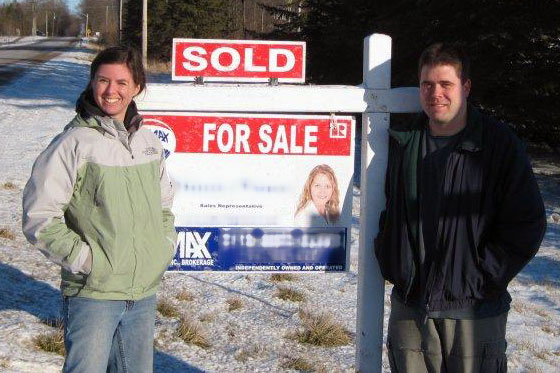
When we last left our heroes, they were standing in the snow next to a sold sign smiling giddily because they had just bought a farm.
In reality, they had a conditional sales agreement on a farm. In order to actually close the deal, they had to pay for the farm, which meant a mortgage.
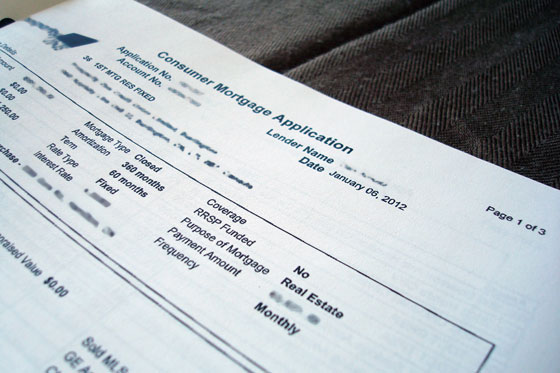
Finding a lender for the farm was a bit like finding the perfect property–frustrating, trying, drawn out, complicated… although [spoiler alert] ultimately successful.
Matt and I had gone to our bank and been pre-approved before we ever started looking at farms. However, now that we had found our farm, we had to convert our pre-approval into an actual approval. And according to our conditional offer, we had eight days to firm up financing.
What we discovered was that in the case of a rural property a pre-approval is mostly hypothetical. Turning it into reality is another matter entirely.
Banks, and really most lenders, like cookie cutter. They have forms and check boxes and mathematical formulas. A 129-acre farm with a modest house, a massive barn, a semi-rickety driveshed, a bunch of hay fields and a few acres of forest doesn’t fit their molds.
Posted interest rates don’t apply. Nor do minimum down payments. Hoops and hurdles are placed in your path. Acrobatics–and lots and lots of paperwork–are required.
Signed offer in hand, we headed to our bank. To cover all of our bases, we also visited a credit union where Matt’s Dad is a member and connected with a mortgage broker recommended by our real estate agent.
Here’s what our options were:
- The bank: Throughout our dealings with our bank, we felt like they were trying to make things as difficult as possible so that Matt and I would just go away. Even though we weren’t planning on working the farm, they wouldn’t give us a residential mortgage. Everything had to go through their small business line of products. And the interest rate was a full percent higher than what other residential customers were getting.
- The credit union: Service was great, and we really felt like our staff person was working with us to make the mortgage happen. They would do a residential mortgage, but the interest rate wasn’t any better than at the bank.
- The mortgage broker: For the most part the broker struck out. Even though Matt and I were a good credit risk and the farm had no big issues, lenders didn’t want to step outside of their little boxes. He did manage to find one major bank willing to give us a residential mortgage. The snag was that the bank saw the “needs TLC” description in the real estate listing and wanted to hold back a portion of our loan conditional on us installing a new heating system and new roof within 120 days of taking possession.
So there was no clear front runner among our three options.
The biggest hurdle in securing financing was that every single lender wanted an appraisal. A real live person had to visit the farm, walk around and say how much it was worth. Except he’d only look at the house plus 5 acres. Maybe 10 if we were lucky.
A big part of the appraisal was looking online for comparable properties, which meant that since the appraiser was only evaluating 5-10 acres, he was looking for anything in the 1 and 15 acre range. Now maybe I place more value on land than other people do, but somehow in my mind 5 acres doesn’t compare to 129 acres.
It was important to us that the whole property be valued properly. All of the lenders would only give us a mortgage for up to 80% of the appraised amount, so if the appraisal came back too low, we could be in the situation where we might not be able to afford the farm.
Aside: The 80% loan speaks to my earlier comment about minimum down payments not applying to farm purchases. While in Canada people are able to purchase houses with as little as 5% down, if you buy a farm, your lender is going to want 20% minimum.
Anyways, the other huge frustration with the whole appraisal process is that the lender ordered it, required us to do it, kept the report and wouldn’t show us a copy, but required us to pay for it. I managed to speak with the appraiser our bank wanted to send out to the property and when I asked him how much the appraisal was going to cost he refused to tell me!
The appraisal ended up being the tipping point for us.
I managed to get the credit union to agree to appraise the full 129 acres–at a cost to us of $762.75. Given the urgent deadline of firming up our financing within a week, we gave their appraiser the green light to head out to the property.
The day our conditions expired, the appraiser’s report showed up at the credit union. Even though we hadn’t signed the final paperwork, we went ahead and waived the conditions on our offer. And by the way, the appraisal came out more than $60,000 higher than we had paid for the farm. Phew!
The day after we waived the conditions, a bank contacted by our mortgage broker came forward with a firm commitment for a residential mortgage at a half percent less than the credit union was offering.
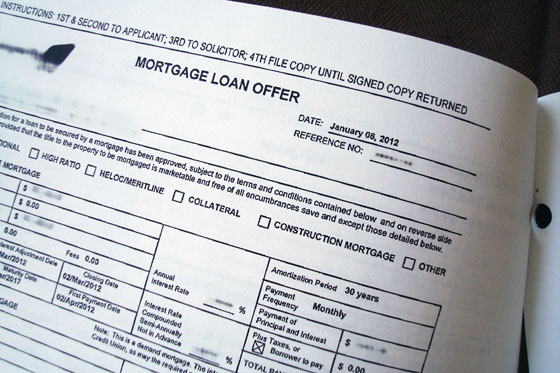
Though he had no obligation to do so, our broker gave us the paperwork from the bank, so that we were able to take it to the credit union and use it to negotiate a better interest rate. The great service from our broker and our mortgage specialist at the credit union made what was an extremely frustrating process slightly less painful.
Some lessons learned for securing a mortgage for a rural property:
- Give yourself as much time as you can to finalize your financing. We had had lots of conversations with the bank throughout our property search, well before we ever placed our offer on the farm. We had some idea of what would be required to secure the mortgage. However, the financing was much more complicated than we could have ever dreamed. We squeaked in just under the deadline to waive our conditions.
- Have all of your financial information documented in detail and carry it with you at all times–extra hard copies as well as electronic files you can email. All of the lenders required three years of tax statements for both of us. In addition, we each supplied pay stubs and personal statements detailing our assets and income. Having all of our numbers on hand ensured we didn’t add any extra delays to the process.
- Consider working with a mortgage broker. Our broker’s contacts and experience were invaluable. He was a fabulous advocate for us and it was very helpful to have someone who was willing to explain the intricacies of mortgage conditions and vet any documents we received.
- Shop around. Don’t settle for the first offer you receive and consider alternatives to traditional banks. Even when you receive an offer, go back to the lender and ask for exactly what you want. You might not get everything, but you may be able to do a little better. Ask lots of questions and make sure you understand exactly what you’re getting.
- Be prepared for some extra expenses just because you want a rural property: you’ll likely face a bigger down payment, higher interest rate and appraisal fees.
For Matt and me, the extra expenses were worth it because we got the farm of our dreams. I can’t say the frustration was necessary, but we made it through.


 Home on 129 Acres