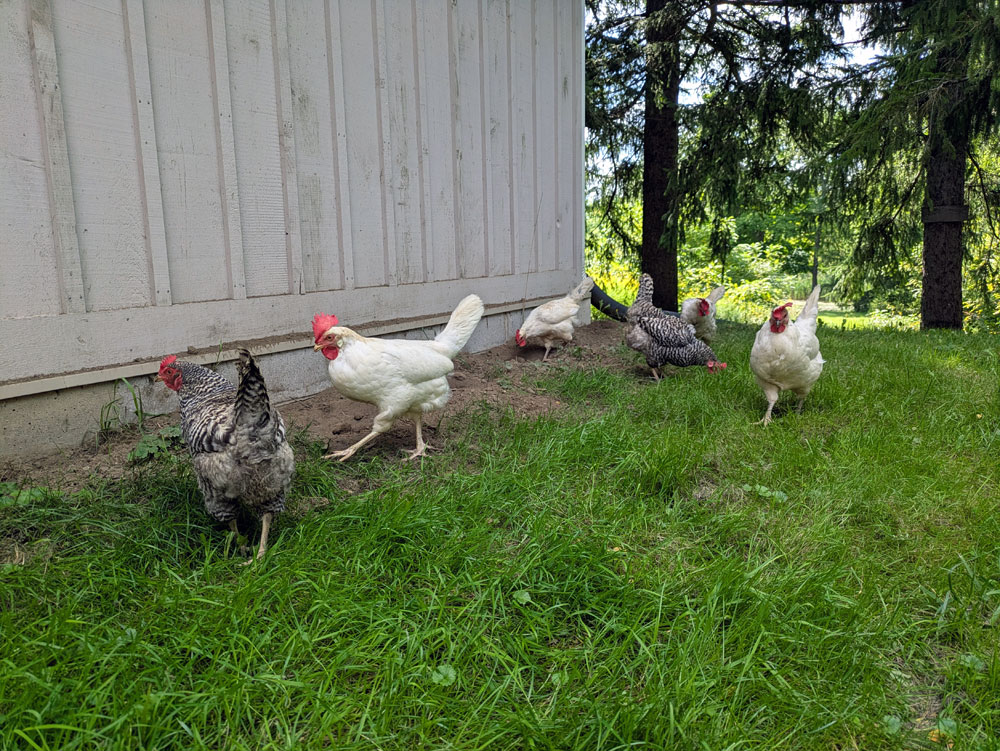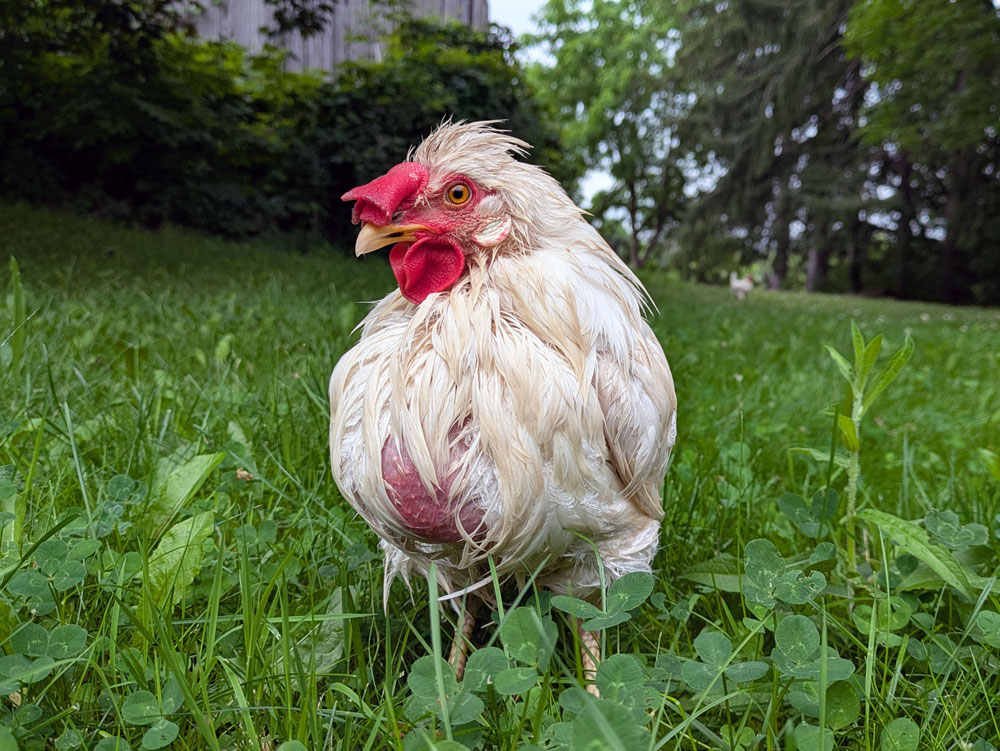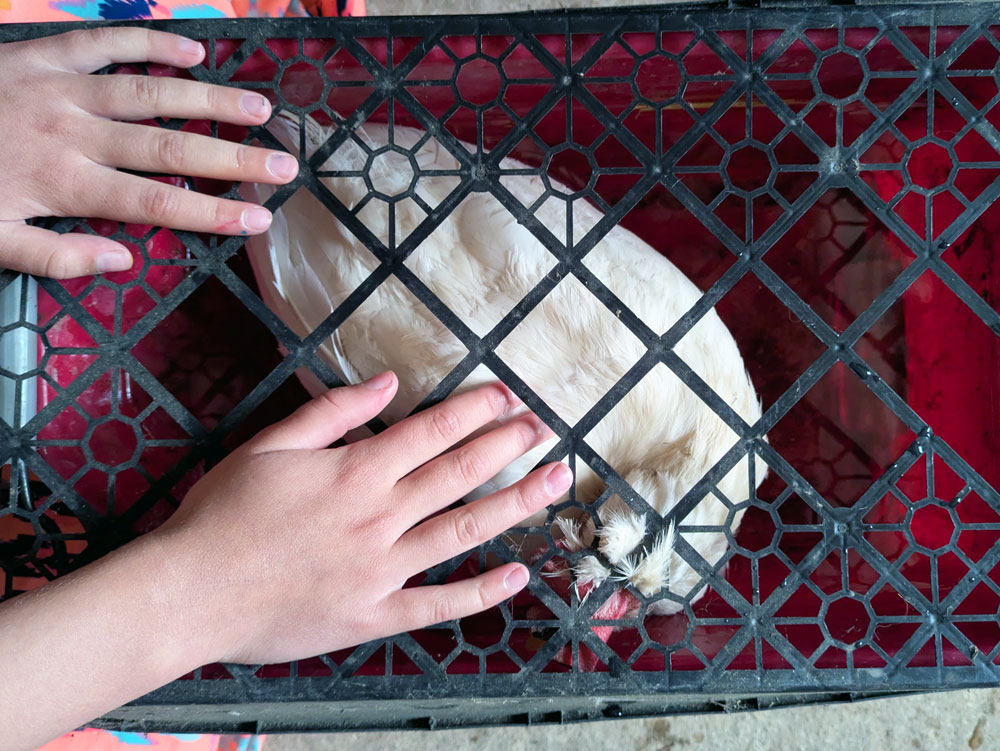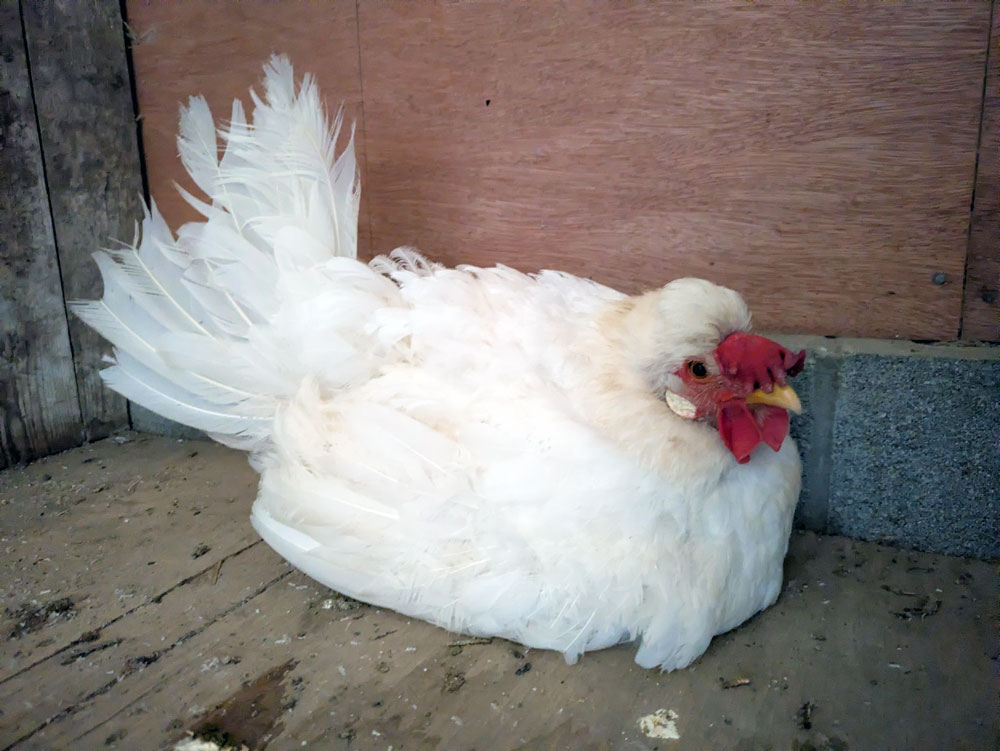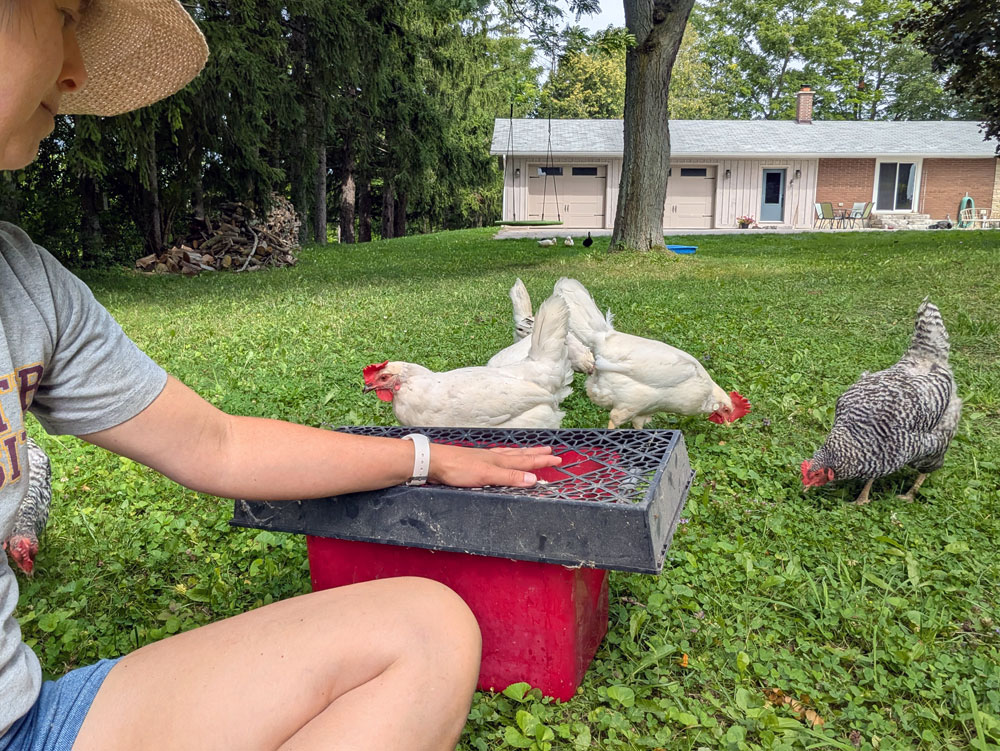
One year ago we brought 10 fluffy little chicks home. Adding chickens to the farm was my dream long before we moved here, and I’m so happy it came true.
To celebrate one year with the chickens, I’m looking back at some of the highlights.
The benefits of day-old birds
We chose to get day-old birds, rather than ready-to-lay, hatching our own, or adopting someone else’s flock. Because we’ve been with them since they hatched, holding them, feeding them, caring for them, our chickens are extremely used to us and super easy to manage. They are calm (as chickens go), comfortable being handled and want to be with us.


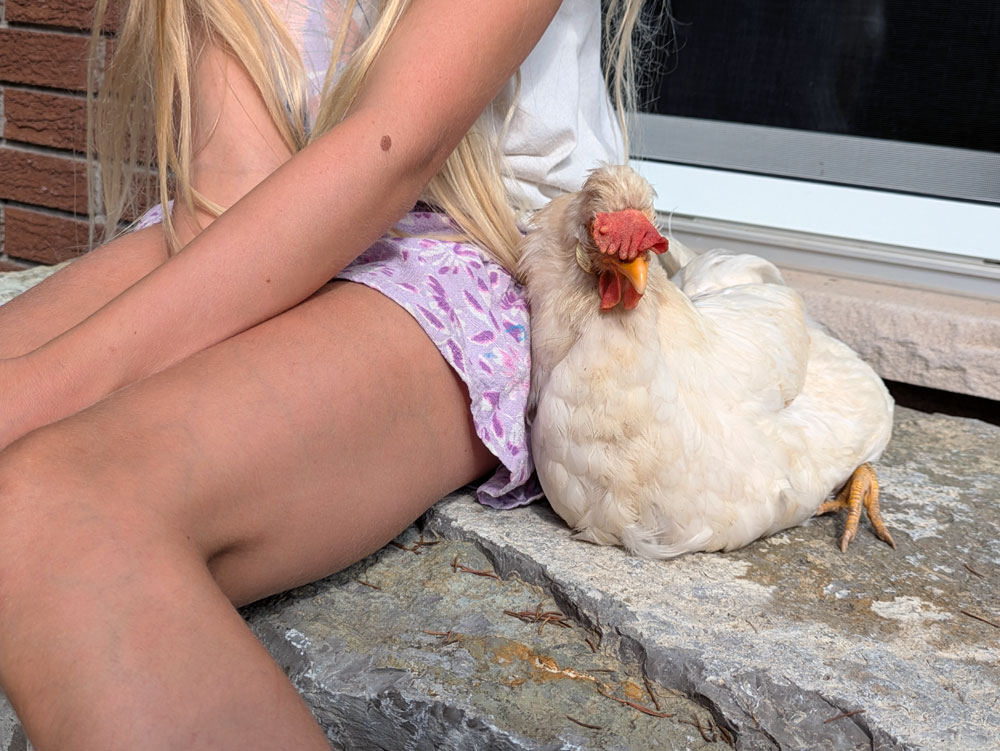
Hair-Do (a favourite hen) will ride on Ellie’s lap on her saucer sing. Clucker (extremely opinionated and food motivated) comes running anytime we’re out. All of the birds come to the fence when they see us drive in the driveway or heading for the coop.
I reviewed our whole brooder set-up in this post.
The fun of fresh eggs
Chickens are fun on their own, but the real reason we got them was eggs. Our first egg arrived mid-August when the hens were about 16 1/2 weeks old. We’ve not had a day without eggs since. Laying decreased a bit in the winter and when the birds molted (more on this below), but now we have many days where everyone lays.
An extra bit of fun with our chickens is their different coloured eggs. We have 3 barred rocks (brown eggs), 3 azure blues (blue eggs) and 4 olives (green eggs). I’ve not noticed a difference in production between the breeds.
A whole breakdown of the eggs’ arrival is in this post.

The failure of the nesting boxes
On the topic of eggs, all of our ladies lay on the floor. All in the same corner. Meaning there are frequently line-ups and pile-ups. For a human to access the corner and collect the eggs requires ducking and contortions. The eggs get stepped on and sat on and are usually quite dirty. It’s awkward for everyone. I installed 3 nesting boxes when I built the coop, but the hens don’t care.

We’ve tried plastic eggs in the boxes to demonstrate what they’re for. We occasionally stuff a hen in the box. They usually hop out.
But we have recently had some success. One day I showed up during a contentious competition for the favoured corner. I scooped up Hair-Do, one of the combatants, and popped her into a nesting box. She stayed in and laid an egg. Since then, she’s been laying in the box every day. Another hen has recently followed Hair-Do’s example.
I’m thinking I might try adding some herb cuttings to the straw in the nesting boxes to see if this encourages any other hens to check them out.
The magic of the poop board
A part of the coop that’s been working exactly as intended is the poop board. This is a wide shelf or floor that I installed under the roosts. The idea is to catch the poop that the chickens make when they’re roosting–and they make a lot. Once a week I scrape the poop into a large bucket and dump it on the manure pile. The poop board keeps a ton of manure out of the straw and helps me keep the coop much cleaner.

The unending thirst for water
I’ve been surprised by how much the chickens drink. In the warmer weather, they have a large waterer in the run along with a bucket in the coop. In the winter, they had just their indoor bucket, and I had to refill it at least once a day. I bring a large bucket of water out every morning and top up their drinking water as needed. We don’t have a tap at the coop (yet), but it hasn’t been onerous to carry buckets from the house.
The worst timing to molt
Molting is the process where chickens renew their feathers. Usually it happens about once a year around the end of summer. Our chickens started molting after Christmas. Terrible timing as temperatures were very cold. Along with losing a lot of feathers, one hen’s comb and wattle shrunk dramatically and turned a very pale pink. We started calling her the pale hen. We added a daily ration of meal worms to increase their protein and waited. Pretty much everyone bounced back really well, and our pale hen is back to normal.

The problem with picking
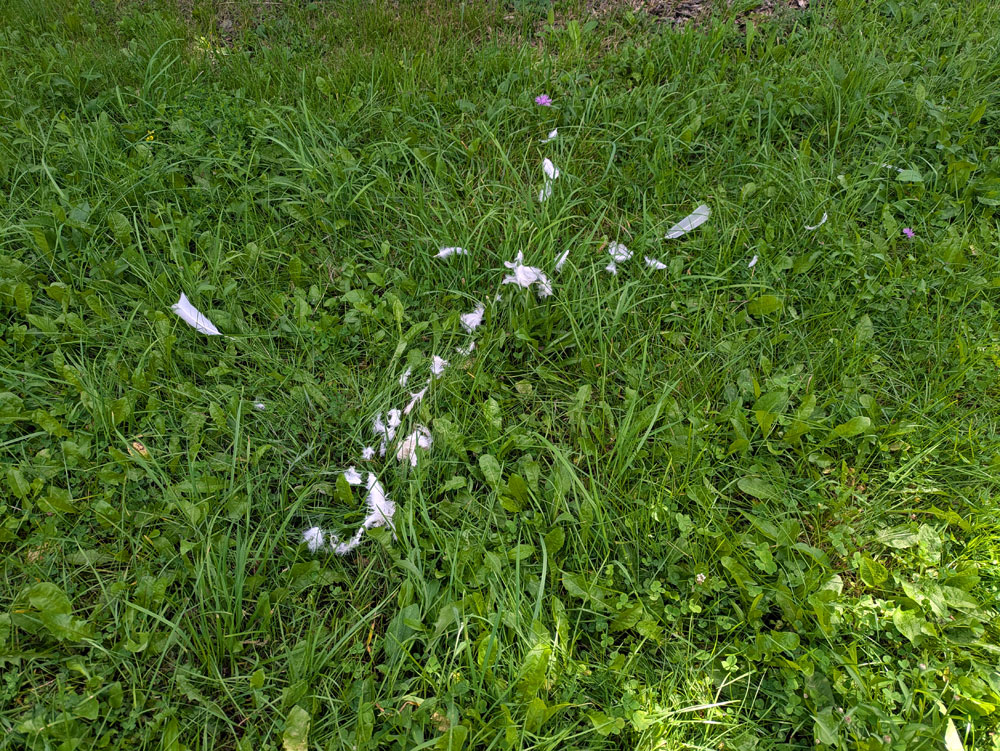
One side effect of the molt seems to be some picking, where hens pick on certain birds and pull out feathers. Anything that’s different will cause chickens to peck. We watch out for wounds or spots that might inspire curiosity. Picking happens for several reasons, including lack of space, protein and boredom. We have a couple of hens who have lost some feathers around their rear ends. The worst case is a hen (Cinnamon) who is missing a lot of feathers on her back. I think she may have been mounted by another hen and bullied.
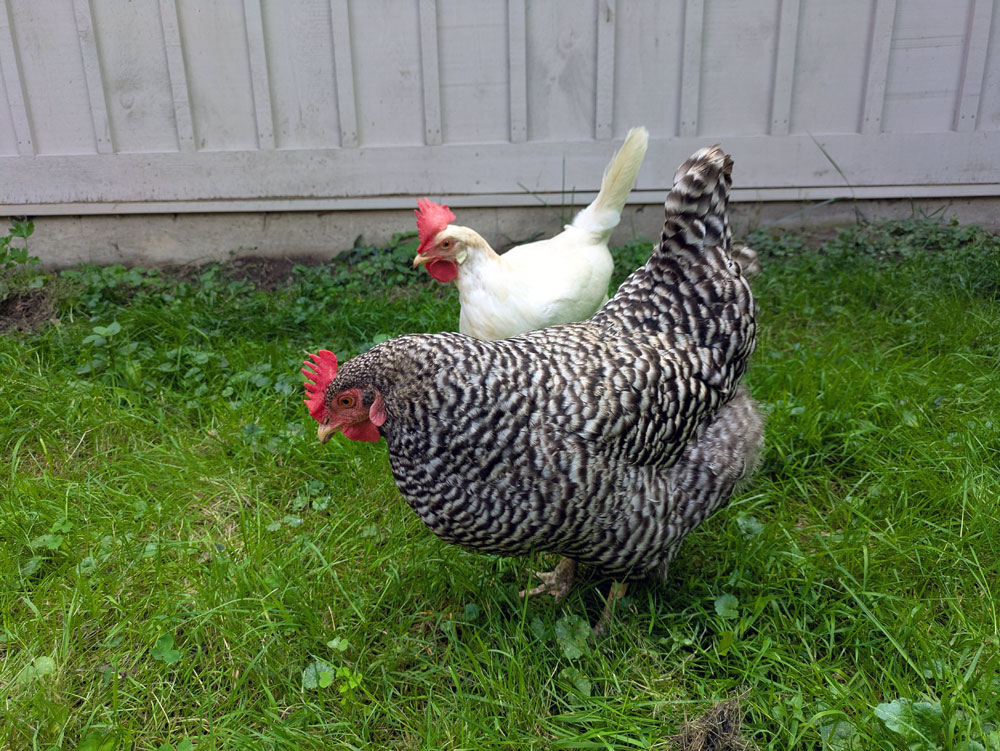
We’ve been letting the chickens free range when we’re outside to keep an eye on them. This helps to relieve boredom and give them something else to pay attention to. Unfortunately, our bare naked ladies are not likely to grow new feathers until they go through another molt.
I’m planning to make a cape (official chicken term is saddle or apron) to cover Cinnamon’s back to protect her until then.
Space constraints
Overall, the coop and run are working well and I’m really proud of what I built. During the winter, the hens spent a lot of time in the coop. While technically the coop has enough space for 10 birds, it feels small when they’re all inside for multiple days. This could be another reason for the picking. We’ve given the chickens a double run, but even it feels tight sometimes. In addition to free ranging occasionally, we’ve talked about using poultry netting to expand the run.
I also want to add some features to their existing run to make it more interesting. Right now the run is flat, bare dirt (or mud thanks to all the rain we’ve had). We built a swing when we moved the chickens outside, but no one has been interested in it. I’m going to try some other perches or structures to give them some other things to do.
I also have some changes in mind before next winter, so they can be outside more easily.
We have hung vegetables and even a small container of scratch mix from the roof of the run as a kind of chicken pinata. These have provided some entertainment for all of us.

(There are holes cut in the bottle, so the scratch falls out when they peck it.)
The past year with our chickens has been fun. I love seeing Ellie’s confidence, care and responsibility with the birds. It’s not been too much work to add them to our family, and the joy we get from them is worth it.
Caring for anything is an ongoing process of learning and adjusting. We are continuing to do that with our chickens.