New tool for tree management

This is my review of the Extractigator Classic tree puller. This is not a sponsored post. I bought the Extractigator with my own money.

Tree management is ongoing at the farm. Usually that means picking up branches that fall down, pruning and, at least a couple of times a year, a few days with Matt’s Dad and his chainsaw. This deals with established trees.

One type of tree I have not dealt with very much is the seedlings and saplings that pop up all over the property. Whether from squirrels or just nature, we have lots of little sprouts everywhere. Maple, walnut, buckthorn. Some of them are fine, and I leave them alone or I’m even happy to see them. But lots are not welcome. The meadow that goes down to the pond is being overrun by walnuts. The swale toward the backfield is filled with buckthorn (an invasive species).

This spring, I decided to take one small step to tackle the growth. I often buy myself a new tool for Mother’s Day. This year, I bought an Extractigator.

The Extractigator is a tree puller. With it, you can pull out unwanted plants, roots and all.

I learned of the Extractigator from a local conservation organization that does a lot of invasive species removal at their nature sanctuaries. There are lots of different tree pullers available, but the Extractigator is their go-to–and it’s made in Canada.

When it arrived, I took it straight into the meadow and quickly cleared a small patch–and realized there are so many more seedlings and saplings than I realized.

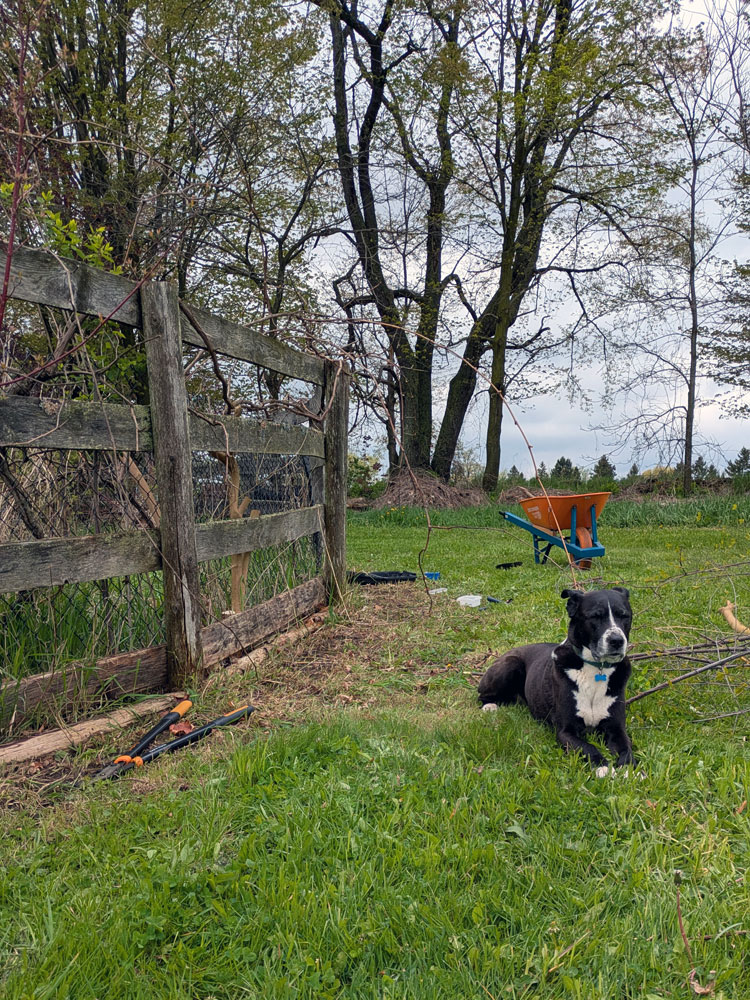
Since then, I’ve used the Extractigator in the gardens, down the driveway and at the pond. I’ve pulled out buckthorn, walnut, lilacs and more.

It is a very helpful tool to remove the trees completely, no shovel needed.

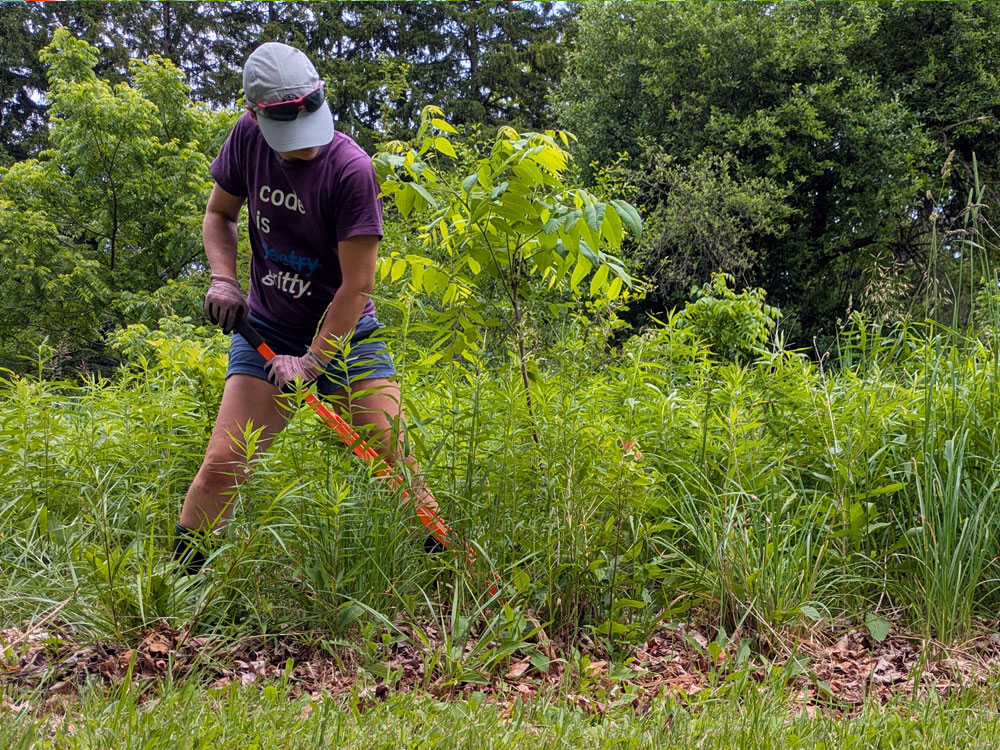
The Extractigator is easy to use. The jaws naturally rest in the open position, and you slide them around the trunk as close to the ground as possible. Then you pull the handle and lever it down toward the ground. Through the magic of physics, exponential force is applied to the tree and the Extractigator pulls it out of the ground. (The Extractigator website says “apply 10 lbs to end of handle, and 120 lbs of pulling force is applied to plant.”)
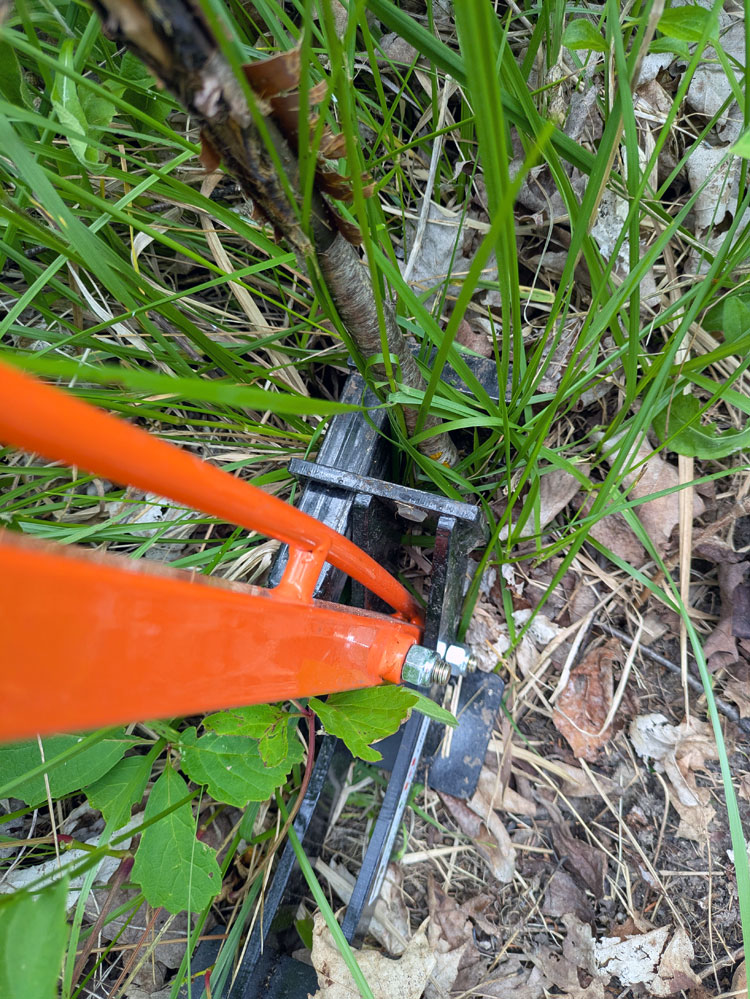
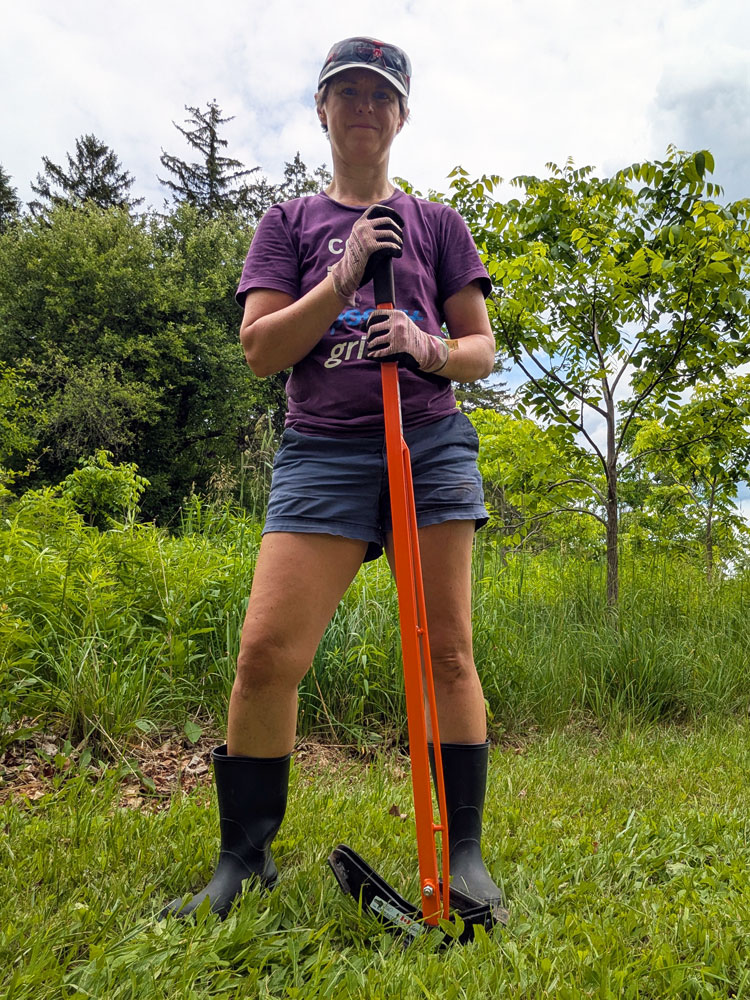
The Extractigator is not effortless. It takes some muscle to push the handle, especially if you have a more stubborn tree. There’s also some coordination required to get the jaws around the trunk, depending on how crowded your area is. The tool itself weighs 12 1/2 pounds, which can get a little heavy after working for a while. But it’s much easier and faster than a shovel.

The Extractigator website says it will remove woody plants up to 2 inches in diameter. I have found it works best on smaller trees, and it depends on the variety. Walnuts with their deep tap roots are most challenging. Even those smaller than 2 inches wouldn’t come out. Lilacs, whose roots twine just below the surface, popped out more easily.
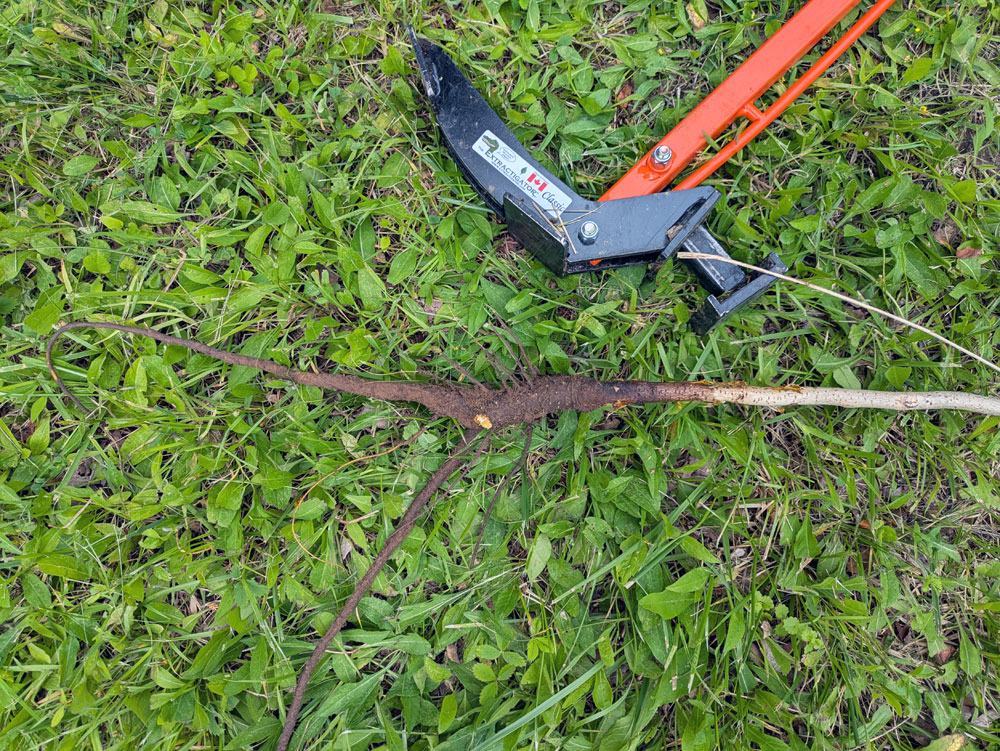
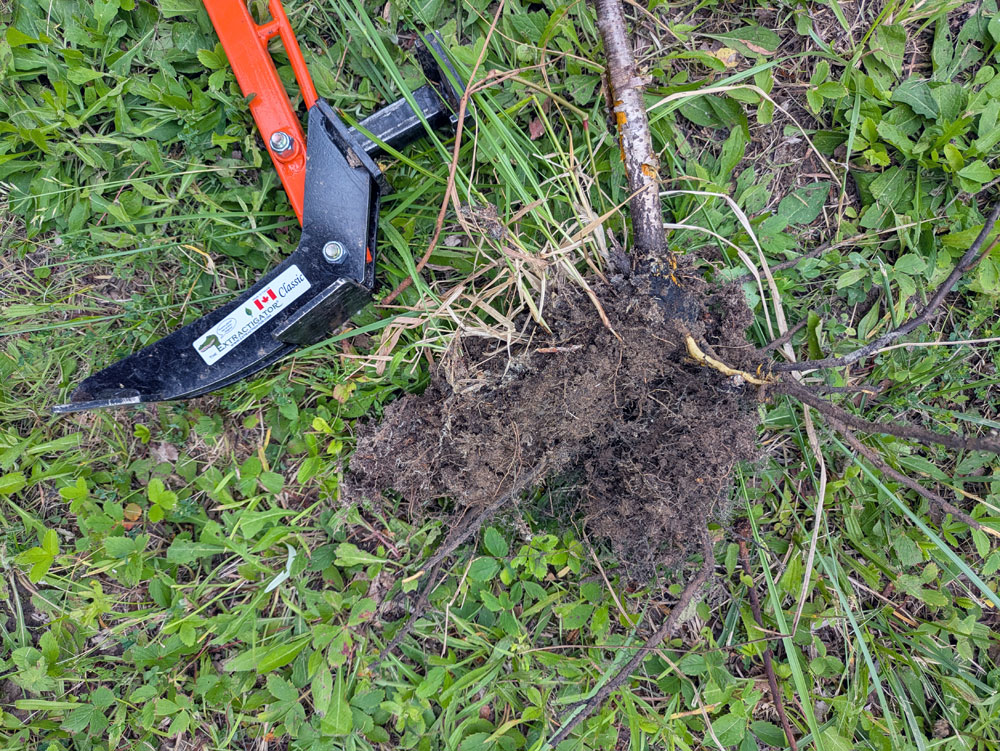
The Extractigator is a good addition to my tree management toolkit. I hope it will help me to tackle more of the invasive growth that has spread through so many spots on the farm and be a better caretaker for this property.
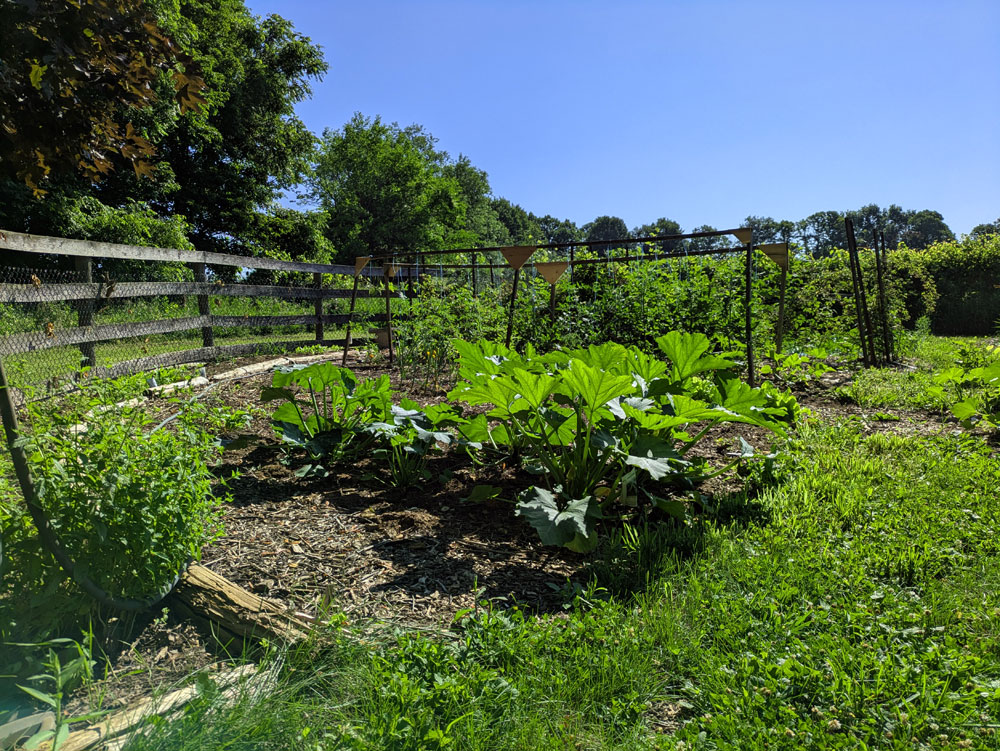
Have you added any new tools to your toolbox this year? Anyone else dealing with unwanted plants? What invasive species are there around your property?

Growth and harvests in the vegetable garden

The garden is growing! I know that’s what it’s supposed to do, but it hasn’t done that for several years, so it seems remarkable.

We’re picking raspberries every day and at dinner yesterday we ate our first zucchini (of what I’m sure will be many). We’ve had lettuce and garlic scapes. We’re watching tomatoes, watermelon, beets, carrots, onions, spinach and grapes get bigger. The asparagus has fully gone to seed. We’re hoping some of Ellie’s flowers bloom.

I’ve repaired the tomato trellises, ignored the squash trellis and am experimenting with green plastic (IRT mulch) for the watermelons.

We’re weeding regularly, which feels like less of a chore when we’re so excited by the growth and prospect of harvests.

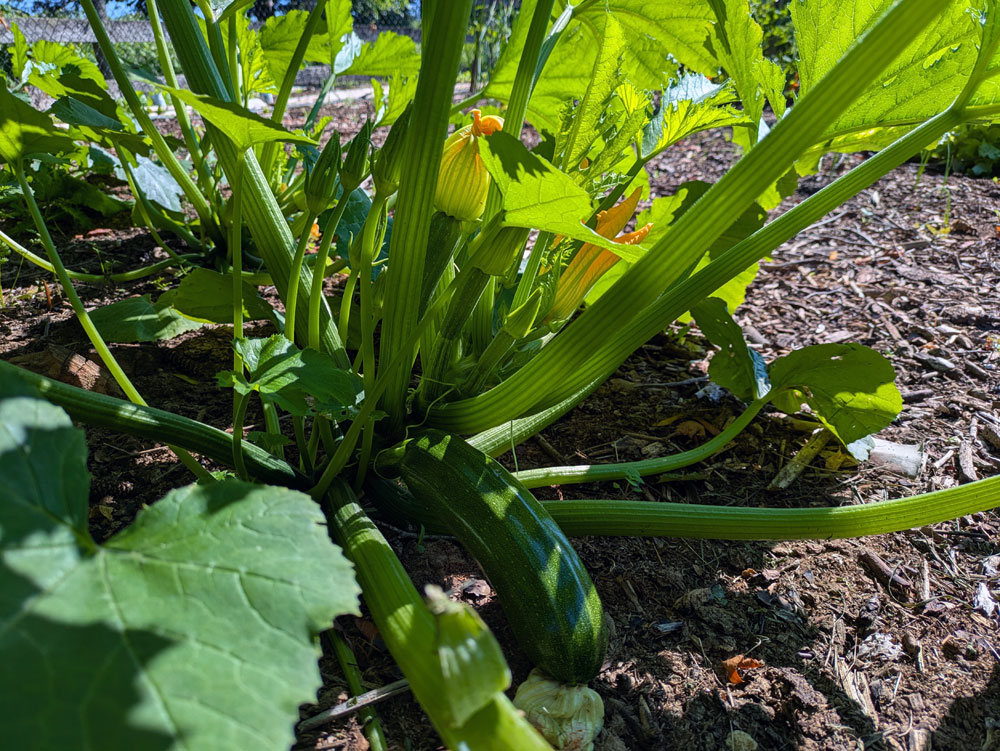
First zucchini. We grilled it for dinner. It was delicious.

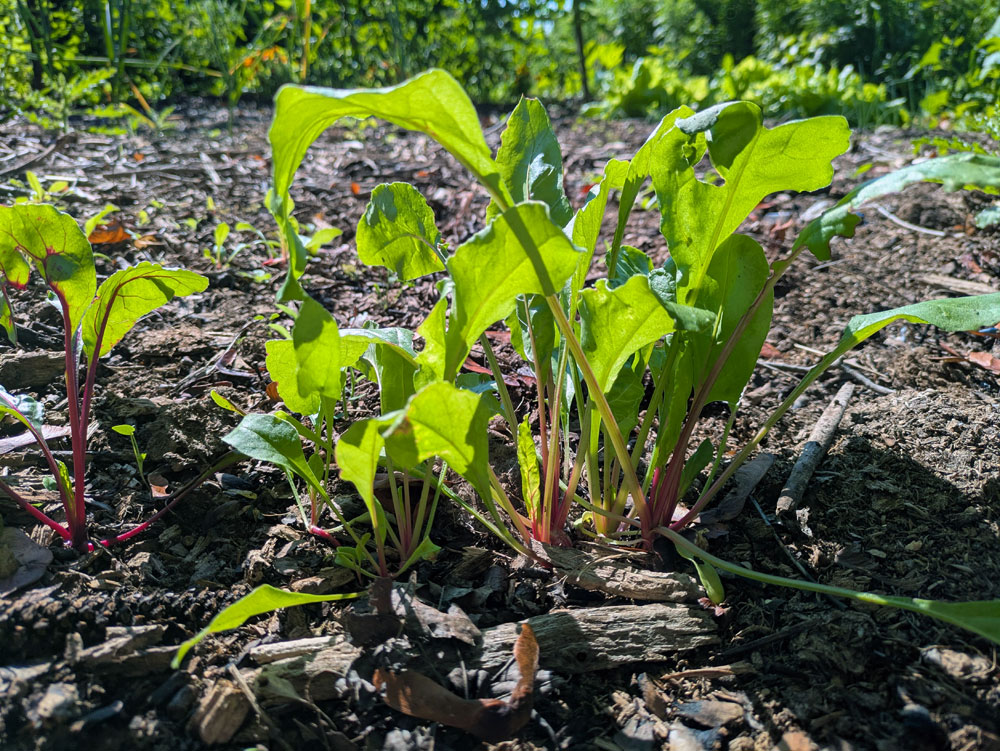
Beets.

These onions are Ellie’s special project. She’s been so diligent about weeding them, even when they were as small as blades of grass and our compost had sprouted millions of miniscule weeds. Lettuce is in the background.

Carrots with garlic in the background.

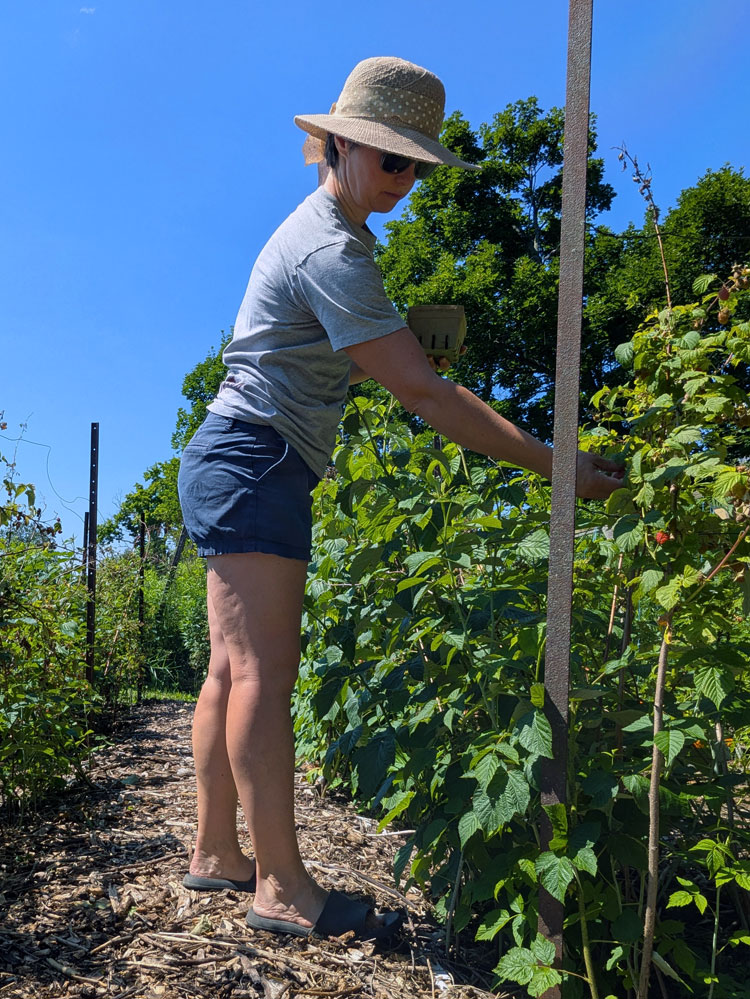
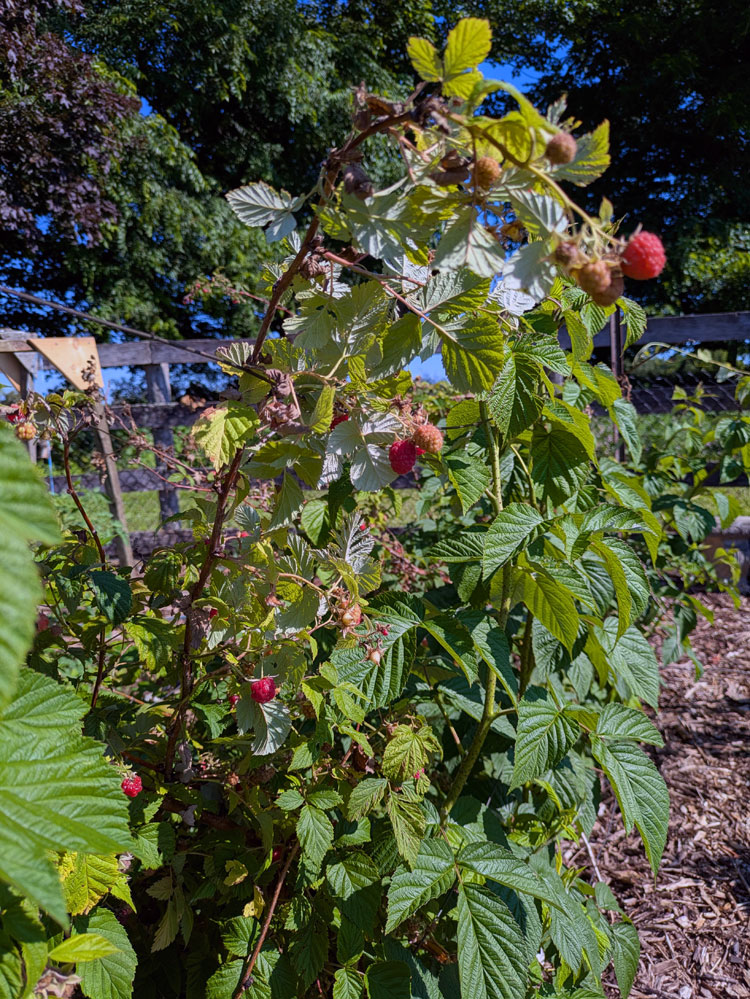
Raspberries are a little sparse after not being pruned for several years. We’re picking about a pint of berries every day and lots of new canes are shooting up.

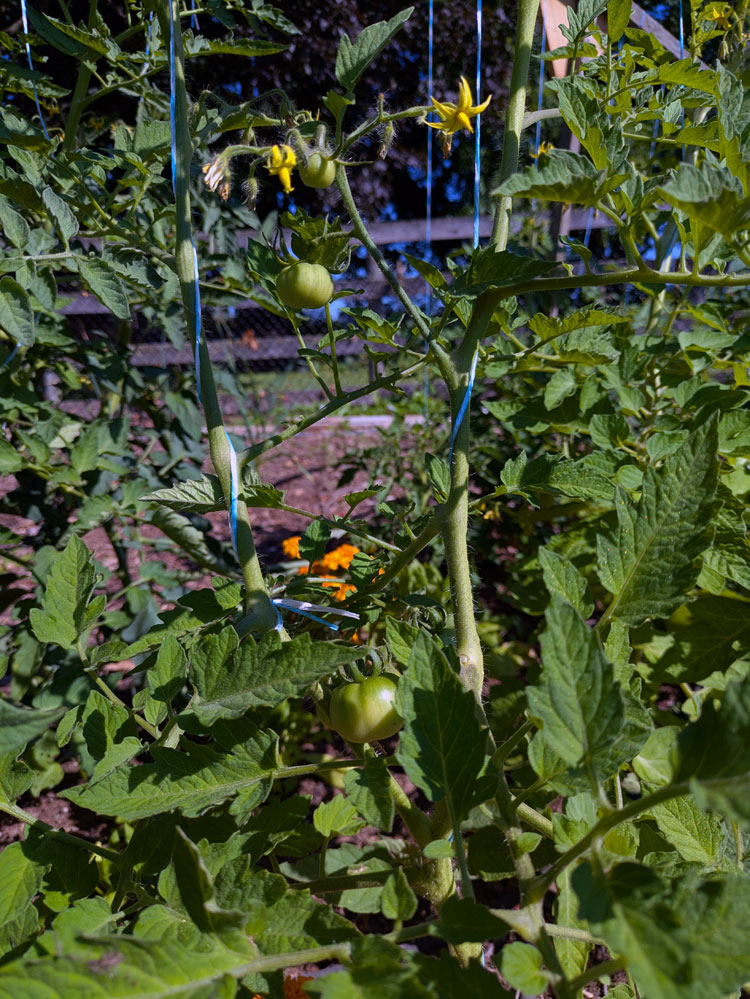
So many tomato plants. Lots of blossoms. Fruit starting to grow. Very helpful to grow them on a trellis.

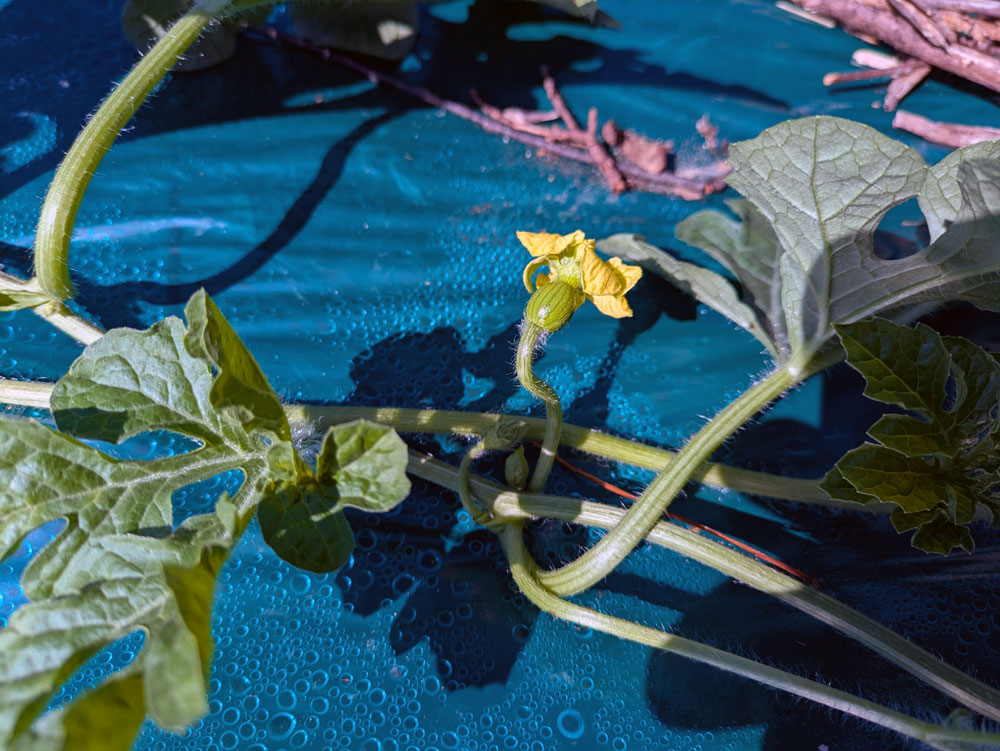
Watermelons on IRT mulch. The vines are starting to go crazy. The plastic is supposed to warm up the soil, helpful in our shorter growing season. It’s also suppressing weeds better than I expected.

Teeny tiny baby watermelon.

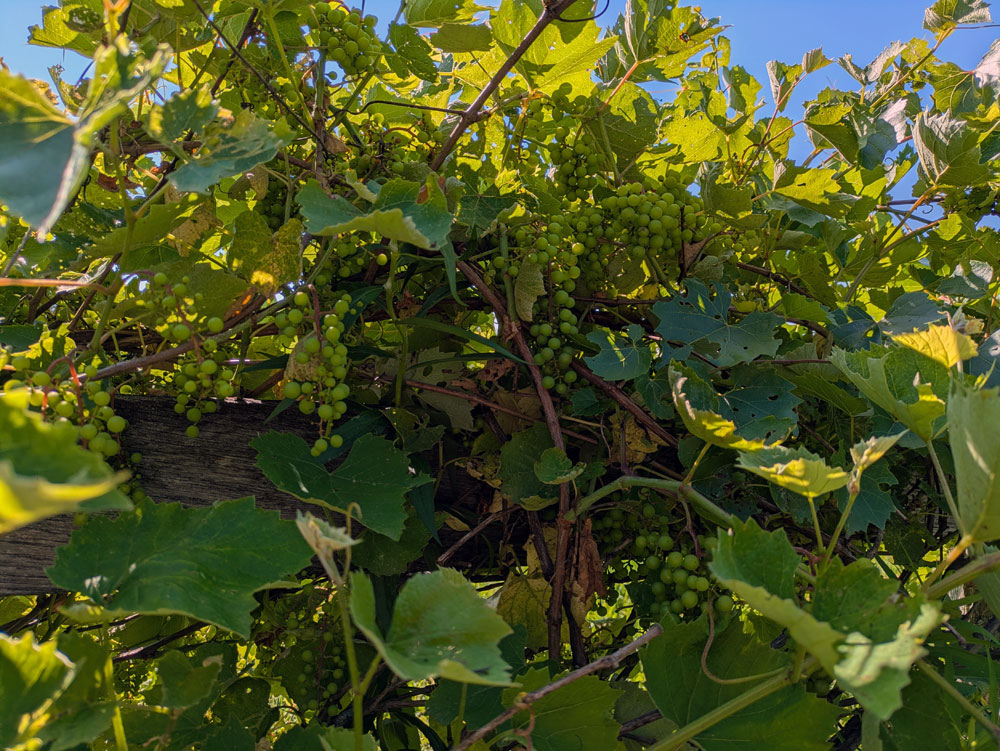
Asparagus gone to seed. Grapes going crazy tangling themselves in the ferns. My ancient tarp still hanging around.

So, so many grapes.

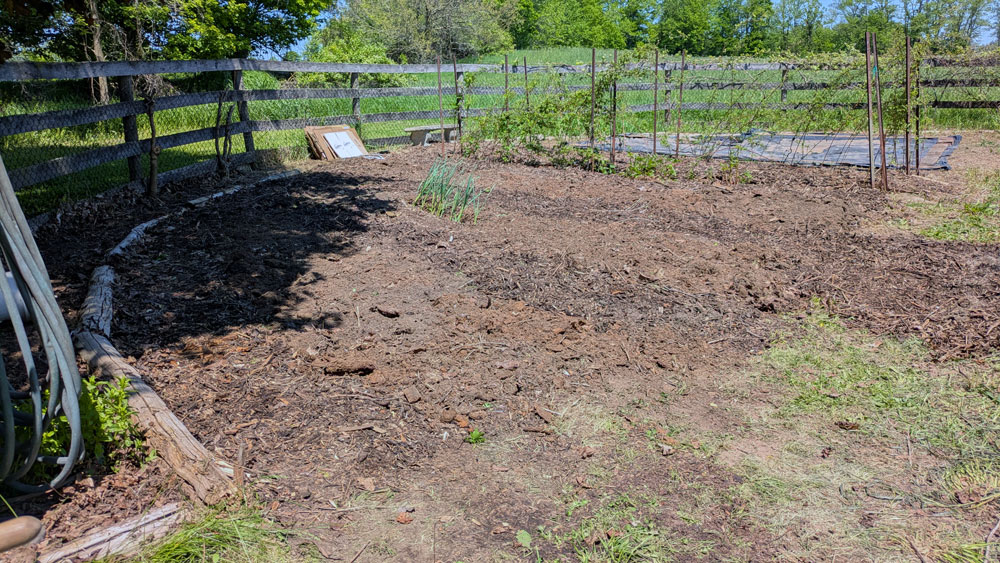
Slide the centre bar to see the garden grow.

There is more work to be done and more harvests to come. I’m looking forward to it all.

Progress and planting in the vegetable garden

This past weekend was garden weekend. The date Ellie and I had decided to plant the vegetable garden. And we did. After a month of work, one quarter of the vegetable garden was ready for planting.

We have 25 tomato plants in the ground. There are 12 more that we have to find spots for. Ellie had great success with her seeds and plans to make lots of tomato soup this fall. We put in two rows of onions, which will also come in handy for the soup.

We have many more seeds to go and much more of the garden to clear, but major progress has been made.

At the start of May, I shared my to-do list for getting the garden back to a manageable state. Here’s how I did.

Edge the garden – I made it all the way around the outside, raking leaves, cutting back grass, weeds and trees. I have been carefully mowing around the edge to try and keep it clear. I would like to break out my weedeater to clean up even more.

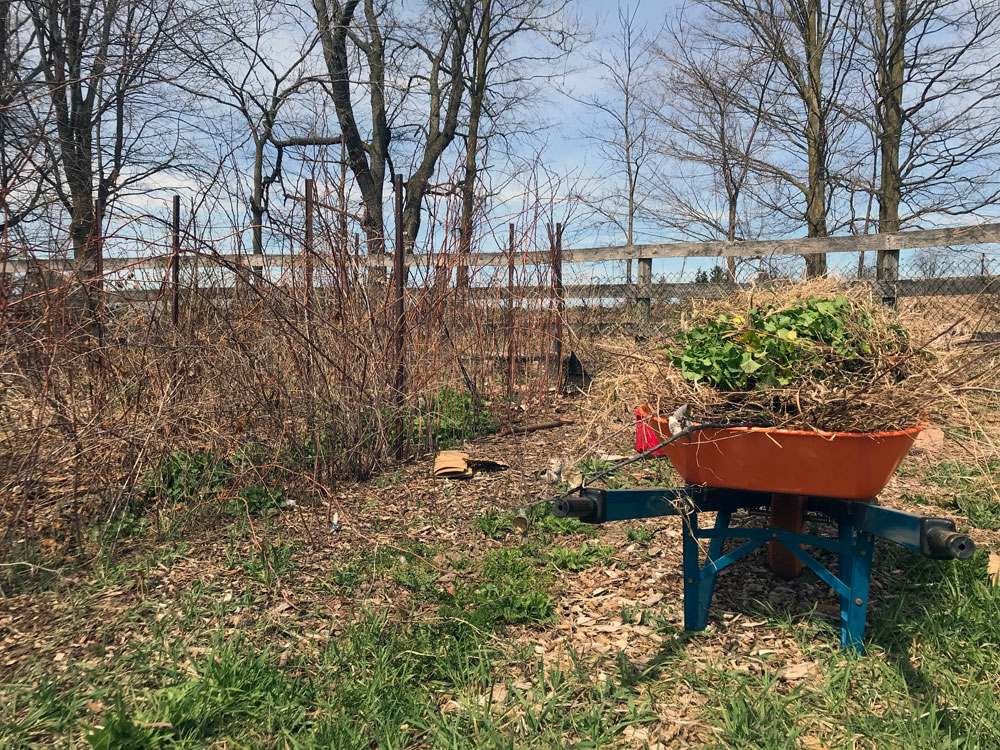
Remove trees – I cut an embarrassing number of trees over the last month. Embarrassing because it shows just how much I have neglected the garden. Some were very tangled in the fence. Some had firewood size trunks. Some roots were particularly stubborn. The trees will come back to the garden as woodchips. My brush pile has grown a lot over the last month and has farther to go. Half of the garden is completely untouched, and there are more trees to tackle.

Prune raspberries – All of the old canes are gone. The live canes are tucked into the wires. The rows are weeded. The path between them is mulched. Everything is much cleaner.

Prune grapes (?) – I did not end up pruning the grapes. For now, I decided to just wrangle them. This meant gathering all of the wild vines that were growing in all directions and wiring them to the fence. The vines stretch almost halfway around the ring. One vine was dead, but the other seven are alive and seem to be doing well. We have so, so, so many bunches of baby grapes. We also have quite a few grape flea beetles, which I’ve been picking off and squishing. If the grapes grow and ripen, we will have quite a crop this year. Cleaning up the grapes has also made it much easier to mow around the outside of the garden.

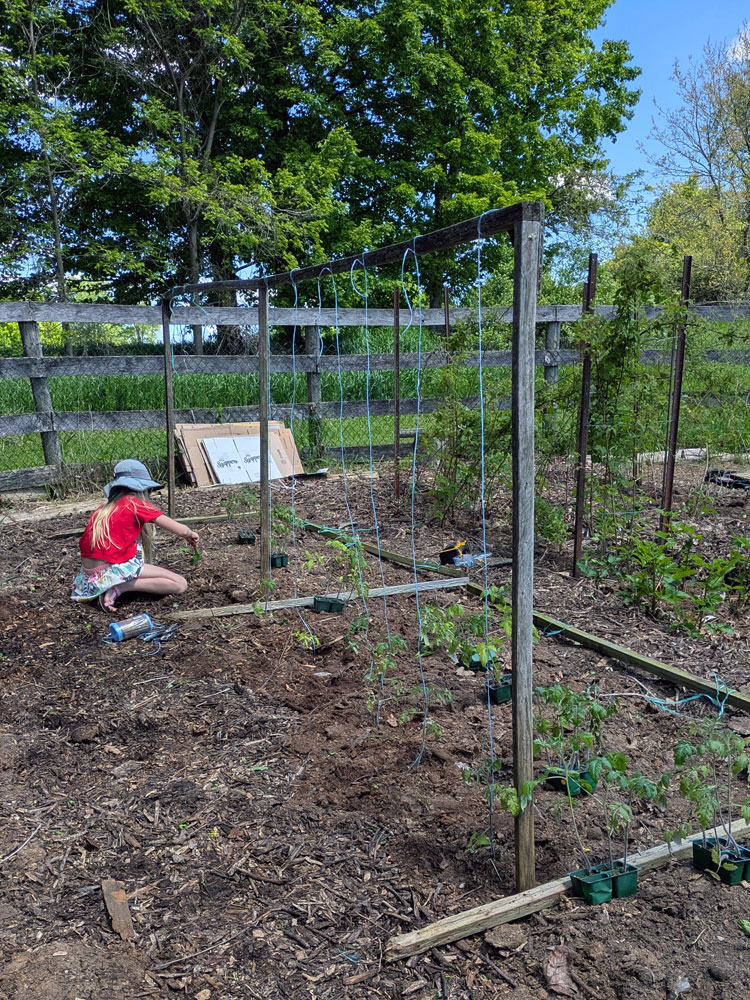
Repair trellises – I added some wires to the berry trellises. I could definitely tighten the original wires but am hoping I might not have to. I pulled out the tomato trellises on the weekend when Ellie was planting her seedlings. They are in really rough shape and are currently held together with hope and as many screws as I could drill into the old brittle wood. They will definitely need some reinforcement to make it through the season and then a complete rebuild. The squash A-frame still needs some repairs, but it’s in the untouched half of the garden, so a lot of things need to happen before the trellis makes it to the top of the list.

Establish planting beds and pathways – Very little trace of the beds and paths I’ve built in past years remained. I’m trying a no dig approach, so to start over I mowed the weeds extremely short and then laid down cardboard to suppress them from growing back. Over top of the cardboard I layered woodchips (if it’s a path) or compost (if it’s a planting area). I made three very wide beds, and that is where Ellie and I started planting.

The year of the garden will be continuing. Now I have to maintain what I’ve established. I also want to work my way around the rest of the garden and clear more sections. Here’s what’s next on my list.

Keep planting – We have quite a few seeds still to go.

Make space for watermelons – Ellie’s seedlings include some watermelons, so we want to get them in the ground as soon as possible to maximize the growing season. Our seed provider recommends using landscape fabric to help warm up the soil. It would also help manage weeds, so I think we’re going to try that.

The squash A-frame – The squash trellis is adjacent to the future watermelon plot, so clearing space for the watermelons leads very easily into this section. I need to clear the space under the trellis, screw the trellis back together and then finally we can plant. I’d like to try using one side of the trellis for peas and cucumbers, so there’s more motivation to make this structure useable again.

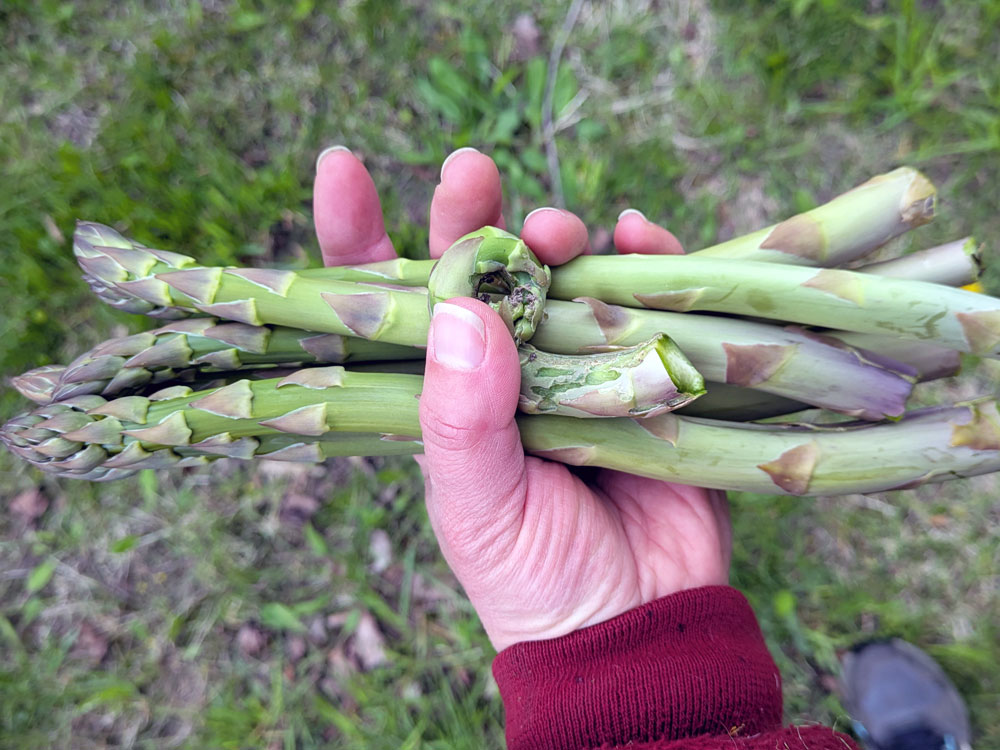
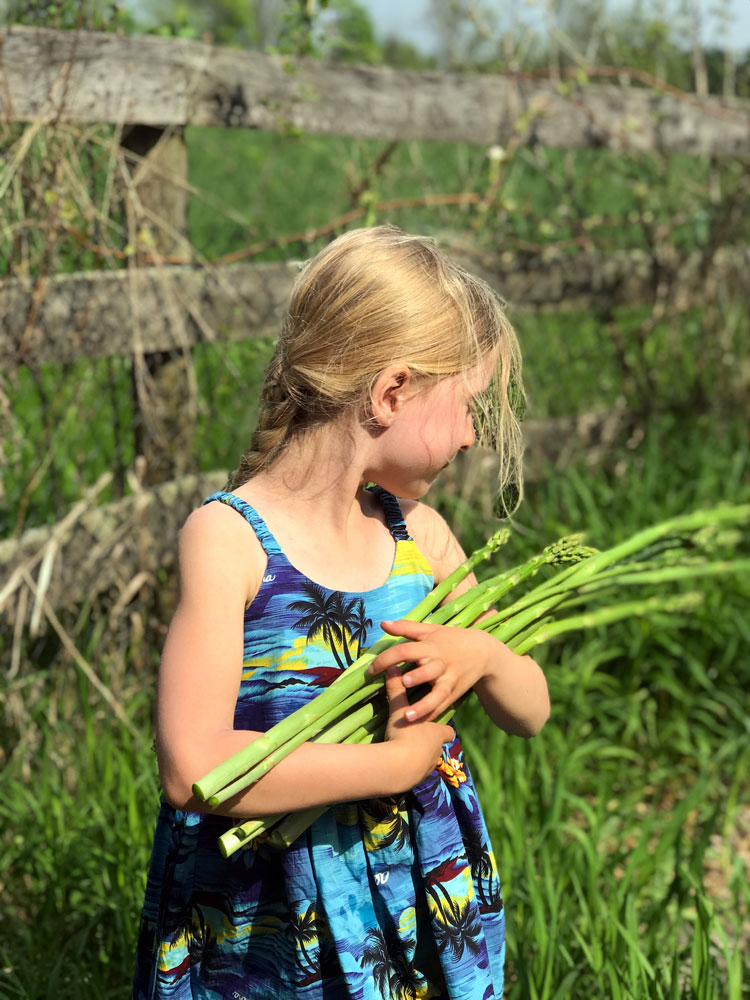
I am very proud of where the garden is at now. We’ve even had a harvest with our asparagus. Picking asparagus and immediately cooking it for dinner is a special way to enjoy our food and it motivates me to keep working on the garden.

I hope I can keep the momentum and motivation going as the year of the garden continues.

Are you gardening this year? What’s the biggest success you’ve had so far? What’s the biggest challenge you’re facing?

The year of the garden begins

Ten years ago, I was digging deep (literally) in a garden blitz. We were still at the “establishing the garden” phase and I had a long list of things I wanted to do.

I feel like I’m in a similar situation a decade later.

The garden is established in terms of the infrastructure. We have fencing, a gate, perimeter beds, trellises, a waterline, perennial crops like raspberries, blackberries, grapes, asparagus and rhubarb.

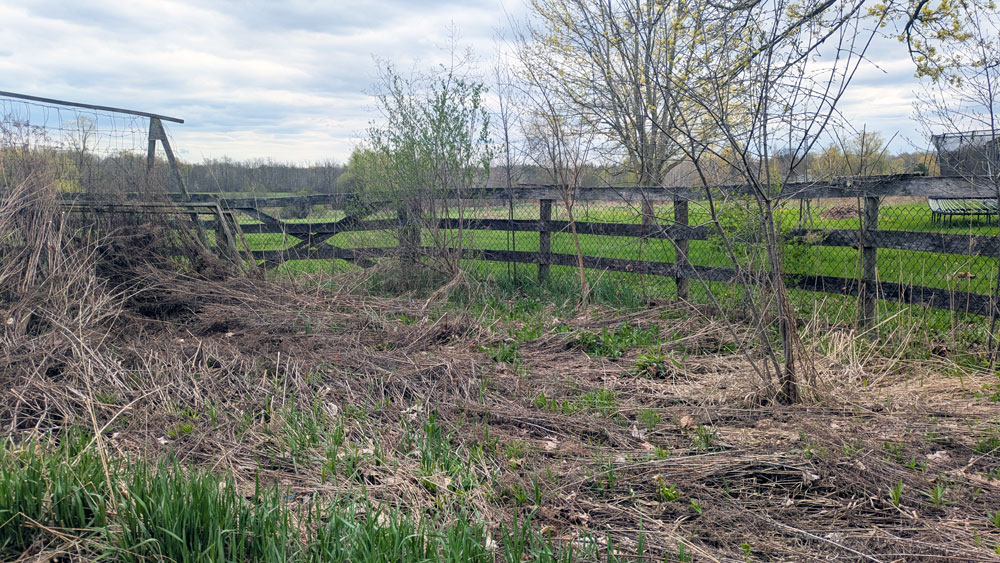
However, after years of neglect, it’s hard to find the beds, never mind the plants. Oh there are plants. They’re just the weedy kind of plants, not the eatey kind of plants.

My mission this year is to reclaim the garden.

Ten years ago, I challenged Sarah in Illinois (remember when Sarah used to write for the blog?) to a garden DIY duel. Sarah, who is still an avid gardener, also had a long to-do list, and we kept each other motivated through our six week challenge.

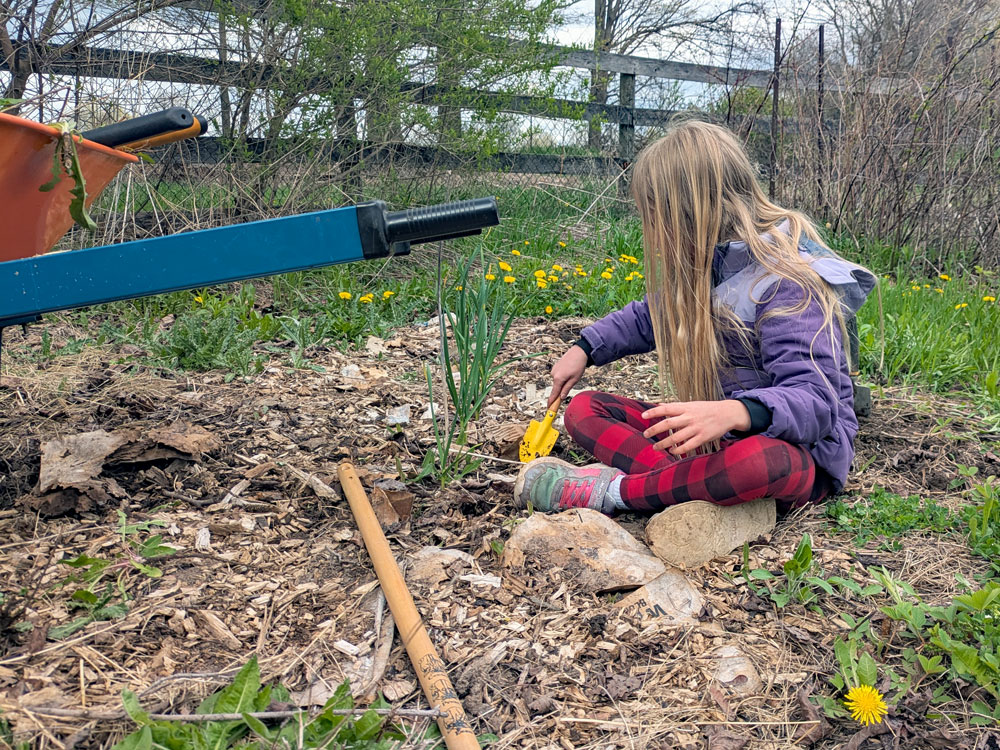
This year, I have another partner, Ellie. Ellie is very keen to have a nice garden and grow some of her own plants. Her motivation and work ethic may not be up to Sarah’s level, but she is enthused, which makes this a fun project to do together.

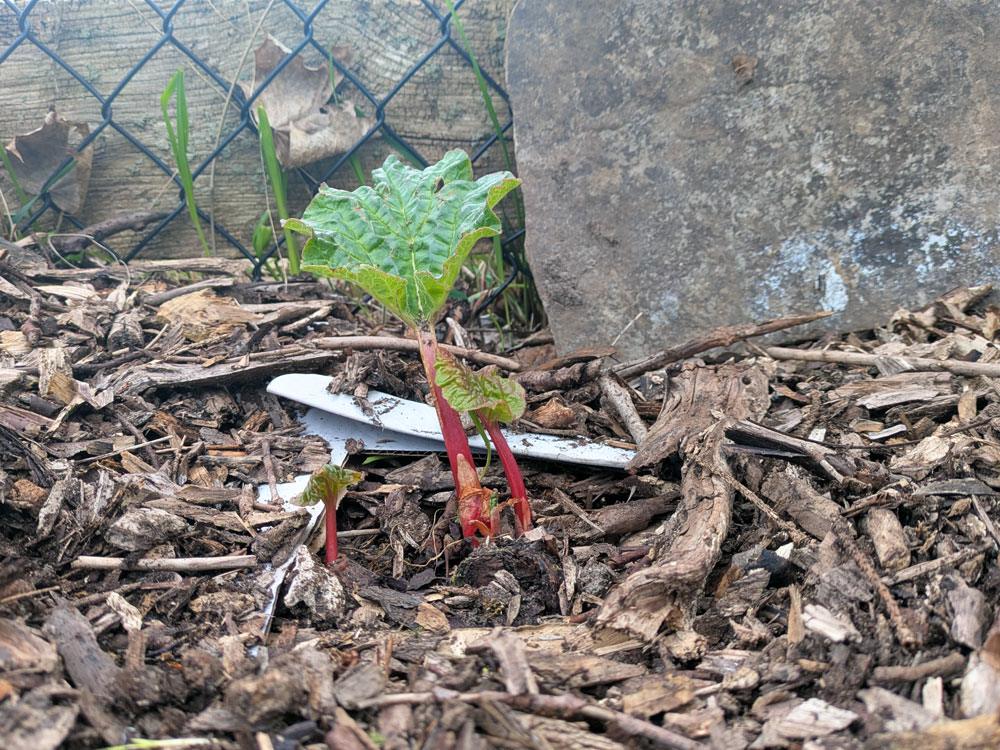
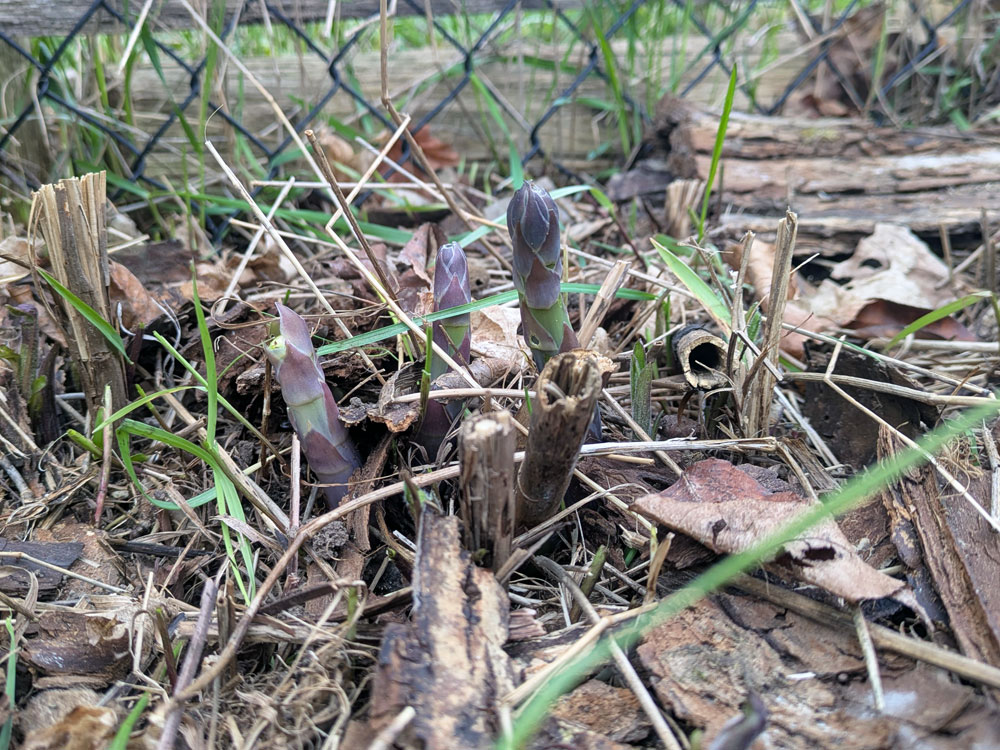
Work is underway. I’ve been popping over to the garden whenever I can find a few minutes, and I’ve found the rhubarb (spindly, but much happier since I cleared the weeds around it) and asparagus (also weed choked, but lots of sturdy stalks are shooting up).

I’m planning to give it some more dedicated attention over the rest of the month. Here’s what I’m hoping to do.

Edge the garden – I’ve been slowly working my way around the outside, raking leaves, cutting back grass and weeds. I’m more than halfway around.

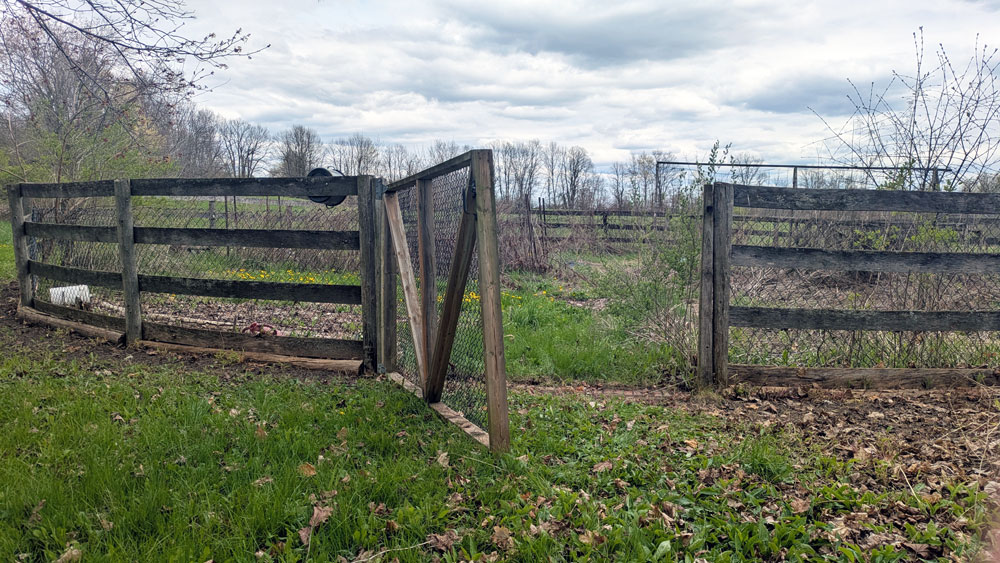
Remove trees – We’ve gone beyond weeds to have actual trees sprouted in the garden. Some I can dig out. Others are tangled in the fence and grapes and will require some special extraction.

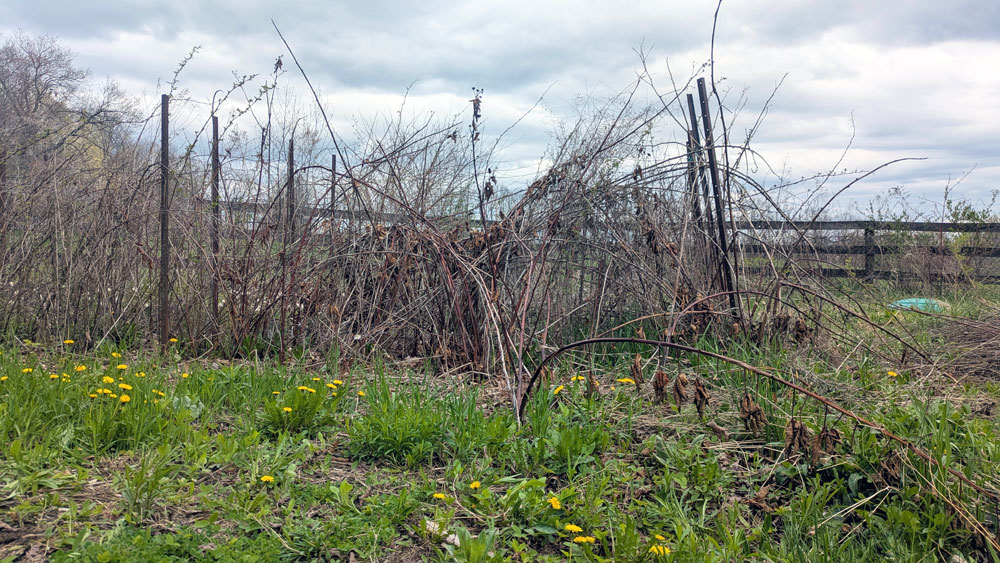
Prune raspberries – I’m not sure whether I missed one year or two of pruning. Removing old canes will give more room for new canes–and berries–to grow. I’ve made it down one side of one row, so a quarter of our berry patch is done.

Prune grapes (?) – I’ve never been sure what to do to take care of our grapes. I’m not even sure how many canes we have right now or how healthy they are. This task will take some untangling–physically and mentally.

Repair trellises – The berry canes have flopped over their wires, and I suspect some wire will need to be tightened. The squash trellis is still standing, but needs some repairs. The tomato trellises are in the garden, but I’m not sure whether they’ll be usable after so many years of neglect.

Establish planting beds and pathways – I’ve built some beds and some paths over the years. Everything is overgrown with weeds, so it’s hard to tell what can be reclaimed and what need to be completely rebuilt.

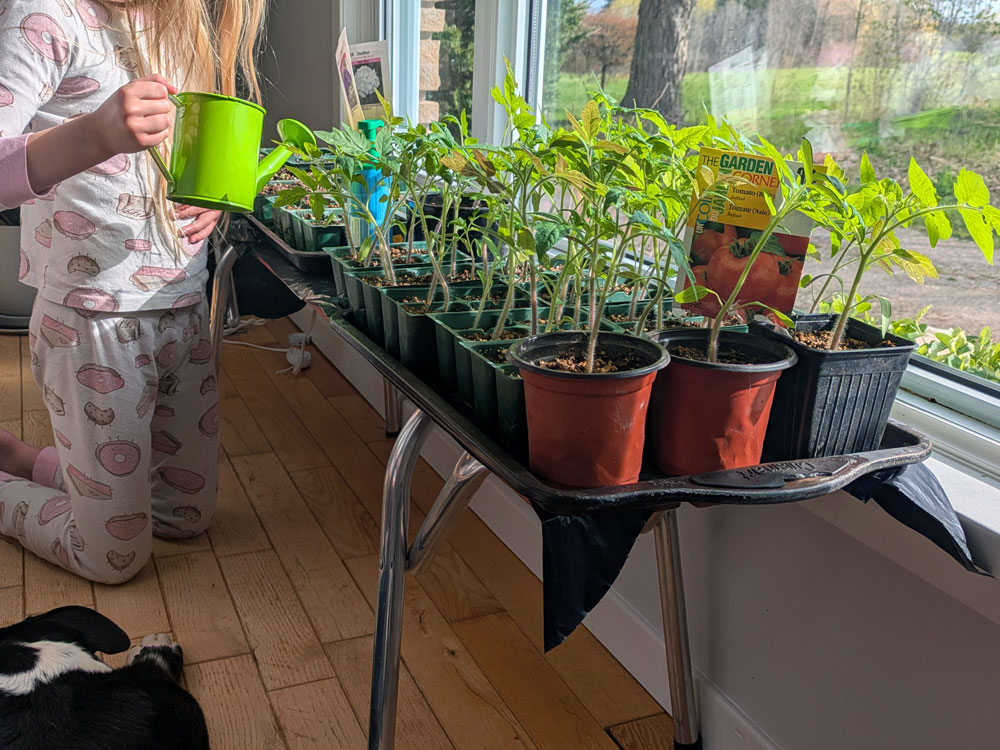
Plant – Ellie was gifted many seeds for her birthday. She carefully scheduled what need to be planted when and has a thriving collection of seedlings. We also have numerous crops that will be seeded directly into the garden.

According to Ellie’s calendar, the last weekend of May is garden weekend. So we have this month to get things in shape.

The nature of gardening is that it’s a process. Each day, week, season, year builds on the one before. So this year is about progress. The garden won’t be perfect, but I’m hoping we can actually have more of a garden this year.

Even with so much neglect, we’re not starting at zero. Everything we’re doing this year builds on what we did ten years ago, and all the years since. I’m glad to be back to this part of the farm.

Are you doing any gardening at your house? Are you a vegetable or flower gardener? Who else has a part of their property or house that has been neglected?

Our paved driveway

Hello. Happy September. I hope you’ve had a great summer. Our summer has been wonderful and full. I have updates to share. First up is the final part of our garage/mudroom/patio makeover: the driveway. The last step of this project is finally complete. The driveway is paved.

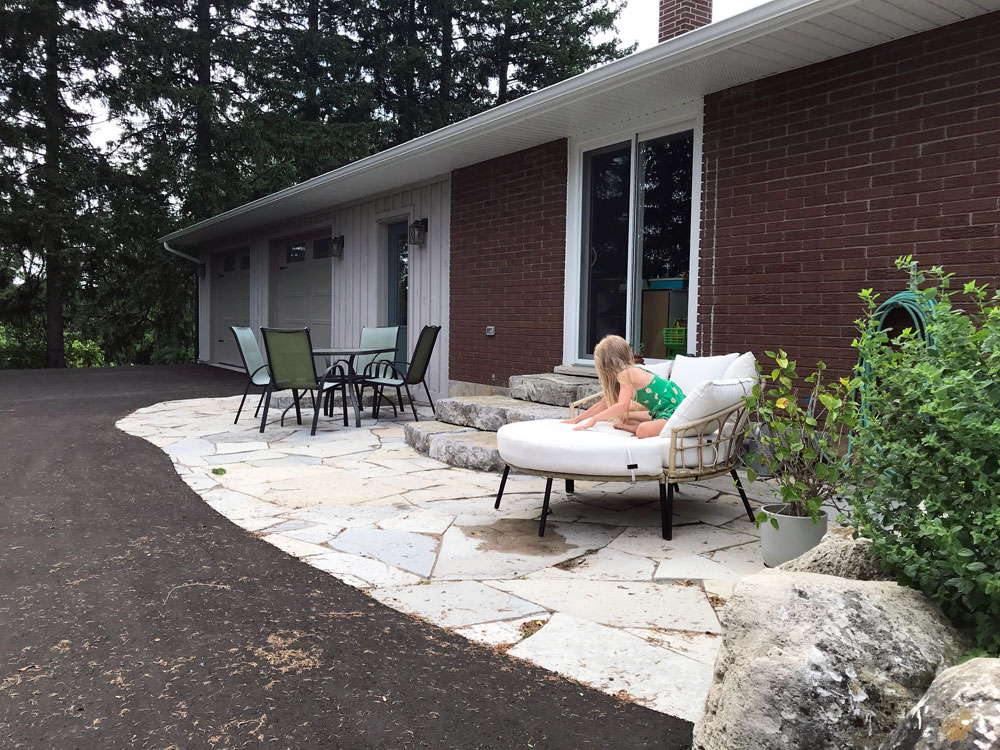
When I started the garage renovation in 2021, I didn’t fully consider how one project leads to another. We had a great garage and mudroom inside the house, but what about the outside? The patio finished off one section and gave us steps to the living room’s sliding glass door and the mudroom entrance. But I really wanted to pave the driveway too.

A long driveway was on my initial wishlist for the farm and I love our gravel laneway with the grassy middle, so there was no way I was touching that. But a bit of asphalt closer to the house accomplished a couple of things for us.

It made plowing and shoveling easier in the winter. Gravel is not fun to shovel, and it’s even less fun to rake out of the grass once all the snow melts.

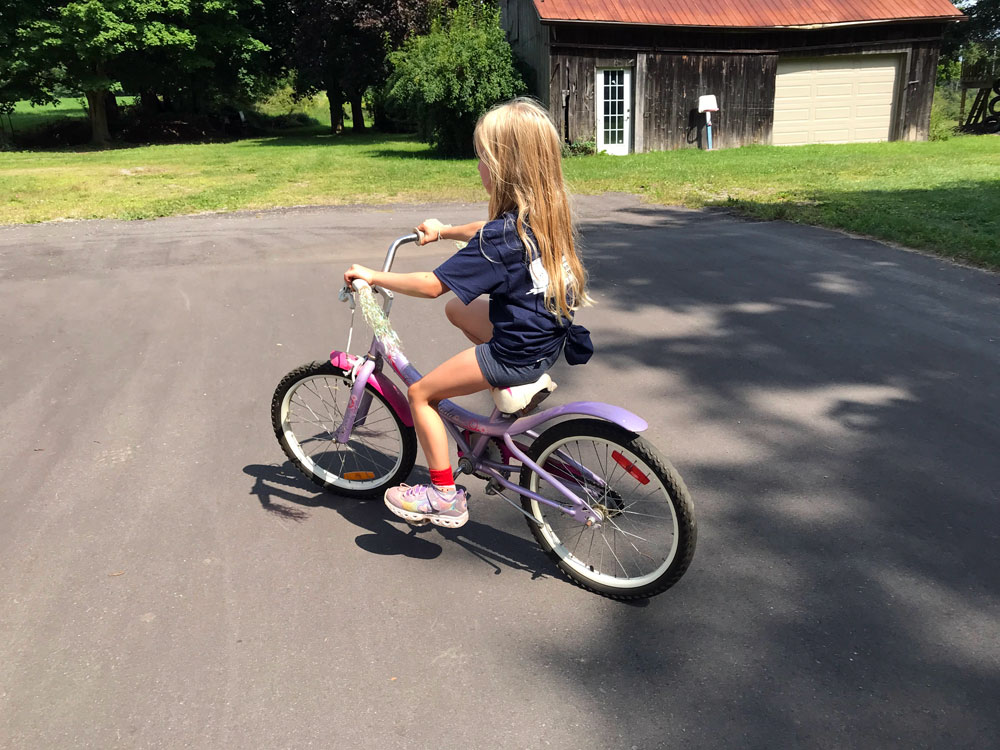
It gave Ellie a smooth place to play. Scootering, bike riding and chalk drawing all work much better on asphalt than gravel.

It lessens, somewhat, the dirt and detritus that is tracked into the house.

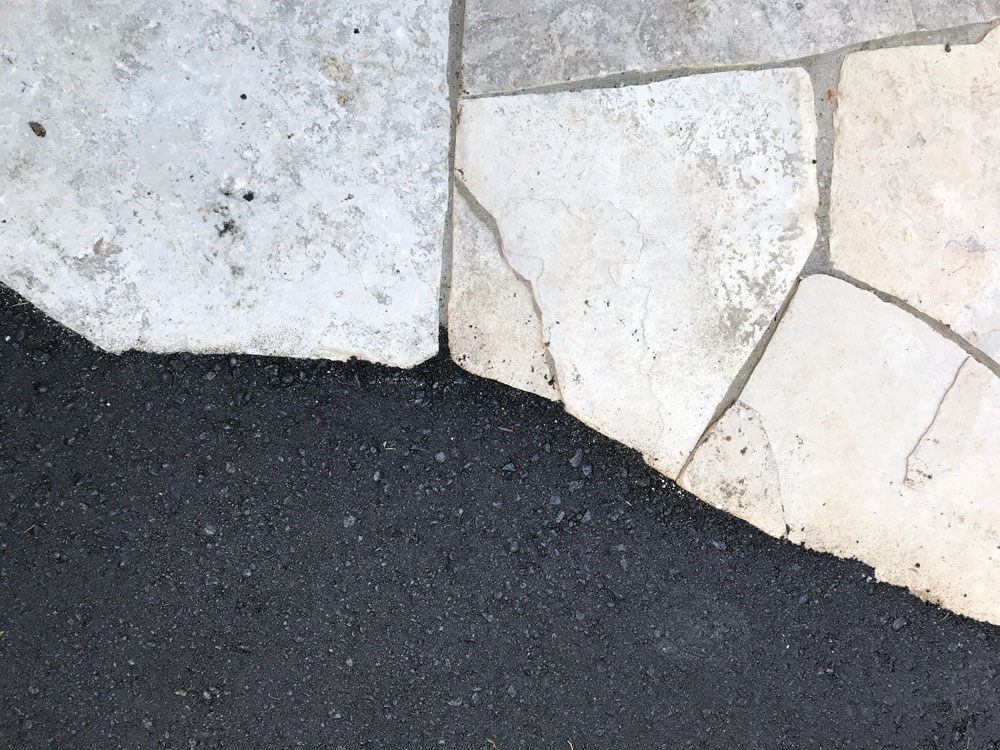
It stabilized the edge of the patio.

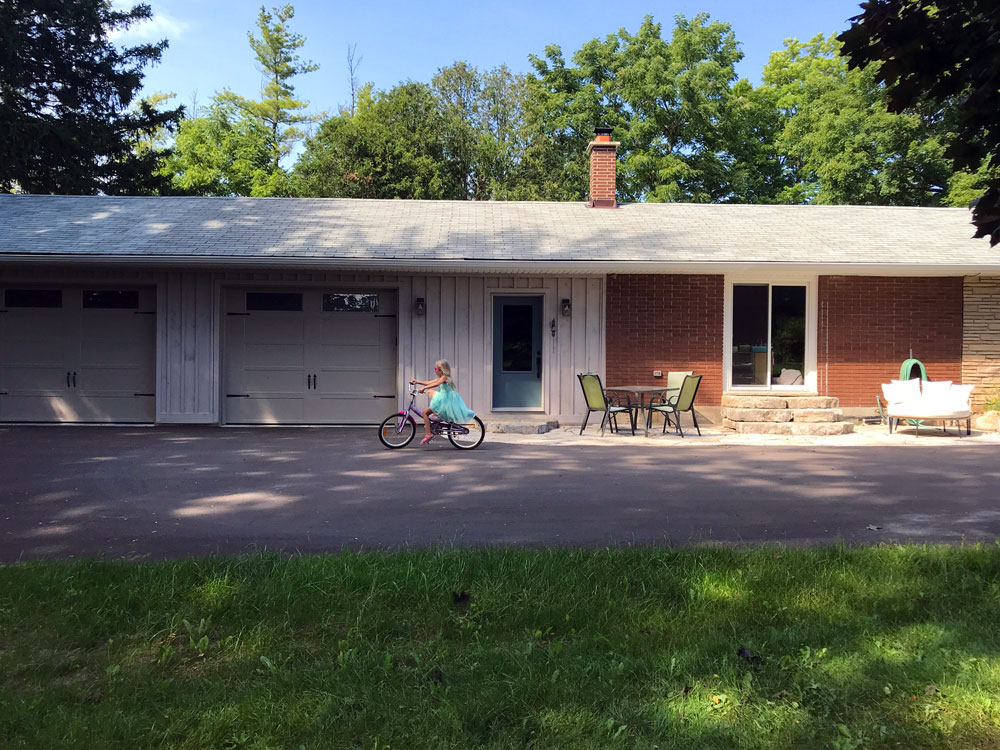
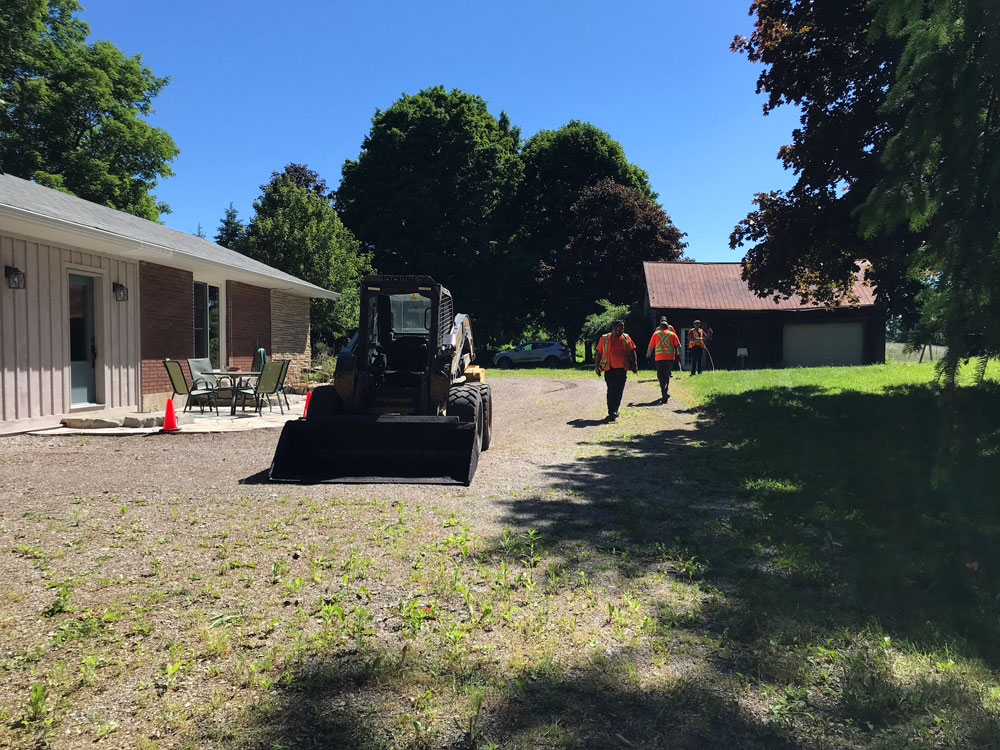
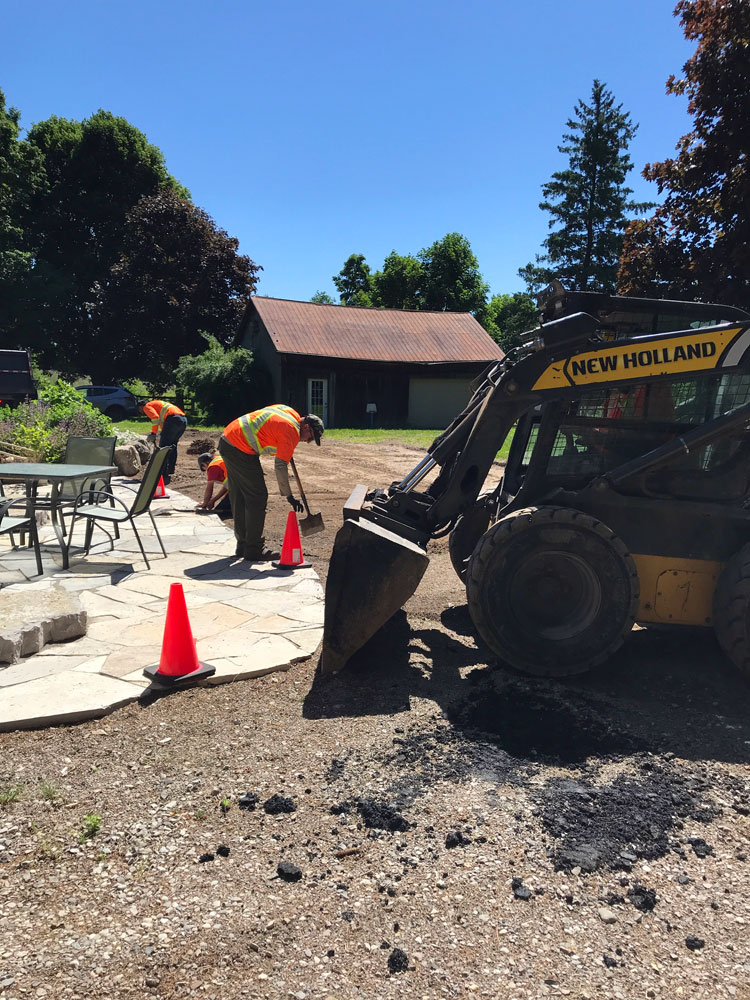
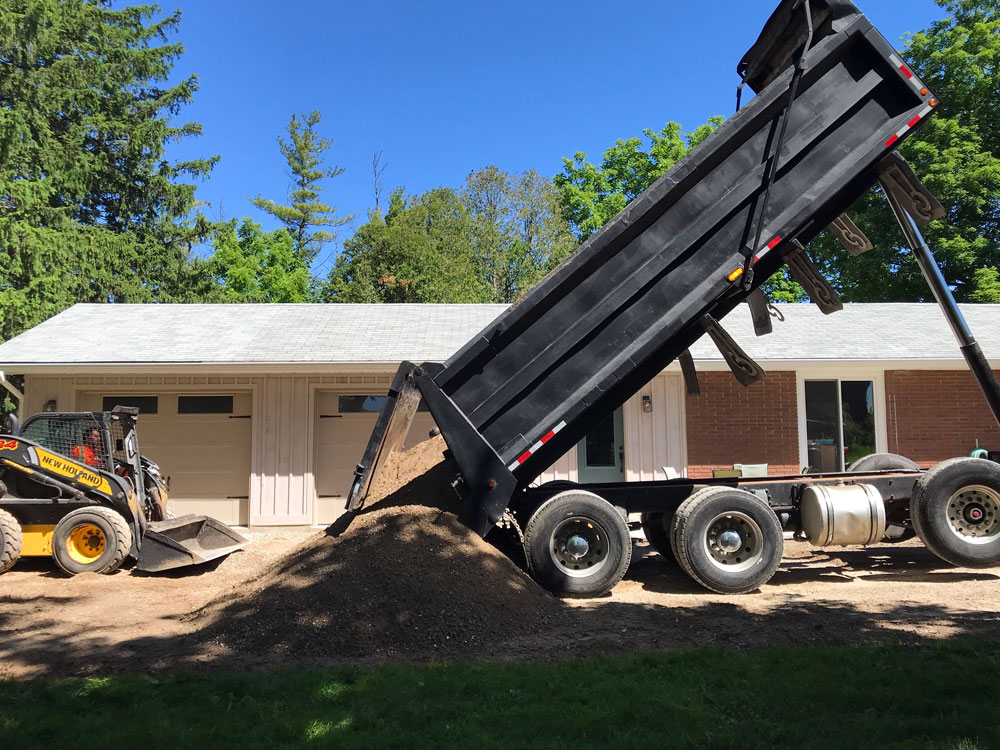
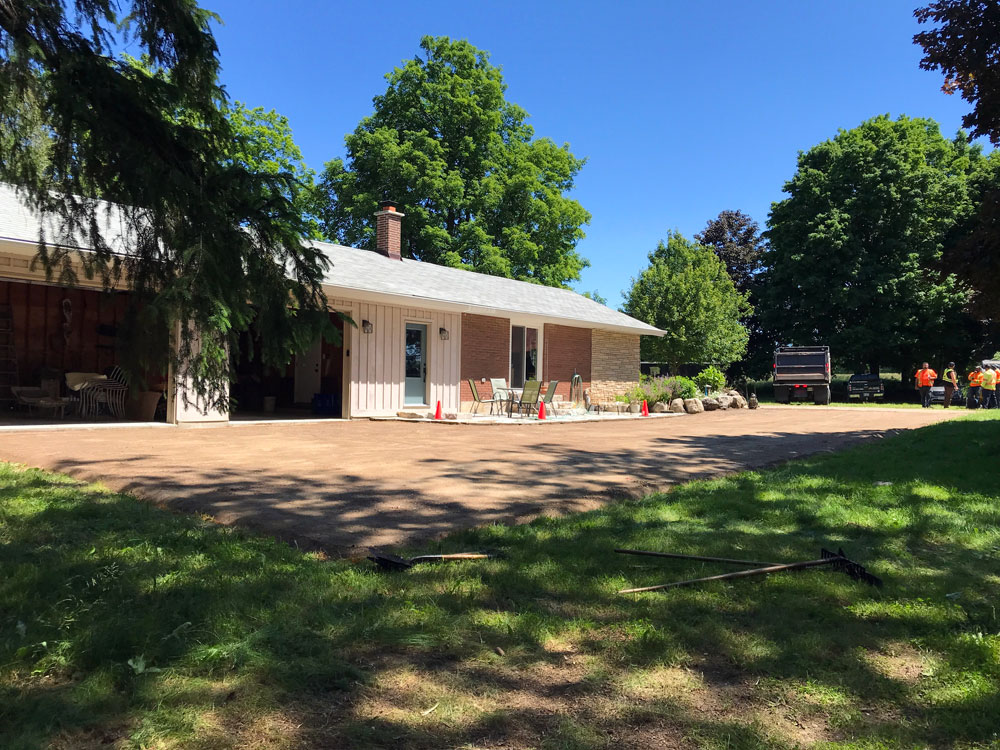
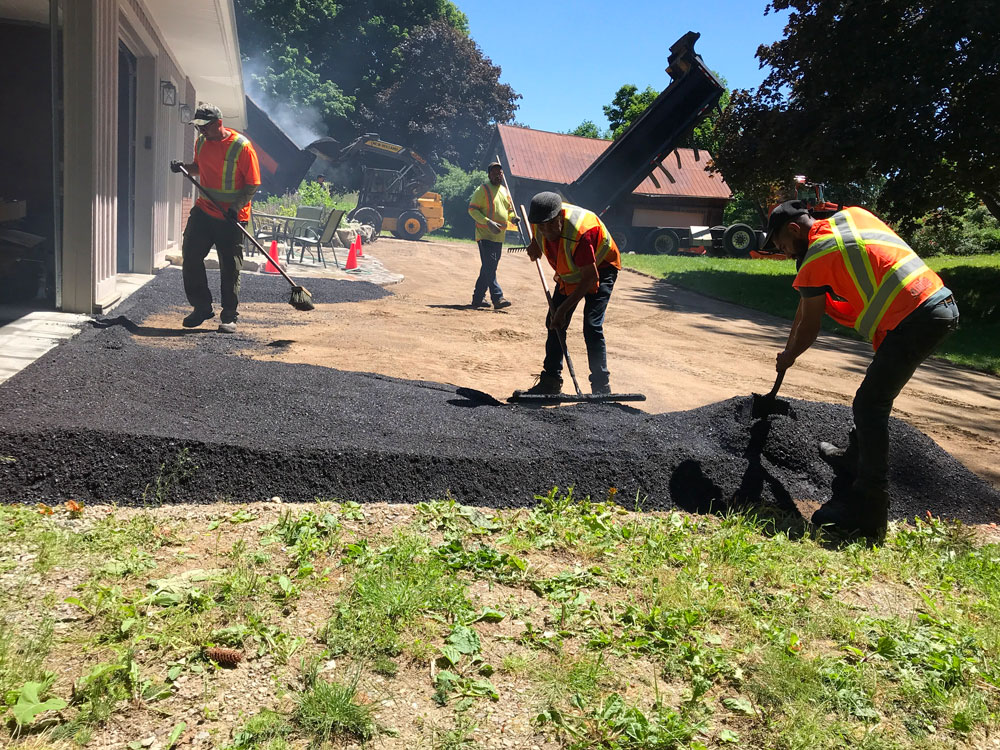
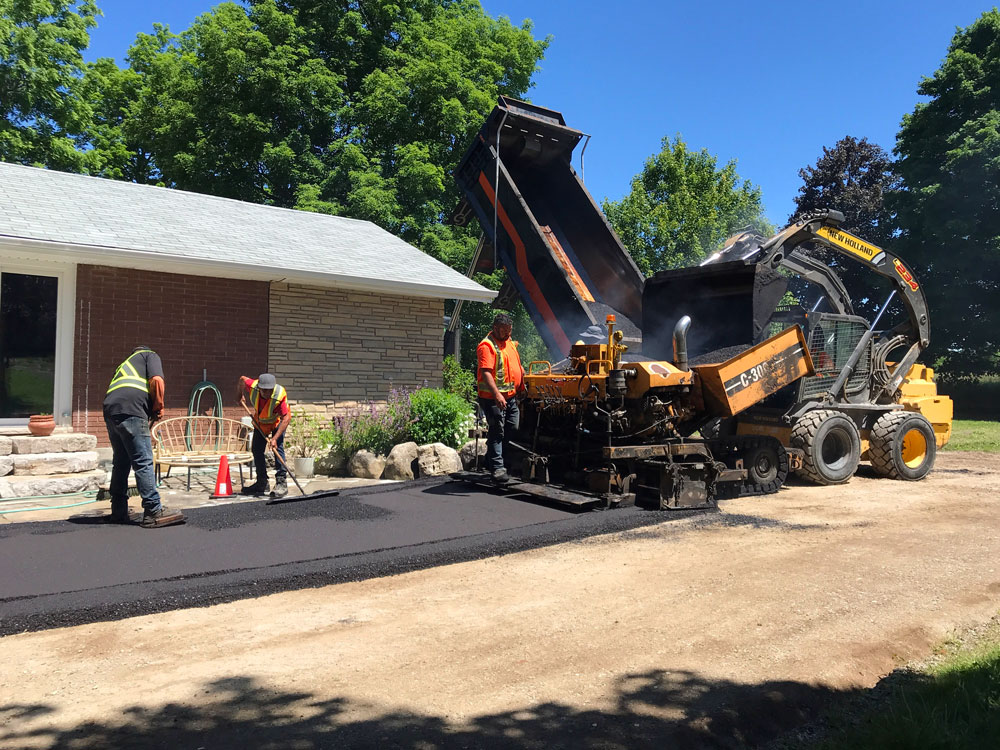
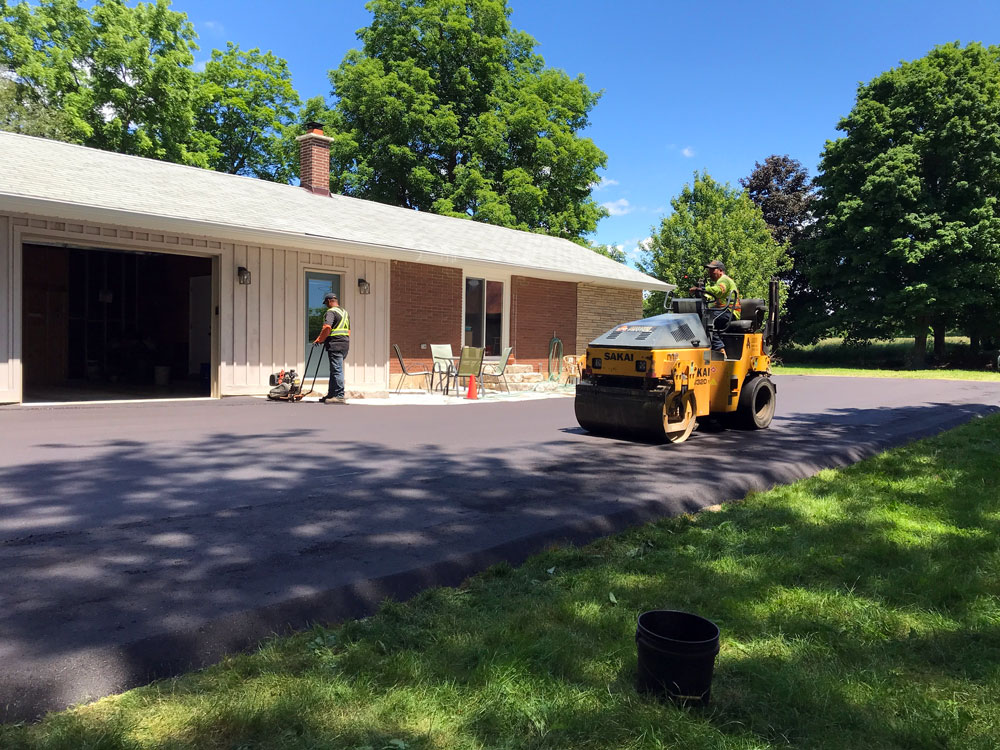
So this spring I hired some pavers (Alliance Paving for any locals). They cleaned up the gravel (so many weeds had invaded), mapped out a square driveway (the original had been dug on the fly by a skid steer with very little measurement), graded everything (more gravel on top of the 250 tonnes we added during the garage reno) and laid fresh asphalt.

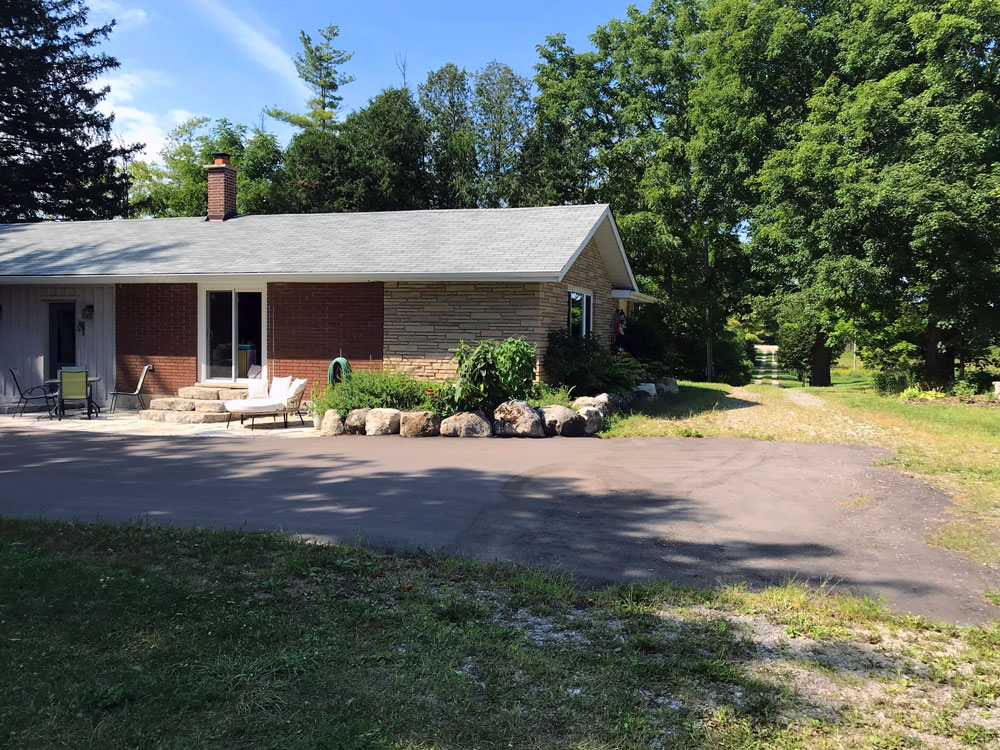
I decided to pave from the spice garden to the edge of the garage. The corner where the driveway section meets the lane was a logical stopping point.

This gave us plenty of room to pull in and out of the garage. It also gives a long runway for Ellie to ride, run, roll or rain dance.

One lesson learned, we paved when the weather was very hot. We did not drive on the driveway for a full week (longer than our contractors recommended), but the asphalt still wasn’t fully set and we have some scuffs and divots in the surface already. Some are from turning the car wheels as I back out of the garage. A couple are from Ellie’s bikes. They’re minor and I’m not upset about them, but when we pave again, I’m going to wait until fall when the weather is cooler.

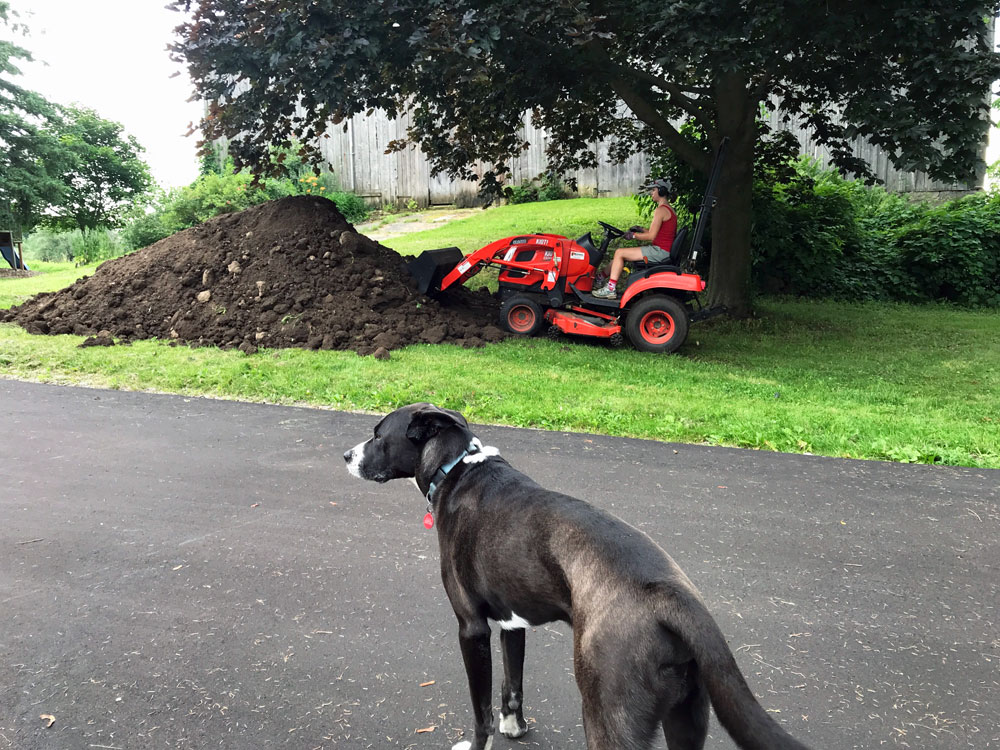
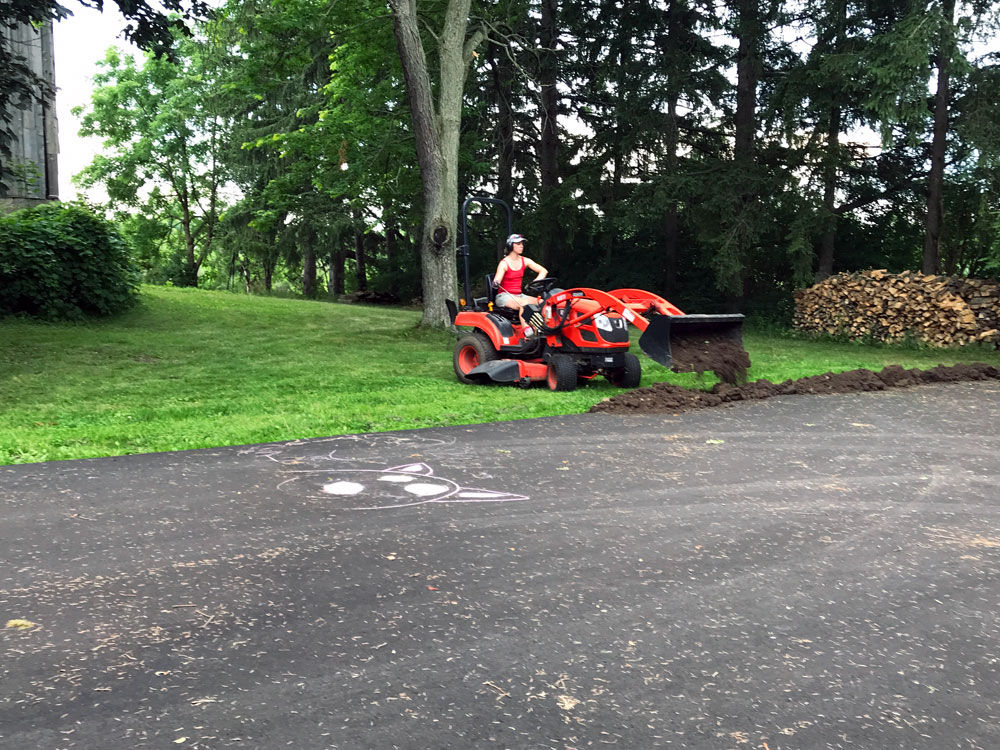
The surface of the driveway ended up several inches above the lawn, so our pavers recommended building up the dirt around the edge. Our farmer arranged for a truckload of topsoil (another dump truck, yay), and I spent a few days on the tractor spreading it around. Ellie followed behind with grass seed.

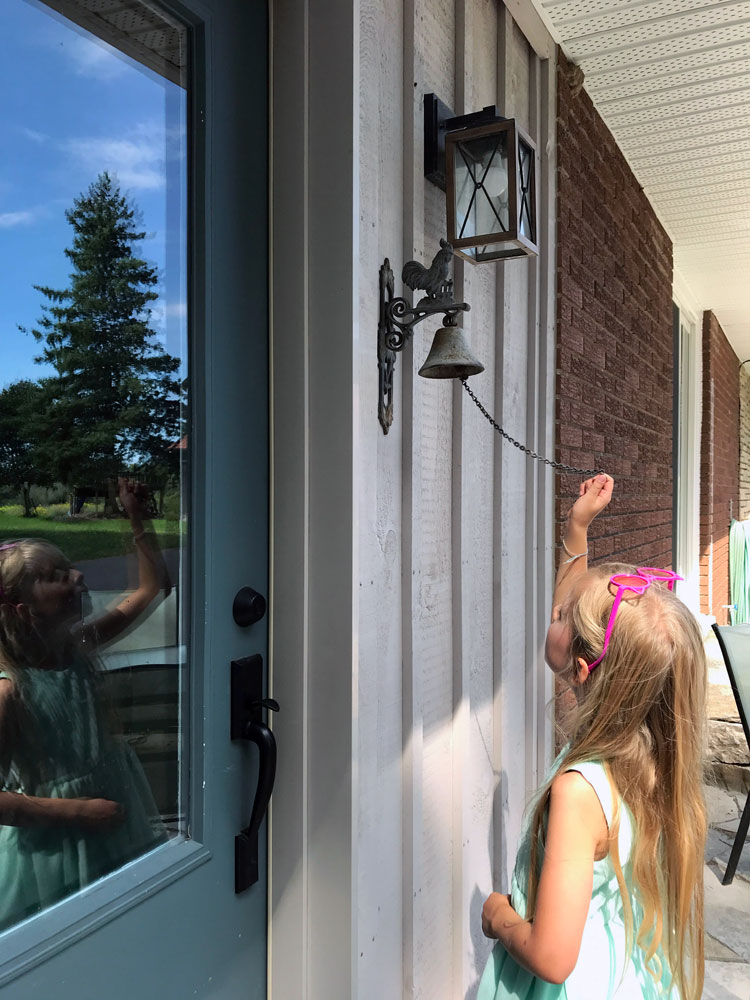
The grass has now sprouted. I added a doorbell (it used to be at the front door, but it kept falling off the stone). And this project–the whole garage/mudroom/patio/driveway renovation that we started 3 years ago–is complete.

(It’s also been the site of a major milestone when Ellie learned to ride her two-wheeler this summer.)

Have you had any big projects or milestones this summer? What kind of driveway do you have? Do you have any projects that continue longer than you expect?

Hay 2024

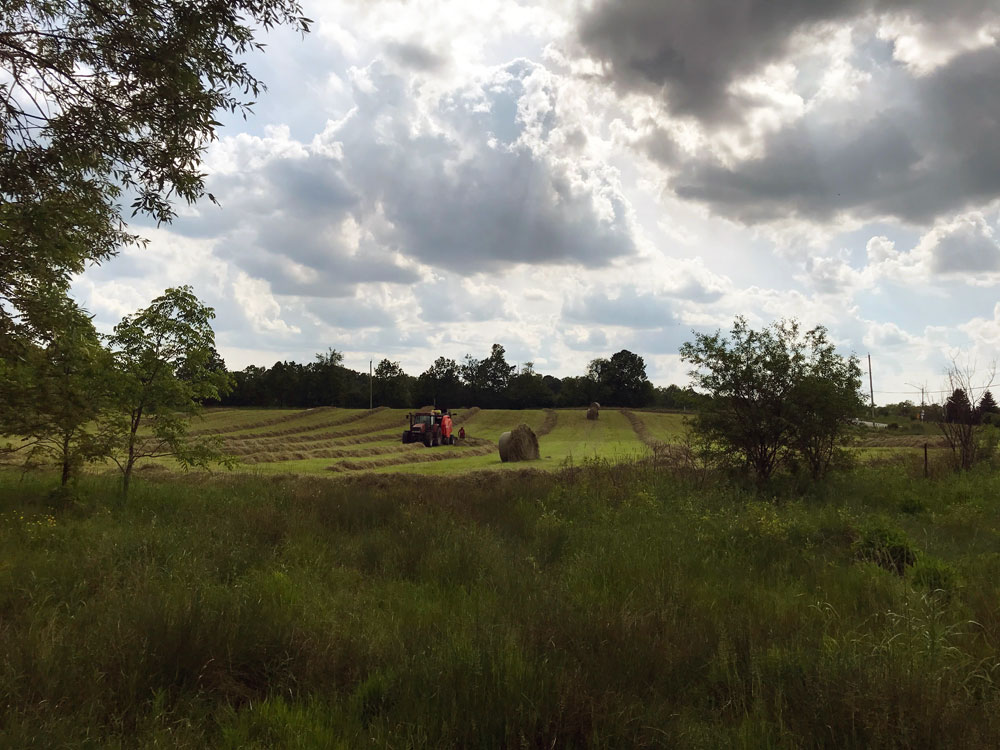
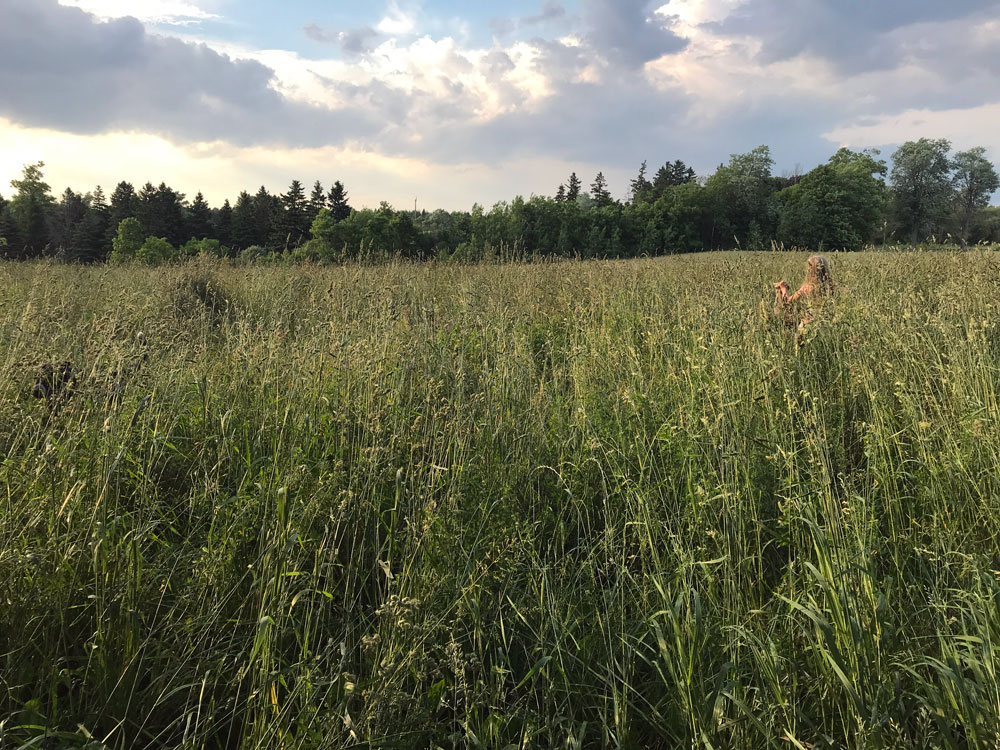
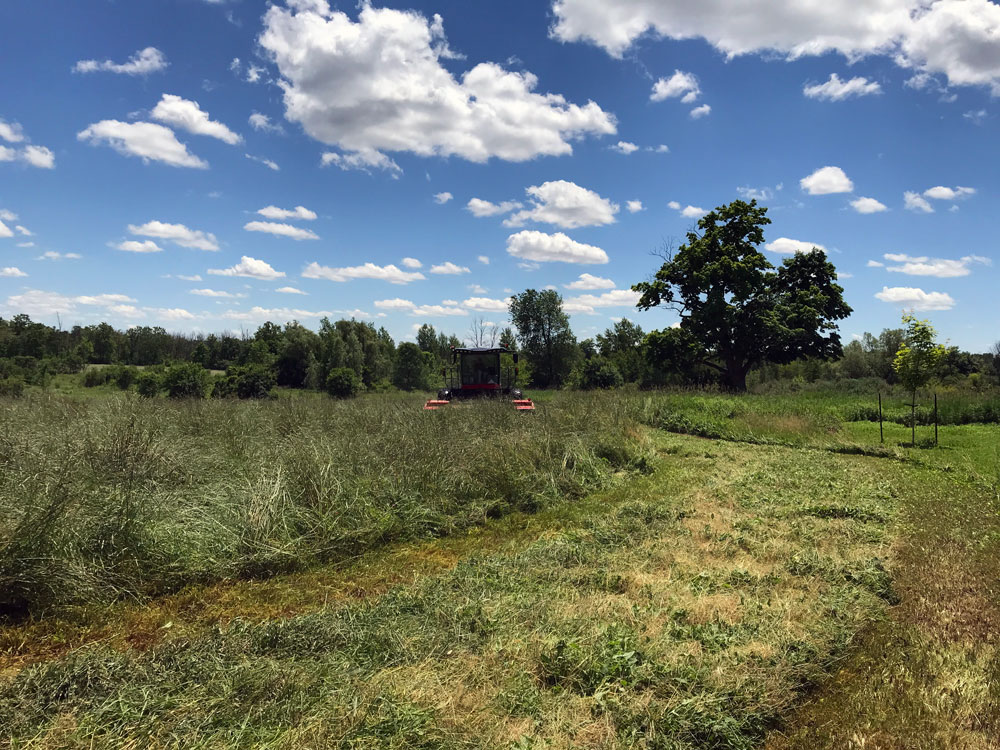
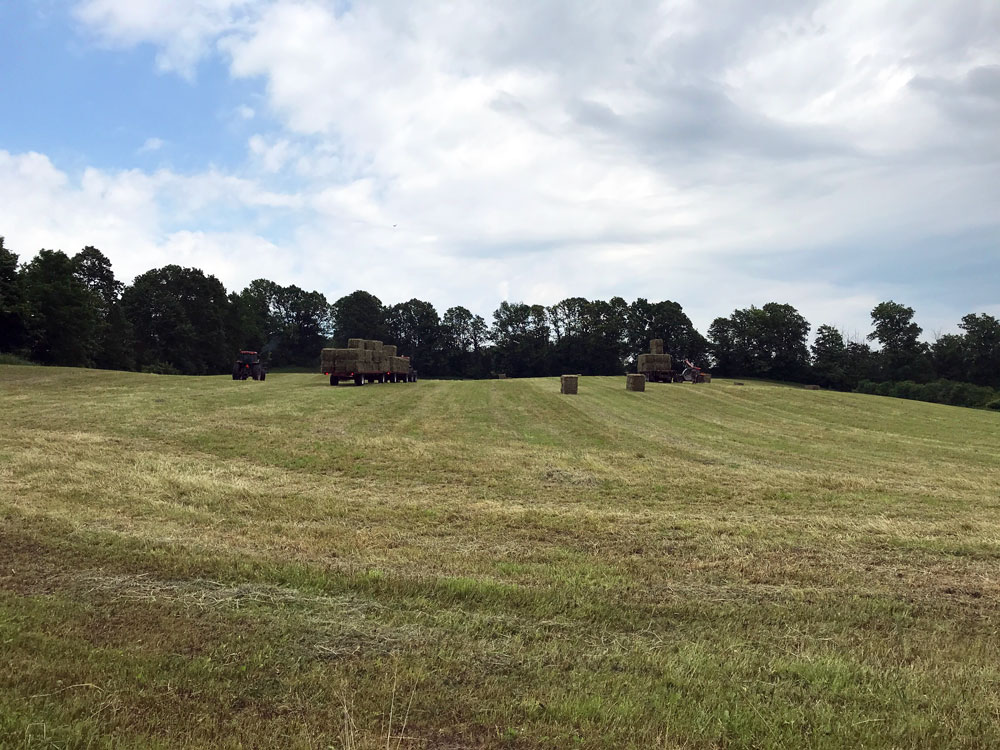
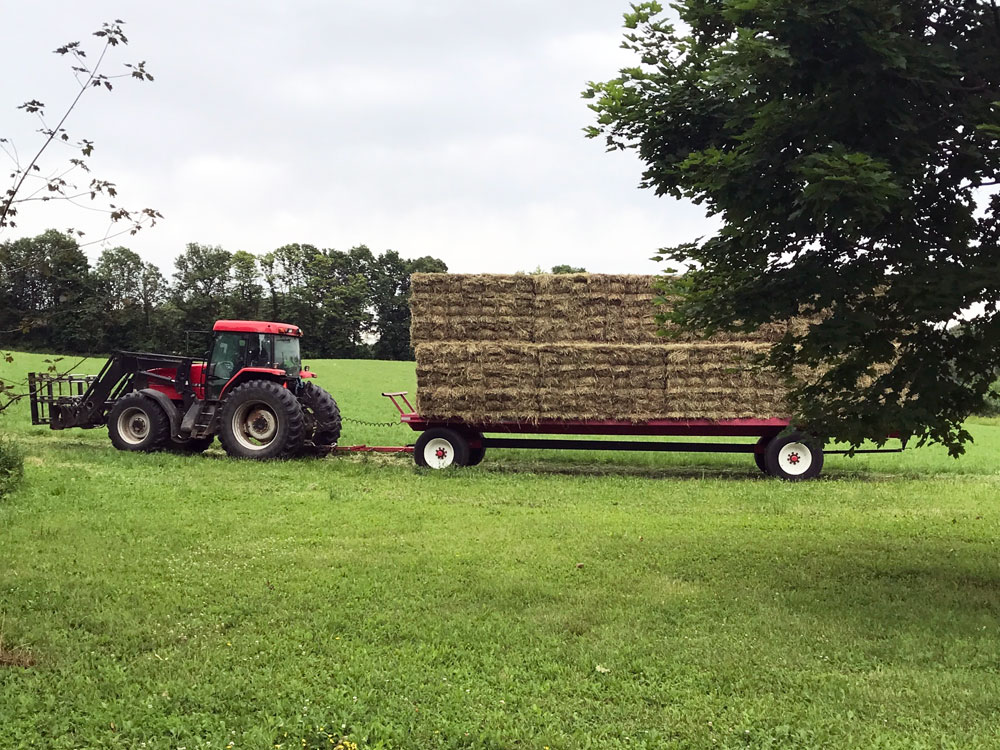
Haying is an experience that is always special and fun for us, even after 13 years of harvests. This year, haying has been hard. We’ve had lots of rainy days (and some torrential days most recently). More than enough to make the grass grow like crazy, but not enough time in between for our farmers to cut, dry and bale.

Our farmer cut our first field at the start of June. They finally pulled the last hay wagon away at the end of the month. In between we watched them battle equipment, race the rain, bring on more help, and work very, very hard.

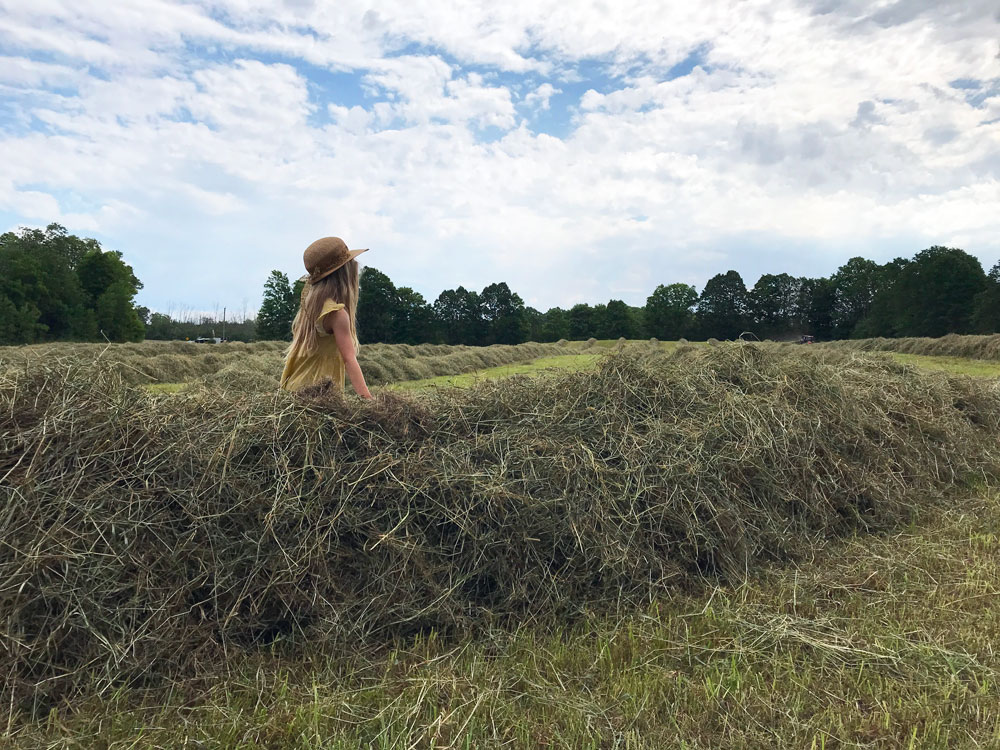
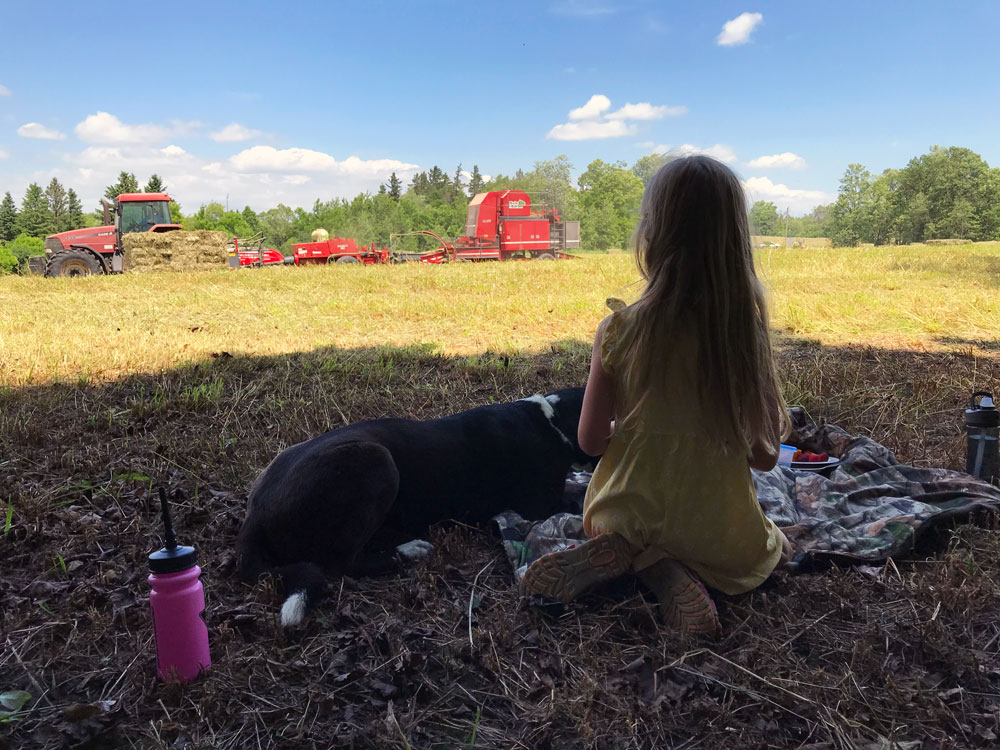
Ellie and I have measured the grass, speculated when it might be cut and then when it might be baled, assessed whether the hay is dry, sympathized with and appreciated our farmers, climbed on hay bales and then jumped off, watched the tractors, balers and wagons, been grateful for this land, and soaked up the experience.

What harvests have you been watching where you live? Anyone else having a wet summer?

Firewood and a father

Firewood is Matt’s Dad’s thing. He heats their house with wood and has a huge, carefully constructed, diligently managed, well-sheltered woodpile. He also has all of the saws, axes, sledgehammers, wedges, and a wood splitter to prepare that firewood–and the experience to use them.

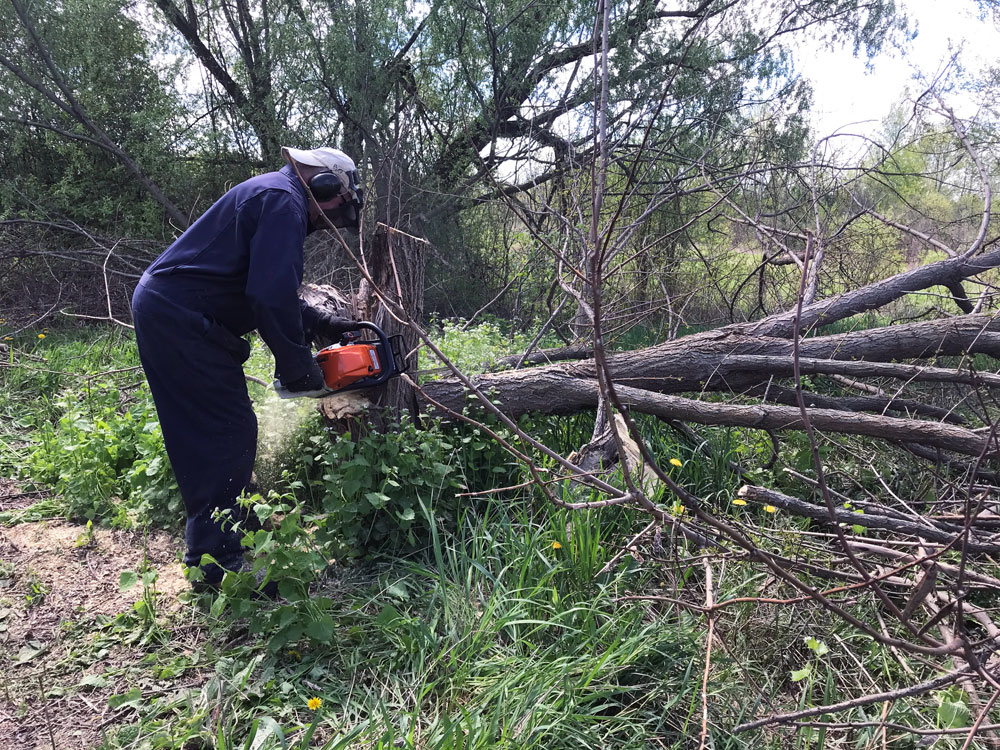
Man in coveralls and earmuffs cutting a tree with a chainsaw

When we ran out of firewood this spring, he immediately committed to restocking us. (He might have been a bit horrified.)

All of the firewood we have ever had at the farm has come from Matt’s Dad’s efforts (and ours). In fact, on our second day of owning the farm he cut his first tree here and one month into the farm we had our first woodpile. There have been lots and lots of trees and cutting and splitting and piling since then.

A few weeks ago, Matt’s Dad and I had a big firewood restocking day. I have always been the gopher when it comes to cutting wood. He saws. I carry, hold, split and stack. He’s offered at various points to teach me to chainsaw, but I haven’t taken him up on it. I finally did.

At first I was uncomfortable. I am very conscious of how dangerous chainsaws are. The saw was also super heavy and felt awkward for me. (Side note: He is much stronger than I realized.) But Matt’s Dad was patient and thorough, and he set me up and gave me the confidence to stick with it.

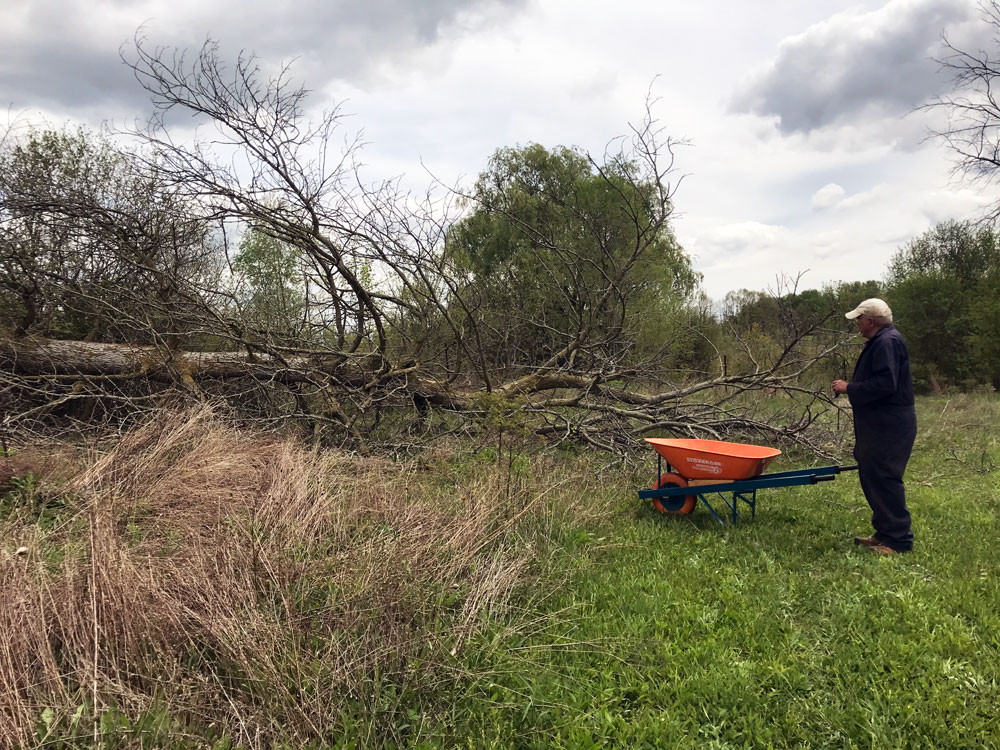
We started with three smaller trees that had died or blown down. Then he spotted a huge dead ash tree. As I kept cutting the smaller trees, stopping now and then to load the trailer, he went for the big one.

It ended up being a full day of cutting–for both of us. Three trailer loads and some very, very big pieces of wood. It was one of the best days I’ve ever had with Matt’s Dad.

Man with a wheelbarrow looking at a large fallen tree
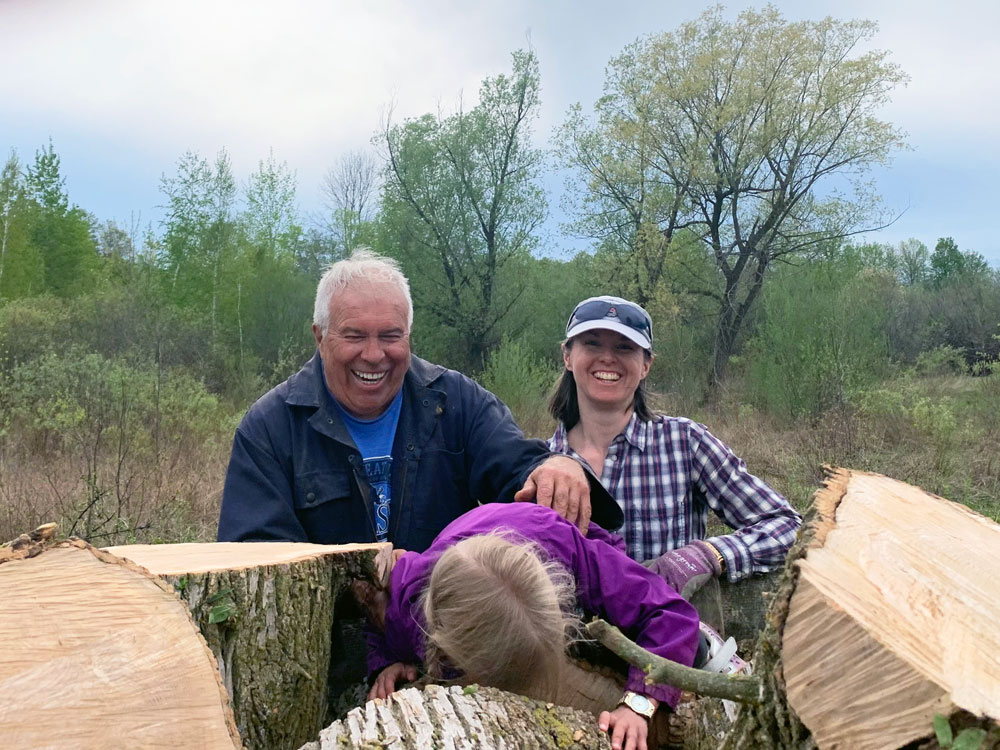
Man and woman smiling while standing behind a pile of large logs

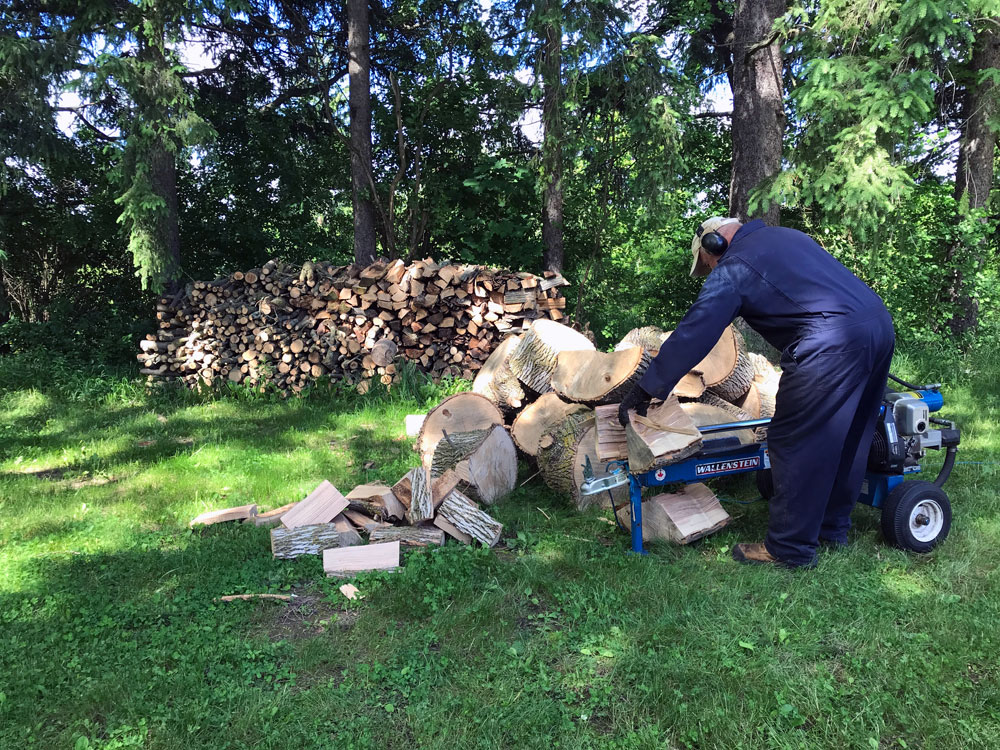
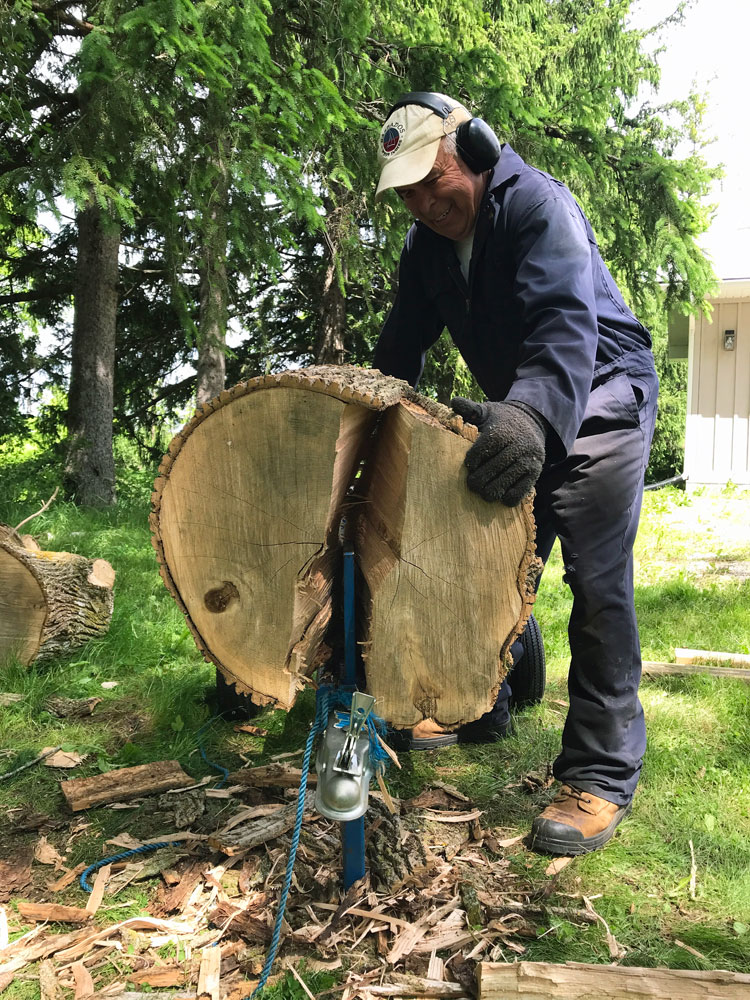
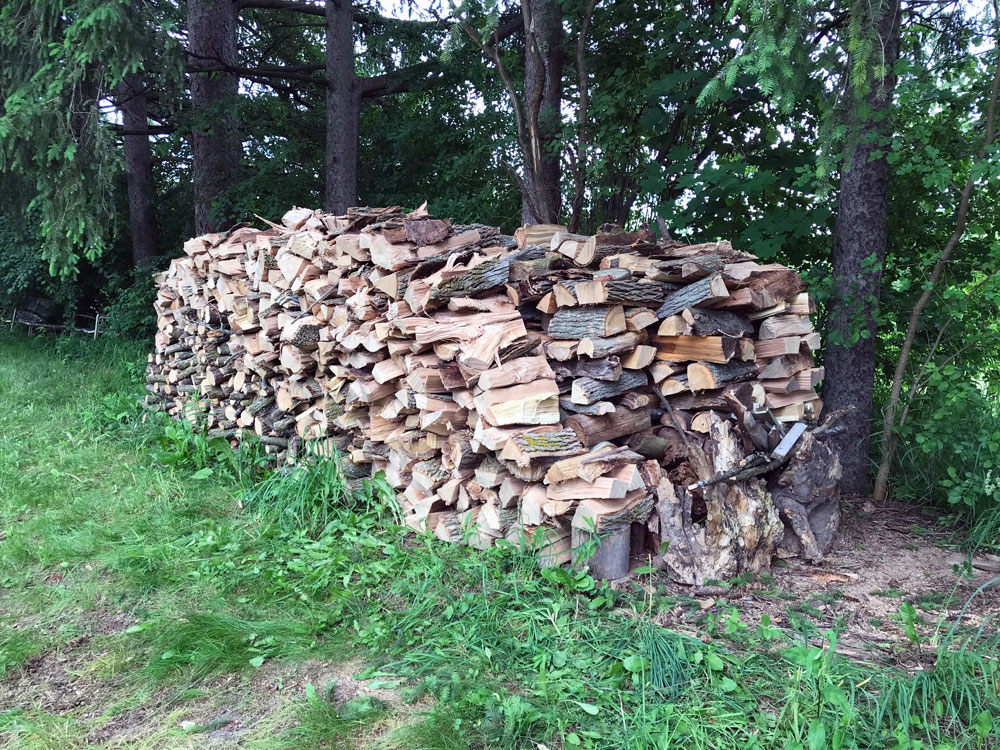
Last weekend, he came back and finished the job, splitting all of the big pieces while I stacked the logs in the woodpile. We are now fully restocked with enough firewood to last for probably two years.

Man splitting logs with a wood splitter in front of a pile of firewood
Man splitting a large log in half on a wood splitter
Stacked firewood

For Father’s Day, I want to celebrate Matt’s Dad. He does so much for us. Just like Dad’s are supposed to. He watches out for us, considers us, helps us, makes sure we have what we need, teaches us and spends time with us. I am very grateful to have him in our lives.

Pick and choose

When it comes to work on the farm, I often use the phrases “pick and choose” and “cut my losses.” I can’t do everything. This is a reality of life, whether you have a farm or not.

When I picked the barn cleanout as my priority for this spring, I knew the timing would coincide with garden prep season. The result is that the gardens have had very little attention.

I managed to pretty much prune the raspberries (something I usually do in the fall). I weeded a little bit around the rhubarb, asparagus and raspberries. And when mowing season started I pushed the mower into the vegetable garden. I have also spent a bit of time in every flower garden, but haven’t made it completely through any of them.

It is time to pull out another phrase and cut my losses. So I’m crossing the vegetable garden off my list for this year. We had a beautiful asparagus harvest–our best yet. I’m hoping for good raspberry and grape harvests again. But that’s it. I’m not going to plant the garden this year.

I will mow as much as I can to avoid it being completely overrun. I will try to weed the raspberries every so often so that we can get to them to pick. But I don’t feel up to doing more right now.

This is where picking and choosing come in. I’ve picked my priority. I can’t choose everything. So in making my choice, I let other things go–cut my losses.
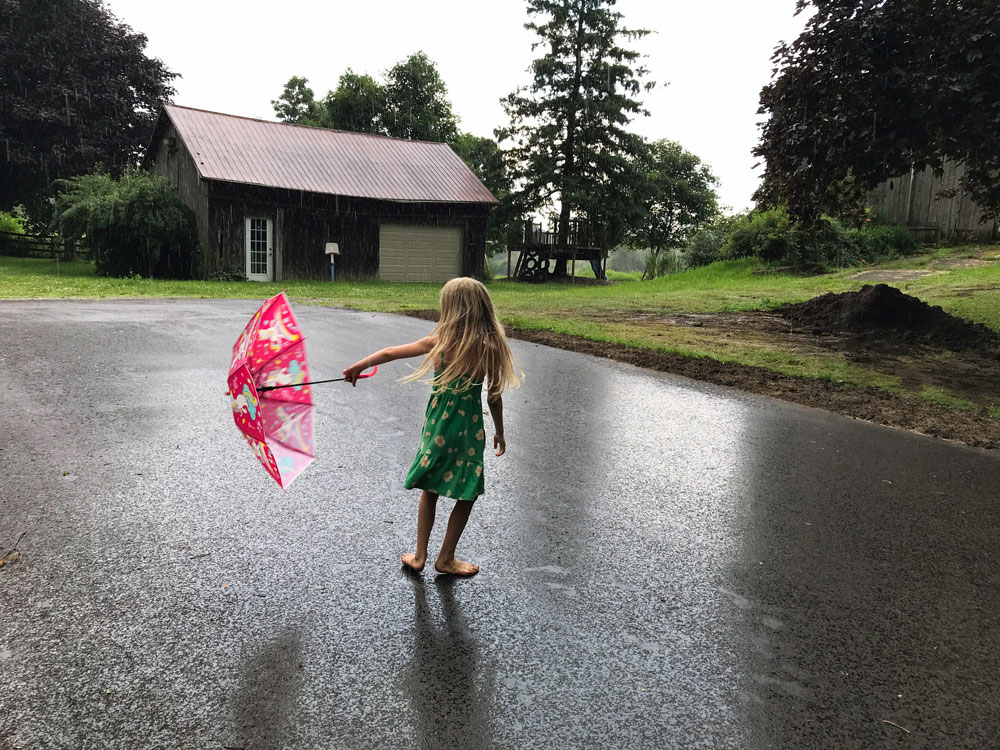
When I want to put my hands in the dirt and make some progress outside, I have plenty of flower gardens that can use the attention. And Matt’s Dad has stepped up and offered Ellie some space in his garden. She loves growing things, but she’s not into the work of a garden yet, so help from Matt’s Dad means a lot.

I’m a bit disappointed. Every year I hope that I will make some headway on the garden and get it to a point where it’s more manageable and productive. To miss another year pushes that goal farther out again. But a garden takes time, and this year I don’t have that time. So rather than keeping it on my list and letting it take up space in my brain, I’m crossing it off. As I do that, I’m also a bit relieved.

Someday we will have a beautiful, productive garden and the time to care for it. But not this year.

Are you doing a vegetable garden this year? How are your gardens growing so far? Is anyone else taking things off their to-do lists? Or perhaps adding something new?

A new tool for the farm

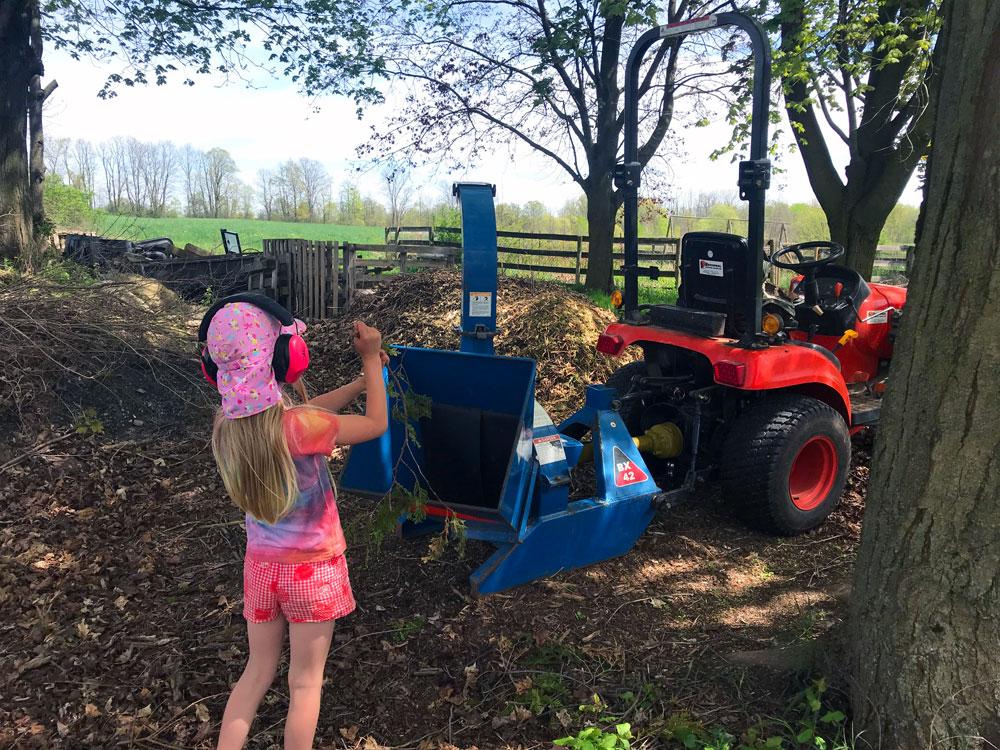
Last week Ellie and I put a new-to-us tool to work for the first time. Our own wood chipper.

You may recall that two falls ago (2022), I borrowed our farmer’s wood chipper (and one of his giant tractors to run it). A little while after that, I was at our tractor dealership, and our sales guy said, “Hey did you ever get that brush pile cleaned up? We have a used chipper here, and your tractor could probably run it.”

Well, the brush was cleared, but I knew there would be more to come. After thinking about it for a few days (and with some encouragement from my sister), I bought it.

But up until this spring, I still hadn’t used the chipper yet. Though I had been rebuilding the brush piles.

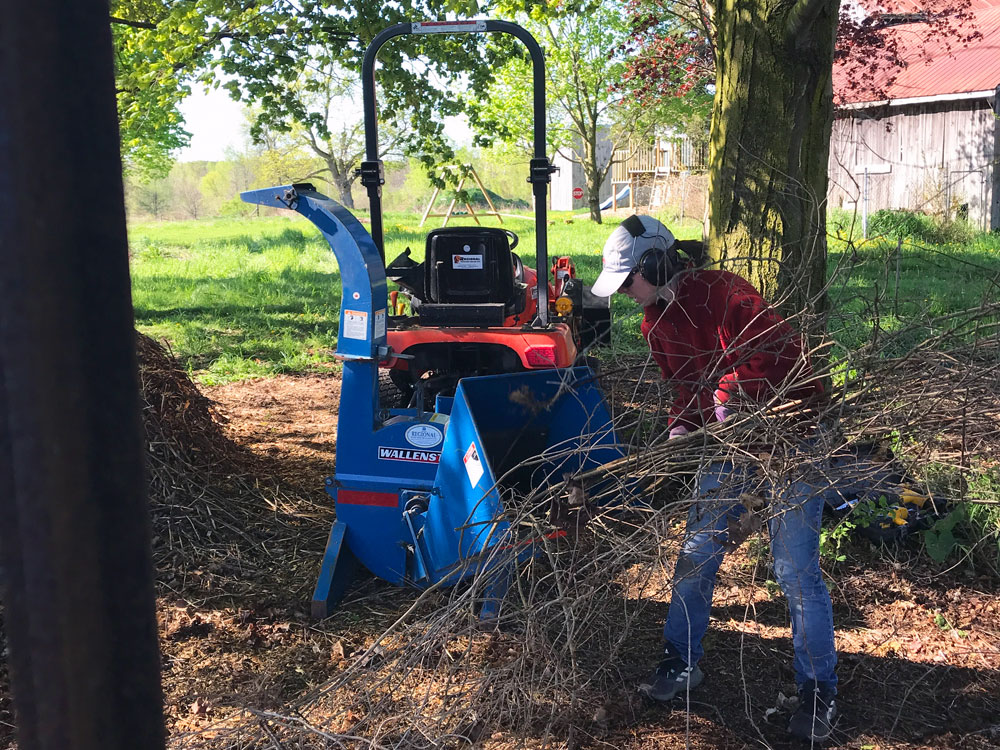
So finally I asked our sales guy to come out, and he helped me hook up the chipper and made sure everything worked properly. And then we blasted through the branches.
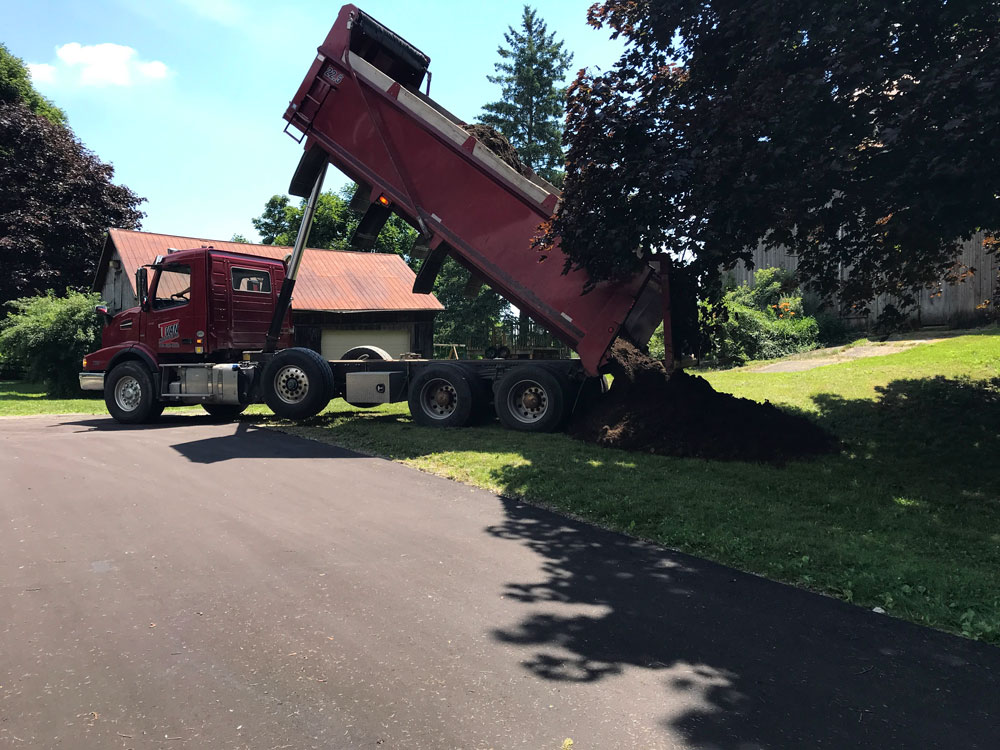
The chipper worked so, so well. It handled big stuff, small stuff, green stuff, dry stuff. The chips are nice and small (our farmer’s chipper let a lot of sticks through). And it gives us great mulch to use in the gardens–much better than burning the brush as we’ve done in the past.

For anyone interested in the details, the chipper is a Wallenstein BX42. It can handle branches that are up to 4 inches, though at our farm that’s firewood. I probably chipped a few 3 inch pieces, and they went through just fine. Our Kioti CS2410 (24hp) tractor runs it easily.

The chipper is a useful attachment, and I’m glad that we have it. It’s a good way to clean up branches, which we always have here at the farm.

Do you have any new tools at your house? Do you use mulch in your gardens? Who else buys something, but then takes a while to use it?

Firewood restock

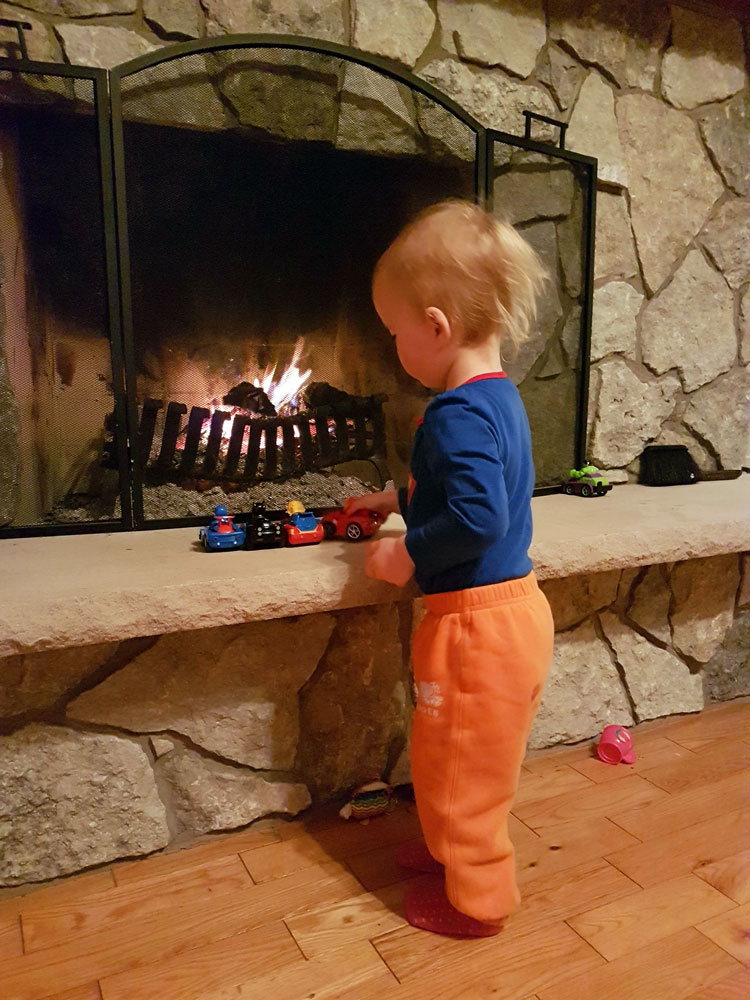
Our fieldstone fireplace is a huge feature in our home. Often through the winter, I would set up in the living room for the day and work in front of the fire. Ellie has come to love the fire as much as me. If it wasn’t going when she came home from school, she would usually want to start one (and she’s become very good at lighting it herself–with supervision).

(Flashback to fluffy baby hair. She still loves to line her toys up on the hearth.)

Our fireplace is just for atmosphere. It puts out a bit of warmth, but our geothermal heats the house. We usually only have fires in the winter. Fire season for me is November to Easter.

This year we didn’t quite make it to Easter because we ran out of wood. I didn’t think this would ever happen. Before we redid the fireplace we had a huge stockpile of firewood (starting just one month into owning the farm and added to again and again).

Moving the wood pile so we could build the garage took two days. Restacking it was also a big job. I think that made me cautious about adding to the woodpile, so I haven’t for the last few years. Matt’s Dad would come out, cut trees, ask if I wanted any wood, and I always said we had enough.

Well, we could have used one extra trailer load this spring.

As of a few weeks ago, we had a small pile of apple wood too fresh to burn and a bunch of punky logs. So this year’s fire season ended for us.

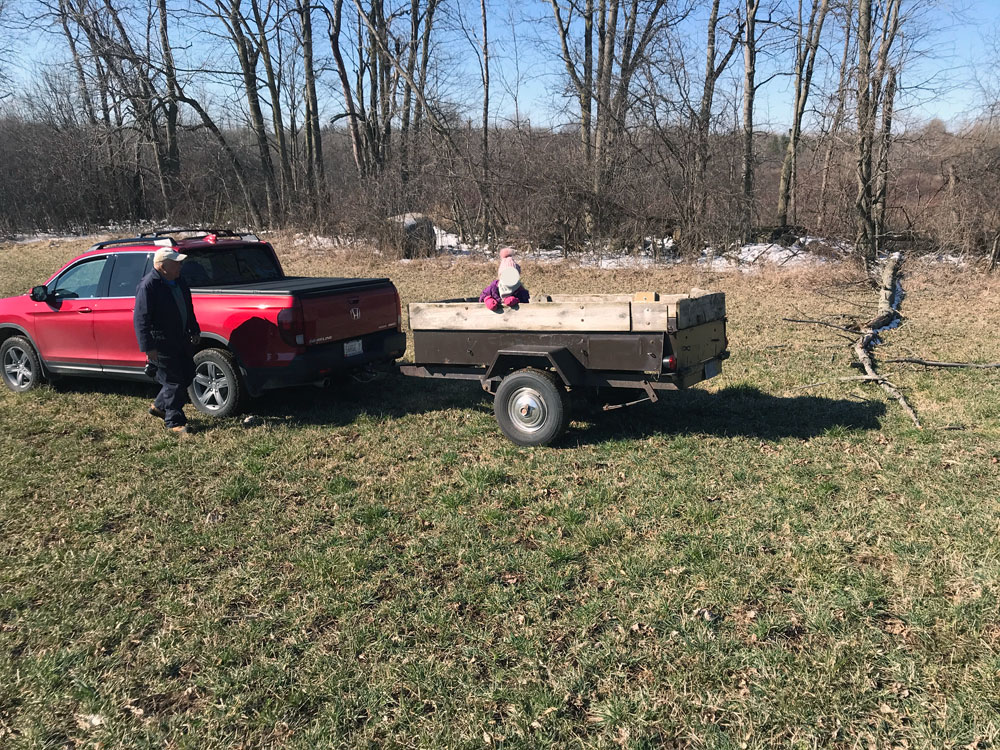
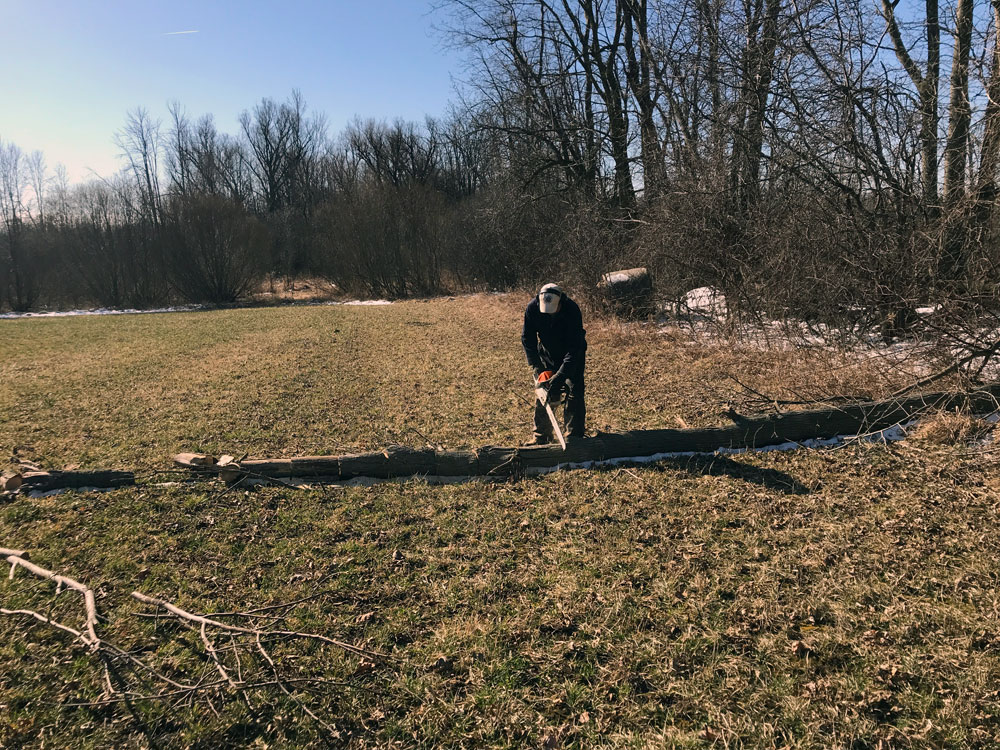
Now we are onto rebuild-the-woodpile season. Matt’s Dad came out last weekend to start spring clean up–trees always come down over the winter, and I want to clear them out of the fields before the grass starts to grow. The first trailer load stayed at the farm. The second went to his house.

When Matt’s Dad came for Easter lunch, he brought his splitter with him and he chopped all of our new firewood with an assist from my nephew. Isn’t he a great person to have around?

(In my journey through the archives as I was writing this post it appears that previous Easters have also been about firewood.)

We’ll need to do this a few more times–I estimate we’ll need three or four more trailer loads to get to my ideal state of three rows–but tree maintenance on the farm is ongoing. We’re on our way to a new fire season later this fall.

How did you spend your Easter? Anyone else maintain a woodpile? Have you started spring clean up yet? Who loves a wood burning fire? Who are your helpful family members?