Paving paradise

I love the town that I grew up in.

That town doesn’t exist anymore.

It’s not like the economy collapsed and everyone moved away. The opposite happened: everyone moved in.

New housing developments on the north, south, east and west edges of town have caused a population boom. And more houses are being built everyday. In fact the population of my formerly small town is forecast to double to more than 36,000 people over the next 10-20 years.
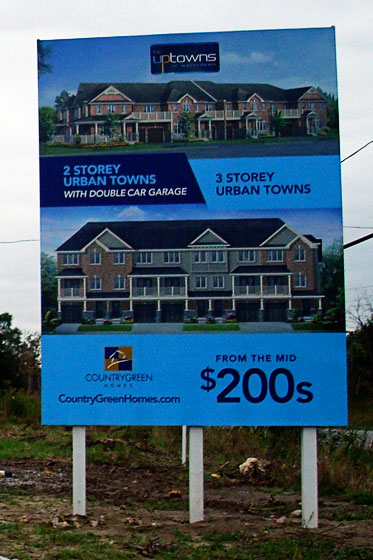
SIgns for a housing development

The result of all of this growth is predictable: traffic gridlock. My parents, who still live in the house I grew up in, make a point of not going out during dinner time because they spend all of their time sitting in the car not moving.

Last week, our local paper reported that plans for a long-debated bypass road have been approved. The road will be constructed on the north edge of town and is designed to funnel people around the town core.

Great in theory. Obviously much needed. However, the north end of town is a wetland.
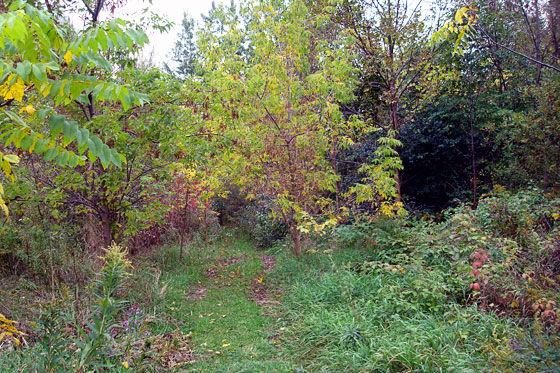
Path through a forest

The article in the paper said that the provincial environment minister “was satisfied the city had developed measures to mitigate the impact on a wetland.” Ummm, you’re building a road through wetland. I don’t think there’s any way you can mitigate the impact of that.

Watching all of the new houses being built in my town was one of the things that solidified my decision to move to the country and to buy the biggest piece of property I could. I didn’t want to be part of suburbia. I wanted to preserve the world and protect it.

Half of our property is wetland. It is restricted by the local conservation authority. So is the land where this new bypass road is going to be built. Governments and municipalities put these protection measures in place and then ignore them in the name of convenience and progress.

Everyday I drive past my childhood town. I see the massive construction developments that are adding thousands of new houses. I see the power centres that have pulled shoppers away from the independent businesses in the town core to the big box stores on the fringes. I see the roads that are paralyzed with more cars than they were meant to handle.
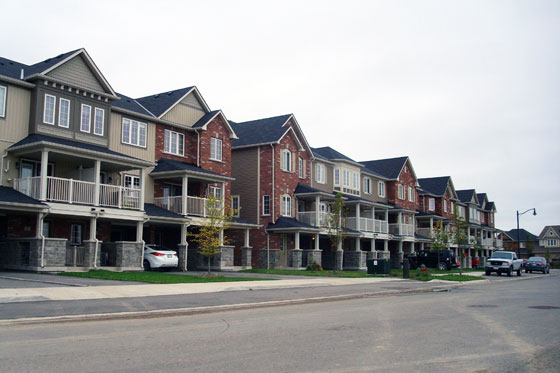
Suburban town homes

I see little thought to intensification, public transit or (sub)urban planning.

I am disappointed that this road has been approved. But looking back even further, I’m disappointed that so many houses were approved for construction. I realize that nothing stays the same, but this isn’t progress to me.
Bidding war

Anyone curious how the farm auction turned out? You’ve already heard about the auction on the farm and my good fortune in finding the items I thought I’d lost. But what about the auction of the farm?

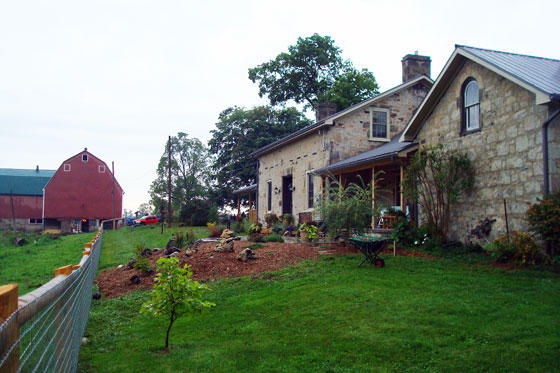
Remember I mentioned that the whole property–the stone farmhouse, the big barn and all 17 acres–were going to be sold? The big day was a week ago.

Stone farmhouse and red barn

I’ve seen one house sold by auction before, but never a whole farm. Auctioning a property is a bit different than other auctions in my experience. Terms are spelled out very, very carefully before any bidding starts. For this sale, the only thing up for negotiation was the price. The winning bidder was making an unconditional offer to purchase the farm–no home inspection, no financing, no sale of their own house, no negotiation on the closing date. And they had to hand over a $50,000 deposit as soon as the auction was over.

Once the sale got going, things moved much more slowly than a typical auction. The auctioneer of course started high. He got no action and slowly lowered the price until people started bidding. He stopped the bidding a couple of times–he’d given us a heads up that he was going to–giving people a chance to talk things over and hopefully talk themselves into bidding.

Matt was not one of those people. He spent the whole auction trying to stand completely still and not make any motion that could be construed as a bid.

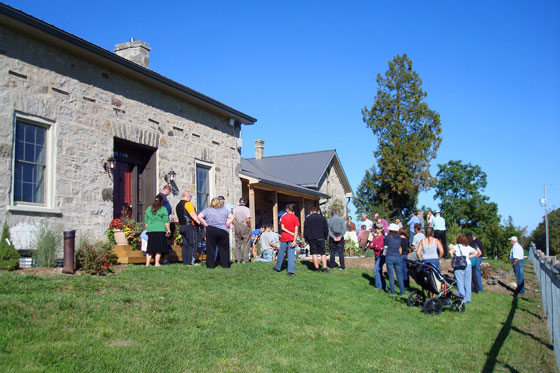
Crowd gathered at a farm auction

As the numbers climbed, it got down to just two bidders. Finally, the one shook his head. He could go no higher. Having lost a few farms in more traditional bidding wars, I felt badly for him, knowing how painful it is to come so close but still walk away farm-less.

The auctioneer took one more break, but the second bidder truly had reached his limit. When the auctioneer started again, it was to slowly and deliberately say, “I have [magic number] once. I have [magic number] twice. I have [magic number] three times. Fair warning.”

There was no climactic, “SOLD!” I expect that the bid was still under the reserve set by the sellers. Instead, the high bidder went into the farmhouse with the sellers to negotiate a final price–which of course was kept secret. The crowd stuck around until the auctioneer came back out onto the porch to announce that the deal was done.

Have you ever been through a bidding war or seen a whole property auctioned off? Have you ever accidentally bid on something or do you make like a statue like Matt?

What once was lost now is found

So remember the other week when I went to an auction and missed out on a couple of items because I was too slow on casting my bid?

Remember how I mentioned the farm itself was going up for auction?

Well, a week ago there was a preview where prospective buyers could tour the house and the property. We’re not prospective buyers, but we are nosy neighbours, so of course we went over to take a look.

The house is beautiful. It’s a great stone house that’s been beautifully restored and updated. Amazing thick walls, stunning wide plank floors, surprisingly big bright rooms. But the house wasn’t the highlight for me.

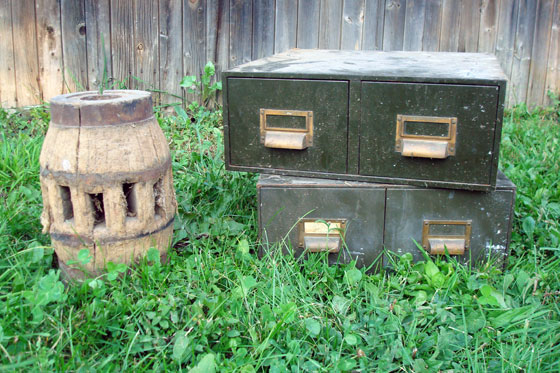
Browsing through the barn, I saw the metal boxes that I’d wanted to buy at the auction. They’d been bundled into a lot and sold, but obviously the buyer hadn’t wanted the extra items. Seeing them made me wonder what else had been left behind. I wandered over to the other side of the barn where I’d last seen the wagon wheel hub, which I’d also wanted. Under a metal barrel lid and amongst some of the smallest kittens I’ve ever seen was the hub. Score!

I trotted back to the house, found the owner and offered him $5 (the two lots sold for just $2 each at the official auction). After a quick check with the auctioneer to make sure the buyers probably weren’t coming back for their items, the boxes and the hub were mine. And even better, the owner gave them to me for free!

Wagon wheel hub and metal boxes

Everything needs a hit with the hose. My plans right now are for the hub to simply be a decoration, perhaps on the fireplace hearth. The metal boxes might hold jewelry or office supplies.

What would you do with them? Have you ever struck gold after you thought you struck out?