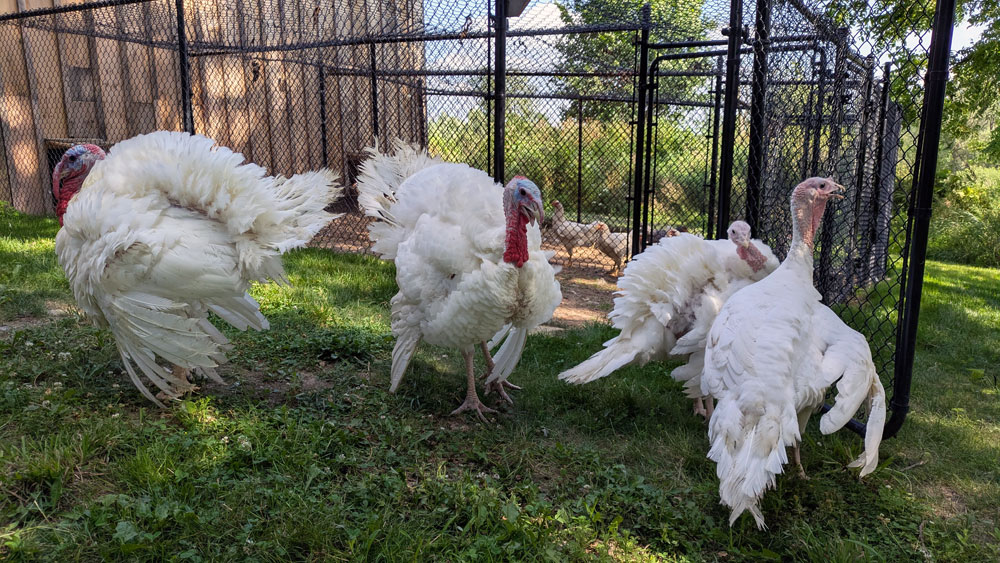
The turkeys went to the “processor” last week. Such a clean term for ending a life. It was hard for me, and definitely hard for Ellie.
Our plan from the beginning was to eat the turkeys. We spent three months with them, from little fluffballs who climbed onto Ellie’s lap to large birds with their own personalities. Ending that was a big responsibility–as it should be.
One of the things I have been thinking about is food should be hard.
Over the years, food has become easy. As we have become distanced from the labour of producing food, we have lost sight of the investment that goes into what we eat. We ignore or are ignorant of what it takes to grow food, whether it’s a turkey or a tomato. The work of raising, sheltering, feeding, watering, harvesting, killing, butchering, storing, cooking is hard.
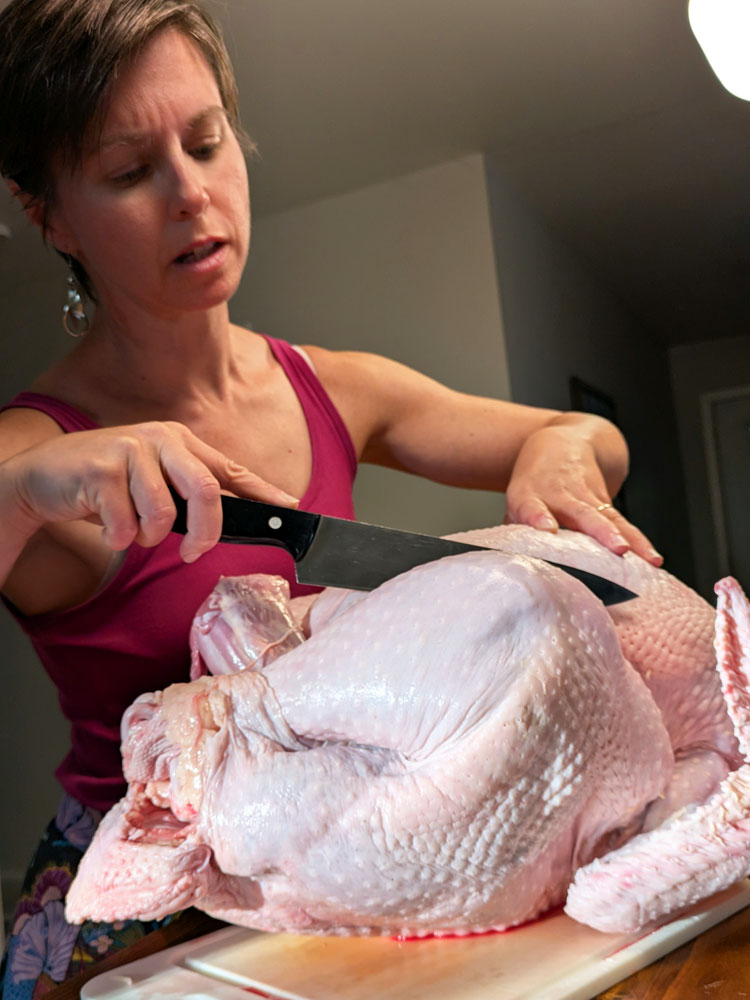
There is also a cost. That cost comes in the toll we take on our soil by growing monocrops, using synthetic fertilizers, pesticides, herbicides, draining the water table. It comes in the quality of life for our animals, the diseases that spread, the pathogens and contaminations that arise. It comes in the nutrients and flavour in our food, or lack thereof. It comes in the physical, financial and mental health of farmers.
Food should reflect those investments and costs. It should be something we consider and value more than most of us do. Food is our connection to the land and to each other. It should be nourishment, health, community. It should reflect the quality of the soil, the care of the animals and the labour of the farmers. It should be grown, harvested, bought and eaten with respect and gratitude.
I am grateful to the turkeys. To Strawberry, Medea, Stewart and Tutu. The experience of caring for an animal and growing our own food is powerful.
 Home on 129 Acres
Sad but necessary. I grew up eating everything farm raised, but I could never handle it now. I’d make pets of everything and they would have to die from old age. lol
They definitely became more pets than we expected.
👌😊
It is hard for those who have hearts. I cannot kill animals, myself, and if I had to, I would prefer vegetarianism. The reality is painful. Best we can do is be grateful for the animals’ sacrifice and give them good, happy lives (if we raise what we consume).
My philosophy is similar. I know the turkeys felt cared for and comfortable with us. I am very grateful to them and am trying to respect them in how I’m using their meat.
Hi Julia,
So true that food has become easy to most of here where we have the affordability (for most) and luxury to purchase what and when we eat.
I think you are amazing in raising turkeys, not to mentioned naming them, with the purpose of consumption. It makes total sense. I’m sure I couldn’t do it but applaud you in your accomplishment
Will you raise more turkeys in the future?
Pam
I’m not sure I’ll do it again. Raising them more as pets made everything much harder. Knowing us and how we interact with our animals I’m not sure we can avoid that entirely. I think there are lots of ways to get more “ethical” meat, if we choose.
This is an incredibly thoughtful exploration of the importance and true cost of food, and one that very few people are considering the way they should.
I start each new semester talking to my incoming students about the purpose of education not being the advancement of the individual, but the preservation of civilization. We turn on the lights each morning, never pausing to think about the chain of systems involved in power generation; brush our teeth with running water from indoor plumbing, never pausing to consider why it isn’t teeming with bacteria and infectious disease.
All of these dependencies and more are made possible by the interconnected, yet fragile structures that we have built up slowly, sometimes over many hundreds of years, and there is no guarantee that they will always be there if they aren’t safeguarded. Our individual rights and freedoms were likewise painstakingly grown over time, and are not guaranteed by anything beyond our collective willingness to preserve them.
However, that which comes too easily is valued too little, and taking these assets for granted by believing the state of the world will always be the way that it is now places us at great risk of neglecting our own role in preserving it – of being aware of the fragility, and exercising our civic duty to protect what our predecessors have built.
Given how hard it is to lead my students to recognition of this, it is comforting to know that there are parents out there educating their children the way you are doing. Thank you for that.
Thank you for such a thoughtful comment. The interconnectedness and collective responsibility we share is something I would like to see more of in the world today.
I’m impressed with your follow through. I’m not sure I would have been able to, but I agree it’s very important to truly understand where our food comes from.
Oh, and I am so in agreement with the idea that if we’re going to take their lives for food, the very least we owe them is to give them a good quality of life first! You certainly did that.
Thanks for saying that, Jem.
An interesting thing with this breed of turkey is I’m not sure how good their quality of life would have been if we’d kept them longer. They have been bred for meat, so they grew and grew and grew. I really feel that their legs and bodies wouldn’t have supported them if I’d let them get too much bigger. I was very worried with the summer heat that they might not make it. It’s very interesting to see what humans have done to certain animals.
Oh my. That’s kind of horrifying, isn’t it. That would make it a little easier to follow through on your original plans/timeline.