We have returned from our annual cottage holiday. And we have come home to a broody hen. Our third broody this summer.
Broodiness happens when a hen’s hormones tell her it’s time to hatch eggs. Even if there are no eggs under her (the case with our three broodies), she will stay on the nest day and night.
Hair-Do started us off this summer. (Broodiness is often triggered in the summer when the weather is hot.) She sat in the nesting box, puffed up her feathers, made a distinctive grumpy rumble when we disturbed her, and stopped laying eggs (counterintuitive, I know). We would pick her up and move her (broodies can be aggressive, but ours haven’t) and she would be so focused on sitting she wouldn’t stand up when we set her down.
Sometimes, farmers want a broody hen. For example, if you have eggs to hatch. Other times, a broody hen is not a good thing. For one, they’re not laying eggs. The lack of eggs was less of a problem for me than Hair-Do’s overall health. Broodiness elevates a chicken’s temperature–not a good thing in the summer heat. Plus I worried she wasn’t eating and drinking as she needed to.
Thinking about Hair-Do having a fever helped me understand some of the techniques to break the broodiness. Broodiness will eventually go away on its own, but it can continue for up to 7 weeks, so there are lots of techniques to try to break a broody hen.
First I took away the nesting boxes. Hair-Do and one other hen were the only ones using the boxes, so it wasn’t a big sacrifice. Everyone else lays on the floor in the exact same corner. For Hair-Do, that was a dream come true. A ready-made nest full of eggs. So that didn’t work.
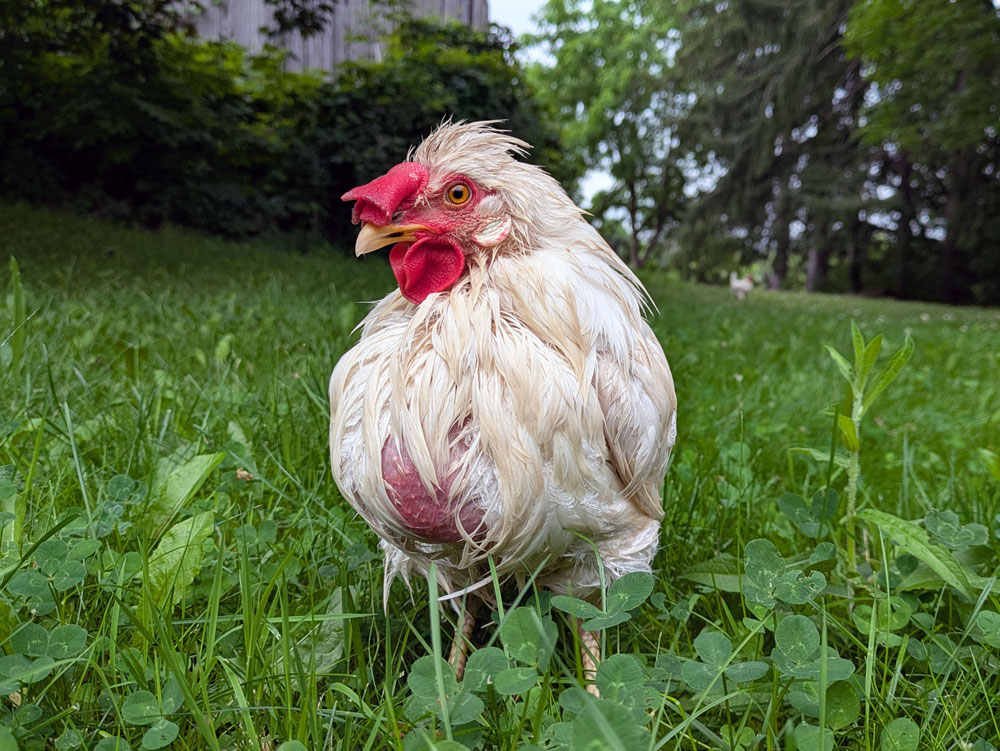
Before having my own broody, I had read that one of the solutions was to soak the hen in a bucket of cold water. That sounded terrible to me, and I couldn’t imagine doing it. But thinking of ways to lower her temperature, I hauled out the hose. Poor Hair-Do had several baths over a couple of days.
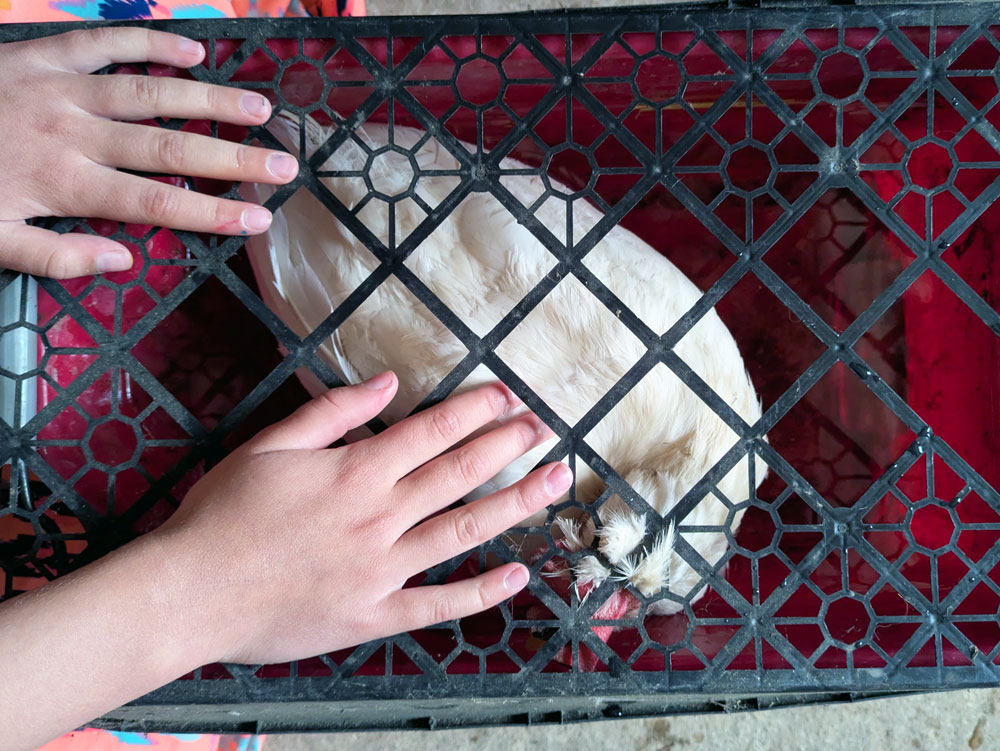
We also put her in isolation. We have a vacant pen in the coop, so we moved her in there. We gave her food and water, but no straw or other bedding (nesting) materials. Most of the advice online recommends using a wire cage for this isolation stage. You can elevate the cage on some bricks or hang it so that the hen gets full air circulation all the way around. I don’t have a wire cage so I just used the empty pen.
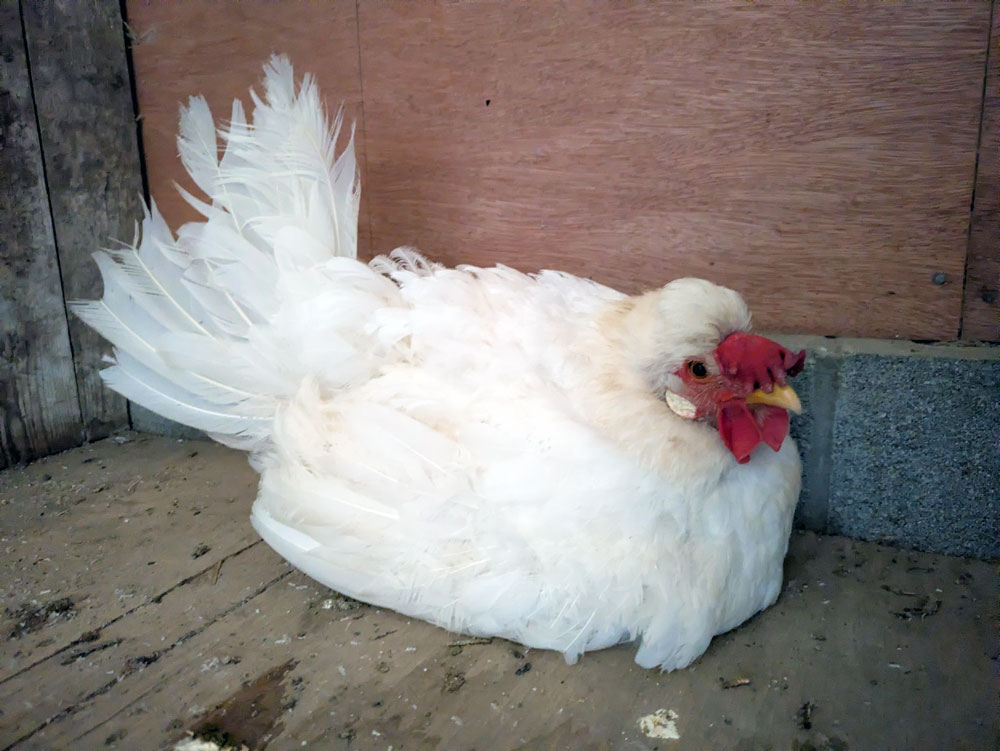
For awhile, she sat in the corner, still fluffed up, still growling at us. After a few days, she was back on her feet and pecking around. So we put her back with the flock and all was well.
Until Boss-Boss went broody.
Boss-Boss is our big barred rock, and she is, as you might guess, bossy. While she wasn’t aggressive, she was madder than Hair-Do at being disturbed. So with Boss-Boss, we skipped the baths and went right to isolation. After a few days of an angry hen yelling at everyone through the walls, she was no longer broody.
Within a week or so, we had a few 10 egg days, which was a great sign that everyone was feeling good.
Then we went away. A few days in, I had a text from Matt’s Dad (who was sharing egg duty with a friend of mine) that we had a hen who wouldn’t get off the nest. When we returned home we found Hair-Do back in the corner sitting on everyone’s eggs. As with Boss-Boss, we spared Hair-Do the baths and tucked her into the vacant pen.
This time around, Hair-Do is very committed to her broodiness. After a week in isolation, there’s been no change, so yesterday I gave her a bath.
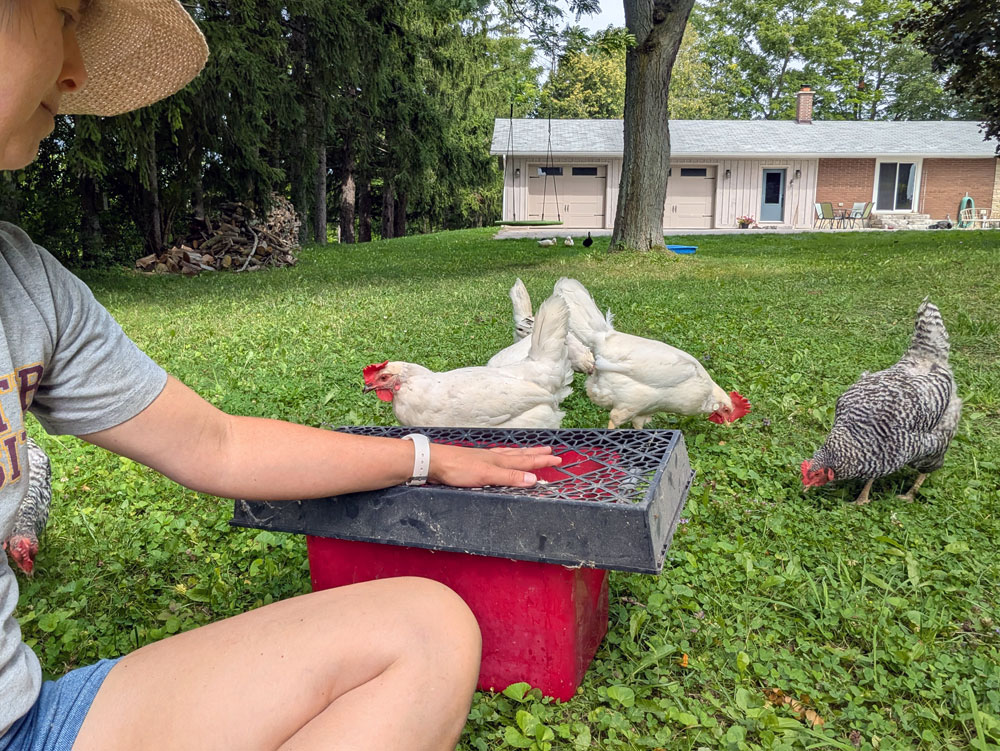
After her bath, she stayed outside with the other hens and even had a dust bath. With her wet feathers, things were a bit more muddy than dusty, but I was pleased to see more normal behaviour from her.
But by the end of the day, she was back in the coop, huddled in the corner, sitting.
So, Hair-Do is back in isolation and back on a regimen of baths.
Here are some sources that helped me with broodiness
- BackYard Chickens is always my go-to for chicken advice.
- The Art Of Doing Stuff helped me think of broodiness like a fever. Plus Karen’s writing is, as always, hilarious.


Psychoanalysis of birds it seems. All kidding aside, I hope hair do and bossy bossy are through with their broodiness soon. This sounds like a time consuming endeavour.
Pam
It’s fun to see all of their personalities. I hope they’re back to their usual selves soon.
Very interesting. Thanks for your weekly posts.
Liz
Thank you for reading along.