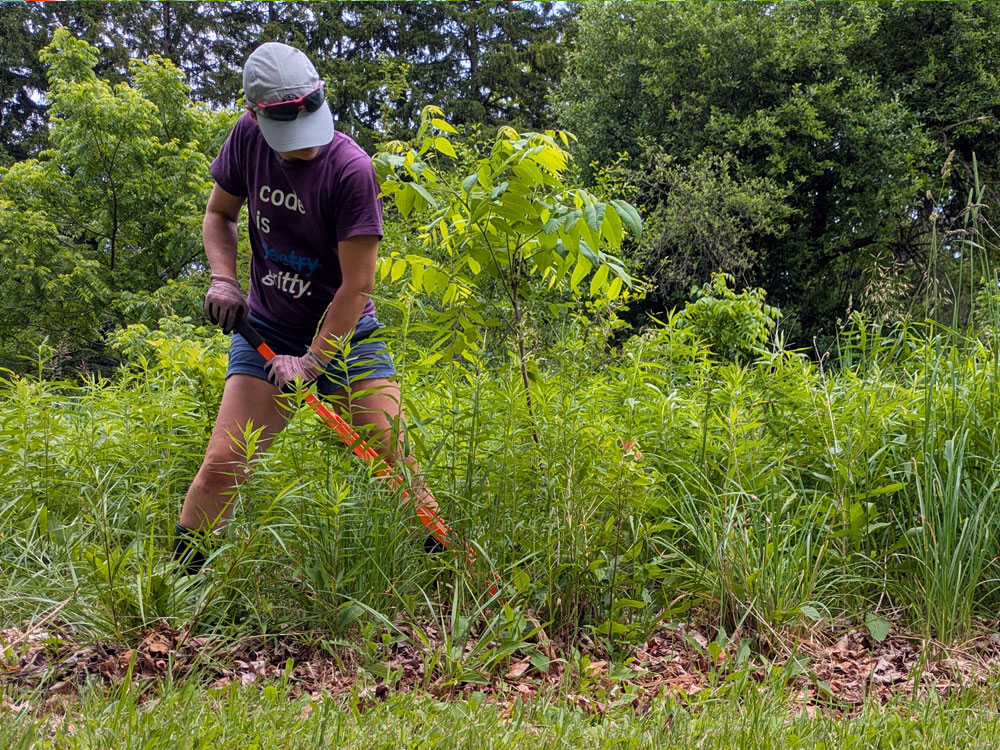
This is my review of the Extractigator Classic tree puller. This is not a sponsored post. I bought the Extractigator with my own money.
Tree management is ongoing at the farm. Usually that means picking up branches that fall down, pruning and, at least a couple of times a year, a few days with Matt’s Dad and his chainsaw. This deals with established trees.
One type of tree I have not dealt with very much is the seedlings and saplings that pop up all over the property. Whether from squirrels or just nature, we have lots of little sprouts everywhere. Maple, walnut, buckthorn. Some of them are fine, and I leave them alone or I’m even happy to see them. But lots are not welcome. The meadow that goes down to the pond is being overrun by walnuts. The swale toward the backfield is filled with buckthorn (an invasive species).
This spring, I decided to take one small step to tackle the growth. I often buy myself a new tool for Mother’s Day. This year, I bought an Extractigator.
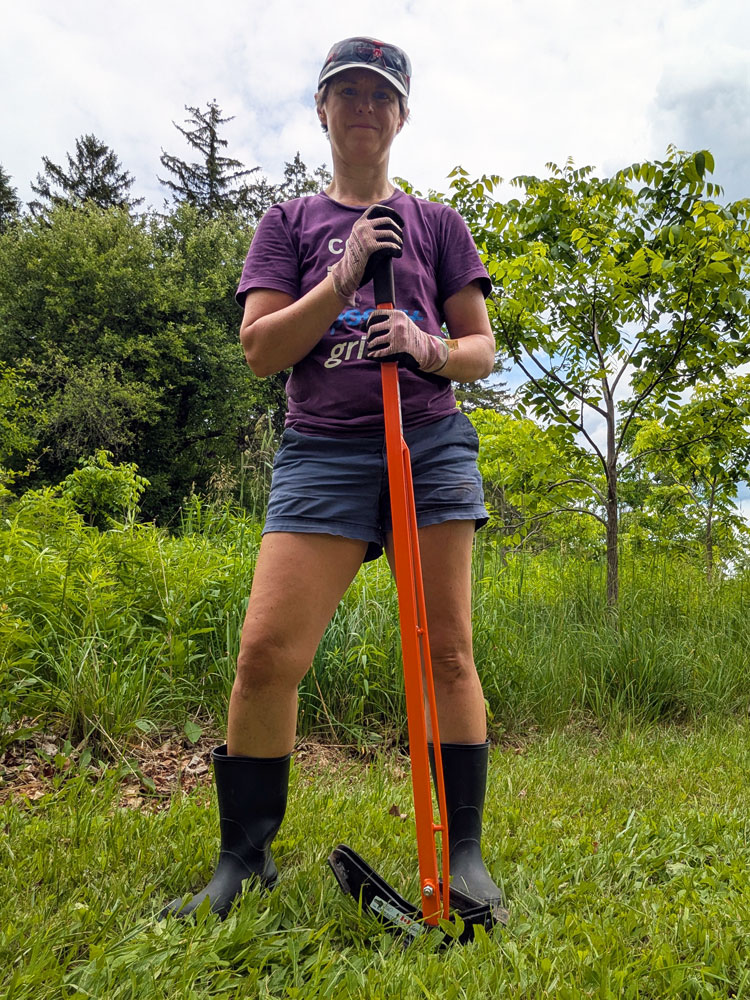
The Extractigator is a tree puller. With it, you can pull out unwanted plants, roots and all.
I learned of the Extractigator from a local conservation organization that does a lot of invasive species removal at their nature sanctuaries. There are lots of different tree pullers available, but the Extractigator is their go-to–and it’s made in Canada.
When it arrived, I took it straight into the meadow and quickly cleared a small patch–and realized there are so many more seedlings and saplings than I realized.
Since then, I’ve used the Extractigator in the gardens, down the driveway and at the pond. I’ve pulled out buckthorn, walnut, lilacs and more.
It is a very helpful tool to remove the trees completely, no shovel needed.
The Extractigator is easy to use. The jaws naturally rest in the open position, and you slide them around the trunk as close to the ground as possible. Then you pull the handle and lever it down toward the ground. Through the magic of physics, exponential force is applied to the tree and the Extractigator pulls it out of the ground. (The Extractigator website says “apply 10 lbs to end of handle, and 120 lbs of pulling force is applied to plant.”)
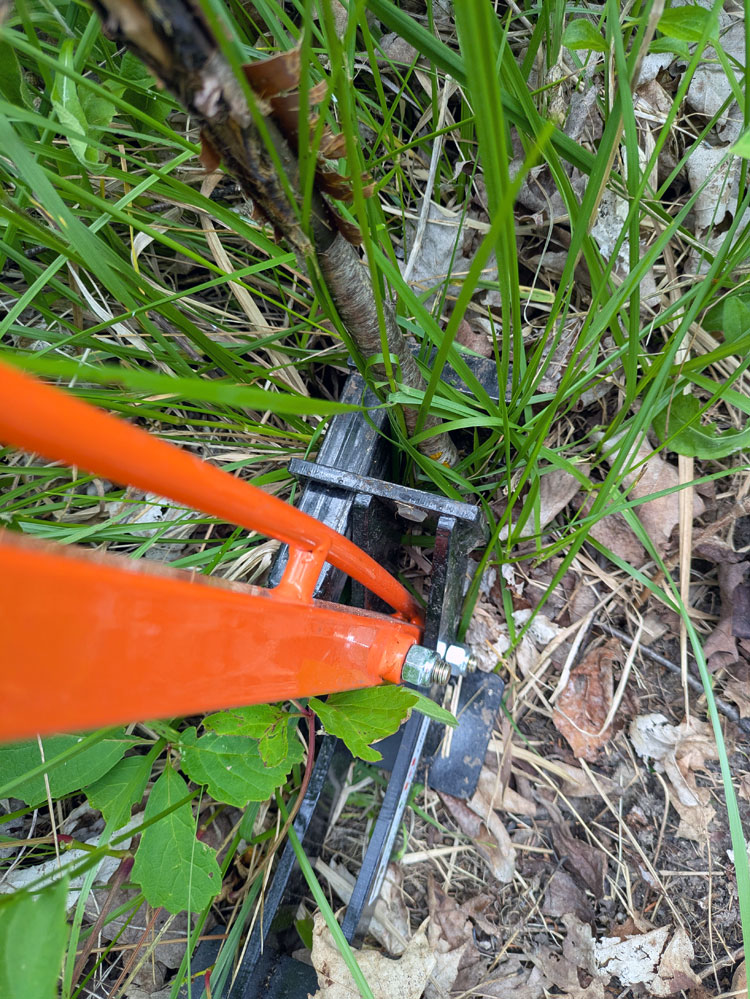

The Extractigator is not effortless. It takes some muscle to push the handle, especially if you have a more stubborn tree. There’s also some coordination required to get the jaws around the trunk, depending on how crowded your area is. The tool itself weighs 12 1/2 pounds, which can get a little heavy after working for a while. But it’s much easier and faster than a shovel.
The Extractigator website says it will remove woody plants up to 2 inches in diameter. I have found it works best on smaller trees, and it depends on the variety. Walnuts with their deep tap roots are most challenging. Even those smaller than 2 inches wouldn’t come out. Lilacs, whose roots twine just below the surface, popped out more easily.
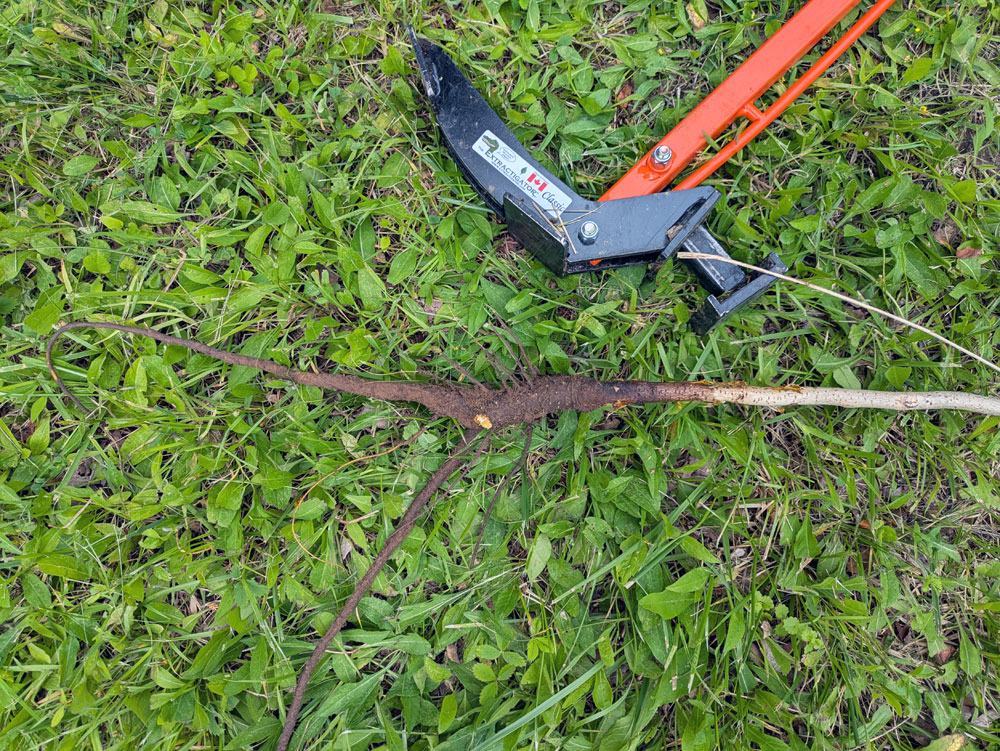
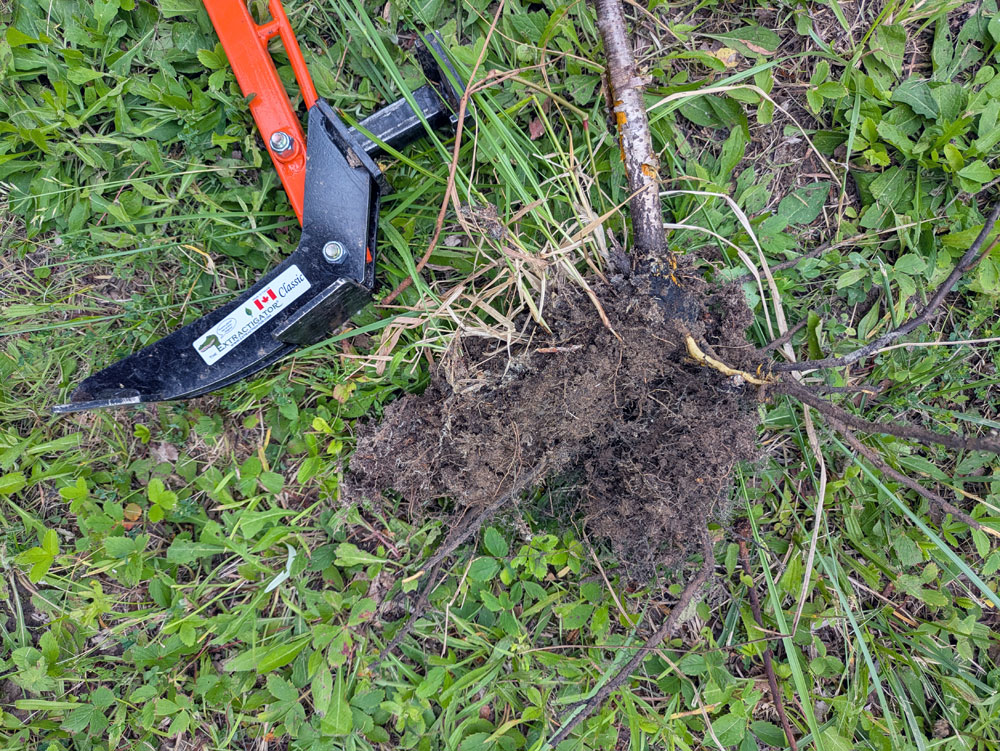
The Extractigator is a good addition to my tree management toolkit. I hope it will help me to tackle more of the invasive growth that has spread through so many spots on the farm and be a better caretaker for this property.


Hi Julia,
I’ve never heard of this tool. Looks like it will be a valuable asset in your tool shed.
We have a mature ornamental pear tree that sits between our unit and our next door neighbour. It is a pretty tree in the spring when in blossom and offers some nice privacy between our decks. However, the suckers that continually grow up at the base of the tree are unsightly. I trimmed these away several times during the season only to see them grow back again with a vengeance, especially the following year. This year, before my knee surgery, I carefully placed black landscape fabric around the tree, tacking it down with garden spikes and covering with mulch. It looks so much cleaner with no sign of growth coming through. The success of my effort will be next spring. My fingers are crossed.
Enjoy your new garden tool.
Pam
My sympathies on the suckers. I hope your fabric and mulch helps.
All I can say is buckthorn, buckthorn, buckthorn… I’m going to look this up!
I’m sorry to hear you’re dealing with buckthorn too. The Extractigator has been a helpful investment for me.
Mimosa!!! Oh how I wish I had never planted that first tree! Once a seedling gets started it grows like wild fire!! They are extremely hard to kill if you don’t get them pulled while they are still at the pulling stage.
That’s the worst thing about invasives, I find. They spread and grow so quickly and if they get away from you they are so difficult to deal with.
👍👍