Climbing the property ladder

Everybody knows about the property ladder. Scrape your pennies together to buy a house and get on the bottom rung of the ladder. Eventually use the equity from your first house to move up the ladder until you’re able to (hopefully) afford to buy the house of your dreams.

The other week, I had the opportunity to talk to the Toronto Star about Matt’s and my experience with the mortgage on our first house. As I was preparing for the interview, it occurred to me that the lessons we learned might be interesting to some of you too.

Our first house got us onto the property ladder. It set us up to buy the farm and begin building our forever house. However, in order to go from our starter house to the farm, we had to skip a few rungs along the climb.

We were able to move up the property ladder quickly because when Matt and I sold our first house, we owned it free and clear. We had no mortgage.

For two 30-year-olds to pay off their first house in four and a half years is a bit unusual.

We didn’t win the lottery, no relative left us a big inheritance, we work regular jobs and earn average salaries, and our parents didn’t give us money to purchase either our first house or the farm.

So how did we pay off our mortgage early?

First, we bought a house we could afford. When we went to the bank to be pre-approved for our mortgage, we were astounded by how much we qualified to borrow. It was close to twice the amount we were expecting to spend. It’s easy to be sucked into spending more than you planned, especially if the bank says that you can. Be disciplined and stick to your budget.

The other thing that we did at the very start was to put down the biggest down payment we could. For Matt and me that was 25%. The hardest part of buying a house for many young first time buyers is building up their savings to make the down payment.

Fortunately, Matt and I were able to live with our parents and pay little or no rent. We saved and economized, and when we were ready to buy the house, we had enough (in my case just enough) to put 25% down. Making the largest down payment you can at the beginning puts you much further ahead in paying off your mortgage over the long term.

The biggest thing that helped us to pay off our mortgage in four and a half years was taking advantage of the accelerated payment plans our bank allowed. To start, we chose a “weekly rapid” plan where we made a payment every single Friday for a total of 52 payments a year. The amount of the payment was determined by taking what we would have paid monthly, dividing it by four and then paying that amount each week. This works out to basically making 13 months of payments rather than 12.

I remember sitting in the bank going over the payment options with the mortgage advisor and her showing us that by making just one extra month of payments a year, we would pay off our 25 year mortgage in 21 years. That was an easy choice for us.

However, 21 years wasn’t fast enough.

The other option we took advantage of was to make lump sum payments directly against the principal of our mortgage. For our bank, the maximum they allowed was 15% per year. Every single year, Matt and I took full advantage of this, and every single year we knocked roughly another 5 years off our mortgage.

I’m not saying it was easy to see that much money going out of my bank account each year, but getting a printout showing our mortgage would be done in 15, 8, and then 3 years did soften the sting.

Mortgage statement

The Amortization Period line at the bottom is the one to keep your eye on.

Most banks will also allow you to increase the the amount of your weekly (or biweekly or monthly) payments. We did eventually bump up our weekly installments, but for the most part we focused on saving for the annual lump sum payments.

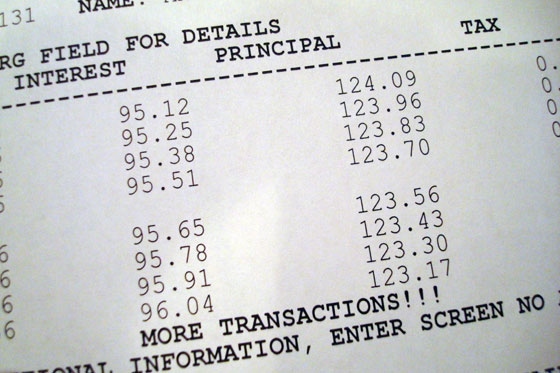
With any financial situation, I think it’s really important to watch your numbers and understand exactly where your money is going. We requested extra statements from the bank that showed the breakdown of exactly how much of our weekly payments went towards principal and how much was interest. When the ratio finally crossed 50-50 with even just a few more dollars going towards principal than interest, that was cause for celebration. We also kept an eye on the amortization period that changed every time we made a lump sum payment and carefully read our annual statements.

Interest and principal mortgage payments

It will likely take a few years, but eventually you will pay more principal than interest.

Because we know our numbers, we know that we paid just over $20,000 in interest on our mortgage. This is versus nearly $200,000 in interest we would have paid if we stuck with the bank’s schedule and taken the full 25 years to pay off our mortgage.

Despite Matt’s and my focus on our mortgage, we did try to keep a balance in our life. Prioritizing our mortgage was important to us, but having a life was too. In the time that we owned our first house, we got married (and paid for our wedding), traveled, furnished our house and renovated. If we had put all of our money towards only our mortgage, I don’t think we would have enjoyed our house in the same way we were able to.

So here are my five tips for how we paid off our mortgage in less than five years:

  1. Buy the house you can afford.
  2. Put as much down as you can.
  3. Take advantage of accelerated and lump sum payment plans.
  4. Watch your numbers.
  5. Prioritize what’s important to you.

Now at the farm, we have a mortgage again, and it’s much bigger than it was on our first house. However, it’s still affordable for us. We’ve again chosen an accelerated payment plan of 13 months of payments per year. And we’re already planning on making a lump sum payment before the end of the year. (Note, lump sum payments are usually calendar year, not mortgage year, so even though we’ve only owned the farm for 8 months, we can still make a payment against the principal).

Our first house put us on the property ladder, and the strong financial foundation we built by paying off our mortgage early allowed us to quickly move up the ladder.

We won’t pay the farm off in five years like we did at our first house, but we’re not satisfied to wait the full term of our mortgage either.

Now it’s your turn. Do you have a mortgage? What’s your approach to payments? Any tips to share?

Farewell first house

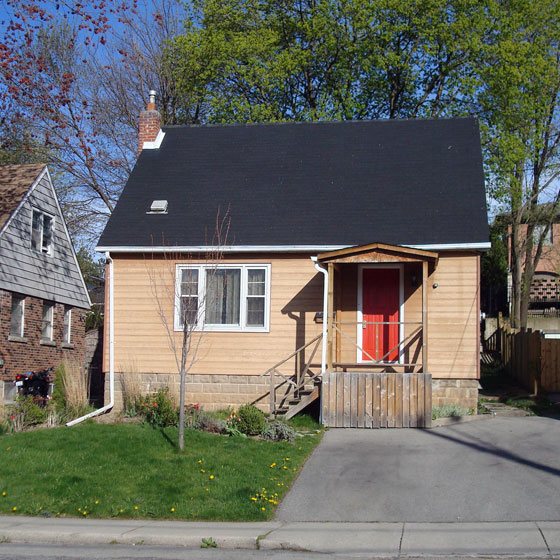
Our first homeThe sale on our first house officially closes today.

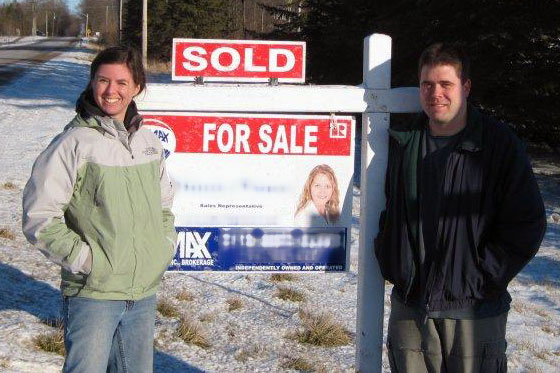
We listed the house for sale right after our offer was accepted on the farm, and it sold within three weeks. But due to a long closing date, we’ve technically owned two houses for the past two months.

This house was a great starter home for us. It was the perfect size for two people, and we had plenty of opportunities to practice renovating and fixing up a home.

On my last visit to the house, Matt’s tulips were just beginning to bloom in the front garden that we put in together.

Tulips

The trees were starting to come into leaf.

Maple tree

When we first saw the house, we were attracted by the mature trees in the backyard and were so excited by the fact that we owned them. Now we own hundreds of trees, and we value them just as much.

We knew all along that this house was just the start for us. Our time there made it possible for us to be at the farm now. It was a wonderful five and a half years.

Putting down roots

We inherited many, many things from previous owners when we took possession of the farm (I haven’t shown you pictures of our personal Hoarders episode yet, but I may some day).

A number of those things were plants. Sometime last year, the people we bought the farm from went out and got many, many plants, but they never planted them! Bushes, flowers, trees, shrubs, all of them were still in their plastic pots sitting on the ground in and around the areas where the front flower gardens would be if they weren’t completely overgrown with weeds.

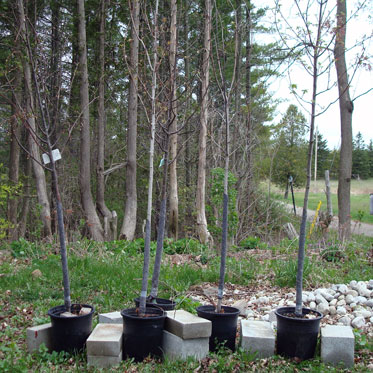
The stockpile included 5 trees.

Our inherited trees

Our inherited trees

I have no idea how long they’d been there, but when we saw the property for the first time at the beginning of January, they were all laying on their sides, frozen into a kiddie pool (I guess an attempt to keep them alive?), and they were still there, just like that, when we took possession in March.

When the ice in the pool melted enough, Matt and I stood them upright, but they were so curvy and bent from laying down that they easily tipped over again. We propped them up with concrete blocks and checked them frequently searching for any signs of life.

A few weeks ago, we noticed buds. Finally on Sunday (fittingly, Earth Day), we made some time to plant them.

I love a tree-lined driveway, and we’re already in pretty good shape, but there are a few blank spots, so that’s where we focused our plantings.

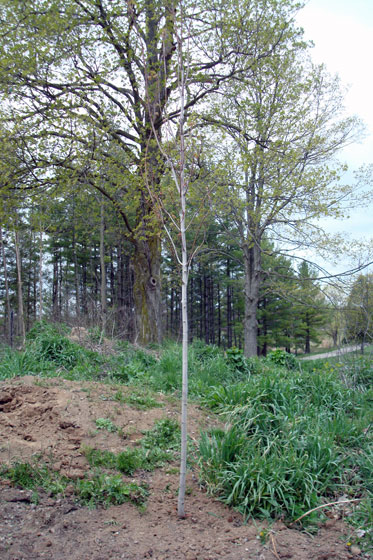
One of our new trees

One of our new trees. He's a little spindly right now, but the inspiration of what he can become is right behind him.

According to the tags that were tied to the trees, we have an Autumn Radiance Maple, two Unique Littleleaf Lindens, and an Autumn Blaze Maple. The fifth tree wasn’t labelled, but it looks like some kind of maple.

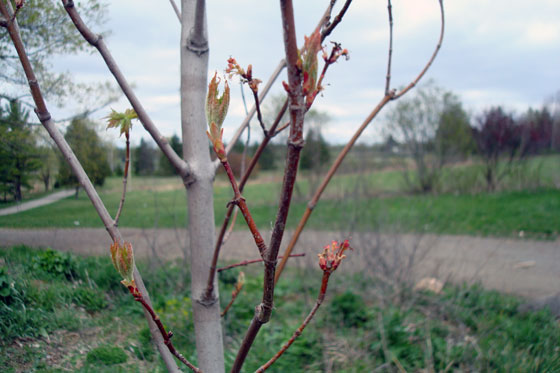
Close up of buds on our new maple tree

It's alive!

The trees make a nice addition to the farm, and planting was a very nice way to acknowledge Earth Day.

What about you? Did you do anything for Earth Day?

Buying a farm – House wish list

You already know what we were looking for when it came to the property. Now for the house.

Growing up in a custom built home and with a Dad that worked construction (and working construction so much myself), I always planned to build my own house. So initially, our search was just for the property. I wanted vacant land, a blank slate, something that I could make completely my own.

Unfortunately, on the type of property we were looking for, a blank slate meant we’d have a lot of extra costs: septic, well, hydro, driveway. Never mind the plans, permits and actual construction costs.

So, the criteria evolved. We decided we wanted a house with “potential.” I won’t go as far as saying we wanted a fixer-upper, because for me “fixer-upper” means major problems. I wanted something that I could put work into and make it into the dream house I’d always envisaged. Matt was just hoping we ended up with something we could actually live in, because there were a few along the way that were a little iffy.

So here’s the house wish list:

  1. Potential
  2. Traditional farmhouse look
  3. Useable basement (Matt’s biggest priority)
  4. Wood burning fireplace or the potential to have one
  5. At least 2,000 square feet
  6. Generous-sized rooms
  7. 3 bedrooms
  8. 2 bathrooms
  9. No pool

And here’s what we ended up choosing:

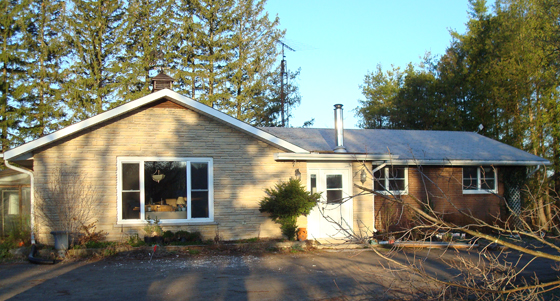
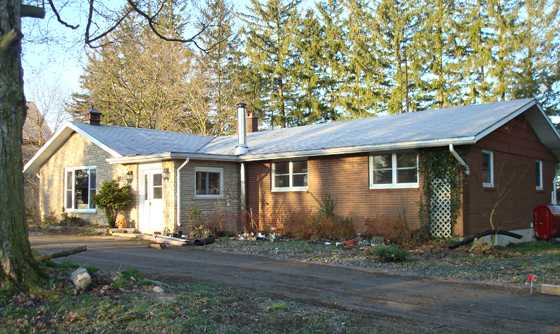
The house

Our new farmhouse.

It soon became clear that a few of our criteria were at odds. Old farmhouses for the most part don’t come with useable basements or generous-sized rooms. I eventually realized I wanted the old fashioned farmhouse exterior with a new, built for the way people live today interior.

So when we found a 30-40 year old bungalow with many of the elements we were looking for on the perfect property, we decided it was the one.

The house is just a smidge under 2,000 square feet. It has three bedrooms and two full baths, lots of closets and a huge useable basement.

On the potential front, this might be a bit more of a fixer-upper than we hoped for (to-do list includes new heating/cooling system, new roof, adding insulation, upgrades to the well and water system and dealing with some weird electrical before we get to the “fun” stuff), but we still think we made a good choice.

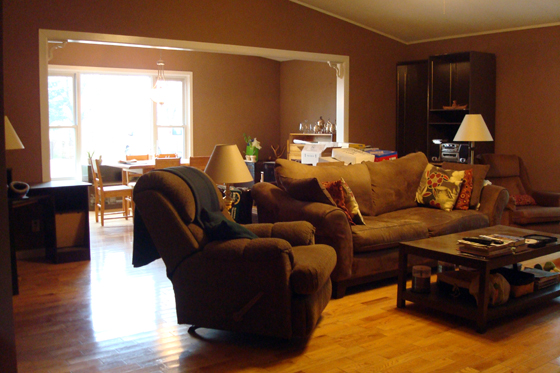
Living room

A great, large, bright living room open to the kitchen with a vaulted ceiling and plenty of room for lots of comfy furniture.

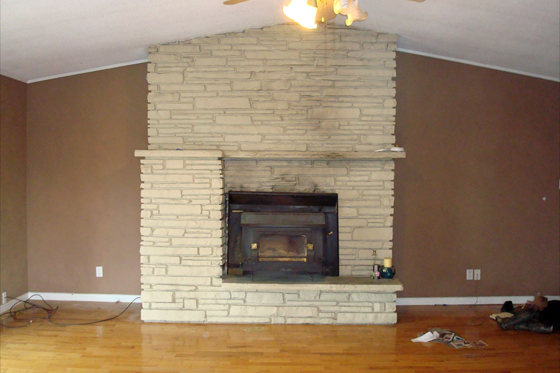
Living room fireplace

A stone-faced wood burning fireplace.

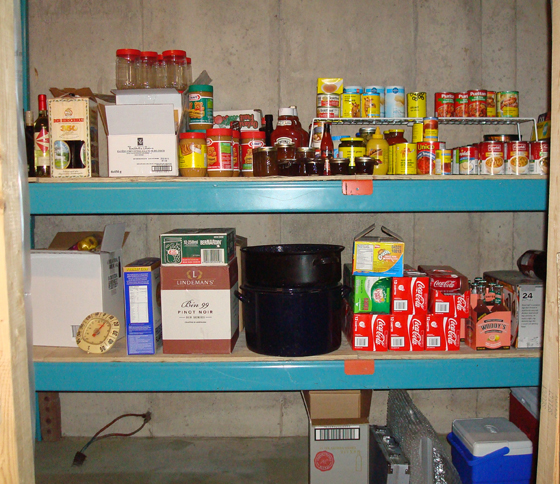
Cold cellar

A cold cellar (not a necessity, but I grew up with one of these, and they're kind of hard to add-on once a house is finished. I'm glad I have one of my own now). And yes, Matt shops with the apocalypse in mind.

Main bathroom

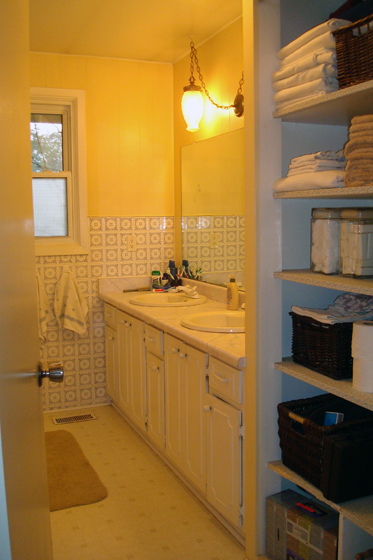
A huge main bathroom with double sinks, a huge vanity and tons of storage. (The cracked sink, 1970s tile, painted paneling on the walls and Care-Bear-colour-palette on the counter top are examples of potential.)

On the compromise side of things, there were two major things I compromised on. Here’s the first:

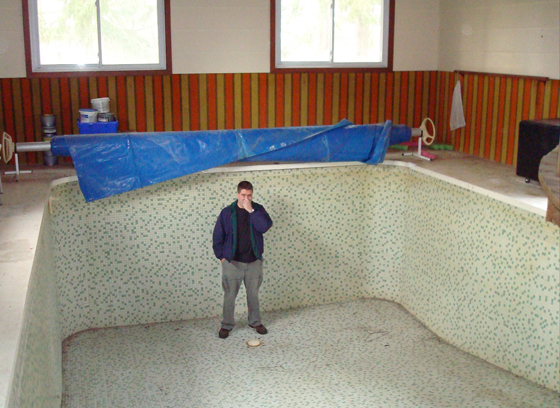
Yes, this is our lovely indoor pool (and Matt on home inspection day demonstrating how to hold your breath in imaginary water).

So I didn’t want a pool in the first place, and now I have one in the house! As far as we’ve been able to determine, the pool has not been used (or filled) in at least 2 years. There are some issues with the equipment, and there may be some issues with the pool itself. We’re not sure exactly what we’re going to end up doing with this space, but suffice it to say that you probably shouldn’t plan on bringing your bathing suit when you come to visit.

The biggest compromise is on the traditional farmhouse look. But I think there’s a solution for that one too. Don’t you think this…

Our house

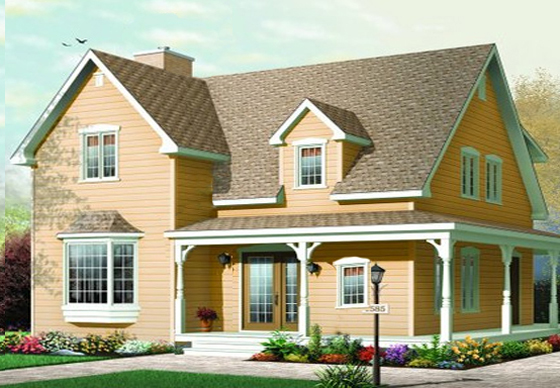
… could become something like this?

Someday farmhouse

Original image available here (I made a few edits)

Can you see it?

Obviously, this is a very long term renovation plan we’re working with. Good thing this is our forever house. We’re going to need to be here for awhile!

Buying a farm – Property wish list

For all of the time that we’ve been together (this is our 15th year for those that are counting), Matt and I both knew that we eventually wanted to live on a farm. However, for most of that time “farm” was just an abstract concept in our minds.

When we started actually looking for a farm that we wanted to buy, we had to give some actual thought to what it was we truly wanted. I thought it might be helpful to lay out our wish list and see how we measured up.

I’m going to start with the property, and next I’ll do the house.

Throughout our search, we (Matt will tell you it was mainly me) were very, very picky. We knew this was going to be our forever house, so we didn’t want to compromise on anything. This is the main reason that the search took a year and a half.

Advice to people looking for the perfect country property? Be patient. It will come and everything will work out the way it’s supposed to.

In the end, here’s the criteria we used when evaluating potential properties:

Property wish list:

  1. A large property, ideally 50 acres+
  2. Not more than an hour (ideally 45 minutes) from work and family
  3. Not too many out-buildings, but definitely a large old wood frame barn
  4. Water of some kind, a pond ideally, but a creek would work
  5. A long tree-lined driveway
  6. Forest or bush that’s not too far from the house
  7. Fields that we can rent out to a tenant farmer
  8. A quiet country road, maybe even a gravel road

So let’s see how we did:

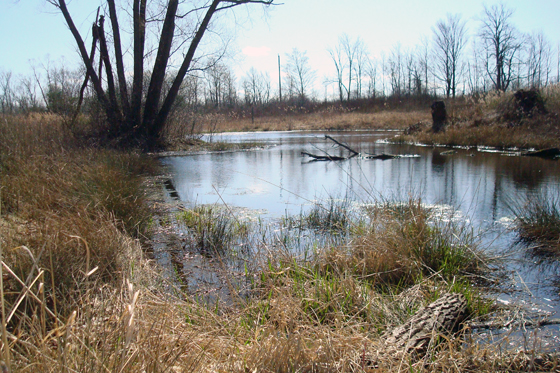
Pond

Pond, check.

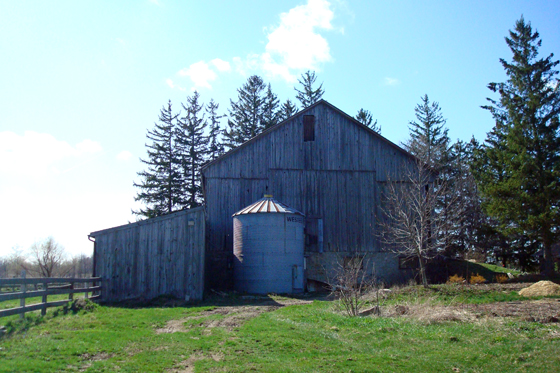
Barn and silo

Old wood frame barn, check.

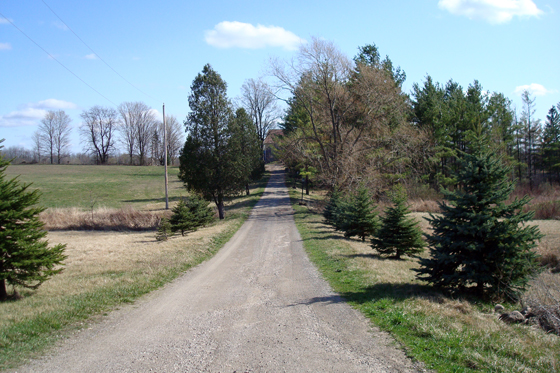
View up the driveway

Long driveway, check.

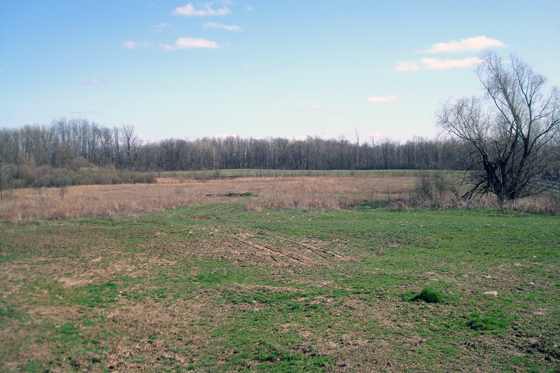
Fields and forest

Forest, check. (Yes, all of those trees in the distance are actually ours)

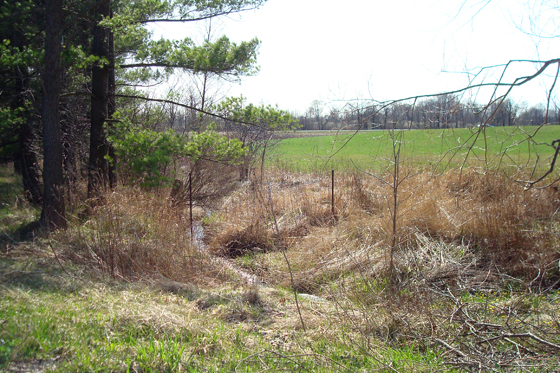
One leg of the creek

Creek, check.

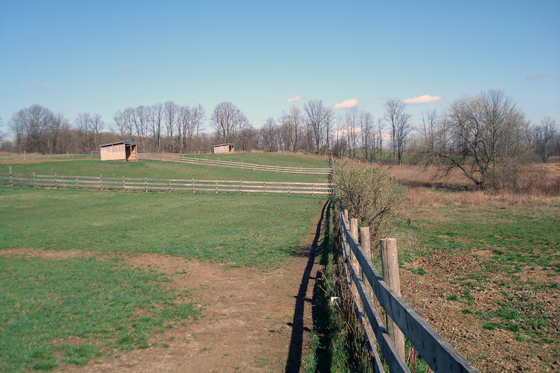
Paddocks and fields

Fields, check. (And paddocks complete with run-in shelters).

Here’s the summary of what we ended up with:

  1. A very large property at 129 acres
  2. 20 minutes from Matt’s parents, 30 from mine, 35 from my work, 45 from his
  3. One large wood frame barn (estimated at ~100 years old) that’s in great shape and a large wood frame drive shed
  4. A good-size pond near the house (I love to look out the kitchen window and see the water glisten in the sunlight) fed by a small stream that then flows into a huge marsh area
  5. 150 metre driveway
  6. Approximately 50 acres of forest, marsh and wild land on the back half of the property, plus a good grove of trees and a stand of huge pine right by the house
  7. Approximately 60 acres of cleared fields
  8. Our road is a little bit busy by country standards–the only miss

There were numerous times throughout our search where we were asking ourselves if we should re-evaluate our criteria or compromise on a particular element. In the end, I don’t feel that we did, and I am absolutely certain that we ended up with the right property for us.