Odds & sods

“If you are neutral in situations of injustice, you have chosen the side of the oppressor.”

— Desmond Tutu

Like so many people, I am watching what’s happening in Palestine and Israel (and Ukraine, Sudan and other places) right now. Like many people, I don’t know what to say. But I feel I need to say something.

Harming and killing people is wrong. Destroying and taking people’s homes is wrong (this goes for Indigenous peoples too). I believe that supporting groups or people who carry out these acts is wrong. Not speaking out for a ceasefire and working for peace is wrong.

I teach Ellie that people are different. Some people think differently than us, live differently and have different opinions about what’s important. But they deserve care, respect and peace. They deserve a home and they deserve to live.

Within our lives, we can determine our own values and make our own choices. But we are part of the world. As I wrote on Remembrance Day, it is my responsibility—everyone’s responsibility—to care for and protect each other.

Here are some other things in my thoughts these days.

On Canada Project is working to bridge information gaps, challenge divisive rhetoric, and lead important conversations grounded in human rights.

What would you do if you knew when you were going to die?

Grief is full of choices (life is too)

First they came for the socialists, and I did not speak out—because I was not a socialist.
Then they came for the trade unionists, and I did not speak out—because I was not a trade unionist.
Then they came for the Jews, and I did not speak out—because I was not a Jew.
Then they came for me—and there was no one left to speak for me.

— Martin Niemöller

The old apple tree

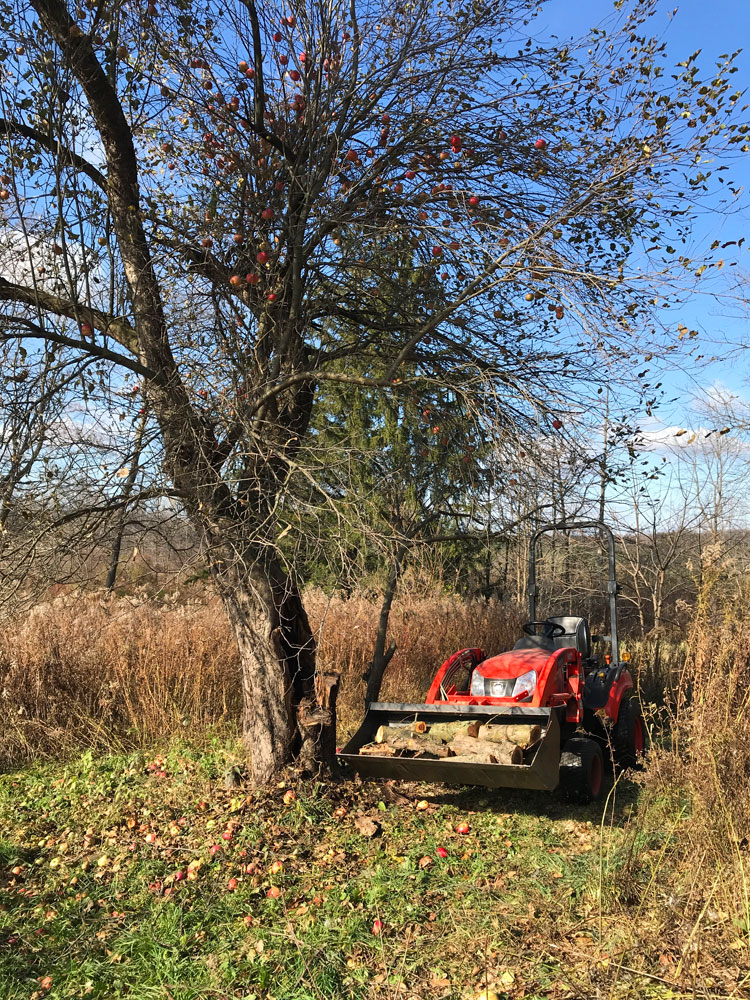
In the centre of the part of the farm we call the meadow, halfway between the pines and the pond, is a big old apple tree. This tree makes me think about the life of this property.

The woman who was born here in 1936 says there wasn’t a pond when she was growing up. It was a stream that they crossed every day on their walk to and from school.

Another former owner that I’ve met called the meadow the orchard. Just two apple trees remain now.

This year was an amazing year for apples. Unfortunately, the weight was too much for this big old tree. Several limbs broke, including one huge section. I feel like half the tree has fallen.

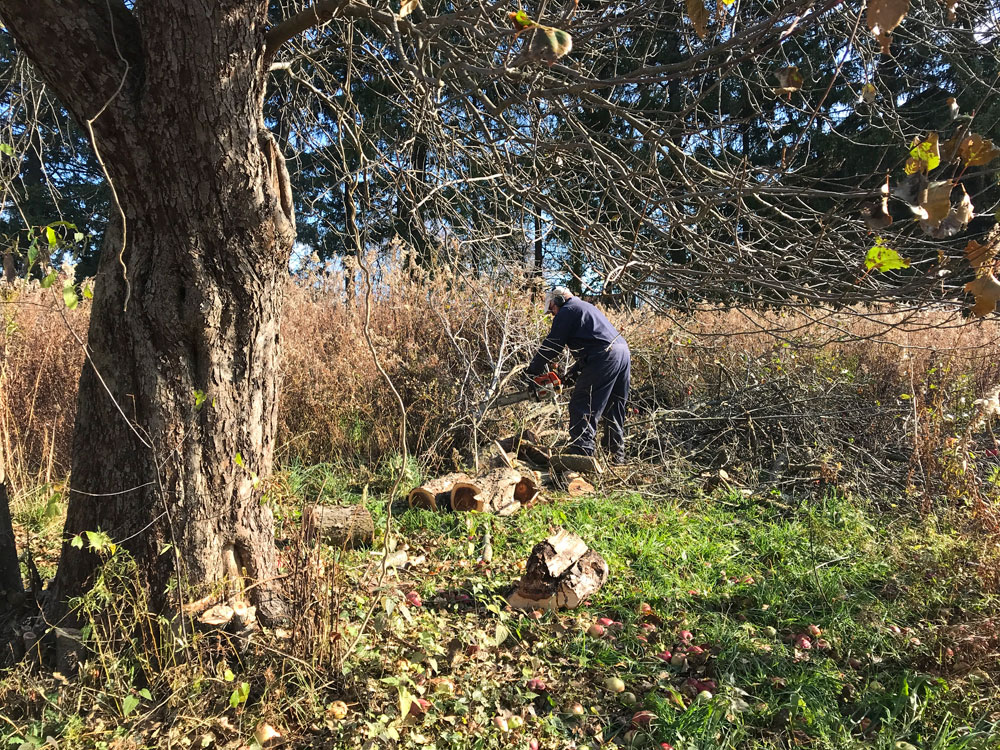
As usual, Matt’s Dad came out with his saws and helped me clean up. The apple tree has grown wild for as long as we’ve been here (and maybe before that). Pruning has been on my list, but I have not done it. There were suckers around the trunk, twigs going in every direction and the aforementioned broken branches.

Matt’s Dad cut most of the suckers. We left one big one, as I hope this could become a new tree if the original tree does not survive. He cut up the fallen limbs and I piled the brush at the edge of the meadow. I loaded the logs into the tractor and brought them up to the woodpile.

The tree could use more pruning. With all the work that Matt’s Dad did, I can now get to it a little more easily. And pruning goes back on the list for next year. Then we can maybe finally do something with all of those apples.

This tree has seen a lot of changes to the farm, the people and the surroundings. I hope that it will stay with us and continue to grow as we grow with the farm.

Lest we forget

Lest we forget. Rudyard Kipling wrote these words in 1897. Today, 126 years later, I feel like we’ve forgotten.

I do not remember the First World War, when “lest we forget” first began to be associated with what was then known as Armistice Day. I do not remember the Second World War, when my grandfather left his family in Canada and fought in Italy and Holland. I don’t remember Vietnam or Korea.

My memories of war are the Persian Gulf, Bosnia, Afghanistan, Iraq, Sudan, Congo, Ukraine, Israel, Palestine. Conflicts that I’ve seen on TV, the news, movies, and social media, while I am safe here in Canada.

My experience of war is distant. But the lessons of “lest we forget” are close.

I saw my grandfather stand at Remembrance Day services every Nov. 11 with medals pinned to his chest. I wore a poppy, read In Flanders Fields, learned about the Holocaust and listened to The Last Post.

The lesson was always never again. These terrible things must never happen again. We must learn, so that we remember, so that we do not repeat.

I learned the lessons of lest we forget, and then I have watched conflict after conflict, genocide after genocide happen again and again. We have forgotten.

In some ways, it’s easy to forget. I feel safe. Israel, Palestine, the Ukraine, Sudan are all far away. My family doesn’t live there. What happens there doesn’t affect me. Why should I care?

I recently heard Malcolm Gladwell paraphrase author James Keenan to say, “Sin is the failure to bother to care.” If we stand by and do nothing when we could help, we are in the wrong.

The lesson of lest we forget is that I am part of the world, and it is my responsibility—everyone’s responsibility—to care for and protect each other.

Remembrance isn’t just about the past. It is about the present and the future. How we behave now, tomorrow and the day after that.

Lest we forget.