Shades of grey

Blame it on being away at a course for two days and missing husband and home. While driving back to the farm, I decided that the best colour to paint the basement is the one that Matt liked the most. After all, the basement was his main priority when house hunting, and I’ve said that my priority is to make it nice for him.

There were six finalists in the running: two off-whites, two creams and two greys. When I asked you what you’d choose, one of the off-whites, White Dove (my favourite), came out on top with Misty Gray (Matt’s favourite) in second.

Poll results

We decided to make it Misty. However, it turned out not to be that simple.

I went and bought a 5 gallon pail of Misty Gray. We put the first coat on the long room. And I didn’t like it.

The grey was so subtle that it looked to me like we’d painted the room white. As much as I liked White Dove, now that we’d chosen to go grey, I wanted the colour to be noticeable.

So we returned to Benjamin Moore with the pail and asked them to adjust the colour. The next tint on the fan deck was Bunny Gray, and that’s what we aimed for–keeping in mind that the colour wouldn’t be exact given that we’d already used more than a gallon from the pail.

There were two things I was unsure about though: I thought that Bunny might still be too light, and I was also concerned that we wouldn’t have enough paint in our pail to cover the whole basement. And with our custom mixed colour, we likely would have trouble matching it exactly if we came up short.

So I decided to order a single gallon of Thundercloud, the next shade darker after Bunny. When we got home, we dumped the remains of our Misty sample pail along with the gallon of Thundercloud into our pail of Bunny.
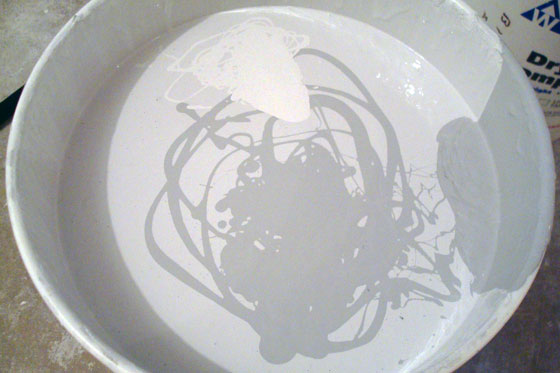
Grey paints in a pail

Misty is the light blob at the top, Thundercloud is the swirl in the middle.

Matt mixed it all together, and I crossed my fingers as I picked up my paint brush. Fortunately, I was happy with our Franken-colour, and we went to town.

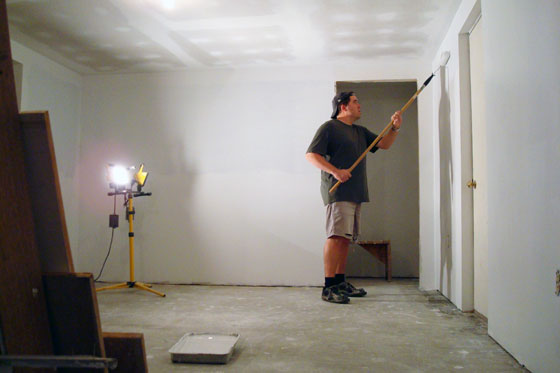
Grey painted basement

Sorry for the picture quality here. It was dark by the time we finished painting, and lighting in the basement isn’t the greatest. This is the future ping-pong area in the main room of the basement.

Running to the store for the retint and being away from home for a couple of days cost us a bit of painting time, so we still have a little more to do yet. But with the colour finalized and a few free evenings this week, we’re expecting to make good progress this week.

Have you ever mixed your own paint colour? How did it work out for you? What do you think of our custom shade of grey? Given my subject matter and the title of this post, I feel like I have to ask if there are any Shades of Grey fans out there? I haven’t read it myself. Do you recommend it?
The greatest dilemma of all time

The title of this post may be a little over dramatic. I am not the first to face this conundrum or to wrestle with this question. However, the angst, the uncertainty, the pressure of this choice is well known by many.

What paint colour do I choose?

With the conclusion of the drywall phase of the basement, we progress to the painting stage. We (optimistically, as it turned out) bought primer months ago, so last week Matt and I started priming the basement.

Matt priming the long room with the roller

Matt rolls on the primer in the long room

You would think with 5 1/2 months of drywalling (still can’t get over how long it took us), 7 1/2 months of farm ownership, and 9 1/2 months of knowing we were going to be painting the basement, I’d have figured this out by now. But I haven’t.

Most of the time in this project, I was planning on going grey. However, we’re planning on buying a charcoal grey sectional and the carpet will likely have grey tones in it. Painting the walls grey too was starting to seem like a lot. So over the last little while, I started thinking about other options.

The criteria for the colour are

  1. Light – I want the basement to be fairly bright, but, with only one window, pale paint is my best bet.
  2. Neutral – I really don’t want to repaint any time soon, but I may want to redecorate every so often. A neutral colour gives me the option to switch up the other colours in the basement when the mood hits.
  3. Works for the whole area – We have a fairly large basement, and the main room, long room, laundry room, stairwell and hallway are all going to painted the same colour (click here if you need a floor plan refresher).

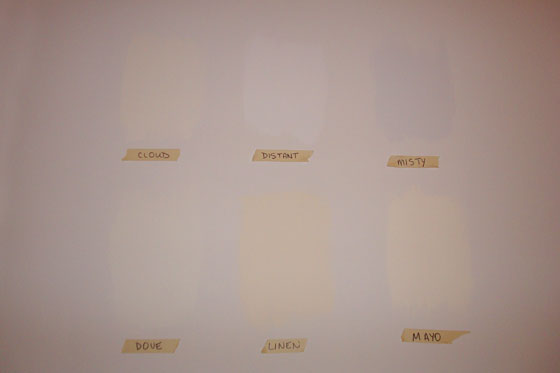
I ended up buying samples of six different colours. Originally, I bought four, but then I didn’t like any of them, so I went back and bought two more.

Off white paint samples

Clockwise from top left: Cloud White, Distant Gray, Misty Gray, Mayonnaise, Linen White, White Dove. (All colours from Benjamin Moore).

This is my first time sampling colours on the actual wall. Usually I just trust my gut and go with a paint chip that I think will work. However, this is also my first time painting my forever house (bathroom aside), so I feel like it matters more that I get this right.

So, in addition to sampling the colours, I am appealing to you for help. What do you think?

Have a favourite colour that’s not covered in my samples? Let me know in the comments what you recommend.

Stick a trowel in me…

… I’m done.

We are calling it on the drywall phase of the basement reno. Five and a half months–in case the text version wasn’t clear, let me translate that into numerals 5 1/2 (or 5.5 for you digitally minded folks) months–after we started drywalling the basement, we are finally finished.

Oh the glamourous life of DIYers.

Lest there’s any additional lack of clarity, the basement reno itself is not finished. Only the drywall stage is done.

Some other things that are done:

  1. Bandaging my fingers for my evening sanding sessions.
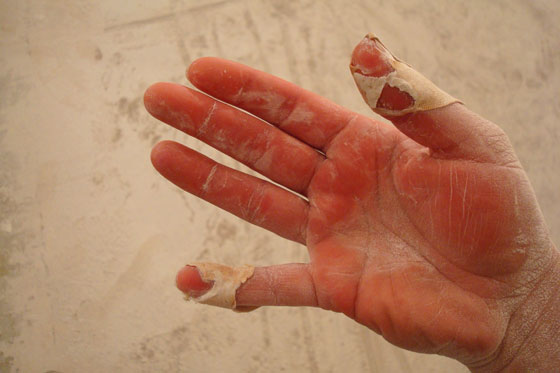
Bandaged fingers

This is what my hands looked like at the end of a night of sanding. The bandages are pretty much worn away.

I built up calluses on my fingers, of course, but calluses can only do so much. It took me two nights of bleeding fingers to learn my lesson. (Point in my favour: the nights were not consecutive. I’m not that dumb). Before the second incident, I thought my fingers were sufficiently toughened from the first incident to not require protection. I learned that no matter how leathery and rough I think my hands are, I can apparently always do more damage.

Good news is I would make a good spy these days, as my fingerprints are sanded off.

  1. Also done is Matt’s nightly decoding dilemmas as he tries to interpret the pasting instructions I draw on the drywall.
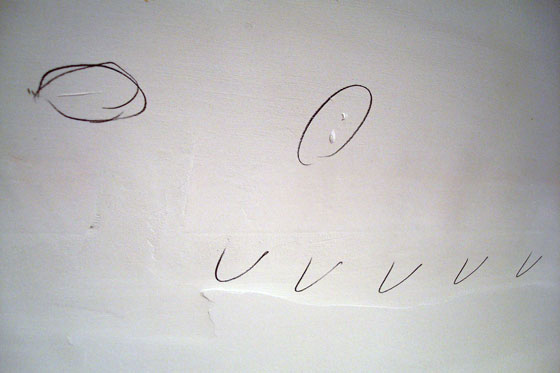
Pencil markings

The two circles highlight a scratch and some divots that need to be filled. The U and V markings are supposed to be arrows that point out a ridge that needs to be feathered out with paste.

The division of labour when it came to drywall was I sand, Matt pastes. As I work, I keep a pencil behind my ear, so that I can mark spots that need particular attention.

Additional symbols in my drywall lexicon include lines and once in awhile actual words–that usually still require translation.

  1. The biggest change that will result from concluding drywall work will be no more drywall dust throughout the house.
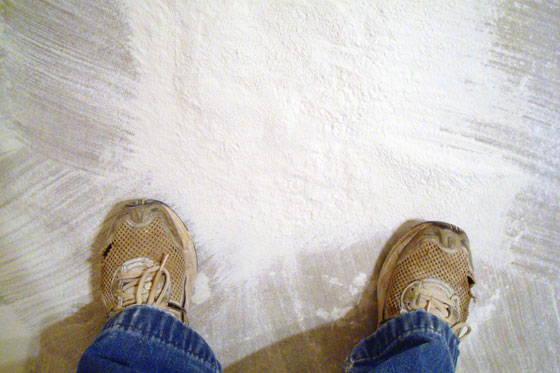
Pile of drywall dust

The partially swept office floor (and yes, I know my work shoes are looking a little worn).

In the basement, the dust was so deep that dunes were starting to form. It took Matt and me a full afternoon to wipe down the walls and ceilings, sweep up the worst of the dust and then vacuum the remaining powder.

Upstairs is also covered in a fine skim of dust, although we haven’t done a deep clean there yet. We have to keep up our glamourous DIY lifestyle, after all.

Starting out on this project, I never dreamed that drywall would take us nearly half a year (ouch, that sounds like a really, really long time). My only excuse is that we ended up having to redo a huge area–pretty much the whole basement, we didn’t work on it religiously every single day and we’re not professional, so we’re slow.

The finish is definitely not perfect, but I’m satisfied with how it turned out, and I’m really happy that Matt and I were able to tackle such a big project together by ourselves (with help from my Dad, of course. Thanks, Dad!).

And now, in the way of DIY, concluding one stage of the project means it’s now on to the next. Painting here we come!

What’s on your agenda for this weekend?

Help! I have hod claw

Matt and I put on a push this week in the basement in an attempt to pick up the pace on the pasting. (I love alliteration, but that’s a lot of ‘p’s even for me). We’ve made a lot of progress, but a side effect of all of this productivity (I just can’t stop!) is that we are both suffering from hod claw.

hod·claw

noun

an uncomfortable contraction of the hand, typically occurring after holding a hod for an extended time

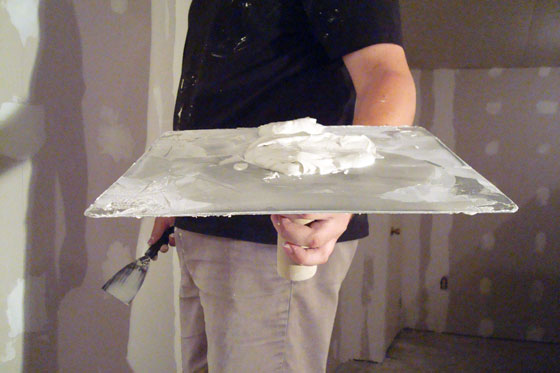
For those that haven’t had the pleasure, a hod is basically a big tray that holds the drywall paste (also known as mud or compound) while you’re working.

After a full evening of working in the basement, uncurling our fingers from our hods is harder than you’d think.

Hod with drywall paste

Matt holding the hod

It’s not that we love drywall and don’t want to stop. The issue is that our hands have seized around the handle of the hod and returning them to their regular dexterity requires much flexing and massaging.

When it comes to drywall, there are a variety of tools people choose to hold their paste. Some work directly from a bucket. Others use a mudpan. I grew up using a hod, so that’s what we use now.

Once I cross the three hour mark of pasting, I don’t think it matters what’s holding my paste. At that point, my hands have cramped. As long as I keep working, I don’t feel it too much. As soon as I set the hod down, though, that’s when I realize how tired my hands are.

Drywalling with a hod

Matt in action

Fortunately, by the next morning, I’ve usually regained most of my range of motion.

Even more fortunately, thanks to our concentrated efforts this week, we’re nearing the end on this pasting odyssey and will soon be setting down our hods. Hopefully, our  hands recover from their case of hod claw shortly thereafter.

Any other DIYers out there who use a hod for drywalling? Have you ever been afflicted with hod claw? Or do you have your own unique DIY injuries?

Degree of dustiness

If you zoomed out on Friday’s photo, you would have seen something like this.

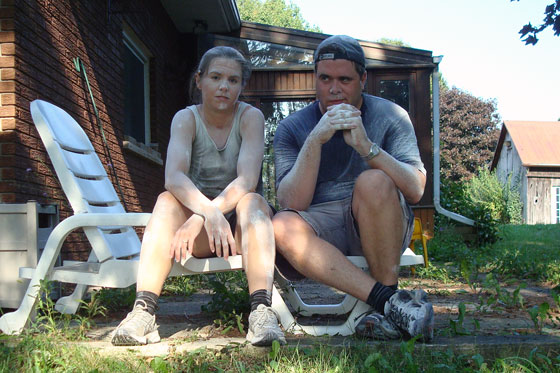
Matt and me after sanding drywall

Matt and me after sanding drywall

No, we did not have a baking accident and we’re not 18th century aficionados who powder our hair and faces.

We’re renovators and these days drywall is on the top of the to do list. Actually, it’s probably more the “please can we just get this done already” list, but I’m trying not to sound too desperate.

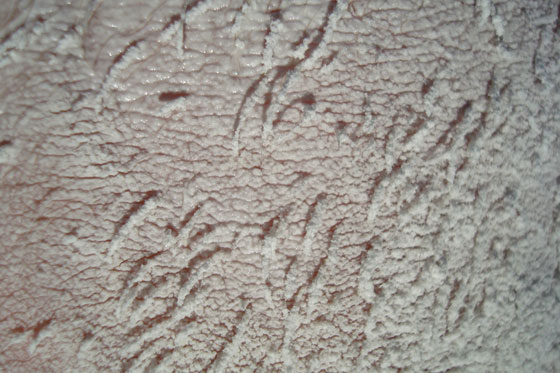
The photo that I posted on Friday was a thick layer of drywall dust coating Matt’s arm. Even though I teased her at the time, Catherine was actually pretty close with her first guess on last week’s post of “really dry skin.”

Drywall dust

Skin and arm hair with a heavy dusting of drywall. Yum.

The sanding stage of drywall installation is usually the time I start to reconsider my affection for DIY renovations.

This is a lot of work, and sanding drywall is really not fun work.

  1. Pretty much every single surface in the basement has new drywall or at least a patch of some kind. That means I’m sanding more than I’ve ever sanded in my life. My arm muscles are toned like they’ve never been before, but my nails and fingertips are rubbed off in some places. Ow. And I’m sure the amount of dust that has entered my body through my nose, eyes and mouth can’t be healthy.
  2. We’re not pros, so we’re slow. Therefore, the drywall and sanding stage take a long time.
  3. Even though we’re only working in the basement right now, dust is everywhere. Good news, you can slide around easily on the floors upstairs which makes getting around quick. Bad news, don’t set your black clothes down anywhere, or else you’ll have to choose a new outfit.
  4. We’re not pros, so there tend to be a few more bumps and ridges that we have to sand out… meaning more time, more sore muscles, more dust.

Matt uses the pole sander, but I have never been able to master it. I also feel like I get a better finish by hand. So that means I get up close and personal with every single square centimetre of drywall.

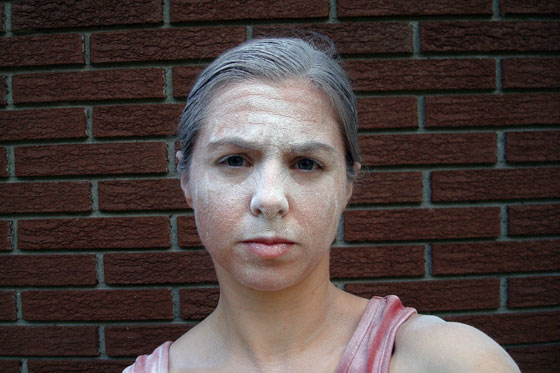
Covered in drywall dust

It’s a good look, wouldn’t you say?

The good news is that the basement is looking really good. We’re at the third (and final) coat of paste pretty much everywhere, and a few spots need only touch-ups.

If we can keep up the momentum, I’m anticipating being covered in paint spatters instead of drywall dust in just a few weeks.

That will be a nice change of style. I’m ready for a makeover.

Who you gonna call? 1-800 DRYWALL

And we’re back.

Since I can no longer dive right in to a lake any time I want, let’s dive right back in to the basement renovation.

To recap for people whose minds may still be on a beach somewhere up north in cottage country (ahem), we ended up taking down all of the drywall on all of the exterior walls in the basement to upgrade the insulation. Then we ended up taking down most of the drywall on most of the ceilings to upgrade the electrical.

Matt declares victory over a pile of drywall and insulation.

Remember this scene from oh so long ago?

All of that taking down meant that eventually we’d reach a point where we’d have to put it all back up. But not the old stuff. That’s not how you do a reno.

With the old drywall unsalvageable, we had to buy new drywall. Now normally, I’d borrow my Dad’s truck and drive to the local lumber mill or home improvement store and buy the sheets that I need. However, renovating a whole entire basement means I’m working on a bit larger scale than usual. Too large for my Dad’s truck.

However, Dad still came in handy. With his help, we measured up the basement and came to the conclusion that we needed about 50 sheets of drywall. We also needed screws, tape, drywall compound (also known as mud or paste) and cornerbead.

As we were adding everything up, we decided that we also really needed someone to carry it down the basement stairs for us.

Matt, who like my father also happens to be a handy fellow, sourced out a selection of suppliers looking for the best price on both materials and delivery. As soon as he landed on 1-800 DRYWALL‘s website, the first words he said were, “These guys say basement delivery is their specialty.”

The marketing was working, but we needed a bit more information before we closed the deal.

We spent some time on their web site, reading all of their FAQs and getting a quote based on the material quantities we needed. Then I did it all again over the phone. Despite me asking a number of questions that were in the FAQ–including, “And delivery includes carrying all of the drywall down into the basement?”–the 1-800 DRYWALL staffer Roy was extremely friendly and helpful. He didn’t even mind when I decided to stop talking to  him and place my order through the web site because I could get $25 off for an online order.

On delivery day, my Dad was on-site to accept the order and supervise the unloading of all of the materials. True to their promise, the delivery team carried absolutely every piece of drywall down into the basement. They even stacked it in two different rooms based on my Dad’s directions.

Stack of drywall

A portion of our 50-sheet drywall order (and some new drywall already taped in the background)

The only hiccup on the day was on the screws. The screws I’d ordered online did not meet with my Dad’s approval. When it comes to drywall screws, my Dad likes a coarser thread because in his experience they hold better. However, the screws stocked by 1-800 DRYWALL had a thread that was too fine for my Dad’s standards, so back on the truck they went. Within a couple of days, 1-800 DRYWALL refunded my credit card, no questions asked.

Even with basement delivery (and not counting the screw refund), the price we paid for all of our materials was about $80 less than any other supplier we looked at–not a huge dollar figure, but enough to make a difference for us.

Where 1-800 DRYWALL truly beat the competition though was on the service side.

On the phone, over email and in person, everyone we dealt with was courteous, prompt and very helpful. Once I placed my order, I received a personal email confirmation, and two days after delivery I received a follow up email thanking me for my business and asking for any feedback.

The other element that I really appreciated was their web site. The site allowed me a high level of self-service, which I liked. I could fill my virtual shopping cart and get a quote all on my own. Plus, the FAQs, tips, testimonials, links to provincial building codes and professional site design inspired confidence that I was dealing with a reputable company.

In the end, my confidence was borne out. When you need drywall, I highly recommend you call 1-800 DRYWALL.

A peek of pretty

Amidst the dust and the upheaval and the tired muscles and the very, very, very long to-do list, I need a little reminder of what we’re working towards. The stack of tile piled in Matt’s future office provides some good encouragement right now.

Here is a little sneak peek at the various pieces that will eventually make up the basement bathroom.

Marble mosaic tiles

I think the white balance is a little off in this photo, as there is much more white than grey in real life

The white subway tile in the centre is going to be the main feature in the room. It will cover the three walls of the shower from floor to ceiling and the bottom half of the wall behind the toilet up to the height of the vanity. I chose a 4 inch by 8 inch tile, rather than the standard 3 by 6. It’s going to take a lot of tiles to cover the walls, and I’m hoping there will be slightly less labour with the larger tiles.

The white tiles will be accented by a narrow band (probably a strip 3 or 4 tiles high) of the grey and white marble mosaic mini subway tiles at the right. These will run at about eye level in the shower area only. Not an original design feature these days, I know, but hopefully a pretty timeless look.

The marble mosaic hexagon on the left is the shower floor. And the square (pseudo marble) tile at the bottom is the floor in the main area of the bathroom. They’re all sitting on the piece of marble, which you’ve seen already. This slab will top the bench in the shower.

Not pictured here are two more pieces of marble that we’ll be using for the top of the shower curb and the base of the niche.

As a reminder, the inspiration for the basement bathroom is Aubrey + Lindsay’s beautiful bath.

We managed to find tiles that were very similar to theirs. Although there were times that I joked that tile sourcing was going to break my enthusiasm for renovating.

The original tile that I picked for the accent band were back ordered until the end of August. They were another beautiful white and grey marble, but longer and more irregular lengths rather than an even subway shape. I really liked the irregular lengths for the contrast with the regularity of the white subway tiles. At the rate we’re moving now, August might have worked, but at the time I didn’t want to delay the project, so I found another option. Ultimately the colour is what will be most noticeable, and the overall feel of the bathroom will likely be pretty much the same with the tile that we ended up choosing.

For the main floor area, my original vision was to have large format white subway-ish shaped tiles. These were incredibly hard to find. Floor tiles seem to be square for the most part. And the ones that I was able to find were more creamy than I wanted. I nearly placed the order for the off-white tiles, but decided to take one more look at other options and found the square tile in the grey and white tones that work well with the colour palette that I’d established.

Ultimately, we ended up sourcing tiles from three different suppliers plus Home Depot for the marble sills and plus our stone supplier for the bench top. Fortunately, everything works very well together and it looks beautiful, even when it’s just sitting in a pile on the floor.

The bathroom is actually ready for tiling, but a couple of other projects (okay, slightly more than a couple) and the universe’s dogged persistence in only putting 24 hours in the day continue to delay installation.

For now, ogling the cases of tile–and remembering how far we’ve come already (psycho shower, anyone?)–keeps me going on this renovation.

Where do you find your motivation?

Olympic dreams

I had hoped today to be showing you the Canadian flag flying from our newly installed flagpole in honour of the Canadian Olympic team. However, the flagpole is still lying in the barn and the flag is folded up in Matt’s office.

However, we did manage to get something installed that has come in handy with the Olympics.

Shaw satellite dish

Our new satellite dish

Like everything else at the farm, the job of installing the satellite turned out to be more work than initially expected.

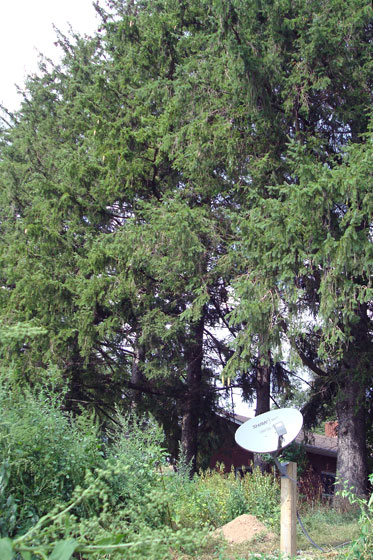
First, we couldn’t install the dish on the house. The satellite signal wouldn’t clear the row of huge pine trees right beside the house. The solution was a post in the meadow on the other side of the pines. Matt spent a couple of hours digging a deep hole while my Dad and I cut a big 6×6 for the post and with Wiley‘s help gathered concrete and gravel to set everything in place. It’s handy having spare construction supplies lying around courtesy of past owners.

Satellite dish on a post

Our dish is dwarfed by the big pines

Satellite dishes on posts in the middle of people’s yards is one of my pet peeves. I’m trying to come to terms with mine by remembering that it’s our only solution (aside from taking down the trees) and it’s in the meadow where we’ve let the grass grow long, so it’s fairly hidden.

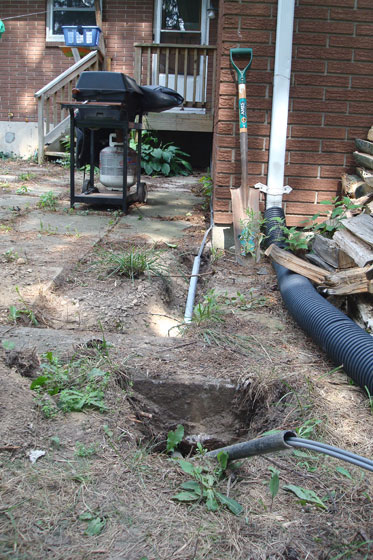
The second issue was running the wires from the post in the meadow up to the house. Trenching the wire in the meadow and across the lawn was no sweat–well, it’s sweaty work, but not super difficult. However, between the house and the lawn is a large patio. Running wires over the surface, even if we protected them in conduit, was obviously not a great option. We were able to lift the patio slabs pretty easily, but the poured concrete border around the edge was a bit more challenging.

With two shovels and a bit a teamwork from both Matt and me, we each dug from opposite sides to tunnel under the concrete so that the installer could easily feed the wire under the patio.

Wire running under concrete slab

We also ran the wire through some plastic conduit for extra protection

As the saying goes, bad news comes in threes, so two challenges were not enough in the saga of the satellite.

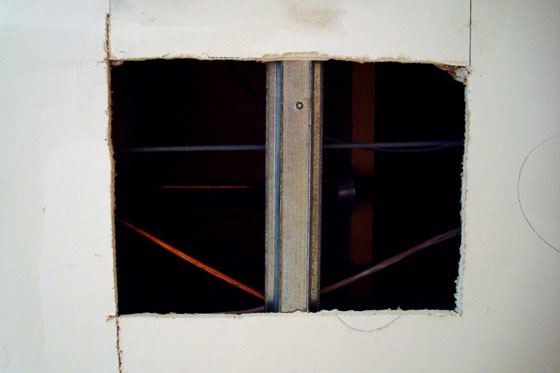
We decided we wanted a satellite receiver in the basement as well as in the living room upstairs. Installing an additional feed in the basement would have been easy had we done it while the ceilings were all open. However, we weren’t certain initially that we were going for two receivers, so we went ahead and installed all of the new drywall and made no accommodations for the satellite wiring. Argh!

Matt and I had realized we were going to have to cut some holes in our brand new ceilings and had gone through all of the stages of grief about undoing our nearly completed work. For my Dad, though, who showed up with his long wire fish to help us prepare for the installation, he had to get from denial (“maybe we don’t really have to cut holes”) to acceptance (“we’re going to need another hole here too”) pretty quickly.

Metal stud

Ouch! Our poor ceilings. The satellite wire is the grey one at the top of the hole

Thanks to all of our prep work, the actual installation of the satellite went fairly smoothly. And just in time. Two hours before the opening ceremonies started, we had TV at the farm.

CTV Olympics on TV

Please ignore the drywall dust which is every where

Matt and I enjoy our TV, but we really haven’t missed it since moving in, mostly because we’ve been so busy with renovations.

However, I am a huge Olympic fan, so being able to stay on top of all of the coverage is a nice treat.

Any other Olympic fans out there? What event are you watching for? Anyone have tips for fishing wires or your own story of a challenging installation?

Oh and one more thing.

Go Canada go!

(Feel free to add your own national cheer below).

Change of plans II

You heard about one change of plans yesterday, and today I have another for you. This one was a relatively minor change in plans, but it did require a bit of a backtrack, because we were already installing drywall when I decided I wanted to make a change.

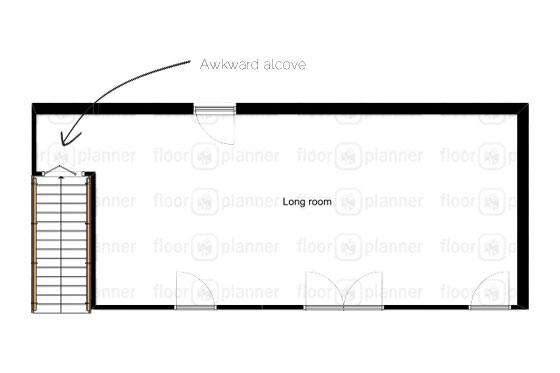
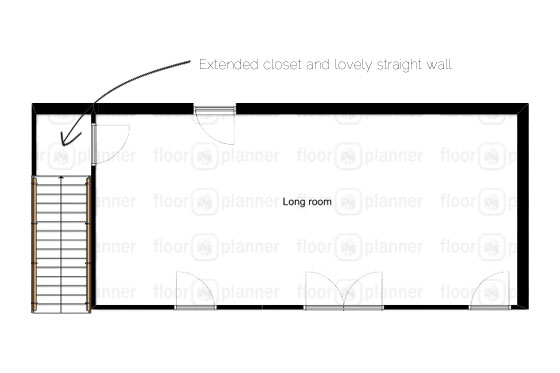
Originally in the basement, there was a closet under the stairs. I’m all in favour of closets. This one was a good way to use an awkward space and I had plans to make it a wonderful home for our Christmas decorations. I had nothing against the closet. However, the little alcove at the end of the long room to access the closet always puzzled me a little. What was I going to do with that space?

Awkward alcove

It took a visit from my youngest sister to open my eyes to the obvious solution. Just square off the room and enlarge the closet slightly. Duh!

Floorplan for extending a closet

So, while drywall installation was underway, I threw on the brakes and demanded that we go back to demo (removing the old doorway into the closet) and construction (framing in a new wall and doorway).

Matt said, “Why does it matter?” and then he just shook his head, sighed and went along.

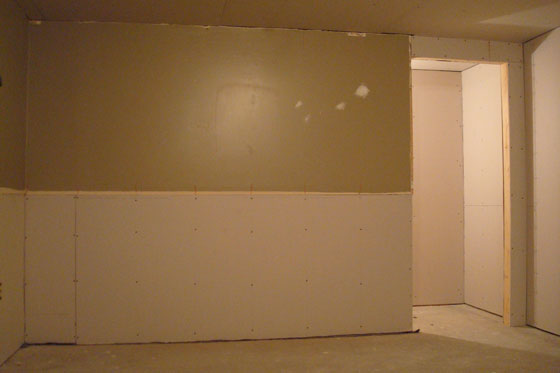
We had the new doorway framed up in about an hour and drywalled it in one more. We moved the light inside the closet–with only one bleeding bent backwards fingernail (ow!)–so that we could install shelves along the whole back wall. And now we have a nice rectangular room with a very large functional closet.

Doorway into a closet

The new straight wall in the long room. Old wall on the left. New doorway on the right.

Looking at my new straight wall makes me happy. This may seem like a minor change, but it’s one of the things that makes the basement exactly what I want, and is part of the reason I’m able to say that this renovation is turning out even better than I imagined. Isn’t it nice when reality matches up to imagination?

Change of plans

You’ll recall that one of the things we needed to do in the bathroom renovation was to increase the storage. This is Matt’s bathroom, and he’s a pretty basic kind of guy who doesn’t believe in a lot of lotions and potions.

However, he is the type of person who changes what toothpaste, deodorant and soap he uses each day depending on how he’s feeling. Some days it’s about the Irish Spring. Others, he’s Ivory all the way. And don’t get me started on the difference between the blue bar and the green one. As well, my husband can’t pass up a deal, so when something comes on sale he stocks up.

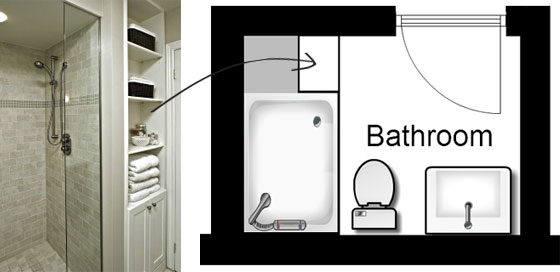
We needed somewhere to stow all of his toiletries (that word sounds too delicate for a man’s bathroom stuff) and the small single vanity was not going to do. The original plan was to tuck some built-in shelving into the one end of the shower.

Bathroom storage

The original floor plan for the bathroom reno showing the shelving unit tucked in beside the shower.

Once we started actually working in the bathroom, though, the space started to feel a bit tight. We were concerned that carving out the storage area would make the shower too small. The bathroom is not huge. However, the hallway outside the bathroom is fairly generous–in fact it’s about seven feet wide.

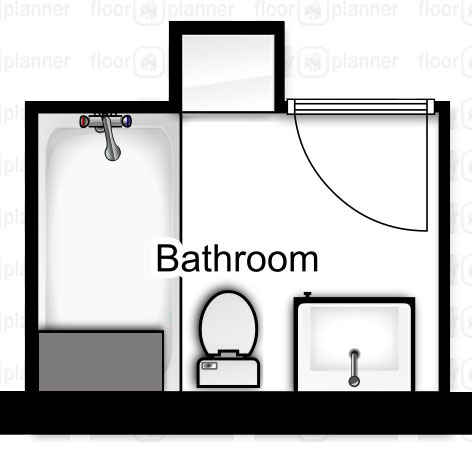
So Matt came up with the idea to borrow approximately one foot from the hallway to make the storage unit.

Bathroom floorplan

Ahhh… much more roomy. The revised floorplan for our new basement bathroom.

We’ll still get floor-to-ceiling built-in storage, so Matt gets to keep all of his different flavours of soap and toothpaste. And making this little bump-out into the hallway allows us also to have a fairly generous shower, complete with a bench.

For your reference, here are some of the measurements for the bathroom:

  • Bathroom itself: 5 feet by 7 1/2 feet
  • Storage area: 20 inches wide by 16 inches deep
  • Shower: 3 feet by 5 feet
  • Shower bench: 32 inches wide by 16 inches deep by 18 inches high

Planning is an important part of renovating. You should take the time to think about your project before you pick up a hammer and go to town. However, you have to be prepared as well to make adjustments as you go along. Sometimes you have to compromise. Sometimes you can improve on your original plan. I think this modification is an improvement on our original plan.