I live in a gated community

It’s a very exclusive enclave we have here in the country.

Population: 2 (plus 1 cat and 1 kitten)

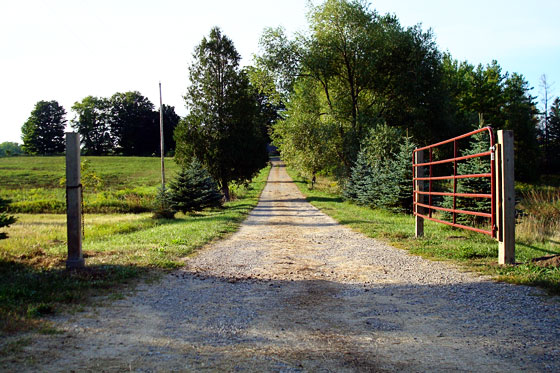
With our new gate in place at the bottom of the driveway, farm living has become quite chi-chi.

Gate at the bottom of the driveway

Open sesame

Actually, setting aside my new pretensions, we installed the gate for security. We’re far enough from civilization that neighbours or police really wouldn’t be much help to us in the event of a break in. If we’re home we can keep an eye on things, but when we’re not the gate may just be enough of a deterrent to people who are thinking about trespassing.

I’ll admit that I was initially pretty resistant to having a gate. I don’t like the way they look, and I didn’t want the inconvenience of opening and closing it when I was coming and going.

However, I actually like the way our gate ended up looking. It’s still a bit of a pain to stop, open the gate, drive through, park and close the gate when you’re leaving or arriving, but it’s a small price to pay for feeling secure about our house.

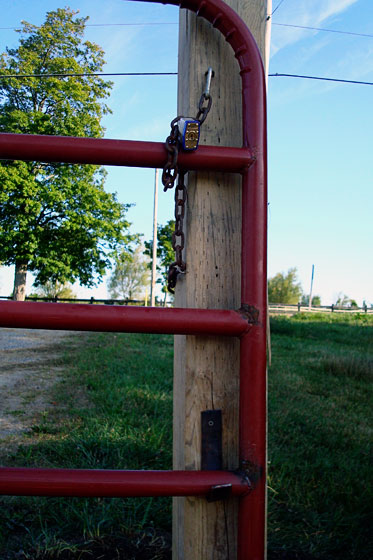
It’s a simple set up: just a chain and a padlock

Padlocked gate

If you want in, you have to have the key

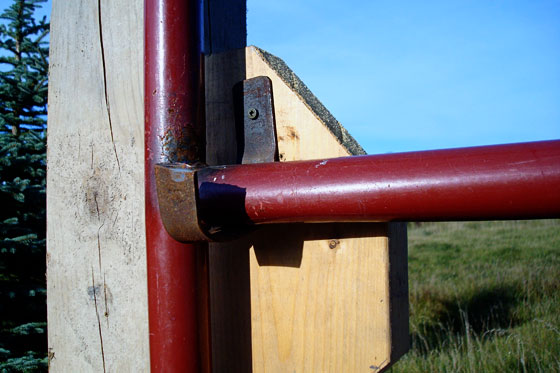
My Dad and Matt made some metal hooks to support the gate when it’s closed and when it’s propped open.

Large metal hook

The hook supports the gate to ease the weight on the hinges and also secures the gate in place.

We do like having visitors at the farm–at least from people we know. So if you’re planning on dropping by, let us know, and we’ll open the gate for you!

Open gate

Welcome to the farm

Anyone out there live in an actual gated community? How do you deal with security at your house?

See my earlier post for the story of setting the posts for the gate.

Six month review

Some days, it seems like we’ve always been here at the farm. Others, it still seems unreal that all of this is ours. However, it is true that this is our new life. In fact, Sunday was our 6-month anniversary of farm ownership.

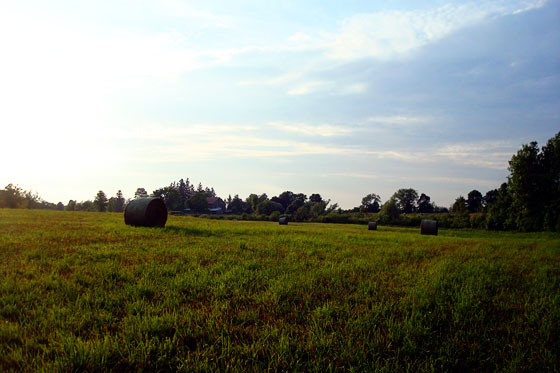
Looking over the hayfield towards the barn

My backyard

I thought it might be interesting to look back and see what we’ve accomplished so far:

  1. Energy Audit, both the initial inspection and the post-retrofit review
  2. Install new geothermal heating/cooling/hot water system
  3. Have all of the ducts cleaned
  4. Drill a new well and install completely new pumping and treatment systems
  5. Buy and install new washer, dryer, dishwasher, fridge. We were also given a new-to-us stove, so all of the appliances have now been replaced.
  6. Upgrade the insulation in the attic
  7. Remove woodstove from the basement
  8. Brick up two old windows and woodstove chimney hole in basement
  9. Reframe all of the exterior walls in the basement
  10. Rewire the basement and do minor electrical upgrades upstairs in the house like a new exhaust fan in the bathroom and a dimmer switch in the bedroom
  11. Reinsulate the basement with spray foam
  12. Install new drywall throughout the basement (pasting still in progress)
  13. Reframe and replumb basement bathroom and install new toilet in upstairs bathroom
  14. Choose tile for basement bathroom (we’ve taken delivery and just need to get moving on installation)
  15. Paint basement bathroom
  16. Reroof the house… I feel like this point should somehow be bigger to show the magnitude of this job
  17. Recover the chair seats of our newly refinished dining room set
  18. Cut down a huge tree that had a split in it and was dangerously close to the house (and cut and split all the wood)
  19. Find homes for three kittens, adopt one kitten ourselves… oh, and have Ralph spayed
  20. Get internet service
  21. Get telephone service
  22. Get satellite TV
  23. Remove the old TV aerial
  24. Make numerous repairs to the barn, including adding a door where there was just a door-sized hole, relocating another door, rehanging a third large sliding door, installing locks, fixing the broken staircase, installing lighting and plugs on the main floor, cleaning out many, many piles of garbage, scrap wood and bales and bales of loose straw
  25. Rehang the driveshed door so that it will now close
  26. Buy a tractor
  27. Install a gate on the driveway
  28. Sell the paddocks fencing, gates and run-in shelters (removal still in progress)
  29. Watch our first hay harvest
  30. Trench new waterline to the driveshed
  31. Clean out and clean up the house and property
  32. Move in (we’re waiting to finish the basement before we completely unpack)

We’ve had a lot of help over the past six months mainly from my Dad and Matt’s Dad. We also hired professional help for several of the jobs listed above, so it has not all been DIY.

It’s been a lot of work and at times I’ve been frustrated that we don’t seem to be accomplishing more. The to-do list is still very long, even if I just look at what we want to complete over the next six months. Looking back at what we’ve accomplished makes me realize that we have done a lot over the last half-year.

In the review that I posted when we were two weeks into farm ownership, I wrote:

This is definitely where I want to be. I feel very privileged that we were able to make this happen and that we’ve found the property for us. It’s very special. Tiring and a lot of work, but still special.

This statement still completely reflects my state of mind. We are so happy to be here, working together to build our forever house.

Signs of September

On Friday I got all sentimental… and metaphorical and poetical… about the sun setting on another summer. I realize officially we have a few weeks left, but here we are the start of September (already!) and things are starting to feel a bit different.

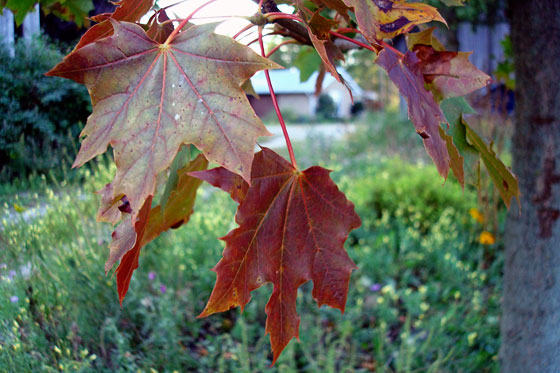
Maple leaves turning red

They’re starting to look a bit different too

To mark the start of September, one of our maple trees has already started turning red.

Maple leaves turning red

I don’t mean to alarm you, but the change is not limited to just a handful of leaves

So far, the change does seem to be limited to the one tree.

Maple tree changing colour in the fall

But the whole tree is involved in the metamorphosis

I think it’s coming, people. Yes, it’s the f-word (not that one!), soon to be followed by the big W.

Are you ready?

Rain clouds at sunset

Rain clouds at sunset

As the sun sank fully below the horizon, the clouds lifted.

A wave of bright peach orange floated across the bottom of the sky glowing brightly behind the dark spires of the trees. The light flowed up, ebbing to a light grey blue splashed with the dark flotsam of the rain clouds. Following the light up into the sky, my view shifted to the darkening east where the deep blue tide of night rose.

Going geothermal – Air conditioning

When the Going Geothermal series concluded, I promised to return to evaluate the air conditioning component of our system.

With several heatwaves this summer, we had ample opportunities to put it to the test.

Round thermometer

When the temperature is still 28ºC at sunset, you know it’s hot. And with the humidity it felt at least 10 degrees hotter.

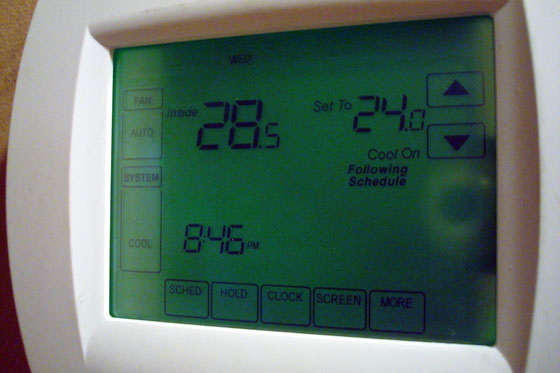
At the start of the summer, the geothermal heat pump had been off for several months as we hadn’t needed heat or cooling. To power it up, we simply chose our set point (24ºC) and turned the thermostat to cool.

Within a couple of minutes, the heat pump came to life and cool air was flowing out of the vents.

Thermostat

“Cool On” is what we’re looking for.

Everything was working well and we were enjoying the comfort air conditioning brings, especially after not having it for the past five years when we were living in our previous house. However, a few weeks in, things changed. A red light showed up on the thermostat a few minutes after we turned on the a/c one night.

Warning light on thermostat

I think this is a bad sign

I don’t know about you, but warning lights cause anxiety for me. Is this just a reminder that I have to clean the filter? Or is it a sign of real danger? Neither our manual nor Google were helpful in providing the answer.

With all of the dust in the house from the renovations, we knew we had to pay attention to the filter, so we gave it a good clean. No luck. The red light still glowed ominously. We shut down the whole system and turned it back on–technical, I know, but it works sometimes. Not this time.

With no solution in sight, we turned to the experts and called our geothermal installers for a service call.

It turned out that condensation was building up in the heat pump and wasn’t draining properly. Water + electricty = not a good idea, so the heat pump lit up the warning light.

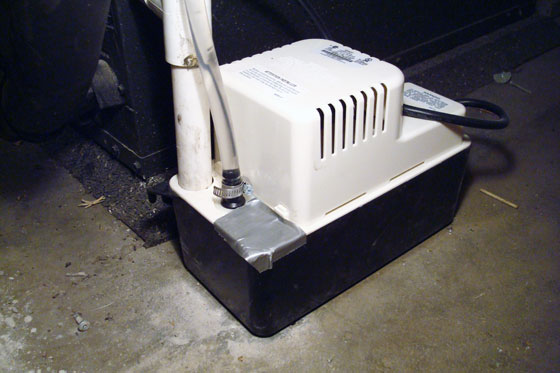
The solution to the condensation was a special pump to remove the water from the system.

Condensation pump

Our new little condensation pump. The duct tape on the corner is covering a little opening that didn’t have a cap.

The pump sits on the floor beside the heat pump. It feeds the water into the clear tube at the front of the unit and then the tube runs across the utility room to a drain.

Since the installation of the condensation pump, the geothermal system has been working perfectly. When we’re running the air conditioning, the temperature of the air is very comfortable–not frigid but it cools the house very quickly.

As with the heat setting, I definitely hear the air as it circulates through the ducts and vents. The air conditioning is not excessively noisy, but it is noticeable.

We are extremely pleased with all of the features of our geothermal system and are happy we made the choice to go geo.

For previous posts in the Going Geothermal series, click on one of the links below:

The dark side

I may be getting ahead of myself, but the other night I did this.

Paint brush and can of paint

Work continues on the drywall in the basement, but we’re all done in the bathroom. So before I put the tile on the walls, I decided to put on some paint.

Yes, I should be sanding and pasting, but it’s so much easier to open a can of paint and brush it around a small room. Never underestimate the power of instant gratification when it comes to renovations.

In fact, I was so pleased, I may not have stopped with just the prime.

Benjamin Moore Wrought Iron

I decided to go really dark with Matt’s bathroom. It’s a pretty small room, and there are no windows, so my first instinct was to choose a really light paint. However, between the built-in shelving, tile and a big mirror, only one wall is going to be painted. Therefore, there’s room for some drama. Plus, everything else is going to be white or mirrored, so there will likely be enough lightness that the room doesn’t feel like it’s closing in on you.

The colour I chose is Wrought Iron from Benjamin Moore. It’s a really dark grey that reads as black at times.

I’m hoping that it will play well with the grey tones in the tile.

And that’s another benefit of painting at this point in the project: no spatters or drips on our beautiful new tile.

This is my first time choosing a paint colour this dark, and so far I’m loving how it looks. If it turns out that I don’t love it later on, it’s simple enough to repaint one little wall.

Anyone else a fan of the dark side? What are your tricks for dealing with a small window-less room?

Who you gonna call? 1-800 DRYWALL

And we’re back.

Since I can no longer dive right in to a lake any time I want, let’s dive right back in to the basement renovation.

To recap for people whose minds may still be on a beach somewhere up north in cottage country (ahem), we ended up taking down all of the drywall on all of the exterior walls in the basement to upgrade the insulation. Then we ended up taking down most of the drywall on most of the ceilings to upgrade the electrical.

Matt declares victory over a pile of drywall and insulation.

Remember this scene from oh so long ago?

All of that taking down meant that eventually we’d reach a point where we’d have to put it all back up. But not the old stuff. That’s not how you do a reno.

With the old drywall unsalvageable, we had to buy new drywall. Now normally, I’d borrow my Dad’s truck and drive to the local lumber mill or home improvement store and buy the sheets that I need. However, renovating a whole entire basement means I’m working on a bit larger scale than usual. Too large for my Dad’s truck.

However, Dad still came in handy. With his help, we measured up the basement and came to the conclusion that we needed about 50 sheets of drywall. We also needed screws, tape, drywall compound (also known as mud or paste) and cornerbead.

As we were adding everything up, we decided that we also really needed someone to carry it down the basement stairs for us.

Matt, who like my father also happens to be a handy fellow, sourced out a selection of suppliers looking for the best price on both materials and delivery. As soon as he landed on 1-800 DRYWALL‘s website, the first words he said were, “These guys say basement delivery is their specialty.”

The marketing was working, but we needed a bit more information before we closed the deal.

We spent some time on their web site, reading all of their FAQs and getting a quote based on the material quantities we needed. Then I did it all again over the phone. Despite me asking a number of questions that were in the FAQ–including, “And delivery includes carrying all of the drywall down into the basement?”–the 1-800 DRYWALL staffer Roy was extremely friendly and helpful. He didn’t even mind when I decided to stop talking to  him and place my order through the web site because I could get $25 off for an online order.

On delivery day, my Dad was on-site to accept the order and supervise the unloading of all of the materials. True to their promise, the delivery team carried absolutely every piece of drywall down into the basement. They even stacked it in two different rooms based on my Dad’s directions.

Stack of drywall

A portion of our 50-sheet drywall order (and some new drywall already taped in the background)

The only hiccup on the day was on the screws. The screws I’d ordered online did not meet with my Dad’s approval. When it comes to drywall screws, my Dad likes a coarser thread because in his experience they hold better. However, the screws stocked by 1-800 DRYWALL had a thread that was too fine for my Dad’s standards, so back on the truck they went. Within a couple of days, 1-800 DRYWALL refunded my credit card, no questions asked.

Even with basement delivery (and not counting the screw refund), the price we paid for all of our materials was about $80 less than any other supplier we looked at–not a huge dollar figure, but enough to make a difference for us.

Where 1-800 DRYWALL truly beat the competition though was on the service side.

On the phone, over email and in person, everyone we dealt with was courteous, prompt and very helpful. Once I placed my order, I received a personal email confirmation, and two days after delivery I received a follow up email thanking me for my business and asking for any feedback.

The other element that I really appreciated was their web site. The site allowed me a high level of self-service, which I liked. I could fill my virtual shopping cart and get a quote all on my own. Plus, the FAQs, tips, testimonials, links to provincial building codes and professional site design inspired confidence that I was dealing with a reputable company.

In the end, my confidence was borne out. When you need drywall, I highly recommend you call 1-800 DRYWALL.

Wildflower week – Thistles

Matt and I have decided to take it easy this week, so the blog is going to be a little quieter than usual. To tide you over until we resume our regular program of renovations, I present a week of wildflower pictures from around the farm. Thank you for allowing me to loaf a little.

Bumblebee on a thistle

Fuzzy bumblebee on a thistle

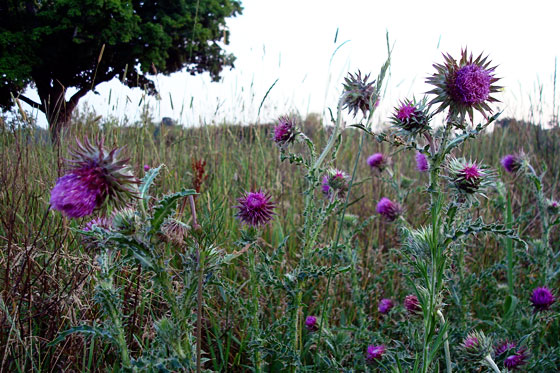
Thistles

Thistles in the field behind the barn

Wildflower week – Cornflower

Matt and I have decided to take it easy this week, so the blog is going to be a little quieter than usual. To tide you over until we resume our regular program of renovations, I present a week of wildflower pictures from around the farm. Thank you for allowing me to loaf a little.

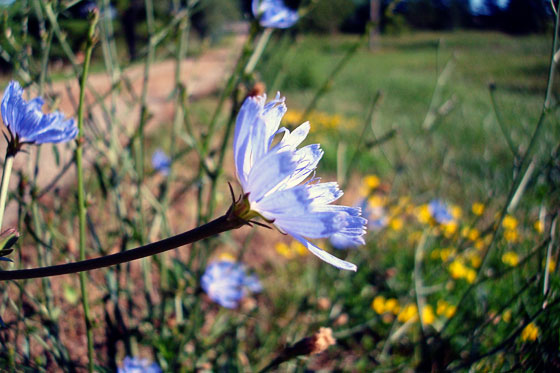
Cornflower

Lovely light blue cornflower

Cornflowers

Every morning, the cornflowers stretch eastward capturing the rays of the rising sun