Mini meows

Here is the first photo of the kittens.

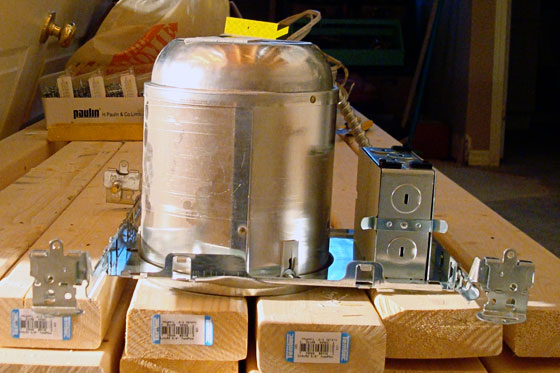
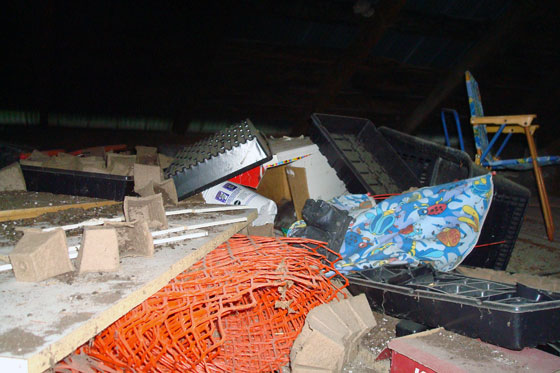
Garbage on the drive shed loft

Not quite the fluffballs you were expecting?

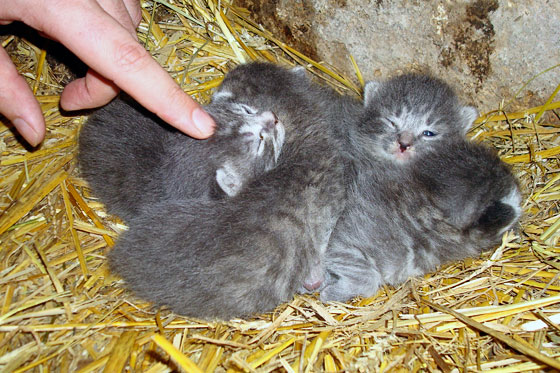
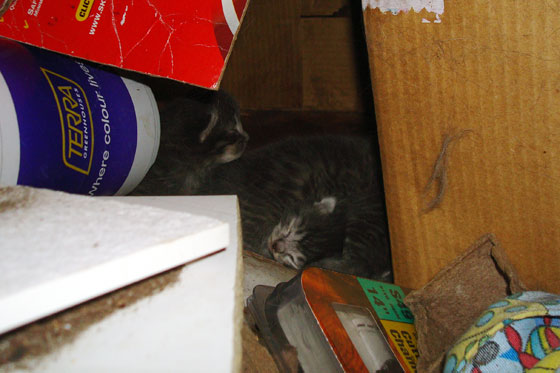
Let’s try that again. Here’s the second photo of the kittens.

Kittens in a cardboard box

See them now?

We haven’t cleaned out the loft in the drive shed yet (don’t judge), and, when it came time for Ralph to have her babies, this is the spot she chose. It’s actually a pretty good location. High off the ground so no animals can get them. Sheltered in a cardboard box. Well hidden behind all kinds of garbage. I’m amazed Matt was able to figure out where they were.

Sometime last weekend, Ralph decided her babies were ready for a new home. Again, Matt was the one who discovered where that was.

Week-old kittens

Matt pets the kittens for the first time

The kittens are now in a stall in the basement of the barn. For the first time, we’re able to see them clearly, so we can confirm we have four kittens. They’re two weeks old, so their eyes are starting to open, but they’re not very mobile yet.

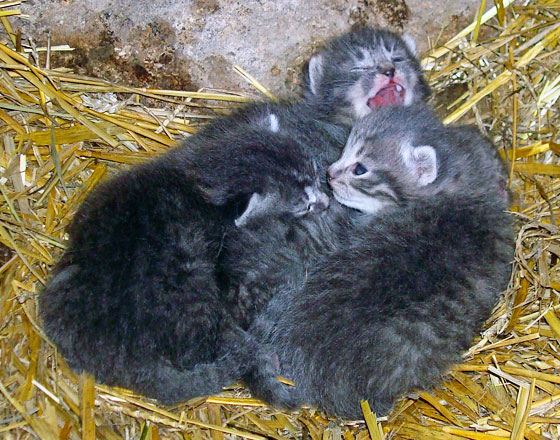
Yawning kitten

I think someone’s getting hungry

Six weeks to go and they’ll be ready for adoption. Let me know in the comments if you want a fluffball of your very own.

Wiring woes

As you saw yesterday, work on the basement continues. In the meantime, I’m going back a few weeks to talk about some of the problems we encountered with the electrical.

Burnt junction box

Fried junction box in the basement ceiling. In case you were wondering, no, the inside should not be black like that.

We ended up discovering a total of 10 junction boxes in the basement ceiling, hidden behind the drywall. This is a big no-no. Junction boxes themselves are okay. But covering them over with drywall is not. You’re supposed to put a cover on them so that they are accessible.

The conversation during demo went something like this:

“I found another one.”
“Seriously? Crap!”
“Do you want to just pull the whole ceiling down?”
“We probably should. Who knows how many there are up there.”

One of my goals in hiring a professional electrician was to eliminate as many junction boxes as possible, because I didn’t want the covers polka-dotting our nice new ceiling. In the end, our electrician was able to get rid of all but two–much better than I’d hoped for.

The other unsettling moment during demo was when we’d open a wall or part of the ceiling and find a loose wire. The ends were usually cut. They weren’t capped or taped at all, and we had no idea where they went and whether or not they were live.

This was the moment when Matt would reach for his tester and point it at the offending wire. If the tester chirped, that meant the wire was live. It turned out that most of the wires were dead, completely disconnected at both ends. No one had ever bothered to remove them, so they just sat there behind the drywall waiting to scare future renovators.

Matt made it his mission to eliminate all of this useless wiring, and he spent a lot of time tracing wires through the ceiling and along the walls so that he could pull them out.

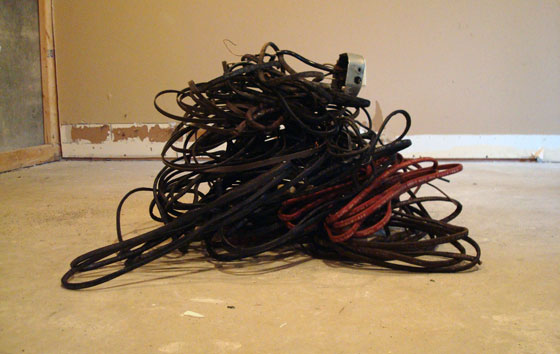
Pile of old electrical wires

Pile of some of the old wires Matt pulled out in the basement.

We did as much of the wiring work ourselves as we could, but having the help of a skilled professional was absolutely necessary for fixing all of the problems. Electrical is not always straight-forward, and it can be dangerous if it’s not right.

I’m all about DIY, but only if I know what I’m doing. Thanks to our electrician, all of the problems have been fixed, the panel is organized and labelled, circuits have been tidied up and new outlets and lights have been added where we wanted them. Most important of all it’s done right and it’s safe.

Warm and toasty… and teal?

What do you think of our new colour scheme in the basement?

Spray foam insulation

It’s a little bit smurf, a little bit cotton candy.

Matt was hoping for blue. I’d say he got his wish.

Last week, we had spray foam insulation applied to all of the exterior walls.

As you’ll recall, the original plans for the basement reno were mostly cosmetic (replace carpet, remove paneling, relocate cabinetry, leave all the drywall in place and just patch and paint). Simple, easy, quick!

However, we’ve had a few surprises in the form of inadequate insulation and improper wiring. Our solution was to remove the drywall and the existing R7 insulation from all of the exterior walls and start fresh.

R7 insulation

The old insulation was actually stamped R7. I don’t think I’d admit it if I was that inadequate.

However, we couldn’t just simply put the new insulation into the old walls because all of the studs were laid flat on the concrete. This meant we only had 1 1/2 inches for insulation. We had to fur out all of the existing studs with new 2x4s.

Furring out studs

We screwed new 2x4s onto the existing studs.

The count was close to 100 studs for the whole basement. Each one had to be plumbed (make sure it’s perfectly vertical) and then toenailed (screwed on an angle) with three inch screws to the old studs. It took two people to do each stud (one to hold and one to screw), so this stage has taken us a little while to complete. Matt and I found it took us about two hours to do a wall.

It would have been easier to put the new studs flat onto the old studs, but we wanted the higher R factor that additional depth allowed us. We ended up with 5 inches of space and we had the option of R20 or R27 for the insulation. R20 application meant we’d have 3 1/4 inches of foam and R27 would be 4 1/2 inches. We chose to go with R20 because there was nearly a $1,000 price difference for just 7 more R factors, which wasn’t worth it for us. R20 is still a really good rating.

I’ve never done spray foam before (and to be clear we couldn’t find a DIY option for spray foam, so we hired an insulation contractor to do the work for us), but we chose this option over the traditional batts for a couple of reasons:

  1. Traditional insulation requires tar paper (or some other membrane) between the concrete and the studs, and there was no way we could do this and still leave the existing studs in place. We then would have to run a plastic vapor barrier over the insulation before we put up the drywall.
  2. We found about 6 mice (all dead) and numerous rodent highways in the old insulation.

Spray foam is tar paper, insulation and vapor barrier all in one. Plus it’s more rodent resistant, which is comforting given our discoveries.

The spray foam covers the wall space between each stud as well as the joist headers at the top of the walls. In the main room and long room the ceilings are all open so the sprayers had easy access (click here if you need a refresher on the floor plan for the basement). In the office we left the ceiling in place, so Matt cut back about 12 inches of drywall off the ceiling on the two exterior walls so that the sprayers would be able to access the joist headers and we’d have a good seal all the way around.

Spray foam insulation in the joist headers

These joist headers (which were completely uninsulated before) can be the source of a lot of drafts

To prepare for the spray foam we made sure all of the electrical and plumbing work that we wanted to do was completed in advance. Spray foam fills all of the nooks and crannies and hardens very quickly. It’s great for efficiency, but you can’t really change your mind and say, “Oh I really wish that plug was over here” after it’s all done.

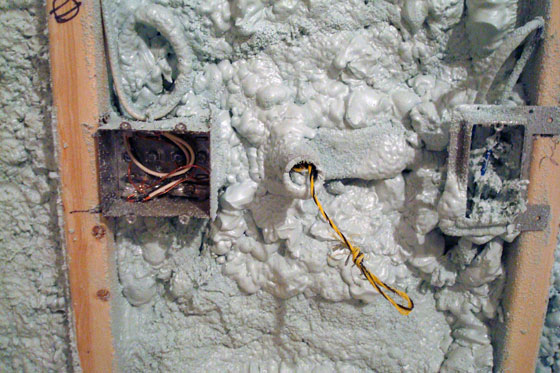
Electrical outlets encased in spray foam insulation

This is the corner in Matt’s office where the desk is going to go. From left to right we have a double box for electrical outlets, a plastic conduit that will eventually house the internet wire (we’ll use the string to pull the wire through the pipe) and a phone jack.

The spray foam crew took a full day to do the whole basement. While the spray is being applied, it is toxic, so the crew wore respirators and my Dad (who was on-site supervising) couldn’t stay in the house. When we got home from work that night there was a slight odor, but we opened the windows and it dissipated quickly.

Insulation is a major step in putting the basement back together. As much as we love the teal, we’re anxious to move on to drywall… Or maybe just anxious about drywall. This next stage is going to be a biggie. We’ll keep you posted on how we make out!

An afternoon hike

Crossing a stream by balancing on a log

Bring your boots (and your balance)

Honeysuckle buds

Buds on a pink wild honeysuckle bush at the edge of the back field

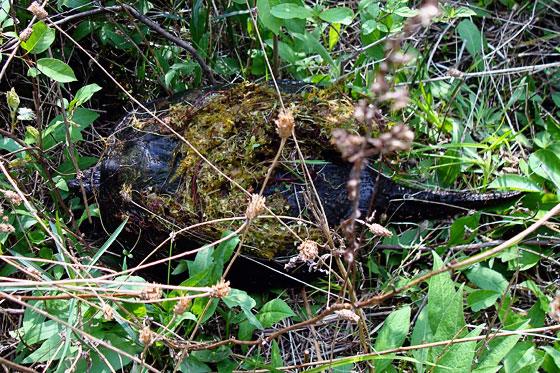
A turtle covered in moss

A turtle covered in moss

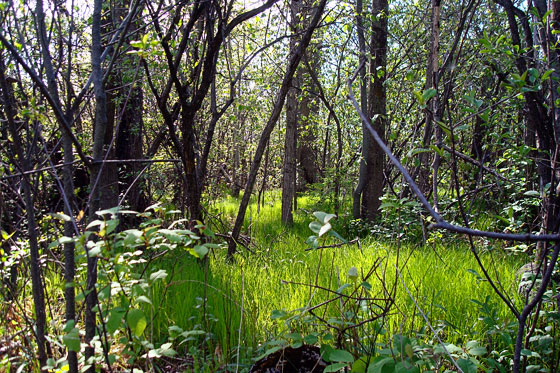
Grassy grove

A grassy grove at the entrance to the trail

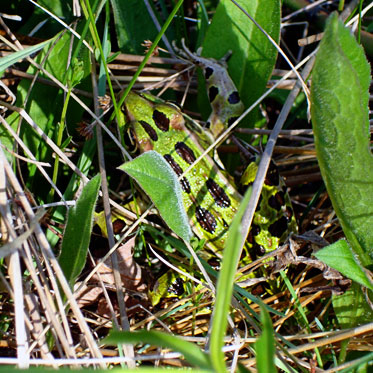
Frog

The only frog that would hold still for a picture

Old stone wall

An old stone wall back in the woods

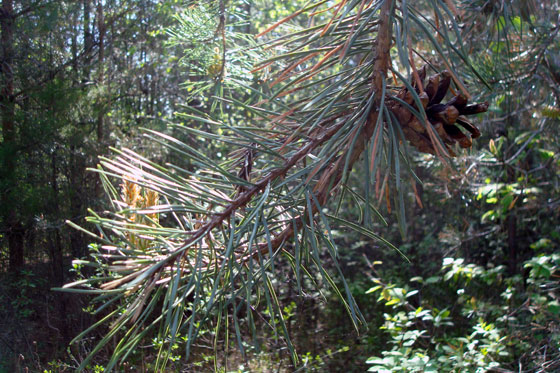
Pine cone

A pinecone stuck to its branch

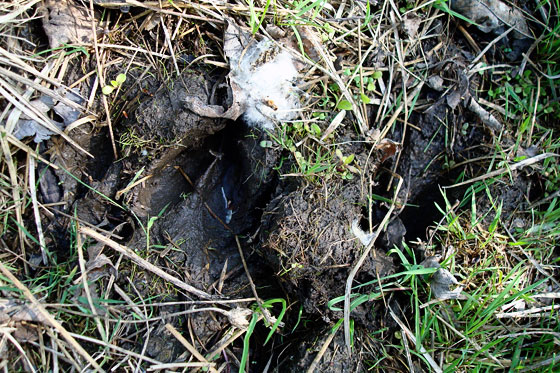
Deer tracks

Deer tracks in the mud

Marsh

A deep spot in the marsh where the stream flows through

It’s pretty cool to go for an hour and a half walk, all on my own property. There were a few moments where I wasn’t entirely sure how to get back to the house.

What did you do with your weekend? Any wildlife sightings in your neighbourhood?

Apple blossom time

Apple blossoms

This beautiful big old apple tree sits in the middle of the west meadow, just between the house and the pond.

Old apple tree

I’ve been watching and waiting all spring for it to blossom. And it finally has.

Tree branch with apple blossoms

As I was taking the pictures, I realized that the air was full of the sound of bees as they buzzed from blossom to blossom, pollinating the blooms.

Bee on an apple blossomOne was kind enough to oblige me by pausing long enough for a photo, although I could not convince him to pose nicely.

My grandparents owned an apple orchard and farmed it for many years. My grandmother would often talk about driving the loads of apples to the market, and Dad still tells stories of working in the orchard with my grandfather.

Someday, I’d like to have a small orchard, just for ourselves. I’d grow apples, of course, and also peaches, pears, cherries, plums and maybe even some grapes.

For now, this tree will do just fine.

How to install a pot light

The original lighting in what will be the TV area of the basement consisted of four pot lights, two ceiling fixtures mounted on the walls and one ceiling fan recessed into the ceiling so that it didn’t decapitate anyone. These three different sets of lights were controlled by three different switches in two different locations.
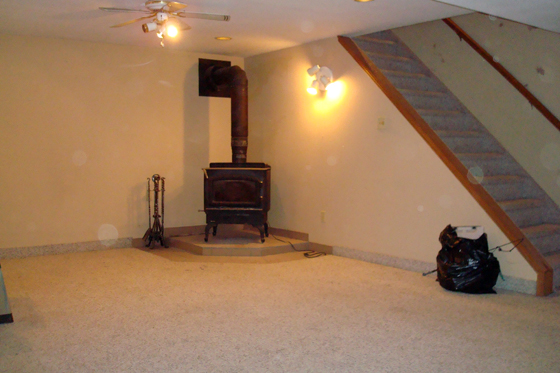
The main room before

The original lighting in the basement.

We decided to keep just the pot lights, so Matt took apart the ceiling fan, and my Dad pulled out one of the wall-mounted ceiling fixtures while I dealt with the other one. We removed the boxes and wires running to each of the lights as well as the switches that controlled the ceiling fan and the pot lights. Then we reconnected the pot lights into the switch that originally controlled the ceiling fixtures.

Everything was working well, but we felt we needed a little more light, so we decided to add an extra pot light in the middle of the ceiling.

Apologies for the quality of the following photos. So many circuits are off in the basement due to the electrical work that we don’t have very many lights. We have construction lights set up, but they’re a little harsh. I played around with some new actions in Photoshop, but I can’t tell whether they made things better or worse.
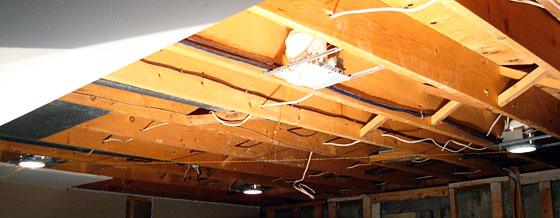
Potlights in the open ceiling

Our original four pot lights

Electrical work can be intimidating, but installing a pot light is a very straight forward job that can be completed in about a half an hour, even by those of us that are not licensed electricians. We did have a lot of other issues with the electrical in the basement, and for those we hired a professional electrician.

Here’s my pot light installation method, complete with lots of photos (of varying quality). Note that in the tutorial I’ve assumed that the wire that is going to be feeding your new pot light is already in place.

1) Turn off the electricity to your light. In this house, none of the circuits are labelled, so our usual method of finding the right one is to turn on the light (or plug something in) and have one of us watch it while the other person flips the breakers until we find the right one. Then we label it!

2) Determine where you want your new light. I used the oh so scientific method of tying a piece of twine to each of the existing pot lights. Where it crossed was the centre.

Using twine to find the centre

3) Now onto your light.

Pot light

Some pot lights can be installed in a finished (drywalled) ceiling. However, this type of pot light has to be installed where the ceiling is open.

4) Pop the cover off the wiring box to reveal the wires.

Preparing your pot light for installation.

Cover on (left). Cover off (right). I also cut off the push-in connectors because I’m used to twisting the wires together instead.

5) Now attach the pot light to the joist. For my light, this meant adjusting the brackets, or bar hangers, so that they were the right length to span between the joists and then nailing the bracket into the joist.

Installing a pot light bracket onto the joist.

For reference, holding the light in place while taking a picture is not the easiest. A third hand, or better yet a second pair, would be helpful.

6) Take a break because your husband has arrived home, and he brought dinner.
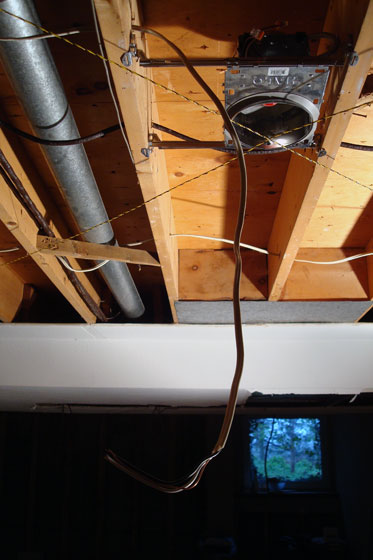
Pot light housing installed

Pot light housing installed. Time for dinner.

7) If necessary, trim your feed wire to the required length and strip back the casing to reveal the individual wires. The easiest way to do this is to use your side cutters to snip a little split in the casing, just enough so that you can access the ground wire (the copper one). Grab the ground wire with your pliers and pull to rip the casing. You want to remove the casing for about 6 inches so that you can access the black, white and copper wire. Once your casing is ripped back far enough, clip it off with your side cutters. Strip about a 1/2 inch or so of the plastic coating off of the tips of the black and the white wires. I usually do this with a knife, as though I’m peeling a vegetable.

Removing the casing from wiring

Remove the casing from the wires by pulling on the ground wire. For reference, the ground wire is pointing up to the right, the black and white wires are pointing down to the left and the empty casing is pointing down in the centre.

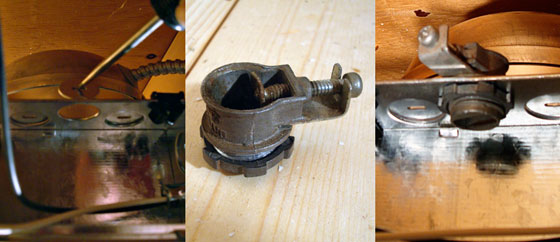
8) Knock out one of the round metal covers (coincidentally called knock-outs) on the pot light housing. I used my awl to bend it up and then wiggled it back and forth until it snapped out. The wire isn’t supposed to float loose in the hole, but the pot light didn’t come with any clamps or conduit, so I pulled one off of an old electrical box and put it in the hole.

From left to right, removing the knock-out, the clamp that will hold the wire in place and the clamp installed.

9) Insert your feed wire into the pot light and clamp it in place.
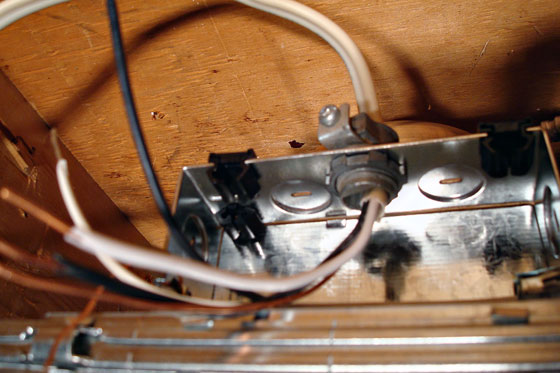
Feed wire inserted into the pot light

Sorry for the slightly blurry photo. The plastic casing should be just inside the pot light housing.

10) Connect your feed wire to the wire in the pot light: black to black, white to white, ground to ground. Twist them together with your pliers and cap them with marretts.

Connected wires in pot light housing

You don’t have to get fancy with different coloured marretts. These are simply the two I had on hand that fit the wires properly.

11) Once everything is securely connected, tuck your wires back into the housing, put in a light bulb and flip the circuit back on to test your light.

New pot light

It works!

12) Put the cover back over the wiring area. Make sure the light is positioned where you want it on the hanger bars. There’s a screw that you tighten into the bar to lock the light in place. Stand back and admire your handiwork.

Five potlights

Let there be light!

The five pot lights look great, and throw a sufficient amount of light. I initially thought we might need some wall sconces or extra lamps, but I think the pot lights will work well for us.

Oh and you might want to take down your measuring twine, unless you really like it as a decorative element.

ETA: The final, final step in installing pot lights is installing the trim, which I did after our ceiling was drywalled. I’ve posted my instructions of how to install pot light trim.
Reflections on a DIY lifestyle

Last week two of the blogs I read regularly did posts on the theme of DIYing vs. Living In Your Home & Enjoying It (that’s Young House Love’s title. DIY Diva had her own reflections). Reading their posts got me thinking about my philosophy and how we live in our house.

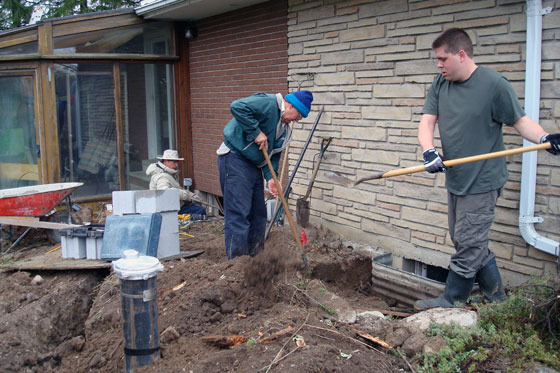
Removing a window well

Matt and Dad dig out an old window well while our mason works at bricking up another old window

It’s been just about two months since we moved into the farm. Our major motivation for moving to the country is to enjoy a slower pace and really savour life, but I feel like we really haven’t taken much time to sit down and enjoy being here. We have moments–Saturday afternoons before dump runs tend to be a time you’ll catch us sitting outside for a few minutes… usually just on the ground or a rock, usually with the kitties around us.
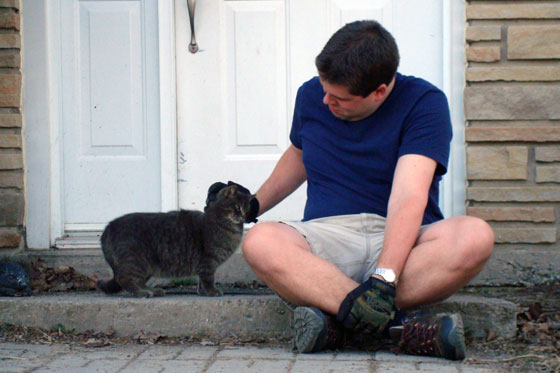
Matt takes a kitty break

Matt on a kitty break. Notice the work gloves are still on.

As much as I love DIY, it can be a tough lifestyle at times.

Last week was a bit rough in spots. We had a couple of late nights working on the house, a couple of evenings out for other stuff (the rest of your life and work continue even when you’re mid-reno) and a couple of last minute shopping sprees/construction blitzes to prepare for trades who were coming the next day.

We tend to sacrifice sleep to get it all done and there are lots of mornings that we are dragging and some days where we feel a bit droopy.

Skinned knuckle

Cuts and scrapes, bumps and bruises are all part of DIY

I can’t imagine not working on our house myself and making it what I want with my own two hands. But there comes a point in every project where I just want it to be done. We’re not there yet. It usually hits sometime around the drywall stage.

A big project, like the basement reno we’re in the midst of now, causes a lot of chaos. Everything that would normally be in the basement is in the living room. The kitchen island is covered with tools and materials and manuals and notes for trades. There’s a fine skim of dust everywhere, both upstairs and down.

The yearning to have a clean and organized house and be able to sit down for an evening without feeling guilty is powerful motivation at this stage of a project.

The partially gutted basement

The partially gutted basement

We do try to keep a balance. We’ve learned we don’t always have to be working on the house. Yes, taking a night off makes me feel slightly guilty and pushes the finish line a little farther away. However, hanging out with friends, sitting on the couch watching TV or just taking a walk rejuvenate me so that I’m more motivated when we get back to work.

Also, we tend to only take on one big project a year, so we have lots of time off to recuperate and relax in between–and forget!

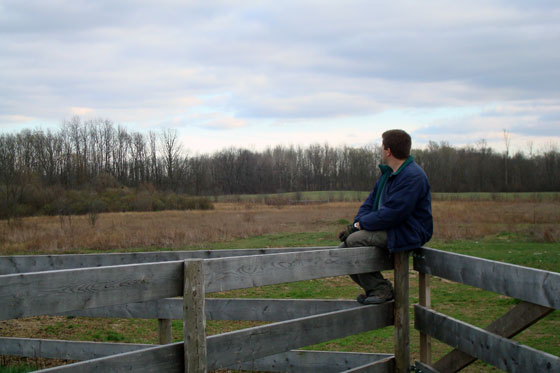
Matt sitting on a fence

Vistas like this just outside the front door can make us shift our focus pretty quickly from DIYing to relaxing.

This basement project is not our first DIY reno, but this is my first time blogging about it, and I’m finding the blog is very motivating as well. Keeping a record of our progress and posting pictures of what we’re working towards help to keep me moving. I know at the end it will be beautiful and completely worth it.

As well, knowing that we have all of you out there supporting us, reading updates and looking forward to seeing the finished product means a lot. People have been promised an invitation to play games and watch movies in our fun basement hangout. We have to deliver!

Now it’s your turn. Whether you’re a DIYer or not, how do you stay motivated?

Meet the barn cats

One of the questions we’re asked fairly often when people hear we have a farm is, “Do you have animals?” I’ve mentioned before that we inherited a lot of things from the previous owners. Included in those things is our barn cats.

Our two barn cats

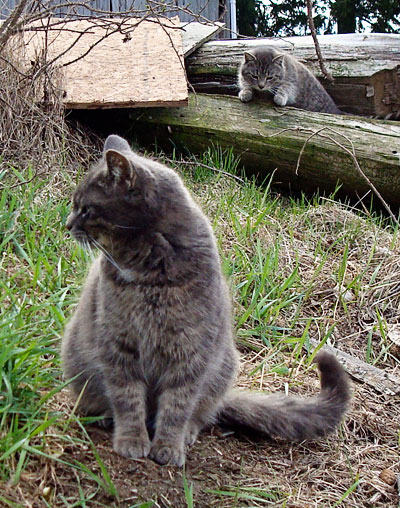
Ladies and gentlemen, meet Ralph (striking a pose in the foreground) and Bert.

The first time we visited the farm we caught glimpses of a cat. We weren’t sure whether it was passing through or whether it belonged to the property. At that point, the house had already been abandoned for a few months, so if the cat did belong to the property, it was on its own.

On a whim Matt named the cat Ralph.

Ralph the cat

Ralph sitting pretty

In the time between when we put in our offer and the deal closed, we saw Ralph every time we came back to the property. We hoped that he’d make it through the winter on his own and he’d still be there when we moved in.

When we took possession of the farm, Ralph was still there. Soon we noticed that he had company. Matt dubbed cat #2 Bert.

Bert, our other barn cat

Bert sitting pretty

(An aside for those who remember the classic Canadian kids’ cartoon The Raccoons. In this show, the main characters were Bert, Ralph and Melissa. This wasn’t in our minds when Matt named the cats, but as soon as we realized we started keeping our eyes out for Melissa).

Both cats were a little skittish, so we went to work on winning them over. This mostly involved a big sack of Agri-Cat kibble purchased at the local feed mill and Whiskas Temptations that we dole out daily.

Ralph quickly came around and soon was camping out by the front door. We learned he was very vocal, he liked to be scratched on the very top of his head right up near his eyebrows… and he was also… female.

Ralph, one of our barn cats

Yes, it’s true, I’m a girl, and they named me Ralph.

This will likely sound familiar to those who know my family. We have a habit of choosing the wrong gender when naming our pets. There was Alice the gander and Clarence the goose and Harry the duck who hatched 18 ducklings. Matt and I are just keeping up the tradition.

Bert was a little more of a hard sell than Ralph. He (and we’re sure he is a he) is quite timid. After a month of wooing him with Whiskas, he finally worked up the confidence to take a piece directly from Matt’s hand. He shows up at feeding time most nights and as long as his head is buried in a bowl of Agri-Cat, he’ll let Matt pet him a little bit. He’s a very, very pretty cat with a very high pitched voice.

Barn cat Bert

Bert tippy-toes along a log

I am not a cat person, but I admit that I’ve come to enjoy arriving home and seeing the cats in the flowerbed by the front door waiting for their humans. Once I’ve parked the car, Ralph comes trotting over to me to get her welcome home scratch.

They live outside and sleep in the barn if they want shelter. Aside from a couple of paws over the threshold from Ralph when we nip inside to grab some treats, they don’t come in the house.

Straw nest

Each cat has made its own “nest” in the piles of straw in the barn.

And they’re earning their keep. We often see Bert stalking the fields for prey. The first time Matt and I sat down to dinner in the dining room, Ralph joined in. She walked up the driveway carrying a mouse, which she then proceeded to eat in its entirety right in front of the dining room window. Perhaps not the most appetizing dinner experience I’ve ever had.

She’s going to have to keep it up too. Over the past two months, Ralph got very round around the middle. Lest you think we’re too generous with the Whiskas, I should tell you that last week she suddenly became her usual svelte self, and on Friday we finally found her brood of barn kittens.

They’re tucked away high up on the loft in the driveshed, so we don’t know yet how many there are, but it appears that we just went from two cats to more. And it looks like there’s a visit to the vet in our future. It was in the plans. We just weren’t quite quick enough.

Any other reluctant cat people out there? Or cat crazy people? Anyone else remember watching The Raccoons? What was your favourite kids’ cartoon growing up? And the most important question of all, anyone want to adopt a kitten? They’ll be free to a good home in about eight weeks.

Pond paddler indentified?

We’ve not seen our furry pond paddler since the last sighting, but we now have more evidence as to what species he might be.

Trees that have been cut by a beaver

Felled trees by the pond

The consensus from the comments on the last post was ‘beaver,’ and the signs seem to say commenters are right.

Trees that have been felled by a beaver

Bite mark analysis, anyone?

Given the size of some of these trees, he’s ambitious. So far, there’s no sign of a dam or a lodge, but about half the property is wetland, so it could be anywhere really.

The farmer who’s rented our fields has started to clear out some of the horse paddocks, as we’re not going to be using them. Perhaps we should put this busy beaver (sorry) to work on our fence posts.

Going geothermal – The verdict

This is the final post in “Going Geothermal.” I’m going to evaluate our experience thus far.

In the first post of this series, I mentioned that geothermal wasn’t even on our radar when we first thought about replacing our furnace. Now, two months after the geo was installed, we couldn’t imagine choosing any other system.

ClimateMaster heat pump

Our heat pump, complete with certification sticker from the Canadian GeoExchange Coalition

On our choice to go geothermal

Geothermal is expensive when it comes to the up front costs. We definitely paid a lot more than we would have if we had chosen to go with a traditional high-efficiency furnace, even taking into account a new air conditioner and hot water heater. Over the long term, however, we should actually save money. According to Matt’s calculations, with the savings we get from not having oil, we should be even after seven years. And after that we’ll be paying about one-third of what we would have been paying if we had an oil system.

Geothermal is a greener technology, which is important to me. I like knowing that I’ve made a responsible choice that is better for the planet than the other options that were available.

On the system

As I mentioned, our system consists of a 5 tonne ClimateMaster heat pump with a desuperheater and a 6 tonne horizontal loop. All of the elements of the system are working very well. The temperature in the house is very comfortable, and we have lots of hot water.

Early in the process of going geothermal, we were told that a geothermal system is most efficient if it can run 90% of the time. Ours definitely does not do this. It could be because it’s spring and temperatures are warmer. Or it could be because our system is slightly over-size for our house due to our plans for future expansion. I’m willing to sacrifice some efficiency to avoid upgrading the heat pump in the future when we put on our addition.

On the con side of things, I would say geothermal is slightly noisy. The heat pump itself is incredibly well-insulated, so you don’t hear the motor or other elements. However, a huge volume of air is being pushed through our ducts–more than if we had a regular furnace. As a result, I find I hear the air as it circulates, and I notice more when the system is running.

I’ve also noticed that the air seems to be dryer than it was at our old house with our gas furnace. I’m not sure whether that’s a factor of the house or of the geothermal.

On the contractor

Our geothermal contractor was Waterloo Energy Products. From the beginning with my initial phone call to their office, I was very impressed by their customer service. They answered every single one of my questions, even if they did tease me a bit about my questionnaire. From the office staff, Jim and Jason, to the on-site crew, Chris, Paul and Mike, they were all very professional, knowledgeable and helpful.

Documentation binder for our geothermal system

At the conclusion of the install, Waterloo Energy Products provided us with a binder with all of the information and documentation for our system, including site diagrams and warranties.

They are also personally very committed to geothermal and have geothermal in their own homes. Their office is an education in sustainable living, showcasing multiple renewable energy products all under one roof. If you’re at all interested in renewable energy–not just geothermal–I encourage you to visit their Sustainable Living Centre.

Still to come

The one part of our geothermal system that I haven’t evaluated yet is the air conditioning. As it’s still spring, we haven’t used it yet. However, I promise to post an update once we do. I’m sure Matt will put it to the test this summer. After five years without a/c, this is one feature of the farm that he’s very excited about.

Update: The air conditioning evaluation is now available.

For now, this concludes the “Going Geothermal” series. We’re very pleased with our decision to go with geothermal, our system and our experience with Waterloo Energy Products. I hope that this series gives you some insight into our experiences and helps those that are interested in going geothermal themselves.

If you have any questions, leave a comment. I’m happy to share more about our experience “going geothermal.”

For previous posts in the Going Geothermal series, click on one of the links below: