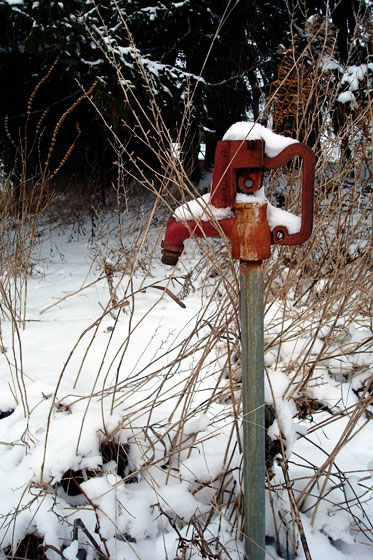
For the next couple months likely, our water will be in the frozen, fluffy white form.
For the next couple months likely, our water will be in the frozen, fluffy white form.
Ice storms are so 2013. For 2014, ice is going to be fun. We started on Jan. 1 with a New Year’s Day skate on the pond.

Well, I was the only one who actually skated. Matt and Baxter just trotted around the ice rather than gliding.

Walking was safer than skating in some areas. Although the ice is mostly smooth, frozen coyote tracks here and there are tripping hazards.

A few stumbles aside, a skate on my own pond was a fun way to kick off the year. This is how I’ll take my ice from now on, please… at least for the next month or so. In July I’ll probably want it cubed and in a glass. Although with the temperatures we’re having right now, the pond may stay frozen solid well into summer #polarvortex.
How did you spend New Year’s Day?
Happy new year! I hope that you all had a great break. Thanks for waiting while I took a bit of an extended holiday. Our break ended up being a bit unusual, so for today I want to spend some time (okay, it’s kind of a long post, so perhaps I should say a lot of time) looking back before I dive into all that is new in 2014.
For some reason, I had my last post–my Christmas post–all set up more than a day in advance. I always have posts written a couple of days ahead, but I usually schedule them just a few hours before I want them to go live. I don’t know why I changed it up for this post, but I’m glad I did because by the time the post went live on Dec. 23, we’d been without power for about 24 hours. There was no internet on the farm.
However, it wasn’t just about not having any internet. We also had no heat. And we also had no water.
As many people are probably aware, a big ice storm rolled into southern Ontario on Dec. 22. Freezing rain coated trees and hydro wires, knocking out electricity to hundreds of thousands of people.
Power outages are not that unusual for us, so we weren’t too concerned when we heard the telltale beeps and clicks in the middle of the night as phones and other devices warned us they were no longer receiving power. By the time we woke up Sunday morning, the house was a little cooler than normal, so we snuggled down under the covers for awhile longer.
The fine print on the dogs are not allowed on the furniture and definitely not in the bed rule notes that exceptions are made during power outages on chilly winter mornings.

Morning Sunday: We were all disturbed from our cozy nest by a tree crashing to the ground right outside our bedroom window. Fortunately it missed the house, though I’m still not quite sure how. While Matt was content to investigate the situation from inside the house, Baxter and I headed out.
Ice more than a quarter inch thick covered the trees. The soundtrack to our morning walk was crack, crash, thump as branches broke, plummeted through the ice coated canopy and landed on the ground. We stayed well away from the treed perimeters of the fields, but I still consciously reminded myself which direction to run in case I heard a crack too close.
As we walked down the driveway to drag some fallen branches out of the way, we were surrounded by the scent of pine from the raw wounds on the trees in the forest beside the house.

Mid-day Sunday: We dug out the batteries to fire up a radio so that we could get an update from the outside world. I found the emergency number for the hydro company only to discover the line was too busy to reach even the automated system. We donned our hats and extra clothes. I sampled paint colours on the hall, kitchen and foyer. Matt graded papers… something he normally wouldn’t do until the very last minute. Baxter and I went for another walk. The crashing and cracking of trees continued. I flushed the toilet–muscle memory, I couldn’t help myself–and we were officially out of water.
For those not familiar with country living, we are reliant on our well for our water. Our well is reliant on its pump to provide us with that water. The pump is reliant on electricity to run. When the electricity runs out, we have the water in the pipes and that’s it. No more is flowing.
Evening Sunday: Darkness was falling, and the house was getting colder. We decided we needed a hot dinner, so we pulled the barbecue out of hibernation, hooked up the propane tank and retrieved a battered pot from our camping gear. I pulled out every candlestick we own and filled them with candles. Two cans of soup, some crackers, some cheese and pickles from our rapidly warming fridge, and we had a not-at-all romantic candlelit meal.
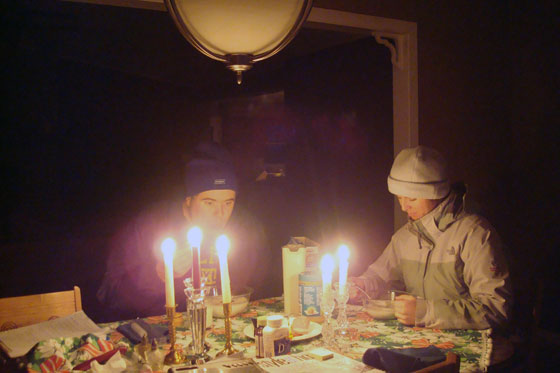
The only problem was, it was only 6 o’clock. We were done eating. Now what were we going to do? Scrabble followed by a marathon rummy session took us through to 9:30. I piled an extra comforter and two sleeping bags on our bed, and with hats on our heads, the dog curled between us and the radio playing, we went to bed in our 16 degree house.
Morning Monday: I have never been so happy to head to work on a Monday morning. Within 15 minutes of getting out of bed, I was out the door. That shower in the office bathroom was the best shower I’ve ever had. I had been wearing a hat for nearly 24 hours. I had not washed my hands aside from a cursory rinse in about 12 hours. I had gone for two vigorous walks with the dog. Let’s just say I was not at my best.
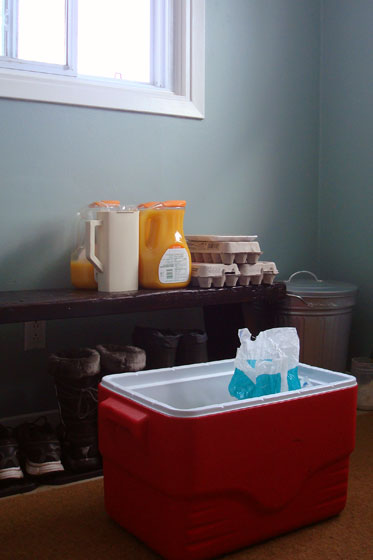
Evening Monday: Driving home my mantra was “Please let there be power. Please let there be power.” I turned into the driveway… and the house was dark. Matt had managed to get a shower at his parents house–they were also without power and on a well, but they have a generator that was connected to their water pump–but he had spent most of the day in the cold house marking papers and calling the power company only to be told they had no idea when our hydro might be restored, but we were one of 1,150 houses in our area without power. He transferred perishables out of the fridge and into the mudroom. With the window open, it was colder there than it was in the fridge.
Our limited menu of cold food or barbecued soup did not sound appealing that night, so we tucked Baxter into his bed and headed out to find a restaurant where we could get a hot meal under electric light. It was easy to pick out the powerless people in the restaurant. They were the ones wearing the massive sweaters, yet still hugging themselves–both for warmth and for comfort. They were the ones with the hat hair–or the ones who wouldn’t take off their hats. They were the ones with the haggard faces. They were the ones that headed into the public bathroom after dinner to wash their haggard faces before they headed back to frigid pioneer-land.
Night Monday: Despite how hard it was to arrive back at that frigid pioneer land, Monday night was easier than Sunday night. We thumbed our noses at carbon monoxide poisoning and fired up the camping lantern for an hour, so I had enough light to read. Matt continued to mark by candlelight. I carefully made the bed, smoothing the sheets and layering the sleeping bags. Even though the temperature was 12 degrees, we slept well burrowed in our cocoon.
Morning Tuesday (Chrismas Eve): We were wearing our winter coats and could see our breath whether we were outside walking the dog or inside eating my cereal (with nearly frozen milk). We were down to 8 degrees inside. Matt continued marking, sure that the gods were just waiting for him to finish before they turned the power back on. However, as he wrote the last grade, the gods did not relent. We were still powerless 57 hours and counting.

Afternoon Tuesday: We were slated to go to Matt’s parents for Christmas Eve, so we decided to arrive early. We packed pyjamas and sleeping bags in case we decided once we got there that we couldn’t bear to abandon the luxury of heat and running water.
As we left the farm, we saw two hydro trucks at either end of our road. They were the first trucks we’d seen in our area, and we were so happy to see evidence that they were finally working on our lines. We followed one truck, which eventually pulled over. We rolled up beside him, and I leaned out the window and requested an update. The driver in the truck said that they were working on our block that afternoon and we should have power back in a few hours. We were ecstatic. We were going to have Christmas at home in our warm, lit, watered house.
Matt wanted to return to the farm to be there for the big moment, but I wanted to be warm that instant so we continued on to Matt’s parents’. Thanks to their generator there was warm running water so we could shower, and thanks to a woodstove we didn’t have to wear our coats and hats–Baxter included. We even watched a Christmas Carol—our annual Christmas Eve tradition—before we headed back to the farm.

Night Tuesday: Driving along the dark country roads with the headlights glinting off the ice coating the trees, we would catch occasional glimpses of lights through the trees. Some people seemed to have power. I tried not to jinx it, but may be we would too.
We turned into our driveway… and everything was dark. The light that we left “on” for our signal was not lit. We opened the door and flicked switches just to check. There was still no power. The temperature on the thermostat read 6.5 degrees. It was not a happy Christmas Eve.
Matt called the power company. There were now just 36 households in our area without power. And we were one of them. The ETA for return of the power? Boxing Day at 10pm. Nearly 48 hours away.
This moment was my lowest point. I was over it. This was not an adventure. I just wanted to be comfortable and home. But my home was completely uncomfortable. I was not going to stay in my frigid water-less house. We packed up some clothes, got back in the car and returned to Matt’s parents’ house.
The whole drive, Matt kept trying to say, “Well, at least we… ” I was not in the mood to look at the bright side of the situation. This was not how I had envisioned spending Christmas.

Clockwise from top left: Shattered ice caking our Japanese maple. The poor broken willow at the bottom of the driveway. Our Rose of Sharon, which is usually as tall as the dining room window. One of our new little trees bowed under the weight of the ice.
Morning Wednesday (Christmas): My father-in-law cooked breakfast on an electric frying pan plugged in to the one outlet powered by the generator. My mother-in-law and I walked up and down the road, looking at the ice coated trees, downed power lines and fallen branches. I sat next to the woodstove and read magazines. When I refused to leave the warm house, Matt headed back to the farm to check on the situation.
There was still no power, so he drained the pipes as best he could and poured antifreeze into the toilets. The temperature was now 4 degrees inside.
Afternoon Wednesday: Christmas dinner was to be at my parents’ house, so we headed out early to take advantage of their powered house. My parents had lost electricity as well, but only for about 24 hours. My Mom was able to cook dinner for 19 people, and we were able to enjoy a hearty meal.
Night Wednesday: Hope springs eternal, so after dawdling over the dishes for awhile at my parents’ we headed back to the farm. We turned into the driveway, and the outside light was on. As devastated as I was on Christmas Eve, I was equally elated on Christmas night. I nearly cried at the prospect of moving back into my house.
We walked in, and the thermostat already read 16 degrees. After the temperatures that we’d been living with, 16 degrees felt positively balmy. According to our blinking clocks, the hydro had come on at roughly 2:15pm–close to exactly 3 1/2 days after it had gone out. While Matt headed back to his parents’ to grab our things, I stripped the bed and threw all of the comforters and blankets into the washing machine.
Yes, the thing I wanted to do most after moving back into my house and being without power for half a week was laundry. The washing machine didn’t stop running for nearly two days, as I laundered bedding, towels, clothes, jackets, hats, mitts, sleeping bags and everything else we used during the outage.
As miserable as I was for my powerless Christmas, there were people much worse off. During the outage, I thought a lot about the farmers around us who had to take care of their animals without power or water. In Toronto (where I guess they probably had running water), some people were without power for the whole week.
I think for many it didn’t feel like Christmas. I know it didn’t for us. But now it’s a new year, and we’re all safe and sound and warm and watered. We’ll have a mini-Christmas celebration in a few months when we get a generator… ’cause you know there’s no way I’m going through this again.
Were you one of the powerless this Christmas? Were your holidays particularly memorable this year? Have you ever gone through a long power outage?

Thank you all for reading, commenting and following along on all of our adventures over the past year. I’ll be taking a little break for the holidays but will be back in the new year with lots of new projects, renos and stories. Wishing you all a wonderful holiday and a very Merry Christmas.
We’re at the time of the year when temperatures are rising and falling day-to-day. A week ago, the thermometre crept into double digits (up to 50º for those tuned to the Fahrenheit scale). This week, we’re having wind chills in negative double digits (down to 0º Fahreneheit). As a result, the view of the pond is constantly changing.
One day it looks like this.

The next day, the darkness of the water has expanded and the thin coating of ice around the edges has completely receded.
Our pond doesn’t like to freeze. It is helped in its quest to stay liquid by the creek that is constantly running fresh flowing water. Even here though, the cold takes hold and ice forms.
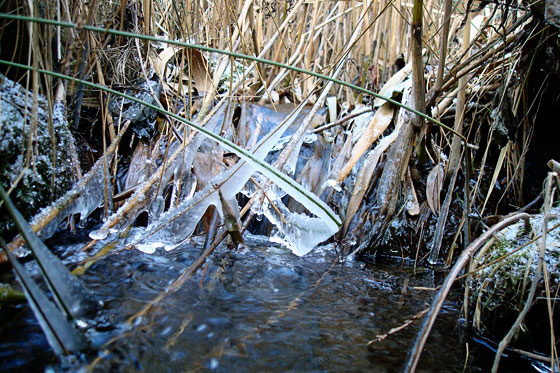
After a couple of days of cold temperatures and snow flurries, the darkness of the water is gone, replaced by ice.

We’re not quite ready for skating yet, but we’re getting there.
What’s the weather like where you are? Does your thermometre count in Celsius or Fahrenheit? Anyone follow the Kelvin scale?
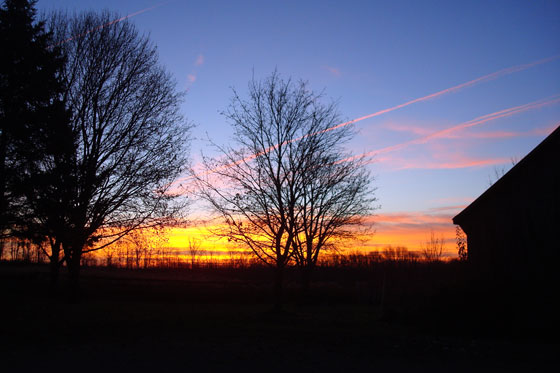
A stunning fall sunrise.
We are now officially in the month of winter. At the farm, most of our prep has been the same as last year–shut off the outdoor taps, put away the outdoor furniture, take the mower deck off the tractor, put on the snowblower. However, there was one thing that I knew I absolutely wanted to change this year: my footwear.
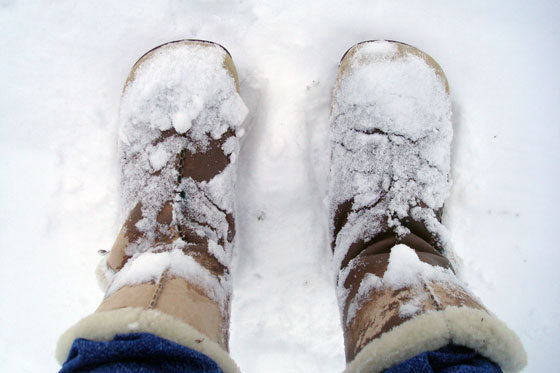
Our first winter at the farm taught me that my previous boots were inadequate for country life. In case you can’t tell from the photo below, they are not only completely snow-covered. They are wet. Soaked right through.
So, this fall I was on the hunt for better boots. Here’s what I ended up with. Can you tell which pair is the “farm” boots?
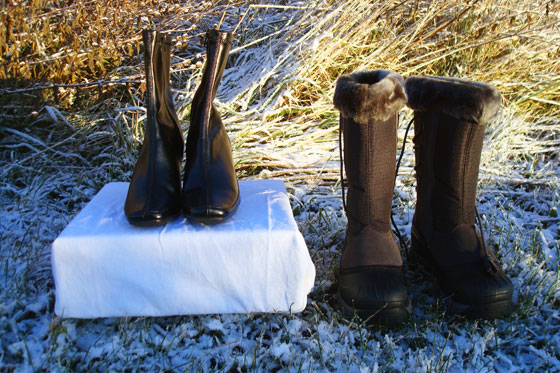
The “office” boots are the divas on the pedestal afraid of our first dusting of snow. The farm boots are tall, furry, with rubber soles and removable lining. I’m hoping that they will stand up to whatever the farm throws at them in the coming season.
At my previous job, one of my co-workers had a hard time reconciling the person she knew from the office with the person she saw on the blog. I had never noticed a disconnect, but then my shoe shopping ends up illustrating the two sides of my personality… or at least my fashion sense.
Do you have a split personality between home and work or in your style? Any winter boot recommendations to share? Have you had your first snow yet?
Our fields are in the process of being transitioned from hay to soybeans. Earlier this fall, our farmer killed off all of the hay, and at the end of last week, the manure men showed up.
I had an inkling that something might be in the works when on Baxter’s and my morning run on Friday–which takes place entirely before sunrise–a very, very large manure-smelling piece of equipment loomed out of the dark as we entered the big field. Baxter and I were both a bit disconcerted, as it’s usually just the two of us alone. Once I ascertained that it wasn’t a) coyotes b) a UFO c) poachers, we were able to get on with our run, although Baxter continued to give it the stink eye (pun not intended, but I feel clever now, so I’m leaving it in) as we did our morning perimeter patrol.
Saturday morning, the rumble of machinery signaled that work was underway. Being the weirdo country newbie that I am, I rushed outside with the camera to document the process. I’m not sure that the manure contractors have ever been models before, but they were pretty tolerant of my presence and even took time to answer my questions.
Despite their explanations, I still know very little about manure spreading, so I’ll do my best to explain what I saw.
To start, this is a massive operation. The manure men were independent contractors hired by the farmer who rents our fields. They had traveled 3 hours by tractor that morning to come to our farm. Here’s just some of the equipment that was involved in manurefying our fields.
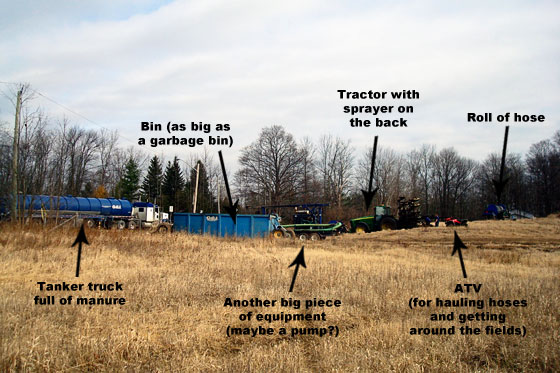
Outside of the frame of this picture is a second tractor, a pick-up truck and another tanker. Each tanker holds 8,000-10,000 gallons of manure. Our front field, which is roughly 6 1/2 acres, took 7-8 truckloads of manure. Holy crap (okay, that pun was intentional).
The trucks were in a regular rotation, going to the veal farm down the road from our place to get filled with manure and then coming back to the farm to deposit their load.
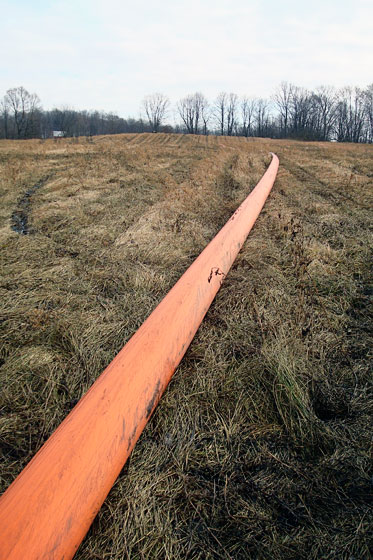
The manure flows from the trucks, I’m assuming through some kind of pump, and then travels in long hoses across the fields to the tractor.
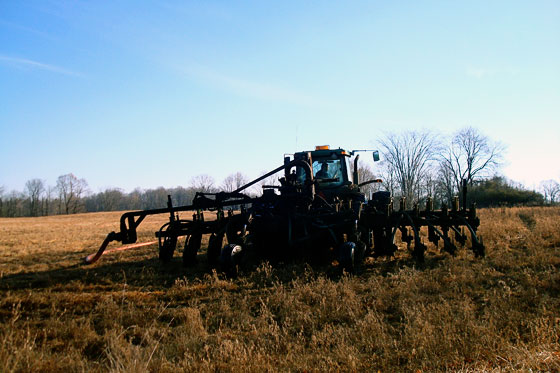
The big hose connects into smaller hoses on the tractor, which are each attached to a disc. It’s a bit hard to see here, but the rear window on the tractor cab has its own windshield wiper… a necessity for when one of the hoses has a “blow-out.” Ewwwww.

Here is the spraying attachment folded up (for scale, the tractor’s tire is as tall as me).

The discs cut into the ground so that the manure goes right into the dirt, although some of it does pool on top.
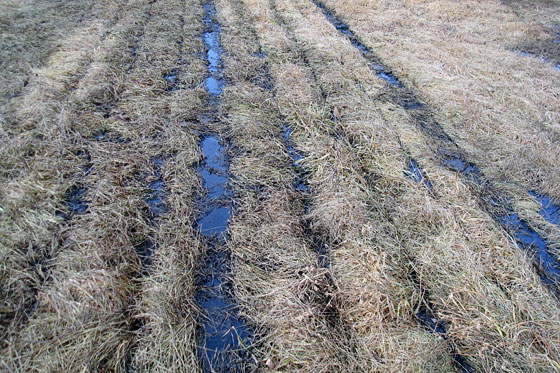
When the field is done, the hose rolls up onto a spool on the front of the tractor.
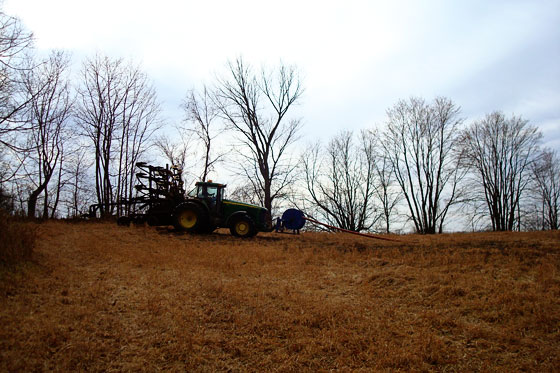
Here’s an action shot of the spraying.
And here’s what our fields look like now. (For contrast here’s a picture from the same angle taken at the start of summer after this year’s first hay harvest.)
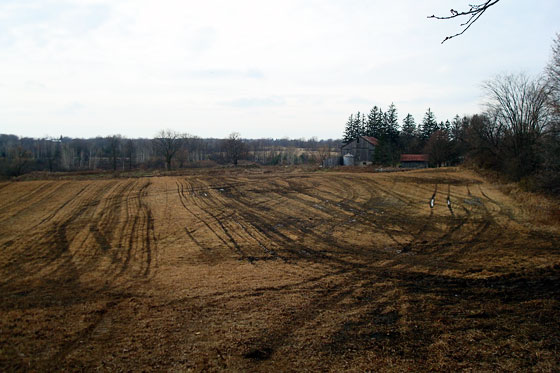
As for what our fields smell like now, well, I have to admit things are a bit stinky around here. It’s not as bad as I thought it would be (perhaps I’m building a bit of an immunity to “country air”). At the same time, I feel like I’m constantly smelling manure. Even when I’m in the house with the windows closed, the smell is still in my nose.
I’ll leave that part of the experience to your imagination.
Does anyone have any wisdom to share about manure spraying? How weird was it that I felt the need to document the whole process? Is anyone else dealing with a malodorous environment? Any idea how long it will take for the smell to fade?
This is our second fall on the farm, yet I feel like I didn’t notice the leaves changing colour this year. This weekend walking around and actually looking around, I was surprised to notice that most of our trees are nearly bare. The colours are gone, and I didn’t even see them.
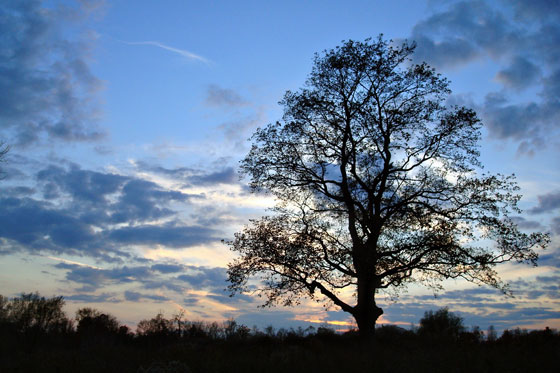
It feels like time is moving so fast these days. Friday was my last day at work. I’ve spent 11 years at the same organization, starting as a student intern, moving to different departments, trying different things, meeting different people. It was a great place to begin my career. I’ve been very nostalgic this fall as I prepared to leave my job. I have a new job to go to at a different organization, which I’m very excited about, but first I have a two week break.
I’m hoping over the next two weeks to slow down a bit and savour my time at the farm, with family, friends and Baxter, working on my projects, relaxing here and there.
How do you slow down? Any suggestions for how I should spend my two weeks? Any advice for handling a job change?
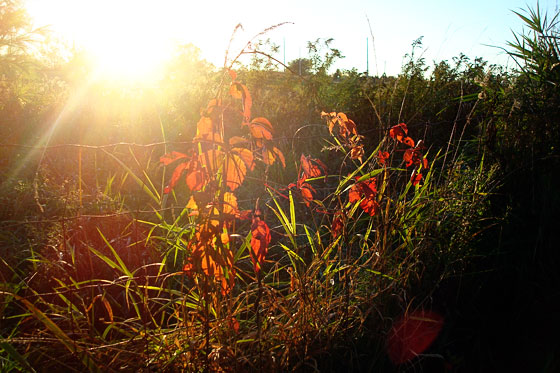
Fall sunset along the creek.

