Roof wrap-up

Matt’s a numbers guy, so as the roof was his project, it’s only fitting that I summarize his work in a statistical fashion.

Here, in a series of lists, is the story of how we reshingled our roof ourselves.
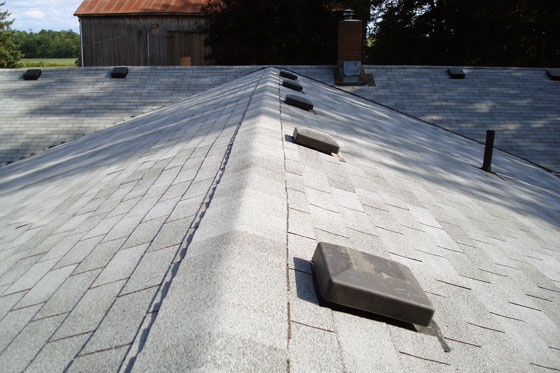
Newly shingled roof

Schedule breakdown

  • Day 1 – 1.5 hours
    Matt loads the shingles and other materials onto the roof. Thank goodness for rooftop delivery.
    Day 2 – 10 hours
    Matt, his Dad and I strip more than three-quarters of the old shingles off the roof. And then we cross our fingers for the night and don’t cover it with a tarp.
  • Day 3 – 15 hours
    Shingling begins. Matt, his Dad and his friend (a former professional roofer) complete about two-thirds of the roof and strip the remaining old shingles. Fingers are still crossed and the naked part of our roof is still untarped when we go to bed that night.
  • Day 4 – 14 hours
    I take a personal day to stay home from work, and Matt, his Dad, my Dad and I finish shingling the roof.
  • Day 5 – 6 hours
    Matt and his Dad do clean-up picking up nails and shingles from around the house and out of the eaves troughs.
  • Total: Five people 46.5 hours–note that nearly 40 of those hours came over just three days

I have to say a huge massive thank you to Matt’s dad and his friend. It was hot, dirty, heavy, uncomfortable work, and they put in a lot of hours, especially Matt’s dad, just to help us out. They supplied tools, equipment and expertise, and we could not have done this without them.

I have to say thanks as well to our roofing supplier AMA Roofing. They were a complete cold call, and we had a great experience. From the office staff I dealt with on the phone to the delivery man who brought the materials to the house, Matt and I were both very impressed. They spent a lot of time answering all of our questions and provided great guidance about how much to order and how to install everything. I highly recommend them.

Materials breakdown

  • 110 bundles of shingles – used 102 bundles
  • 22 pieces of drip edge (176 lineal feet) – used none, as there was a strange flashing/drip edge installed on the roof that we ended up reusing
  • 48 lineal feet of valley
  • 14,400 nails (120 coils) – used only 75 coils. We had so many nails left over because we had to buy two cases, as we would have been short with just one.
  • 3 rolls of ice & water shield (240 lineal feet)
  • 6 roof vents (we found an additional four in the driveshed that we were able to use)
  • 1 special roof cap/vent for the kitchen hood fan exhaust
  • 8 rolls of tar paper – used 7 rolls
  • 6 tubes of roofing tar
  • 10 sheets of plywood – used only part of one sheet for three small patches. Despite the awful state of our shingles, the plywood underneath was in good shape.

You’ll notice that we went with a very light grey shingle. Its official name is dual grey, and it’s a combination of black, grey and white stones. At times it reads almost green or blue from the ground. This is not what I was going for at all, but I can live with it.

My biggest goal in choosing the colour of the roof was to pick something light. White roofs are more eco-friendly, because they reflect more of the sunlight, rather than absorbing all of that heat into our house. We didn’t want to go with a true white roof, but we chose a light colour to give us as much reflectivity as possible.

By the numbers

  • Total roof square footage: 3,375
  • Average temperature: 29.82ºC (not including the humidex)
  • SPF: 60
  • Cost savings from doing it ourselves: $7,000 (this is a guess, as we didn’t actually get a proper quote from professional shinglers)
  • Hours between installing the last shingle and the first rain drop: 10. And then it rained for three days straight.
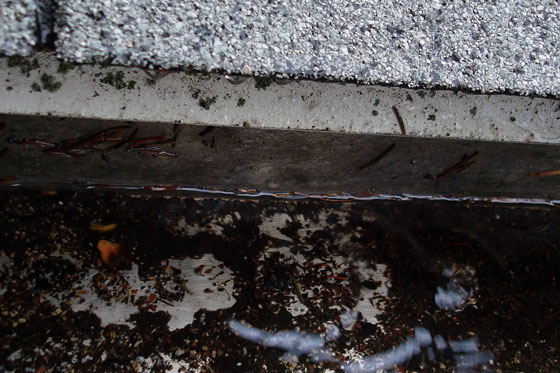
Rain falling into eaves trough

Casualties

  • One air compressor – it literally went up in smoke
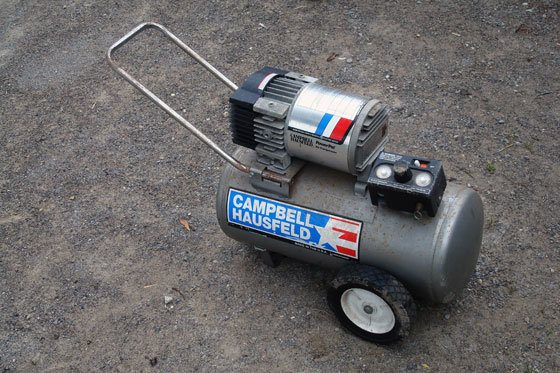
Campbell Hausfeld air compressor

  • Three shirts – Matt wore white in the hopes that he would be slightly cooler, and I’m not even going to try and wash those poor shirts
  • Two pairs of gloves – Matt and I both wore through the fingertips
  • One shower loofa – used to be white, now is the colour of shingle scum
  • One pair of shoes – the soles melted and are now completely misaligned
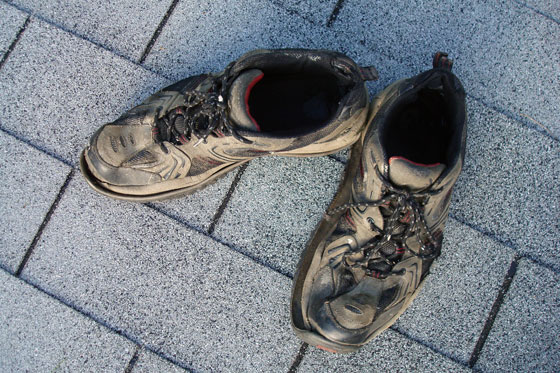
Old shoes

I was a little bit uncertain about tackling the roof reshingling all on our own. This is a big job and does require a certain amount of know-how to do it right–know-how that Matt and I didn’t have at the start. As it came time to order the materials and figure out exactly how we were going to do this thing, I was very nervous and did consider calling in professional help. However, I’m a big believer that everything happens for a reason, and as we got closer to starting the work there were a few signs that showed me we were going to be okay:

  1. A tremendously positive, helpful and encouraging phone call with our roofing supplier. Getting the quote and talking through the project with Debbie at AMA boosted my confidence tremendously.
  2. Kit, another roofing novice who shared my trepidation–or as she wonderfully described it “grim determination wrapped around an unmistakable sense of dread,” single-handedly shingled her donkey barn.
  3. Matt’s friend, a former professional roofer, rearranged his schedule so that he was able to come and help for a day.
  4. This Old House had a segment on roofing–and yes, we took notes.

As well as everything worked out, I cannot recommend roofing as a DIY. This is a really tough job, and Matt basically knocked himself out getting this done. I’m incredibly grateful that he’s willing to take something like this on, but we’ve both agreed we won’t be doing this ever again.

Final lessons

  • There’s a fine line between stubborn and stupid, and we ended up deep in dingbat territory
  • Bungalow = big roof. Big, big, biiiiiiiiiiiiig roof
  • Don’t try this at home. Seriously, folks. Don’t.

This is not taking it easy

Remember on Friday when I said that I was hoping Matt and I would do nothing this weekend? Yeah, well, that plan didn’t work out at all.

Instead of sleeping in and sitting outside in lawn chairs for two days straight, we went and rented an auger.

We’ve had a number of people turn in the driveway and come all the way up to the house. Once they get to the top and realize our cars are parked there (i.e. we’re home), they make their way around the turnaround and go back down the driveway. Usually by this point I’ve come out of the front door to glare at them as they drive away.

We have a long driveway, so if people are lost and need to just turn around, we wouldn’t even know they were there. For people to end up at the house, they’re trespassing.

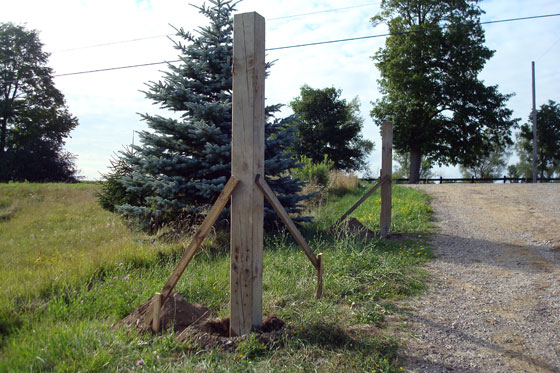
We decided we need a gate at the bottom of the driveway.

A gate needs posts, and posts need holes, so we needed an auger.

Drilling post holes with an auger

Matt and my Dad drill a post hole with the auger

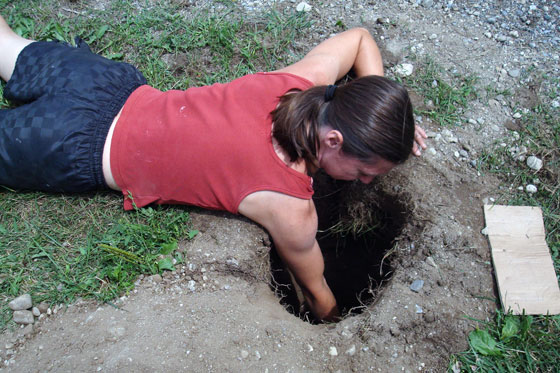
Matt and my Dad ran the auger while I came behind and cleaned out the holes.

Reaching into a post hole

Why does the person with the shortest arms have to clean out the hole?

We do own shovels, but a hands-on approach worked better for me sometimes given what we found in the holes.

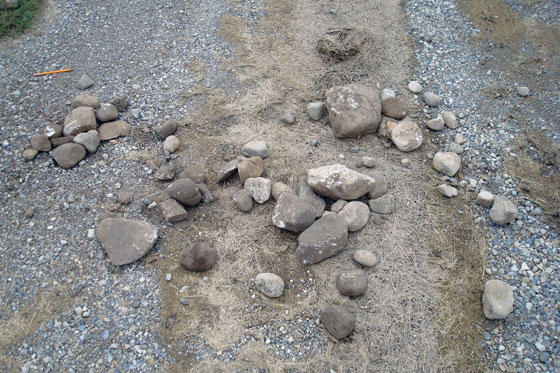
Field stones

Lots and lots of stones

The auger did not like the stones.

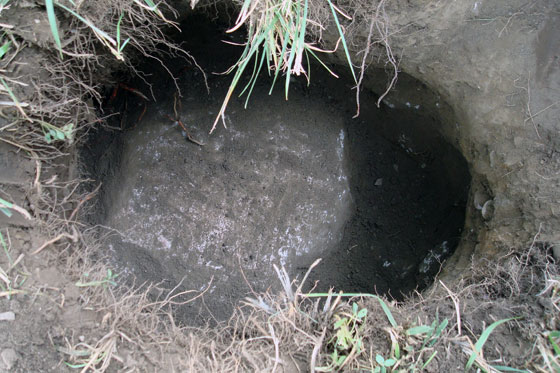
Rock at the bottom of a post hole

It particularly disliked this stone.

This boulder became the bane of my existence for about an hour. We all took our turns working around it with the shovel, the prybar, even a pick. It was massive, and it wasn’t moving.

The post that was to go in this hole was supposed to be our hinge, so we needed it to be really solid. But with the rock in the way, we couldn’t get the hole deep enough. So, we decided to swing the gate the other way and drilled a new nice and deep hole on the other side of the driveway.

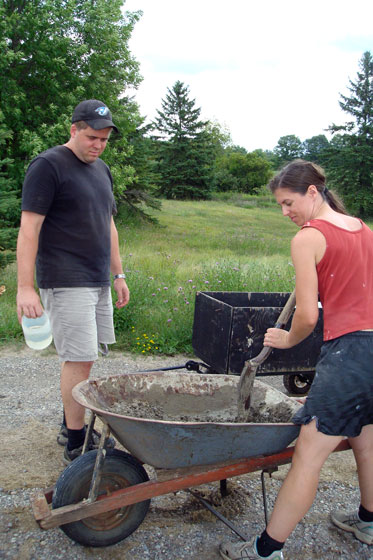
Then, it was a matter of mixing up our concrete and setting our posts in place.

Mixing concrete in a wheelbarrow

I take a turn mixing while Matt adds the water

By the end of the day, we had four new posts in place: two at either end of the gate, one to hook the gate to when it’s open and a new post for the mailbox.

Posts braced

We braced the posts to hold them plumb while the concrete sets

Oh, and we also had more sore muscles and a few new calluses.

Have we reached the end of the to-do list yet? Has anyone spotted the end? Can you please tell me is it far away?

And please tell me someone out there got to sleep in and sit in a lawn chair this weekend.

Done

The roof is done.

I’ll post a full project wrap-up next week, but right now I’m too stupid tired to coherently tell the full story.

For the weekend, I leave you with some photos of what happened this week.

Bundles of shingles on the roof

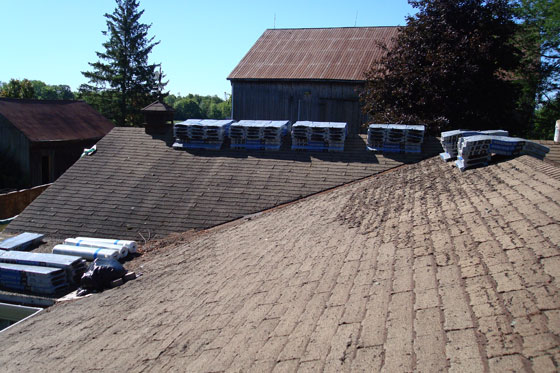
The before shot: A portion of our 110 bundles of shingles sitting on the roof awaiting installation

Stripping old shingles from the roof

Work begins: Matt and his dad start stripping the old shingles off the roof

Bundles of shingles on a plywood roof

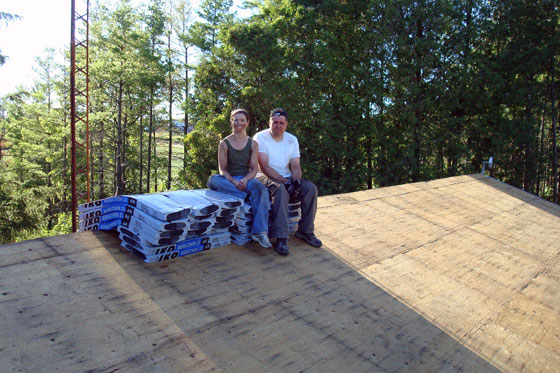
The end of day one: Note the naked roof and the new shingles waiting to be installed

Let’s take a bit closer look at this photo, shall we? This image pretty much sets the scene for the rest of the week.

Matt and me

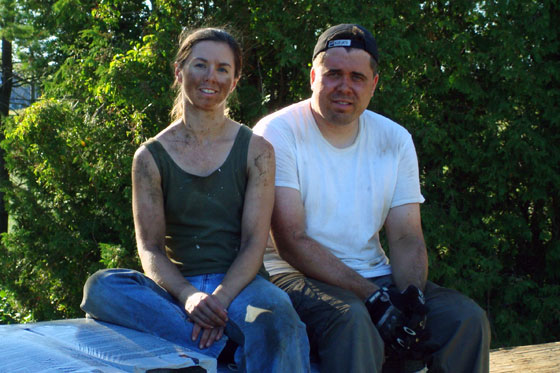
The dirty duo: Matt and me at the end of day one.

This is the “I’m trying to smile, but every single muscle hurts right now and I’m too tired to make the proper facial expression” look. Oh, and the reason the upper half of my face is the only part of me that is clean is that I was wearing a hat and sunglasses all day. I’m sure if I hadn’t the dirt would have been up to and into my hair.

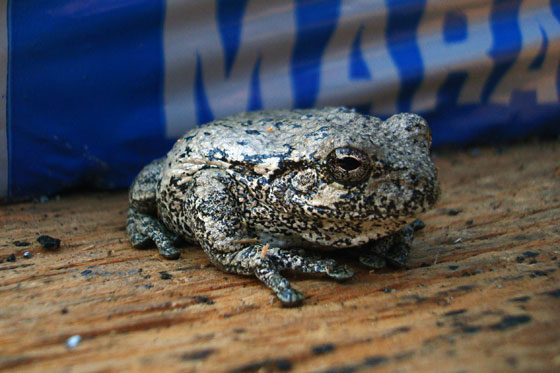
Toad on the roof

The toad that showed up on the roof two mornings in a row. If he’d brought his tool belt, we might have let him stay up there. And can I just ask, what is it with us and amphibians?

Half shingled roof

The sun rises on the second day of shingling: On day one–also known as the 15-hour day–about two-thirds of the roof was shingled and the remaining old shingles were stripped.

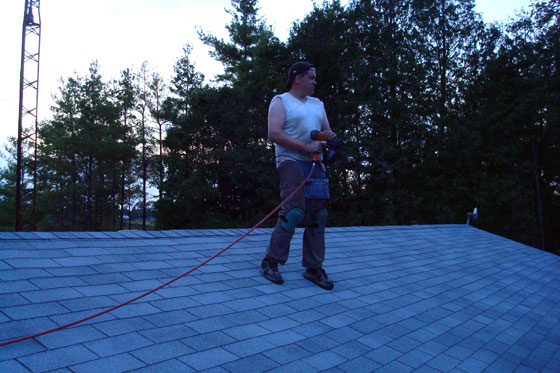
Matt on the freshly shingled roof

The end of shingling day two: As the sun sets, Matt gives his best Scott McGillivray pose on the finished roof

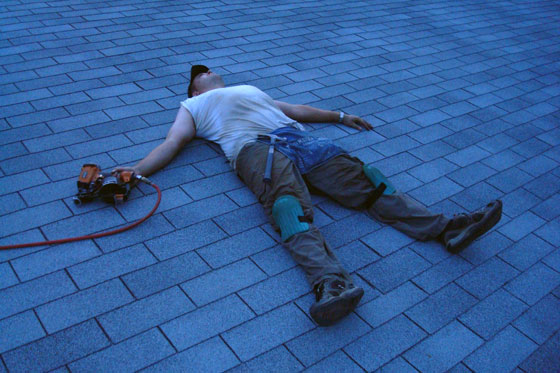
Matt laying on the roof

A few minutes later: Matt’s muscles give out and he collapses from exhaustion–nail gun in hand still wearing his hammer, tool belt and knee pads.

I’m wishing everyone a good weekend. I sincerely hope that Matt and I will be doing nothing.

Oof!

Friday’s mystery image was a preview of this week’s to-do list. There is only one item on the list. And it’s a doozy. It makes me say, “Oof!”

As many of you guessed last week, the picture was of shingles. The project for this week is the roof. Oof.

You’ve seen the detail shot. Let me zoom out a little bit and show you the scope of our issues.

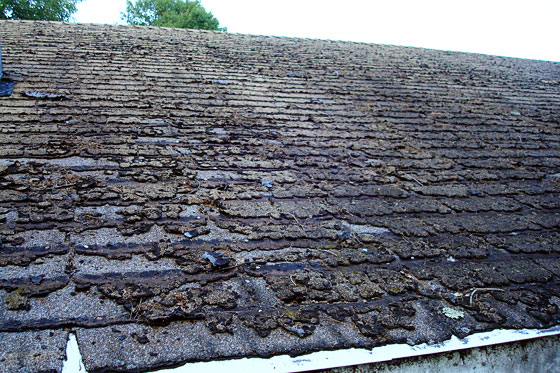
Old shingles

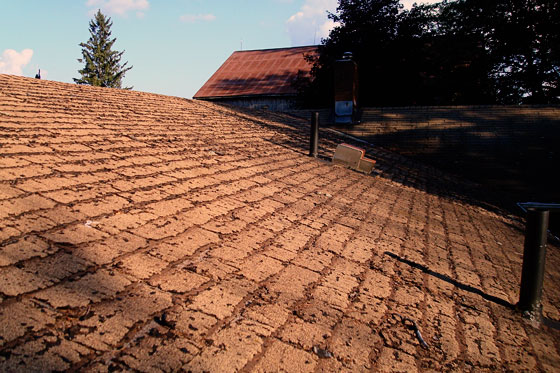
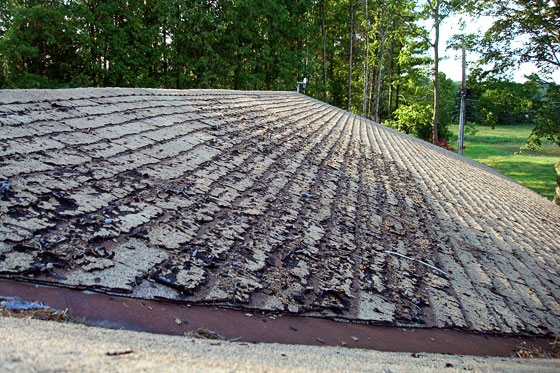
Shingles are not supposed to look like this

Our shingles have gone beyond curling and are officiallyfried. They have to be replaced.

Roof

At this angle, I’m looking above the broken shingles on the house and gazing longingly at the steel roof of the barn

Somehow, our attic is still dry inside, but I’m a little anxious about what the plywood under the shingles is going to look like.

Shingles in need of replacement

The front half of the roof is as bad as the back

Normally, roofing a whole house is not a job I’d choose to DIY. However, given the long list of must-do fixes we’ve done so far (new geothermal system, upgrading insulation in the attic and the basement, redoing the well and water system, rewiring the basement) the budget is reaching its limits, and so we chose free labour (us) over professional help.

Matt will be the lead on this, as he’s able to be home while I have to keep up with my day job. However, I will be working in the evenings and he’ll have some help from his dad and one of his friends.

The roof is just under 3,400 square feet. That works out to 110 bundles of shingles. Oof.

In addition to new shingles, we’ll be looking to make a few other changes to the roof.

Collage of roof images

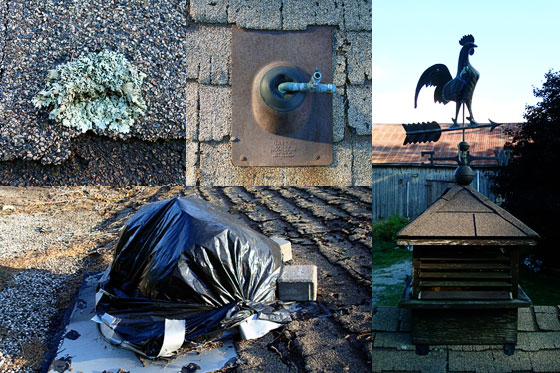
Areas of concern from our roof

Clockwise from top left:

  1. The sea creatures–or moss–that have grown up on the old shingles will be extinct by the end of the week.
  2. The old hook-ups for the solar hot water heaters for the indoor pool will hopefully not be too difficult to remove and patch.
  3. The cupola and buxom rooster weather vane (the only thing I like about the roof) will be carefully removed so that I can reuse them on the attached garage, which we will build some day.
  4. The last remaining piece of the woodstove chimney will be removed and the hole will be patched–with plywood and shingles, not a garbage bag and duct tape.

The other necessary upgrade is to improve the ventilation. Currently, there is not a single vent anywhere on the roof. Hence the reason why our shingles look the way they do–they cooked. No vents is not only unhealthy for our house; it’s also against the building code.

We’re crossing our fingers that we haven’t taken on more than we’re capable of with this project.

If anyone has any pointers or words of encouragement, they would be most welcome.

A peek of pretty

Amidst the dust and the upheaval and the tired muscles and the very, very, very long to-do list, I need a little reminder of what we’re working towards. The stack of tile piled in Matt’s future office provides some good encouragement right now.

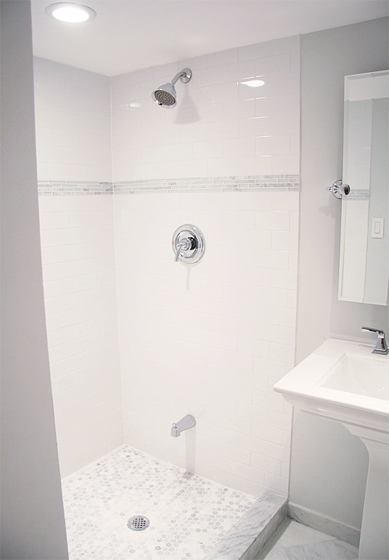
Here is a little sneak peek at the various pieces that will eventually make up the basement bathroom.

Marble mosaic tiles

I think the white balance is a little off in this photo, as there is much more white than grey in real life

The white subway tile in the centre is going to be the main feature in the room. It will cover the three walls of the shower from floor to ceiling and the bottom half of the wall behind the toilet up to the height of the vanity. I chose a 4 inch by 8 inch tile, rather than the standard 3 by 6. It’s going to take a lot of tiles to cover the walls, and I’m hoping there will be slightly less labour with the larger tiles.

The white tiles will be accented by a narrow band (probably a strip 3 or 4 tiles high) of the grey and white marble mosaic mini subway tiles at the right. These will run at about eye level in the shower area only. Not an original design feature these days, I know, but hopefully a pretty timeless look.

The marble mosaic hexagon on the left is the shower floor. And the square (pseudo marble) tile at the bottom is the floor in the main area of the bathroom. They’re all sitting on the piece of marble, which you’ve seen already. This slab will top the bench in the shower.

Not pictured here are two more pieces of marble that we’ll be using for the top of the shower curb and the base of the niche.

As a reminder, the inspiration for the basement bathroom is Aubrey + Lindsay’s beautiful bath.

We managed to find tiles that were very similar to theirs. Although there were times that I joked that tile sourcing was going to break my enthusiasm for renovating.

The original tile that I picked for the accent band were back ordered until the end of August. They were another beautiful white and grey marble, but longer and more irregular lengths rather than an even subway shape. I really liked the irregular lengths for the contrast with the regularity of the white subway tiles. At the rate we’re moving now, August might have worked, but at the time I didn’t want to delay the project, so I found another option. Ultimately the colour is what will be most noticeable, and the overall feel of the bathroom will likely be pretty much the same with the tile that we ended up choosing.

For the main floor area, my original vision was to have large format white subway-ish shaped tiles. These were incredibly hard to find. Floor tiles seem to be square for the most part. And the ones that I was able to find were more creamy than I wanted. I nearly placed the order for the off-white tiles, but decided to take one more look at other options and found the square tile in the grey and white tones that work well with the colour palette that I’d established.

Ultimately, we ended up sourcing tiles from three different suppliers plus Home Depot for the marble sills and plus our stone supplier for the bench top. Fortunately, everything works very well together and it looks beautiful, even when it’s just sitting in a pile on the floor.

The bathroom is actually ready for tiling, but a couple of other projects (okay, slightly more than a couple) and the universe’s dogged persistence in only putting 24 hours in the day continue to delay installation.

For now, ogling the cases of tile–and remembering how far we’ve come already (psycho shower, anyone?)–keeps me going on this renovation.

Where do you find your motivation?

Olympic dreams

I had hoped today to be showing you the Canadian flag flying from our newly installed flagpole in honour of the Canadian Olympic team. However, the flagpole is still lying in the barn and the flag is folded up in Matt’s office.

However, we did manage to get something installed that has come in handy with the Olympics.

Shaw satellite dish

Our new satellite dish

Like everything else at the farm, the job of installing the satellite turned out to be more work than initially expected.

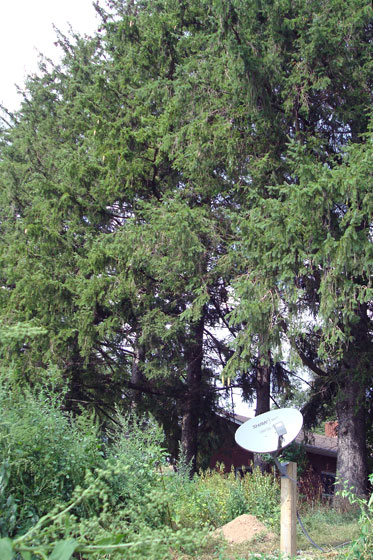
First, we couldn’t install the dish on the house. The satellite signal wouldn’t clear the row of huge pine trees right beside the house. The solution was a post in the meadow on the other side of the pines. Matt spent a couple of hours digging a deep hole while my Dad and I cut a big 6×6 for the post and with Wiley‘s help gathered concrete and gravel to set everything in place. It’s handy having spare construction supplies lying around courtesy of past owners.

Satellite dish on a post

Our dish is dwarfed by the big pines

Satellite dishes on posts in the middle of people’s yards is one of my pet peeves. I’m trying to come to terms with mine by remembering that it’s our only solution (aside from taking down the trees) and it’s in the meadow where we’ve let the grass grow long, so it’s fairly hidden.

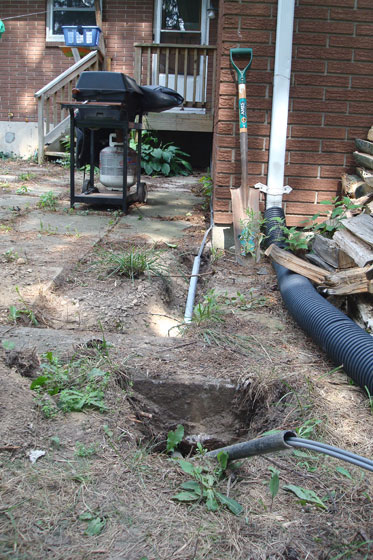
The second issue was running the wires from the post in the meadow up to the house. Trenching the wire in the meadow and across the lawn was no sweat–well, it’s sweaty work, but not super difficult. However, between the house and the lawn is a large patio. Running wires over the surface, even if we protected them in conduit, was obviously not a great option. We were able to lift the patio slabs pretty easily, but the poured concrete border around the edge was a bit more challenging.

With two shovels and a bit a teamwork from both Matt and me, we each dug from opposite sides to tunnel under the concrete so that the installer could easily feed the wire under the patio.

Wire running under concrete slab

We also ran the wire through some plastic conduit for extra protection

As the saying goes, bad news comes in threes, so two challenges were not enough in the saga of the satellite.

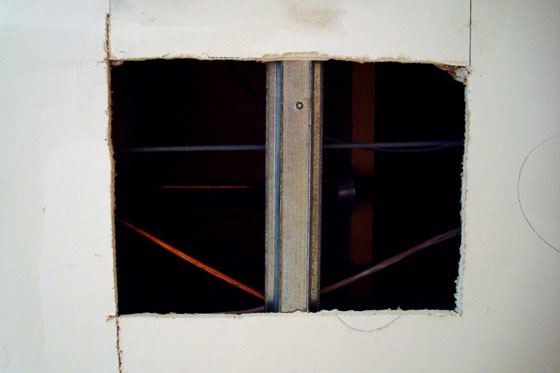
We decided we wanted a satellite receiver in the basement as well as in the living room upstairs. Installing an additional feed in the basement would have been easy had we done it while the ceilings were all open. However, we weren’t certain initially that we were going for two receivers, so we went ahead and installed all of the new drywall and made no accommodations for the satellite wiring. Argh!

Matt and I had realized we were going to have to cut some holes in our brand new ceilings and had gone through all of the stages of grief about undoing our nearly completed work. For my Dad, though, who showed up with his long wire fish to help us prepare for the installation, he had to get from denial (“maybe we don’t really have to cut holes”) to acceptance (“we’re going to need another hole here too”) pretty quickly.

Metal stud

Ouch! Our poor ceilings. The satellite wire is the grey one at the top of the hole

Thanks to all of our prep work, the actual installation of the satellite went fairly smoothly. And just in time. Two hours before the opening ceremonies started, we had TV at the farm.

CTV Olympics on TV

Please ignore the drywall dust which is every where

Matt and I enjoy our TV, but we really haven’t missed it since moving in, mostly because we’ve been so busy with renovations.

However, I am a huge Olympic fan, so being able to stay on top of all of the coverage is a nice treat.

Any other Olympic fans out there? What event are you watching for? Anyone have tips for fishing wires or your own story of a challenging installation?

Oh and one more thing.

Go Canada go!

(Feel free to add your own national cheer below).

Change of plans II

You heard about one change of plans yesterday, and today I have another for you. This one was a relatively minor change in plans, but it did require a bit of a backtrack, because we were already installing drywall when I decided I wanted to make a change.

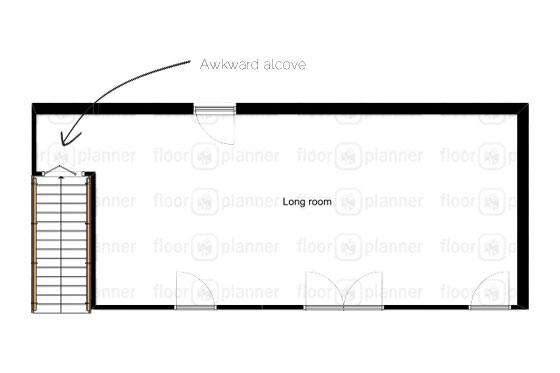
Originally in the basement, there was a closet under the stairs. I’m all in favour of closets. This one was a good way to use an awkward space and I had plans to make it a wonderful home for our Christmas decorations. I had nothing against the closet. However, the little alcove at the end of the long room to access the closet always puzzled me a little. What was I going to do with that space?

Awkward alcove

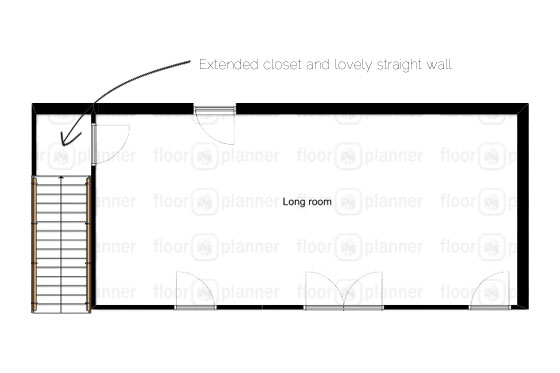
It took a visit from my youngest sister to open my eyes to the obvious solution. Just square off the room and enlarge the closet slightly. Duh!

Floorplan for extending a closet

So, while drywall installation was underway, I threw on the brakes and demanded that we go back to demo (removing the old doorway into the closet) and construction (framing in a new wall and doorway).

Matt said, “Why does it matter?” and then he just shook his head, sighed and went along.

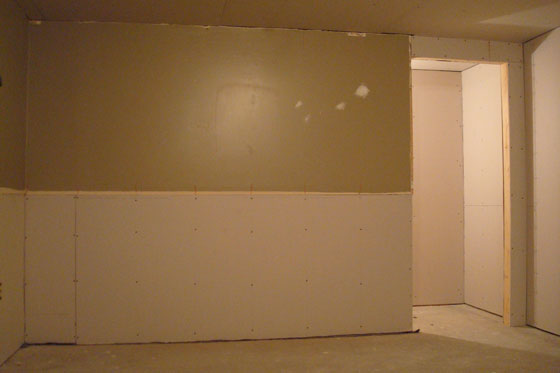
We had the new doorway framed up in about an hour and drywalled it in one more. We moved the light inside the closet–with only one bleeding bent backwards fingernail (ow!)–so that we could install shelves along the whole back wall. And now we have a nice rectangular room with a very large functional closet.

Doorway into a closet

The new straight wall in the long room. Old wall on the left. New doorway on the right.

Looking at my new straight wall makes me happy. This may seem like a minor change, but it’s one of the things that makes the basement exactly what I want, and is part of the reason I’m able to say that this renovation is turning out even better than I imagined. Isn’t it nice when reality matches up to imagination?

Change of plans

You’ll recall that one of the things we needed to do in the bathroom renovation was to increase the storage. This is Matt’s bathroom, and he’s a pretty basic kind of guy who doesn’t believe in a lot of lotions and potions.

However, he is the type of person who changes what toothpaste, deodorant and soap he uses each day depending on how he’s feeling. Some days it’s about the Irish Spring. Others, he’s Ivory all the way. And don’t get me started on the difference between the blue bar and the green one. As well, my husband can’t pass up a deal, so when something comes on sale he stocks up.

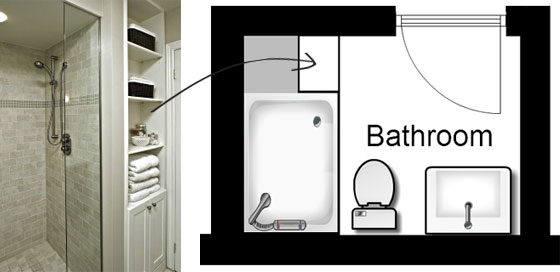
We needed somewhere to stow all of his toiletries (that word sounds too delicate for a man’s bathroom stuff) and the small single vanity was not going to do. The original plan was to tuck some built-in shelving into the one end of the shower.

Bathroom storage

The original floor plan for the bathroom reno showing the shelving unit tucked in beside the shower.

Once we started actually working in the bathroom, though, the space started to feel a bit tight. We were concerned that carving out the storage area would make the shower too small. The bathroom is not huge. However, the hallway outside the bathroom is fairly generous–in fact it’s about seven feet wide.

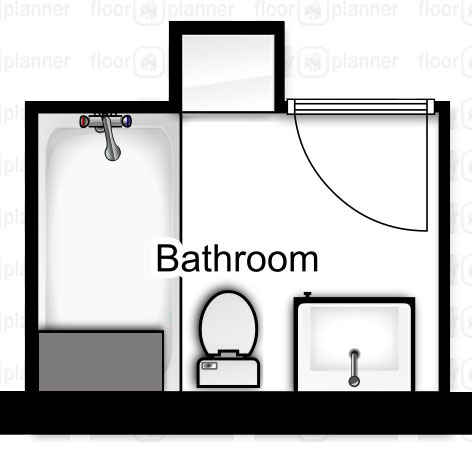
So Matt came up with the idea to borrow approximately one foot from the hallway to make the storage unit.

Bathroom floorplan

Ahhh… much more roomy. The revised floorplan for our new basement bathroom.

We’ll still get floor-to-ceiling built-in storage, so Matt gets to keep all of his different flavours of soap and toothpaste. And making this little bump-out into the hallway allows us also to have a fairly generous shower, complete with a bench.

For your reference, here are some of the measurements for the bathroom:

  • Bathroom itself: 5 feet by 7 1/2 feet
  • Storage area: 20 inches wide by 16 inches deep
  • Shower: 3 feet by 5 feet
  • Shower bench: 32 inches wide by 16 inches deep by 18 inches high

Planning is an important part of renovating. You should take the time to think about your project before you pick up a hammer and go to town. However, you have to be prepared as well to make adjustments as you go along. Sometimes you have to compromise. Sometimes you can improve on your original plan. I think this modification is an improvement on our original plan.

Change of pace

This past weekend was a little different for Matt and me. We left the work clothes in their piles on the bedroom floor and the measuring tapes stayed in the toolbox. Instead, we got dolled up in our best duds and put on our dancing shoes.
Matt and me

What was the occasion for such finery? The celebration of my sister’s wedding.

You know I’m all about DIY, though, so for the past couple of months I’ve been taking a bit of time off from the basement renovation to work on this little number.

Yellow dress from sewing pattern Vogue 1108

I’ve no plans to turn this into a sewing blog, but this was a special dress made with a special fabric for a very special occasion, so please bear with me as I break with our regular program of country living and home improvement to share a little bit about The Dress. For those that want the full project breakdown, see my review on Pattern Review.

This dress is the most challenging thing I’ve ever sewn, and it’s my first sewing project at the farm. The fact that my sewing room isn’t set up yet and has in fact become the holding room for most of the boxes we haven’t unpacked and a lot of the things that we don’t know what to do with yet complicated things slightly. Between a desk leftover by the past owners where I could set up my sewing machine, an ironing board in the dining room and a few square metres of clear floor space behind the living room couch, I made it work.

I probably would not recommend tackling a project like this concurrent with moving, renovating and caring for a large property, but despite a bit of stress about finding sewing time everything worked out very well in the end.

The fabric for this dress is actually courtesy of my sister, the bride. She bought it for me in Malaysia when she was visiting her fiancé’s family. Initially I wasn’t sure where I’d ever use such a fancy, brightly coloured fabric. But when my sister said that she wanted to be the white in the middle of a brightly coloured rainbow of her bridesmaids, I knew this was perfect.

Different colour bridesmaid's dresses

A family wedding is a tremendously special occasion, and I was very happy to be part of my sister’s and her new husband’s special day. Congratulations, Jennifer and Jeremy. I wish you much love and happiness together.

We have walls!

It’s been more than a month since I posted the first pictures of new drywall in the basement. Things definitely don’t move quickly when you’re DIYing–or at least Matt and I don’t move quickly!

I am pleased to announce that thanks to a big push this weekend as of Sunday afternoon all of the drywall is installed. Yay!

Untaped drywall

The new view in the long room

The total tally was 59 sheets. The entire bathroom, all of the exterior walls, and the ceilings in the main room and long room all got new drywall (click here for a refresher on the floorplan for the basement).

And taping is already underway. The bathroom has its third (and final) coat, the office has its second, the main room has its first. Matt has taken the lead on this part of the project, and my Dad has come up several times to help out. Between the two of them, they are motoring.

Pasting drywall joints

My Dad and Matt put the second coat of paste on the office

With three coats of paste plus sanding between each coat, this will be a big part of the basement renovation. Hopefully the next update is less than a month away.