How I organize recipes

Open shelving in the kitchen for cookbooks

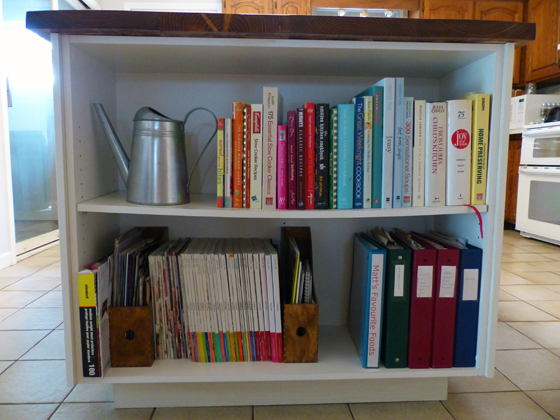
One of my favourite features of the island we added to the kitchen is the open shelving on the end that holds our cookbooks.

The books add a splash of colour to the wood and white of the kitchen. The shelves keep them organized and easily accessible. Plus I love cookbooks. I will sit and read them like a magazine or novel. (And, yes, you’re not imagining. The upper shelf is sagging a bit under the weight of all of our cookbooks).

However, not all of my recipes reside in cookbooks. I have a bunch of printouts from recipes I’ve found online (I haven’t progressed to a tablet yet), clippings from the newspaper or magazines, even a few hand-written recipes from family and friends.

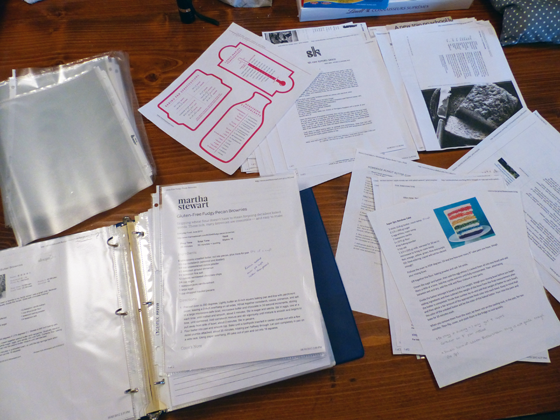
To keep these recipes organized, I returned to the lessons learned in school–binders, dividers and page protectors.

A couple of weeks ago, I added a bunch of new recipes to my collection, so I thought I’d share my organization method with you.
How to organize recipes

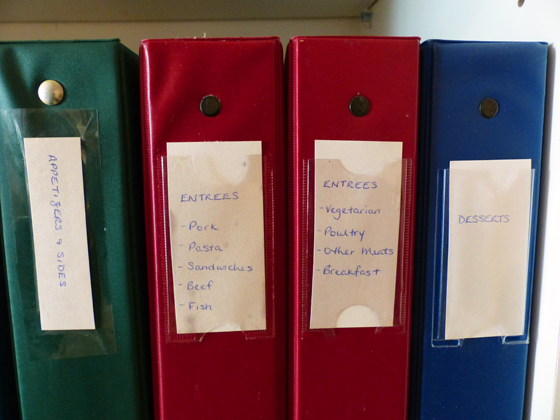
First are the binders. I have three major categories which each get their own binder: Appetizers and Sides, Entrees, Desserts and Sweets. Entrees outgrew its single binder and is now split into two books. I use different colours for each grouping.
How to organize recipes

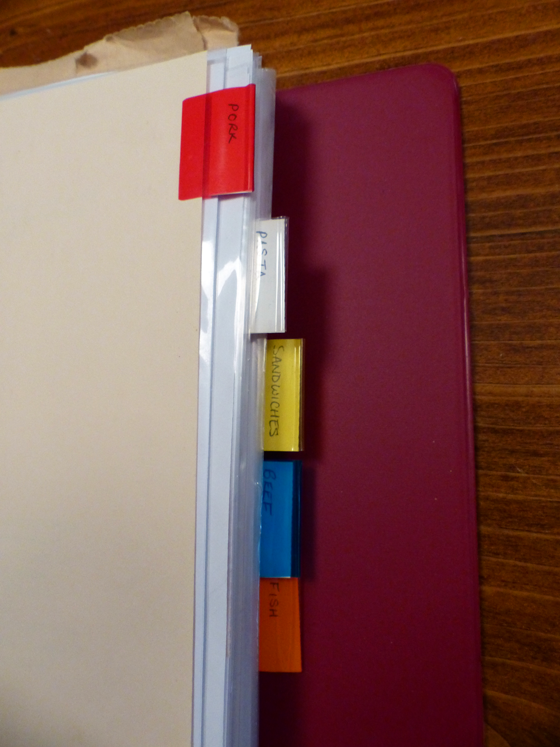
Within each binder, I’ve divided the recipes into subcategories.

In appetizers, the sections are appetizers, soups, salads, sides, snacks, breads and drinks. For entrees, I divided them into pork, pasta, sandwiches, beef, fish, vegetarian, poultry, other meats (venison, lamb), breakfast. Desserts starts with the most important, chocolate, and then goes to cookies, “buns” and bars (including muffins), cakes, pies, fruit, custards and Christmas.
How to organize recipes

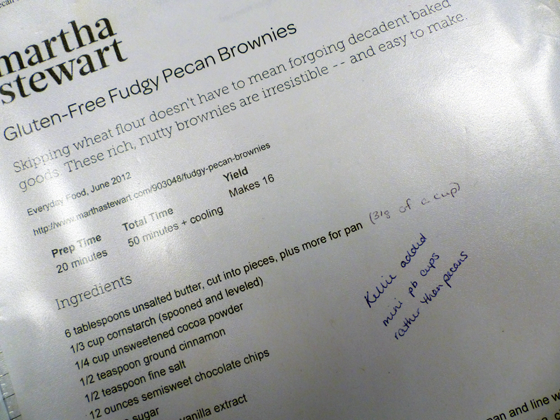
The recipes themselves are stored in plastic page protectors. I’m not the tidiest cook, so the plastic sleeves protect the paper from spills and splashes.

However, it’s easy to slide the recipe out of the plastic and add notes about what worked, what didn’t or what adjustments I made.
How to organize recipes

Beyond the binders, I also use magazine holders to organize the smaller pamphlets and cookbooks I’ve collected over the years. I got two wooden holders from Ikea and stained them to match the countertop and cabinets.
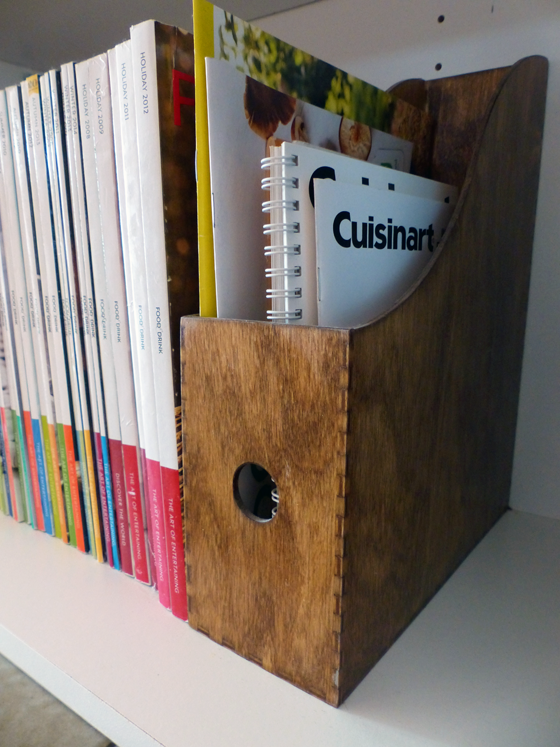
Wood magazine holder

I love having my recipes organized.

In fact, I was so inspired that I flipped through the dessert binder and whipped up one of my favourite fall recipes, spiced apple muffins, using the apples my friend gave me from her own tree.
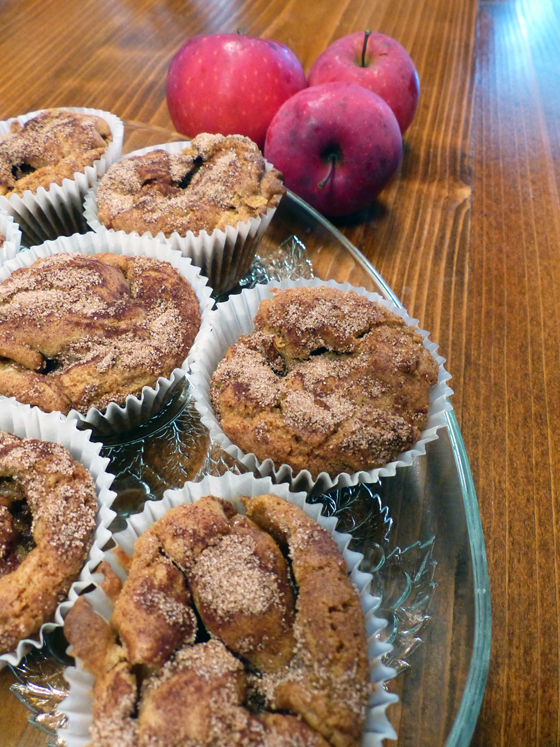
Apple spice muffins

With my recipes all organized, I feel ready to move on from fall baking on to Christmas baking.

Are you doing any baking, either fall or Christmas? How do you organize your recipes?
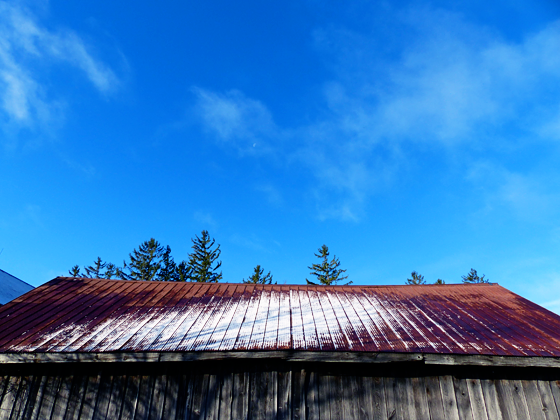
Foggy morning on the farm

Foggy morning on the farm

Last Friday we set record warm temperatures for November. But before the thermometer rose, the fog descended, making for a very murky morning walk.

Foggy morning on the farm

My favourite tree still stood.

Foggy morning on the farm

But it felt like the world ended at the edge of the farm.

Foggy morning on the farm

By the end of the walk, the sun had risen and the fog was burning off and the farm returned.

Foggy morning on the farm

I love seeing how the farm changes over a day, over an hour and over a season. Starting and ending my days here never gets old.

When life gives you persimmons, make persimmonies

After using a pile of persimmons in her last post to try to predict what kind of winter we’re going to have, Sarah in Illinois is back today to answer the question of what she did with all of that fruit.

Persimmons are a big commodity in Illinois in the fall. A quick search on Facebook shows the going rate for persimmon pulp is $4/pint.

As I talked about in my previous post, I have used persimmons to try to predict the upcoming winter, but I had not used them to make any type of dessert. So this year I decided I should try one.

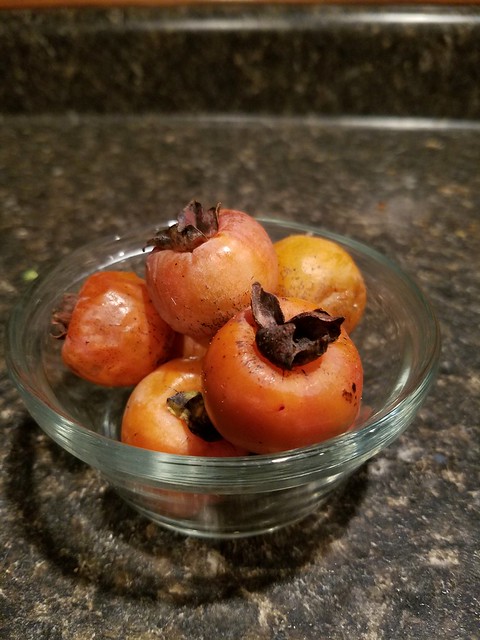
When you taste a ripe persimmon, it is really sweet and the texture is similar to an overripe peach. But there is a catch. If you taste a persimmon that is not ripe, you will know it.

An unripe persimmon will dry your mouth out in a second. I really have not tasted anything like an unripe persimmon.

So when I picked persimmons I tried to pick mostly from ones that had fallen to the ground. If they have fallen, they are most likely to be ripe.

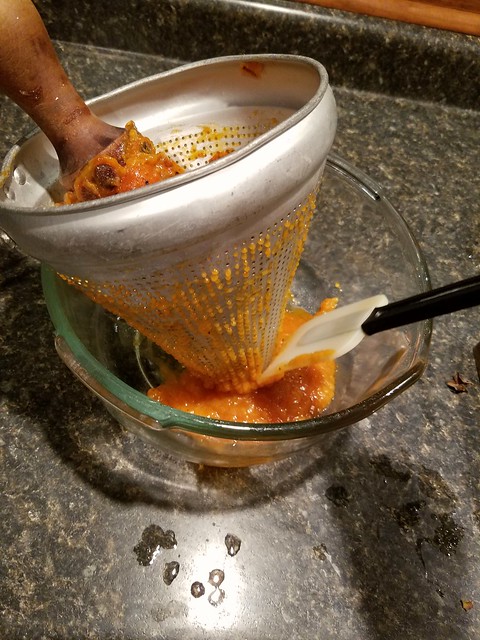
When I brought them home and removed the skin and the seeds, I put what was left in my Grandmother’s sieve/masher.

It has a wooden pestle that allowed me to push the pulp through the little holes. This step took a lot longer than I was expecting, but when I was done I had 2 cups of pulp.

Now I had to decide what to make.

When you say “persimmon” the first thing that comes to mind is “persimmon pudding.” A quick search on the internet will bring up more recipes than you can imagine. But that is not what I was looking for. Persimmon pudding is similar to a bread pudding, and I don’t care for bread pudding.

So my next search was persimmon cookies. Most cookie recipes call for walnuts and raisins. And I don’t care for either of those in my cookies. So what else could I make? Persimmon bread? Persimmon roll? Persimmon bars? Persimmon smoothie? Persimmon margarita?

I decided on Persimmonies which the author describes as a “cross between a bar cookie and a snacking cake.” It even has the suggestion of adding chocolate chips.

How can you go wrong with adding chocolate?

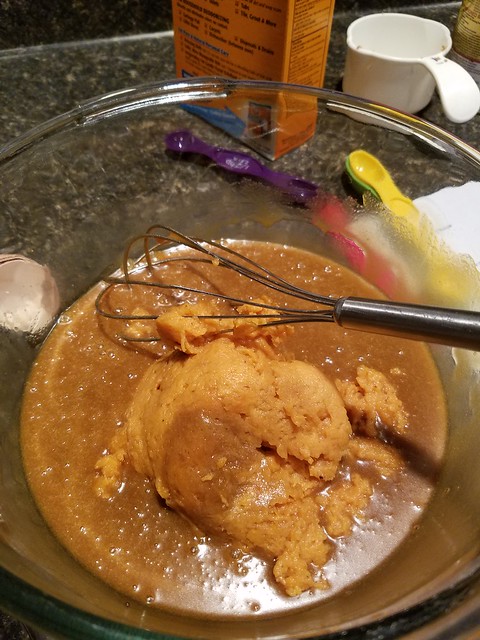
I followed the recipe exactly. I was surprised that the batter was pretty thick.

I won’t describe each step here, you can click on the website and get it straight from the author, but it was a pretty straight-forward cake like recipe.

I didn’t have chocolate chips on hand so I just used the author’s original recipe.

The results

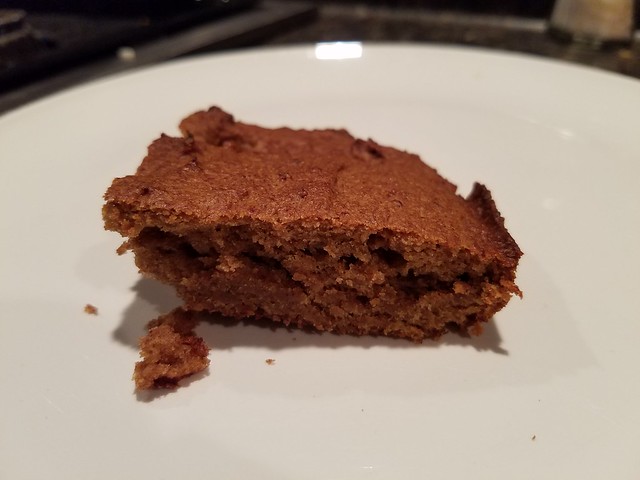
In my opinion, it tasted like cinnamon bread, which was really, really good. I just didn’t taste much persimmon. Maybe I should have added some more pulp. And next time I will definitely add the chocolate chips, because again… chocolate.

I took the persimmonies to work and brought home an empty pan, so you could say they were a success.

Anyone made anything with persimmons? What recipe would you try? Are persimmons popular in your area?

I’ve not seen persimmons in our area, and I don’t think I’ve ever eaten one–let alone made anything with them. I’m curious now, Sarah, to give them a try. And I agree… chocolate is never a bad idea.

I have to add, a very happy Thanksgiving to Sarah and all of my other American readers.

Meeting expectations and finding grace

This year has been hard.

I felt like I wasn’t meeting anyone’s expectations. Not my husband’s. Not my boss’s. Not my family’s. Not my staff’s. Not even the dog’s. Poor Baxter didn’t get a hike with his friends all summer.

Worst of all was feeling like I wasn’t meeting my own expectations.

I don’t think I’ve felt anything quite like that discouragement, pressure and futility.

At the end of October, I started working four days a week. This was part of my attempt to find my balance again.

I thought it would be a bit like when you know you have Friday off or when Monday’s a holiday. Yay! Short week!

Not so much.

It was still tough.

Squeezing five days of work into four has meant some long days. And at home it took awhile to find where I needed and wanted to spend my time. The second four-day work week, I felt like I had jet lag. I was trying to do everything and adjust to a new schedule. My body and brain couldn’t keep up.

I’ve learned that finding my balance is a process. And this weekend, I think I’m starting to feel that balance returning.

I had a great day at work on Thursday. I still didn’t leave the office until 2 hours after everyone else, but I felt good about where I spent my time and what I accomplished. Friday, I spent the day with my parents, and I felt like I made a difference for them. I even managed to make it home in time to squeeze in a hike with Baxter before the sun set.

Over this weekend, I’ve cooked and baked. I knit a pair of slippers. My whole house is vacuumed. Laundry is done. The rotten lumber from last week’s clean-up has been burned. The living room, dining room and kitchen are tidy. I even fit in some redecorating when I swapped out some end tables in the living room.

And, I spent time with Matt, and we actually talked and shared and helped each other. That connection with my husband is the most important thing to me. We have a phenomenal partnership, and he is there for me no matter what. One of the turning points for me over the last few months was when he said to me, “You’re sad all the time now.”

Matt knew I was struggling, but hearing that my struggles were so obvious and that I was bringing those feelings home to my husband, to my family, to my home was terrible. I never want to put those low feelings onto anyone.

Feeling like we’re in a better place is the biggest sign to me that I’m getting my balance back.

Of course, there’s always more to do. My office is only halfway tidy. I still have months of paperwork to file, and my bathroom needs to be cleaned.

But I’m trying to give myself grace. Matt, my family, my team at work, my boss have all given me grace. I have to do the same.

Winter rye cover crop in the vegetable garden

Winter rye sprouts in the vegetable garden

Look at our pretty green sprouts.

Fall in Ontario is about brown. Gardening season is done. Leaves, grass, flowers are all pretty drab. But we have one new crop growing.

This is our winter rye cover crop in the vegetable garden. It’s our first time trying a cover crop.

We love our garden and how productive it is. So we’re working hard to maintain the quality of our soil. Last year, I spread straw and manure all over the garden. This year, we’re going with so-called green manure.

In the spring, we’ll cut the rye and turn it into the soil.

Have you ever grown a cover crop? Do you have any green growing at your house?

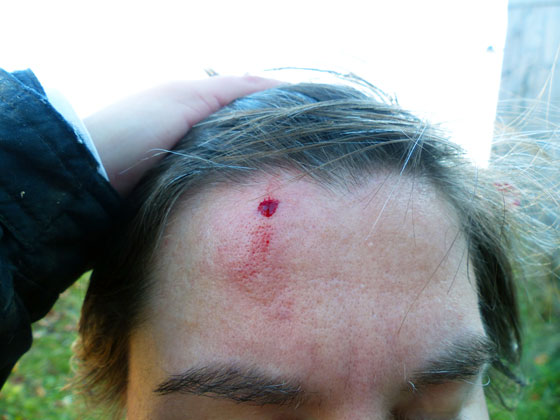
That time my husband dropped a 2×4 on my head

Or, as Matt tells the story, the time I followed too closely behind him while he was carrying–and dropping–lumber.

Head wound

Saturday afternoon was fall cleanup day here on the farm.

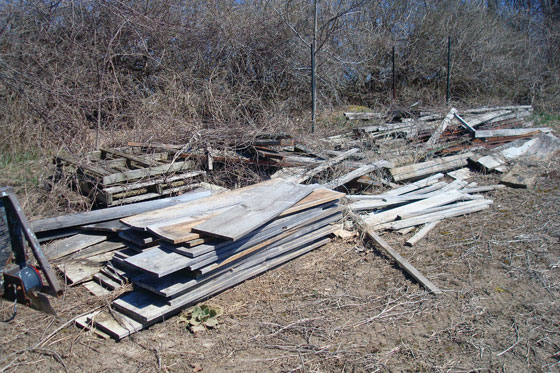
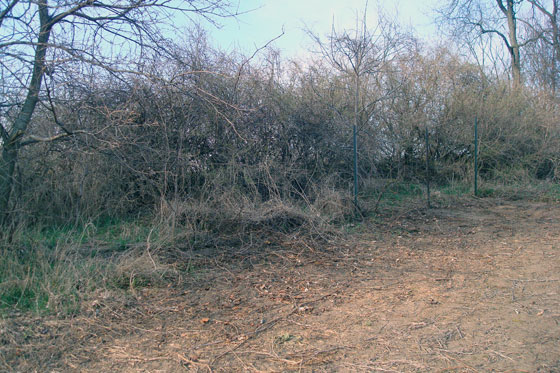
Remember this pile of lumber that I cleaned up back in the spring? I was so proud. I am woman, hear me roar.

Lumber pile at the edge of the field

Field after clearing the lumber pile

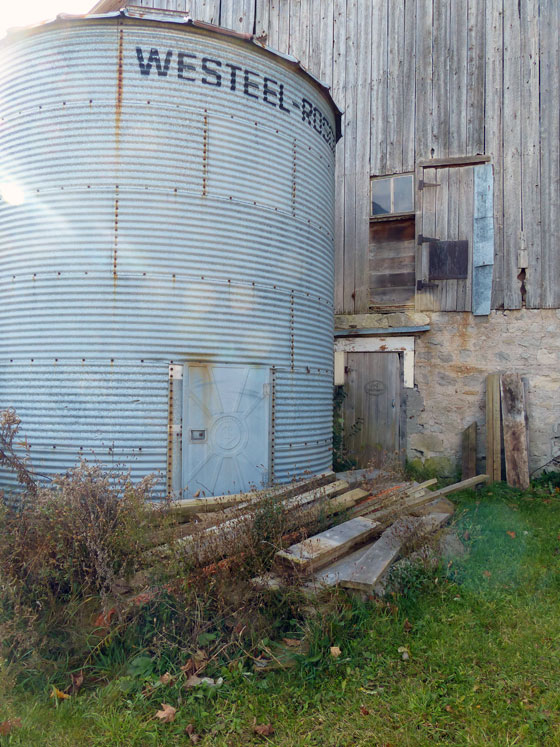
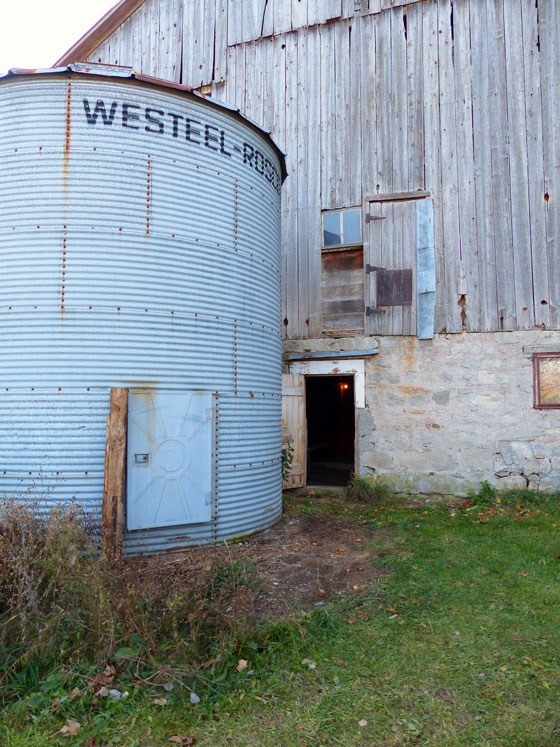
However, I really only did half the job. I brought it over to the barn, but not actually into the barn. I dumped it beside the silo.

Lumber piled outside the barn

Putting it into the barn was one of the tasks on my (mental) fall to-do list. After mucking all of the old straw and manure out of the stalls last fall, we have lots of extra space, and I knew one of the empty stalls would be perfect to corral all of this lumber.

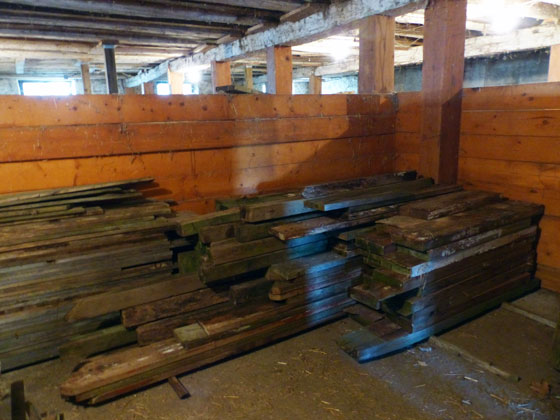
I recruited Matt to help me, and we moved 6x6s, 4x4s, 2x8s, barnboard siding and assorted other lumber–including a few pesky 2x4s–into the barn. There is so much lumber, yet it takes up barely a quarter of a stall. Horses are big animals, people.

Lumber piled in a horse stall

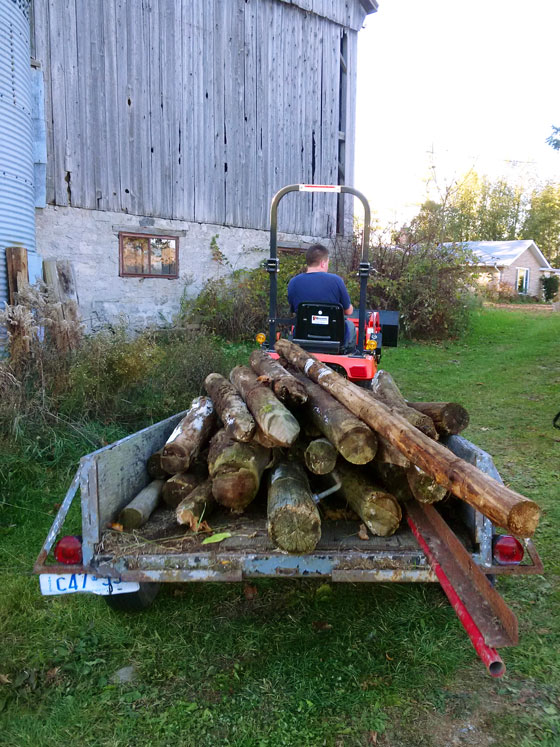
Along the way we picked up the leftover fence posts that have sat by the garden all year, some other lumber, some metal posts–five piles in all.

Trailer loaded with old fence posts

I’m so happy that the property is looking just a wee bit tidier. Next year when we mow these new areas, it will look even better. I’m not sure Matt is quite as enthused yet. Especially since he’s our main mower.

Lumber pile cleaned up beside the silo

My husband knows me so well. When we came into the house at the end of the day, he asked me, “How much of that did you have planned, woman? I thought we were just moving the one pile by the silo when I agreed to this. I want to re-examine the contract. I think I might sue.”

I admitted that I had planned for three out of the five piles–the other two were just a bonus. I also reminded him of the original contract, which says, “for better or for worse.”

How did you spend your weekend?

In Flanders Fields


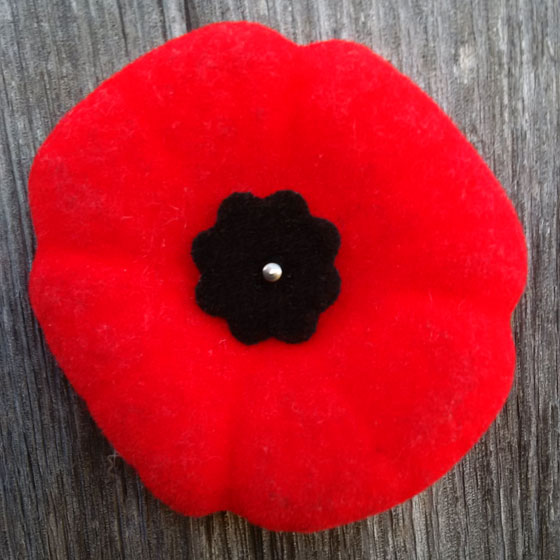
poppy5

I’m thinking today of my grandpa and other veterans.

I’m not sure how familiar people are with this poem. Here in Canada, it’s a fixture of Remembrance Day.

It was written during the First World War by Canadian John McCrae, who was born very near our farm. In part because of this poem, “the poppy was adopted as the Flower of Remembrance for the war dead of Britain, France, the United States, Canada and other Commonwealth countries” (Source)

In Flanders fields the poppies blow
Between the crosses, row on row,
That mark our place; and in the sky
The larks, still bravely singing, fly
Scarce heard amid the guns below.
We are the Dead. Short days ago
We lived, felt dawn, saw sunset glow,
Loved, and were loved, and now we lie
In Flanders fields.
Take up our quarrel with the foe:
To you from failing hands we throw
The torch, be yours to hold it high.
If ye break faith with us who die
We shall not sleep, though poppies grow
In Flanders fields

Particularly this week, I am thankful to be Canadian. I’m also grateful to the people like my grandfather who took a stand to defend people who needed help and preserve freedom.

Winter predictions

“A Canadian is someone who worries about winter before summer is even over,” a senior climatologist at Environment Canada said earlier this fall (source). Apparently, that definition extends to Illinois as well. When you live in a place like Canada or Illinois where winter can be a big deal, you try to anticipate what kind of season we’re going to have. Sarah in Illinois is sharing some of her predictions for the upcoming winter.

As the temperatures start falling, our thoughts are turning towards winter and more importantly what kind of weather we are going to have.

Snow? Wind? Or even worse, ice?

Of course there is no way to know for sure. Even the best meteorologists are just making scientific-based guesses. But it feels good to think maybe we can plan ahead, even just a little bit. We do look at our local weatherman’s winter forecast, but we also like to base our predictions off of old wives’ tales. Here are a few that we use at our house.

Persimmons

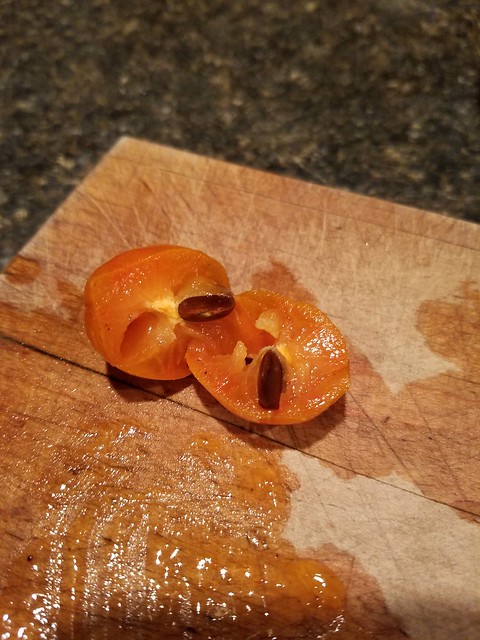
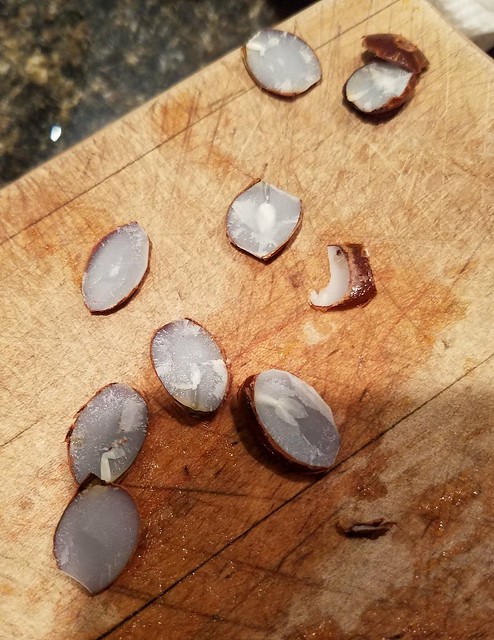
My brother has a persimmon tree. When the fruit starts falling to the ground we gather a few and take the seeds out. The seeds are very slimy and you have to wipe them off really well because the next step is a little dangerous. We take a very sharp knife or even a razor blade and slice the seed in half. Inside is the little white kernel. If you look closely it will resemble one of three shapes: a spoon, a fork or a knife.

If the shape is a spoon, then you should expect heavy wet snow. If it is the shape of a fork you should expect a milder winter, and if it is in the shape of a knife you can expect lots of sharp wind that cuts right through you. We cut some open at my brother’s house and they looked like spoons to us.

We cut some open when we got home, and it seemed like the knife scraped the kernel away and it was hard to read. But if we really looked hard we thought they looked like spoons. So by that we should prepare for lots of snow.

(In my next post I will share what I did with all of those persimmons.)

Woolly Worms

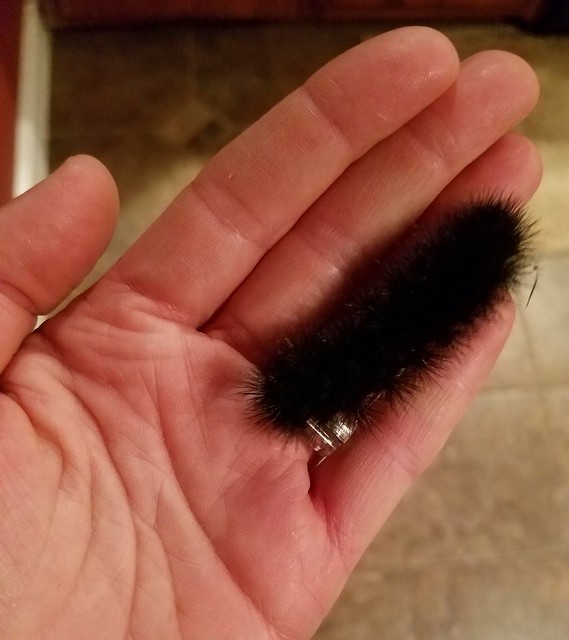
Another prediction that we have used since we were little is the color of the woolly worms. Woolly worms are usually striped black then brown then black. The more proportion of the worm that is black means the harsher the winter will be. We have seen several different woolly worms so far this fall. I have seen an all light brown woolly worm, and several with more black, then brown, then black but by far we have seen the most all black.

These seem to be crawling everywhere. If you do an internet search you will see some “professionals” that say these are not the worms you use to make your predictions. They say this is a different variety of woolly worm and it doesn’t count. So I guess you can make your own decision on what that prediction means. But to us it means be prepared for snow.

Squirrel Nests

Steve’s favorite predictor has to do with the squirrel nests in the trees. He says that the larger the nest, the colder the winter. I’ll be honest before I met Steve, I never paid attention to the squirrels even made nests in the trees, but now I am always on the lookout.

This prediction is yet to be determined since there are still way too many leaves on the trees and we can’t even see any nests. But I know we will start noticing them in the next few weeks and we will have to see what the squirrels predict.

I am curious, what other old wives’ tales are out there? Do you use anything in nature to predict your winter weather? Have you heard of the methods that we use? What does the winter forecast look like in your area?

So far it sounds like the prediction for Illinois is snow. Honestly, I like a snowy winter. I could do without some of the frigid temperatures we’ve had over the past few years. I’ve heard of the woolly bear (worm) method before, but never persimmons. You have me curious how you used all of those fruits.