Moments and happenings

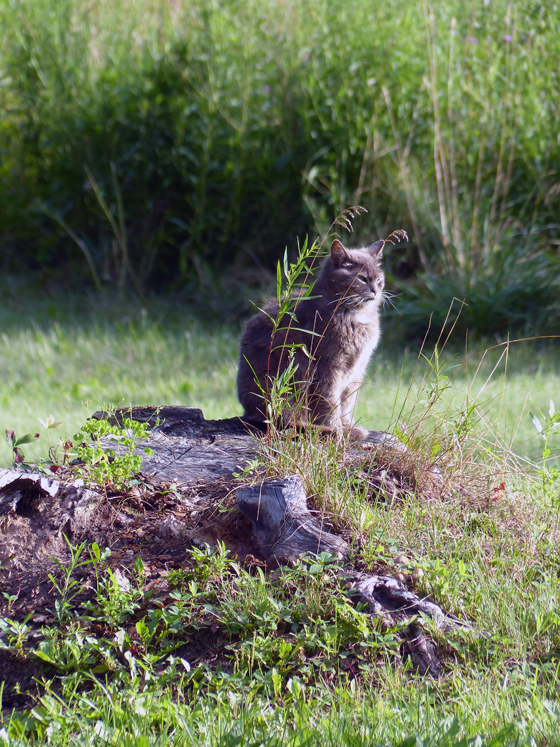
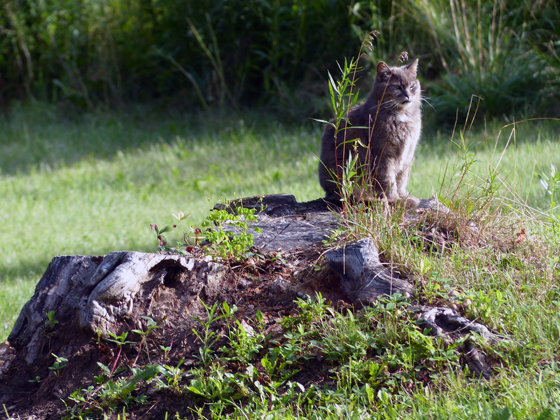
Barn cat on a stump

Going into this past weekend, I was a bit anxious about what I was going to be posting on the blog this week. I had nothing written, and unusually I didn’t have any ideas either.

The thing about the farm though is that something always happens. We do something or see something and that becomes something to remember and share. Some moments are simple, some are bigger.

But together, they make up life here at the farm and are part of what makes living here so special.

Saturday morning started with Matt and Bax heading out for their walk, and Ralph sitting on her stump waiting for them to come back. She does this often. Last weekend she meowed after them the whole time they were gone.

But when I came out to snap her picture, she hopped off the stump and came to get attention from me instead. This weekend, I was more stealthy and managed to get a few shots of her. Queen of the farm on her throne.

Barn cat on a stump

After the photo session, I took my  book and went out and sat with her.

The quiet of a Saturday morning. The summer sunlight. Our amazing cat. This beautiful land. A simple moment that was a special start to the weekend.

Raspberry report

Raspberries

Raspberries equal summer for me. I grew up picking them in my parents’ garden and making jam with my Mom. In fact, at Matt’s and my wedding all of our guests received a small jar of homemade raspberry jam made with my parents’ berries.

Now we have them in our garden.

It’s been two years since I transplanted canes from my parents’ garden. They have spread and sprouted new plants and this year they are bearing fruit. Lots and lots of fruit.

We have one row that’s about 16 feet long, and now at the peak of raspberry season we’re picking about 3-4 pints a day.

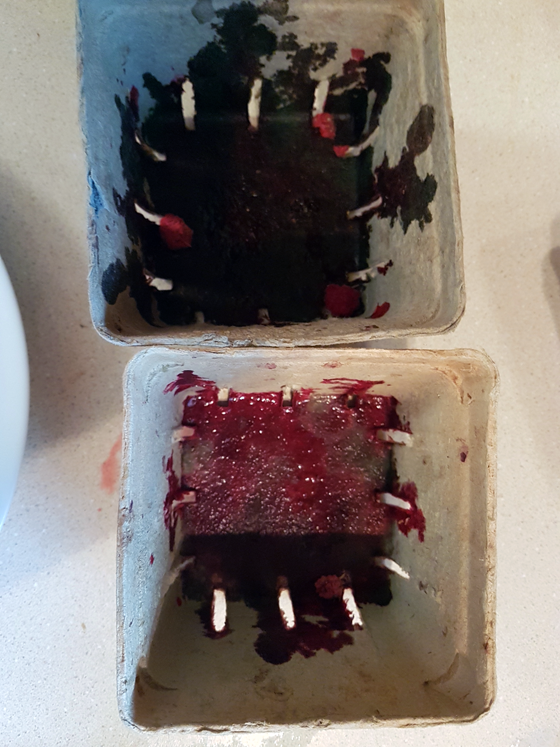
Although I’m mostly picking partial quarts because I ruined a couple of pints when I accidentally fermented some berries by leaving them on the counter too long.

Soggy pints

Quarts of raspberries

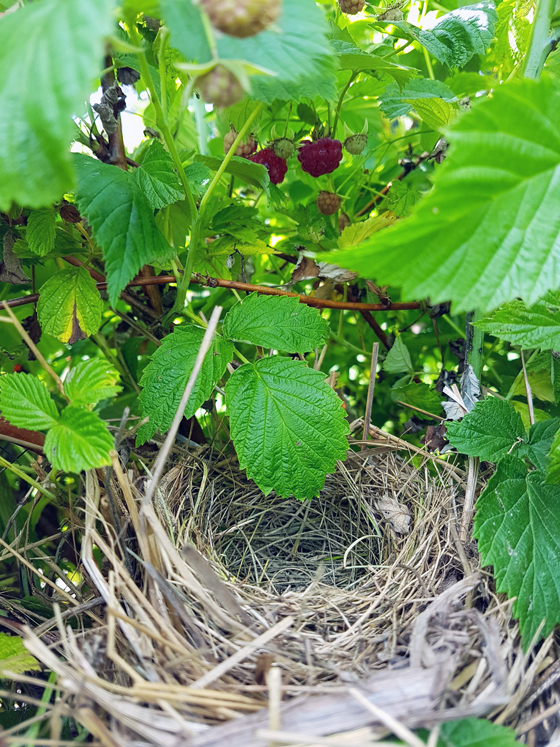
Our plants are super dense with lots of canes. In fact, the row could likely benefit from some thinning. I think a few less canes might encourage more fruit or at least let more light or air get to the fruit. This bird’s nest was buried deep in the plants. I had no idea it was there.

Bird's nest in the raspberries

The wire trellis that we built has done a good job of keeping the canes upright and contained, so the row has been easy to manage. We added some woodchips between the raspberries and blackberries, trying to keep weeds down.

We’ve had a good amount of rain during this growing season, but I think the berries could have benefited from a bit more watering. They’re a wee bit small. With a bit more water, they might grow bigger. Something to keep in mind for next year.

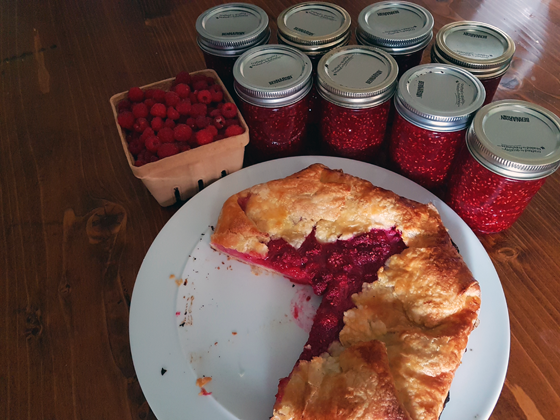
Small or not, we already have plenty of berries. In fact, it’s been hard to keep up. I’ve made jam, a galette, muffins, stirred lots into my yogurt and pints are still stacked in the fridge.

Raspberry galette and jam

We could have even more, but I’ve not been super enthused about picking after I get home from work. I’m expecting to find some very ripe berries this weekend. They should be good candidates for more jam.

We may not need wedding favours this year, but I’m sure our family will still enjoy jam in their Christmas packages.

Are you enjoying raspberries at your house? Any raspberry recipes to recommend? Or growing tips to share?

How to rescreen a screen door

Fresh country air is one of the best parts of summer living on the farm. But summer on the farm also means bugs, so screens are an absolute necessity. Sarah in Illinois is here today to share how she fixed her screen door after it had a few too many encounters with a puppy who was enthusiastic to enjoy the country air in person dog.

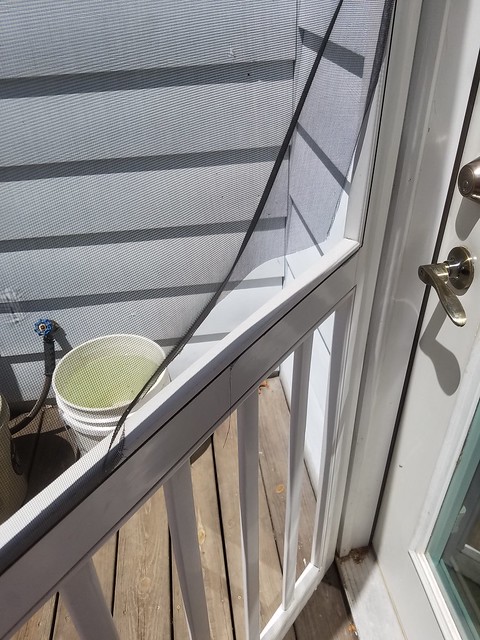
I don’t think you can live in the country without a screen door. Unfortunately screen doors and young energetic dogs don’t mix. Blitz gets so excited to head outside that he pushes the door open with his big paws.

The screen became damaged enough that I decided that it was time to try my hand at re-screening a door.

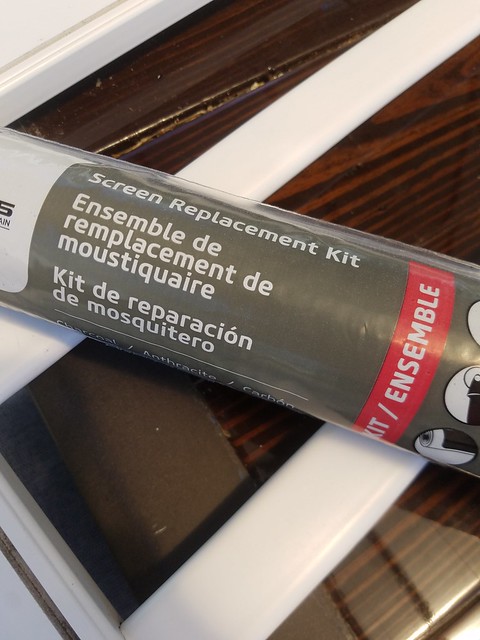
I started with buying a screen replacement kit at our closest home improvement store. It comes with a large roll of screen, a roll of spline and a spline tool. The only other tools that I needed were a utility knife and pick.

I started by removing the damaged screen and using the pick I pried all of the old spline out of the grooves.

I compared my old spline to the new spline. My only concern was making sure that they were the same diameter. If the newer spline was too large it wouldn’t fit in the groove, if it was too small, it wouldn’t stay in place. Thankfully, it was close enough to work well.

After all of the spline was removed and I cleaned the door, I was ready to start putting the new screen in place.

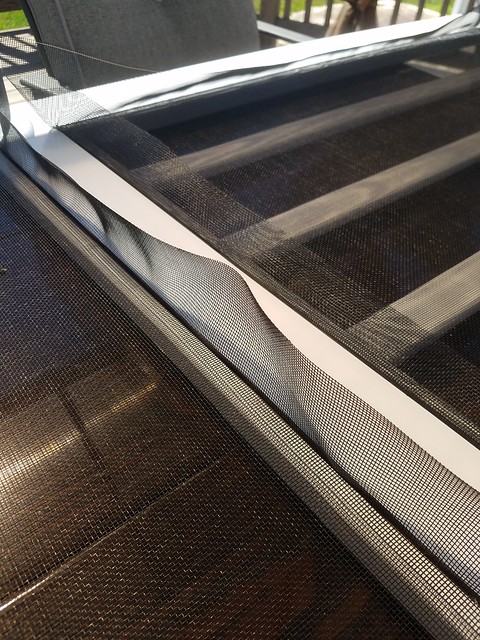
I carefully centered the screen over the opening and laid the spline over the groove. Working with just one side I used the spline tool, which is basically a handle and a roller, and pushed the spline down into the groove. It was a tight fit, but not too tight, just enough that I knew that it wasn’t coming out.

I worked my way around all four sides pulling slightly on the screen to keep it taut.

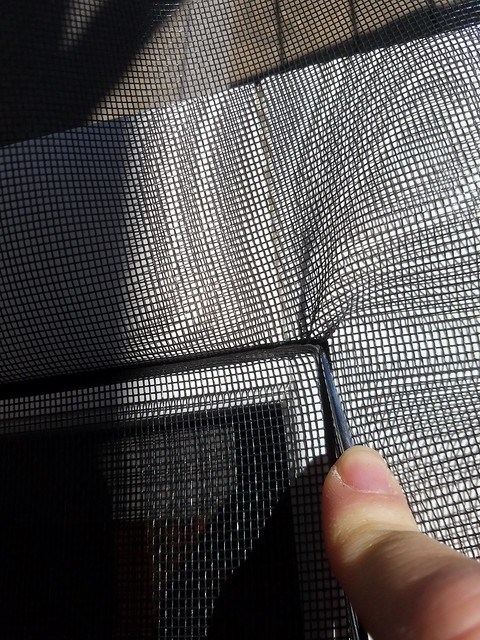
At the corners I had to use the pick again to squish the spline down tight where the spline tool couldn’t reach.

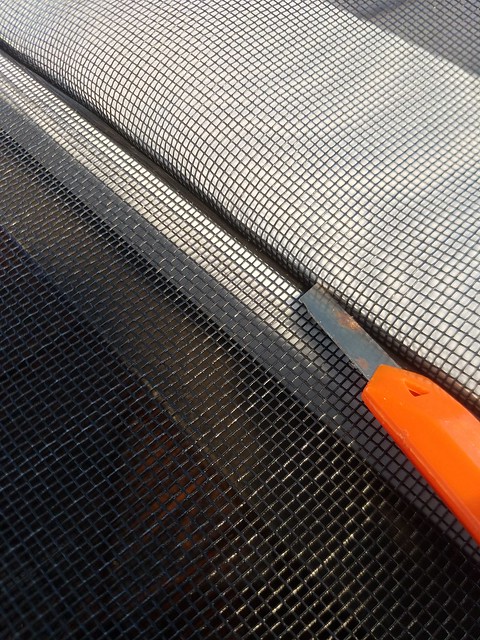
Once I felt that the screen was in securely and pulled tight, I trimmed the excess screen off with a razor blade.

In the case of our door, there were two separate screen areas so I repeated everything on the second half of the door.

I was then ready to rehang the door.

I was nervous tackling this project because I was worried that it would never look like it did when the door was new. But honestly, this was such an easy project and cost me less than $10 for the kit.

Now we’re ready for this guy’s next adventure.

Well done, Sarah. It looks really professional. We love having the windows open in the summer, but I’m realizing a few of our screens are in need of repairs. We’ve found ourselves chasing moths or even the occasional mosquito in the house. In the past, I’ve patched a hole. Rescreening sounds pretty easy and straightforward. Plus I’m ensured of not missing any holes.

Reclaiming the jungle

Landscaping is a multi-phased project here on the farm. I’m not entirely sure what phase we’re in now, but I looked back through the archives and the first time I posted about this area of the property was four years ago. Holy moly.

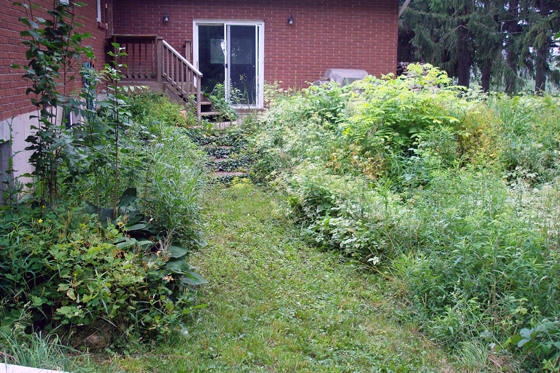
The back of the house has been a wee bit overgrown. As in we just let it go. Not the prettiest view out the kitchen window.

Overgrown weeds at the back of the house

There were so many rocks and weeds it was unmowable. But I wasn’t prepared to put in the work to make it a flower garden either.

We left it alone. Surprisingly, it didn’t improve.

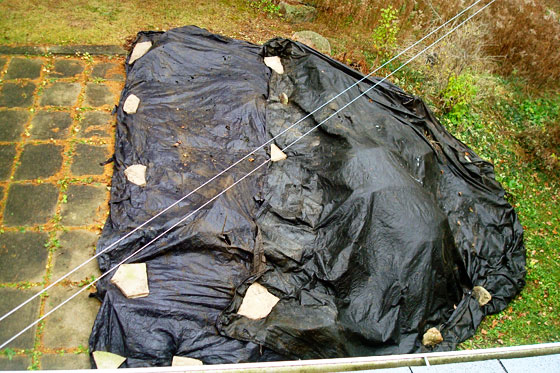
Then two years ago we covered most of the mess with a tarp. Which wasn’t really much of an improvement either.

Tarp covering the backyard

We left it alone again. For two more years.

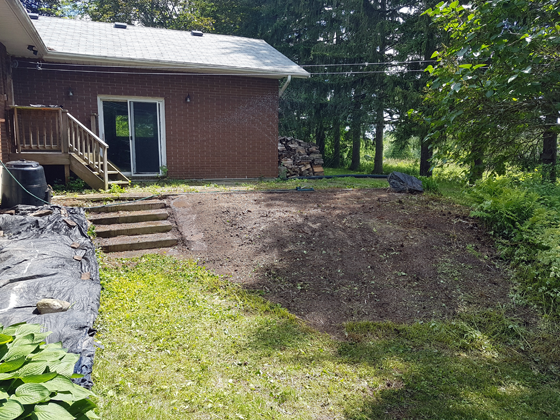
But at the start of this July, I finally lifted the tarp.

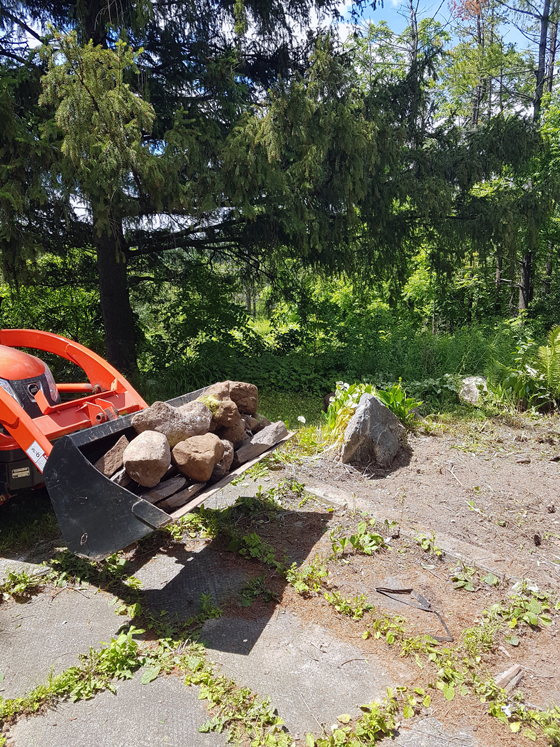
Hello rocks. Fancy finding you here. But the weeds had mostly died, so that was a bonus.

Picking up rocks

With some raking, digging, leveling, a wee bit of sawing and mowing for some of the more stubborn brush, and finally seeding and watering, we ended the day with something that we thought could someday be a lawn.

Seeding the backyard

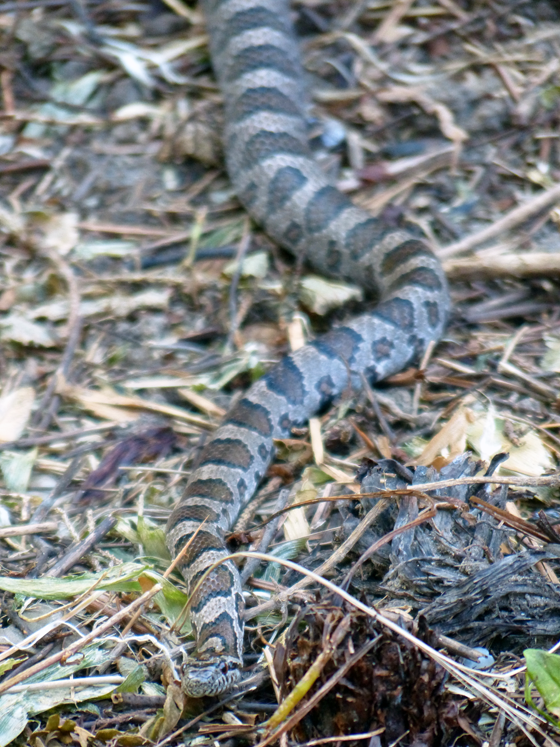
The local wildlife came by to check out the transformation. The snakes particularly seemed to enjoy the cleared dirt.

Milk snake

Our usual inspector came by too. Hello Ralph. And hello sprouts!

Ralph inspecting the newly sown grass

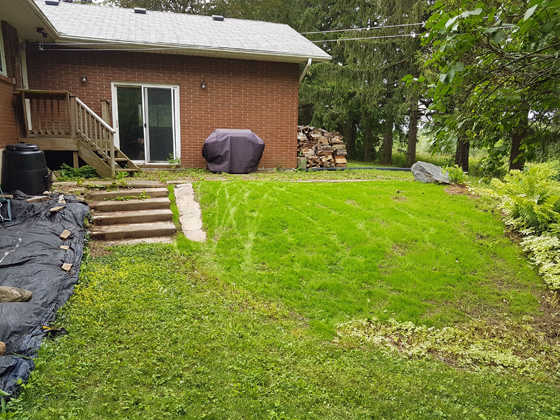
Three week later, hello electric green lawn.

New lawn

We still have some blending to do and a few thin spots to fill in (plus I’d love to break up that concrete beside the steps).

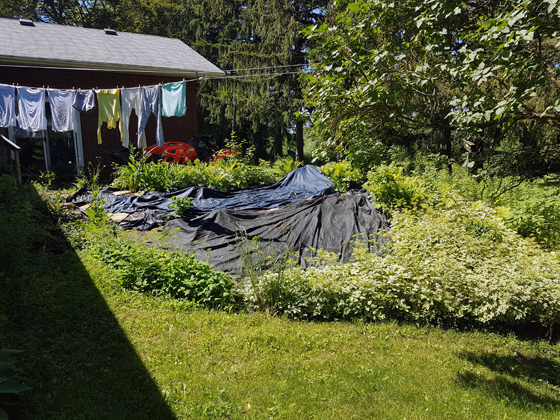
And of course that black tarp is still hanging around. Hopefully the weeds closest to the house die over the next few weeks and I can seed that area this fall. Who knows what phase we’ll be at by that point.

Do you have an overgrown area that you’re reclaiming? Have you ever used the tarp technique to deal with weeds? Are you a seed or sod person? Is anyone else’s property overrun with rocks? Who else has snakes slithering by?

Building a round wood framed mirror

Large round wood frame mirror

It’s been two years since I watched a bunch of bloggers participate in the One Board Challenge. Two years since I haven’t been able to get this round mirror by Jenn at Build Basic out of my mind. The fact that it was built with a single 1×8 made it even cooler.

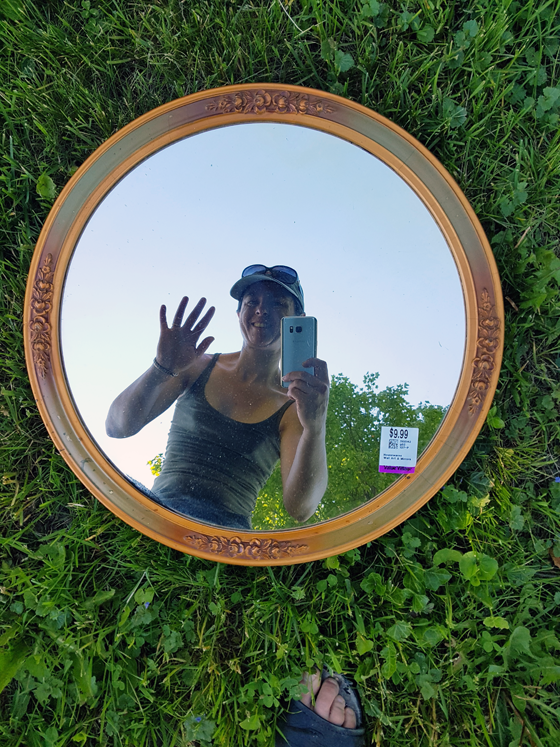
Every time I went to a thrift store, I casually looked for a large round mirror. This spring I finally found one at Value Village (for $9.99), and it was time for my own One Board Challenge.

Round mirror makeover before

I’m not going to post a how-to here because, hello, not my project and also Jenn’s instructions are very good.

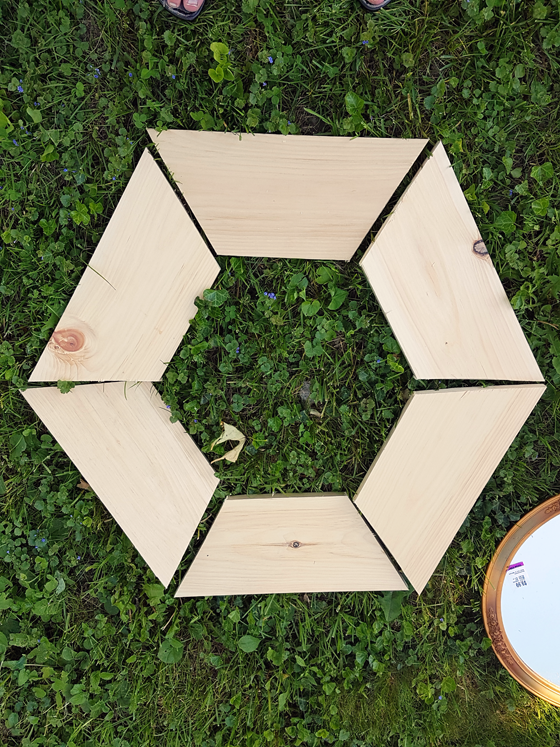
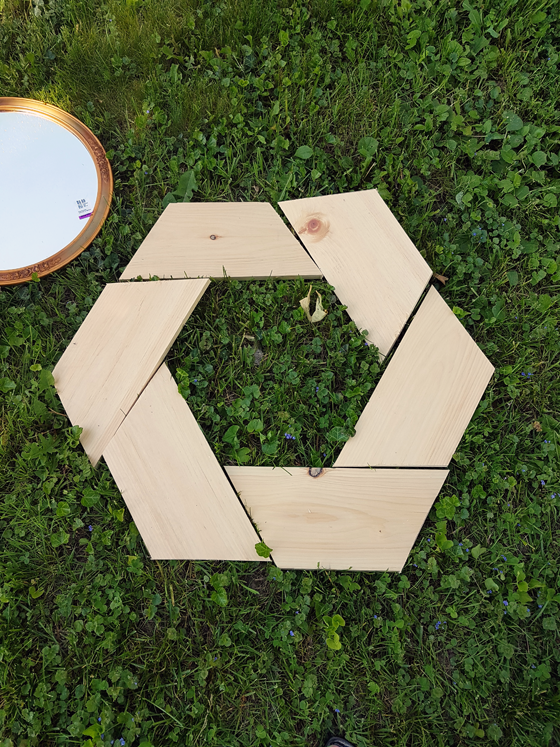
I love the creativity of the One Board Challenge. My brain does not work like this. I would not think to make a round frame out of a straight board. In fact, even with the tutorial, it took me a couple of tries to figure out how to arrange the wood. My first try was fine, but not as interesting as Jenn’s configuration.

Building a round wood frame

Jenn notes that there are multiple ways to arrange the wood. I feel like her arrangement had more interesting angles, so that was what I went with.

Building a round wood frame

If you’re thinking of trying this mirror yourself, I do have a few notes to share.

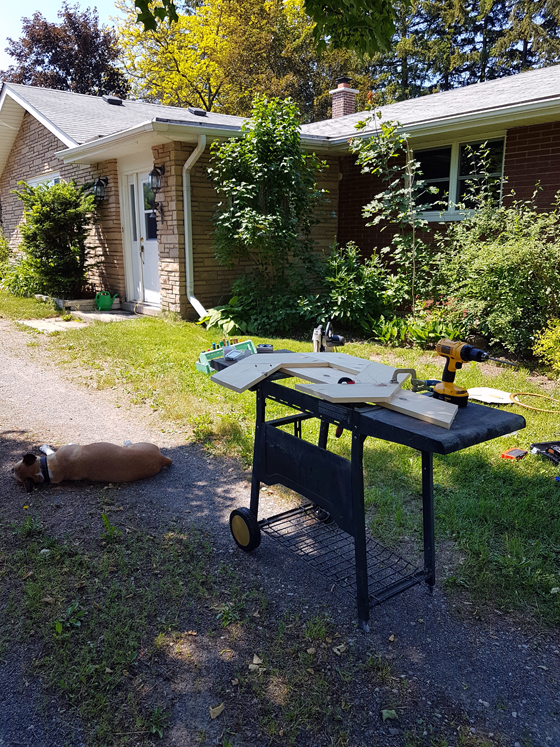
This project is rated moderate. It’s very doable, and none of the skills are particularly difficult. What might make this challenging for a novice DIYer is that building the frame takes a lot of tools. I had my tool box, mitre saw, jig saw, drill, Kreg Jig, sander and clamps all spread out over the front lawn (plus the dog). Then I went to my parents’ house and used my Dad’s nailer and air compressor.

Outdoor workshop

Cutting the curves with the jigsaw–especially the narrow border pieces–takes a certain level of confidence. I think it would be much easier to do the little pieces on a table mounted jigsaw versus freehanding it.

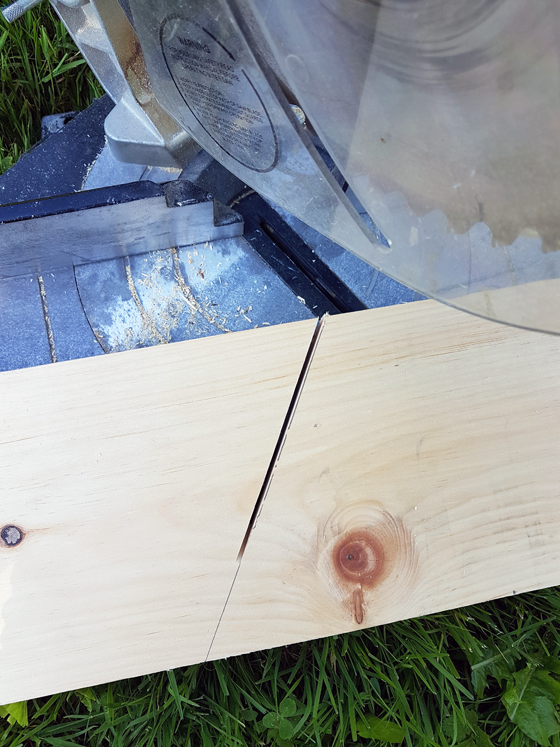
Speaking of tools, my mitre saw wasn’t big enough to handle the major angle cuts in one shot. A 1×8 is not a narrow board. I had to cut partway through, then flip over the board, readjust the angle of the saw, and cut the other half. It wasn’t difficult. Just slow.

Building a round wood frame

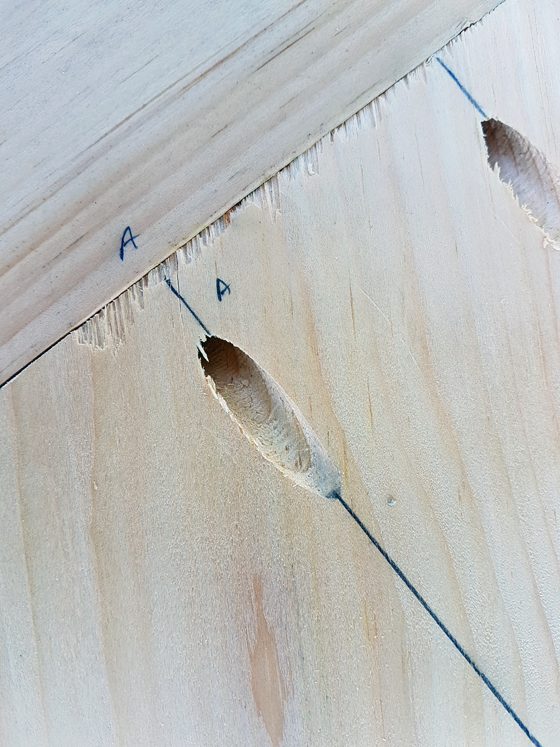
In Step 4, Jenn says “On each joint, mark a unique registration line so that it’s easy to quickly reassemble the pieces later on.” A simple registration mark is letters–you want each to be unique, so a line or slash isn’t distinctive enough. With letters, you can make one joint the A joint, another B and so on. You draw an A on each of the pieces to be joined together, so that you know which piece connects to which, even after dryfitting, sanding and the rest of the steps.

Registration marks

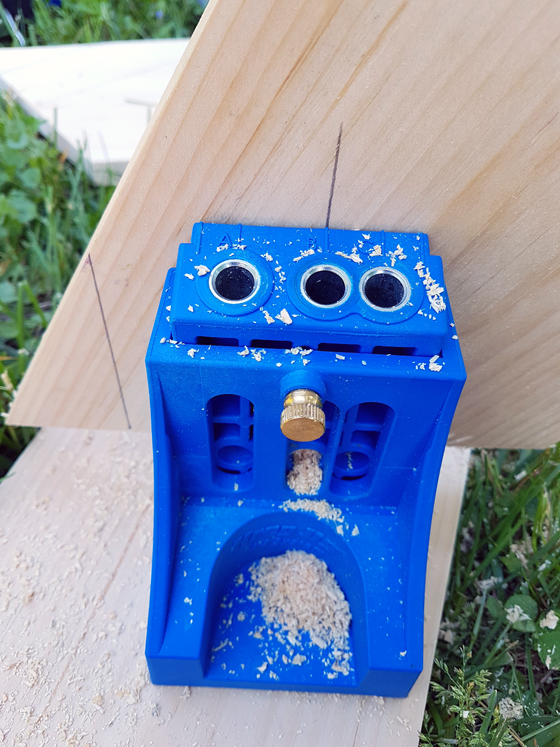
When marking your holes for the Kreg Jig, draw your lines extra long so that the jig doesn’t cover them up.

Kreg Jig

Once the frame was assembled, I stained it my favourite Provincial. Then the final step was attaching the mirror to the frame.

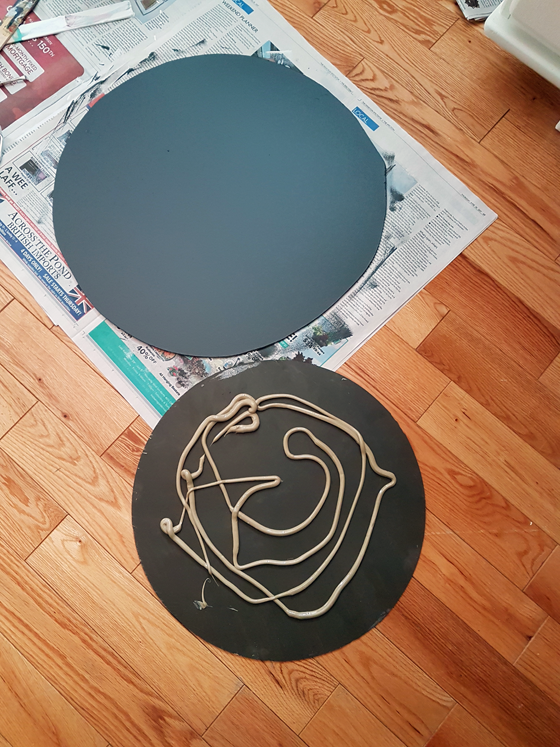
I broke from Jenn’s suggestion to attach the mirror using clips because my mirror ended up being just a wee bit smaller than the finished opening. Instead, I cut a disc from hardboard. I painted it black to camouflage any gaps that might show between the edge of the mirror and the frame, then I used construction adhesive to glue the mirror to the disc.

Gluing a mirror with construction adhesive

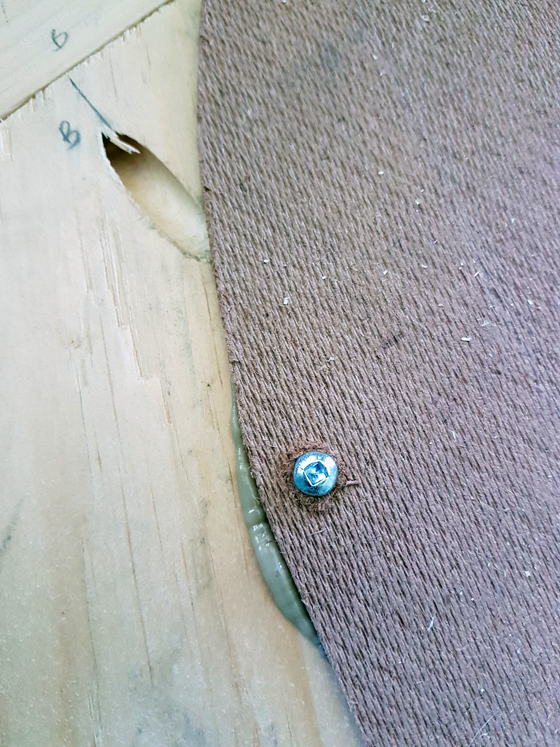
Once the adhesive was set, I then glued the disc to the back of the wood frame. I added a couple of tiny screws for extra insurance.

Attaching the mirror to the wood frame

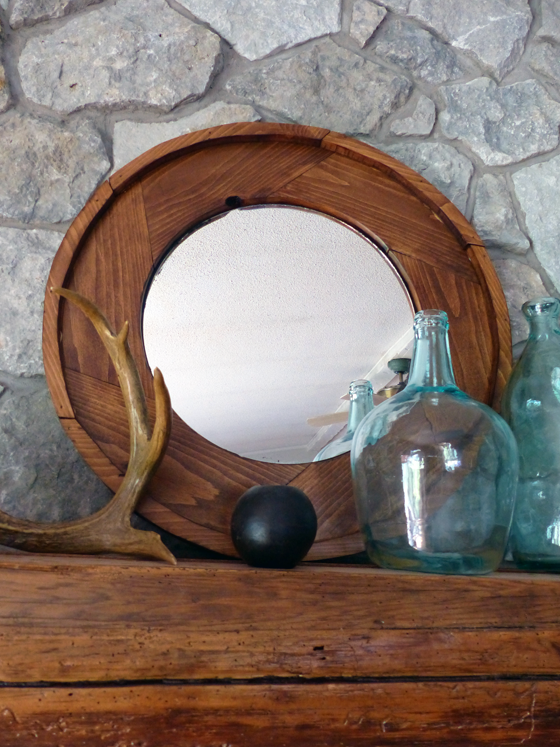
As soon as I flipped it over, I was ecstatic. I love how this turned out.

Large round wood frame mirror

Fieldstone fireplace in the summer

It’s large and bright and a little bit rustic–and a great addition to the summer mantel in the living room. Thanks to Jenn at Build Basic for sharing such a great project.

Do you decorate with mirrors? What would you build in a One Board Challenge?

Summer farmhouse mantel

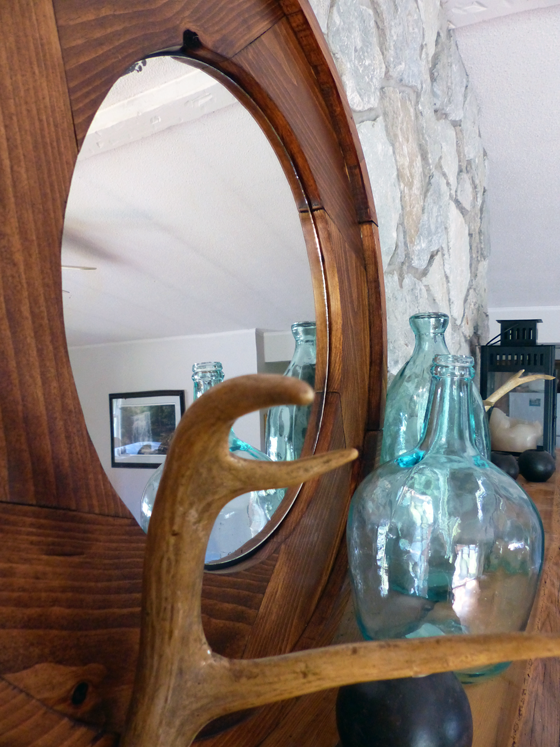
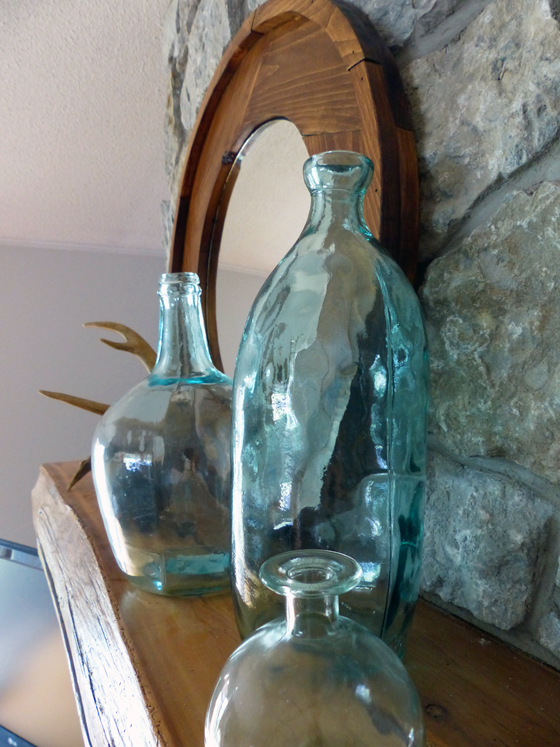
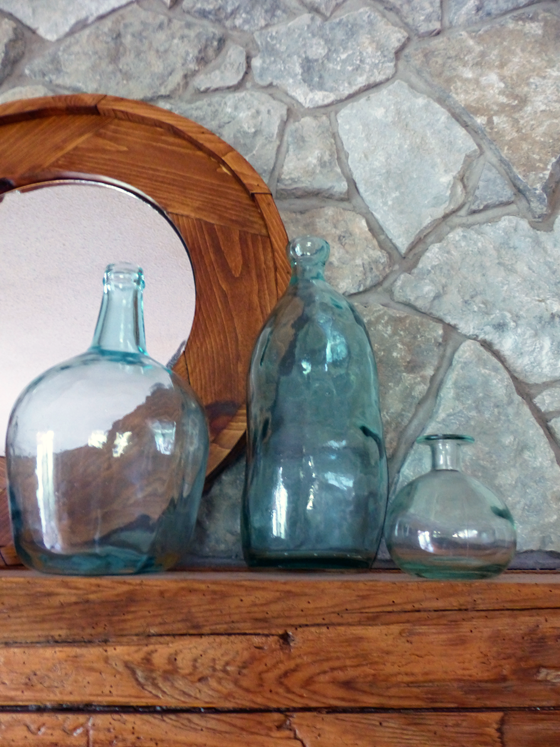
Blue-green glass jugs on the mantel

I typically don’t do a lot of seasonal decorating. But given that the mantel still had snowshoes on it at Easter, I thought it was time for a little refresh in the living room.

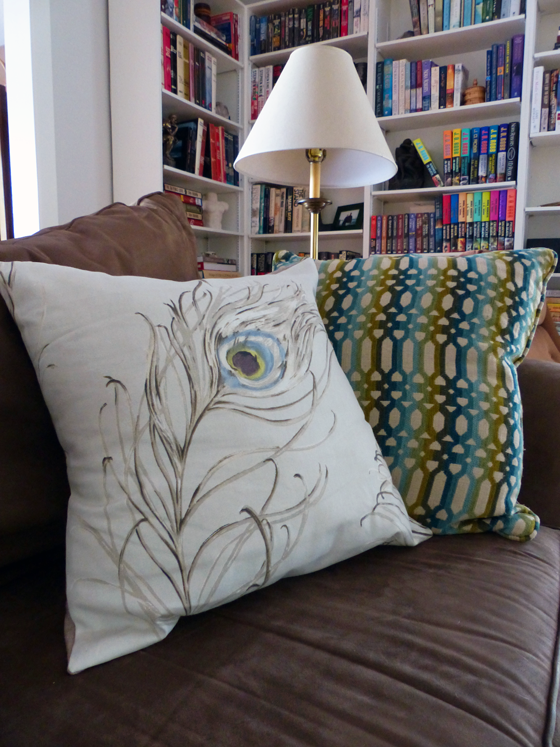
These blue-green glass jars are definitely more summery than snowshoes. They go perfectly with the new throw pillows I added to the couch.

Blue-green glass jugs on the mantel

How to mix and match throw pillows

I bought the two bigger bottles last year and even though they looked large in the store, when I put them on the mantel I felt like they were a wee bit small. The fireplace is huge and with the vaulted ceiling in the living room, there’s a lot of space above the mantel to fill.

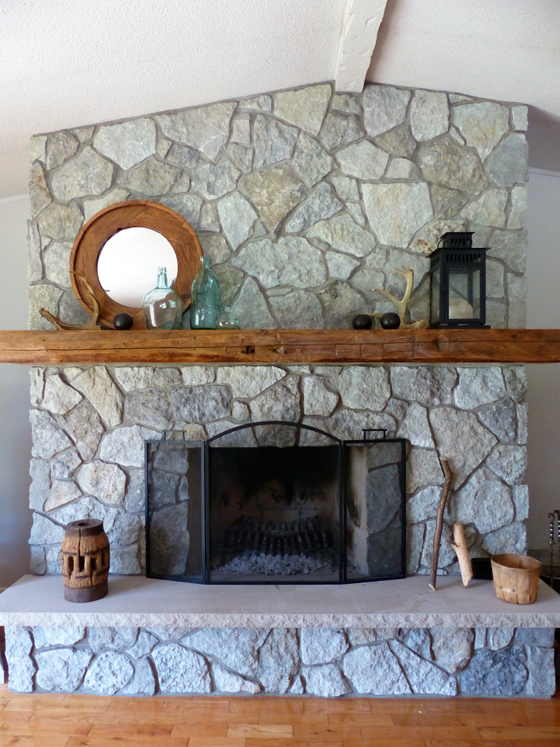
I made this wood framed mirror to add some height and give the illusion of doubling the bottles. (More on this mirror coming up later this week).

Fieldstone fireplace in the summer

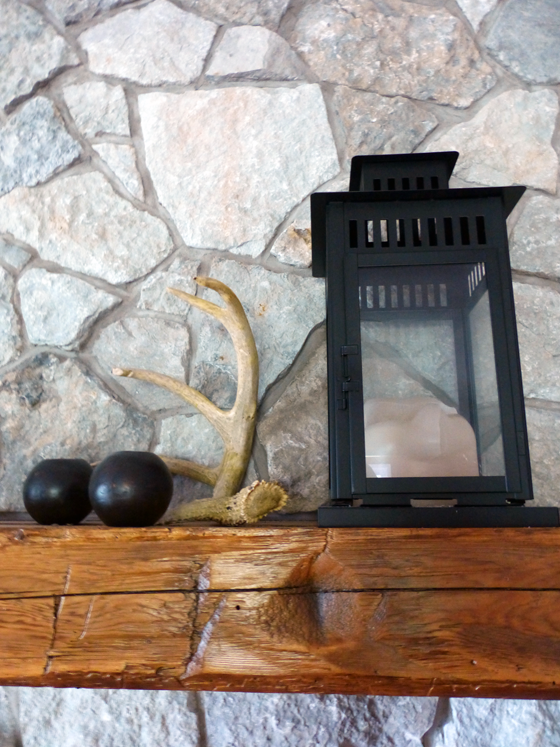
On the rest of the mantel, I used our usual decor that stays no matter the season. The pair of antlers that my FIL found are a beautiful organic accent that complements the wood and the stone. The large lantern and the trio of sphere tealight holders are very welcome hits of black.

Decorating our mantel with a lantern and antler

We are not using the fireplace these days–Easter was the cut off for that as well as the snowshoes. However, the beauty of the fieldstone and barn beam has not diminished. I love how it is the centrepiece of our home.

How do you decorate for summer? What colours do you associate with summer?

Hollyhocks

Light to dark pink hollyhocks

Every summer along the edge of the field behind my parents’ house a clump of hollyhocks would spring up. The tiers of blooms fascinated me, and I frequently tromped through the unmowed grass to admire them.

Last year, I planted some hollyhocks seeds in the vegetable garden. In last week’s guest what post, I shared a bud that appeared a few weeks ago. This year, at the entrance to the vegetable garden we have the most beautiful stand of blooms.

They range from the lightest blush pink to deep dark red.

Dark red hollyhock blooms

Hollyhocks feel farmy to me. They’re so beautiful and I love having them in the vegetable garden.

Hollyhocks are biennial, meaning that they bloom every other year. After seeing how well these have done, I went and bought another packet of seeds and sprinkled them over the soil beside these blooming stalks. These are supposed to self-seed, so I’m hoping that with the new additions we’ll have blooming hollyhocks every year.

Pink hollyhocks

Do you have hollyhocks are your house? Have you planted any flowers amongst your vegetables?

Guess what?

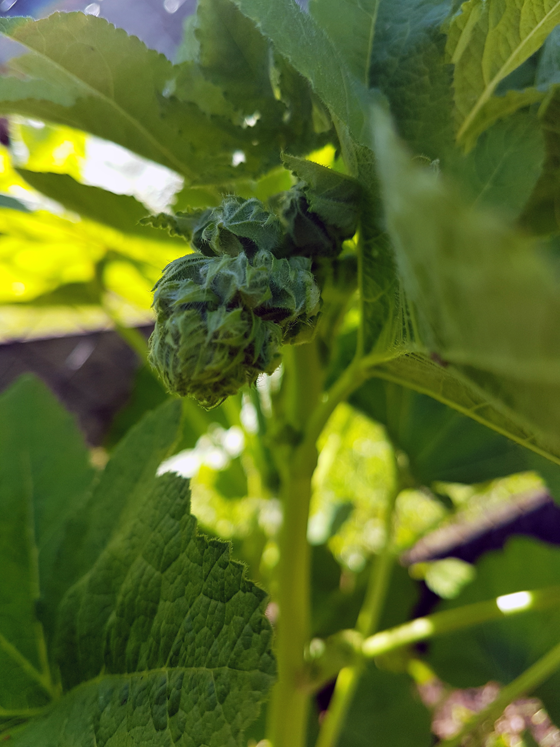
whatisthis11

It’s been awhile since I’ve done a guess what post. I’m not sure this one is entirely fair, as the before and after pictures were taken a few weeks apart.

I’m thrilled to have this addition to the farm. Take a guess today, and I’ll be back on Monday with the answer.

In between, I hope that you have a great weekend.

How to make a light box for tracing

Hand up if you’ve ever found yourself standing at a window, trying to hold two pieces of paper steady while you traced a pattern. My hand’s definitely up. It’s awkward, right? For crafters, tracing is an important part of a lot of projects.

A light box is a handy tool that makes tracing much, much easier. Sarah in Illinois is sharing how she made a light box for her quilting mother. 

I hinted a few posts back that I was not making good progress on my “one project a month.” If you remember, my three projects for the second quarter of the year were

  1. Light box for my mom
  2. Grill lighting
  3. The garden

Starting from the bottom, the garden is doing well. Very well. Plants are growing, we’ve picked some veggies, had some setbacks, but overall it’s doing very well. I decided to write a separate post on the garden, so I will just say I am very happy with the progress so far.

The grill lighting is on hold. When we hung the decorative string lights on our awning this year we decided that they give off enough light to make sure our hamburgers aren’t burnt. And since we are not sure what we want in permanent lighting we decided to do more research before we make the money and time commitment. So not done, but on hold.

As for the light box, I can say it is done.

So what is a light box? Basically, it is box with a transparent top and a light source inside.

When you put a print and a blank piece of paper on top of the box, the light shines through and makes it easy to trace the original print. This is great for crafters wanting to copy patterns. In this case, my mom wanted one for making quilts.
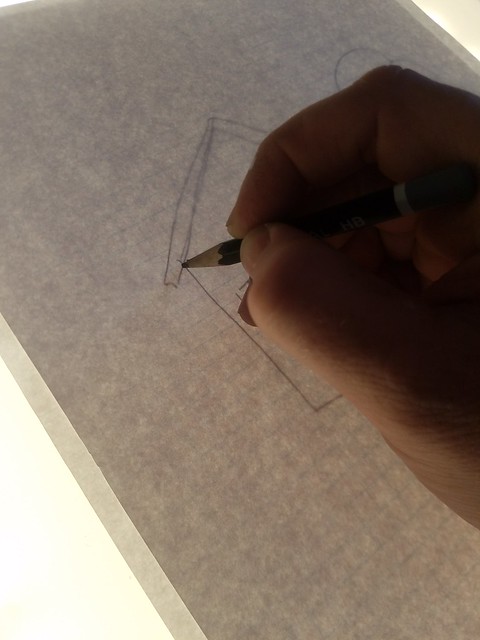
I started by cutting 45 degree angles for the 4 sides of the box.

Then I got to play around with the router. Honestly, I had not used our router before. It is kind of Steve’s toy, but using some practice boards it was fairly easy to get the hang of. The reason for the router was to cut a groove in the sides of the box for the transparent top to sit in.

I also used the router to curve the edges of the boards to give it a nicer look.

So this was the point where I would have started assembling the pieces. Except I came home and found that Blitz had put his mark on two of the pieces, quite literally.

It aggravated me of course, but who could I blame but the person who left them where a 10 month old pup could reach them? In case that wasn’t clear, that person is me.

So after redoing half of my work I began putting the sides together. Simply put, it is like building a frame for a picture.

The finished dimensions are 13 inches by 15.25 inches with the “window” area being 12.5 inches by almost 14.75 inches. Obviously I didn’t work by any plans, I just wanted to make sure it was large enough to use a standard 8.5 by 11 piece of paper for tracing.

I pre-drilled my nail holes and put three sides together.
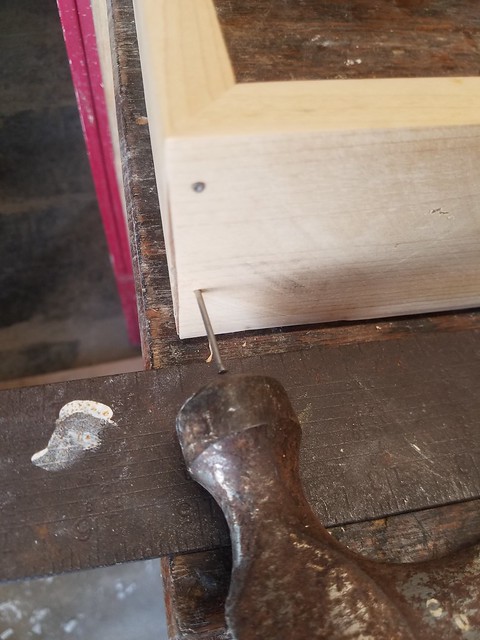
It was at this point that I put the first coat of white paint on all of the pieces. It has been extremely humid here which is not the best weather for paint to dry. I got several scratches and finger prints on the pieces that had to be touched up once I was done handling everything.

I slid the “window” into the channels that I routed and attached the fourth side.

For the window I used a piece of plexiglass that I cut with a razor blade and snapped to break. To hide the inside of the box and to dull the brightness of the intense lights that I chose, I sprayed the plexiglass with a frosted paint.

It was at this point that I turned the box over and installed the light source. I chose this LED tape at our local home improvement store. I wanted LED so that heat did not build up inside the box.

This tape is 6.5 feet long but came with instructions on how to cut it to the correct fit. I used both the adhesive back and the small mounting brackets that came with the tape. I cut a small hole near the bottom to run the cord out of.

I was pleasantly surprised that the light tape came with a switch so that it will be easy for Mom to turn on and off as needed.

And finally I screwed the back to the box. I chose to use screws so that I can remove the back if I ever need to make any adjustments or repairs.
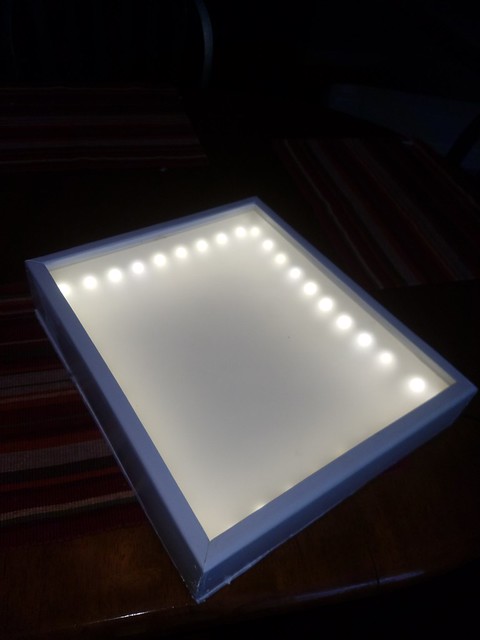
I am happy with the results and can’t wait to give it to Mom for her to try out.

That light box looks great, Sarah. It’s super professional with the routed channel for the plexiglass and the LED strip. I’m sure your Mom will appreciate it. Maybe you’ll get a new quilt out of it. 🙂
Gotcha Day 4

Baxter hiking on a boardwalk through the marsh

I haven’t written as much about Baxter on this blog since I started writing for ThatMutt.com. But Mr. B is still our favourite dude and a huge part of life at the farm.

I love that he’s by my side as I work on projects or walk over the property. And I love that he’s opened up other opportunities for me, like writing for ThatMutt.com, or connecting with our off leash hiking group.

Baxter came to live with us July 7, 2013, so last week was his fourth gotcha anniversary.

I’m keeping up my annual tradition of writing a letter to Baxter (inspired by Tracey at love lives on). It’s posted at ThatMutt.com.

Here are my letters from year 1, year 2 , year 3 and Baxter’s adoption story.