Winter rye cover crop in the vegetable garden

Winter rye sprouts in the vegetable garden

Look at our pretty green sprouts.

Fall in Ontario is about brown. Gardening season is done. Leaves, grass, flowers are all pretty drab. But we have one new crop growing.

This is our winter rye cover crop in the vegetable garden. It’s our first time trying a cover crop.

We love our garden and how productive it is. So we’re working hard to maintain the quality of our soil. Last year, I spread straw and manure all over the garden. This year, we’re going with so-called green manure.

In the spring, we’ll cut the rye and turn it into the soil.

Have you ever grown a cover crop? Do you have any green growing at your house?

Vegetable garden highs and lows

I’m going to go a bit corporate today. Have you heard of a SOAR analysis? It’s a business planning exercise where you look at the strengths, opportunities, aspirations and results for a particular project. It’s a bit friendlier than the old-school SWOT (strengths, weaknesses, opportunities, threats).

Today’s project is the vegetable garden.
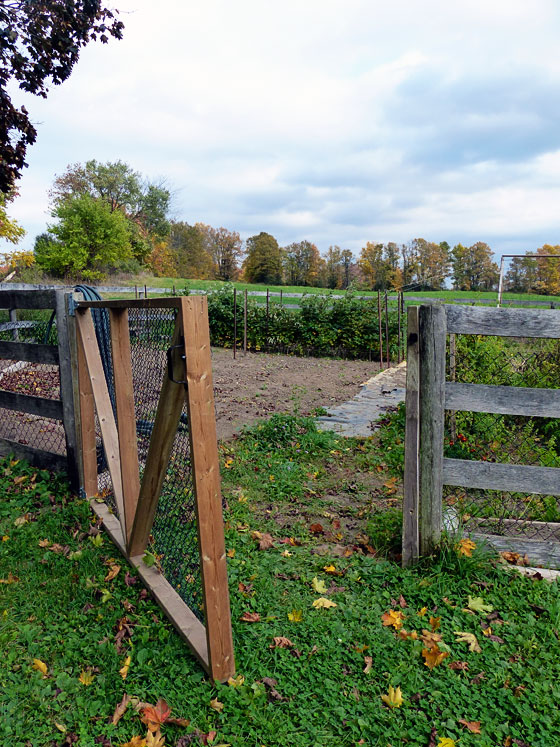
Vegetable garden in October 2016

Matt and I officially harvested everything last weekend. We have more clean-up yet to do, but I feel like I’m ready to look at what worked and what didn’t… or, more positively, what opportunities there are for next year.

Strengths

Soil – We have a great garden, and I can’t really take a lot of credit for it. Our soil is fabulous, and I’m doing everything I can to keep it healthy (see opportunities below).

Trellises – I’ve written about growing our raspberries, tomatoes and squash vertically. It totally worked. We got great yields in much less space than we would have without the trellises.

How to grow squash vertically

Watering – This was a very, very, very dry summer. I was very thankful for our well, so that we didn’t have to pay municipal water fees. We watered every other day–more than is recommended by most gardening how-tos–but I think it made the difference between losing most of our plants (which didn’t happen) and harvesting a very impressive crop (which did).

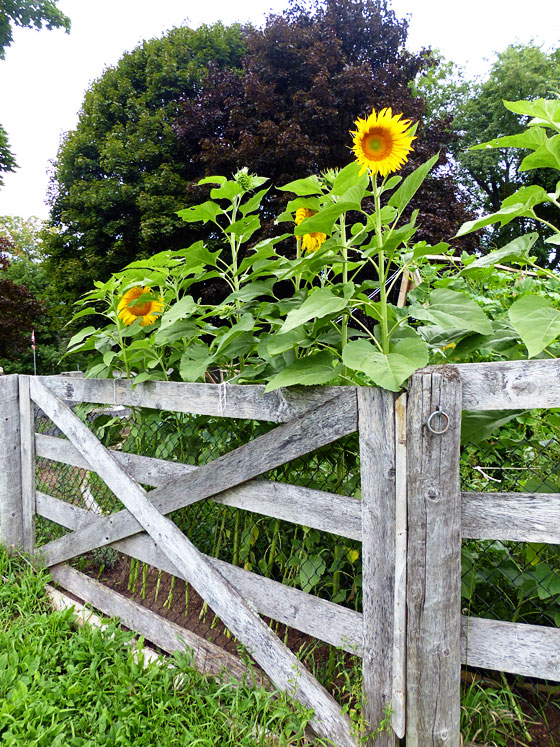
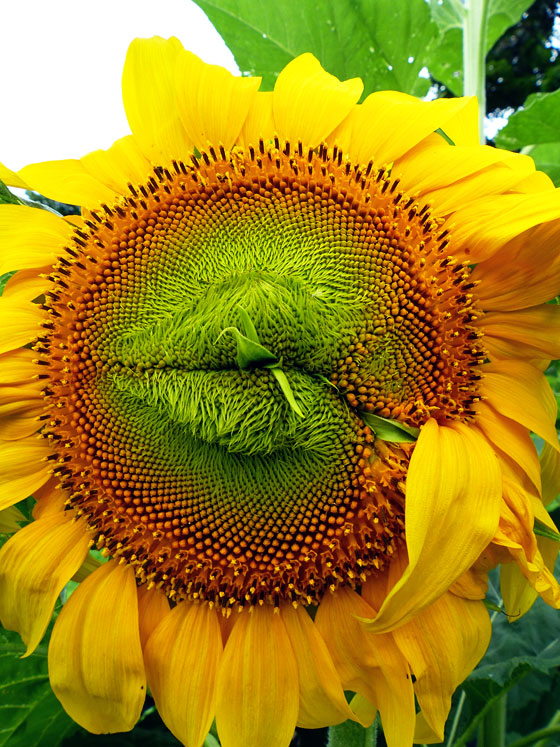
Crops – In terms of impressive, the key successes this year were peppers and beans, which last year did next to nothing. Two new crops–sunflowers and watermelon–were also great successes. The watermelon took forever to ripen, but finally made it thanks to the hot summer weather continuing well into fall.
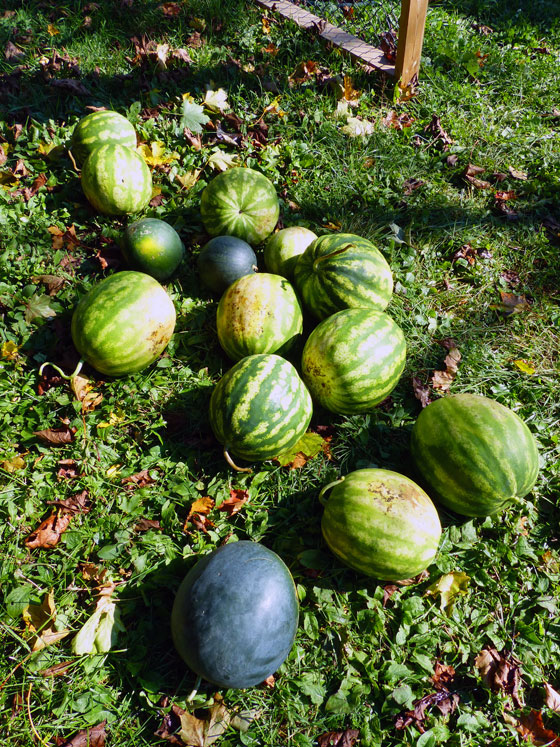
Watermelon harvest fall 2016

Our potatoes, tomatoes and zucchini were crazy prolific as usual, and the new versions we tried–ridiculously giant Sicilian Saucer tomatoes and Russian Blue potatoes–were fun additions.
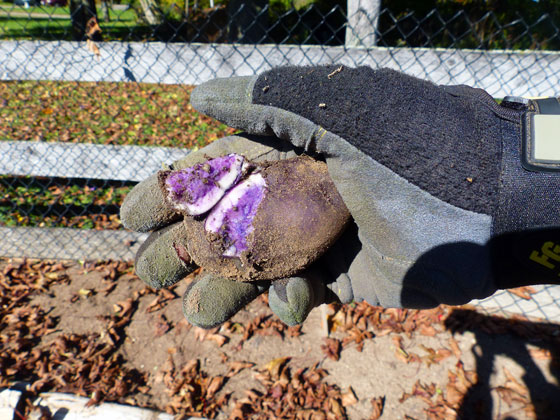
Russian blue potato

Opportunities

Raised beds – Argh the raised beds. I love having the perimeter beds in the garden, but the soil we bought for them was not good at all. Weeds didn’t even grow. The asparagus, hollyhocks and some of the herbs eventually got some traction, but it took all season. The carrots, beets and onions were nearly complete failures. Some of the herbs just shriveled up and died.
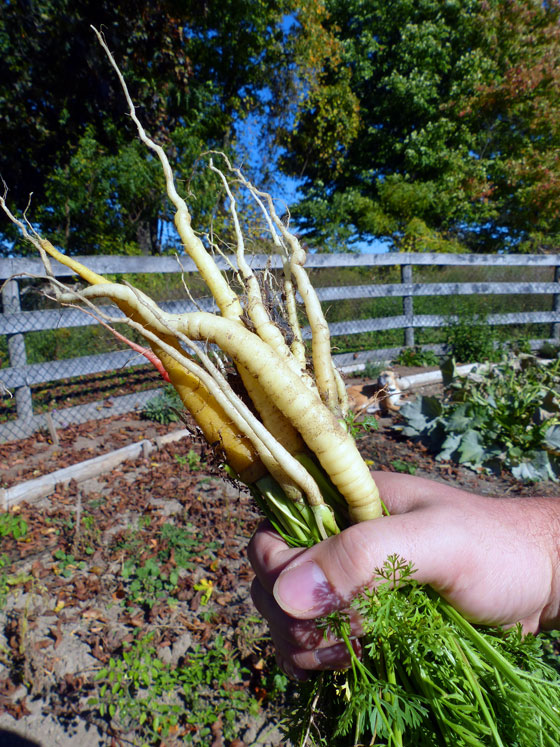
Pathetic carrots

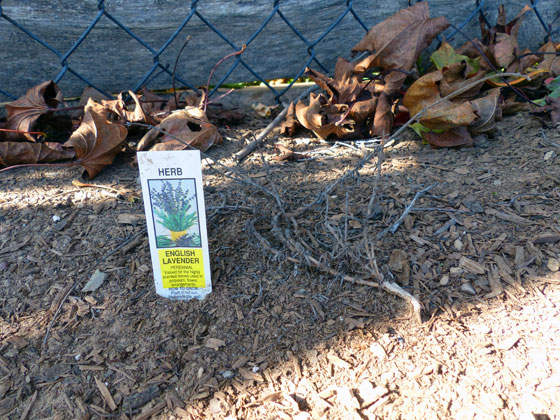
Dead lavender plant

I’m not sure what we need to do to remedy this next year. The soil was triple mix which is supposed to include compost, peat moss and top soil. However, our triple mix is very sandy and seems to be deficient in nutrients. I’m thinking all kinds of compost and manure might revitalize it.

Black raspberries – My attempts to domesticate the wild black raspberries that grow elsewhere on the farm was also a big fat fail. These plants can only be described as brambles. They’re thorny and floppy–and when they flop over, they root themselves into the ground making a big tangled mess. I channeled Sleeping Beauty’s Prince Phillip and dug them all out last weekend. I’m looking forward to finding a new kind of berry to plant in their place next spring.

Weeds – One of the things I wanted to try this year was using a deep layer of straw as a mulch over the garden to smother the weeds. Matt and I brought an old abandoned bale of straw up to the garden, but I never got around to spreading it over the garden. We didn’t keep up with weeding by hand, so the garden was very, very weedy. The deep mulch method is still on my list for next year.

Weedy garden

Plant the whole garden – Our garden is big. Last year we planted just half, but this year we made it up to three quarters . I ended up mowing the weeds in the empty quadrant all summer. Not the best use of space. I’m hoping that we can use the whole garden next year.

Aspirations

Maintain the soil – I’m learning that gardening is about growing soil, more than growing plants. Last fall I added ash and manure to the whole garden. This year, I’m aiming for more manure and some compost–especially in the raised beds. I’m also trying a cover crop for the first time, seeding one quadrant with winter rye. Crop rotation is another consideration that I’m realizing takes lots of advance thought–as in years in advance.

Slow-growing crops – Asparagus and grapes were two additions to the garden this spring. Both are going to be long-term commitments, and I’m hoping that they make it through the winter and thrive next year.
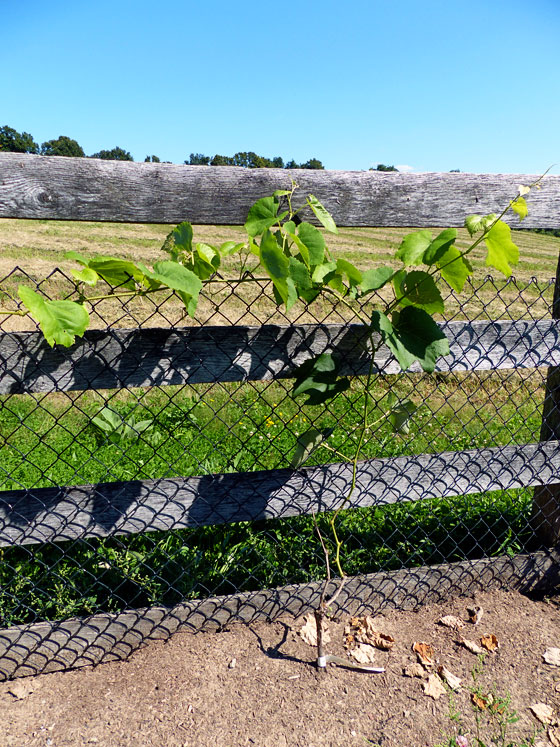
First year grape vines

New additions – I’m looking forward to adding more herbs to the raised beds and putting more thought into how they’re clumped around the perimeter of the garden. Another consideration is maybe a cutting garden, or at least dressing up the vegetables–and filling some of the vacant spaces–with a selection of flowers.

Results

Infrastructure – There’s another corporate, distinctly non-garden word for you. But I don’t know how else to describe the base structures that form the garden–and that as of this year are all done. Last year our big accomplishment was the fence. This year, we added the curbs, raised beds, trellises, gate and waterline. I’m looking forward to not “building” the garden next year and just planting it.

#Harvest16 – Once again, the garden was super, duper productive. We had more zucchini, tomatoes and watermelon than we could use–to the benefit of our families and co-workers. We’re hoping that our squash and potatoes last well into the winter. Any storage tips?
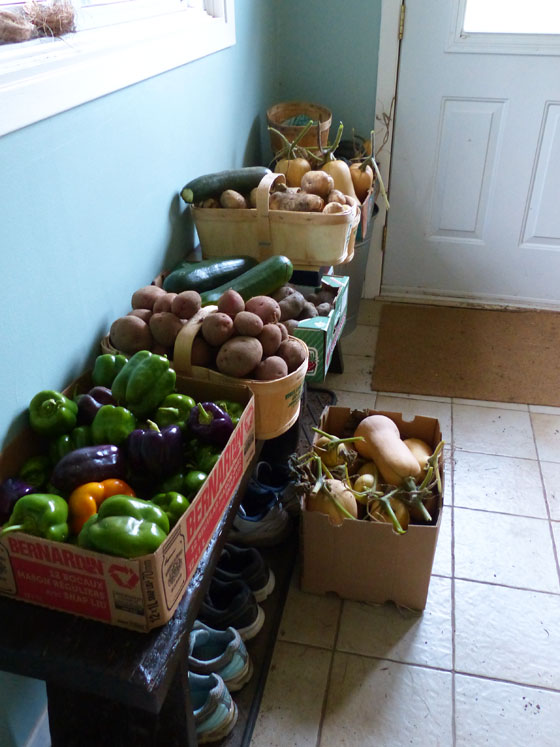
Garden harvest fall 2016

Preserving – I feel like growing your own garden soon leads to preserving your own food, and this year Matt and I dove in to canning. We pickled about 10 pounds of beans–I was skeptical, but they’re so good I can eat a jar on my own–and made nearly 12 litres of our own ketchup–Matt is a big user of ketchup and is very particular about his preferred brand… although he has now switched allegiances to our homemade version. We’ve also loaded up the freezer with beans, roasted tomatoes, grated zucchini and plan to add peppers.

I’m not quite ready to call this year’s garden completely done, but I am ready to call it a success. In fact, we have also fulfilled every single goal I had for the garden in my original Home Goals 2016 post. That’s an achievement.

How did your garden grow this year? Any tips for storing potatoes and squash? Or favourite recipes to share? Anyone have ideas for the soil in our raised beds?

Growing sunflower seeds

It’s been neat to watch the sunflowers go through their various stages of growth.

More than a month ago you saw the cheery blossoms.

A couple of weeks ago, the seeds started to come in. The spiky flowers in the centre of the blossom dropped off to reveal the tightly packed seeds.

Sunflower seeds

Sunflower seeds

It was about this time that the local wildlife seemed to discover the sunflowers.

I had hoped to get another photo this week, but the flowers have been nearly picked clean. Most of the seeds have been consumed.

The biggest culprits are the blue jays. Any time I walk past the garden, at least six jays erupt from the sunflower patch. We’ve also spotted chipmunks and squirrels.

So it appears that we may be buying bird seed again this year.


How to grow squash vertically

Last year, our squash took over the garden. Fully half of our nearly 2,500 square foot garden was completely covered in squash vines.

We loved the squash that we harvested, and we knew we were definitely growing squash again. However, we knew that we weren’t willing to give up that much of the garden this year.

My plan to corral the squash was first to plant less. No matter how much we like squash, we cannot eat nearly 40 butternuts and about 70 acorns (last year’s harvest).

Wheelbarrow full of acorn squash, butternut squash and pumpkins

The second part of the plan was to coax it up, rather than across. Up was a theme of our garden all this season. I’ve already shared how our raspberries and tomatoes are growing vertically. Now it’s time for the report on our final vertical experiment.

And this truly was an experiment. We were growing acorn and butternut squash. They weren’t small and lightweight. I wasn’t sure whether the vines would be strong enough to support the hanging fruit.

Back in the spring, I built a large A-frame. It was about 8 feet tall and 16 feet long.

A-frame squash trellis

We used 2x3s for the As with plywood at the peaks for extra stability. The top ridge is two 2x2s. Each A is screwed into stakes that are hammered into the ground. We spread wire fencing across each side and attached it to the wood with big staples. Just for extra stability, we tied each end of the trellis to the fence so that it couldn’t fall over.

How to grow squash vertically

With the A frame in place, I planted (half) our squash seeds under the trellis.

Squash seedlings

As the plants grew, I tucked the vines into the mesh. The vines were a bit fragile and bruised or even snapped easily. I learned it was important to not let the plants get away from me. I had to be diligent about training them up the trellis before they grew too big. Fortunately, the squash seemed to recover quickly from any of the damage I inflicted.

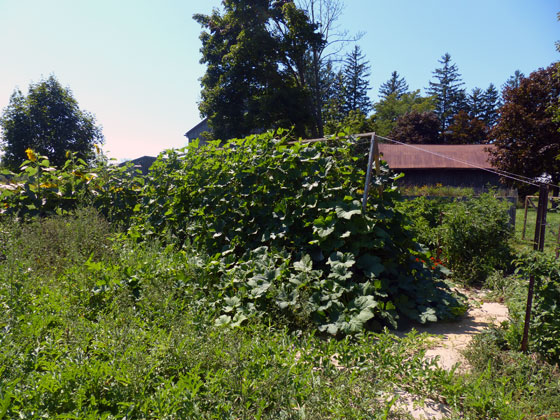
Squash growing up an A-frame trellis

Just like last year, though, the squash took over. Thankfully, this year it took over in the right direction–up. Soon, the whole A frame was completely covered.

squashtrellis7

The plants blossomed and set fruit. And I crossed my fingers that the fruit would stay on the vines long enough to ripen.

We’re nearing the end of the season now, and I’m happy to report that things are looking really good. The leaves are starting to die off, so you can see just how good for yourself. Behold, the squash.

How to grow squash vertically

Yup. Once again, we have a whole lotta squash. And they’re big ‘uns. Oy vey.

How to grow squash vertically

The butternuts are phenomenal. The acorns are more iffy. But I’m not sure that I can blame the trellis.

First, we don’t have quite as many acorns as I was expecting. The butternuts definitely have them beat for quantity.

Second, the acorns aren’t exactly all acorns. They come in a few different shapes. Any ideas what would make them grow so differently?

Elongated acorn squash

Mishapen acron squash

Despite some mutants, I’m calling the vertical squash growing experiment a success. It’s definitely a method we’ll be using again.

Have you done any experiments in your garden this year? Have you tried vertical gardening? What’s your favourite type of squash? Any tips for storing the squash or recipes to share?

Save

Save

Save

Save

Save

Making more ‘mums

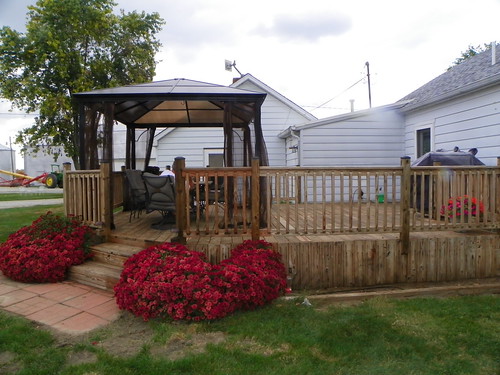
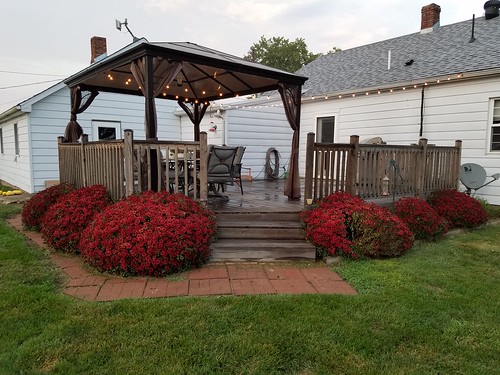
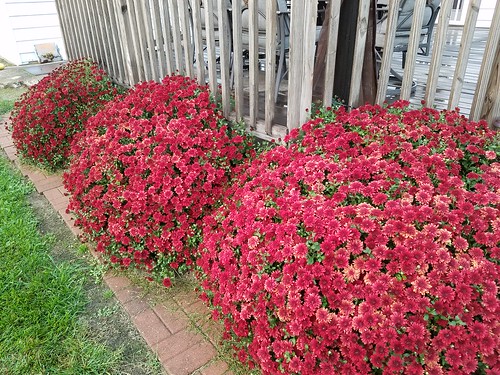
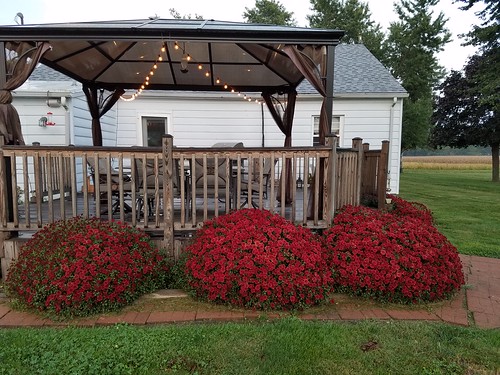
Almost exactly a year ago Sarah in Illinois wrote a post about sealing her deck, and she included a photo of the very impressive chrysanthemums that were growing on either side of the deck stairs. A year later, they’re even more impressive–and they’ve multiplied. Read on to learn about how Sarah successfully split her mums.

Last fall I shared a picture of my mums. I was really proud of them. They were so full and added so much color to our deck.

Then this spring Julia and I had a garden challenge. One of the projects I checked off my list was to divide my mums.

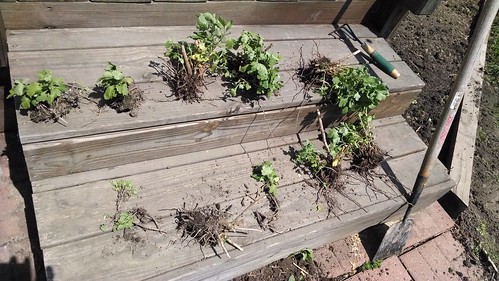
I simply dug them up out of the ground, divided them into a few same-sized clumps and planted them back into the ground around our deck.

That is it. That is all I did.

Then this is what happened.

I know. I am as impressed as you are.

I have had neighbors stop and ask me what my secret is. But all I can say is, I watered them for the first week or two after I transplanted them. That’s it. No fertilizer. No secret concoction. I didn’t trim them back or even sing to them! I just sat back and let them go.

That’s my kind of gardening.

Holy chrysanthemums, Sarah! Those are gorgeous. I’ve heard that some plants do better after splitting, and this seems to definitely be the case for your mums. My frugal heart also loves that you now have six huge plants and didn’t have to spend any extra money.

How we installed a waterline for the vegetable garden

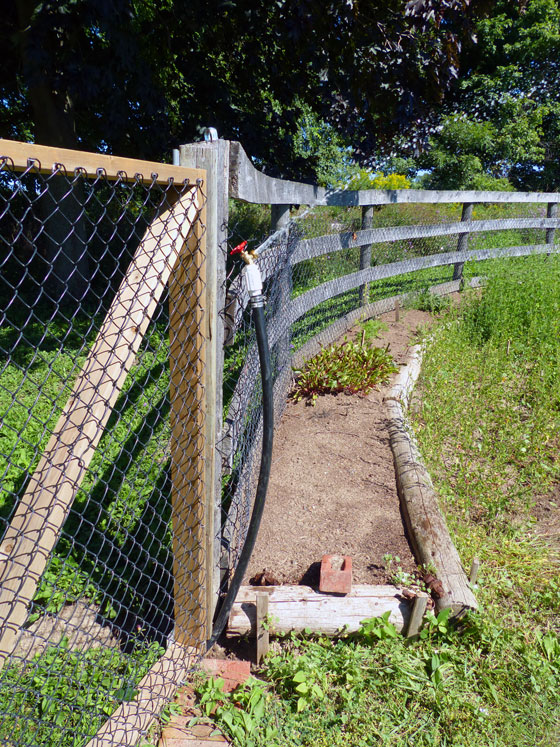
A big to-do on the garden task list is now done. We finally have a hose at the garden… and I’m so happy to cross this one off the list.

Hose in the vegetable garden

With the lack of rain we had this summer, we watered the garden a lot. However, the closest hose was at the driveshed. That was three hose-lengths away. I had screwed the hoses together back in the spring, and most of the time we kept them laid out across the yard. But any time I had to wind them up (like every time we cut the grass) it was a heavy haul.

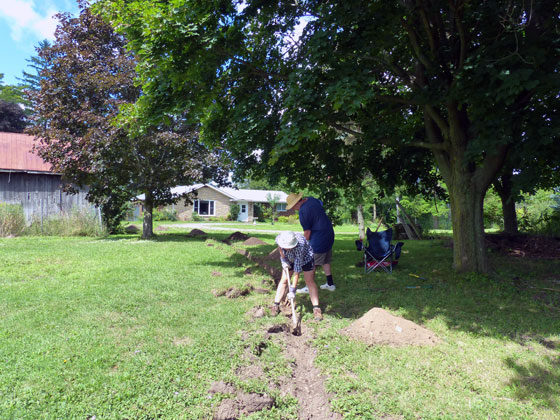
Adding a tap at the garden was one of my Home Goals 2016. I already shared a bit of the misery that was digging the trench from the driveshed to the garden (ground so hard, summer so hot, rocks and roots so many, garden so, so, so far away).

Trenching a waterline to the garden

When I measured the trench, it came out a bit more than 100 feet. I spent a week visiting various home improvement stores and then specialty plumbing suppliers trying to find someone who would sell me 110 feet of irrigation pipe. All I could find was 100-foot or 400-foot coils. Ugh.

I bought 100 feet and crossed my fingers that we could splice on a small extra piece we had at the farm already and still make it to the garden.

But it turned out I was worried for nothing. When Matt and I unrolled the pipe and laid it in the trench, it easily reached the garden. Thank goodness for small wins.

The other thing I was worried about was our plumbing abilities. I had a plan, but I wasn’t sure if it was actually going to work.

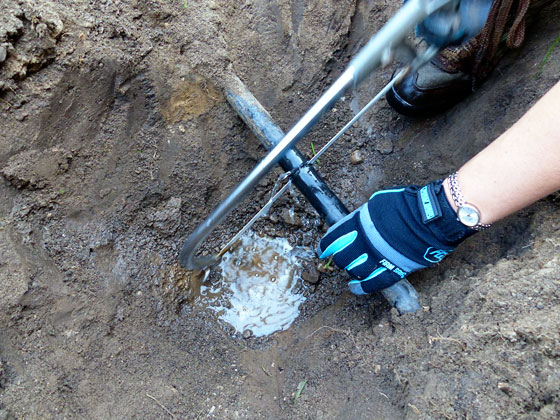
We dug down to the waterline that ran to the hose at the driveshed. After turning off the water, I took a deep breath and cut through the waterline with the hacksaw. So much for my brand new work gloves.

Cutting a waterline with a hacksaw

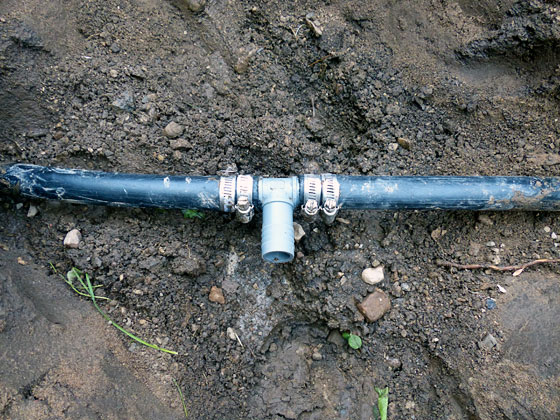
Then we inserted a T. A note about these connections. They fit super, super tightly. We boiled the kettle and then Matt poured the hot water over the pipe and that softened the plastic enough that I was able to wedge the fitting into place. The clamps on either side provide extra insurance to hold everything together and prevent leaks

Adding a T connection on a waterline

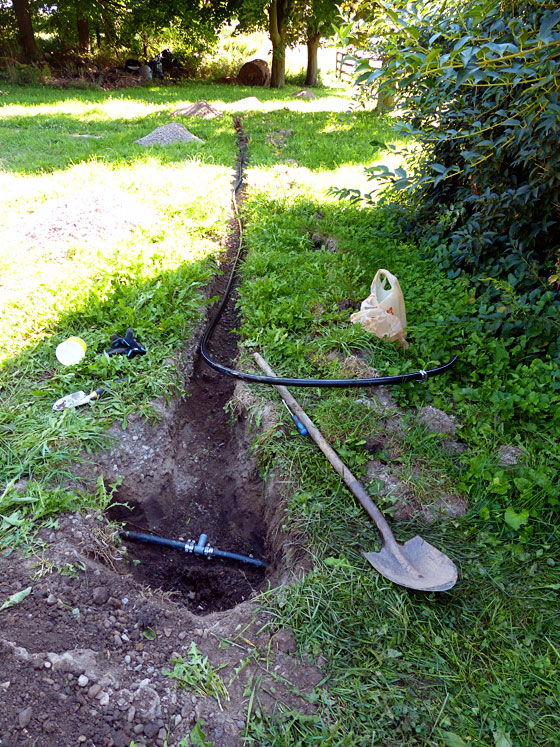
From there, it was easy to connect our new 100 feet of pipe.

Running a waterline for a garden hose

At the garden, the pipe sneaks under the brick threshold at the gate and up the post. Look how much pipe we had. Exactly the perfect length. And look at the water flowing. We did it! And there are no leaks! Big wins all around!

Adding a hose at the vegetable garden

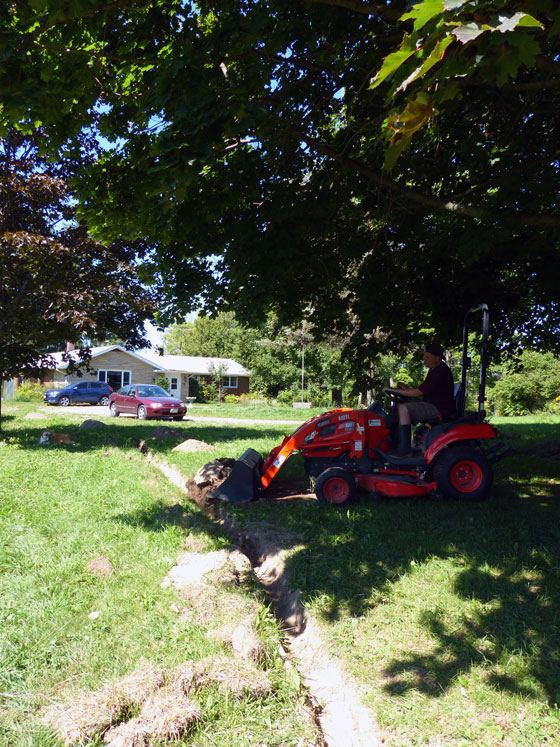
Backfilling the trench was much easier than digging it out. Wiley helped which was huge.

Backfilling the trench with the tractor

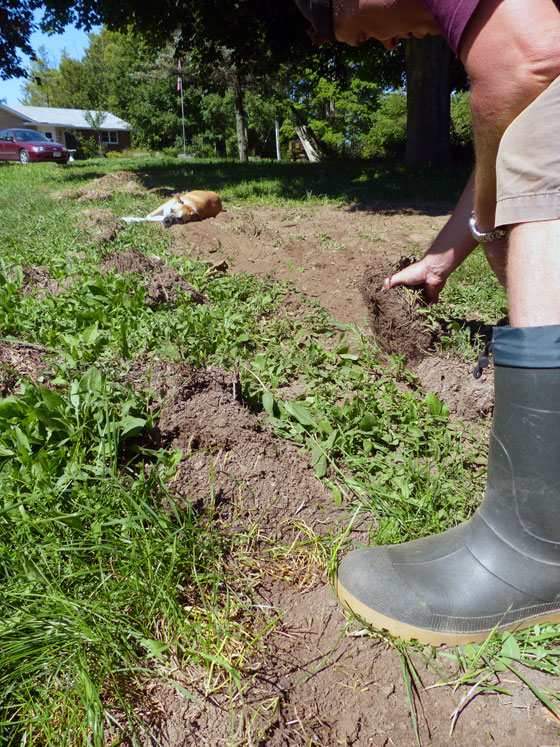
Baxter did not help. In fact he staged a sit-in (lie-in) to protest when Matt started to put the sod back down. “Dirt is good, dude.”

Baxter lying in the dirt

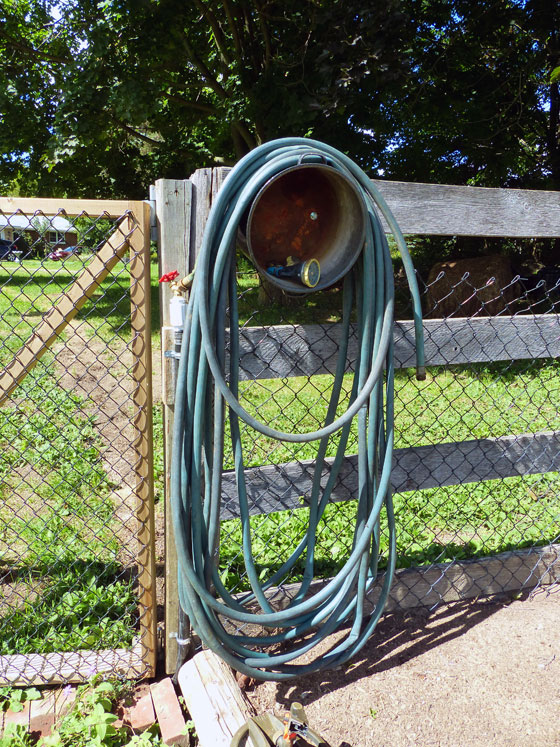
The finishing touches were clamping the waterline to the fence post and then installing a hose hanger.

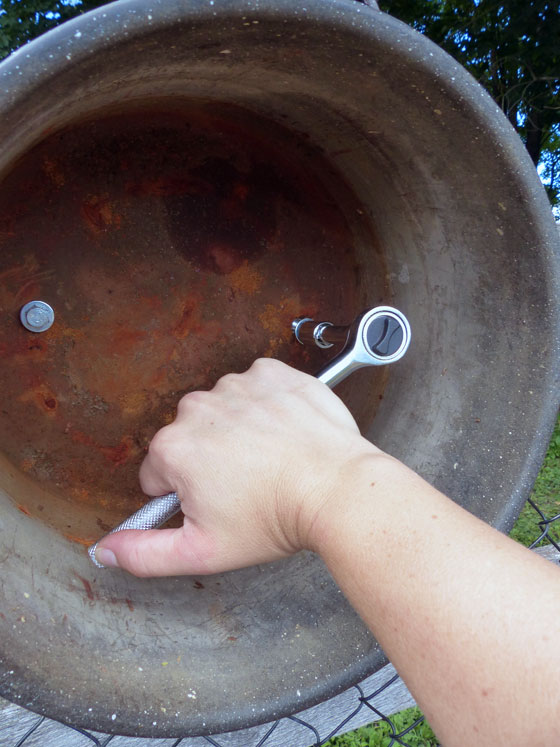
Rather than a typical hanger, I wanted to try a metal bucket. I’ve seen a few other people do this, and I figured it would give us a place to stash nozzles or maybe even some garden tools.

Again, I spent some time running around to various stores trying to find the perfect bucket. Then I remembered a rusty old canning pot–one of our many gifts from previous owners. I knew there was a reason I didn’t throw that out.

I drilled a couple of holes in the bottom and then bolted it to the fence.

Using a pot as a hose hanger

Then I dragged the hose out to the garden one final time (except for seasonal shutdown, but don’t burst my bubble, okay?) and coiled it up.

Hose in the vegetable garden

Such a great addition to the garden. And this is actually our final to-do on our garden to-do list. This year has been all about adding the structure (raised beds, trellises, perennials) and functionality (gate, trellises, hose) to the garden. I think all of this is going to make a huuuuge difference next year.

The other thing that is going to make a huge difference–and that we have yet to do–is clean up. We have a whooooole bunch of weeds that I want out of there before winter sets in. That’s still a few weeks away though, as harvest is still going strong.


How is your garden growing? Does plumbing make anyone else anxious? How do you handle irrigation in your garden?
Save

Save

Save

Save

Save

Save

Garden Olympics in Illinois

Today’s post from Sarah in Illinois further solidified my belief that we’re completely kindred spirits. Obviously, Sarah and I both love our gardens. I realized today that we also both love the Olympics. Sarah has come up with a really clever, Olympic-esque way of summarizing her garden’s performance this year. Let the medal ceremonies begin.

Our garden is just about done for the year. We currently only have two things still growing: peppers and pumpkins. In a future post I will go over some of the ways that I am preparing for next year, but for now I will review this year.

I started out with such high aspirations for our garden. And it’s a good idea to set your goals high, but when I look back over the year I need to be realistic with my results. I need to focus on what went well and not what didn’t. So I am going to go over the results in the spirit of the Olympics and start with my gold medal winners.

Gold medals

Sugar Snap Peas – With a mild spring and plenty of rain, I had a much bigger harvest than normal and I even still have some in my freezer.

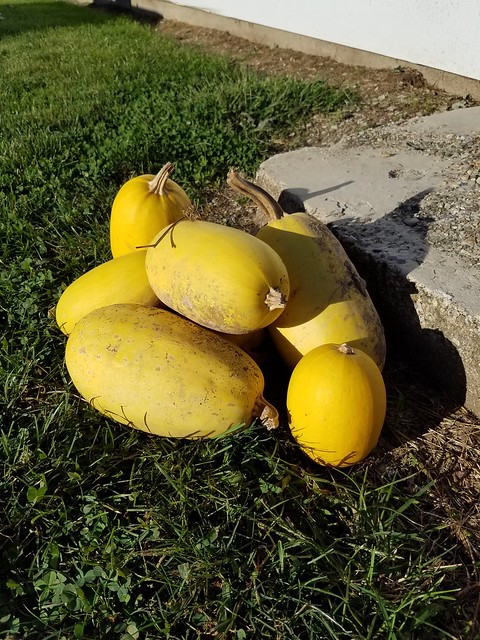
Spaghetti Squash – I gave away several, I baked a few, froze some and I still have more to use up.

Kale – I couldn’t keep up with my Kale this year. I didn’t know what to expect when starting it from seed indoors and transplanting it, but it could not have done better.

Green Beans – We had an excellent first harvest and even got a few meals from a second harvest.

Potatoes – The potatoes did very well and we still have a meal or two to dig up before we close down the garden.

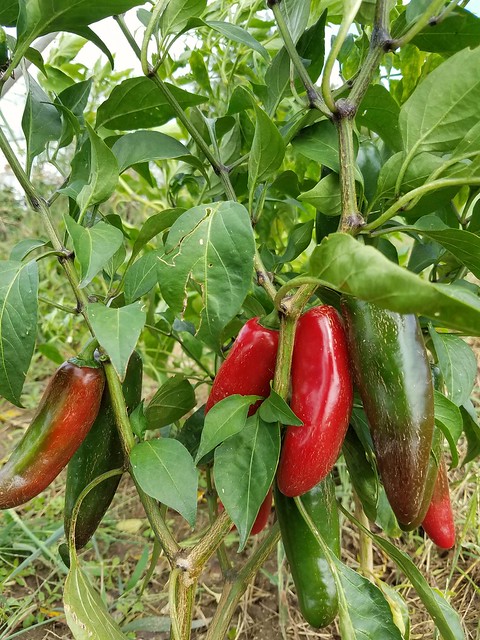
Peppers – Both our green peppers and our hot peppers really did well this year.

Silver medals

Radishes – The plants themselves did well. I just did a poor job of planning and planted too much at one time. So a lot was wasted.

Cauliflower – This was my first year for growing cauliflower. Again, the plant grew well, and I pinned the leaves closed like I was supposed to. Then I waited, and waited, and waited, and waited. Steve finally mentioned that he thought they should have been ready to pick by now. However, I had waited too long and they were all bitter. If I had been more vigilant they would have gotten a gold medal.

Tomatoes – The plants grew large and produced a lot of fruit. We made one harvest and took them to Steve’s mom to can. She made a few quarts of tomato juice from them. We had planned another harvest and then rain hit. In one weekend we got over 4 inches of rain and the garden was too soft for me to walk in. By the time the ground dried up a little and I remembered that we needed to pick tomatoes, most of them were rotten.

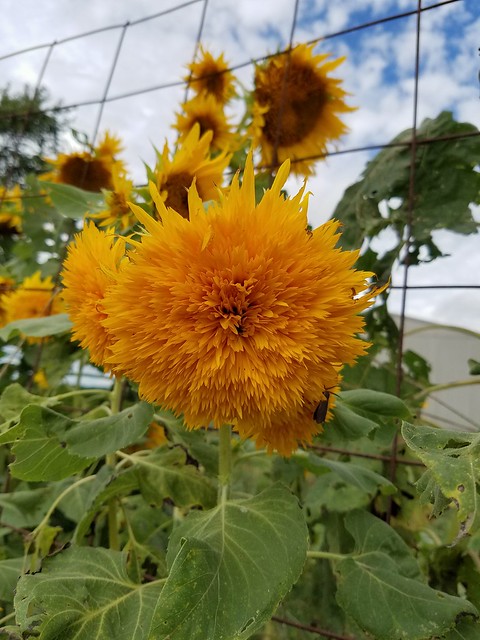
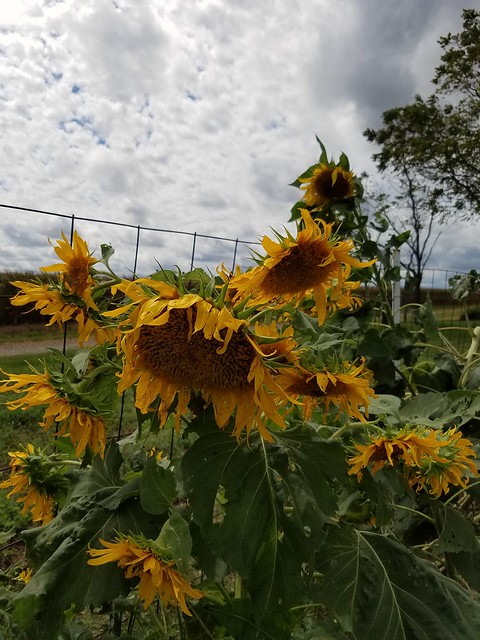
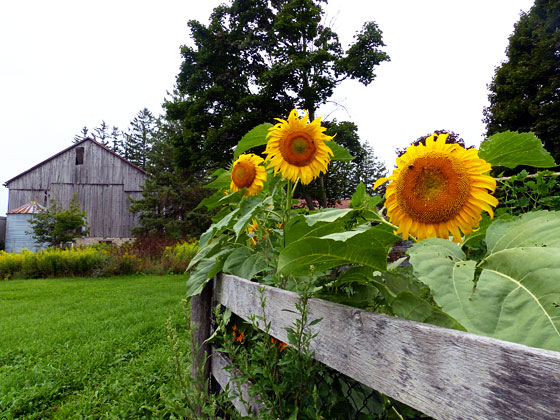
Sunflowers – The flowers are beautiful, but I did not pay attention to the amount I planted of each variety. I got several plants that are really pretty but only two are the type that you can harvest the seed from and the kids are disappointed that we will not have sunflower seeds to eat.

Bronze medals

Red Cabbage – I had planted 4 plants and they looked healthy, but I only was able to harvest one head.

Carrots – We planted the carrots too close together. The few that we harvested were good, but they did not have much room to grow very large.

Cabbage – I am thinking maybe cabbage moths or some type of pest took over the plants. All of the leaves were full of holes and we did not harvest any cabbage.

Asparagus – I didn’t know what to expect for my first year of asparagus. And I would normally think that maybe mine looked okay. Until I went to my brother’s and saw his first year of asparagus. His plants look so full and healthy and mine look so thin and spindly. I will have to add some new crowns next year.

There were a few vegetables that did not even show up to my “garden olympics” and so they did not get awarded anything:

Cucumbers – my plants this year were pitiful. Just pitiful. There is no other way to describe them. I think out of about 15 plants I harvested 2 cucumbers. TWO.

Brussels Sprouts – This was my first year of growing them and I knew that they didn’t seem to be doing anything. My thoughts were confirmed when I went out to the garden and saw Steve mowing the plants down. Apparently he had given up on them before I did.

Overall, I should be happy. We produced our own food. We grew food that was healthy and fueled our bodies with the best quality nutrients. There really is nothing I should be upset about. I should just look to improve next year.

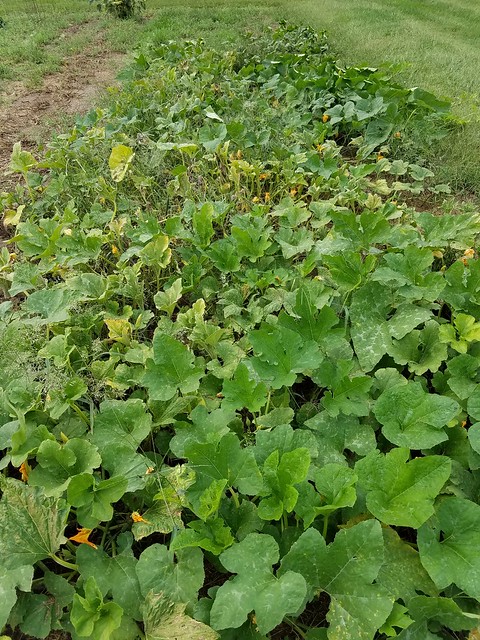
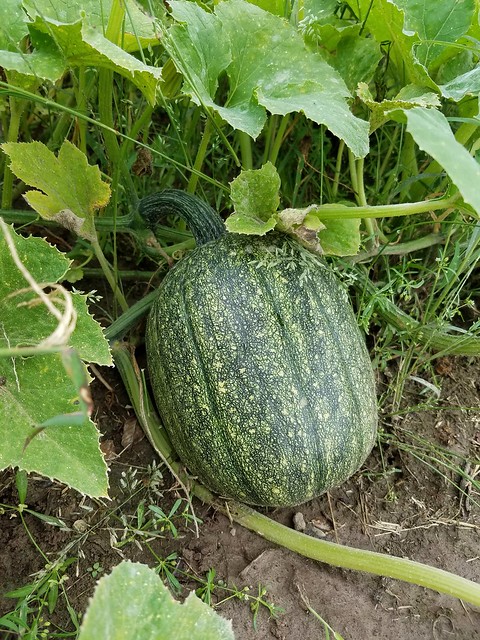
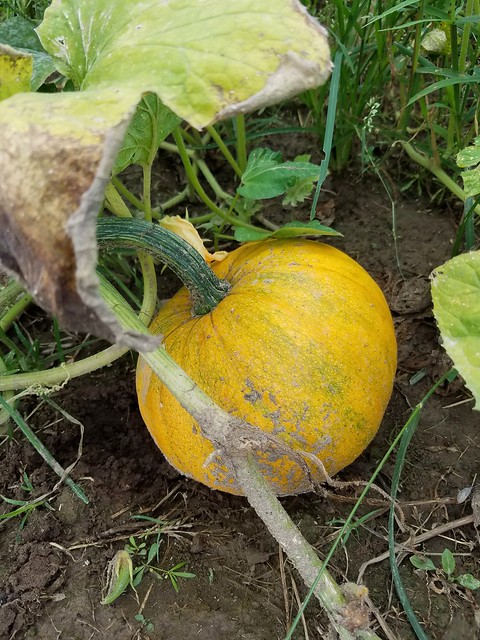
In the meantime, I will keep checking on these vines and hope that we have some pumpkins to carve this year!

Great summary, Sarah. I think as gardeners we learn very quickly that we can’t expect everything to be a success. It even varies year to year. It’s really good to keep a record like this of what worked and didn’t, and use that to set goals and plan for next year. (BTW, I love the fuzzy fluffy sunflowers! I’m adding those to my garden plan for next year.)

Save