Vegetable garden: Keeping it real

Today we’re keeping it real. I haven’t shared much about the vegetable garden this year. Mostly because I felt like it’s not good looking or full of food yet. But weedy, slow-growing, buggy… whatever is happening in the garden is what you’re going to see today.

Like the hose that fell off the fence that I haven’t bothered to fix yet.

Hose tangle in the vegetable garden

Honestly, I love our garden. I’m very proud of it, and I think overall it’s doing well this year.

We got a late start, so all of our produce is behind. This might have been to our advantage, though, because our spring was super rainy. By the time we put things in the soil, the rain had mostly passed, so our sprouts and seeds survived.

We’ll start in quadrant #1. This is the area where I planted our winter rye cover crop last fall. We never turned the rye in the spring because I didn’t know what I wanted to plant here. So I just mowed the rye.

We had a surprise when a whole row of Russian Blue potatoes popped up through the rye. Last year, this quadrant was home to all of our potatoes. I have no idea how we left so many potatoes in the ground last fall–and apparently in a perfect row. But we’re taking the volunteers and I’ve been carefully mowing around them.
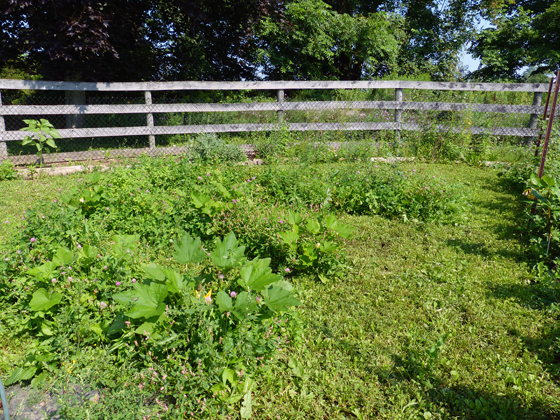
Quadrant 1 of the vegetable garden

Quadrant #1 is also home to our zucchini. I didn’t know where to put them, so I stuck them in the middle of the rye. The plants are a little crowded and spindly as a result, but I’ve harvested two zucs and there are more to come–which will be good as my sisters and people at work have all been asking for them.

Zucchini blossom

As we rotate around the ring, we come to the blackberry and raspberry rows. I planted five new blackberry bushes in the spring, and they are all alive, which feels like a great victory.

In an attempt to combat weeds, we laid some wood chips between the blackberry and raspberry rows. They’re not working quite as well as I had hoped–weeds are the story of the garden this year.

Blackberry bushes

The red raspberries were plentiful–in fact, they completely got away from me. I couldn’t keep up with the picking, and so I let the raspberries go. We enjoyed lots of them though before I gave up. I’m looking forward to pruning the canes this fall. I think it will tidy up the row and hopefully improve the health of our plants.

The one issue is that the raspberries have fallen victim to Japanese beetles. So even if I didn’t like picking berries, I need to get back in the canes and pick beetles.

Japanese beetles on the raspberry bushes

Quadrant #2 on the other side of the centre axis of the berries hosts this year’s potato crop. A whole quarter of the garden devoted completely to potatoes. You can see the weeds at the back edge of the quadrant, but the potatoes have managed to thrive despite the invaders. And we’re actually really close to harvesting. I think the red potatoes are ready. The rest are not far behind.
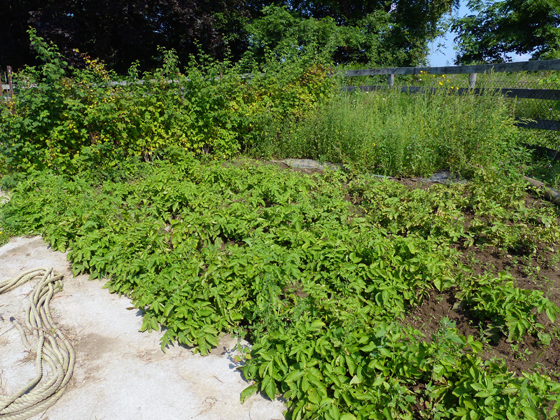
Potatoes plants

At the far edge of the garden, our grape vines are climbing. After the vines were decimated by strange little worms in the spring, everyone has bounced back. The vines are tall and leafy. I did cut off any grapes that sprouted in the spring so that the plants could focus on growing big and strong. Things are looking good and my fingers are crossed that a year from now we will have fruit.

Grape vine

Spinning around into quadrant #3 we come to our late bloomers. This was the very last quadrant we planted. We have a row of decorative kale (it’s supposed to be in different colours, not for eating), my favourite yellow bush beans, my other favourite beets, some parsley and a mix of lettuce–oh, and more weeds.
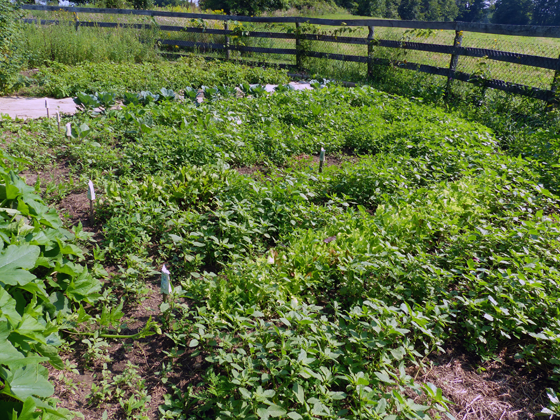
Quadrant 3

Basket of lettuce

I really like the arrangement of the ring of raised beds around the outer edge of the garden. These are home to our perennials like asparagus, grapes, rhubarb, blueberries and hollyhocks. They also have all of our herbs. My favourite is rosemary. I’ve laid a few springs down, trying to encourage new bushes to root.

Rosemary

Opposite the raspberries the other arm of the centre axis is our squash A-frame. Half is butternut (my favourite) and half is acorn (Matt’s favourite). Because we planted so late, they haven’t climbed very high, but they’re working on it. I love how the A-frame helps to keep the squash contained. Otherwise, they would absolutely take over the whole garden.

Squash growing up an A frame trellis

Our final quadrant, #4, is probably my favourite. Remember back when I said I wanted to try a straw mulch to deal with weeds? I have decent layer on straw on this quarter, and it’s been very helpful at suppressing weeds. This quadrant is growing onions, red and jalapeno peppers and three rows of tomatoes–one more than last year.

Our cherry tomatoes–which are all volunteers–are the first to ripen. None of them have made it into the house yet. I love having a pre-dinner snack right in the garden.

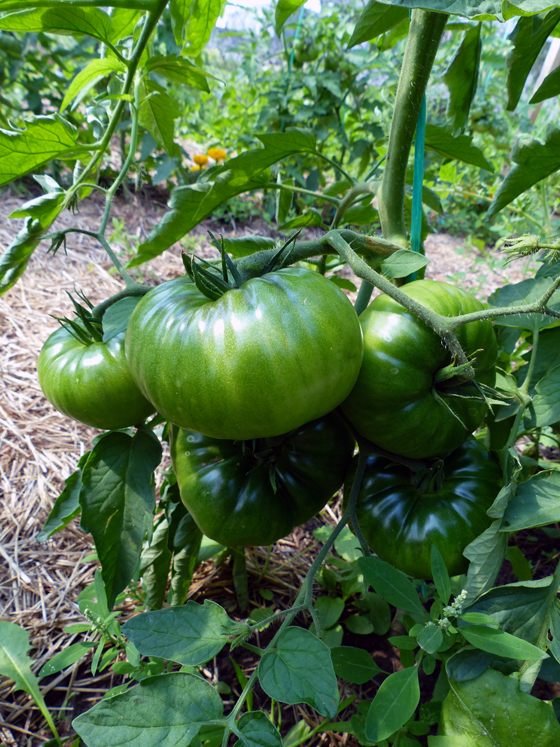
Onions, peppers and tomatoes in the garden

Green tomatoes growing in the garden

So that’s the garden so far this year. Not the prettiest and not the most productive–at least not yet–but ours, and I’m satisfied with where we’re at.

How is your garden growing? What are your tips for dealing with weeds? Do you have any favourites that you’ve planted this year?
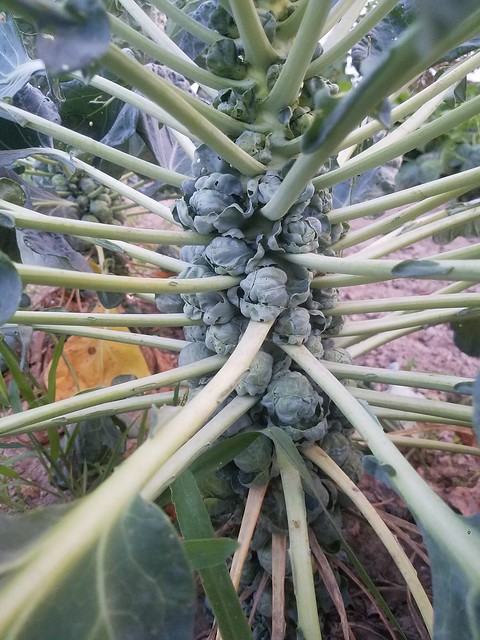
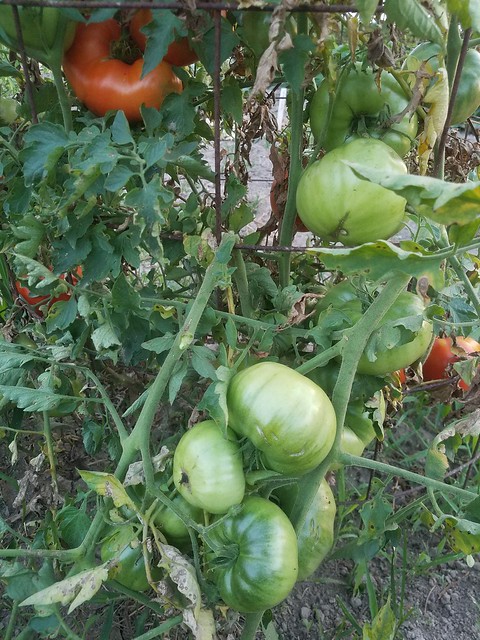
Mid-summer garden in Illinois

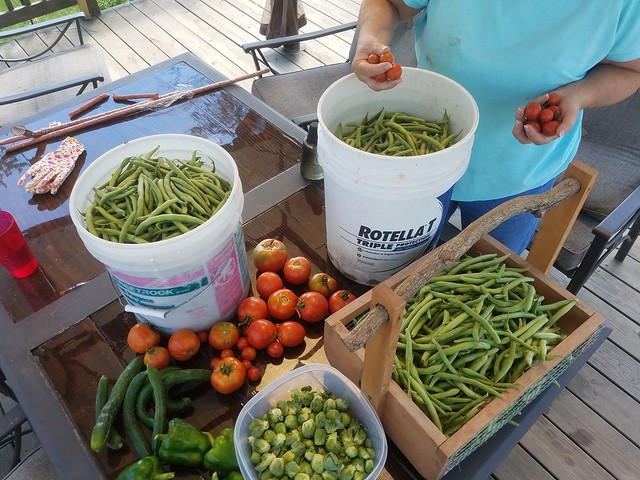
We’re deep into summer, which means the gardens are at their peak (well, they should be… ours is a bit behind as you’ll see later this week). However, Sarah’s garden is going gangbusters in Illinois.

My garden is in full swing. I think the pictures can mostly speak for themselves.

Brussel Sprouts

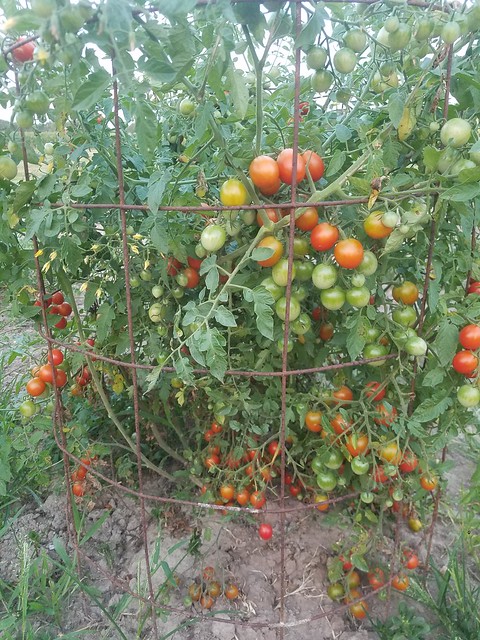
Tomatoes

Cherry Tomatoes! Wow!

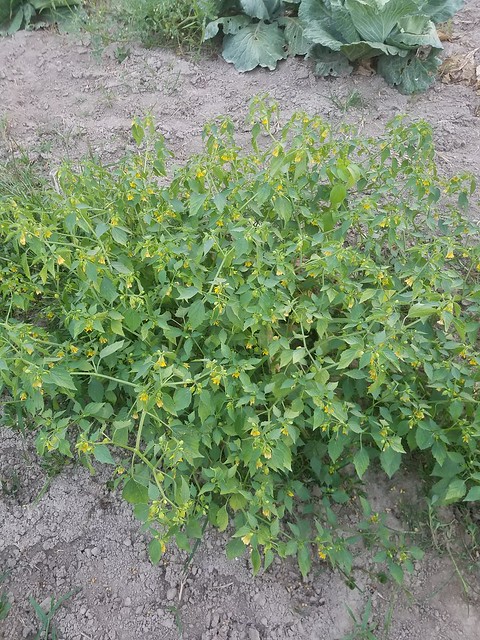
Tomatillo

Side note on my tomatillo: this is my first time ever growing a tomatillo. The plant looks very green and healthy however, I have not seen anything that resembles any fruit. I only see blooms. I was at first worried that maybe it didn’t get pollinated, but the other day I saw a little bee working hard going from bloom to bloom. I really hope something comes of this little plant!

Watermelon

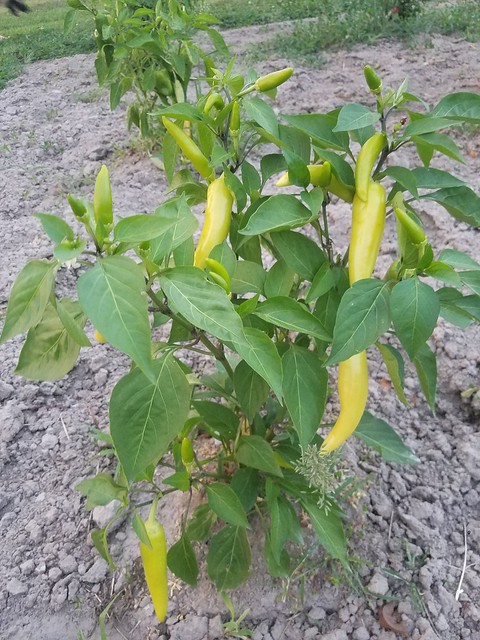
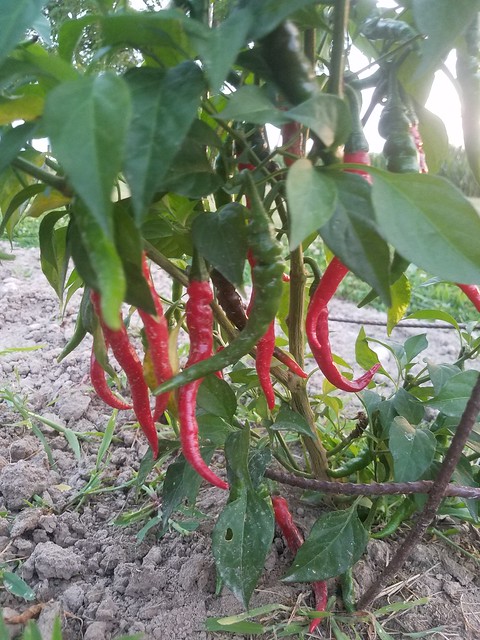
Peppers

So what am I doing will all of this produce?

Quite a bit is eaten fresh in salads and snacks.

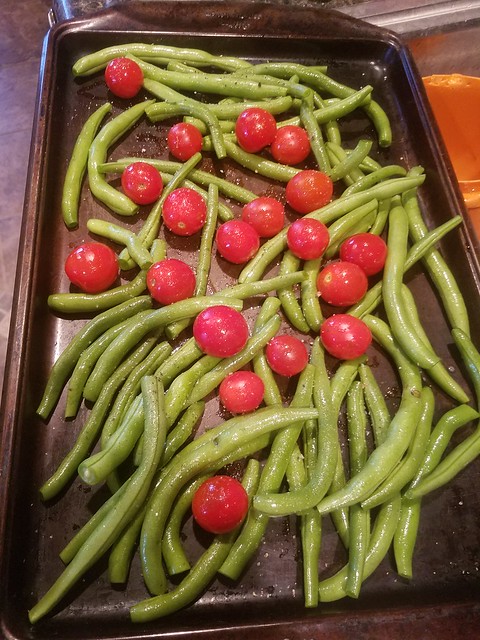
Sometimes I roast it for a delicious side (my favorite way to eat green beans).

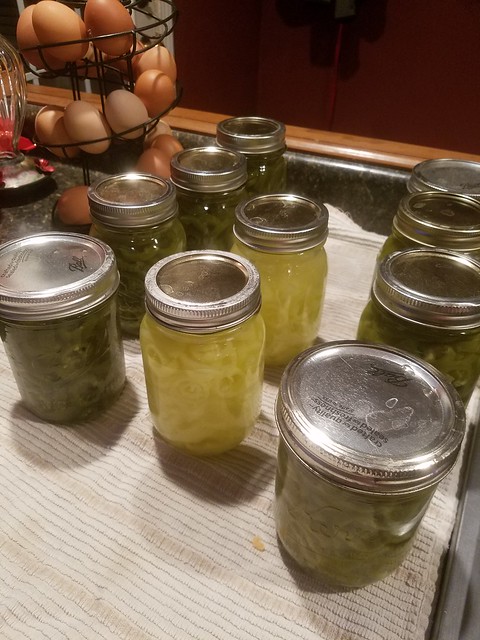
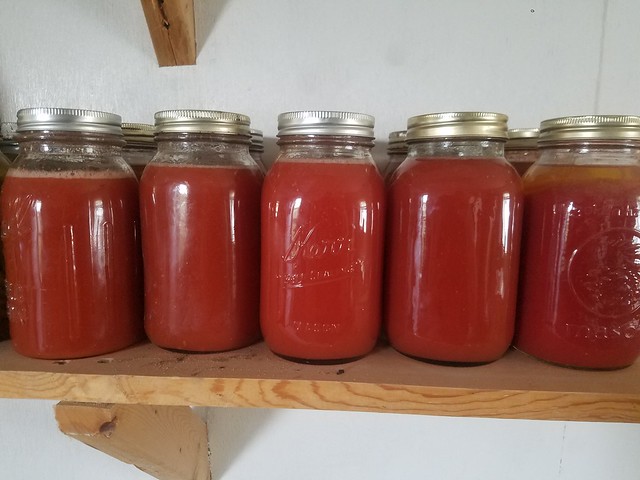
And finally, I am learning to can. We brought my mother-in-law over to show us the ropes in canning and so far I have canned:

Ten pints of hot peppers.

Nine quarts of tomato juice. And there will be many more to come. The tomatoes are just now ripening.

And finally 24 quarts of green beans.

I am learning a lot about canning.

For example, when the directions suggest using rubber gloves when canning hot peppers, DO IT!

I am also learning vegetables ripen quickly and all at once. So just because you thought you didn’t have anything planned for the evening, one trip to the garden will change your plans to a late night over a steaming stove top.

And finally I have learned that the small area we had set aside for the few things that my mother-in-law had canned in previous years is way too small and will require new shelves and storage area and a minor remodeling of our laundry room. But of course, that is material for another post.

What do you do with a large harvest? Do you can? Freeze? Dehydrate? Any suggestions on how to use 10 pints of hot peppers?

What an awesome harvest already, Sarah. Well done. I think canning is a necessary part of gardening. We turned most of our tomatoes into ketchup last year, and Matt’s talking about salsa this year. We also pickled a lot of beans. I was skeptical, but I really liked them.

Freezing and dehydrating are also good. My secret with the cherry tomatoes came from Chiot’s Run: garlic, olive oil, roast overnight in a low temperature oven. They turn out almost like sundried tomatoes. Then I toss them in freezer bags and into the freezer. Really good with pasta or pizza.

Composter course correction

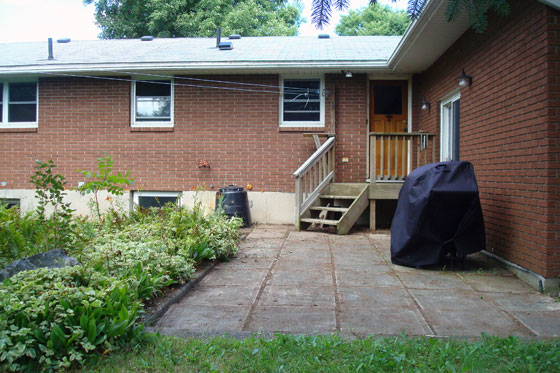
Remember when I overthought my way into adding a composter behind the house? It’s been really handy having the composter so convenient to the kitchen (the picture below is from when I first put the composter in place two years ago).

Patio after

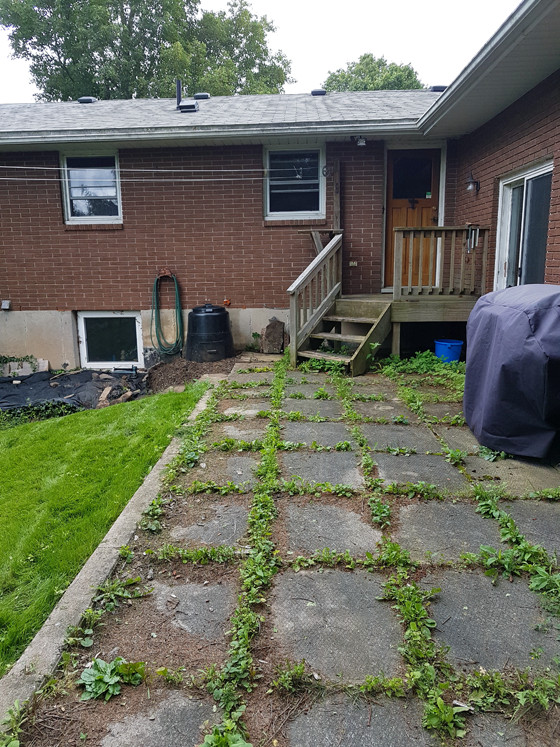
However, it was apparently a little too convenient for someone else too. And we apparently were composting some overly delectable food stuffs (and I apparently haven’t weeded the patio yet this year). Side note: For about the third weekend in a row rain started as soon as I hung up the laundry. So annoying.

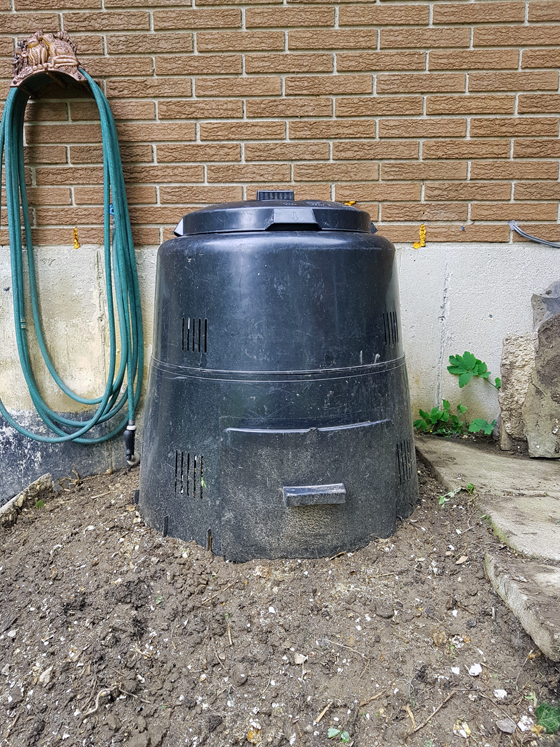
Tilted composter

Someone tunneled into the composter, spreading food around and tilting the composter.

Composter

So compost clean-up was required–boy, you’re in for a glamourous post today.

I had been hoping to defer this area until the fall, when I can deal with all of the weeds behind the house, pick up rocks and seed new grass–basically what I’ve already done on the other side of the concrete steps. I’d do it all in one shot, level things out–and over-complicate a simple composter installation yet again.

But the composter was too tilted to use, and the smell of compost was making its way up to the kitchen window.

So I decided not to over-complicate things and to just fix the immediate problem.

I picked up the composter and set it aside. It’s light plastic and easily lifted off the ground. Then I scooped the compost that was strewn about into the wheelbarrow and went about releveling the area.

Along the way, I did end up extracting a bunch of rocks–what else is new–but I tried not to get too carried away. It still took Matt and Wiley three trips to take them to the rock pile behind the barn–and these are only from an area that’s about 3 feet by 4 feet. So ridiculous.

Rocks by the composter

Then I was able to set the composter back in place and put the compost back inside. The compost looked really good, and I considered just spreading it right on the gardens, but there was enough food that was still whole that I just dumped everything back in the bin. Soon enough.

I piled a bit of dirt around the bottom of the composter and then spread some grass seed to hopefully help hold everything in place.

Composter

The back of the house

So it’s not glamourous, but it looks better–and the kitchen no longer smells like compost.

Still to come, the rest of the back of the house.

Do you have a composter at your house? Have you had any issues with animals getting into your compost pile? How long does it take for your compost to decompose?

Finding our waterfront

Remember how clearing the pond shore was my one and only outdoor home goal for this year? And how at the mid-year report I said it wasn’t going to happen?
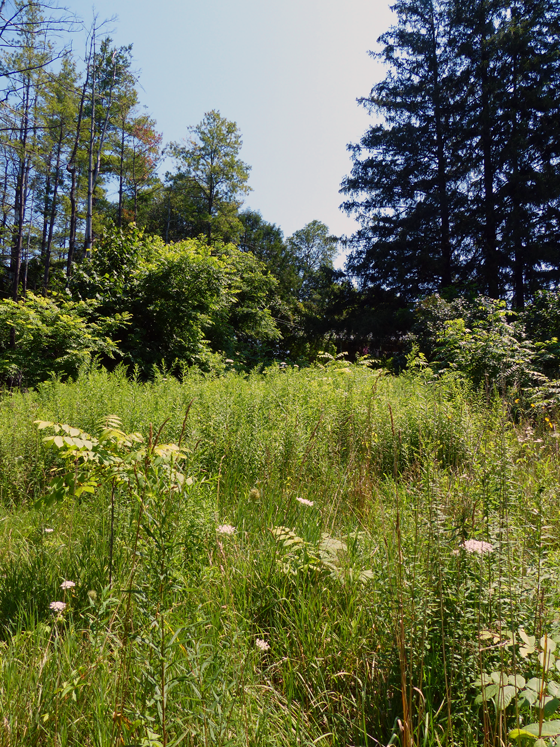
It’s happening, people.

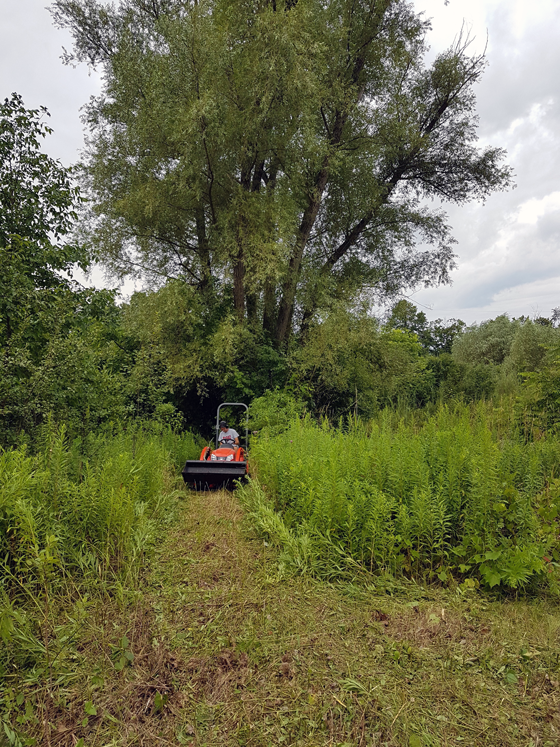
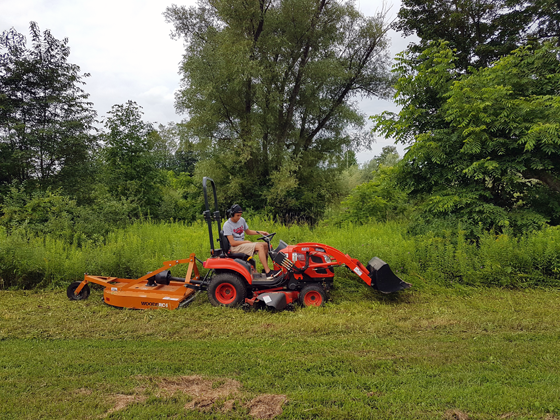
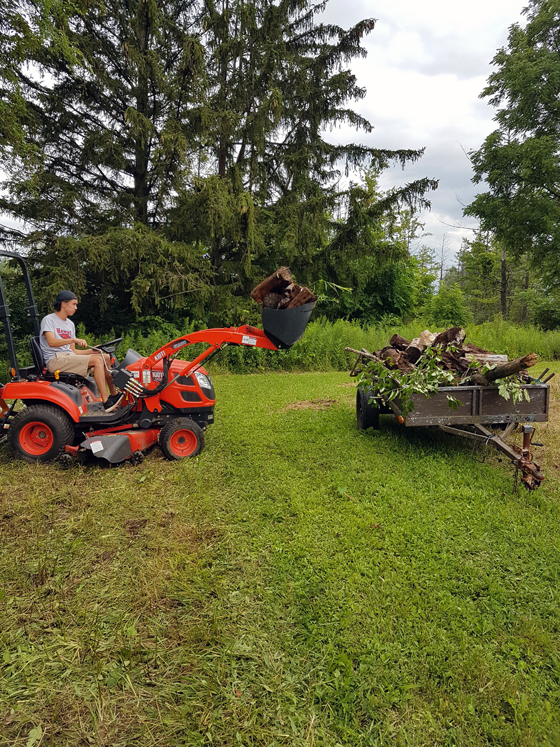
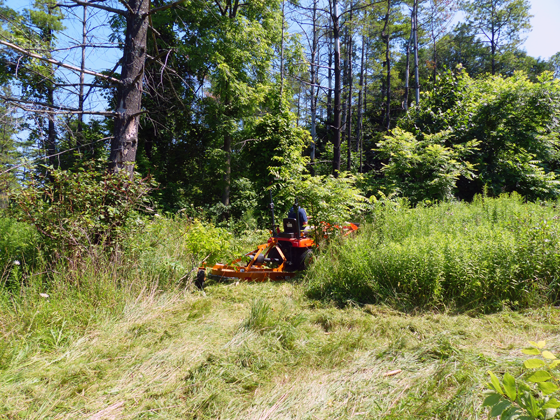
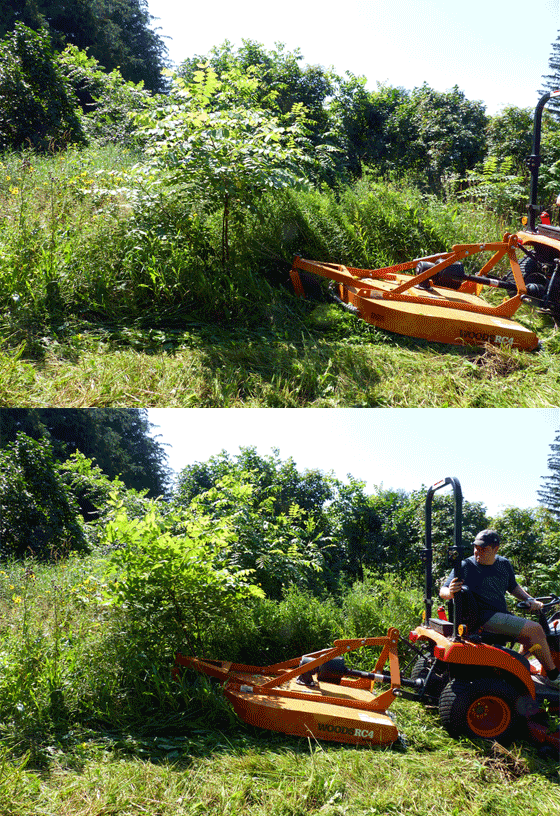
Our keen 17-year-old nephew who loves being at the farm had a day off from his summer job, and he wanted to learn how to drive the tractor. If you’re driving the tractor, you might as well learn how to use the front end loader, the new rotary cutter and tow the trailer.

So I went through the basics of a hydrostatic transmission and what levers did what. We hooked on the rotary cutter and I pointed him at the pond.

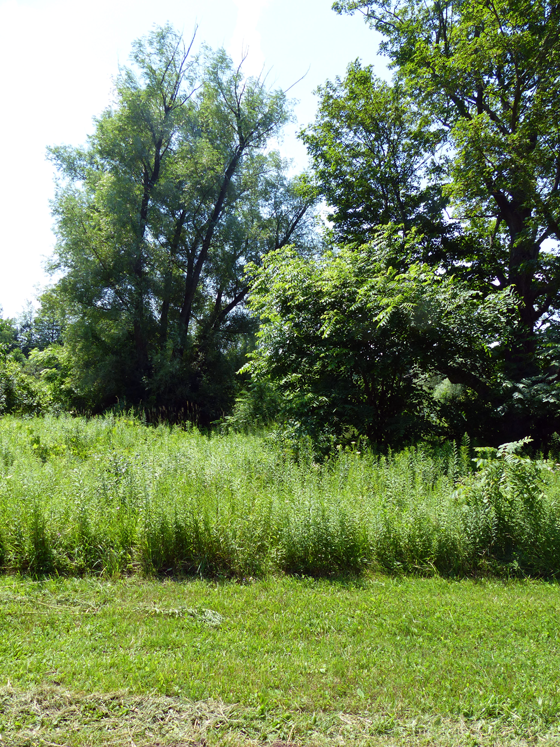
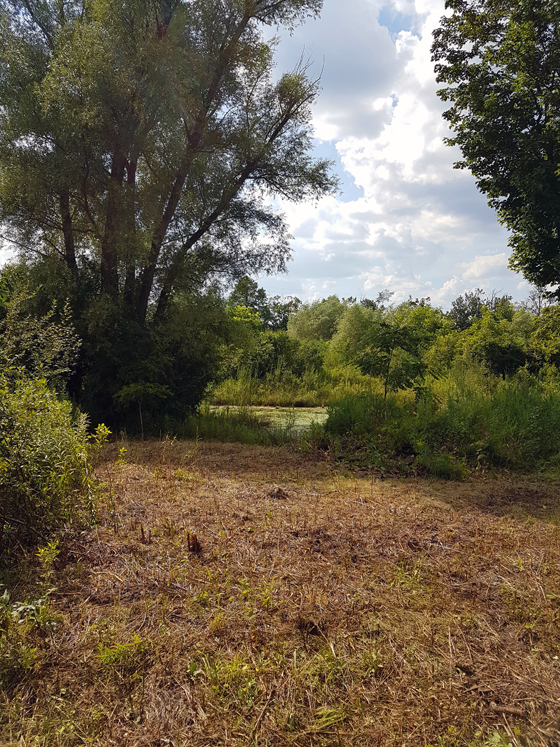
Here’s how things were looking after last weekend’s mowing of the meadow. I swear there’s water on the other side of all of that grass and brush.

Overgrown brush on the shore of the pond

I was super impressed with our nephew. He was calm and confident and careful.

Mowing the overgrown grass around the pond

Mowing the overgrown grass around the pond

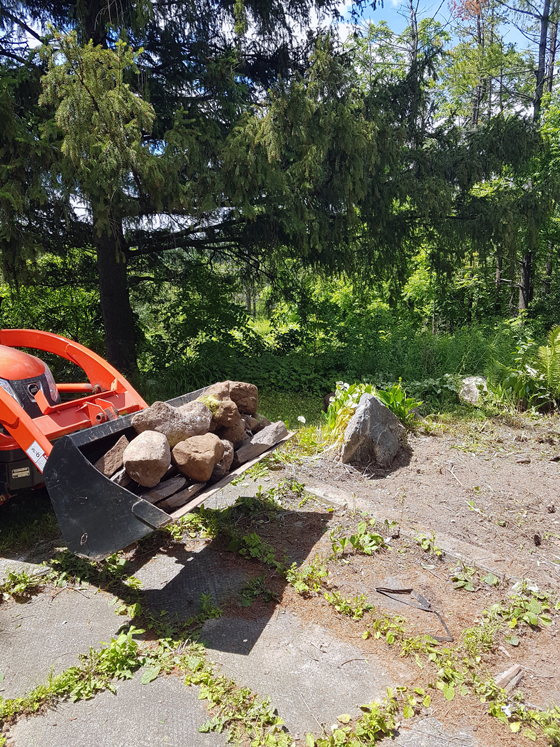
Loading firewood with the front end loader

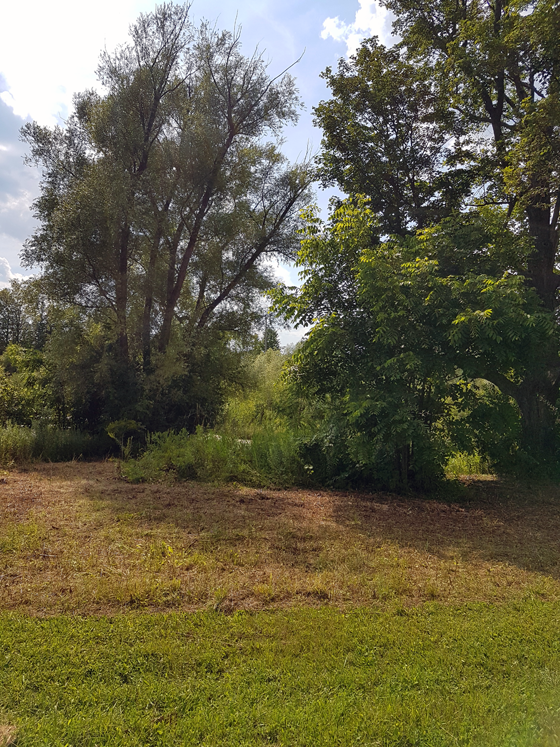
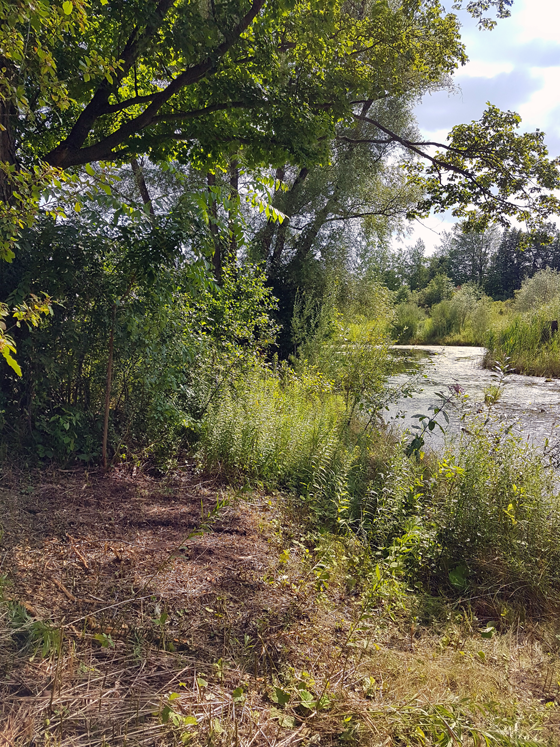
A morning of work cleared about half the shore on the east side. The remaining thickets are hiding all kinds of logs and stumps. So we have more work to do, and I need to set Matt loose with his chainsaw, but the progress is awesome.

This vantage point still doesn’t show you much of the water, but I swear it’s there.

Clearing overgrown brush on the shore of the pond

Clearing overgrown brush on the shore of the pond

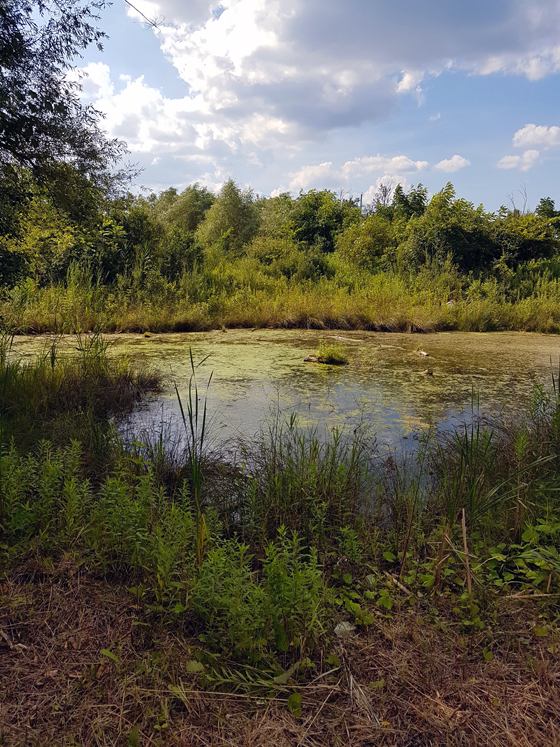
This deep in the summer, the pond is a little mucky, but it’s still my favourite part on the property.

Pond in the summer

Pond in the summer

Our nephew totally made my summer.

Little green apples

Little green apples on our old apple tree

A big ancient apple tree stands right in the middle of the meadow. Now that we’ve mowed some of the grass, I can actually get to the tree to see that it’s loaded with little green apples.

We have apple trees sprinkled around the farm, but we’ve never done anything with the fruit. Maybe now that this one tree is accessible this will be the year.

My friend made an amazing apple butter for us last year that Matt went bananas (does that even make sense?) for. Plus, apple sauces and butters and jellies don’t care how pretty (or, let’s be honest, not) our apples are. And these are pretty homegrown looking.

Although I don’t think I can take any credit. This tree has been doing very well all on its own.

Do you have any apple trees at your house? Any tree care tips to share? What about favourite recipes?

Making room to run

Back in the spring, I stopped in at our tractor dealership. I love our tractor, Wiley. I particularly love his attachments–mower deck, front-end loader, snowblower–and covet more–backhoe, auger, rotary cutter.

On this particular day, I was particularly coveting the rotary cutter.

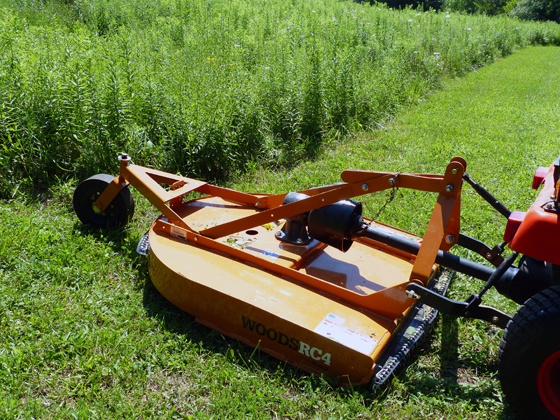
A rotary cutter is a heavy-duty mower, sometimes called a bush hog. It can go through thick brush. It can hit rocks and stumps without breaking. It can even take down small trees.

In our constant campaign to beautify/tame/maintain the farm, clearing brush is an ongoing undertaking.

The thing about anything to do with the tractor is it isn’t cheap. So when I came home and told Matt I’d gotten a quote on a rotary cutter, I wasn’t sure what his reaction would be.

His exact words were, “You’ve been talking about this since we moved here, woman. Just buy it.”

Alrighty then. One rotary cutter coming our way.

Woods rotary cutter

It took us a while to get the rotary cutter running. Eventually, our tractor guy came out for a farm call to walk us through it (five years in and we’re still country newbies). But last weekend we got cutting.

And Matt loved it as much as I did.

Matt did the septic bed. He wanted to cut the little trees so that their roots don’t get into the drainage area. It’s hard to see, but at the top of this slope behind all of those weeds is the house.

Clearing brush with the rotary cutter

It took Matt very little time to get his confidence. While I avoided trees that were more than a couple of inches in diameter, Matt had no hesitation about mowing them down.

Clearing brush with the rotary cutter

Clearing brush with the rotary cutter

Clearing brush with the rotary cutter

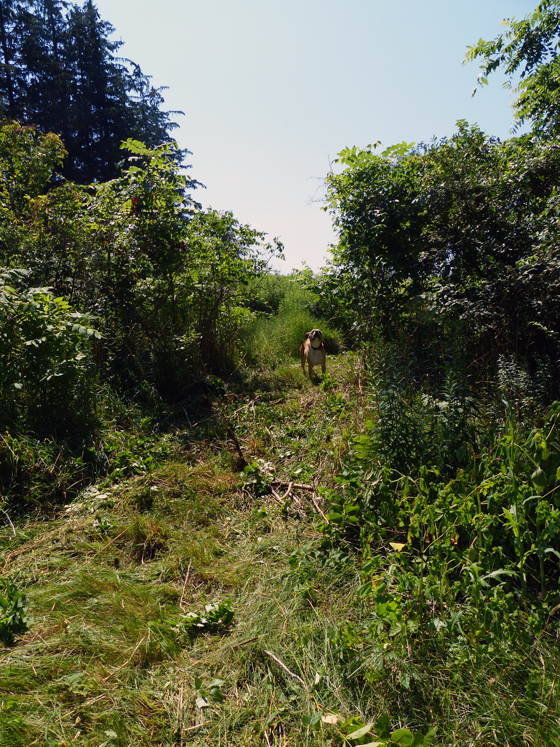
The puppy liked all of the new smells that we uncovered.

Clearing brush with the rotary cutter

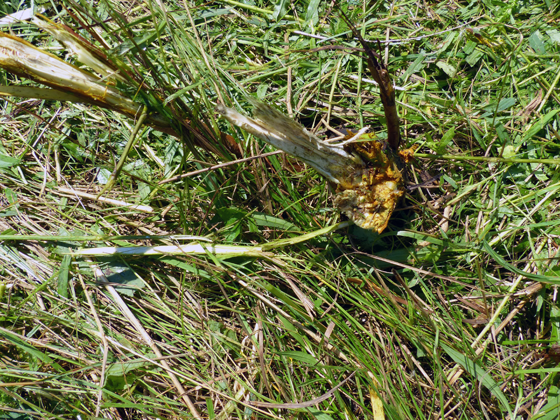
We also uncovered a few rocks and stumps, but the cutter powered through.

Rock scraped by a mower

Matt soon had the septic bed nice and clear. (The house is behind me in this shot.)

Cleared septic bed

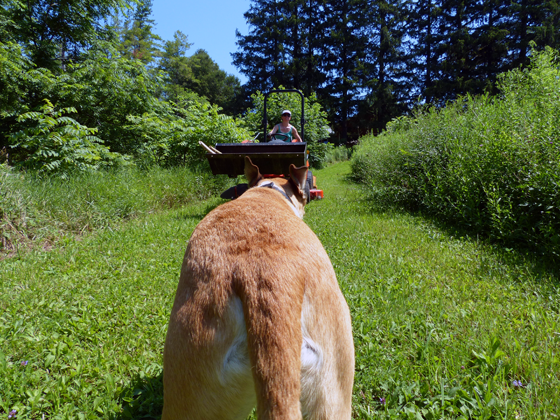
After Matt had his turn, I took mine in the meadow. This is what happens when I ask my husband to take my picture. I end up with puppy butt.

Baxter watching the tractor

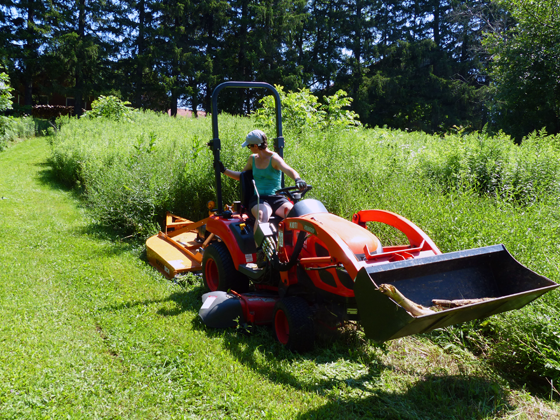
He did manage to resist Baxter’s charms long enough to get a few action shots.

Clearing brush with the rotary cutter

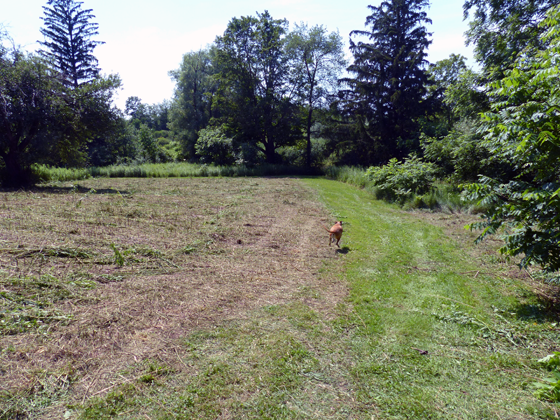
At the end of the day, there was plenty of space for the puppy to run.

Baxter running through the meadow

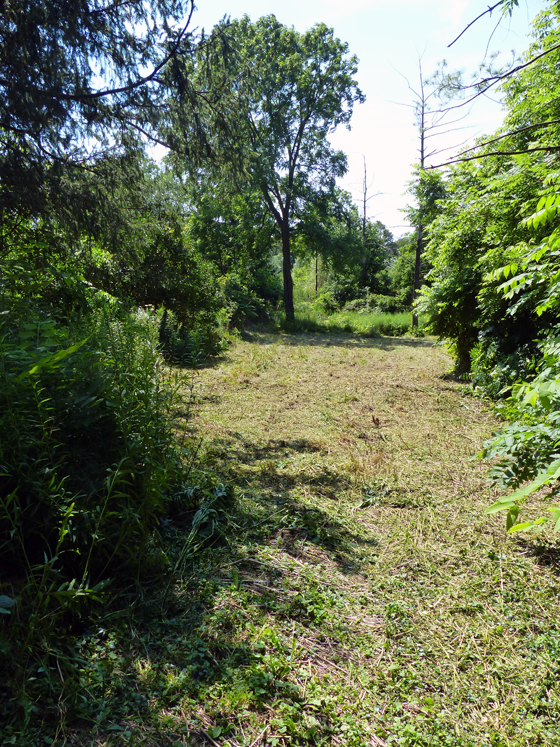
And a nice clear view from the pond up to the house. Well, clear except for the pines, but there’s no way we’re taking those down.

The mowed meadow

Raspberry report

Raspberries

Raspberries equal summer for me. I grew up picking them in my parents’ garden and making jam with my Mom. In fact, at Matt’s and my wedding all of our guests received a small jar of homemade raspberry jam made with my parents’ berries.

Now we have them in our garden.

It’s been two years since I transplanted canes from my parents’ garden. They have spread and sprouted new plants and this year they are bearing fruit. Lots and lots of fruit.

We have one row that’s about 16 feet long, and now at the peak of raspberry season we’re picking about 3-4 pints a day.

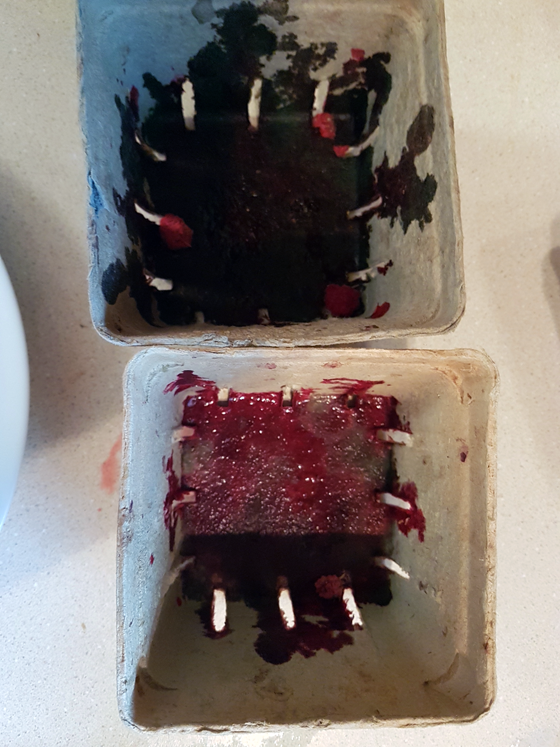
Although I’m mostly picking partial quarts because I ruined a couple of pints when I accidentally fermented some berries by leaving them on the counter too long.

Soggy pints

Quarts of raspberries

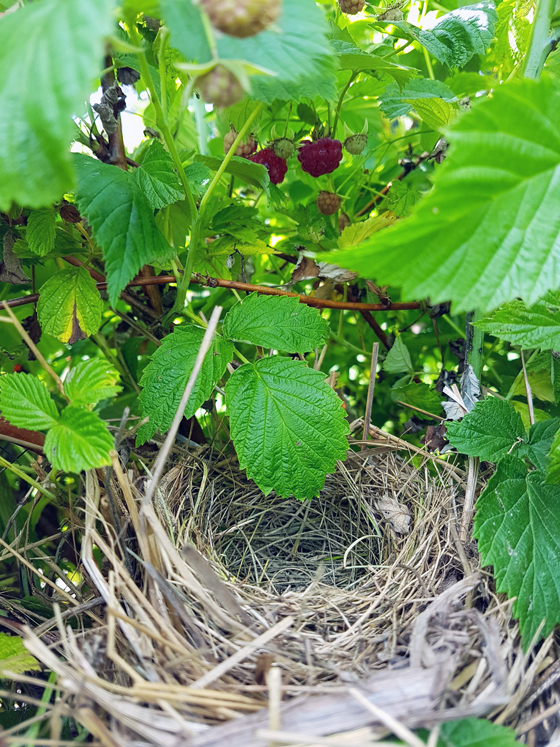
Our plants are super dense with lots of canes. In fact, the row could likely benefit from some thinning. I think a few less canes might encourage more fruit or at least let more light or air get to the fruit. This bird’s nest was buried deep in the plants. I had no idea it was there.

Bird's nest in the raspberries

The wire trellis that we built has done a good job of keeping the canes upright and contained, so the row has been easy to manage. We added some woodchips between the raspberries and blackberries, trying to keep weeds down.

We’ve had a good amount of rain during this growing season, but I think the berries could have benefited from a bit more watering. They’re a wee bit small. With a bit more water, they might grow bigger. Something to keep in mind for next year.

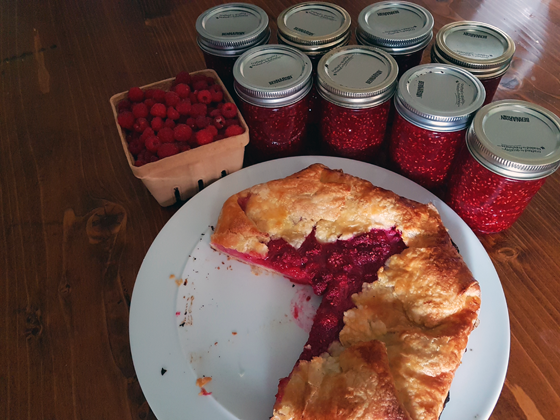
Small or not, we already have plenty of berries. In fact, it’s been hard to keep up. I’ve made jam, a galette, muffins, stirred lots into my yogurt and pints are still stacked in the fridge.

Raspberry galette and jam

We could have even more, but I’ve not been super enthused about picking after I get home from work. I’m expecting to find some very ripe berries this weekend. They should be good candidates for more jam.

We may not need wedding favours this year, but I’m sure our family will still enjoy jam in their Christmas packages.

Are you enjoying raspberries at your house? Any raspberry recipes to recommend? Or growing tips to share?

Reclaiming the jungle

Landscaping is a multi-phased project here on the farm. I’m not entirely sure what phase we’re in now, but I looked back through the archives and the first time I posted about this area of the property was four years ago. Holy moly.

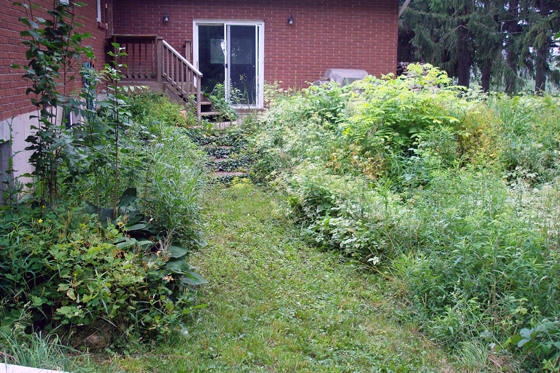
The back of the house has been a wee bit overgrown. As in we just let it go. Not the prettiest view out the kitchen window.

Overgrown weeds at the back of the house

There were so many rocks and weeds it was unmowable. But I wasn’t prepared to put in the work to make it a flower garden either.

We left it alone. Surprisingly, it didn’t improve.

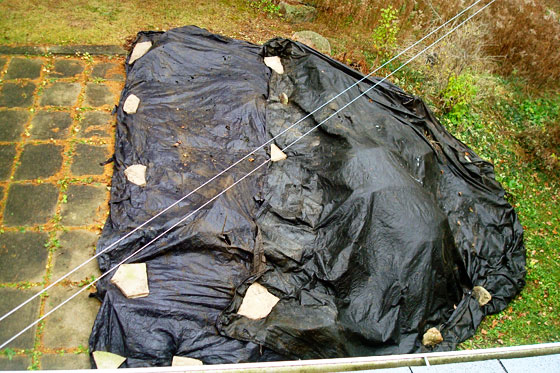
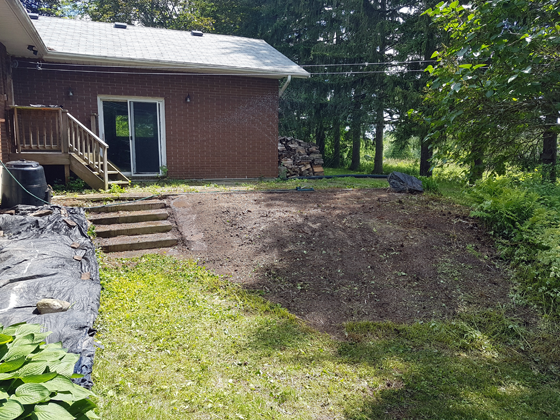
Then two years ago we covered most of the mess with a tarp. Which wasn’t really much of an improvement either.

Tarp covering the backyard

We left it alone again. For two more years.

But at the start of this July, I finally lifted the tarp.

Hello rocks. Fancy finding you here. But the weeds had mostly died, so that was a bonus.

Picking up rocks

With some raking, digging, leveling, a wee bit of sawing and mowing for some of the more stubborn brush, and finally seeding and watering, we ended the day with something that we thought could someday be a lawn.

Seeding the backyard

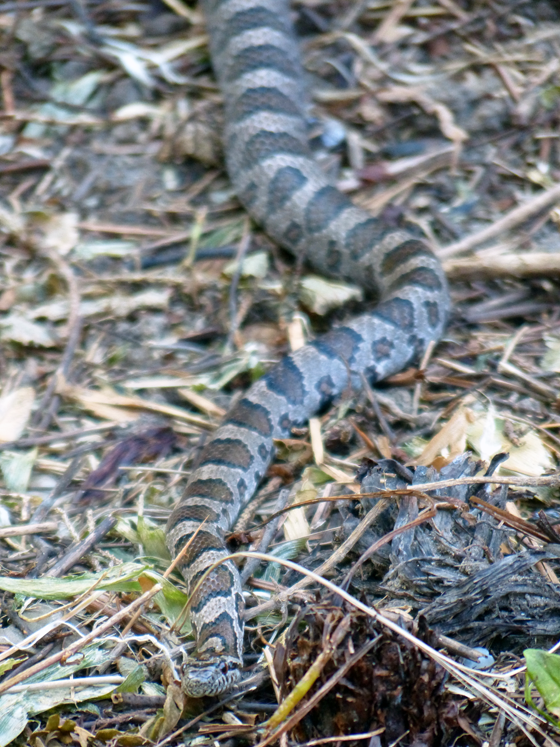
The local wildlife came by to check out the transformation. The snakes particularly seemed to enjoy the cleared dirt.

Milk snake

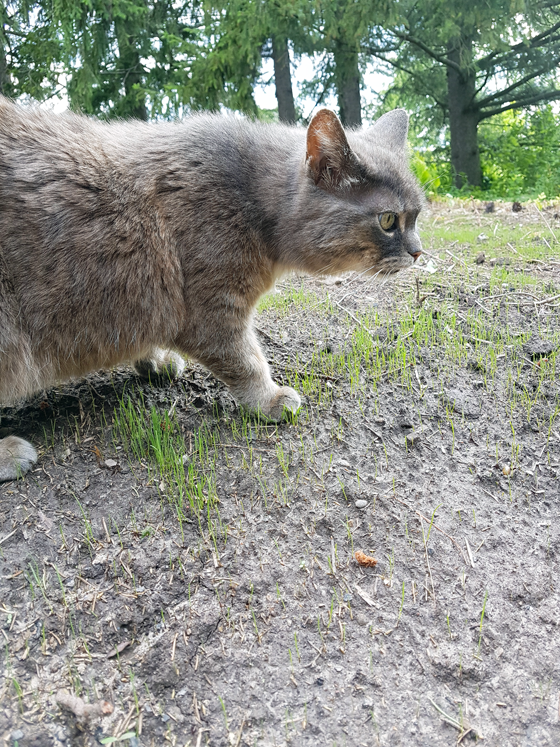
Our usual inspector came by too. Hello Ralph. And hello sprouts!

Ralph inspecting the newly sown grass

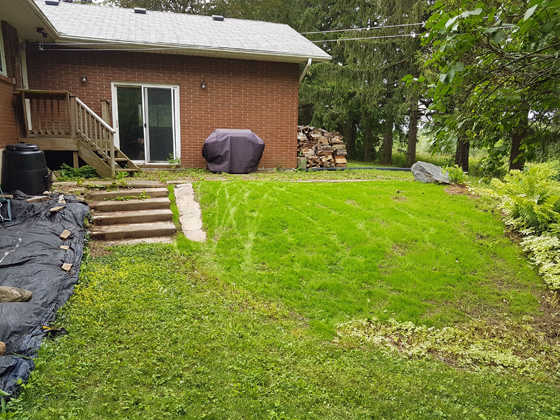
Three week later, hello electric green lawn.

New lawn

We still have some blending to do and a few thin spots to fill in (plus I’d love to break up that concrete beside the steps).

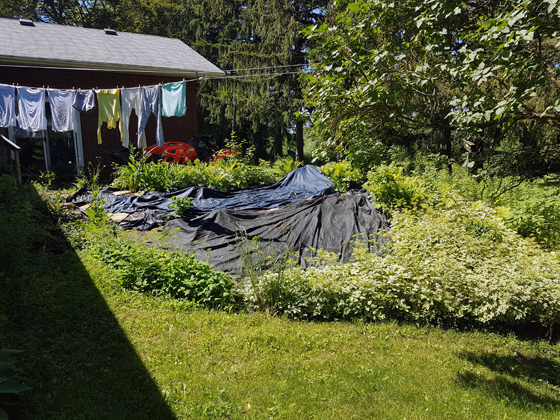
And of course that black tarp is still hanging around. Hopefully the weeds closest to the house die over the next few weeks and I can seed that area this fall. Who knows what phase we’ll be at by that point.

Do you have an overgrown area that you’re reclaiming? Have you ever used the tarp technique to deal with weeds? Are you a seed or sod person? Is anyone else’s property overrun with rocks? Who else has snakes slithering by?

Hollyhocks

Light to dark pink hollyhocks

Every summer along the edge of the field behind my parents’ house a clump of hollyhocks would spring up. The tiers of blooms fascinated me, and I frequently tromped through the unmowed grass to admire them.

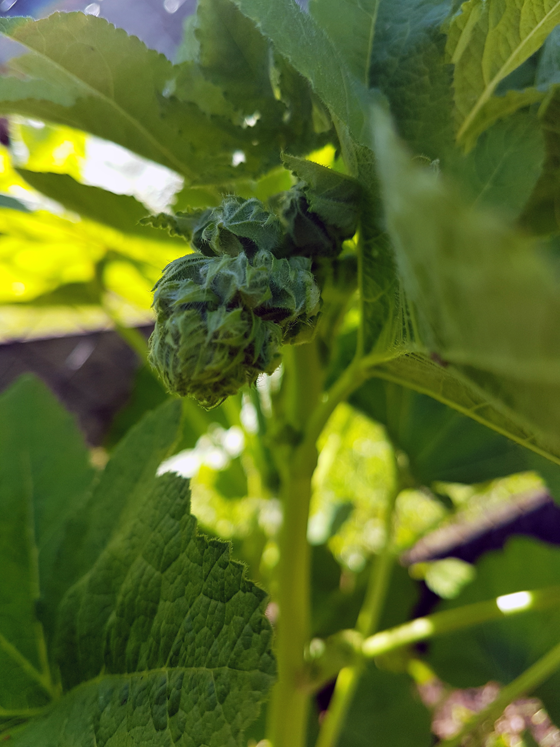
Last year, I planted some hollyhocks seeds in the vegetable garden. In last week’s guest what post, I shared a bud that appeared a few weeks ago. This year, at the entrance to the vegetable garden we have the most beautiful stand of blooms.

They range from the lightest blush pink to deep dark red.

Dark red hollyhock blooms

Hollyhocks feel farmy to me. They’re so beautiful and I love having them in the vegetable garden.

Hollyhocks are biennial, meaning that they bloom every other year. After seeing how well these have done, I went and bought another packet of seeds and sprinkled them over the soil beside these blooming stalks. These are supposed to self-seed, so I’m hoping that with the new additions we’ll have blooming hollyhocks every year.

Pink hollyhocks

Do you have hollyhocks are your house? Have you planted any flowers amongst your vegetables?

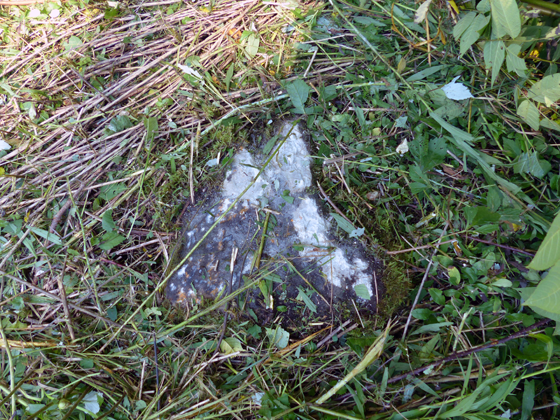
Guess what?

whatisthis11

It’s been awhile since I’ve done a guess what post. I’m not sure this one is entirely fair, as the before and after pictures were taken a few weeks apart.

I’m thrilled to have this addition to the farm. Take a guess today, and I’ll be back on Monday with the answer.

In between, I hope that you have a great weekend.