Firewood and a father

Firewood is Matt’s Dad’s thing. He heats their house with wood and has a huge, carefully constructed, diligently managed, well-sheltered woodpile. He also has all of the saws, axes, sledgehammers, wedges, and a wood splitter to prepare that firewood–and the experience to use them.
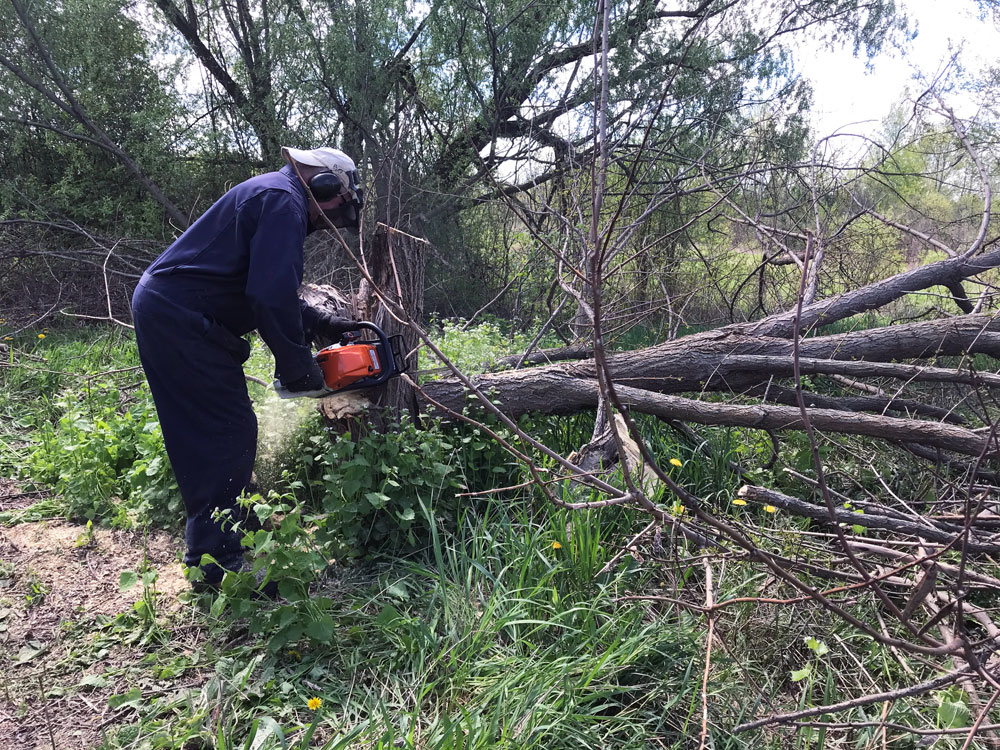
Man in coveralls and earmuffs cutting a tree with a chainsaw

When we ran out of firewood this spring, he immediately committed to restocking us. (He might have been a bit horrified.)

All of the firewood we have ever had at the farm has come from Matt’s Dad’s efforts (and ours). In fact, on our second day of owning the farm he cut his first tree here and one month into the farm we had our first woodpile. There have been lots and lots of trees and cutting and splitting and piling since then.

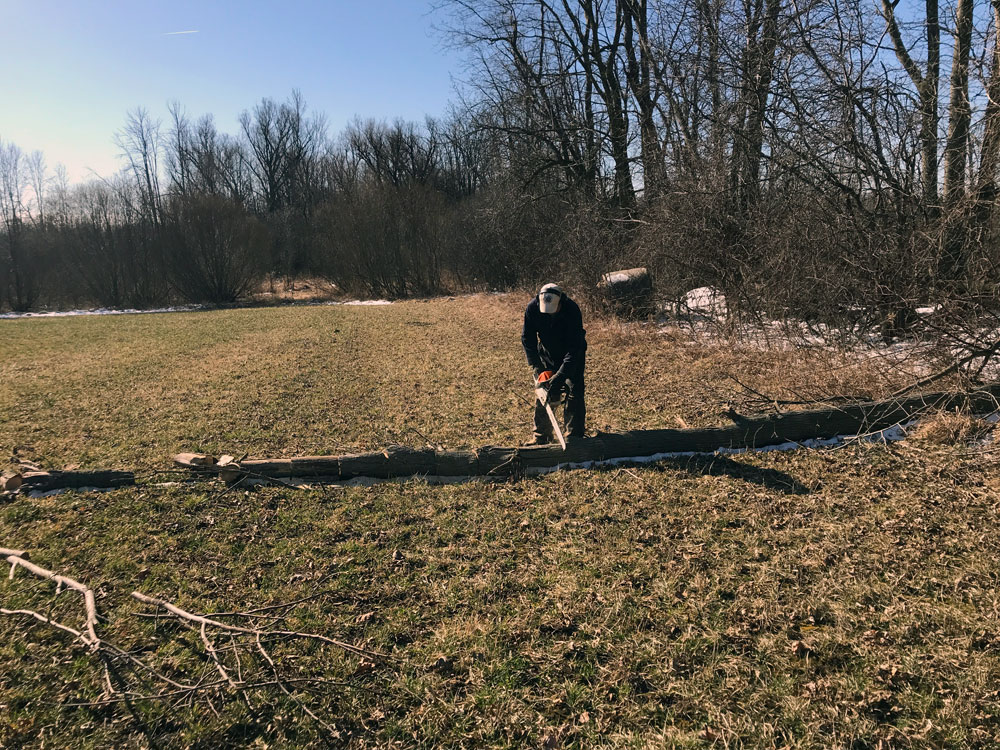
A few weeks ago, Matt’s Dad and I had a big firewood restocking day. I have always been the gopher when it comes to cutting wood. He saws. I carry, hold, split and stack. He’s offered at various points to teach me to chainsaw, but I haven’t taken him up on it. I finally did.

At first I was uncomfortable. I am very conscious of how dangerous chainsaws are. The saw was also super heavy and felt awkward for me. (Side note: He is much stronger than I realized.) But Matt’s Dad was patient and thorough, and he set me up and gave me the confidence to stick with it.

We started with three smaller trees that had died or blown down. Then he spotted a huge dead ash tree. As I kept cutting the smaller trees, stopping now and then to load the trailer, he went for the big one.

It ended up being a full day of cutting–for both of us. Three trailer loads and some very, very big pieces of wood. It was one of the best days I’ve ever had with Matt’s Dad.
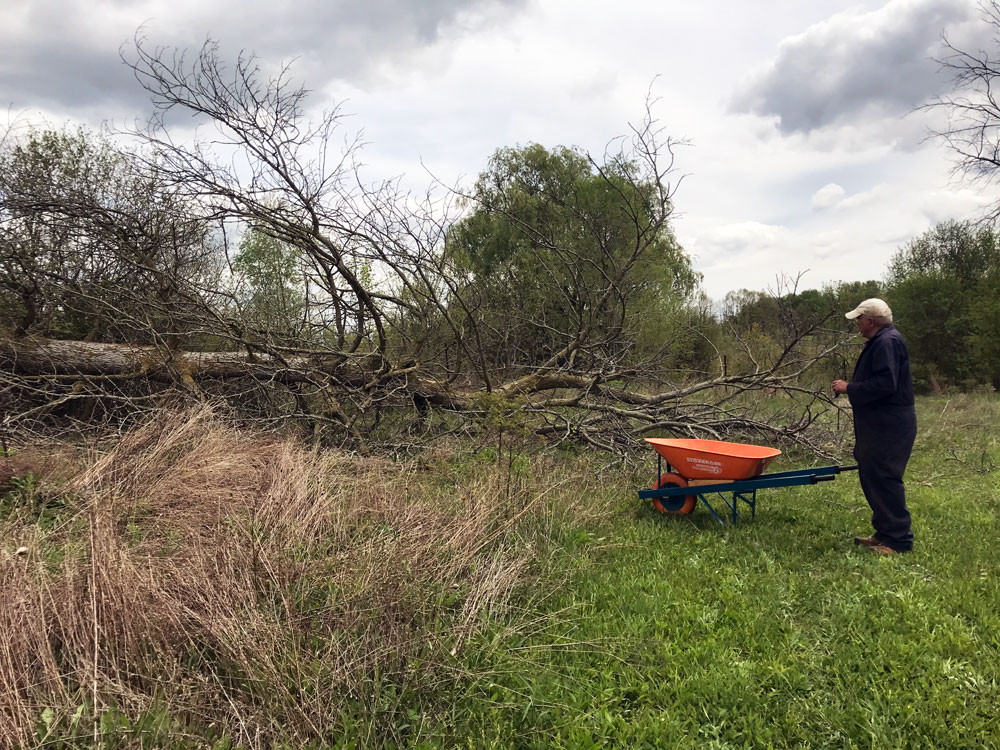
Man with a wheelbarrow looking at a large fallen tree
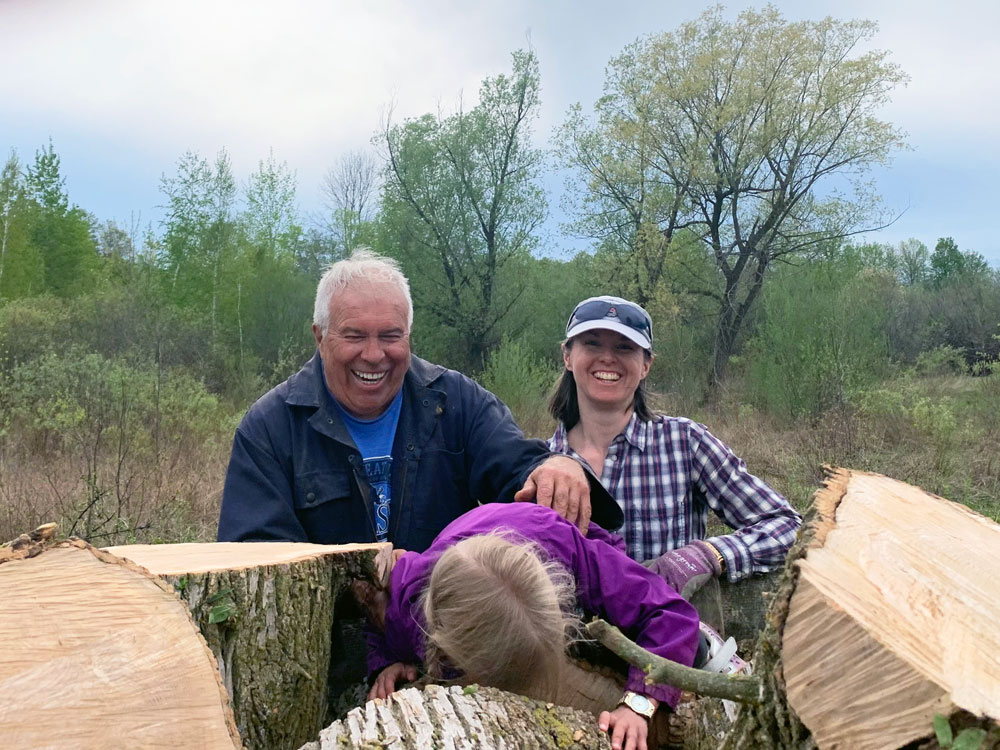
Man and woman smiling while standing behind a pile of large logs

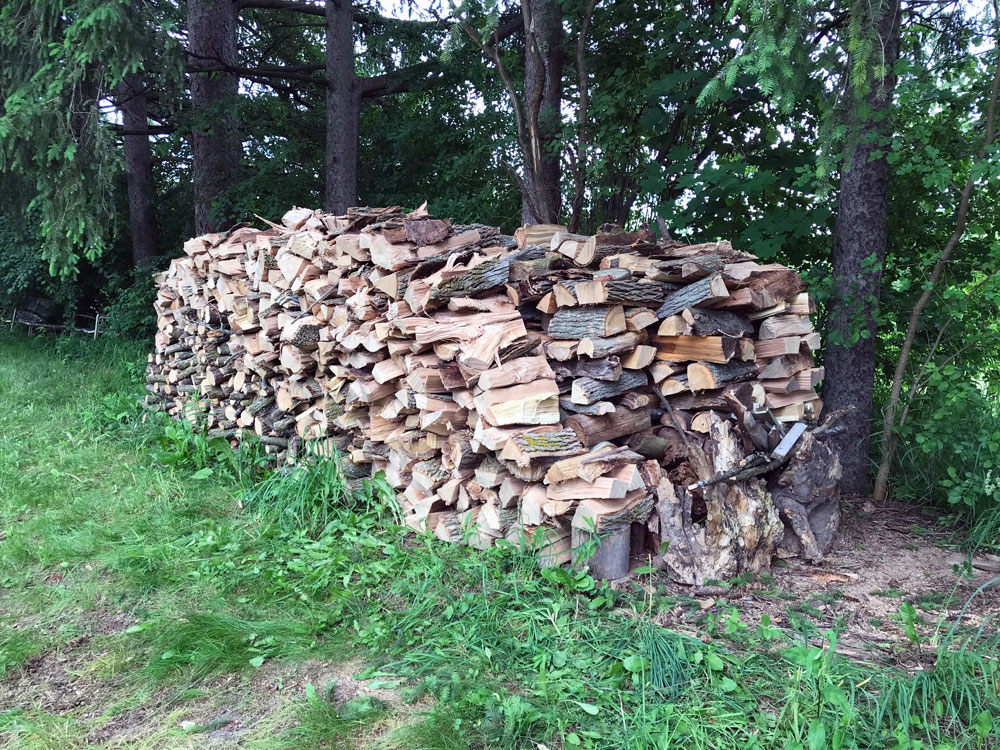
Last weekend, he came back and finished the job, splitting all of the big pieces while I stacked the logs in the woodpile. We are now fully restocked with enough firewood to last for probably two years.
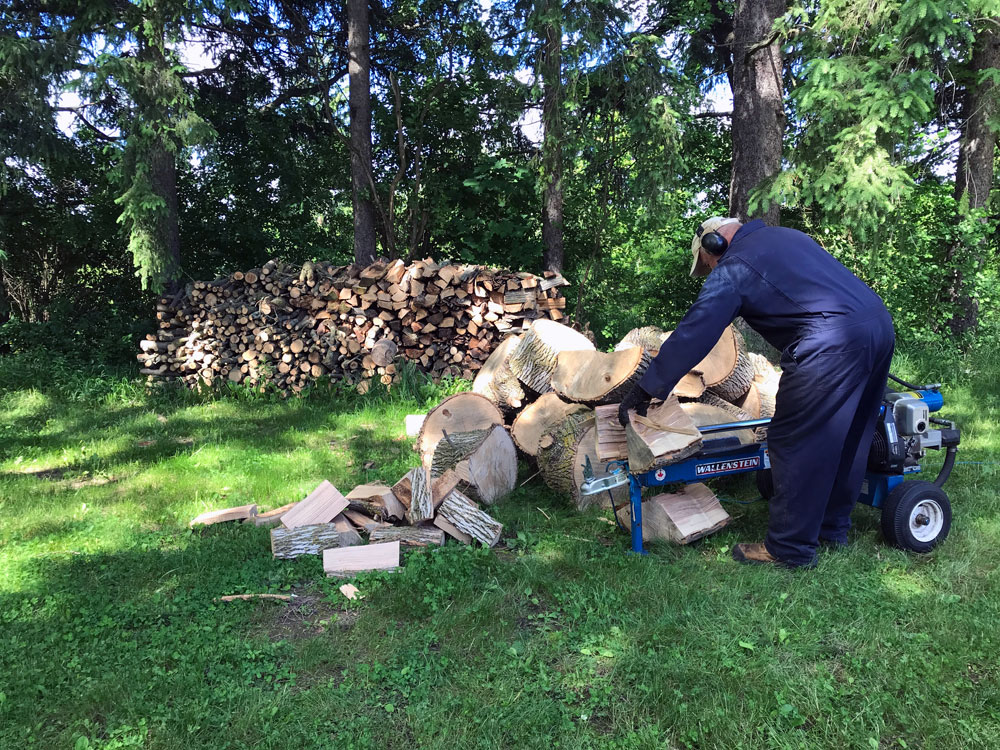
Man splitting logs with a wood splitter in front of a pile of firewood
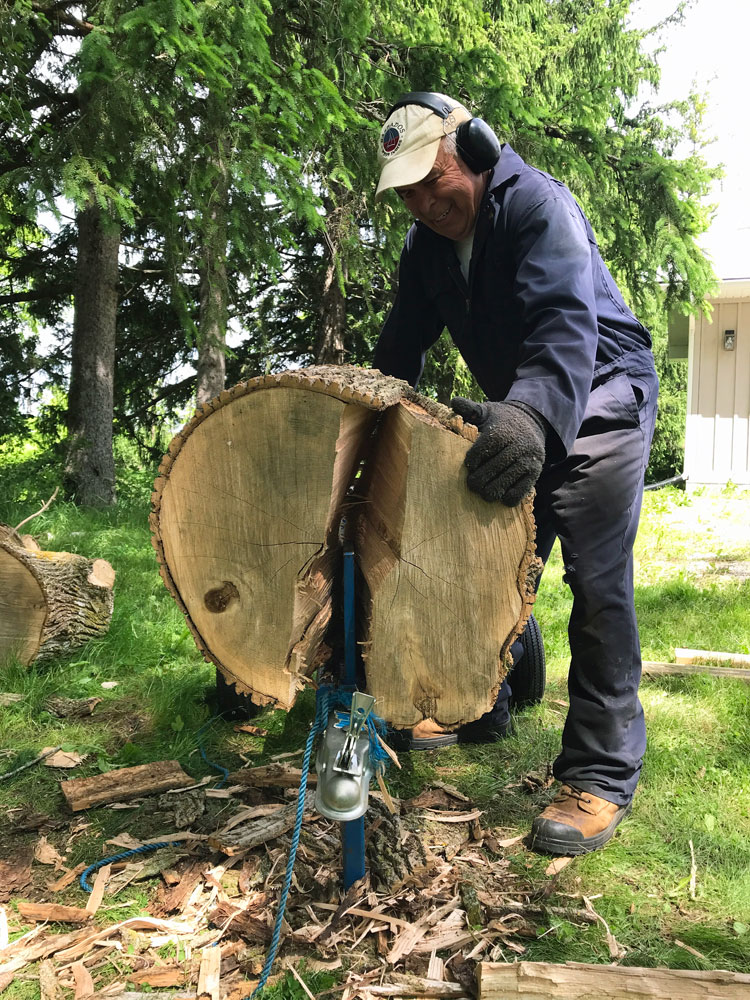
Man splitting a large log in half on a wood splitter
Stacked firewood

For Father’s Day, I want to celebrate Matt’s Dad. He does so much for us. Just like Dad’s are supposed to. He watches out for us, considers us, helps us, makes sure we have what we need, teaches us and spends time with us. I am very grateful to have him in our lives.
Trees from my Grandpa

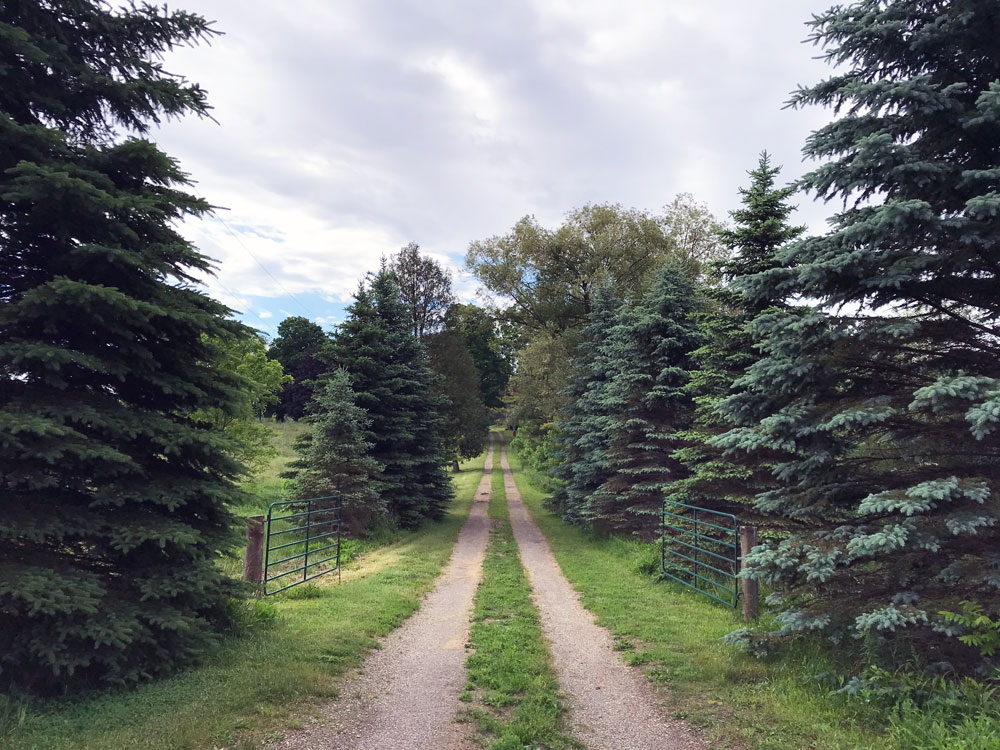
Farm driveway lined with evergreen trees

I have always wanted a tree-lined driveway. Big maples arching over the lane making a tunnel of green.

Matt and I planted 6 trees along the driveway (5 maples and 1 linden) to try to make that happen.

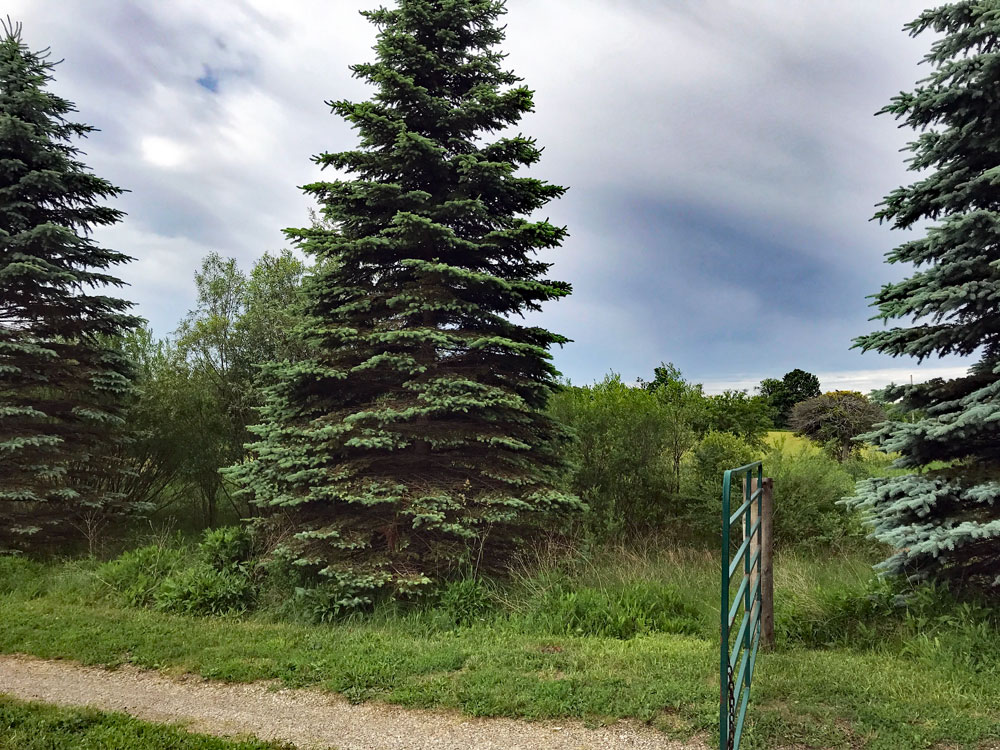
At the bottom of the driveway, there are already some well-established trees. These ones were evergreens. Not what I envisioned, but they provide a great windbreak and snow break around the gate. However, there were some gaps. Whether trees were never planted there or the trees died, I don’t know.

Evergreen trees at the edge of a gravel driveway

This spring we unexpectedly had the opportunity to fill in some of the gaps.

It started when we were helping my Mom in her garden. There were two little saplings that had grown from cones from the neighbour’s trees. The neighbours used to be my grandparents and my grandfather planted the spruce trees that shed the cones.

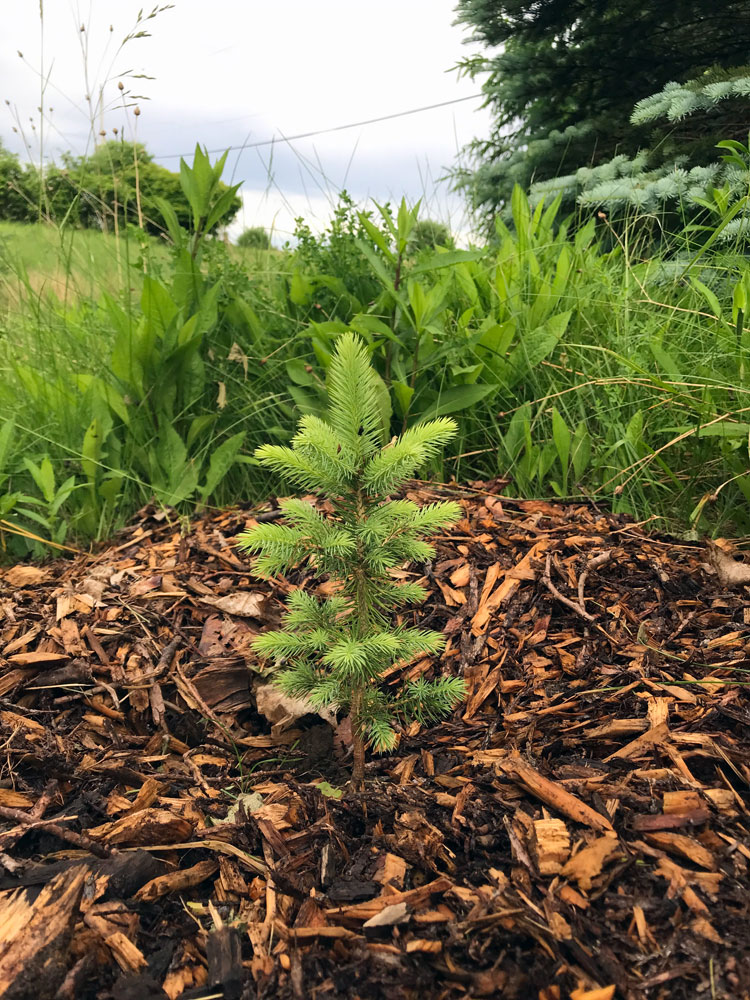
My Mom didn’t want the saplings, so I dug them out and brought them home. They have happily taken root amongst the evergreens around the gate. I’m hoping they’ll fit right in once they grow up.

Small evergreen tree surrounded by woodchip mulch

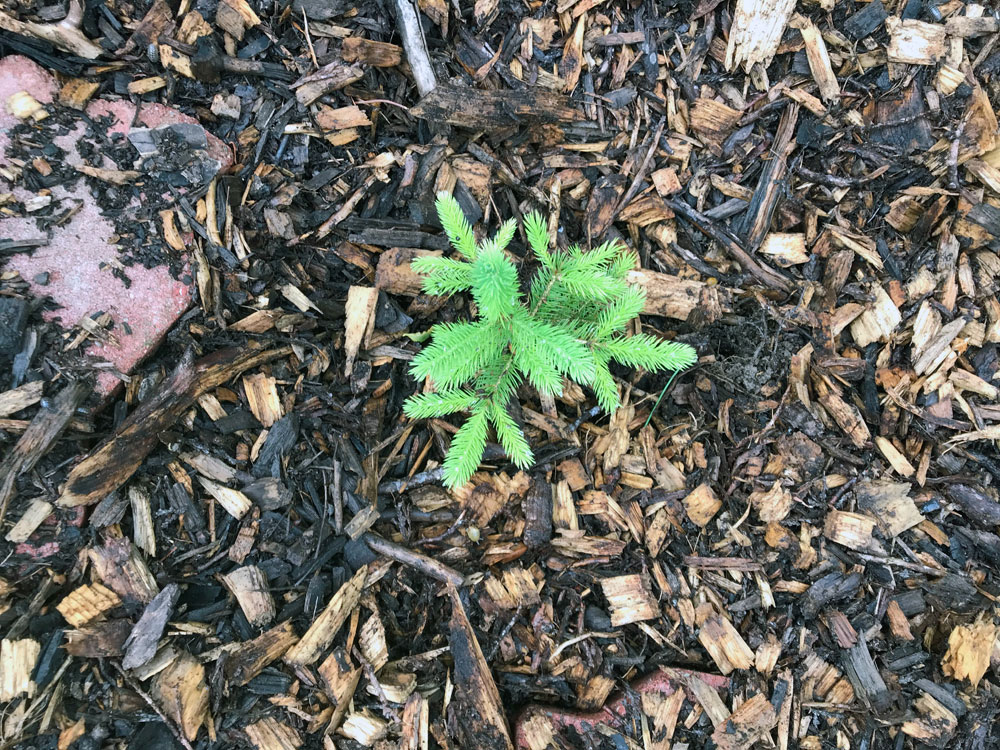
On the other side of the driveway, we planted 4 more little evergreens. These ones are even smaller than my Grandpa’s trees. They had popped up on the barn ramp, so I decided to relocate them. It turned out they fit perfectly in the gaps on the opposite side–or will once they grow.

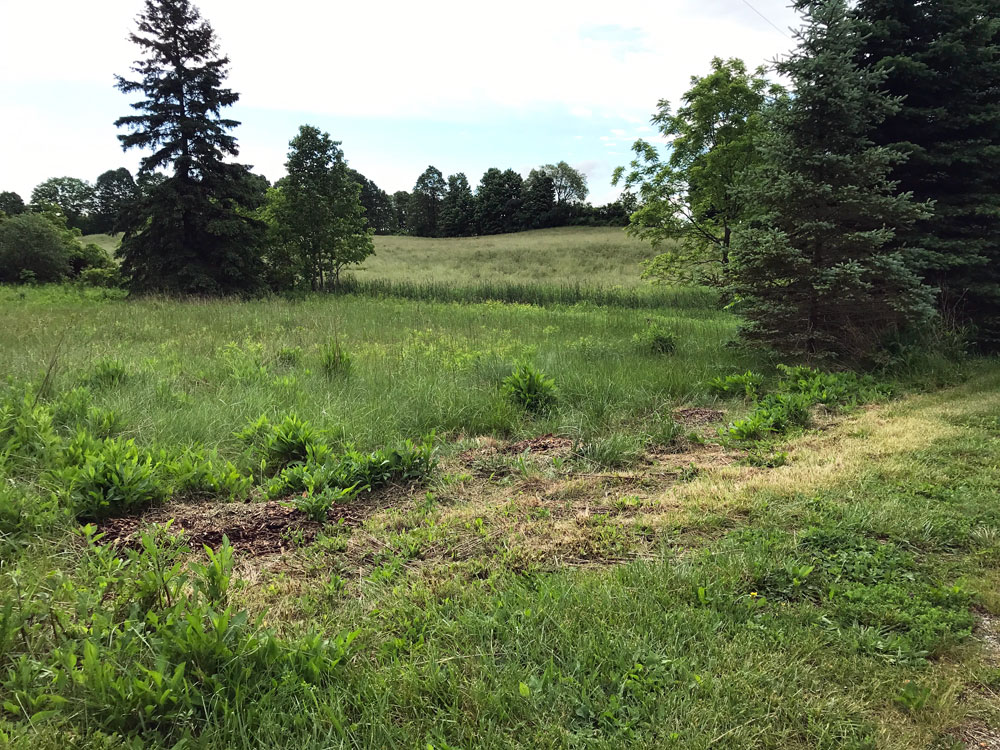
View across a field of tall green grass

Diana Beresford-Kroeger (please read anything by her) says that if everyone on earth plants 1 native tree per year for the next 6 years (48 billion trees), we can reverse the effects of climate change. I’m trying to plant more trees around our property as a small way to help.

Small evergreen tree seen from above surrounded by woodchip mulch

Even though the evergreens are not part of my vision for a tree-lined driveway, they are a practical choice to shelter the area around the gate. I also love that I have two trees from my Grandpa here at the farm now.

Have you planted any trees this spring? Is anyone else relocating trees from one home to another? Do you have any family heirloom plants?

A new tool for the farm

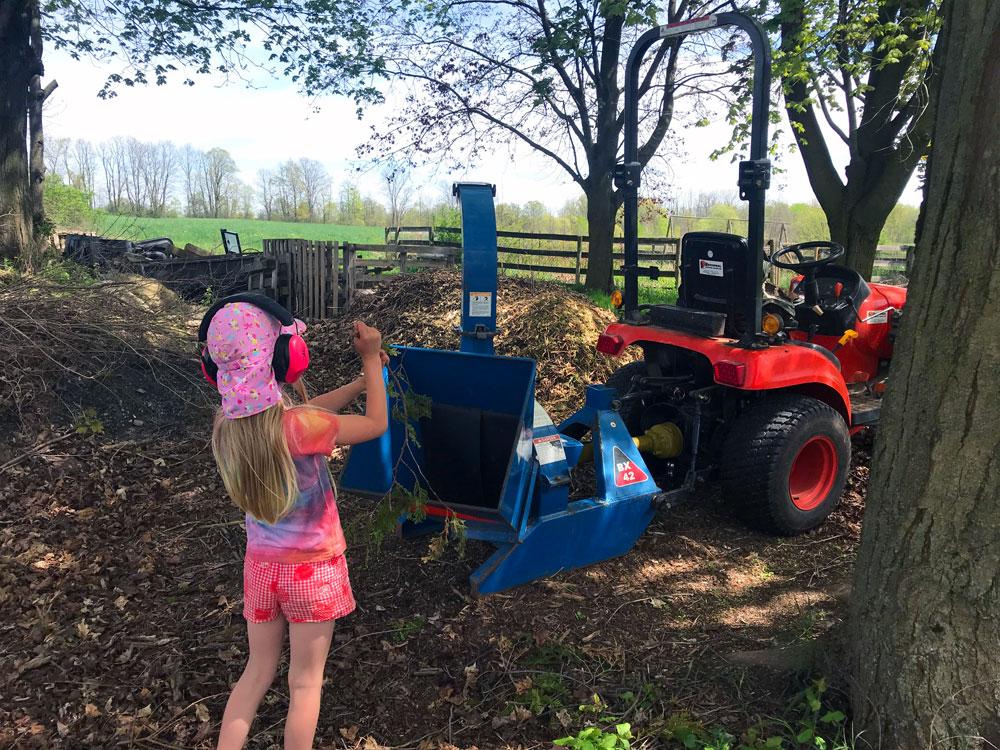
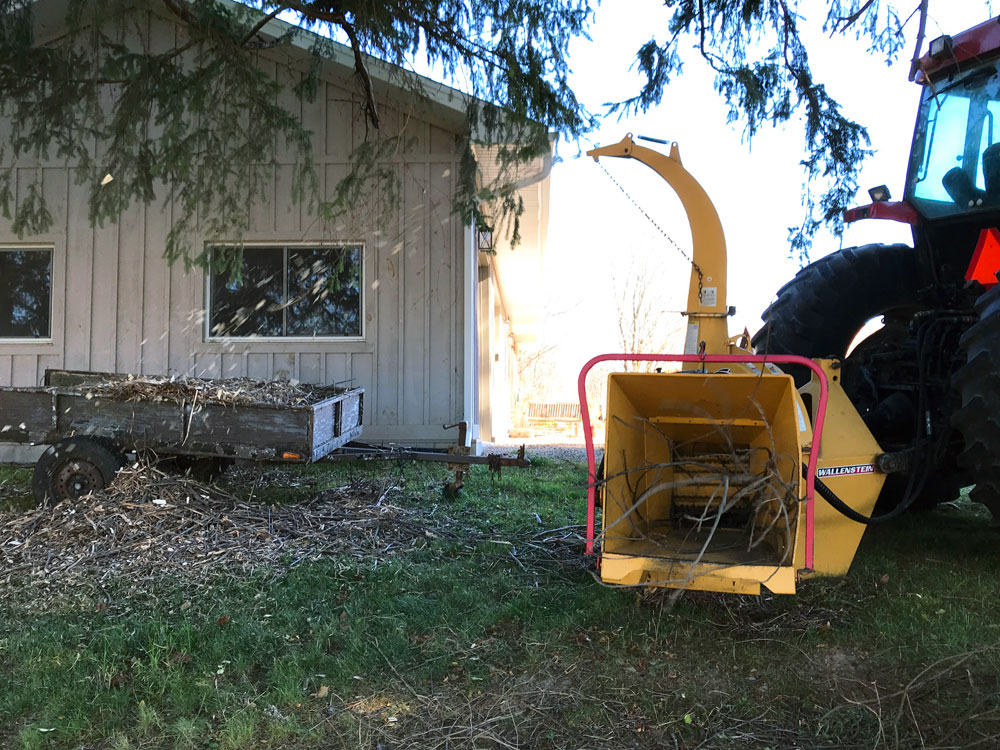
Last week Ellie and I put a new-to-us tool to work for the first time. Our own wood chipper.

You may recall that two falls ago (2022), I borrowed our farmer’s wood chipper (and one of his giant tractors to run it). A little while after that, I was at our tractor dealership, and our sales guy said, “Hey did you ever get that brush pile cleaned up? We have a used chipper here, and your tractor could probably run it.”

Well, the brush was cleared, but I knew there would be more to come. After thinking about it for a few days (and with some encouragement from my sister), I bought it.

But up until this spring, I still hadn’t used the chipper yet. Though I had been rebuilding the brush piles.

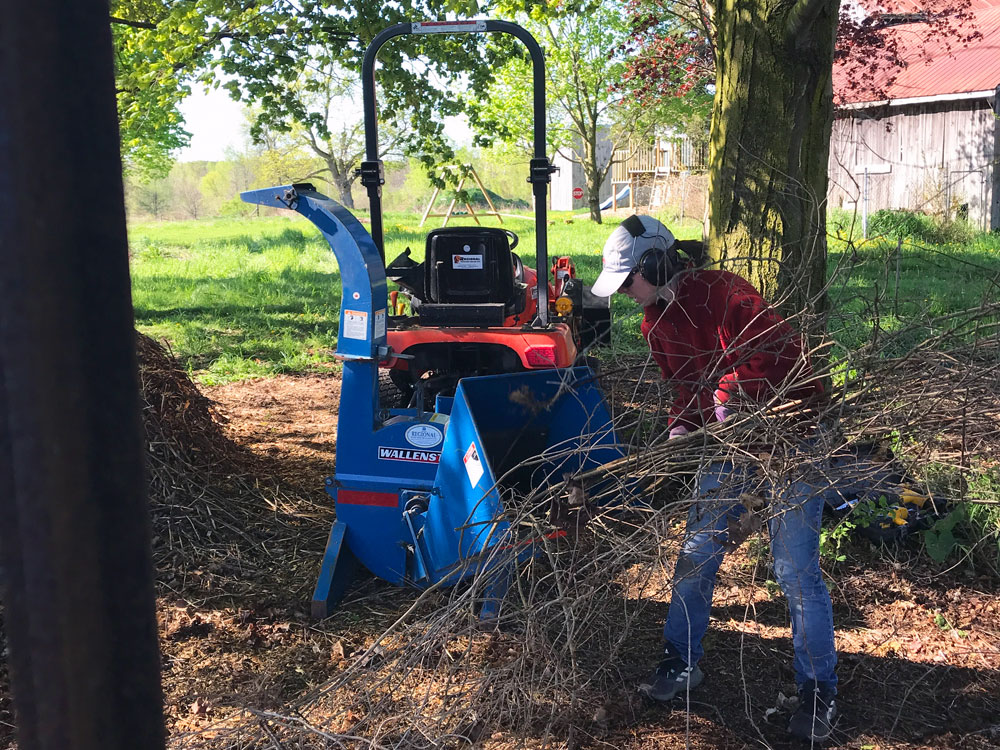
So finally I asked our sales guy to come out, and he helped me hook up the chipper and made sure everything worked properly. And then we blasted through the branches.

The chipper worked so, so well. It handled big stuff, small stuff, green stuff, dry stuff. The chips are nice and small (our farmer’s chipper let a lot of sticks through). And it gives us great mulch to use in the gardens–much better than burning the brush as we’ve done in the past.

For anyone interested in the details, the chipper is a Wallenstein BX42. It can handle branches that are up to 4 inches, though at our farm that’s firewood. I probably chipped a few 3 inch pieces, and they went through just fine. Our Kioti CS2410 (24hp) tractor runs it easily.

The chipper is a useful attachment, and I’m glad that we have it. It’s a good way to clean up branches, which we always have here at the farm.

Do you have any new tools at your house? Do you use mulch in your gardens? Who else buys something, but then takes a while to use it?

Firewood restock

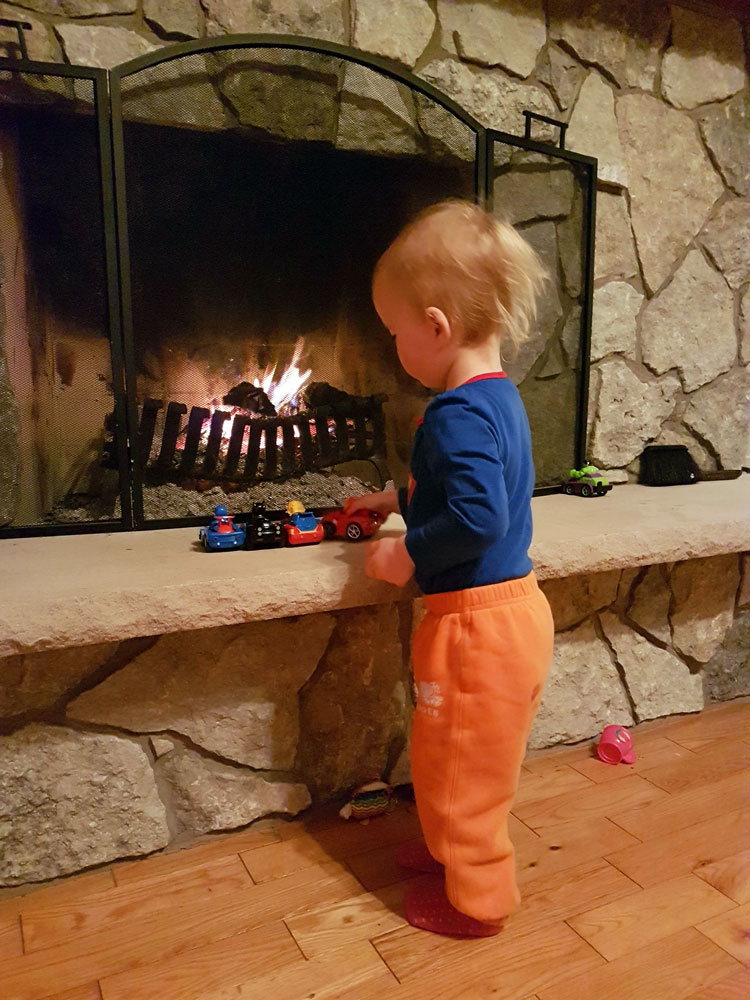
Our fieldstone fireplace is a huge feature in our home. Often through the winter, I would set up in the living room for the day and work in front of the fire. Ellie has come to love the fire as much as me. If it wasn’t going when she came home from school, she would usually want to start one (and she’s become very good at lighting it herself–with supervision).

(Flashback to fluffy baby hair. She still loves to line her toys up on the hearth.)

Our fireplace is just for atmosphere. It puts out a bit of warmth, but our geothermal heats the house. We usually only have fires in the winter. Fire season for me is November to Easter.

This year we didn’t quite make it to Easter because we ran out of wood. I didn’t think this would ever happen. Before we redid the fireplace we had a huge stockpile of firewood (starting just one month into owning the farm and added to again and again).

Moving the wood pile so we could build the garage took two days. Restacking it was also a big job. I think that made me cautious about adding to the woodpile, so I haven’t for the last few years. Matt’s Dad would come out, cut trees, ask if I wanted any wood, and I always said we had enough.

Well, we could have used one extra trailer load this spring.

As of a few weeks ago, we had a small pile of apple wood too fresh to burn and a bunch of punky logs. So this year’s fire season ended for us.

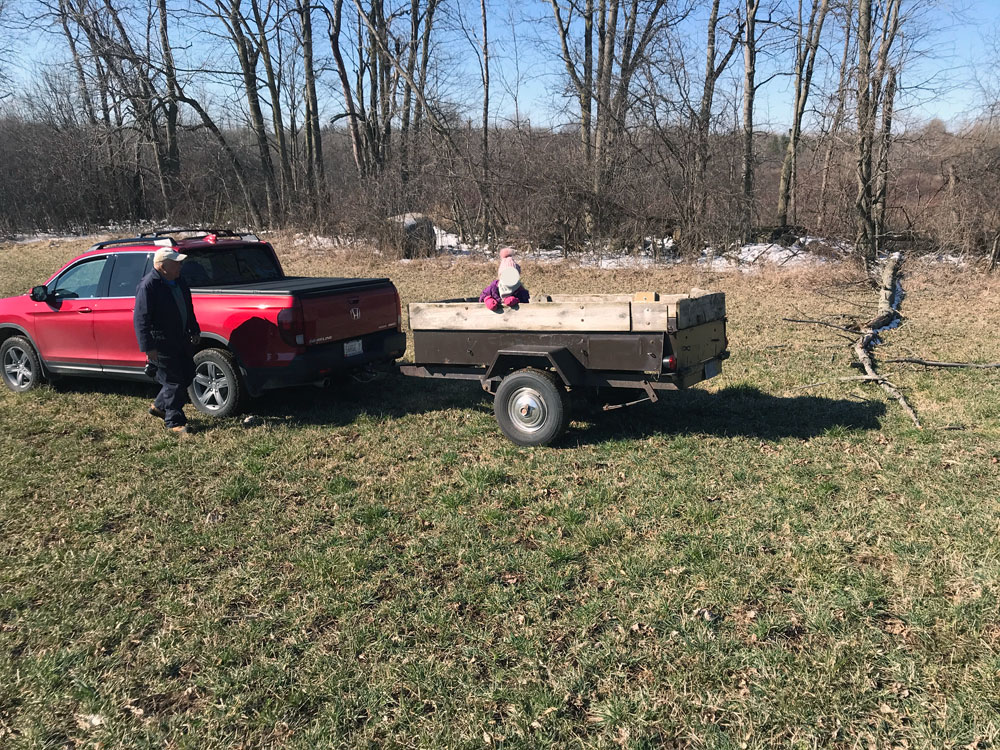
Now we are onto rebuild-the-woodpile season. Matt’s Dad came out last weekend to start spring clean up–trees always come down over the winter, and I want to clear them out of the fields before the grass starts to grow. The first trailer load stayed at the farm. The second went to his house.

When Matt’s Dad came for Easter lunch, he brought his splitter with him and he chopped all of our new firewood with an assist from my nephew. Isn’t he a great person to have around?

(In my journey through the archives as I was writing this post it appears that previous Easters have also been about firewood.)

We’ll need to do this a few more times–I estimate we’ll need three or four more trailer loads to get to my ideal state of three rows–but tree maintenance on the farm is ongoing. We’re on our way to a new fire season later this fall.

How did you spend your Easter? Anyone else maintain a woodpile? Have you started spring clean up yet? Who loves a wood burning fire? Who are your helpful family members?

The old apple tree

In the centre of the part of the farm we call the meadow, halfway between the pines and the pond, is a big old apple tree. This tree makes me think about the life of this property.

The woman who was born here in 1936 says there wasn’t a pond when she was growing up. It was a stream that they crossed every day on their walk to and from school.

Another former owner that I’ve met called the meadow the orchard. Just two apple trees remain now.

This year was an amazing year for apples. Unfortunately, the weight was too much for this big old tree. Several limbs broke, including one huge section. I feel like half the tree has fallen.

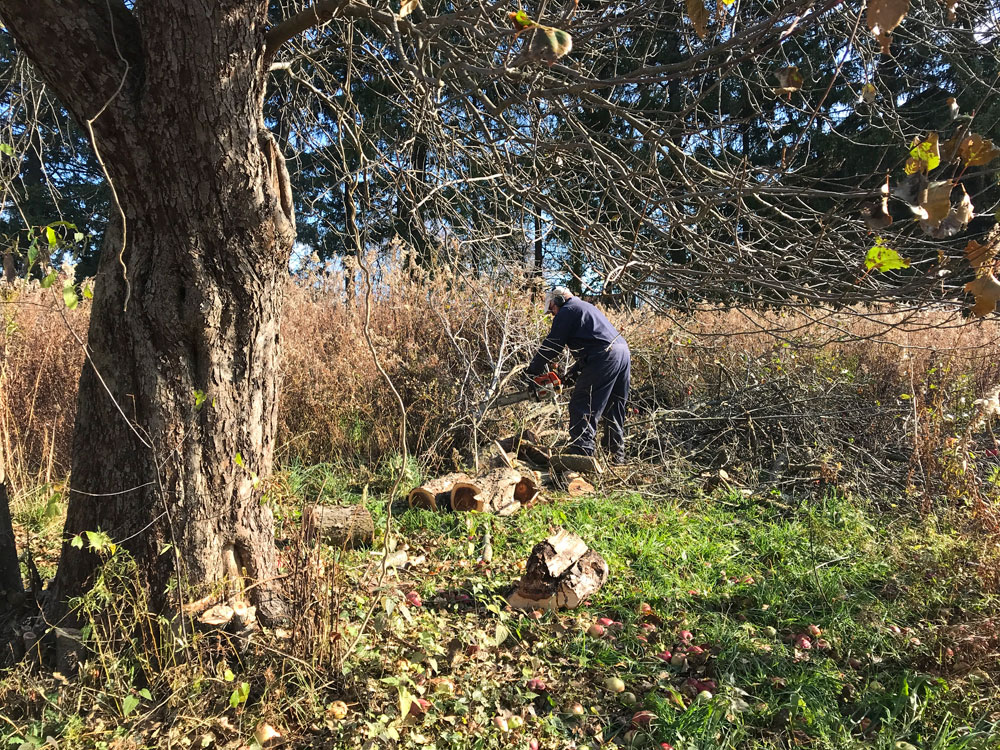
As usual, Matt’s Dad came out with his saws and helped me clean up. The apple tree has grown wild for as long as we’ve been here (and maybe before that). Pruning has been on my list, but I have not done it. There were suckers around the trunk, twigs going in every direction and the aforementioned broken branches.

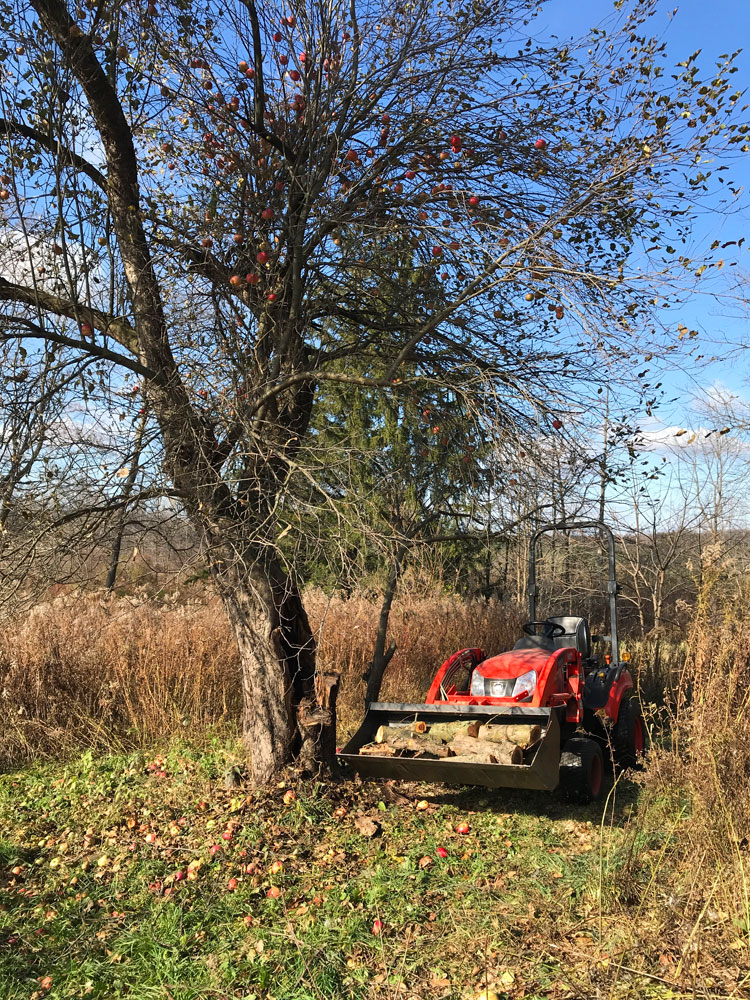
Matt’s Dad cut most of the suckers. We left one big one, as I hope this could become a new tree if the original tree does not survive. He cut up the fallen limbs and I piled the brush at the edge of the meadow. I loaded the logs into the tractor and brought them up to the woodpile.

The tree could use more pruning. With all the work that Matt’s Dad did, I can now get to it a little more easily. And pruning goes back on the list for next year. Then we can maybe finally do something with all of those apples.

This tree has seen a lot of changes to the farm, the people and the surroundings. I hope that it will stay with us and continue to grow as we grow with the farm.

Brush clean-up with a borrowed wood chipper

Back in the spring, I started trimming branches, brush and trees that had sprouted up around the farm. I kept clipping and cutting for weeks. (Matt’s Dad even came out to help with some bigger trees). By the time I stopped, I had two very large piles of brush.

I asked our farmer (who rents our fields) if I could borrow his wood chipper. He was willing to loan it to me, but when I asked if our tractor could run it he laughed at me. So I needed to borrow the chipper and a tractor. Well, the weather shifted soon after that, hay season started, and our farmer and his tractors were busy.

So the piles sat.

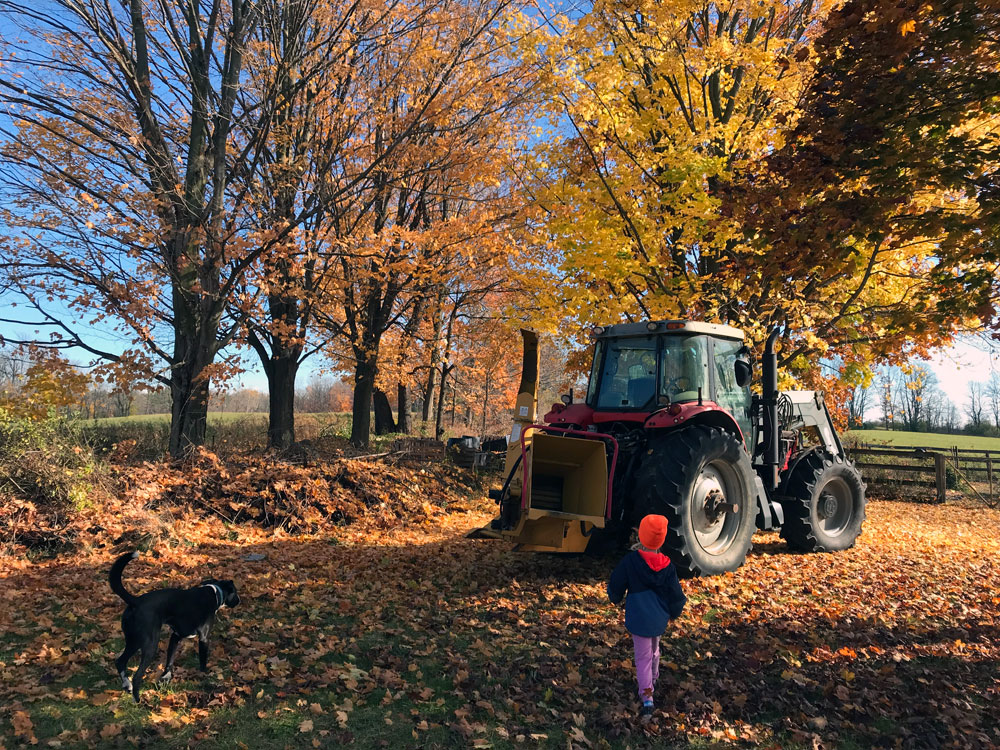
I waited until we were well into fall, and I reached out to our farmer again. A giant tractor and an equally giant wood chipper soon arrived.

And I got to work.

The chipper blasted through our brush. It was awesome. Matt’s Dad came over and cut a few more trees, so I added them to my pile and kept going. When I finished one pile, I moved the tractor (slightly terrifying to drive something that big) to the next pile and kept going. It took several days, but finally all the brush was gone.

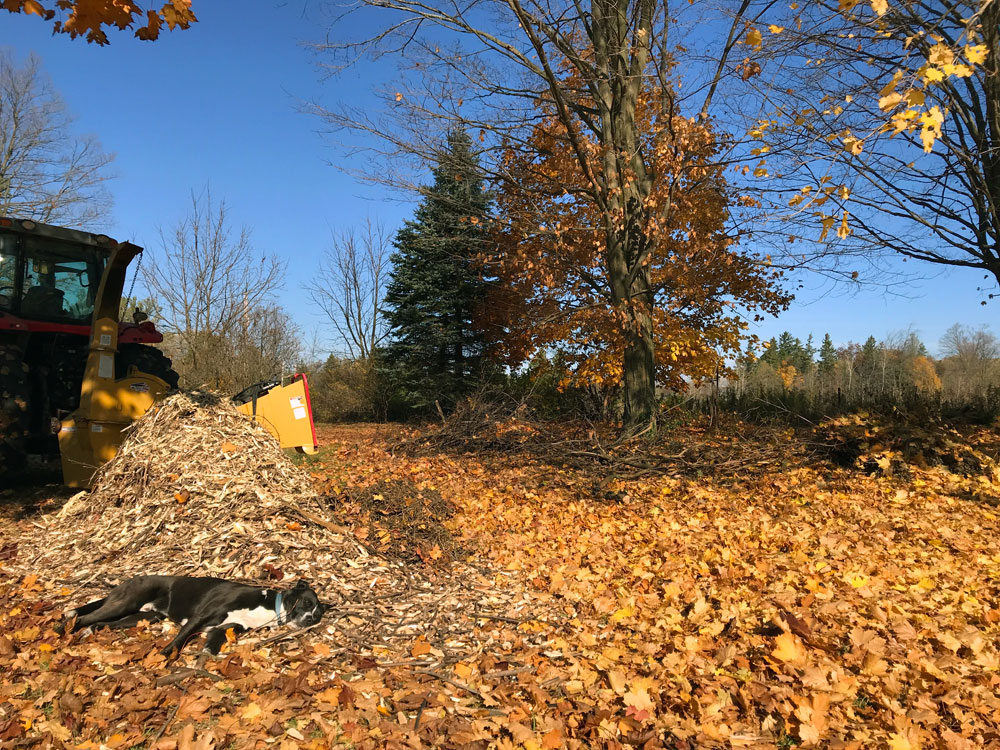
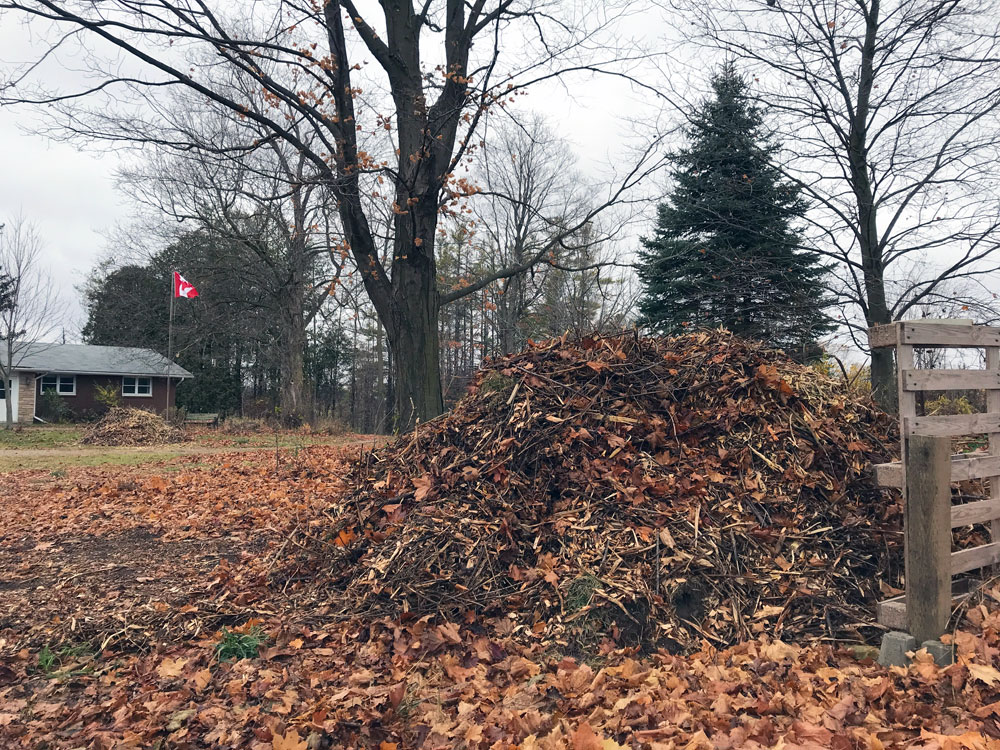
I spent another day cleaning up and moving the piles of chips. I have one pile on the turnaround where it will be spread on our new flower garden next spring. I have another pile tucked beside the compost bin for wherever else we need it. And I still have half of the load that a local tree service delivered back in the spring. (Comparing piles, I estimate that I chipped another truck load.)

With my focus on no dig gardening, the chips will be useful. I’d much rather make the brush into something useful than burn it. Plus having all of the brush finally cleaned up feels like a big win.

Do you use woodchips in your gardens? Have you ever used a woodchipper? Or driven a big tractor?

Harry’s tree

Two years ago, I met a woman whose grandparents had owned the farm in the early 1900s. Her name is Lorraine. Since then, Lorraine and I have stayed in touch, and she has visited the farm several times. Last fall, Lorraine arranged to have a tree planted in memory of man who worked on the farm with her father. I wrote an article about this for our community newsletter, and I’m sharing it here today.

In 1936, Harry Halworth came to Puslinch. He was 16 years old. At home in England, there were no jobs, so he signed up with a government program that brought young people to Canada to work on farms.

Harry’s experience in Puslinch forged a deep connection to Canada. This connection was commemorated in the fall with a special tree planting. Lorraine Stewart, the daughter of one of the farmers Harry worked for, arranged for a maple tree to be planted on her parents’ former farm.

“That tree is really like a memorial to Harry’s love for this country,” Lorraine explains.

A case of appendicitis brought Harry to the Stewart farm. The farmer Harry was working for could not pay Harry’s medical bills, and Harry was abandoned in the Galt hospital. Lorraine’s father, Allan Stewart, stepped in and Harry then came to work for the family.

Harry worked for the Stewarts and other farms in the community for three years. Then he decided to go home and bring his fiancée, Vina, to Canada.

Unfortunately, the year was 1939. When war broke out, Harry enlisted in the British Navy. He spent the next five years in submarines. When the war concluded, Harry stayed in England and went to work in the coal mines of Mexborough. He and Vina raised five children.

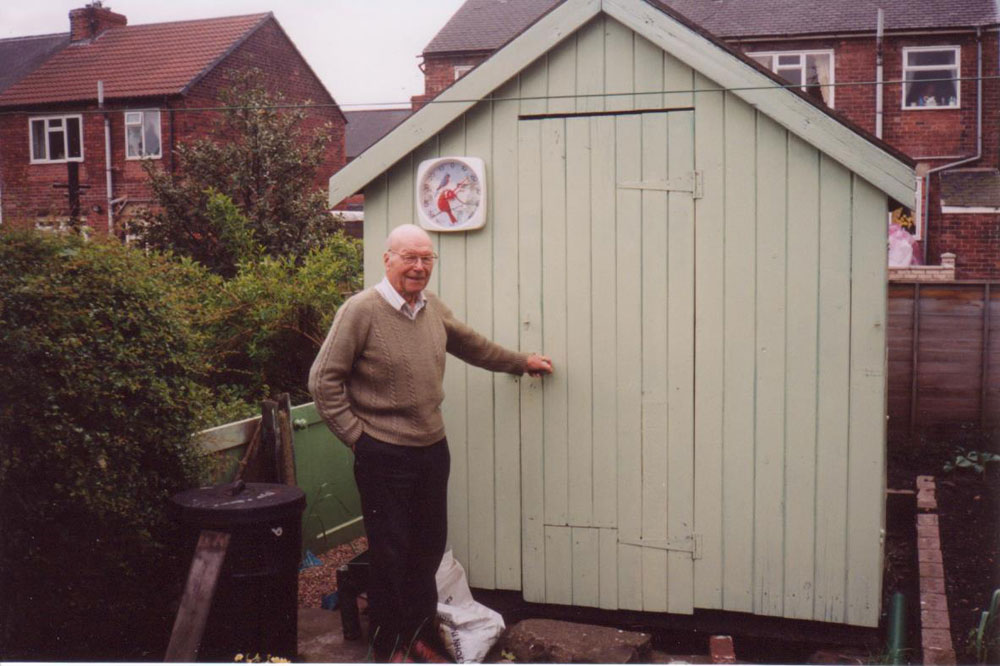
Harry at his home in England

Harry never forgot his time in Canada, though, and in 1962 Allan received a telephone call. The Stewarts had left the farm in 1942 when Allan took a job in Hamilton. But a cousin who lived in Puslinch had seen a notice in the Galt paper. Harry Halworth was inquiring about Allan Stewart and some other people.

“My Dad wrote to him, and Harry ended up coming here,” says Lorraine. Harry and Vina would return to Canada many times for holidays, continuing to visit with Lorraine and her friend Greta after Allan’s death. Harry’s last trip was in 2010 when he was 90. He rode the train to Vancouver, enjoying the view of the Rockies from the glass dome railcar.

Shortly after Harry returned to England, his daughter phoned Lorraine to tell her Harry’s health was failing.

“That’s when I told him I was going to plant a maple tree in the northwest corner of the property,” says Lorraine. “He loved this country. I think he felt so badly that he had missed out in not getting here.”

The tree honours Harry, his work in Puslinch, and his love of Canada. It will be a beautiful legacy for generations to come.

Lorraine (right) and her friend Greta with Harry’s tree

Lorraine came to see Harry’s tree a few weeks ago. The tree is struggling due to the lack of rain, but we’re working to save it. I’m proud to commemorate Harry and also Lorraine with this tree. Living on this farm which has such a history and getting to know some of that history is very special.

Maple moon

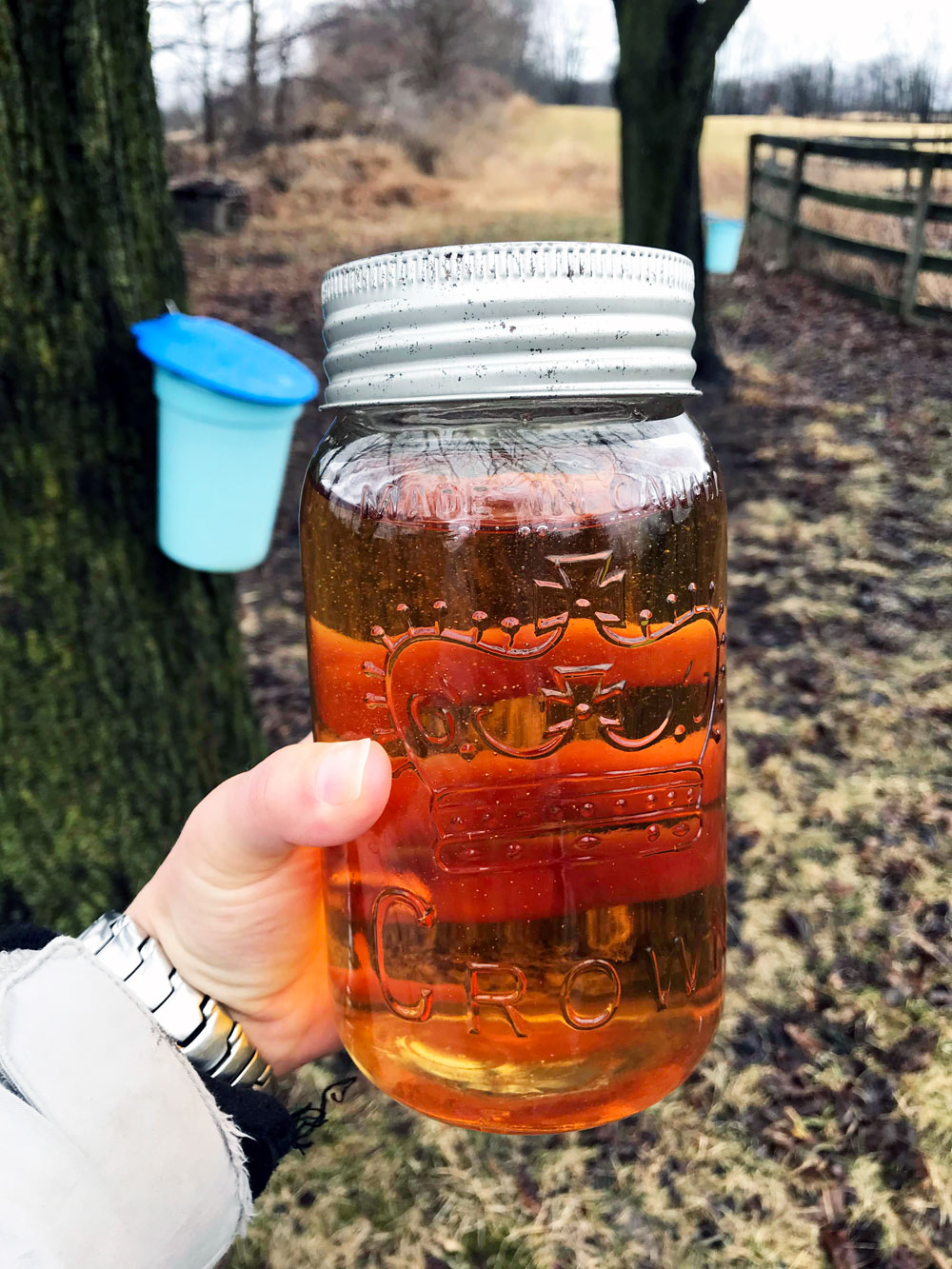
I love being outside at the farm during a full moon. Being able to see my shadow at night feels like a bit of magic. Last week we had a maple moon–a full moon that coincided with the sap running in the maple trees.

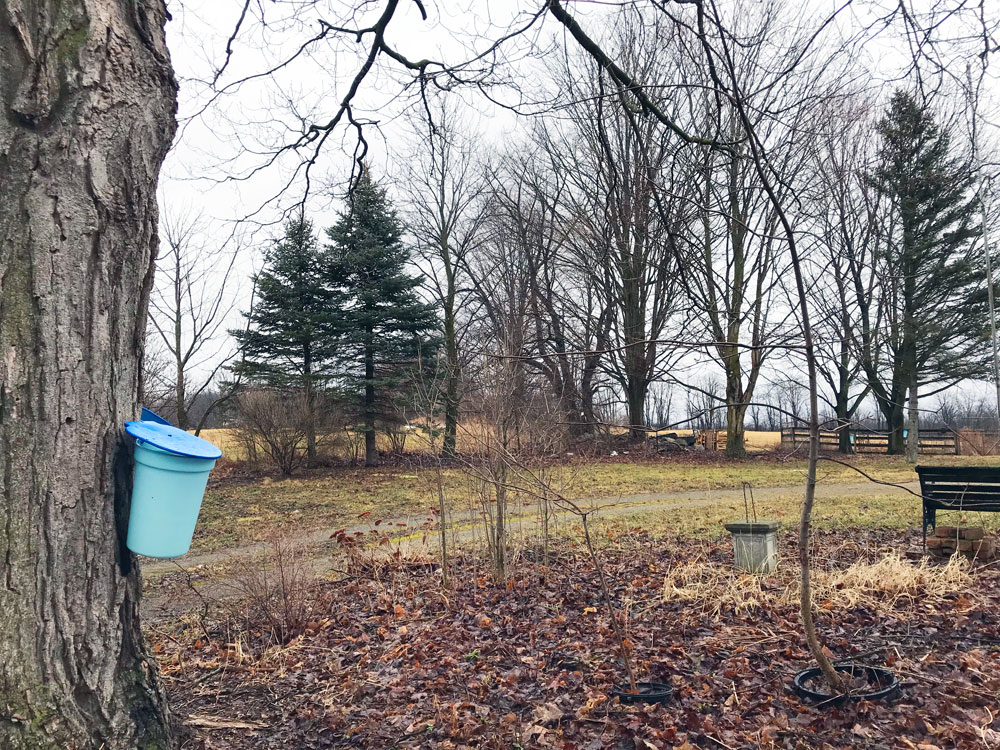
Once again, we have tapped our trees. The annual sap run and syrup making has become a fun tradition.

Ellie loves sample the sap as it drips from the trees and then monitor the sap as it boils on the stove. (We scorched our first batch, so she keeps an extra close eye now.)

Enjoying our sweet homemade syrup is a sweet treat for the rest of the year (as long as it lasts) and a continual reminder of the magic of the farm.

Treehouse playground

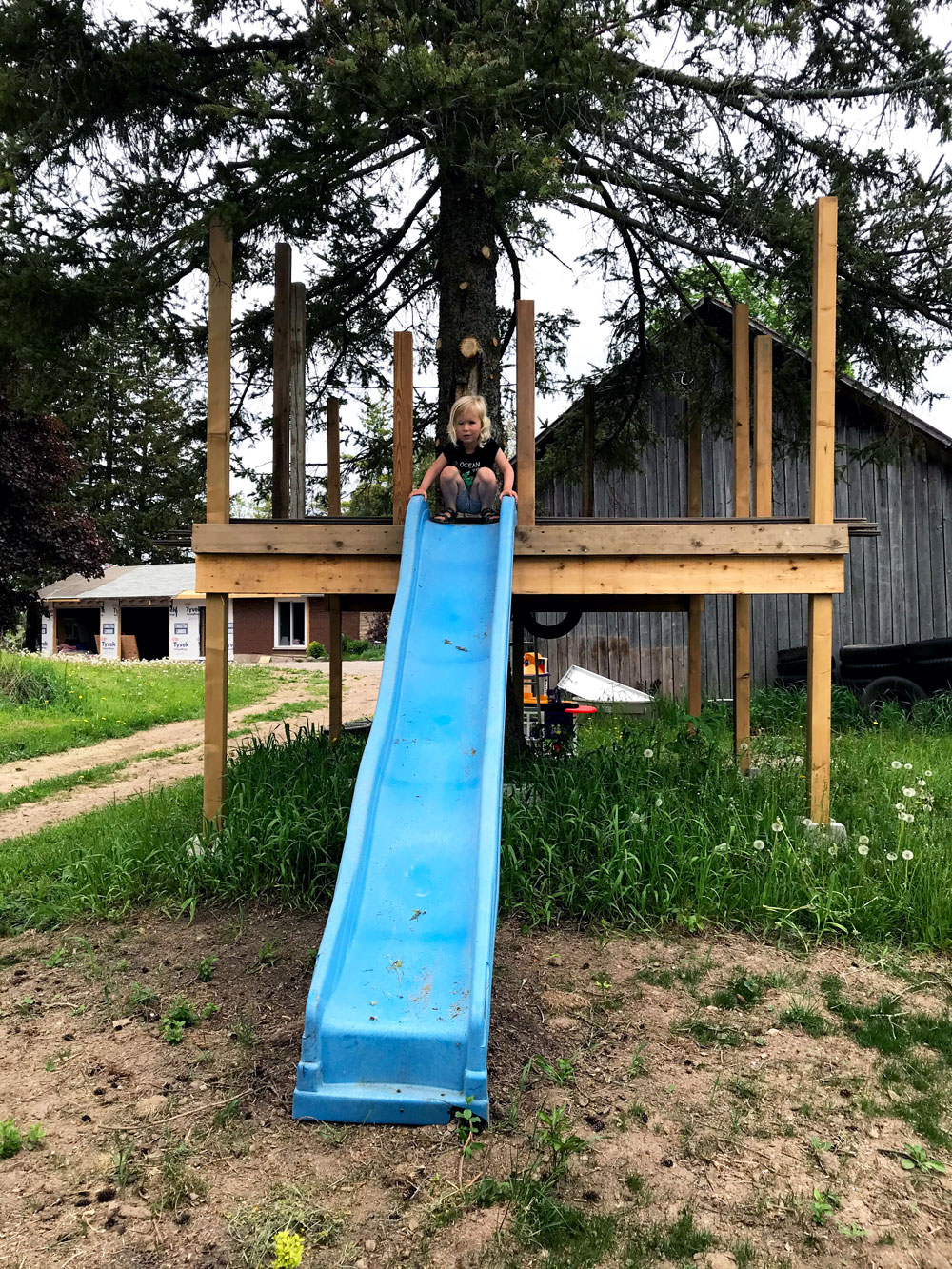
One year ago, as I was driving home with parts of Ellie’s new-to-us playset in my car, I spotted a slide at the end of someone’s driveway. It was cracked, but I couldn’t resist so I loaded it into the car.

As soon as Matt’s Dad and I set up Ellie’s playground, I started dreaming about expansion plans.

I quickly realized that a playground was not super complicated to construct, I had better quality lumber stored in the barn than what her playground was constructed of, I didn’t really fit in the playground, and Ellie was going to quickly outgrow the set.

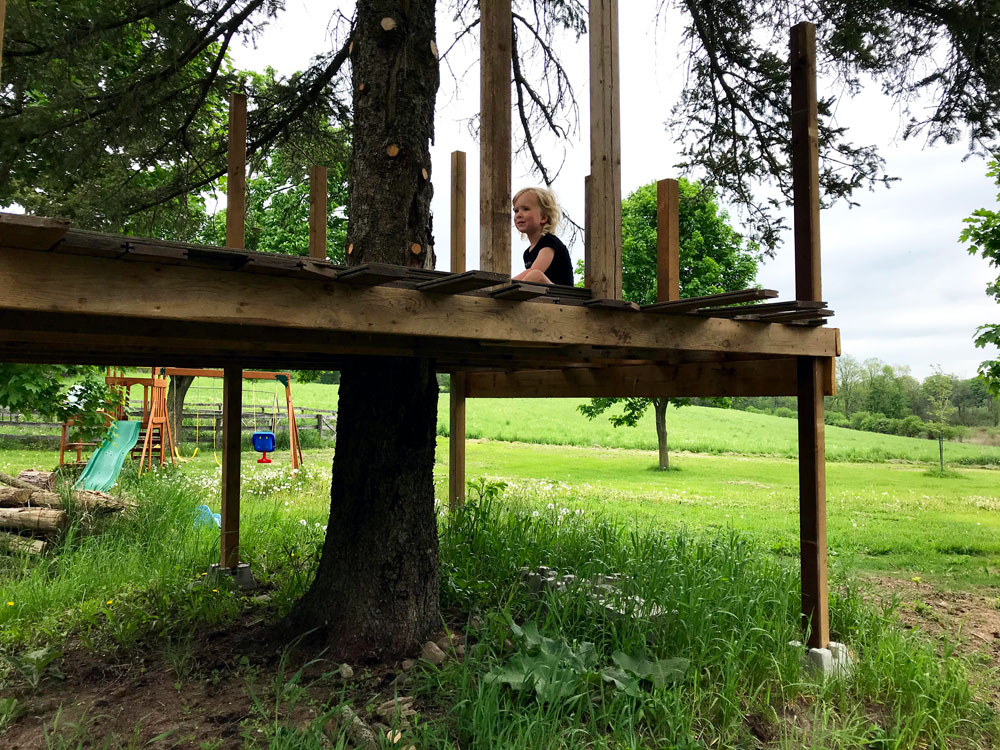
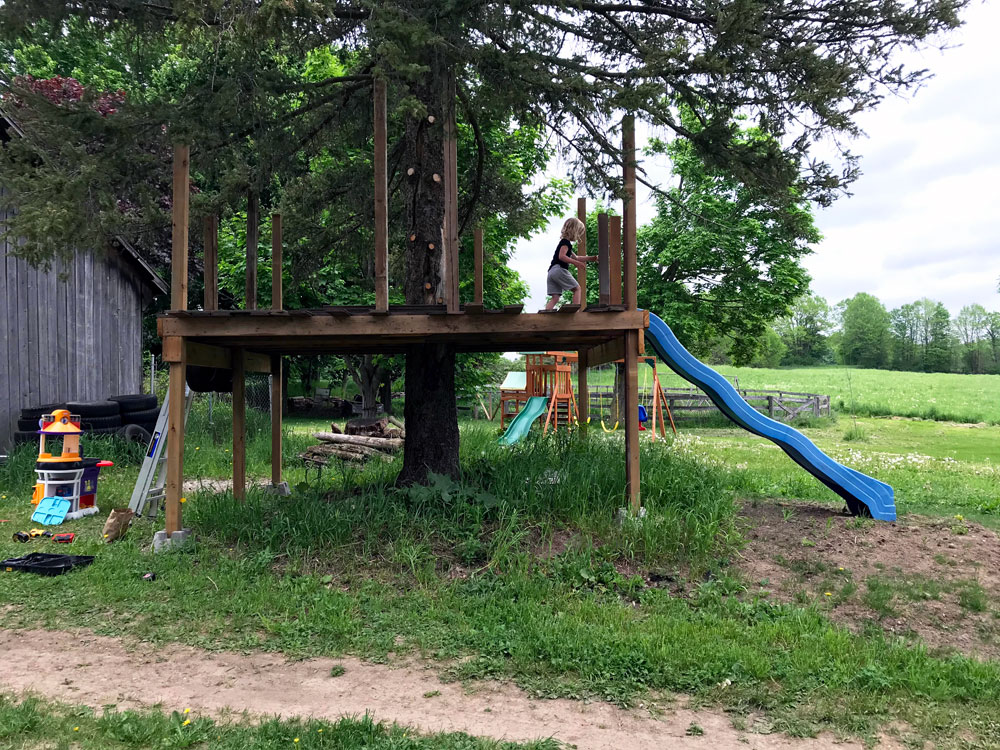
When I saw this treehouse playground, everything clicked in my mind. We had a big pine tree near her current playset that would be perfect. We also had an old deck worth of lumber in the pool. Oh, and we had that extra slide.

Construction on the playground began after a timely text from a cousin. He asked if I needed help with anything, so I replied, “How do you feel about building a treehouse?” A week later, he helped me build the underlying structure of posts, beams and joists.

We made it as big as our lumber allowed. Roughly 10 feet by 12 feet. The platform is 5 feet up from the base of the tree, which was recommended for a 10 foot slide. It feels high enough. The tree is on a little mound, so the edge of the platform is 6 to 7 feet off the ground.

It’s big and tall and open to so many possibilities.

I contacted a local deck company, and they let me (and Matt’s Dad) dive through their dumpster to get boards for the decking. I’ve been slowly working my way through the decking for the last couple of weeks, and yesterday I finally finished it.

We have a collection of tires here at the farm, thanks to previous owners. I picked out 8 that are roughly the same size and have begun bolting them together to make a ladder.

I’m still on the hunt for a firepole (one of Ellie’s favourite activities at any playground).

And obviously we need a railing.

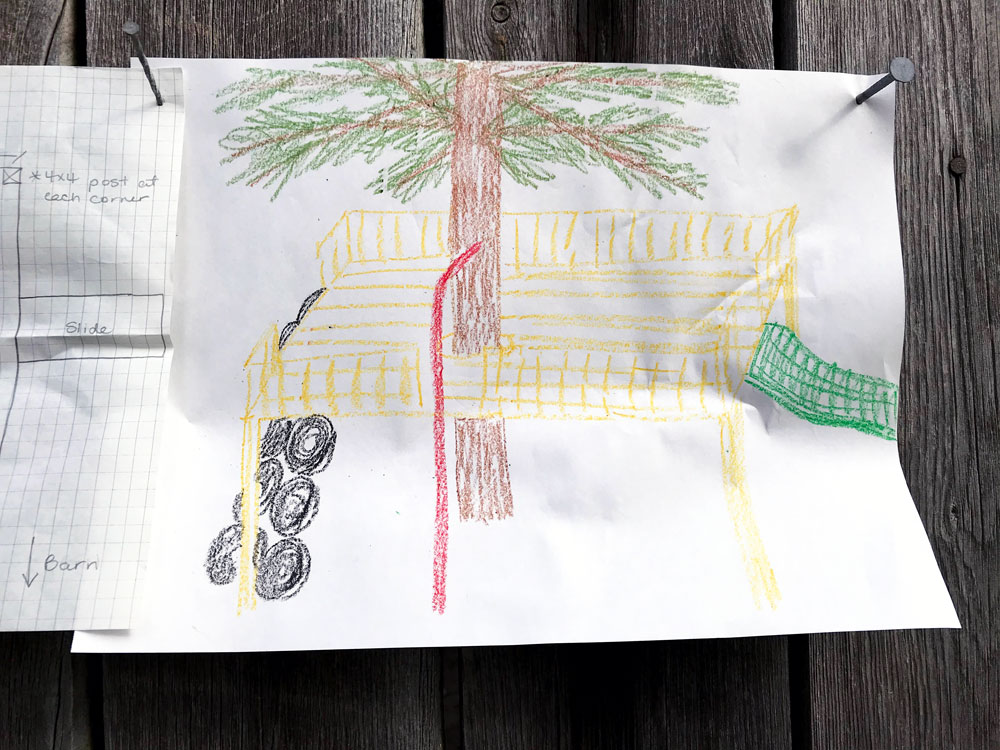
This very sophisticated crayon rendering might help you to visualize the final playground.

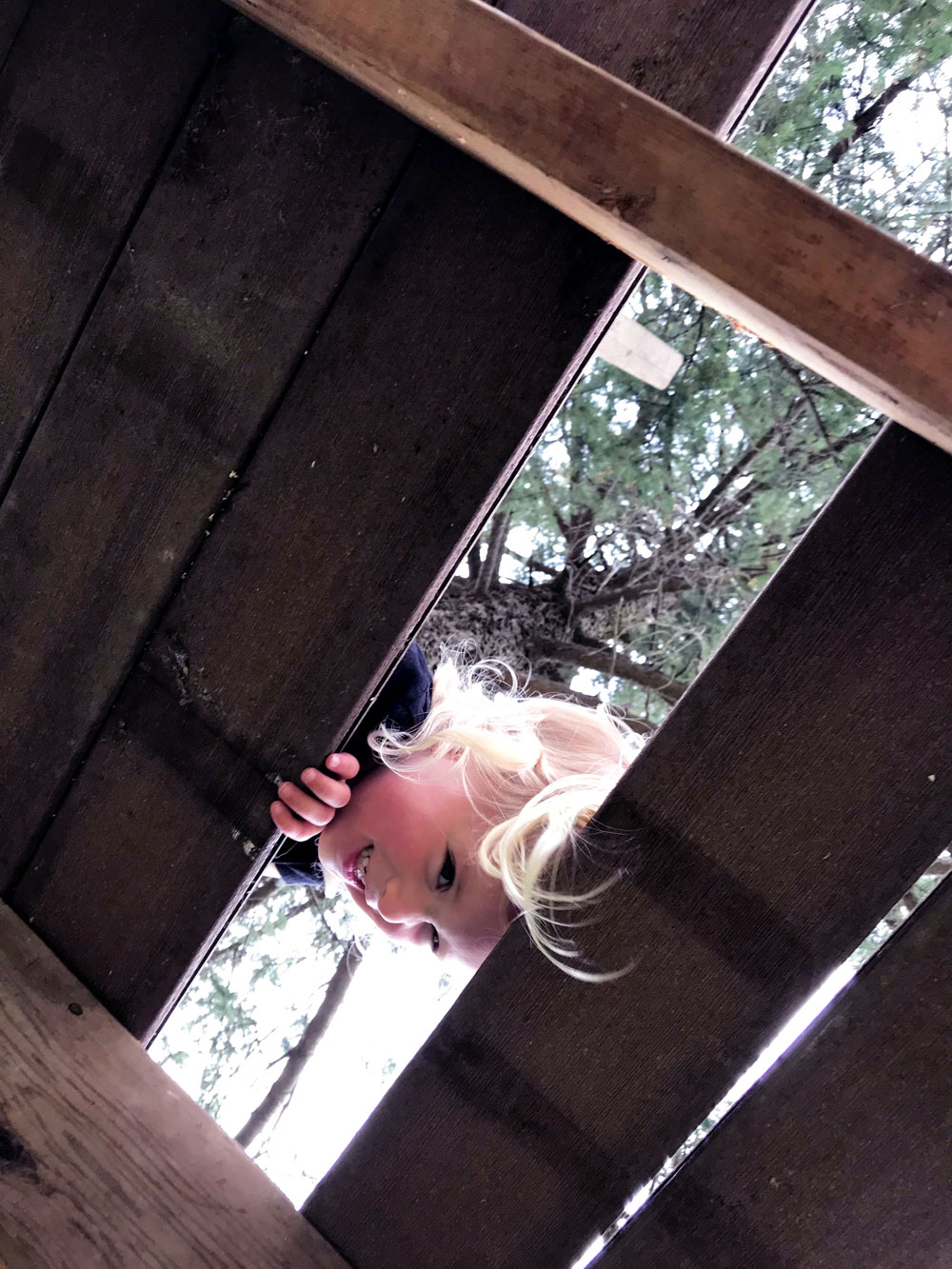
So far, we’re having a lot of fun building—and already playing on—the treehouse.

Did you have a treehouse as a kid? Where was your favourite place to play? What’s your favourite activity at a playground?

How to fight gypsy moths

Gypsy moths are an invasive species that is very destructive to trees. Caterpillars “feed gregariously.” If there are enough caterpillars, they may eat all of the leaves off a tree. “Severe defoliation can reduce tree growth and predispose trees to attack from other insects and diseases.” (Source)

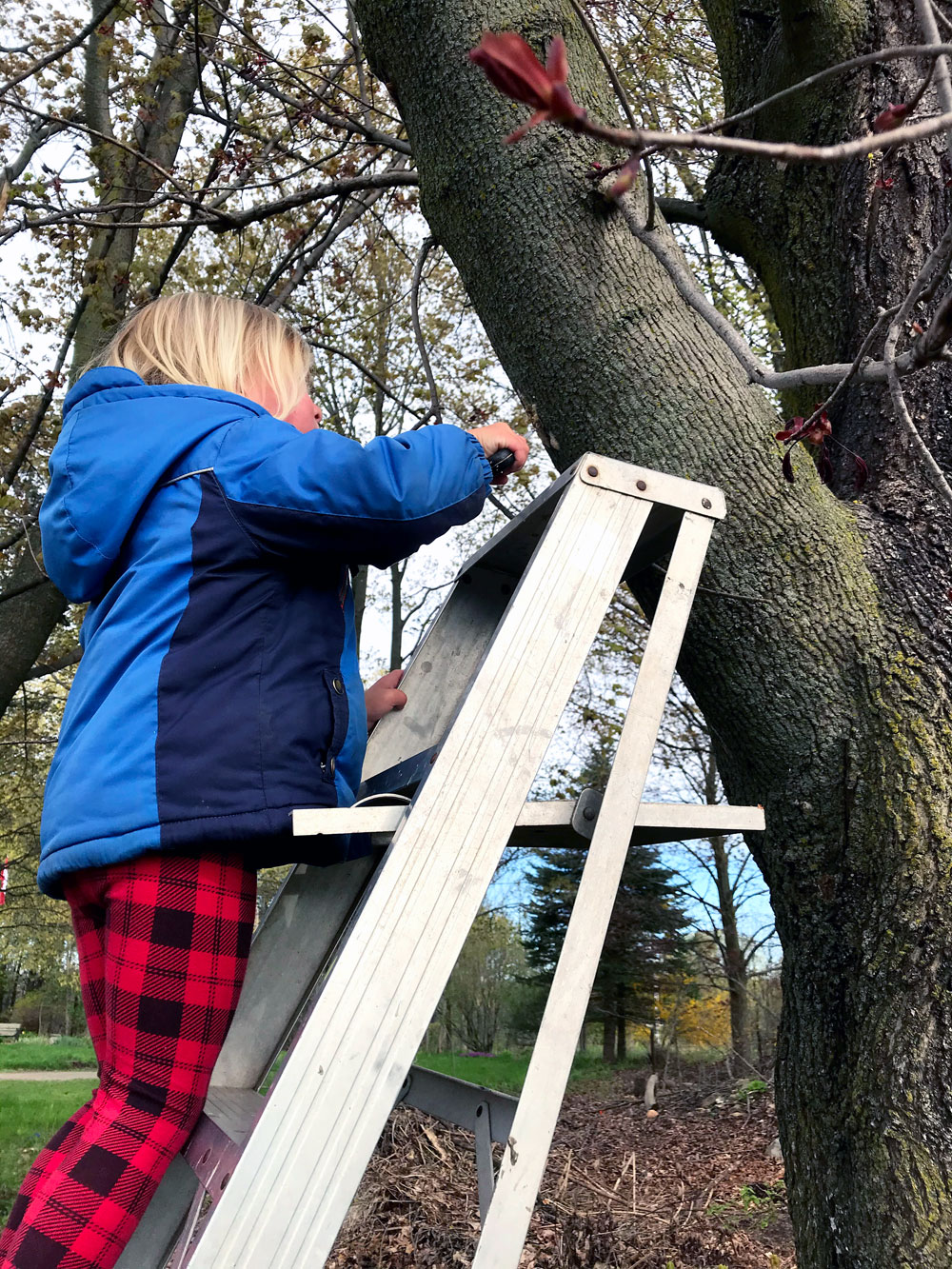
We prize our trees here at the farm, and we’ve had some caterpillar damage the last few years. So last week, Ellie and I spent a morning scraping gypsy moth eggs off our trees.

Child standing on a ladder scraping gypsy moth eggs off a tree

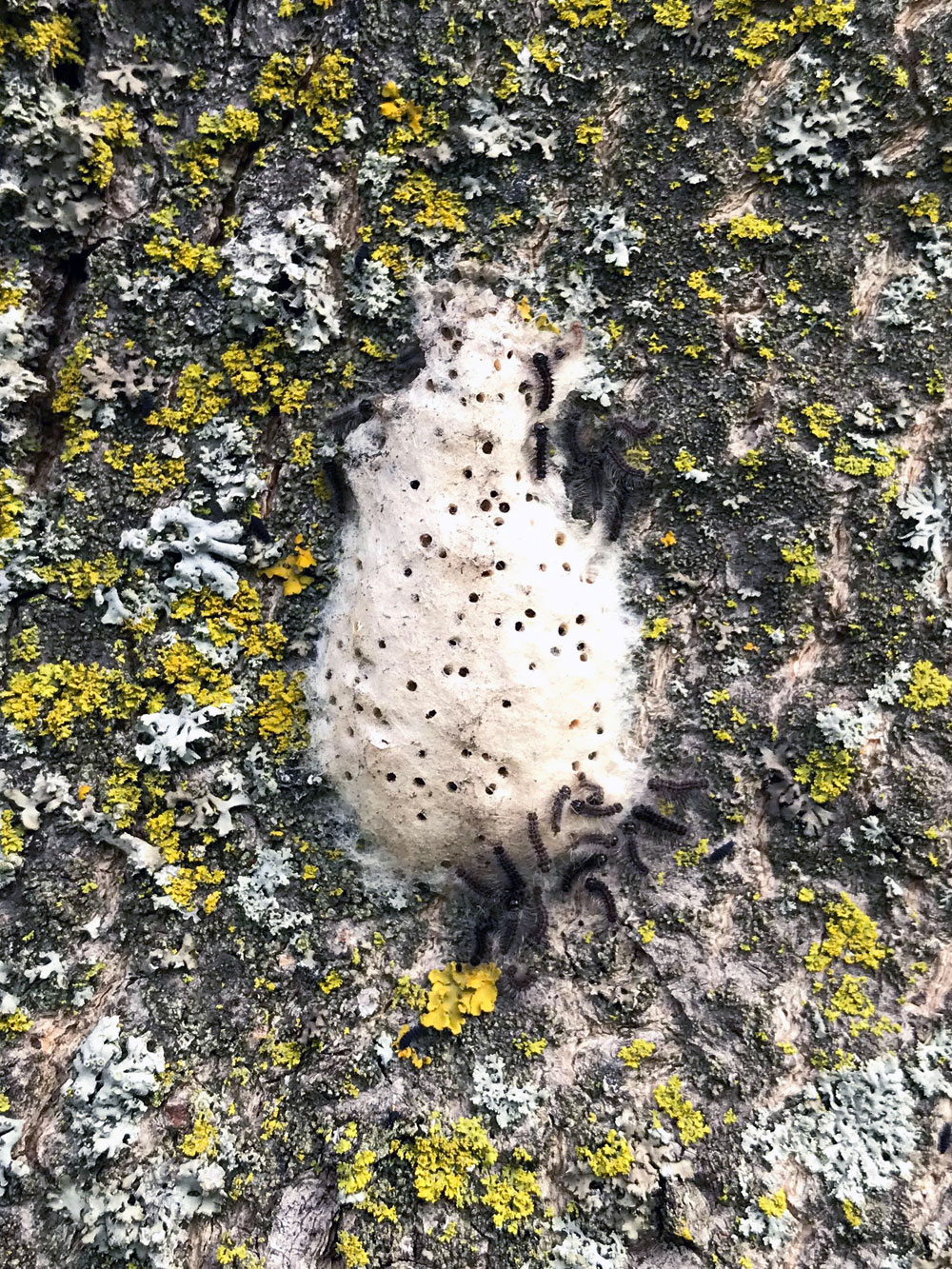
I had noticed some pale patches on various trees and after a close look assumed they were egg deposits of some kind. Then, articles in a couple of magazines confirmed they were from gypsy moths. A very detailed article in our community newsletter advised scraping them into a bucket of hot water mixed with bleach. And to do it by May before the caterpillars hatched.

We were already into the first week of May, so Ellie and I got busy right away. We carefully examined our trees and scraped off any masses we found. A few had already hatched, though the caterpillars were still small and hadn’t crawled away yet. I was very glad to remove them before they moved onto the trees.

Gypsy moth egg mass with newly hatched caterpillars
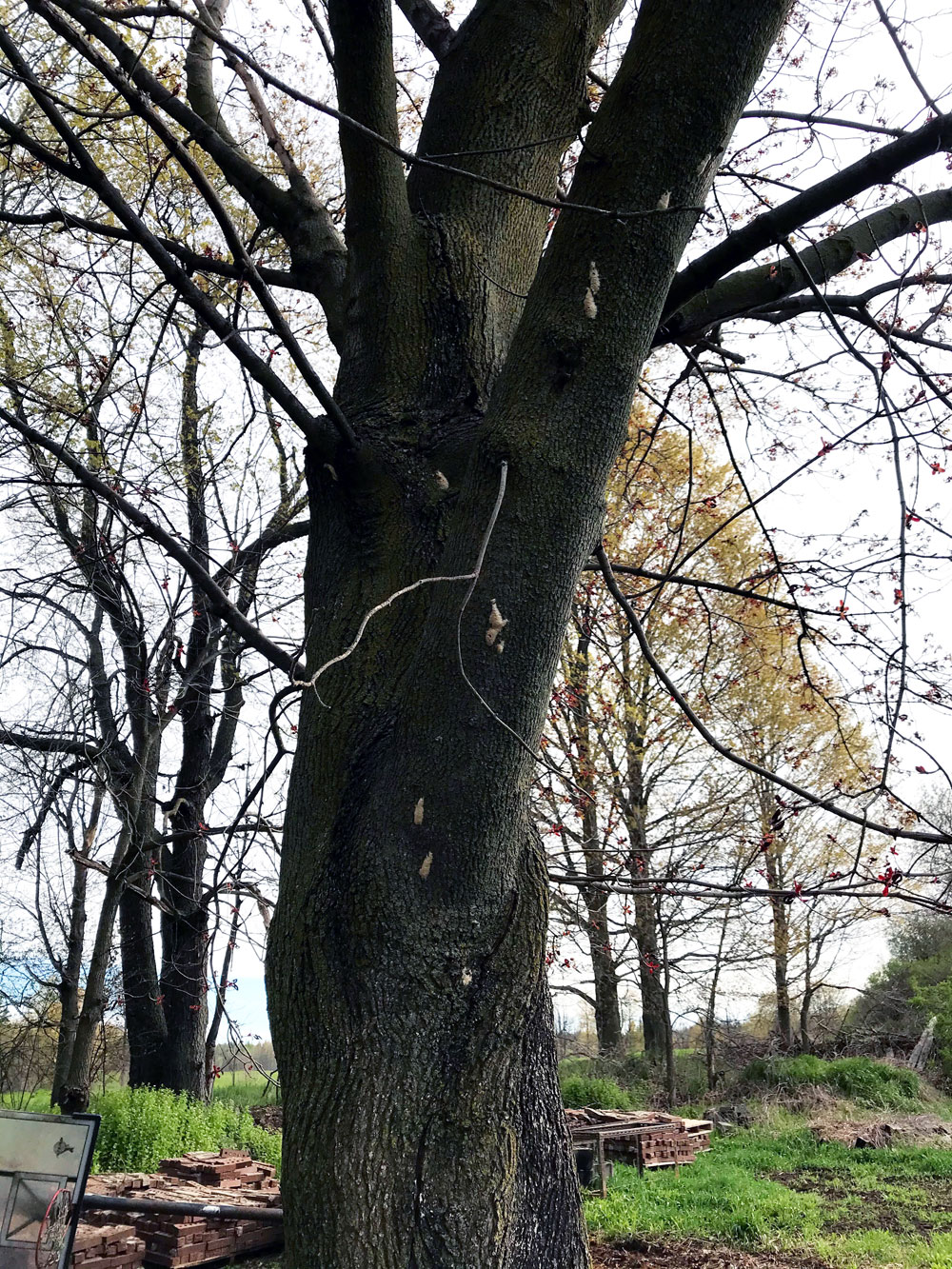
Gypsy moth egg masses on a maple tree

We used a ladder to get as high as we could. We were careful to scrape as many of the eggs off as possible and catch them in the bucket, rather than letting them fall to the ground.

Gypsy moth egg masses and caterpillars in a bucket of water

We found the eggs on many of our maple trees. I’m sure there are a few we missed, and some that were out of reach. I’m hoping that we removed enough to prevent the trees from being severely damaged.

Our community newsletter also recommended wrapping sticky tape around the bottom of the trees to catch the caterpillars, so I’m planning on doing that as well.

The article concluded, “The more people that are aware and actively working to reduce gypsy moth populations, the better overall control we will have over this invasive pest.” I hope that this post encourages you to check your property for signs of gypsy moths.

Do you have any pests on your property? Are gypsy moths a problem in your area?