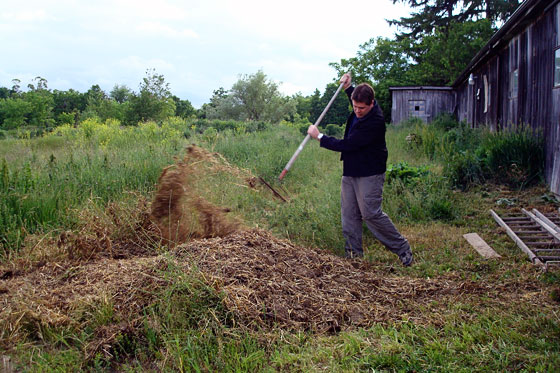
Garden Dueling DIY Week 1

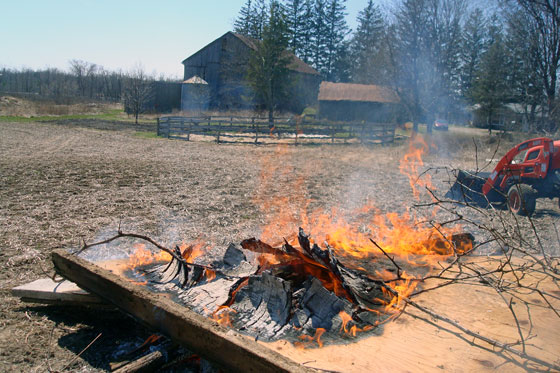
Fire in the field

In this Dueling DIY garden challenge, I am on fire. Literally.

These were my jeans at the end of Saturday.

Burned cuffs on my jeans

And this was the back of my neck at the end of the weekend. Ow-ee.

Sunburned neck

If you’re new to this Dueling DIY series, Sarah in Illinois and I are undertaking some friendly competition to help us get our gardens in shape this spring. You can check out all of the previous posts here.

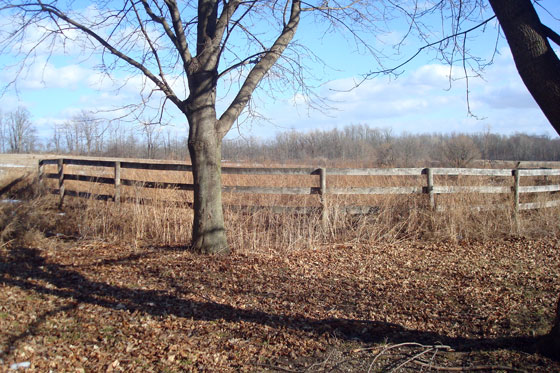
Now, if you look again at that top picture and squint through the smoke, you might notice that the fire is some ways away from the garden itself–that big round thing with the fence around it.

Fire in the field

Blame it on my pyromaniac tendencies. Blame it on the other outdoor task on my 2016 Home Goals list–general property cleanup. Blame it on the first nice weather of the year. I got a little bit distracted over the weekend.

I cleared a stack of about a dozen incredibly heavy metal siding panels that had been hiding in the weeds on the south side of the garden.
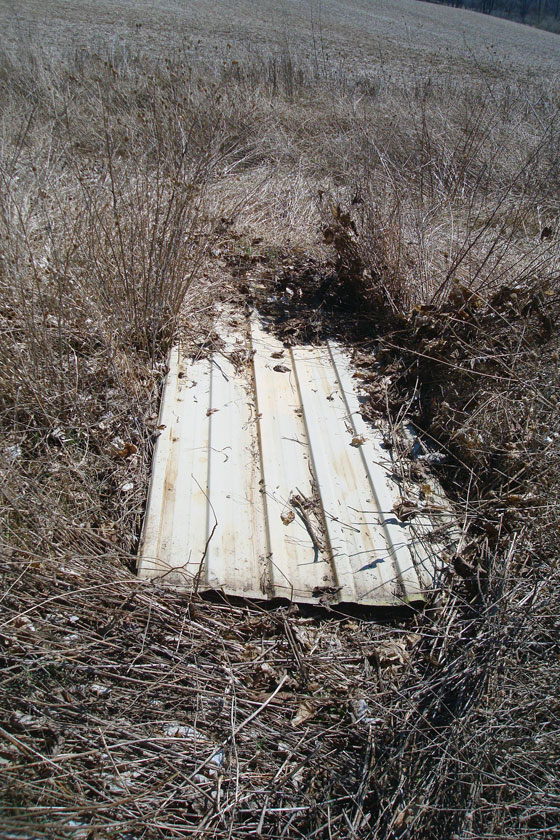
Sheets of metal siding

Wiley and me moving the siding

Then I cleared the weeds themselves–using my preferred method of fire.
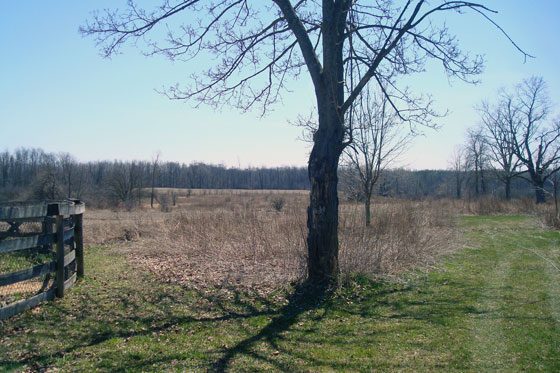
Burning weeds in the south field

Burning weeds in the south field

I cleared a very large pile of lumber at the edge of our centre field–and lit some of the really punky stuff on fire. (I might have a problem).
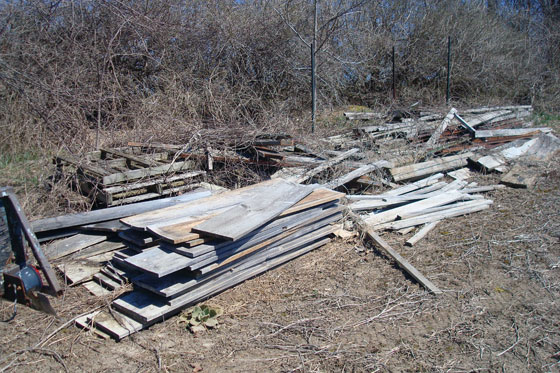
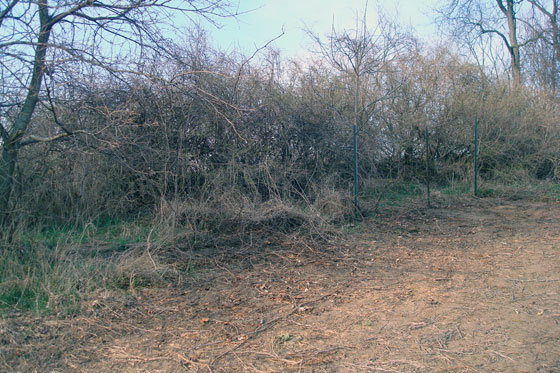
Lumber pile at the edge of the field

Field after clearing the lumber pile

I cleared a stack of old fence posts beside the driveshed.
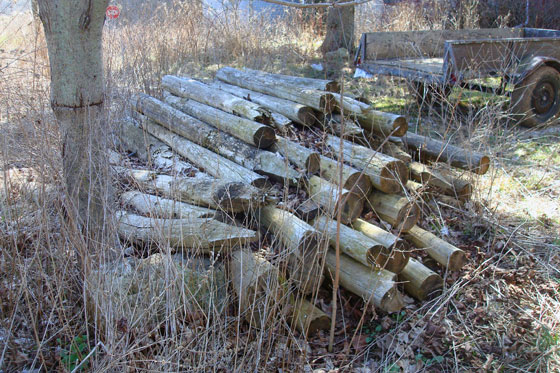
Pile of old wood fenceposts

I’ve moved these fence posts once before, picking them up from where they were scattered around the property and tucking them behind the driveshed. I had to remind myself a couple of times that I had moved them before, and I could move them again.
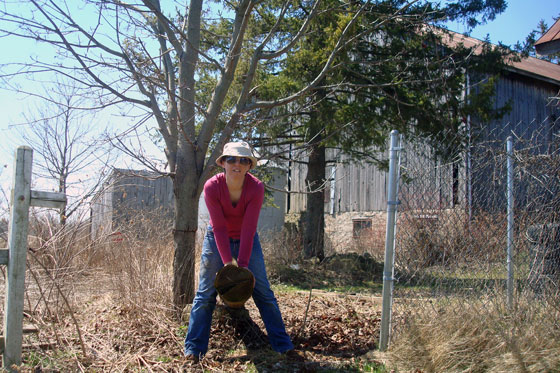
Moving the fenceposts

These things were heavy. The very last one was the girth and almost the length of a telephone pole–not even close to a fence post. Example 8,694 of why I don’t need a gym membership.
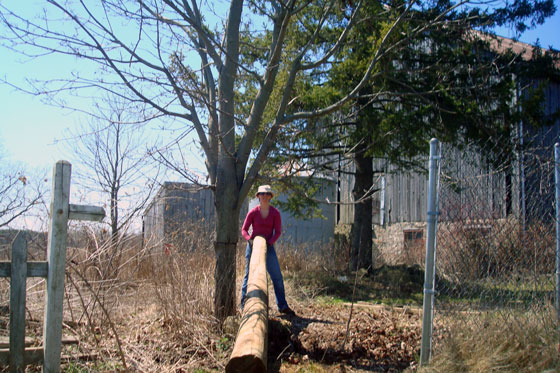
Moving the fenceposts

But I digress. All of these clearing tasks do actually have something to do with the vegetable garden.

The fence posts are going to become the “curbs” around the outside of the garden and the raised beds.

Some of the lumber from the field is going to be trellises for the tomatoes and stakes to hold the curbs in place.

The metal T-posts that were mixed in with the lumber pile are going to be the trellises for the raspberries.

So my big accomplishment in this Dueling DIY is that I have amassed all of my materials. A whole lot of materials.

Materials for the garden update

My other accomplishments are on the non-heavy lifting side: I ordered seed potatoes and grape vines, and we’ve started some watermelon, tomato and pepper seeds inside.

Here’s my original to-do list that I shared last week. I can cross just one thing off.

  • Hang the gate
  • Edge the garden
  • Build raised beds around the perimeter
  • Build trellises for the raspberries, tomatoes and squashes
  • Start a few seeds indoors
  • Till in the ash, straw and manure currently spread over the garden

But here’s how I’d calculate my scorecard so far:

  • I cleared the weeds from a space roughly equal to the size of the garden. Maybe this means fewer weeds to go to seed and infiltrate the garden itself.
  • I am prepped–and stocked–in the garden materials department.
  • I moved a telephone pole all by myself–in fact the equivalent of several telephone poles if you put all of those fence posts together.
  • And I lit myself on fire.

Beat that Sarah.

Thanks to everyone who shared their garden/spring to-do lists last week. Please share your progress. How is your spring project coming? Are there any pyromaniacs out there? Who else gets distracted from the primary project? What are you working on in your garden?
Spring Garden Dueling DIY – The Challenger

This week I kicked off a Dueling DIY Challenge to help get the vegetable garden ready for planting. Sarah in Illinois is my opponent in this challenge, and she’s here today to share her to-do list. Another Sarah, she of Ugly Duckling House and one of the original Dueling DIYers, issued another challenge yesterday–she admonished Sarah and me to “throw down.” I’m not usually one for smack talk, but I’ve seen Sarah’s to-do list, and I think I’ve got this.

There’s nothing I love more than a little friendly competition, whether it is during bowling league, golfing, or predicting the outcome of professional football games. So when Julia suggested a competition that would also help me get my garden and yard in better shape, I was all for it.

Last weekend I looked around the yard and garden and made a list of things that I really want to get done.

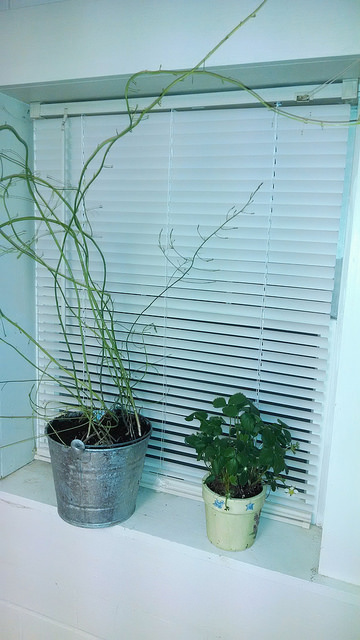
Our temperatures have been unseasonably cool so far so I still have not made any type of raised bed or containment for my asparagus and strawberries. Remember I stuck them in a pot temporarily? Well, they are not going to last there much longer.

Asparagus and strawberry plants

If you look closely, the strawberries are already blooming. And I really don’t know what to say about that asparagus other than it needs planted badly!

I have a small flower bed on the north side of our house that needs some attention. It needs mulch and the division between it and the yard either needs neatened up or maybe a more permanent border.

I shared this picture of my mums back in October and said that I wanted to divide them and spread them around our deck. Now that they are starting to come up, it is time to do just that.

Deck with mums

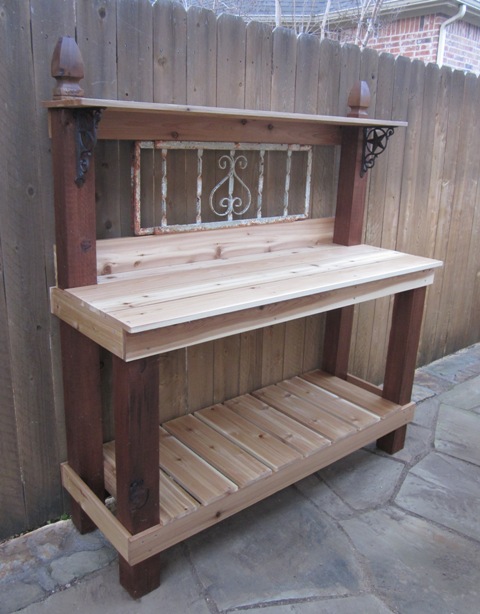
For my final and most ambitious project, I want to make a designated gardening area. I have pinned a few gardening benches on Pinterest.

While cleaning out one of our barns this weekend I found what will make a perfect bench top and that gave me the kick to get started on a work area.

So here is my summary:

  • Make some kind of designated area (possibly raised bed) for annual vegetables such as asparagus and strawberries.
  • Make a designated area (or raised bed) for a new cutting garden.
  • Neaten, and define north flower bed and add mulch.
  • Divide mums and spread around deck
  • Make a designated gardening area complete with workbench.

I am inspired Julia, let’s go!

Let’s go indeed. Bring it on, Sarah.

The woman can’t even control her asparagus. Yup, I’ve got this.

Vegetable garden dueling DIY challenge

I’ve been eagerly waiting to get back into the vegetable garden, but Mother Nature has not cooperated so far this spring. In fact, we had snow three times in the last week, negative temperatures and windchills.

But I’ve decided it’s time. No matter what Mother Nature thinks, gardening is going to happen.

Now I’m in Canada, so it’s not going to happen for a little while. The traditional start date for the Canadian gardening season is Victoria Day–also known as May 24 (or the 23rd this year because we’re all about the holiday Monday).

That’s six weeks away, which I think is perfect. There’s lots of work to keep me busy until frost has passed.

Garden at the beginning of April

It turns out, I’m not the only one with a gardening to-do list. Sarah in Illinois has one too. Inspired by DIY Diva and Ugly Duckling House, we’re kicking off a Dueling DIY challenge. Today, I’ll share my spring garden to-do list. On Wednesday, Sarah will share hers. Every week from now until Victoria Day, we’ll post progress reports and help keep each other on track.

We hope that you’ll join in too. Share your to-do list in the comments today, and come back each week to share your updates.

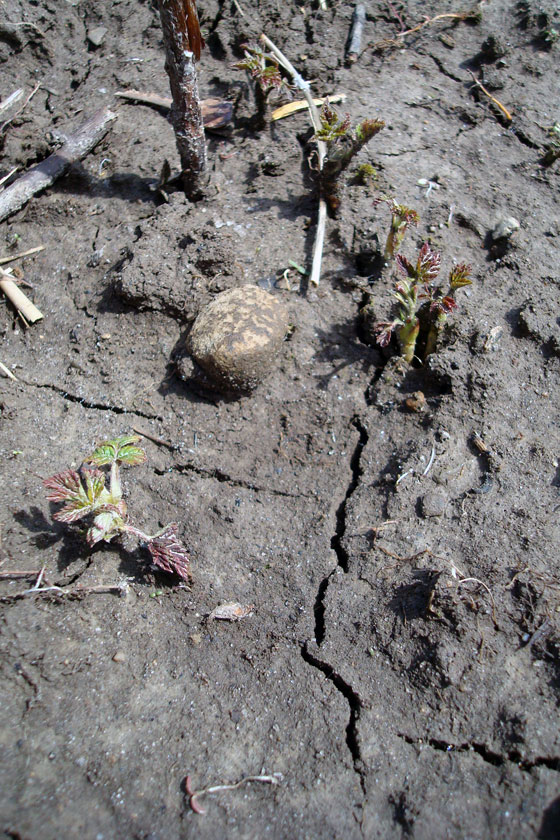
Raspberry canes sprouting

Here’s what I want to accomplish in the next six weeks:

  • Hang the gate
  • Edge the garden
  • Build raised beds around the perimeter
  • Build trellises for the raspberries, tomatoes and squashes
  • Start a few seeds indoors
  • Till in the ash, straw and manure currently spread over the garden

And a couple of maybes:

  • Weather permitting, plant grapes and potatoes
  • Run a waterline out to the garden (this one’s Matt’s… I’m not sure he’ll be as enthusiastic about Dueling DIY as Sarah is)

I think it’s do-able. I just need a little co-operation, Mother Nature.

Are you looking forward to gardening season? Or do you have another spring project? What’s your to-do list?

Harvest basket

Sarah in Illinois is still looking ahead to garden season. In fact, she’s looking far ahead to harvest time. She’s made a super cute harvest basket. I’ve admired these on other blogs, and I love the special twist Sarah added to hers (read on to find out what it is).

I have several projects pinned on Pinterest that I have wanted to work on, but making a harvest basket has been at the top of my list for a while. I have a few images pinned.

I did not click on any of the pins to know what kind of instructions they give. I just used the images as a guideline to make my own.

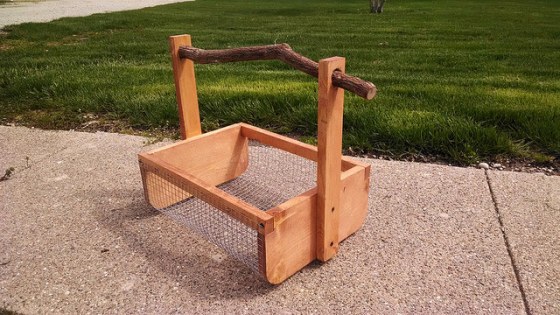
Wooden vegetable harvest basket with a twig handle

I started with cutting two boards for the sides and two boards for the uprights that would hold the handle. I took no measurements. I just “eyeballed” what I thought would be a good width and what I thought would be a good height. I am sure there are much more precise directions on Pinterest.

How to make a wooden vegetable harvest basket

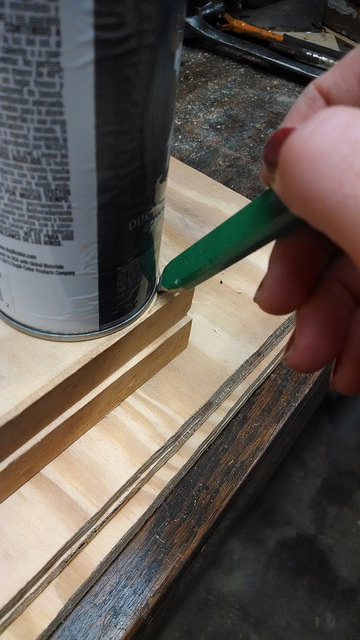
I wanted the bottom to be rounded so that it was easier to attach the hardware cloth. So I used whatever I could find (which happened to be a can of spray paint) and drew my rounded corners.

How to make a wooden vegetable harvest basket

I wanted the sides to match so I clamped both boards together and cut the rounded corners with a jigsaw.

How to make a wooden vegetable harvest basket

I also needed to notch out the corners for the side rails. I did this the same way as the rounded corners, by clamping the two together and using the jigsaw.

How to make a wooden vegetable harvest basket

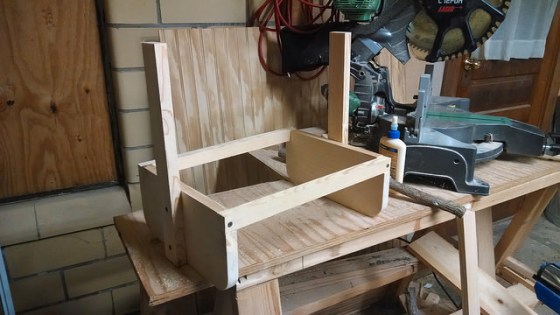
It was at this point that I attached everything together. The frame work was fairly flimsy, so I used both wood glue and screws.

How to make a wooden vegetable harvest basket

I could have used just a dowel rod for the handle, but in my barn are several branches. Someone took the time to find very straight ones and remove all of the limbs. And those branches have been out there since way before we moved here. So I thought they would make a nice handle.

I used a paddle bit to cut a hole in the top part of each upright. Since the limb was not a perfect fit, I used a nail to secure the limbs in the holes.

How to make a wooden vegetable harvest basket

Then I spread a quick coat of stain over the whole thing.

Wooden vegetable harvest basket with a twig handle

The final step was to attach the hardware cloth. It is very sharp so I was sure to wear gloves and used metal snips to cut a piece to size. Then I stapled it to the frame.

How to make a wooden vegetable harvest basket

Wooden vegetable harvest basket with a twig handle

This was not a difficult project. It took me about two hours and now that I have done it once, I think that I could do the next one even faster.

And I am thinking I know of a few people with gardens that might like one as a gift!

I hope that we put this one to good use this year. I can’t wait to take it out to our garden and fill it with fresh vegetables for supper.

Isn’t that a great basket? I love the twig handle so much. Clamping the wood together and cutting it as one is such a smart way to get precisely identical pieces. Oh, and I think I know at least one person with a garden who would absolutely like a harvest basket like this! 😉

Starting from seed

Sarah may be in Illinois, but her mind is in the same place mine is–the vegetable garden. However, Sarah’s doing something that I’ve never tried before–starting her own plants from seed. She’s sharing the lessons she’s learned and the progress she’s made so far.

Every year Steve and his parents have grown a very large garden. And when I came along six years ago, I jumped right in to help and have become more and more interested every year.

I had always planted a few tomato and pepper plants before, but until I started helping at Steve’s I had never seen broccoli, or cabbage or brussel sprouts growing in a garden.

For several seasons I have tried to start plants from seed. And that usually starts off great and then fails miserably.

Steve likes to say that I have a “brown thumb” but that isn’t really true.

I just am terrible at hardening off the starts. I am impatient, and I am forgetful! So I push plants to be ready when they are not, and I forget to water them or forget to bring them in during the hardening phase.

This year I am going to use my “word for the year” that I mentioned around New Year’s and I am going to FOCUS on the hardening off process.

Starting plants from seed

This weekend I started my first seeds. I looked up online when the last predicted frost for my area will be and it said April 18. So I thought this was the perfect time to start some kale and lettuce.

Now I am going to make note here for the future that Steve says his farming sources predict a late frost for us and that we could get a frost up until May 5. That is a huge difference and I am really curious which source will be more accurate.

Over the next week or two, I plan to also start tomatoes and pepper plants from seed.

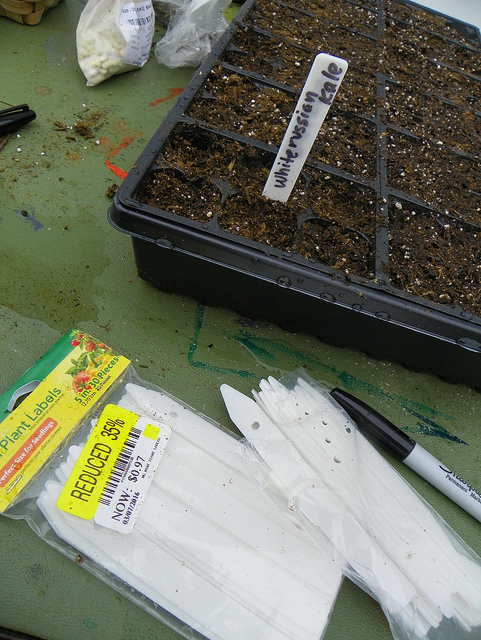
I found some plants on sale and used a black marker to label them. I was sure to not only write the variety of the plant but on the back I also wrote the brand of the seed. That way I can make notes of which seeds worked best and then I will have reference of where to buy my seeds in the future.

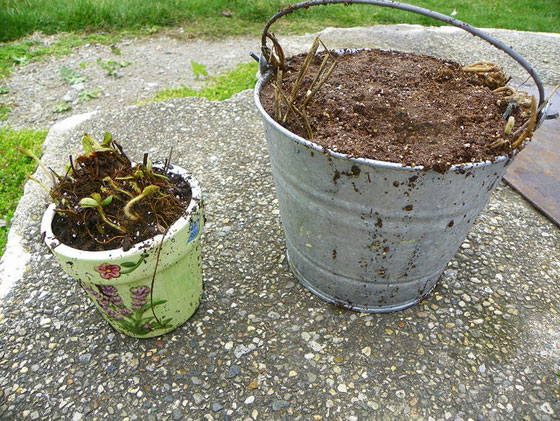
My mom and I had placed a small order for seeds and plants and those arrived last week. So besides the kale and lettuce seeds, I also had to do something with the strawberry and asparagus starts that I had ordered. Since I do not have my raised beds ready yet, I just stuck them in a bucket and pot temporarily. But now making those raised beds needs to be a priority.

Strawberry and asparagus starts in a bucket

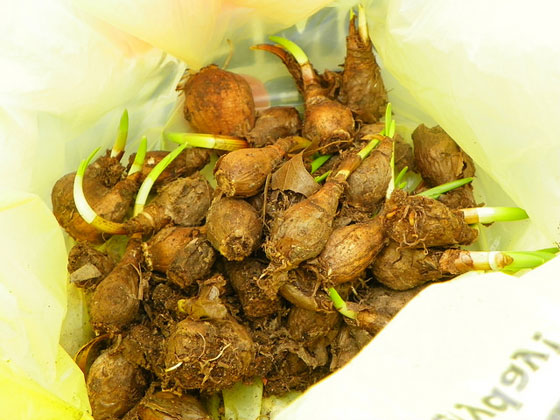
While I was digging through my gardening supplies I found a grocery bag with daffodil bulbs from last fall. So when I say I am forgetful, I am not exaggerating.

Daffodil bulbs

I stuck them in the ground since they were still alive, and I reminded myself that “FOCUS” has to remain my theme!

Next post I will update with the progress of my seeds.

Do you have a green thumb or a brown thumb? Do you have any helpful hints for the hardening off process? Do you have trouble staying focused?

Good luck, Sarah. Funnily enough, plants are one area where I get impatient or forgetful too. I hope you find your focus this year. I’m looking forward to following your progress–and seeing who’s right about the last frost.

No till vegetable gardening

The no till philosophy has gained traction in farming. The more I learn about vegetable gardening, I’m realizing no till also applies on a smaller scale.

If you’re not familiar with no till, it basically means undisturbed soil is healthier soil.

Our experience with our vegetable garden last year really brought this home for me. We built the garden in an area that hadn’t been touched–at all–the whole time we’ve owned the farm. I don’t know how long it had been abandoned before then.

Longe ring

Inside the fence, grass and weeds grew as high as they wanted. Every fall they died. Over the winter and spring, the dead grass was matted down by snow and rain. New growth sprouted in the spring and grew high over the summer. Rooted in the fertile soil, the new sprouts fed on the previous year’s plants which were slowly decomposing around them.

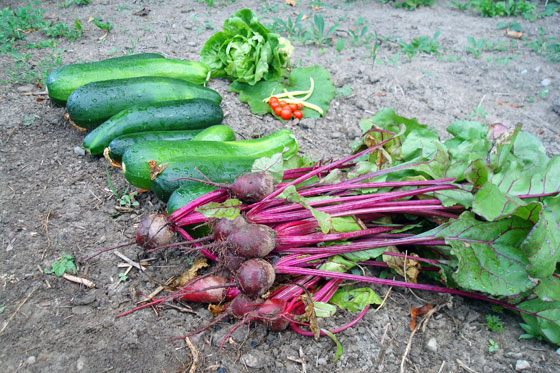
When we cleared the ring and planted vegetables in place of the weeds and grass, the vegetables went crazy. They sucked up all of the nutrients from the soil and were super productive.

Vegetable garden harvest

As the season went on and we harvested more and more from the garden, I realized that if I wanted to continue this productivity in future years, I was going to have to focus on the soil.

I’ve heard other gardeners say that gardening isn’t about growing plants. It’s about growing soil.

So that’s why I started a compost bin for all of our kitchen scraps and I spent three weeks spreading a thick layer of manure over the whole garden at the end of the growing season.

Manure in the garden

That’s also why I’m contemplating going no till.

I’m sure this isn’t entirely accurate, but I have this circle of life idea playing in my head. Whatever nutrients the plants take from the soil as they grow are returned to the soil as the plant decomposes (aside from the fruit and vegetables that we eat, of course). So leaving everything untouched and in place means we have complete soil, not deficient in any element.

Last year, I was quite excited to get our hand-me-down rototiller. But the more I learn about gardening, the more I wonder if we should be using it.

Matt and I tilling the garden

I’ve read a bit about the deep mulch method. It’s supposed to be good for weed control, retaining moisture and also for returning nutrients to the soil. (See The Prairie Homestead and Reformation Acres for some info).

We already have a deep layer of straw on the garden thanks to the manure spreading, so maybe we can build on that. My plan is to work towards something like the raised row method from Old Word Garden Farms.

Anyone have experience with no till or mulch gardening? Aside from the health of our soil, my biggest concern is weeds. Any tips for dealing with weeds?

Garden plans

I’ve held off posting about the garden until February.

Yes, today is the very first day of February. But I held off.

You see, I’ve been thinking about this garden since before the end of last season.

You’re impressed with my restraint, aren’t you?

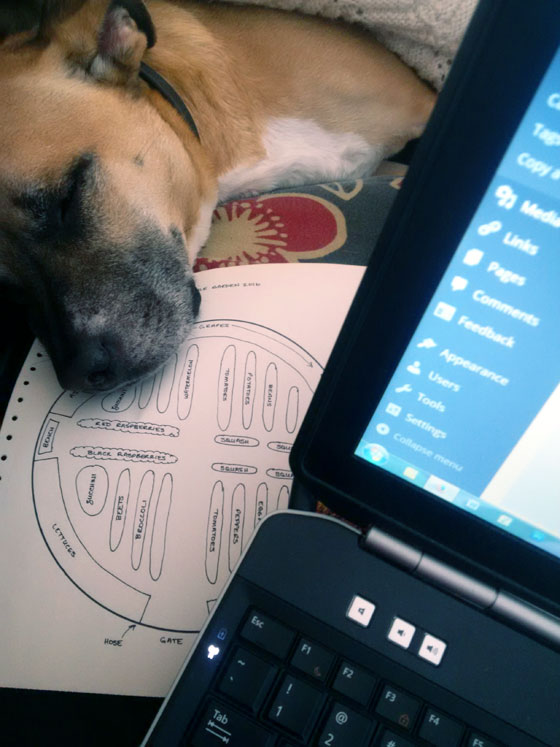
You know who’s not impressed or excited? Baxter. Dude does not share my enthusiasm for the garden at all. In fact, he drooled on my garden plan as I was writing this post.

Baxter sleeping on the garden plan

But never mind him. I will carry on.

There are a few things feeding my obsession:

  1. I’ve wanted a garden ever since we moved to the farm and last year it finally happened.
  2. It turned out the garden was a project that both Matt and I enjoyed. Sometimes our projects tend to belong more to one of us, so it was nice to have something we were both invested in.
  3. The garden worked! We had so much food. It was amazing.
  4. There’s so much potential. Translation: So much more to do.

You saw some of my to-do list in my Home Goals 2016 post. Today I want to focus less on what has to be done and more on what could be done.

As in, what could be grown.

Here’s my initial idea for the upcoming season (minus the drool).

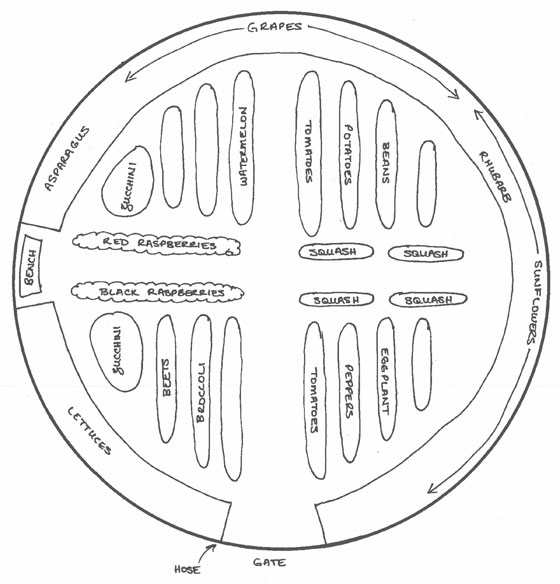
Round garden plan for 2016

The big news for this year is that we’re using the whole garden. Last year, we only cleared half.

So that means we can plant more of certain things (potatoes, beans) and more new things (broccoli, watermelon, eggplant, asparagus, sunflowers). You’ll see there are still a few blanks in the plan above. I’m open to suggestions.

I also feel like this is the year to sort out the best layout. I’m still wrapping my head around gardening in the round. The layout of two central axes crossing at right angles, and then shorter rows running perpendicularly (does that description make any sense?) is something I started last year. I found it’s a helpful way to divide this huge garden into manageable sections.

A couple of points to keep in mind:

  • The raspberries, squash and tomatoes are all going to be on trellises, so think vertical when you envision those.
  • The perimeter plantings are going to be in slightly raised beds. The rest of the garden is all at ground level.
  • The bottom left corner can be a wee bit shady late in the day.

As always, though, I would appreciate your input.

What plants would you suggest? How would you lay things out? What summer projects are you planning? What are you going to grow in your garden this year?

Home Goals 2016

I really enjoy the process every January of setting my home goals for the coming year. (If I’m being honest, I start thinking about them in December or even earlier). I’m not big on resolutions on the personal front, but on the home front my annual plan helps me stay focused.

This year, I’m going to try to continue last year’s plan of striking a balance between productivity and a bit of relaxation. There’s still lots to do, of course. But it’s been four years since we bought the farm. Obviously, our renovation pace is not even close to breakneck.

We are approaching the point where we have either really big projects (kitchen, bathroom, garage, master suite) or small stuff (paint the guest room, dining room, my office). For now, I’m keeping the focus on the small stuff.

Which will help me to continue another theme from last year: frugality. We did pretty well on that front in 2015. You’ve seen some of my long-term renovation plans already, so continuing to save money in 2016 will be helpful.

And that’s the first goal on the list: get an idea of how much the Big Reno is going to cost.

Beyond that, the focus is going to be on small, frugal things.

Guest room

Matt and I got a start on this at the tail end of last year by scraping the stippled ceiling. We have more to go to make it match the picture in my mind.

  • Paint the walls and trim
  • Replace the light fixture
  • Make window treatments (ugh… I really don’t want to sew curtains again)
  • Refinish the desk chair
  • Strip the paint off the metal bedframe (and maybe repaint)
  • Decorate and personalize

Finish the basement

Scrabble art for the basement

Source: insideways

The basement was our very first project when we moved to the farm. But the nit-picky finishing bits are still hanging around. I just need to get my butt in gear and get it done.

  • Trim around the cold cellar doorway
  • Finish the built-in storage area in Matt’s bathroom
  • Make/buy art to finish off the space (this one’s a carry-over from the 2015 home goals)
  • Build shelving in the closet under the stairs

Furniture

My list of wanted furniture is getting shorter and shorter.

  • China cabinet for my office
  • Coffee table for the living room
  • Reupholster slipper chair for my office (in the same beautiful Brissac Jewel by P Kaufmann that I used for my bulletin board)

Vegetable garden

Last year’s top home goal returns. There’s still more to do to make my dream vegetable garden.

  • Hang the gate
  • Edge the garden
  • Build raised beds around the perimeter
  • Build trellises for the raspberries, tomatoes and squashes (we can’t have the squashes running rampant again this year)
  • Plant perennials: grapes, asparagus, rhubarb, more raspberries
  • Run a waterline out to the garden

Outdoor clean-up

Manicured meadow

Source: LandVest

I’m going to be a bit ambitious this year and add a second outdoor task to the list. The task of cleaning up this property could be a full year project for a full team of people. It’s a job of picking up rocks, extracting weeds (fire worked well last year), grading (and maybe adding a bit more topsoil), seeding grass, mowing. And it’s a matter of picking my spot… and being satisfied with a spot, not all of them. Here are my options:

  • North side of the house
  • West side of the house
  • On the edge of the woods at the north side of the house
  • Around the barn (all points of the compass)
  • Behind the driveshed and around the garden
  • At the foot of the driveway
  • Along the shore of the pond (oh how I want to clear the shore so that I can get close to my pond)

Six goals for 2016. I feel like there’s a bit of symmetry in that. Most important I feel like these goals should be relatively achievable.

In fact, the year is already off to a pretty good start.

The guest room is well underway, and I’ve started a few projects for the basement too.

You’ll see some of those soon.

Are you setting goals for 2016? What projects do you hope to complete this year?

Looking back at Home Goals 2015

There are all kinds of retrospectives and reflections happening in the blogosphere right now. My look back will not be nearly as emotional or deep as some of the ones going around.

I feel like 2015 was a pretty good year for this blog and our projects at the farm. Last January, I said I wanted to be flexible and not knock myself out renovating all the time. I definitely feel like I managed that. I also had a few more personal posts mixed in over the course of the year, and I’ve made some progress on that front too.

For now, it’s time for the annual report on how we did on Home Goals 2015.

1. Master bedroom Check!

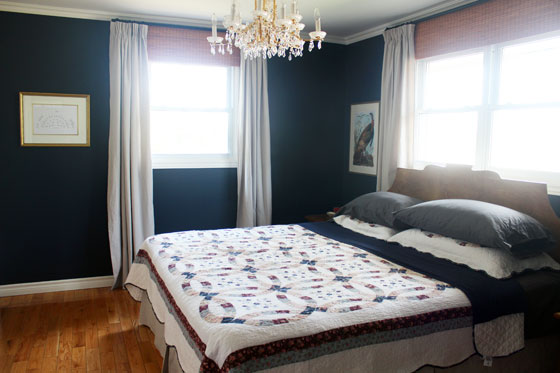
Thanks to the One Room Challenge, we have a beautiful master bedroom. I love having another room completely done.

Dropcloth curtains in a navy master bedroom

2. Basement art No check.

The smallest task on the list–and the one I was most enthused about at the start of last year–was the one where I made no progress. This one will carry over to 2016.

3. Furniture Partial check.

Looking back over the year, I was a bit surprised at how much furniture we bought, made or made-over. We did better than I thought. However, there’s always more on the list, hence the partial check.

  • Found 2 bookcases that I’m going to make into a china cabinet for the dining room. They still need their makeover, but they’re working okay for now.
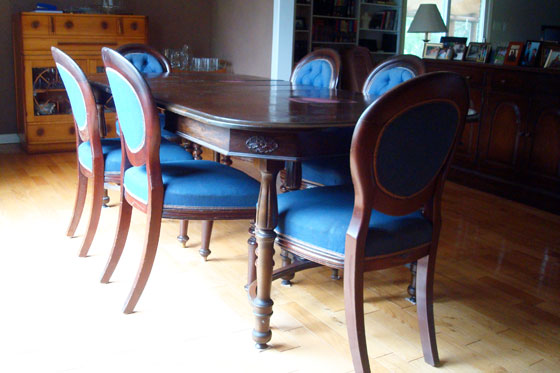
  • Found a set of 8 dining room chairs that match our table nearly perfectly. They’ll need to be reupholstered and refinished someday, but once again, they’ll do for now.
  • Found a ladder/step-stool/chair that reminded me of my grandmother–and a lot of you of yours.
  • Made a headboard and painted a dresser as part of the master bedroom makeover.

Dining chairs and table

4. Vegetable garden Big fat check.

My one and only outdoor goal for the year was a huge success. It started when I decided to build the garden in Matt’s “goat ring.” To get rid of the weeds, our nephew and I lit it on fire, I spread out the world’s biggest tarp, and then Matt rototilled the whole thing. We planted and watered and then we harvested… and harvested… and harvested. Along the way, I built a gate, and Matt and I put up chainlink all the way around. And then at the end of the season, I spread manure over the whole thing.

Tomatoes ripening in the garden

There’s still more work to be done. It’s a garden, which I’ve learned is synonymous with work. However, it’s established. It produced food. We’re still eating our harvest. And I’m so enthused about this year’s plans.

But that’s the stuff of home goals 2016. Those will be coming up next week.

How did you do on your goals in 2015? What was your big accomplishment?

Mucking out and working out

You’ve been hearing about me spreading manure on the garden pretty much all fall. However, this post has been an even longer time coming. In fact, it’s been sitting in my drafts folder since June 2012. Way back then, Matt and I mucked out our first stall.

I was responsible for raking up the old straw.

Mucking out a stall

And Matt was responsible for getting the straw out of the stall and into the field behind the barn.

Raking straw

We just used rakes, rather than bothering to find the pitchforks, and then we piled the old straw behind the barn. This stall became Wiley’s garage.

The previous owners of our property had boarded horses. When they left, they didn’t bother to clean out the stalls.

And this fall, three years later, we still had 14 stalls full of straw and manure.

We also had a brand new vegetable garden that had been super productive. If I wanted to keep it productive, I needed to replenish the soil.

That meant it was finally time to tackle the barn.

It took me about 9 hours spread over three weekends. There were more than a dozen trailer loads of manure, and I don’t even know how many wheelbarrow loads. There were two assistants, Ms. Scratches and Mr. Sunbather, neither of whom gave very much assistance.

Ralph and Baxter in the barn

There was no way to get the tractor or the trailer into the barn, so I wheeled all of the straw through the barn, up a plank and into the trailer. When the trailer was full, I towed it out to the garden.

I got very proficient at backing up the trailer through this project. It just fit through the gate on the garden.

I usually laugh when people ask me what my workout routine is. I own a farm. That means I work. No need for a gym membership. Here’s my version of a workout video. Repeat that about a 100 more times.

So it only took me three years (or really three weekends once I got started), but finally the stalls are clean.

Now to find a new workout…

Have you ever had to muck out stalls? Any tips to make it easier? (Not that I’m planning on doing it again). What’s a project that you’ve had hanging around for awhile?