Squash harvest 2017

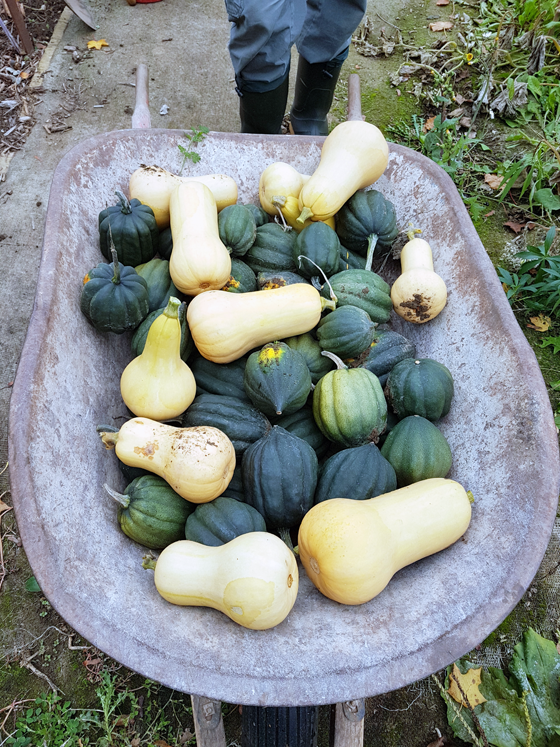
Wheelbarrow full of butternut and acorn squash

Squash seems to have become our signature crop.

The first year of the garden, we harvested 39 butternuts and about 70 acorns. Last year we intentionally planted fewer plants, but we still ended up with a tonne of squash (although I didn’t bother counting them… or at least didn’t record the count).

This year, we’re finally approaching a manageable number. This year’s squash harvest was 35 acorns and 11 butternuts.

Wheelbarrow full of butternut and acorn squash

Plenty for soups, side dishes and more. (Along with being our signature crop, they’re our signature food that we love to eat). I’m looking forward to trying this for my lunches.

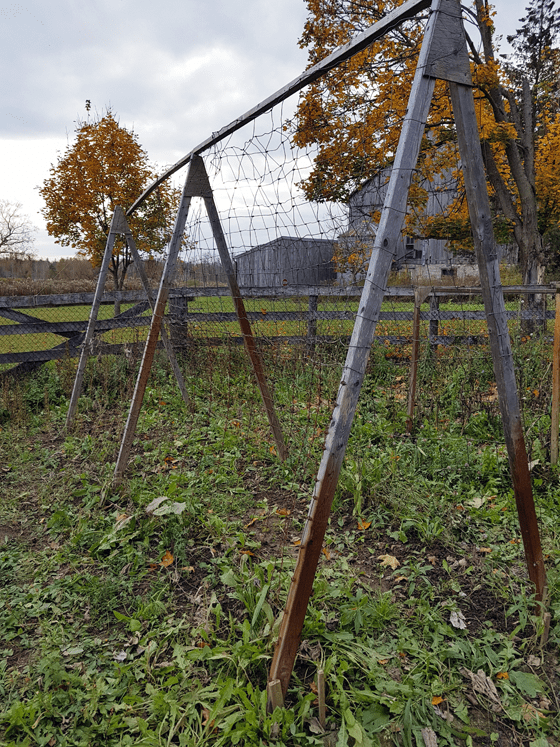
Garden clean out is happening slowly. I pulled all of the vines off of our A-frame trellis and sent them to the compost pile. (I did not do any weeding.)

Squash A-frame trellis

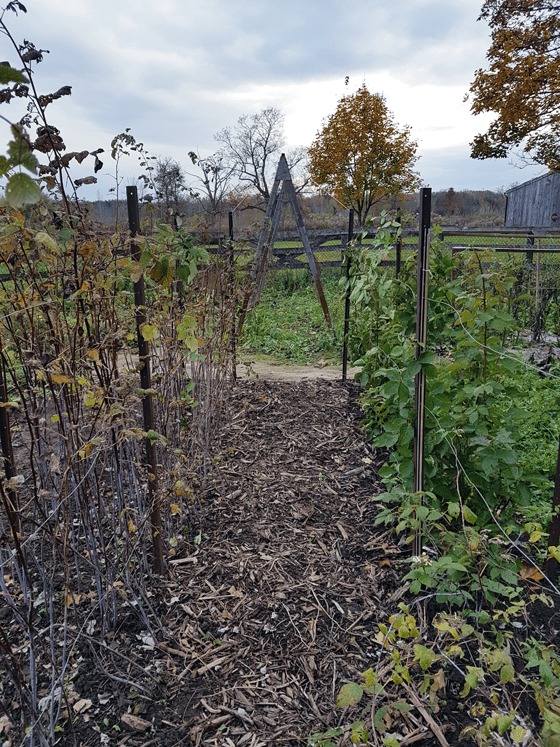
Weeds or not, I’m calling the centre axis of the garden done for the season (as good as it gets is how we’re rolling this year).

Looking across the garden from the raspberry row to the squash trellis

Four quadrants and the perimeter raised beds still to go.

Hopefully I wrap those up before the snow arrives.

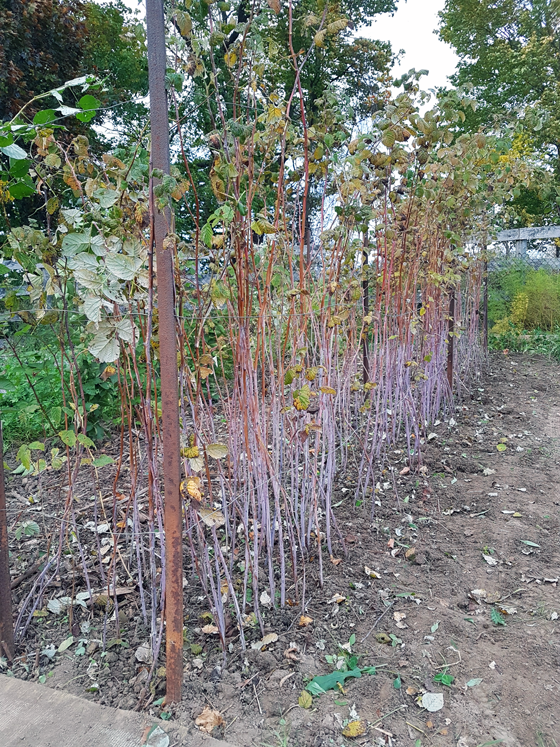
How to prune raspberries

How to prune raspberries

Pruning the raspberries was one of the items on my “putting the garden to bed” to-do list.

Pruning removes dead canes, opens the rest of the canes up to light and air and gives new canes room to grow.

The best time to prune is in the fall. The canes have finished fruiting. Leaves have died and fallen off. New growth won’t start until the spring.

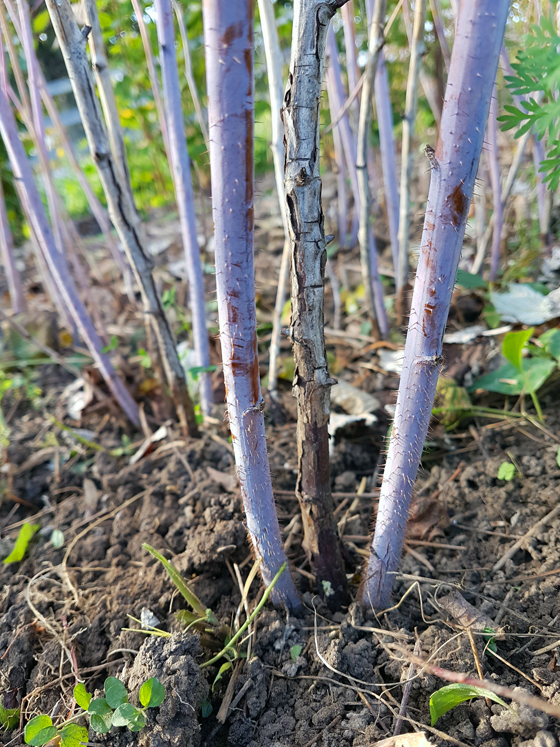
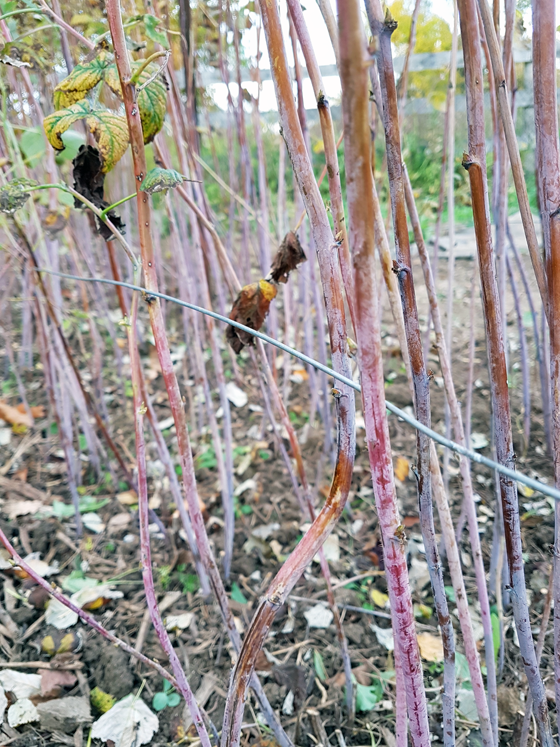
The first step is to identify which canes are dead. You want to look for the canes that are woody. For our berries, that means I can see actual bark and it looks like the outer shell of the cane is peeling a bit. The cane in the centre of the picture below needs to go. The two on either side can stay to bear berries next year.

How to prune raspberries

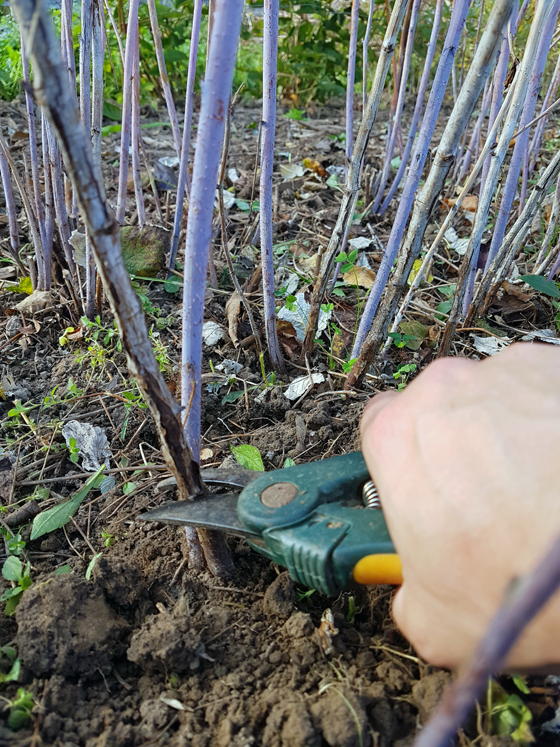
Using sturdy clippers, cut the dead cane a couple of inches above the ground. Pull the cut cane out of the row and throw it on your compost pile. If your canes are very thick or tangled, you may need to clip the dead cane in half so that you can extract it from the row.

How to prune raspberries

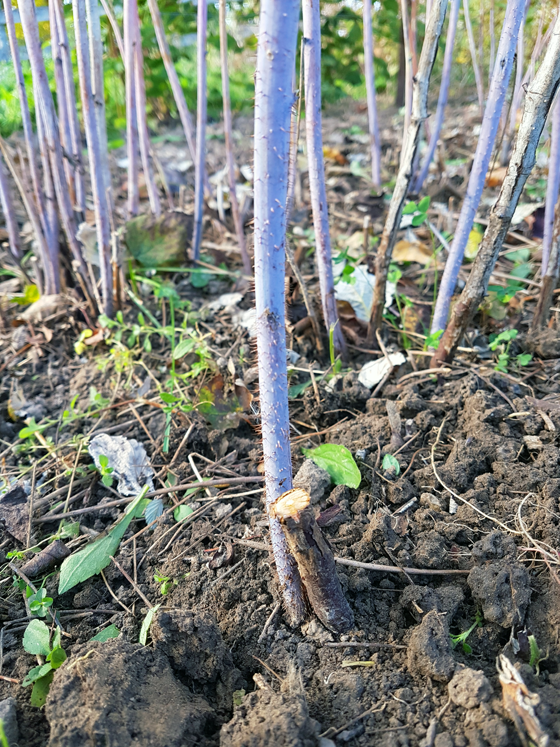
It’s okay to have a little stump left behind. In a year or two, this stump will rot away.

How to prune raspberries

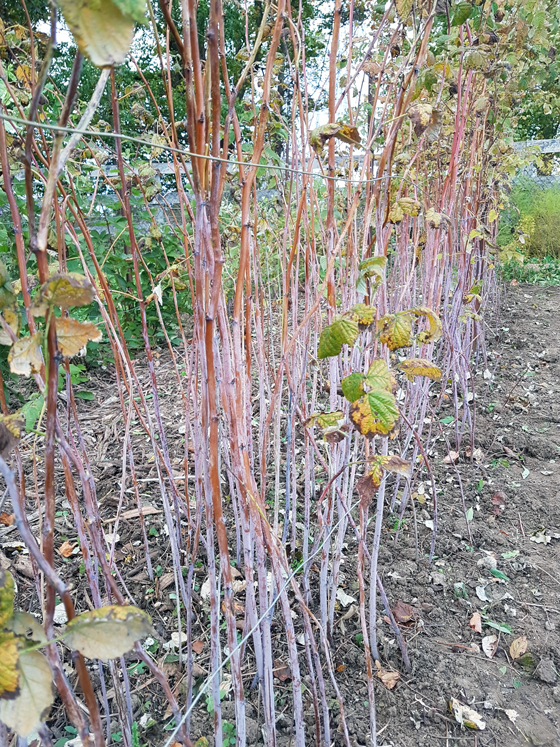
While you’re in your raspberry patch, now is also the time to weed (the last time this season). I also tuck the canes back under the wires of our trellis (here’s how we built our raspberry trellis). This contains the plants, helps them grow upright rather than flopping over and makes it easier for picking and care next year. You can see in the picture below one guy is on the wrong side of the wire (while his neighbour has bent over nearly backwards to grow within the row).

How to prune raspberries

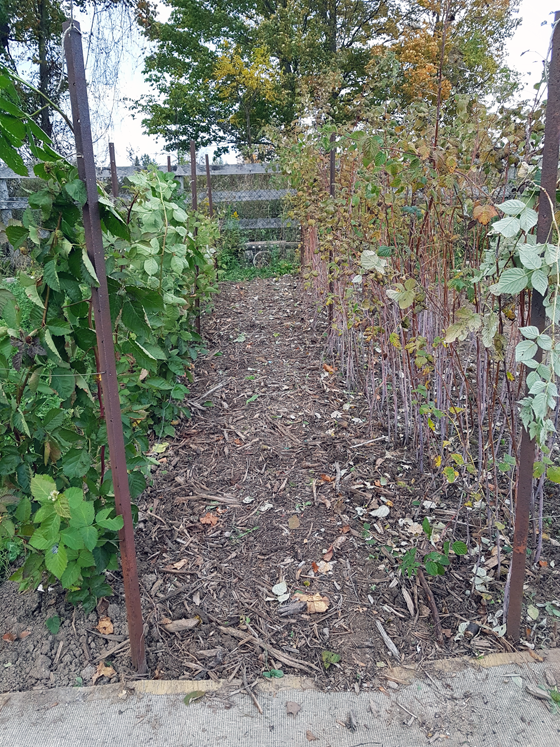
At this time of year–especially while temperatures are still warm–the canes are pretty flexible, so it’s easy to bend and coax them under the wires. The result is a tidy row of plants with plenty of space to walk between the rows.

How to prune raspberries

How to prune raspberries

Has anyone else been pruning raspberries? Any tips to share? How are you doing on your garden clean up this fall?

Long term tomato storage

It’s finally starting to feel like fall here in Southern Ontario. We had an unexpected frost on the weekend that made me fear for our still growing garden, but we made it through fairly well. Sarah in Illinois is feeling the coming fall and looking to prolong her garden too. She’s here today to talk about how she’s trying to store that favourite garden fruit, tomatoes, for as long as possible.

Fall-like temperatures have finally hit Illinois and the cooler weather is a sure sign that the days for getting fresh vegetables from the garden are numbered. I posted earlier that I am learning the ropes of canning, but there are other methods for storing vegetables well after the frost arrives.

When I was choosing the tomatoes that I wanted to plant this year, I had on my list “Long Keeper.” Long Keeper is a variety of tomato by Burpee that is supposed to be great for winter storage. I tried to plant some from seed, but I am still struggling with the hardening off process.

A friend provided me with several varieties of tomatoes that she grew from seed, I was excited to discover that one plant was a “Red October” which is another variety of storage tomato.

Thankfully, this plant did very well and had an abundant supply of fruit.

So now that I have all of these tomatoes, what is the best way to store them?

The info I have gathered from several sources has a few things in common.

  1. Store tomatoes so they are not touching.
  2. Store in a cool (but not cold), dry spot.
  3. Check often for spoilage, since one bad tomato can cause the others to spoil quickly.

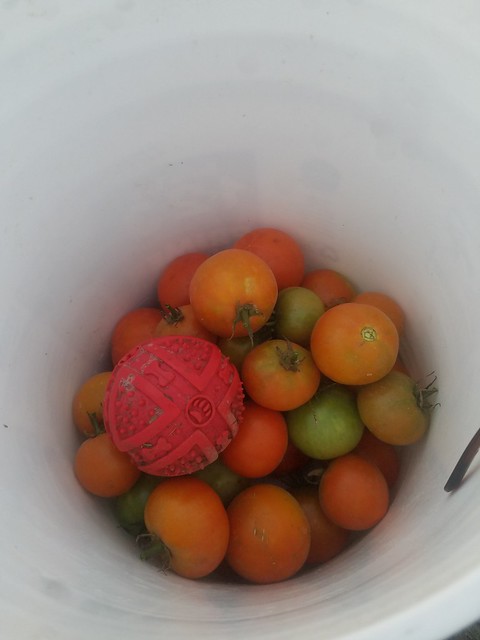
When I picked the tomatoes to store, I made sure to pick only the healthiest, firmest tomatoes. I figured that if they are already showing signs of over-ripening there was no reason to attempt to store them. I also picked them in varying degrees of ripeness. I am not sure if they will ripen well in the box or not.

Blitz quickly figured out what I was doing and added his red tomato-colored ball to my bucket. Man, it amazes me how smart he is!

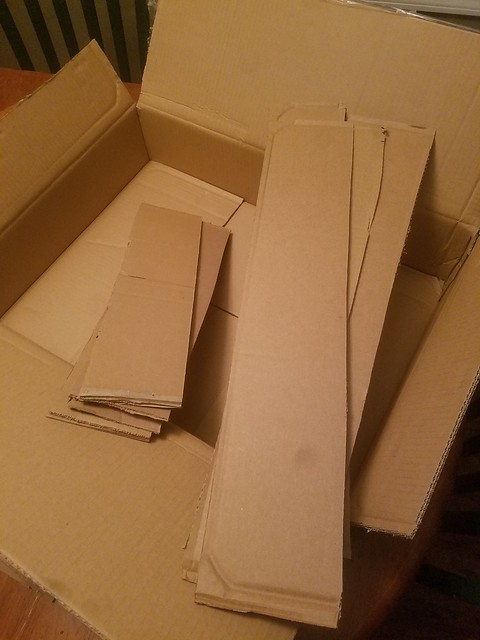
I have a seemingly endless supply of cardboard boxes at work so I picked a shallow box and made a cardboard grid to keep the tomatoes from touching.

To make the grid I cut pieces of cardboard the height of the box (4 inches in this case) and then I cut them the length of the box. Some I cut the length of the short side of the box, and some the longer length. I ended up with 4 longer pieces and 6 shorter pieces. Each box of course will be different and you can adapt it to your needs, but in this case my box was 15 inches by 21 inches. So when I evenly spaced the slats I had 3 inch squares for the tomatoes to sit in.

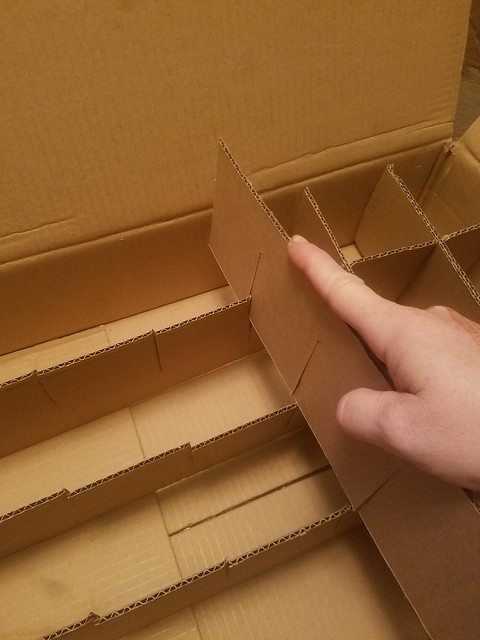
To get the slats to fit together in a grid I cut slits evenly across each piece. I made sure to cut each slit more than halfway so that the grid fit together nicely.

I was able to fit my slats together fairly easily. None of my measurements were exact so thankfully cardboard is forgiving and I could work everything into place.

Once my grid was in place I was able to fill it with tomatoes.

I have chosen to store the box in the garage attached to our house. This way I can keep a close eye on them to check for spoilage and I know that it will be a while before it freezes out there.

This really is an experiment. I have no idea if I will have garden tomatoes in January, or if they only last into October. So I plan to report back on how it is going and anything I learn along the way.

Have you ever stored tomatoes long term? Any advice for me? Have you ever grown Red October tomatoes?

I feel like this is as good a technique as any, Sarah. I’m curious to see how it works for you.

I received an interesting preserving cookbook last Christmas called Batch, and it talked about how there are so many more preserving techniques than just canning. Cellaring (like what you’re doing) and freezing were two additional techniques along with several others (and yes, there’s a whole section on tomatoes).

I slow roasted a batch of cherry tomatoes on the weekend. They’re super simple to toss in the freezer and then toss onto pizza in the middle of winter. Unfortunately, I got distracted and didn’t check them soon enough and they were beyond roasted by the time I pulled them out. I’m still mourning them a bit. But they’re in the composter now, so I may have some volunteer tomato plants next year.

September summer keeps the vegetables coming

The first weekend of fall was not at all fall-ish. Temperatures were over 30 degrees (85F), and it felt like 40 degrees (100F+) with the humidity. Matt and I both agreed that it felt like the hottest weekend we’ve had all year.

The good news about summer continuing into fall is that our garden is continuing to grow.

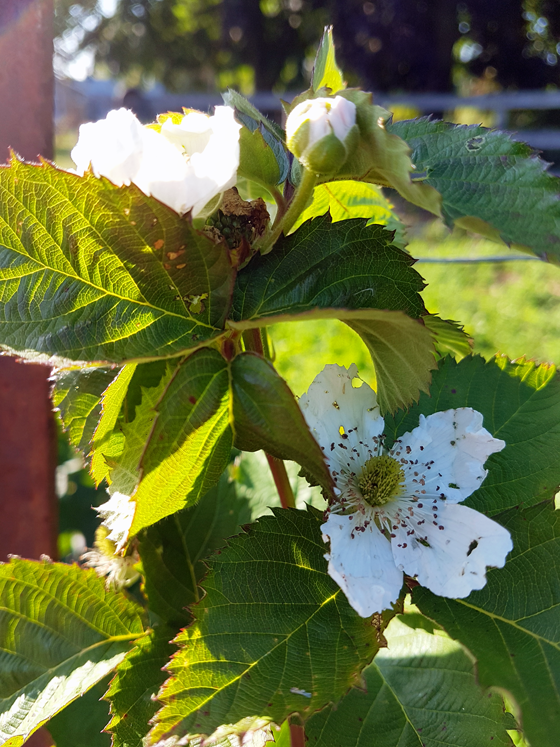
In fact, our blackberries have started blooming.

Blackberry blooms

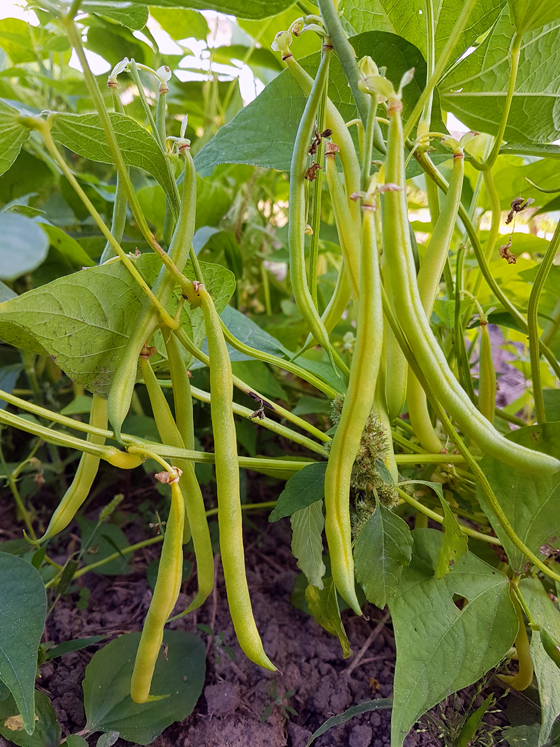
I don’t think we’re going to get to the berry stage before the weather officially turns–it’s going to happen eventually–but we’ve managed to successfully get to the bean stage with our yellow bush beans.

Matt and I braved the heat on Sunday afternoon to pick our first couple of quarts of the year.

Yellow bush beans

Like our berries, the other crop I’m extremely skeptical about is our first try at eggplant. We were so, so late getting these plants in the ground. We have some beautiful purple little babies finally, but I’m not sure they’ll have time to grow up. (Isn’t the colour amazing?)

Baby eggplant

We picked and froze 35 jalapeno peppers over the weekend and have a whole lot more coming. I’m watching our bell peppers closely hoping they turn red soon.

Our tomatoes are still battling, and I managed to salvage a few dozen cherry tomatoes. I’ll be roasting these off tomorrow.

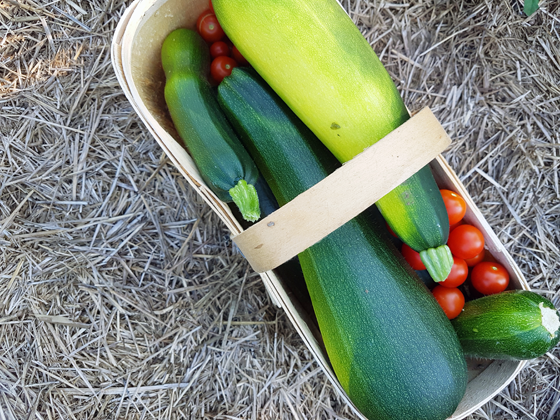
Zucchini are slowly persisting, although a few got away from me and grew a little too large for my liking. Zucchini bread coming up.

Basket of zucchini

We got such a late start on planting the garden this spring. I’m grateful that the weather has held, so that we actually are able to have a decent growing season. Summer’s my favourite season, so garden or not, I’m really hoping that the hot weather hangs around a little bit longer.

What’s the weather like where you are? What do you think my chances are of harvesting eggplant this year?
Not so rosy results from this year’s tomatoes

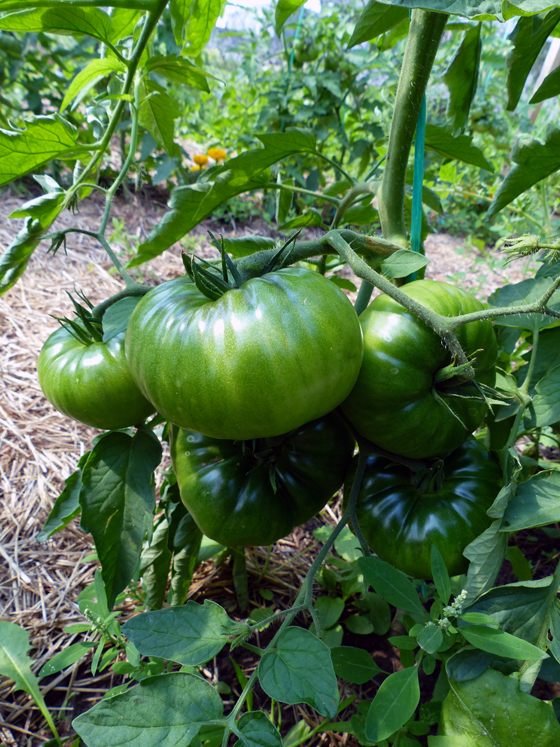
Unfortunately we’re ending garden week on a low note. I was very optimistic about our tomatoes this year. We had beautiful big green tomatoes. I was just waiting for them to turn red and then I would be devouring my favourite tomato sandwiches.

Green tomatoes growing in the garden

From what I’ve heard from other gardeners in our area, tomato blight is pretty prolific this year. Many people have lost their crops.

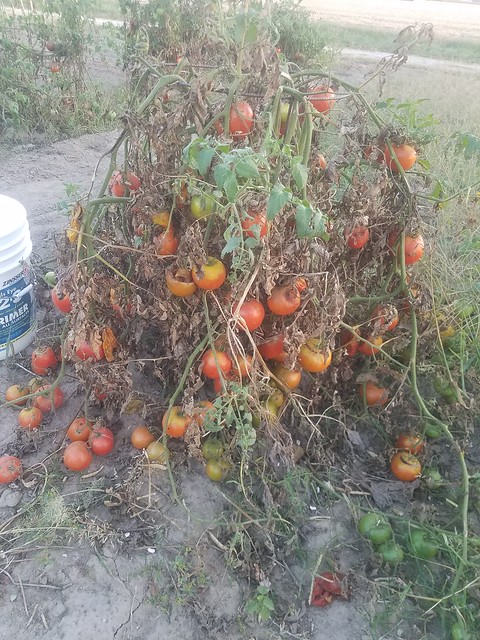
I thought we were going to squeak through, but the blight has now hit us as well. It started with our Black Krim tomatoes–this year’s new variety. The plants died first. The stalks developed brown patches, then the leaves withered. And now the fruits themselves have started to shrivel, darken and fall off the plant–even as a few of them have tried to turn red.

Tomatoes afflicted by blight

Tomatoes afflicted by blight

I thought the blight might be limited to the Krims, but it’s now spreading to the Mountain Merit beefstakes and even our usually resilient cherry tomatoes.

Tomatoes afflicted by blight

To try and curb the blight for next year, I will be ripping out our plants and throwing them on the burn pile rather than composting as we usually do. And rotation is a must to ensure that next year’s tomatoes are away from the blight.

I did stock up for my tomato sandwiches, but I did it at the grocery store, rather than the garden. 😦

Have you had any blight issues this year? How have your tomatoes grown? What’s your favourite way to enjoy tomatoes?
Potato harvest 2017

Garden week is continuing here on 129 acres. This post is all about the high point of the whole gardening season so far–the potato harvest.

Picking potatoes

You may recall that we decided to devote a whole quadrant of our 2,500 square foot garden to potatoes this year. We had a whole bunch of seed potatoes–all from our own pantry–and I ended up putting in about eight rows.

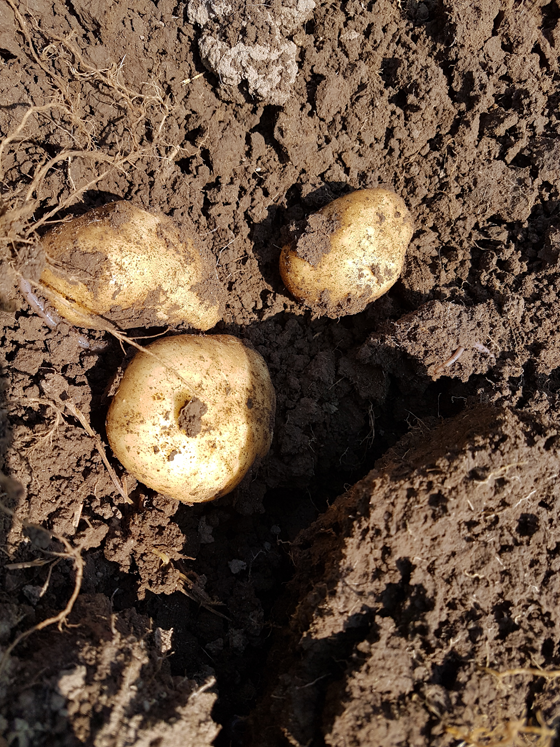
The results were pretty much as expected. A whoooooole lotta potatoes.

Potato harvest 2017

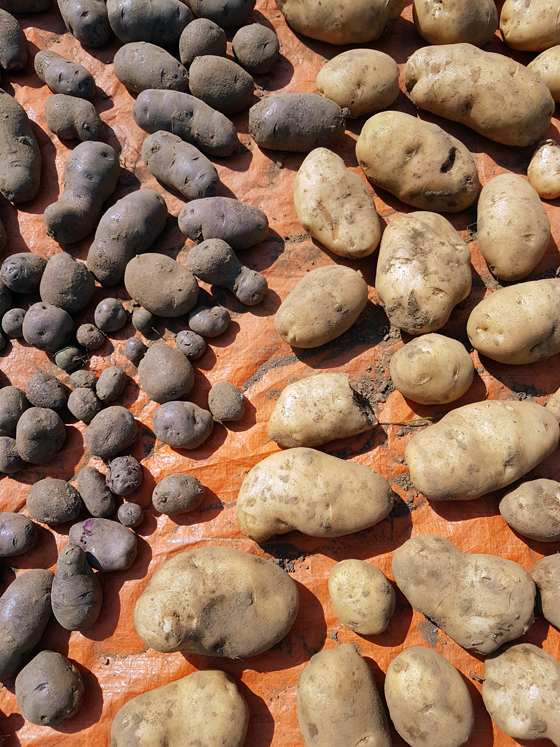
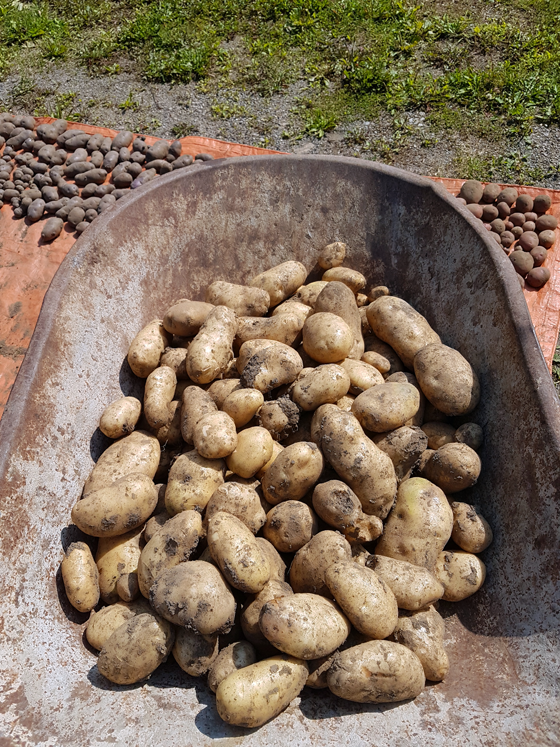
We grew four varieties: Kennebec, Russian Blue, Basin Gold and red. The Kennebecs are by far our favourite. They fry up nice and crisp for hashbrowns, but stay soft and potatoey inside. Their flavour is also wonderful. It’s a good thing we like them because we had so many we ended up picking them into the wheelbarrow.

A wheelbarrow full of Kennebec potatoes

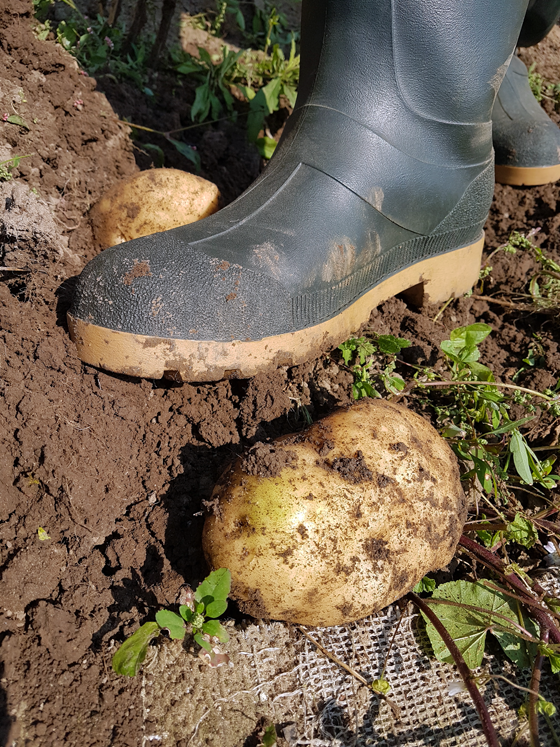
The Kennebecs also grew big. One potato will make more than enough hashbrowns for breakfast for both of us. For comparison, Matt wears a size 13 boot.

Giant potato

The Russian Blues are fun purple potatoes. We got a decent crop of them. The reds are the first potatoes we ever tried growing. I think some of the plants were choked by weeds this year because the number of reds that we got this year was not great.

However, the greatest disappointment ended up being the Basin Golds. These were an experiment. When Matt is looking for giant baking potatoes to go with our steak dinners, he picks up Basin Golds.

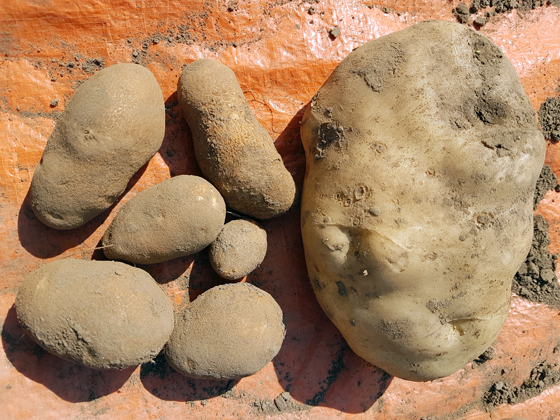
We had a couple of potatoes that sprouted by the time spring arrived, so we stuck them in the garden. They definitely did not live up to our expectations of giant baking potatoes. First, we only got six potatoes. And second they’re small. Here are our measly six taters with their size 13 Kennebec relative.

Different size potatoes

The potatoes are all different shapes and sizes.

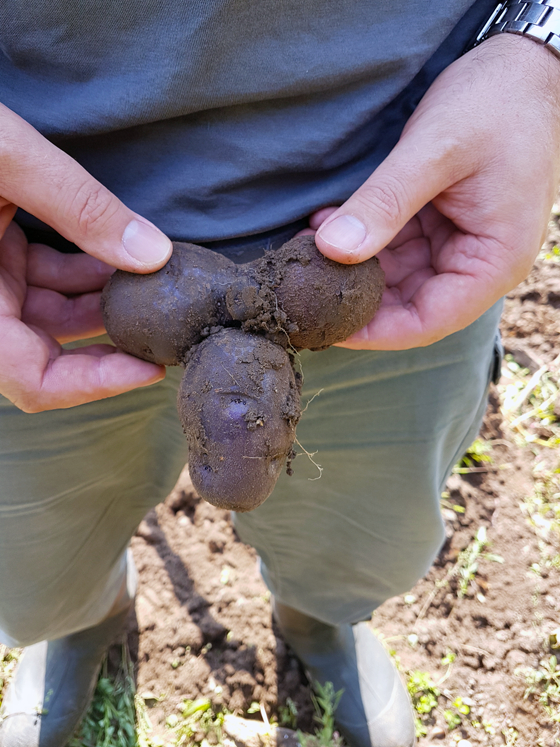
There was a Russian Blue that Matt enjoyed particularly. Ahem.

Mishapen potato

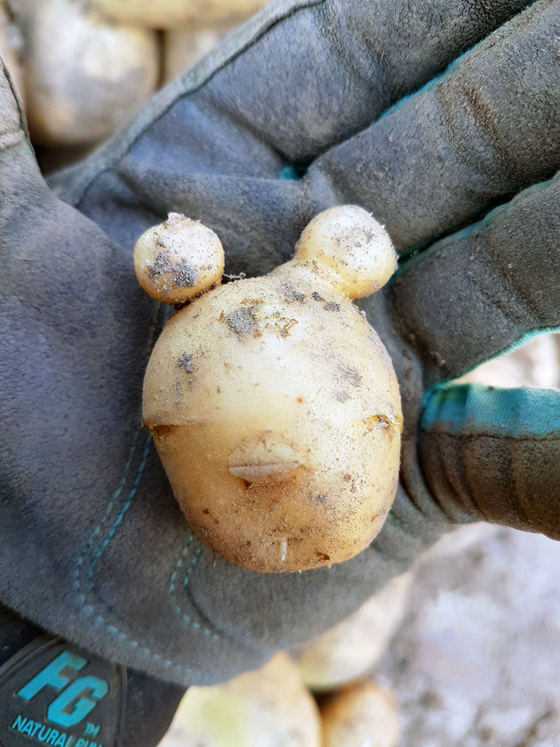
And the much more G-rated Mini Mouse potato.

Mini Mouse potato

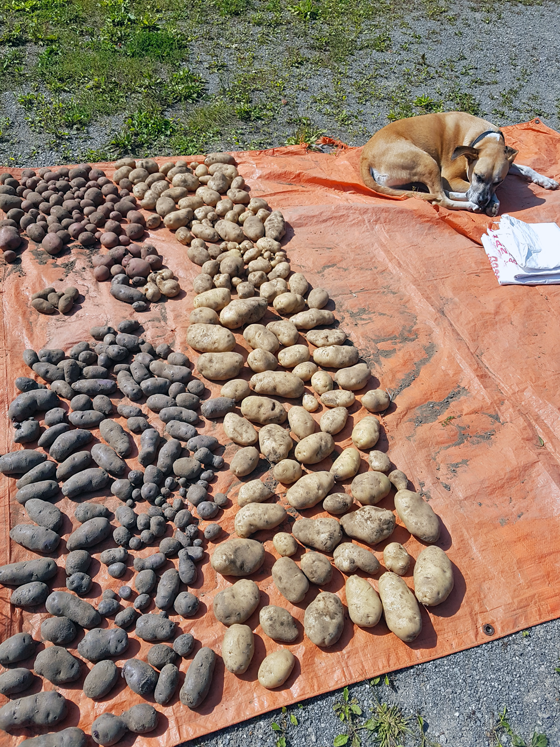
We dried the potatoes for a little while on a tarp on the driveway–supervised by that omnipresent puppy–and then loaded them into sacks and put them in the cold cellar. Last year, we followed a pretty similar process, except we put them in cardboard boxes, and they lasted fairly well.

Potato harvest 2017

Hopefully we will be enjoying homegrown potatoes for many months to come. I’m expecting breakfast for dinner–complete with hashbrowns–will be on the menu one evening this week.

Do you grow your own potatoes? Do you have a favourite kind of potato? How do you like to eat potatoes? Any tips on storing potatoes? I’m really hoping that our sacks work well.

Battling Japanese beetles in the vegetable garden

Thanks everyone for the well wishes on my last post. Freelancing is an exciting venture for me, and I’m very grateful that I’m able to take this step.

This week is garden week on 129 acres. I’ve shared some of our highs and lows already. As the season is progressing, we have more news to share. Harvest is still coming on very (very) slowly.

Matt was looking for squash this weekend. We’re easily at least a month away from those, I would guess.

I did reap a bumper crop recently, but not a food I was looking for. I finally picked our Japanese beetles. Definitely won’t be eating these.

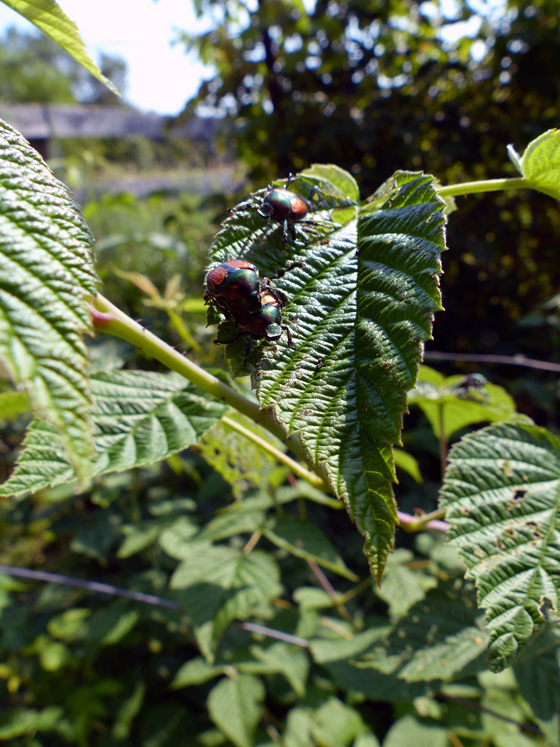
Our raspberries have been the worst victims, although the grapes have also hosted a few of these munching monsters. I’ve even found a few on my laundry after it’s been hung outside. Not impressed.

Japanese beetles on the raspberry bushes

It’s extra insulting when they’re procreating right in front of me. But the reward is killing two or three at once.

Japanese beetles on the raspberries

I had read that the most effective technique was to handpick them off the plants and drop them in a bucket of soapy water. I think a couple of years ago I was squeamish to touch these guys. Not anymore. I walked up and down the rows and didn’t hesitate to flick the beetles I saw into my bucket.

The film of soap on the water kept them in the bucket–aside from when I tripped over a rogue weed and sloshed water and beetles over the soil.

I picked for a couple of days in a row and eventually noticed a decrease in the number of beetles I found. The result was a small bucket of grossness–which I did not count.

Bucket of dead Japanese beetles

I think in future years I need to be motivated to pick these guys as soon as I spot them. It would likely decrease the chances of progressing to a full infestation.

Do you have Japanese beetles at your house? Or another pest that you’ve been battling? Any tips for dealing with beetles?

Vegetable garden: Keeping it real

Today we’re keeping it real. I haven’t shared much about the vegetable garden this year. Mostly because I felt like it’s not good looking or full of food yet. But weedy, slow-growing, buggy… whatever is happening in the garden is what you’re going to see today.

Like the hose that fell off the fence that I haven’t bothered to fix yet.

Hose tangle in the vegetable garden

Honestly, I love our garden. I’m very proud of it, and I think overall it’s doing well this year.

We got a late start, so all of our produce is behind. This might have been to our advantage, though, because our spring was super rainy. By the time we put things in the soil, the rain had mostly passed, so our sprouts and seeds survived.

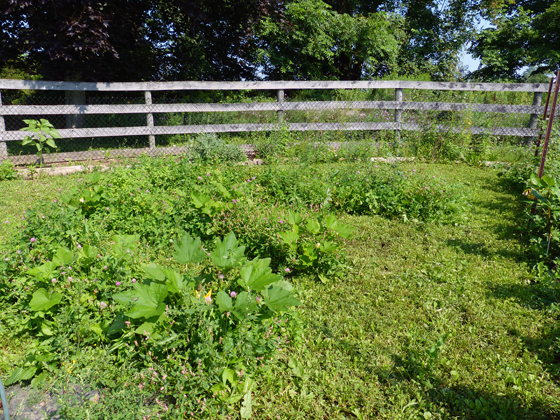
We’ll start in quadrant #1. This is the area where I planted our winter rye cover crop last fall. We never turned the rye in the spring because I didn’t know what I wanted to plant here. So I just mowed the rye.

We had a surprise when a whole row of Russian Blue potatoes popped up through the rye. Last year, this quadrant was home to all of our potatoes. I have no idea how we left so many potatoes in the ground last fall–and apparently in a perfect row. But we’re taking the volunteers and I’ve been carefully mowing around them.

Quadrant 1 of the vegetable garden

Quadrant #1 is also home to our zucchini. I didn’t know where to put them, so I stuck them in the middle of the rye. The plants are a little crowded and spindly as a result, but I’ve harvested two zucs and there are more to come–which will be good as my sisters and people at work have all been asking for them.

Zucchini blossom

As we rotate around the ring, we come to the blackberry and raspberry rows. I planted five new blackberry bushes in the spring, and they are all alive, which feels like a great victory.

In an attempt to combat weeds, we laid some wood chips between the blackberry and raspberry rows. They’re not working quite as well as I had hoped–weeds are the story of the garden this year.

Blackberry bushes

The red raspberries were plentiful–in fact, they completely got away from me. I couldn’t keep up with the picking, and so I let the raspberries go. We enjoyed lots of them though before I gave up. I’m looking forward to pruning the canes this fall. I think it will tidy up the row and hopefully improve the health of our plants.

The one issue is that the raspberries have fallen victim to Japanese beetles. So even if I didn’t like picking berries, I need to get back in the canes and pick beetles.

Japanese beetles on the raspberry bushes

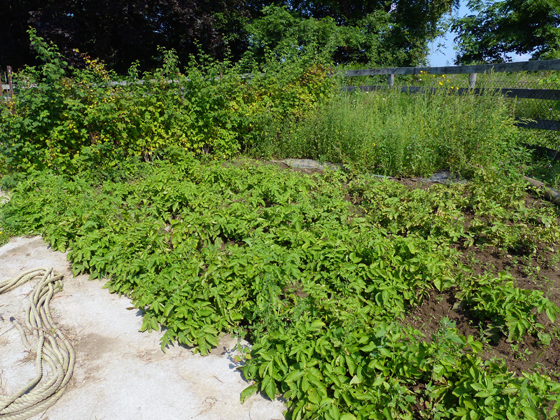
Quadrant #2 on the other side of the centre axis of the berries hosts this year’s potato crop. A whole quarter of the garden devoted completely to potatoes. You can see the weeds at the back edge of the quadrant, but the potatoes have managed to thrive despite the invaders. And we’re actually really close to harvesting. I think the red potatoes are ready. The rest are not far behind.

Potatoes plants

At the far edge of the garden, our grape vines are climbing. After the vines were decimated by strange little worms in the spring, everyone has bounced back. The vines are tall and leafy. I did cut off any grapes that sprouted in the spring so that the plants could focus on growing big and strong. Things are looking good and my fingers are crossed that a year from now we will have fruit.

Grape vine

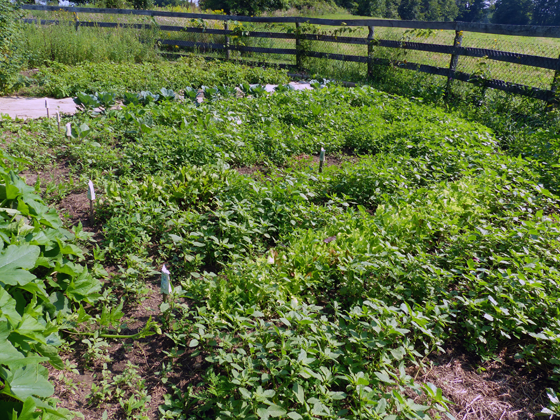
Spinning around into quadrant #3 we come to our late bloomers. This was the very last quadrant we planted. We have a row of decorative kale (it’s supposed to be in different colours, not for eating), my favourite yellow bush beans, my other favourite beets, some parsley and a mix of lettuce–oh, and more weeds.

Quadrant 3

Basket of lettuce

I really like the arrangement of the ring of raised beds around the outer edge of the garden. These are home to our perennials like asparagus, grapes, rhubarb, blueberries and hollyhocks. They also have all of our herbs. My favourite is rosemary. I’ve laid a few springs down, trying to encourage new bushes to root.

Rosemary

Opposite the raspberries the other arm of the centre axis is our squash A-frame. Half is butternut (my favourite) and half is acorn (Matt’s favourite). Because we planted so late, they haven’t climbed very high, but they’re working on it. I love how the A-frame helps to keep the squash contained. Otherwise, they would absolutely take over the whole garden.

Squash growing up an A frame trellis

Our final quadrant, #4, is probably my favourite. Remember back when I said I wanted to try a straw mulch to deal with weeds? I have decent layer on straw on this quarter, and it’s been very helpful at suppressing weeds. This quadrant is growing onions, red and jalapeno peppers and three rows of tomatoes–one more than last year.

Our cherry tomatoes–which are all volunteers–are the first to ripen. None of them have made it into the house yet. I love having a pre-dinner snack right in the garden.

Onions, peppers and tomatoes in the garden

Green tomatoes growing in the garden

So that’s the garden so far this year. Not the prettiest and not the most productive–at least not yet–but ours, and I’m satisfied with where we’re at.

How is your garden growing? What are your tips for dealing with weeds? Do you have any favourites that you’ve planted this year?
Mid-summer garden in Illinois

We’re deep into summer, which means the gardens are at their peak (well, they should be… ours is a bit behind as you’ll see later this week). However, Sarah’s garden is going gangbusters in Illinois.

My garden is in full swing. I think the pictures can mostly speak for themselves.

Brussel Sprouts

Tomatoes

Cherry Tomatoes! Wow!

Tomatillo

Side note on my tomatillo: this is my first time ever growing a tomatillo. The plant looks very green and healthy however, I have not seen anything that resembles any fruit. I only see blooms. I was at first worried that maybe it didn’t get pollinated, but the other day I saw a little bee working hard going from bloom to bloom. I really hope something comes of this little plant!

Watermelon

Peppers

So what am I doing will all of this produce?
Quite a bit is eaten fresh in salads and snacks.

Sometimes I roast it for a delicious side (my favorite way to eat green beans).

And finally, I am learning to can. We brought my mother-in-law over to show us the ropes in canning and so far I have canned:

Ten pints of hot peppers.

Nine quarts of tomato juice. And there will be many more to come. The tomatoes are just now ripening.

And finally 24 quarts of green beans.

I am learning a lot about canning.

For example, when the directions suggest using rubber gloves when canning hot peppers, DO IT!

I am also learning vegetables ripen quickly and all at once. So just because you thought you didn’t have anything planned for the evening, one trip to the garden will change your plans to a late night over a steaming stove top.

And finally I have learned that the small area we had set aside for the few things that my mother-in-law had canned in previous years is way too small and will require new shelves and storage area and a minor remodeling of our laundry room. But of course, that is material for another post.

What do you do with a large harvest? Do you can? Freeze? Dehydrate? Any suggestions on how to use 10 pints of hot peppers?

What an awesome harvest already, Sarah. Well done. I think canning is a necessary part of gardening. We turned most of our tomatoes into ketchup last year, and Matt’s talking about salsa this year. We also pickled a lot of beans. I was skeptical, but I really liked them.

Freezing and dehydrating are also good. My secret with the cherry tomatoes came from Chiot’s Run: garlic, olive oil, roast overnight in a low temperature oven. They turn out almost like sundried tomatoes. Then I toss them in freezer bags and into the freezer. Really good with pasta or pizza.

Raspberry report

Raspberries

Raspberries equal summer for me. I grew up picking them in my parents’ garden and making jam with my Mom. In fact, at Matt’s and my wedding all of our guests received a small jar of homemade raspberry jam made with my parents’ berries.

Now we have them in our garden.

It’s been two years since I transplanted canes from my parents’ garden. They have spread and sprouted new plants and this year they are bearing fruit. Lots and lots of fruit.

We have one row that’s about 16 feet long, and now at the peak of raspberry season we’re picking about 3-4 pints a day.

Although I’m mostly picking partial quarts because I ruined a couple of pints when I accidentally fermented some berries by leaving them on the counter too long.

Soggy pints

Quarts of raspberries

Our plants are super dense with lots of canes. In fact, the row could likely benefit from some thinning. I think a few less canes might encourage more fruit or at least let more light or air get to the fruit. This bird’s nest was buried deep in the plants. I had no idea it was there.

Bird's nest in the raspberries

The wire trellis that we built has done a good job of keeping the canes upright and contained, so the row has been easy to manage. We added some woodchips between the raspberries and blackberries, trying to keep weeds down.

We’ve had a good amount of rain during this growing season, but I think the berries could have benefited from a bit more watering. They’re a wee bit small. With a bit more water, they might grow bigger. Something to keep in mind for next year.

Small or not, we already have plenty of berries. In fact, it’s been hard to keep up. I’ve made jam, a galette, muffins, stirred lots into my yogurt and pints are still stacked in the fridge.

Raspberry galette and jam

We could have even more, but I’ve not been super enthused about picking after I get home from work. I’m expecting to find some very ripe berries this weekend. They should be good candidates for more jam.

We may not need wedding favours this year, but I’m sure our family will still enjoy jam in their Christmas packages.

Are you enjoying raspberries at your house? Any raspberry recipes to recommend? Or growing tips to share?