Six-month performance review

Not to alarm anyone, but we’re halfway through the year. (Sorry. Tempus fugit.)

It’s been nearly six months since I posted my home goals for 2014. Time for a mid-year performance review.

I had six projects on my list. Here’s how I’ve done so far.

1. Paint the main floor hallway and kitchen.

Big fat done on task number one. Matt and I knocked this one out in February.
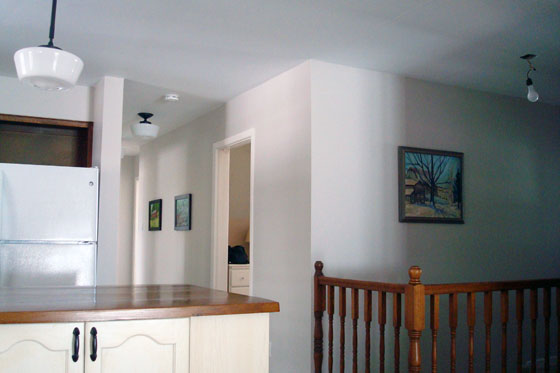
Hallway painted Benjamin Moore Abalone

2. Laundry room.

I haven’t started this one yet. I figure it will be a good fall project when I don’t want to/can’t work outside anymore. Besides, I can’t start anything until Matt digs out the foundation wall and fixes the basement leak. Hello summer honey-do list.

3. Master bedroom.

For the most part, this is another fall project. However, prep starts this month with removing the popcorn ceiling.

4. Furniture.

I’ve done fairly well in this department.

  • Sofa table for the living room. Found this one in an empty office at work (I asked permission before I took it).
  • Narrow dresser for my office. DIYed this one out of two nightstands.

Tall and narrow DIY dresser

  • Cabinet for the laundry room. Bought this one from Canadian Tire. (There was some DIY, since we had to assemble it ourselves).
  • Ottoman for the basement reading nook. Made this one out of a plastic barrel.
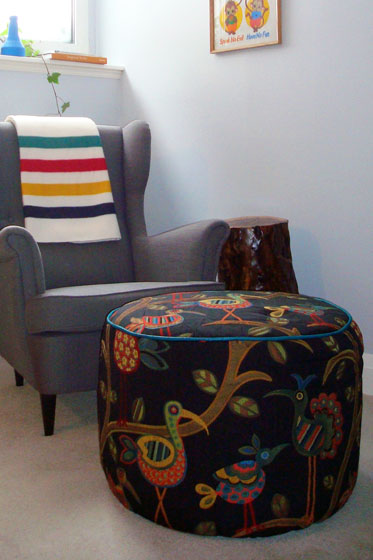
How to make a round footstool

I have a few more pieces that I’m still on the lookout to buy or make. Top on the list is refreshing my bookshelves and the living room TV stand. My books have been packed away for more than two years. I want them back.

5. Living room fireplace.

Hope still springs eternal. The fireplace will be redone some day. Whether that day is this year depends solely on how much we’re able to rebuild our post-solar bank accounts.

6. Landscaping.

  • Reestablish the flowerbeds around the house. I’m slowly, ever so slowly, working my way around the house.
  • Continue to plant the turnaround. The turnaround is looking awesome, albeit a bit weedy.
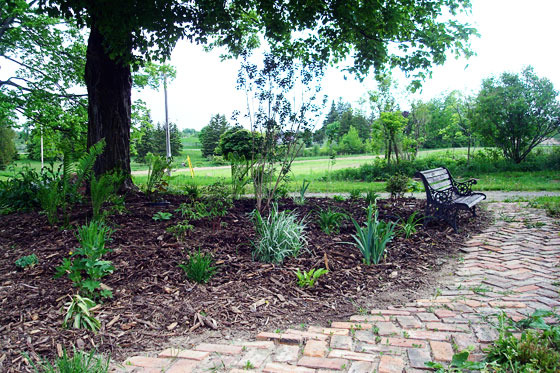
Garden with a brick path and park bench under a big tree

The pond shore is even more overgrown than last year and is pretty much inaccessible. Since this is my favourite part of the property, that is a bit of a downer. I’m willing to cut my losses on the pond this year, but I’m still hoping I’ll be able to clear and fence the vegetable garden before the end of the year.

And that brings us to the bottom of this year’s original goals.

However, there are a few things we’ve done beyond this list.

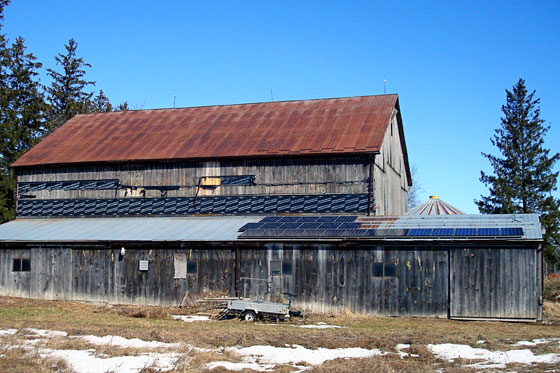
Obviously, the solar panels are a pretty massive project.

Solar panel array

We’re also revisiting the basement, finishing off the reading nook, adding the ping pong table and making over the doors (in progress).

I’ve had a bit more success this year staying on task thanks to the monthly projects. Thanks as well to all of you for your encouragement along the way. It’s nice to look back and see that I’ve actually made some progress. We have half a year to go, and I have a bit more work to do yet, but I think I’m on the right track.

Have you ever given yourself a mid-year performance review? Who else feels like time is flying by? Is there anything you’d like to accomplish over the rest of the year?

Operation popcorn

You know those things that you have to do, want to do, but don’t really want to do? That’s this month’s project.

The plan is to start our master bedroom makeover. Step one is remove the popcorn ceiling (the fan’s on the list too).

Popcorn ceiling

I’ve been saving this project until I could open the windows, as there is likely to be a bit of dust and mess.

What are you up to this July? Do you have any tips for removing stippled ceilings? In the basement, I scraped some and sanded others. Sanding’s way messier, but I got a nice smooth finish and had to do less patching.

Barn door makeover – Progress report

It’s not quite the end of the month, but I’m calling it close enough. Time for an update on how I did on June’s project. You may recall that the plan was to update the boring slab doors in our basement with some trim.

Here’s where we’re at:

A plastic bag full of old hardware.

Bag of door knobs and hinges

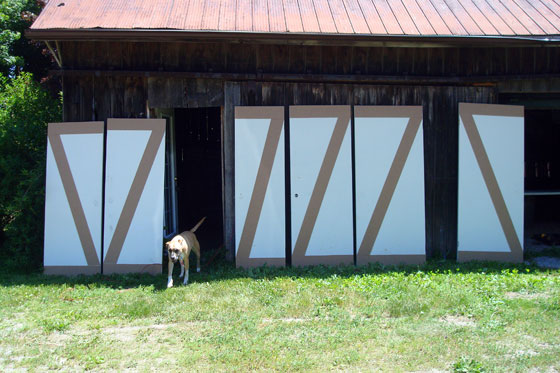
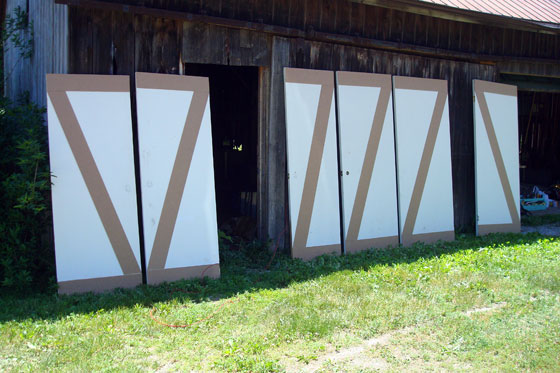
And seven doors trimmed out. (I know there’s only six pictured here, but trust that the seventh one is laying in the driveshed with the trim in place. To make it up to you, I’ll give you a cute puppy instead.)

Making slab doors into barn doors

My timelines shifted a little bit (i.e. my bias to procrastinate came out), but I’m not too far off schedule. Here are the details of how the update went down.

1. Figure out design for the doors. By June 6. Done June 10

As you can see, I decide to go with a basic Z (that’s a Canadian ‘zed’). It’s a classic barn door motif for a reason. Plus, I was able to keep it simple and lay out my strips so they don’t interfere with the door knobs or hinges.

2. Buy material (and hopefully the store staff will cut it into strips for me). By June 13. Done June 13.

A very accommodating (if slightly math challenged) associate at Home Depot along with his beautiful panel saw ripped two sheets of hardboard into 6-inch strips for me. Thank goodness it was a quiet Friday night at the store.

3. Cut strips (if I have to). By June 14. Non-issue.

4. Remove doors. June 14/15. Done June 21.

My Dad came over and helped me get back on track last weekend. He popped all of hinge pins, and I schlepped the doors upstairs.

5. Remove hardware. June 14/15. Done June 22.

A lot of the handles were dummies, and it took me a few minutes to figure out how to detach them. This video was helpful, even though my handles didn’t slide off nearly as easily. I got them eventually.

Bag of door knobs and hinges

6. Trim the bottom of the door to the electrical panel closet (since it rubs on the carpet). June 21/22. Done June 21.

No matter how much I practice, I still can’t cut as straight a line with my circular saw as my Dad does.

7. Install strips on the doors. June 21/22. Done June 21.

It took my Dad and me just two hours to add the panels to all seven doors. Easy-peasy (except for the door where we put the strips on the inside (closet side) of the door, hence only six doors in the picture below. Oops.)

Making slab doors into barn doors

To attach the panels to the doors, we put a smear of carpenter’s glue on the back of each strip and then tacked it with the nail gun. We let the doors sit for about 24 hours, and then I filled all of the nail holes and joints with wood filler and sanded it smooth.

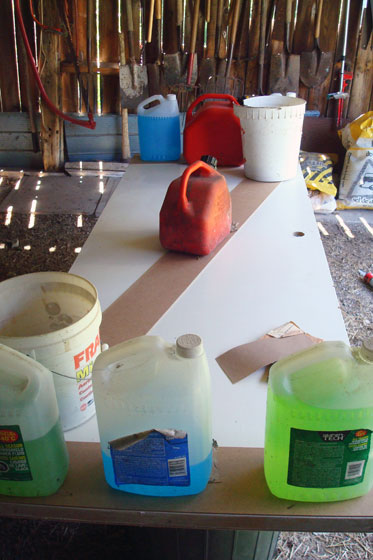
I was on my own to fix the mess-up on the closet door. Since the nail gun went home with my Dad, I used construction adhesive on the panels and weighted them down with everything I could find in the driveshed.

Weighting down the panels until construction adhesive sets

I’ll be interested to see if one method holds up better than another. I sincerely hope that no matter what the panels stay securely in place.

8. Buy new ORB hinges. By June 27. Done June 25.

Upgrading the hinges is the biggest expense on this project. I figure I’ve saved everywhere else, so I can spend a little bit to get exactly what I want. The cost for 20 new hinges is still less than $100, so it wasn’t a huge splurge.

There are a few things left to do before this door makeover is complete, so here’s the plan for the final tasks and June’s final four days:

9. Paint the door jambs – By June 27

I haven’t started painting, so this task will not be done today. It should be an easy weekend project though.

10. Spray paint old knobs ORB – By June 29

Good weather is forecast for this weekend, so I’m planning to set up a spray paint station outside.

11. Paint the doors – Not my problem.

You might recall my plan is to have Matt paint the doors. Well, he starts summer holidays this afternoon. Happy holidays, honey.

Do you have any last minute projects you’re hoping to knock out this weekend?

Pretty peonies

Bright pink peonies in front of a steel silo and old barn

We’re fortunate that we have numerous peony plants growing around the property.

Fuschia peony

I’ve moved a few into the gardens that I’ve reclaimed, but most are still out in the undomesticated wilderness.

White peony bud

They’re all different shades and are a beautiful splash of colour.

Light pink peony

I never pick a bouquet of peonies because I’m cautious about ants, but it would be nice to have some the beauty inside as well as out. Am I worrying unnecessarily?

Who else is a peony fan? Do you have a favourite colour? Any tips for peony care?

The cost of country living

You’ll have to excuse me today. I have a bit of a rant.

I said last week that I am most looking forward to getting to the payback stage of our solar panels. Friday night, we came home to an envelope from the hydro company. Inside was not a payment, but a bill.

The panels use a little bit of power to operate. Once our account is fully set up, this amount will be deducted from the total we generate. The payment side, though, isn’t set up yet. The billing side is. Funny how that works, eh?

Delays in getting our payments are not my complaint.

Country living is not simple, and it’s not cheap. One of my biggest surprises in moving to the farm was how much electricity costs.

Well, it’s not so much electricity. The rates are the rates. What changes depending on where you live is the delivery rate. In the country, where the population is less dense and there are fewer houses, delivery (the cost to get electricity from the generating station, through the lines and up to my house) is more than half my regular bill. Ouch.

I’m willing to suck it up and pay for the privilege of living where I do. However, this latest bill for our solar is completely out of whack. Look at the numbers.

Hydro bill

We used 1 kWh of electricity. One. Delivery was $5.40. Five freaking dollars and 40 freaking cents. Oh, and let’s throw 70 cents of tax on there just for fun. The total bill of $6.10 does not include a charge for using any actual electricity. It’s all just delivery and tax. Ridiculous.

Ask Matt and he’ll tell you that I’m a little bit bitter about the delivery charge. I’ve hated it for pretty much every hydro bill during the last two and a half years. I cannot wait until the hydro company finally starts paying us for the electricity we’re generating.

Going solar – Show me the money

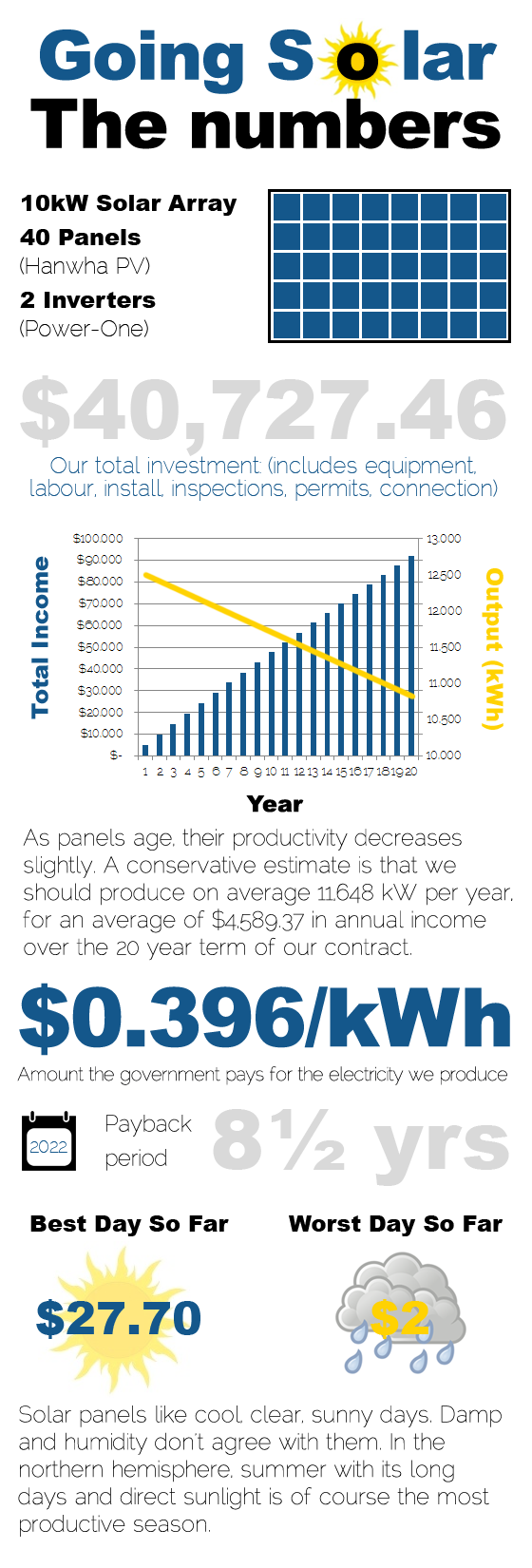
It’s time for the final post in our solar panel saga. As we all know, going green costs green. Today, I’m going into the numbers (in a slightly artistic fashion).

Read on to find out how much our solar panels cost, how many kilowatts they produce and all of the other details for our solar system.

Solar panels cost and output

Obviously, our solar array and its associated dollars and cents are specific to the Ontario microFIT program. I expect some of our numbers will translate, though, for others who are setting up their own systems.

The last outstanding part of our solar project is to receive our first payment from the hydro company. I have to say I’m looking forward to moving on to the payback stage of this project.

Going solar – I’ve got the power

This week, I’m sharing all of the details on our solar panel project. For the first post, click here.

When we last left off, we finally had an approved application, and we’d made it through a wicked winter. But we were running out of time to complete our panels by the end of our contract.

Preparation

The first step to get ready for the install was an engineering assessment. We had to make sure that the barn was strong enough to hold the weight of the solar panels. Even though the barn is (at best guess) more than a hundred years old, it’s rock solid, so there was no concern there.

The second step was the building permit. Again, there were a couple wrinkles in the application paperwork, but our contractor was able to straighten them out

Installation

The actual solar install finally started at the end of March. First step was the inverters. These “convert the DC (Direct Current) power from your panels to AC (Alternating Current) before feeding it back into the hydro grid.” Our contractor’s web site calls the inverters “the brains” of the system.

Solar panel inverters

Then came the panels. Solar panels work best if they face south. The sun is strongest and hits them most directly from this direction. Fortunately, the back roof of the barn faces exactly south. Given the long delay in our application process, we had lots of time to observe the barn, calculate sun and shadow patterns and determine the optimum position for our panels. We have a long row of very tall pines along the west side of the barn. They’re so tall that in the late afternoon they cast a shadow on the upper barn roof, so we decided to install the panels on the lower lean-to roof as far away from the pines as possible.

Solar panel install on the barn roof

Three rows of racks went up on the lean-to, and then came the panels. We have a total of 40 panels, the maximum we’re allowed under the microFIT program. Panel install took about three days.

Connection

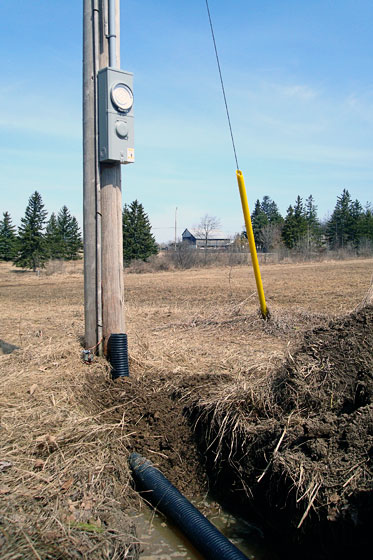
After the last panel was installed, it took another two weeks before the snow had melted enough for the trench to be dug between the barn and the hydro pole. Remember we’re feeding all of the power we generate back into the grid, so connecting into the hydro pole was essential.

Of course, it wasn’t simply a matter of waiting for the snow and frost to melt so that the trench could be dug. The trench was more than 300 feet long. Over that distance, we needed a special heavy-duty type of wire, so that we didn’t lose power. Pulling the wire through the trench was another bit of fun. When the trench was dug, the excavator laid a conduit in the bottom. It looks a bit like weeping tile.

Trenching for solar panels

There’s a rope running through the pipe. The trench is back-filled and the conduit is completely buried. To get the wire from the panels to the pole, our contractor had to pull it using the rope in the conduit–a heavy, 3-person job.

April 23 was connection day. Inspections had to happen. Power had to be shut off. Wires had to be hooked up. And everything had to be turned back on again. There were two or three different groups involved, along with our contractor. This was another instance where I was very glad for professional help. I would not have wanted to coordinate everyone.

But it turned out all of the scheduling didn’t matter.

Meter connection for solar panels

Connection was a no-go. The hydro inspector wanted to see the wire and conduit laying in the trench, but the trench was back-filled. The excavator had installed a T with a small section of conduit that looked down to the bottom of the trench and the wire, but that wasn’t enough. A section of the trench had to be dug out down to the wire so that the inspector could see it. Fortunately, the trench was re-excavated April 23, and by April 24 we were connected.

April 25, our contractor came out and walked us through all of the equipment and how it worked. He flipped the breakers and we were live.

In the infamous words of Snap, I’ve got the power!

Going solar – If at first you don’t suceed…

This post has been a long time coming. I don’t know why it’s taken me so long to write this, but it’s finally here. Everything you wanted to know (and more) about our solar system.

… I mean, our solar panel system… the one on the barn… not the one in the sky.

Solar panel array

In fact, now that I’ve started writing, I have so much to say that I’m breaking it up into several posts. In today’s post, we start at the very beginning.

How solar works in Ontario

The provincial government operates a program through the Ontario Power Authority to encourage people to install solar panels. The program is called microFIT. It’s micro because it gives people “the opportunity to develop a small or “micro” renewable electricity generation project (10 kilowatts or less in size) on their property.”

Under this program, we enter into a 20-year contract with the government. We produce and deliver electricity to the province’s grid, and we’re paid a guaranteed rate per kilowatt for the term of our contract.

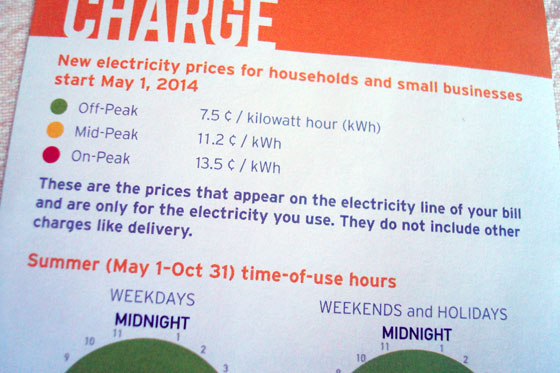
So we’re not “off the grid.” All of the power we generate goes directly back to the grid. We still buy the electricity that powers our house from the grid. This might seem weird to people. I’ll go into the numbers more later this week, but here’s the basic explanation: the government is paying us $0.396 cents per kW for what we generate. We’re paying the government $0.075 cents per kW (off-peak) for what we consume.

Hydro rates in Ontario

Our solar contractor

Once we made the decision that we wanted to go solar, we started meeting with contractors. Given how the microFIT program works in Ontario, lots of companies are full-service when it comes to solar installs. They take care of all of the applications to the government, they install the system, they monitor your system, they fill out all the paperwork along the way, they arrange for all of the inspections, they even help you apply for financing if you need it.

We found companies to contact through road side signs (there are lots of solar installations in our area). The company that we chose is called Hayter. Hayter had great service, had been around for a long time, offered a decent price, and the people we met with were very knowledgeable and down to earth.

Hayter solar

Application process

This was not a quick project. We met with Hayter for the first time in July 2013, liked them and decided to go with them. They submitted our application to the government. Our application was rejected about three times due to minor clerical errors. The microFIT forms are very complicated and missing even the smallest check box causes your whole application to be thrown out. We were very glad to have an experienced company working with us and taking care of all of the paperwork. I cannot imagine having to figure that out on my own.

Finally, our application went through. But that wasn’t the end of the bad news. In September, the government suspended the program. They were going to re-evaluate the rate that they paid per kW. When the microFIT program first started, the government paid about $0.80 per kW. When we applied, the rate was $0.55. The suspension meant that our application was dead, again. After re-evaluation in September, the new rate was $0.396. The decrease was very disappointing for us, but we decided to proceed anyways. We’d still be earning more for what we generated than we were spending on buying electricity from the grid.

We resubmitted our application. By mid-October, we got the good news that we were in. October 31, we made our first payment to our contractor, and they paid all of the fees with the government. And then came five months of nothing. Our solar company had said that they could work through the winter and complete our install before spring. However, the winter of 2013-14 wasn’t a normal winter. Between polar vortexes, ice storms and snow, nothing could happen.

Weathered picket fence in winter snow

Under the terms of our agreement with the government, we had six months to complete our install. That gave us until April 30. As spring slowly rolled around, we anxiously waited for work to begin.

Ooooh. Such a cliff hanger ending. Tune in next time to find out if installation begins and whether we meet the deadline.

If you have any questions, please feel free to ask in the comments, and I’ll do my best to answer them in upcoming posts.