Summer progress in Illinois

Sarah is back today with more news from Illinois. Like me, she has a long summer to-do list, and she’s made some good progress recently.

Things have been pretty busy around here.

This past weekend Steve and I spent over 4 hours trying to get the garden back in shape. Weeds had really gotten ahead of us.

It’s crazy how a good rain and warm sunny weather for a couple days can turn weeds from “manageable” to “out of control,” because that is exactly what happened. But we do now have a handle on things, and I need to work on it every day, even for just a few minutes, so that we stay on top of things.

Freshly weeded vegetable garden

The rain and sun has been great for the kale though. I have added it to my salads, and I have made some kale chips. But truthfully I really needed to find a way to use more of it and quickly.

I was listening to Young House Love’s podcast, and John mentioned that he blends his kale with just a little bit of water and freezes it in ice cube trays. Then he uses a cube or two to drop in his smoothies. Wow! That was such a simple idea and I had never thought of that or read that idea anywhere. So I cut a bunch of kale, rinsed it and did exactly what John suggested.

Blended kale ice cubes

I used a lot of my kale. It only took a few minutes and now I can add it easily to my breakfast.

I will have more to harvest. This is AFTER I made my kale cubes.

Kale in the garden

The other thing that we worked on over the weekend was the chicken coop.
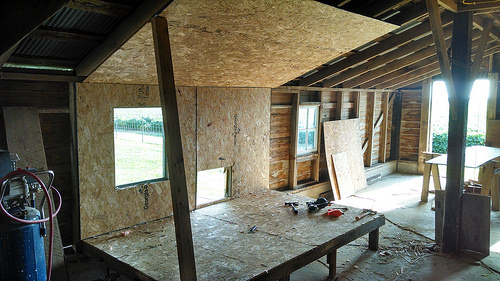
Building a chicken coop inside a barn

We had just been using wood that we had laying around, but we got to a point where we had to make a run to the home improvement store and get more supplies.

We are basically making a small room inside one of our barns. The exterior wall and the roof will be insulated.

I am still kind of designing and redesigning things as we go, but I have a pretty good plan in mind. I am hoping we will be ready for chickens by the end of this upcoming weekend.

This summer seems to be flying by so quickly. We have gotten so much done, but I feel like I have so much more that I really want to get finished.

I don’t want another month to go by without checking so much more off of my to-do list!

Oh, I know what you mean, Sarah. Summer is the time to get things done. I’m glad I’m not the only one with an ambitious to-do list. You’re doing a really great job, though! I can’t wait to see the rest of the coop–and its occupants.

Save

Save
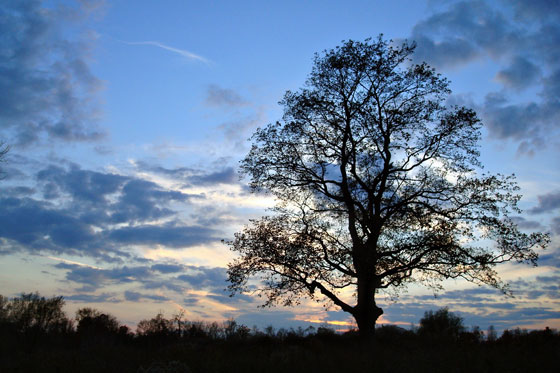
Dry fields hoping for rain

Oats harvest

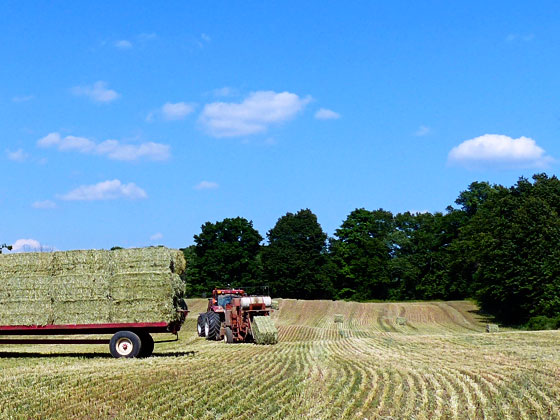
Last week our farmer harvested our fields. It’s been an incredibly dry season. As the tractor rolled across the fields dust plumed behind the wheels.

The fields had been planted with oats. Our farmer was not happy with them, but it looked like he got a good quantity of bales.

Baler behind the hay wagon

He was hoping desperately for rain in the next couple of days. Underneath the oats, he had also planted hay. We needed rain or else we were going to lose all of his seeds.

On Wednesday night, just a few hours after the harvest, the skies opened up. We had rain off and on for two days.

Hopefully that means good things for his seeds.

Tractor harvesting blaes of oats

It would be nice to have another harvest yet this year.

What’s the weather been like in your area?

Save

Save
Save

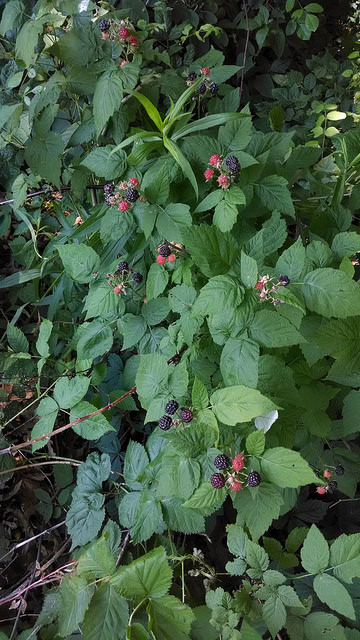
Wild raspberries in Illinois

Sarah in Illinois is kicking off summer with a quintessential summer activity: a family berry-picking outing.

One of the perks of my husband being a farmer and spending long days driving around backroads and secluded fields is that he finds secret spots.

Like the best mushroom hunting spot. Or like one day this spring when he took us out into one of the fields that he was getting ready to plant and showed us an eagle’s nest. The nest was so very big. We waited for quite a while but never got to spot an eagle.

His latest secret spot came to us Friday.

When he got home he said, “Tomorrow we are going raspberry picking!” In years past when he would see that the raspberries or blackberries were nearing ripeness, we would wait too long and the birds got to them first. So this year Steve said we had to go and we had to go immediately.

Saturday after breakfast we rounded up ice cream buckets and baskets, picked up Steve’s mom and headed to the field.

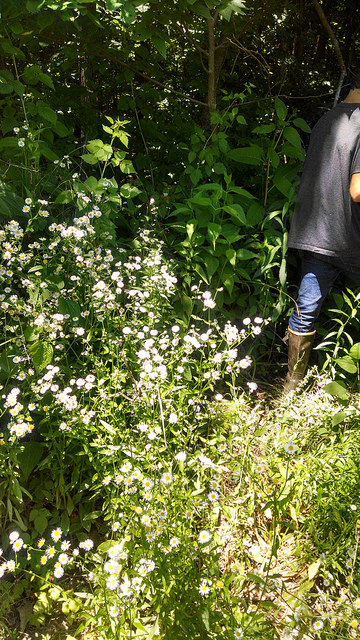
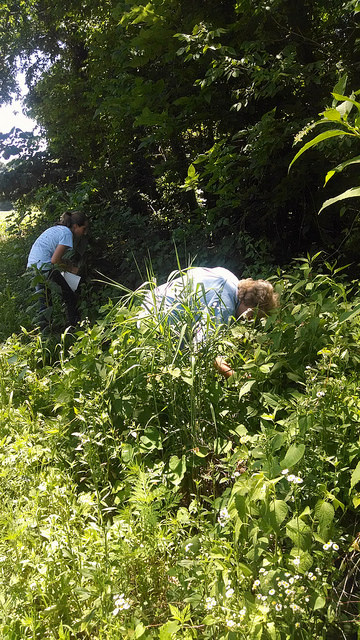
Picking wild raspberries

Picking wild raspberries

I think we were still a little too early but we picked for at least two hours.

Picking wild raspberries

Picking wild raspberries

And believe it or not, after Julia posted about her run in with a turtle, we ran across one in the field.

Yellow and black box turtle

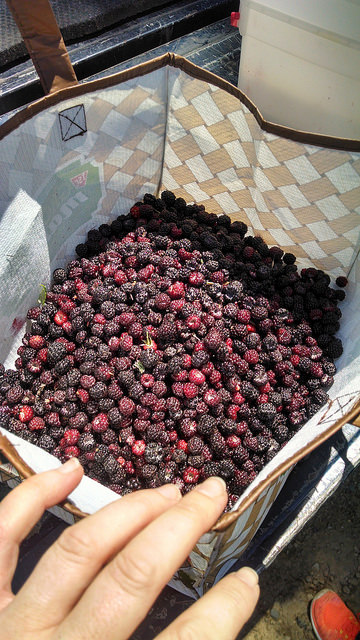
We ended up bringing home enough raspberries to freeze 3 quarts.

Bin of wild black raspberries

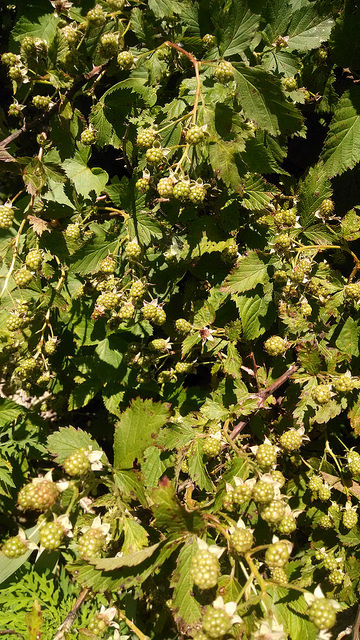
We have given Steve instructions that as soon as he sees these blackberries begin to ripen to take us back! There were even more blackberries than raspberry vines!

Unripe blackberries

What a great bounty of berries, Sarah! Strawberries have just started in our area, so we have a little while to go until the raspberries are ready. I can almost taste the sunwarmed berries when I look at your photos. Enjoy!


The best and the worst of people

I’ve written before about people throwing things in our ditches. A couch. A printer. Litter.

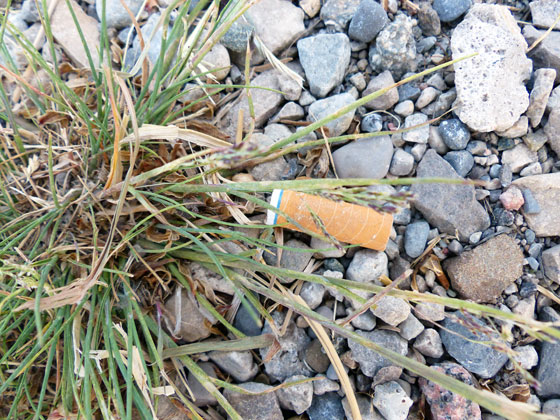
Last week, as best we can guess someone threw a cigarette. Now on it’s own, a cigarette is not an unusual find. Butts are plentiful on the shoulders of the road and in the ditch.

Cigarette butt on the side of the road

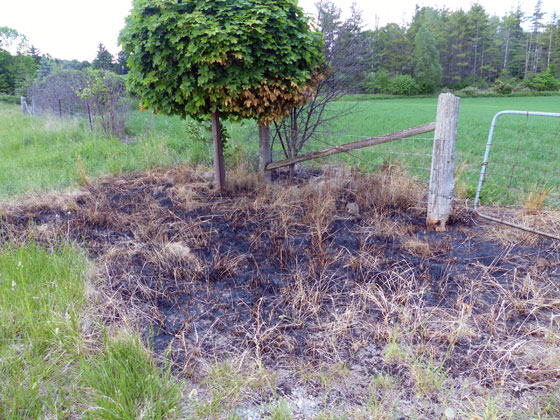
However, this butt ended up being unusual because we haven’t had much rain this spring. We ended up with a fire.

Aftermath of a ditch fire

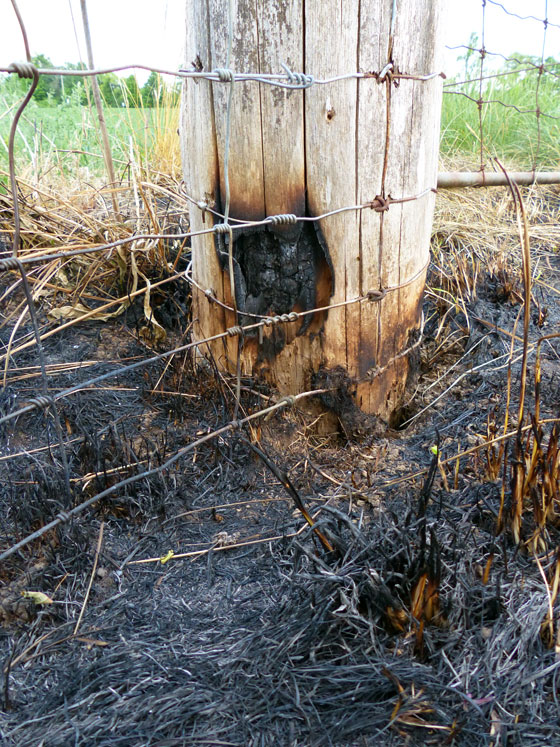
When Matt arrived home from work, he was greeted by good Samaritan who had spotted the flames, pulled over, poured her water bottle over a smoldering fence post and called the fire department.

Burned fence post

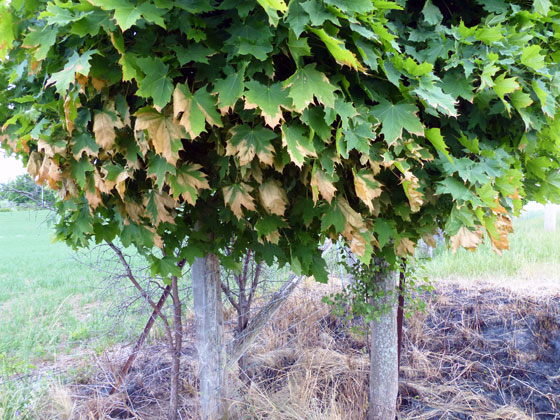
We are very thankful that damage was minimal. The tree that was in the centre of the fire has some singed leaves, the fence posts are slightly charred and a patch of grass is ash.

Tree leaves singed by fire

I keep thinking about the Fort MacMurray wildfire and being grateful that this didn’t take off. The woman who stopped said to Matt she was surprised that no one else pulled over. We’re very thankful to her as well.

So litterers… the worst. Our impromptu firefighter… the best.

Shoe tree

In the city, shoes dangling over the wires mean you might not be in the greatest neighbourhood. Out here in the country, we do things a little differently. Although I’m not sure what the meaning is of the shoe tree.

Literally, a tree covered in shoes.

Shoe tree

There are fancy shoes and casual shoes. Big shoes and little shoes.

Shoe tree

Sandle shoes and boot shoes and fuzzy shoes.

Shoetree

And of course, Canadian shoes.

Shoetree

I think the fact that we have a shoe tree says less about the neighbourhood and more about the people who live here.

Crazy country folk.

Icy Easter

Hello. How was your weekend? Did you have a good Easter?

Our Easter weekend ended up being extra long thanks to an ice storm that rolled through our area on Thursday. The storm closed both Matt’s and my work and turned off our electricity for 9 hours.

By Good Friday, the freezing rain had stopped, but temperatures had not risen, and a thick coating of ice covered everything.

Spring ice storm

Spring ice storm

Spring ice storm

Just days into spring, and our lilacs had their new green growth encased in ice.

Spring ice storm

The ground was covered in ice chunks from the trees and bushes.

Spring ice storm

Icicles dripped off the back of the bird feeder and at the front there was a steady queue for the only food available.

Icicles on the birdfeeder

In the garden, icicles hung from the top fence rail and the chainlink was augmented with its own icy shield.

Spring ice storm

Fortunately, we didn’t have much damage. The worst was losing just a few branches off the pine trees.

Spring ice storm

The weight of the ice is incredible. Normally, we can walk easily under these branches that are touching the ground.

Spring ice storm

Down the driveway, more branches overhung far enough that Baxter could reach them.

Spring ice storm

Temperatures finally started to rise on Saturday afternoon. Ice slid off the roofs and the cars in sheets. Slowly the branches returned to their usual heights as the trees shed their icy casings, shards shattering into the ground.

By yesterday, Easter Sunday, the farm was back to normal.

What was the weather like where you are? Did you do anything special this weekend? How did you celebrate Easter?

Sweet times on the farm

I looooove maple syrup. Growing up, every spring my parents went to a Mennonite farm and bought gallons of pure maple syrup. Then they put it into containers and froze it, so we had it for the whole year. It was always a sad day late in the winter when we ran out of syrup.

Sorry, Aunt Jemima, you’re just not for me.

You can imagine how excited I am to be making our own maple syrup this year.

We jumped right in to tapping our trees with little thought to how we’d transform the sap into syrup. A lot of what I saw online talked about evaporators or cauldrons over fires. Pretty much everything said, “Do not boil sap indoors.”

We have neither an evaporator nor a cauldron, however. Nor did we have a ton of sap, so Matt and I threw caution to the wind and decided we were going to boil our sap inside on the stove. Daring, I know.

We selected some large pots–including our big roasting pan, dumped in the sap, set the burners to high and turned on the exhaust fan to suck out the steam. And you know what? It totally worked!

Boiling sap on the stove to make maple syrup

On an average evening, we found about 12 litres of sap was a good quantity. It fit in our pots easily and didn’t fill the house with too much steam. After boiling for about 3 and a half hours, the sap had transformed into syrup.

At first we just judged by colour and flavour, but Matt progressed to measuring the temperature. He found online that 218ºF (103ºC or so) was the magic number.

Tip to anyone who wants to try making syrup indoors, we used the soup pot as a finishing pot and transferred the sap from the roasting pan into the soup pot for the last half hour of boiling

Boiling sap on the stove to make maple syrup

The ratio for sap to syrup that we found online was 40:1, and that was our experience too. 12 litres (12,000mL) of sap made about 1 1/2 cups (375mL of syrup).

This picture shows another neat thing I’ve learned about syrup. I knew it came in different grades or colours, but I thought it was just the amount of boiling time that determined what grade your syrup was. It turns out it’s early versus late in the season. The jar on the left is from our second boil, and the one on the right is our fourth. See how the colour is subtly darker in the older syrup?

Homemade maple syrup

An aside about these old Crown canning jars. How perfect is the made in Canada label?

Homemade maple syrup in a Crown canning jar made in Canada

I’m loving having maple syrup again. It’s sweetened a lovely pumpkin soup, made a beautiful golden topping on vanilla ice cream (one of my favourite ways to eat it) and of course added just what was missing to my favourite meal of the day, breakfast.

Homemade maple syrup on French toast

I’m trying to be a bit frugal and not eat it all at once. We already have two full jars in the freezer, so I’m hoping to remember my childhood and make it stretch as long as I possibly can.

Are there any other maple syrup snobs out there? Have you ever made your own syrup? Any tips to share–whether for inside or outside boiling? Do you have a favourite maple syrup recipe?

Getting sappy

We have a new project for these last few days of winter. We’re tapping our maple trees!

Tapping maple trees

I picked up a basic starter kit at the hardware store. It came with five buckets, five lids and five spiles.

Backyard maple syrup kit

Thankfully the kit also came with instructions on how to get started. We selected trees that were the right size, drilled holes, stuck the spiles in, and watched the magic happen.

Tapping maple trees

The sap started flowing as soon as we drilled the holes. Matt was impatient saying, “Stop taking pictures! We’re wasting sap!” (Picture Kermit arm flailing). The maple syrup has totally turned into Matt’s thing.

Tapping maple trees

The spiles, buckets and lids all hook together in a pretty simple system. The sap travels up the tree, into the spile and then drips into the bucket.

Tapping maple trees

Tapping maple trees

Tapping maple trees animated gif

The sap run this year hasn’t been terrific. Last week temperatures shot up, and I had high hopes for a a lot of sap. However, the temperatures were so high that even night was above freezing. Apparently cold nights are critical for sap.

However, we have had a few good days where Matt had to empty the buckets several times.

Tapping maple trees

To collect the sap, Matt takes my biggest stock pot outside and empties the buckets into the pot. Then in the house we strain the sap to get out any dirt or bugs or twigs and put it in big containers in the fridge until we’re ready to move on to the syrup stage–which I’ll talk about in my next post.

Have you ever tapped trees? Are you trying anything new this time of year? What’s your big spring project?