Finally finished the fence

The benefit of using the old longe ring for the garden meant that we already had a fence. However, it was a beautiful sturdy weathered wood fence. Perfect for form, not so good for function when it comes to a garden.

The ring was used to exercise horses. Meaning anything smaller than a horse could fit through the fence.

Matt and I decided to add chainlink to keep the bunnies and other hungry creatures away from our garden.

I had collected a few rolls of chainlink from the ends of various people’s driveways, but the ring is so big that I had to buy three more rolls. So this project was definitely the most expensive part of the garden so far coming in at nearly $300.

Fortunately, we didn’t have to buy posts or anything else besides staples. We made use of the wood fence and stapled the chainlink to the existing posts.

Chainlink fence stapled to a wood post

Lesson learned, we should have thought a bit more about who does what.

I stretched the fence, and Matt hammered the staples. I have less muscle than Matt, so stretching the fence was hard for me. Matt has bigger fingers than me, so he hammered his fingers a lot while he was holding the staples between the links of the fence.
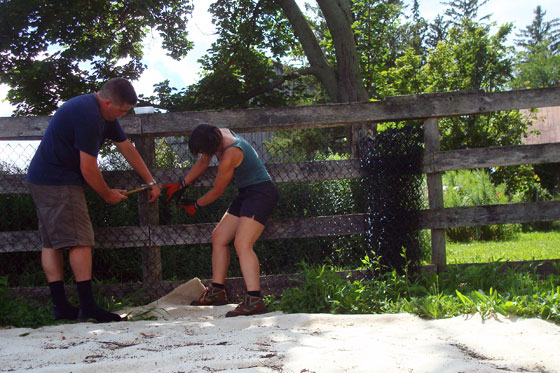
Installing chainlink fence in the garden

Matt wasn’t going to give in though. There was no way he was switching roles. So we worked our way around the garden taking breaks to hammer the ground in frustration or slap mosquitoes who just won’t go away this summer.

When we reached the end of a roll, we joined it to the next section by weaving in a single strand of fencing. Just twist, twist, twist until the wire reaches the bottom. (To separate a section of fence, you just reverse the process and untwist one piece of wire. Your fence will easily split in two.)
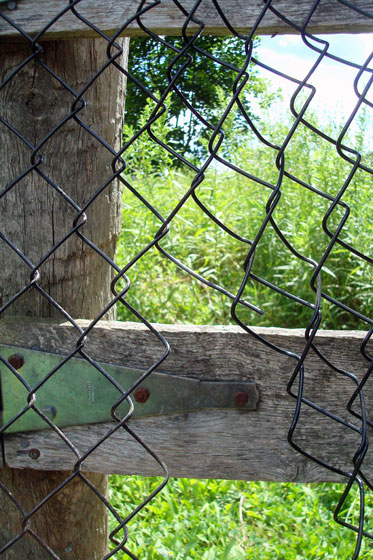
Joining chainlink fence

Eventually, we got a rhythm. A lot of it consisted of us asking each other, “Ready?” And then, “Hold it, woman!”

Our marriage survived, and our garden is fenced.

Fenced, but not gated. We bought wood for the gate last week but haven’t built it yet. So we are still welcoming the hungry creatures–horse-sized and smaller–to our garden.

The thing that I like about the fence is that the chainlink is pretty much invisible, so we still have the aesthetic qualities of the wood fence that I fell in love with from the start.
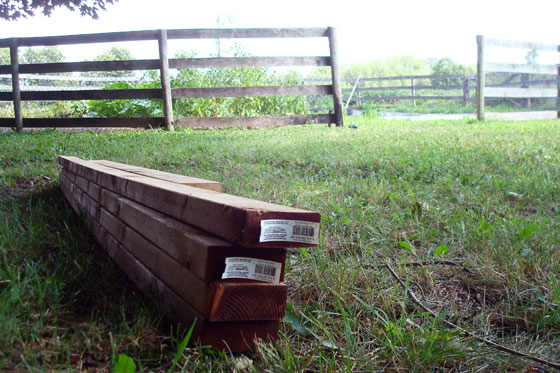
Wood for the garden gate

And to be honest, our garden isn’t really under threat from the local wildlife. Our beans were munched shortly after they sprouted, but the rest of their gardenmates have survived… and thrived. In fact, I think Matt would be happy if a hungry hoard descended on the zucchini.
Over-thinking

My thought process went something like this:

“Now that we have the garden, we could really use a composter. I should put it near the kitchen so it’s convenient.”
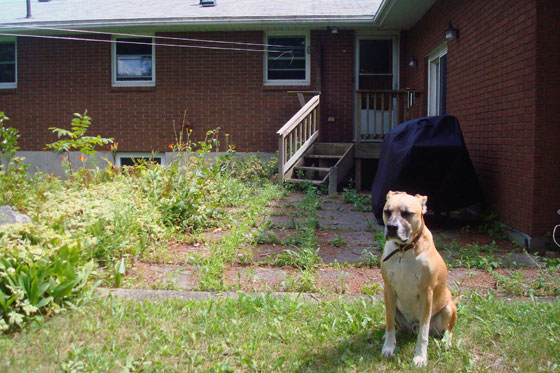
“While I’m out here, I might as well clear the weeds from the patio.” (I did not ask Baxter to pose. Dude was in a photogenic mood.)

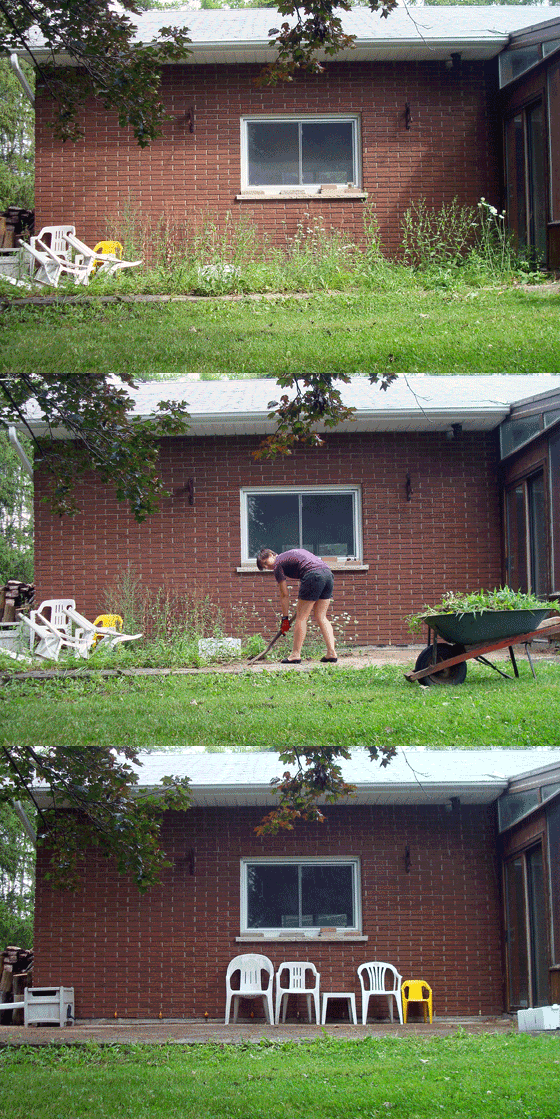
Weedy patio

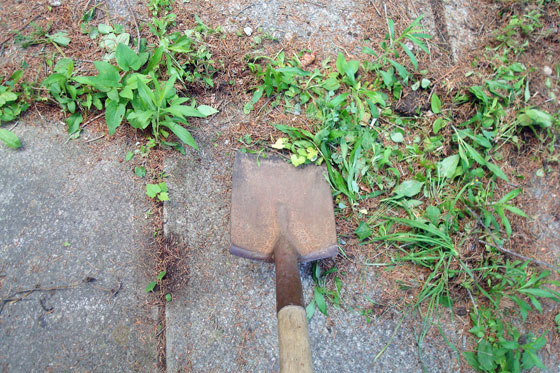
My technique is to take a sharp spade and shove it sharply against the joints between the slabs. If you feel like you might break your wrist, you’re doing it right.

Clearing weeds from the patio

“Now that I’ve cleared the weeds, I might as well see if I can uncover the steps.” (We’ve never seen the steps, and you probably can’t either).

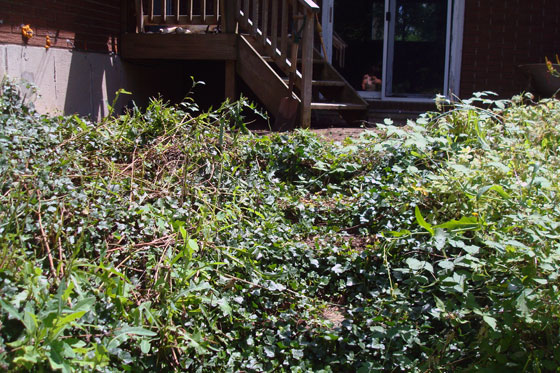
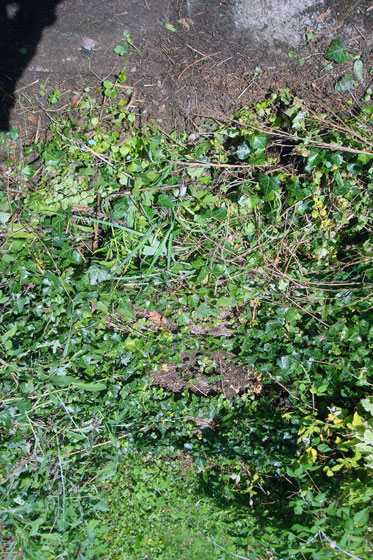
Stairs covered with ivy

“Holy heck. What was I thinking trying to clear the steps? This ivy is ridiculous!

Stairs covered with ivy

“Wow, these steps are much bigger than I thought. And they look amazing.”

Concrete patio steps

“Now where to put the composter? I’ll just clear a little more of this ivy.”

Clunk.

“What was that? Are there more stones under this ivy? Why?

“Oh hello, husband. You have great timing. Milkshake? Yes, please.”

—Break for Matt’s amazing chocolate peanut butter milkshake—

“Alright, that gave me the fuel I needed. Let’s do what I came out here to do in the first place.”

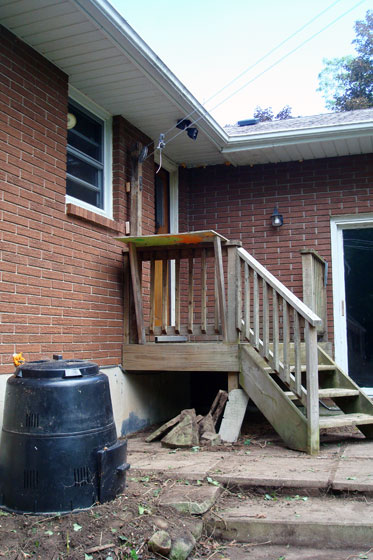
Composter on the back patio

“Finally done.” (And yes, the dog abandoned me after the milkshake break).

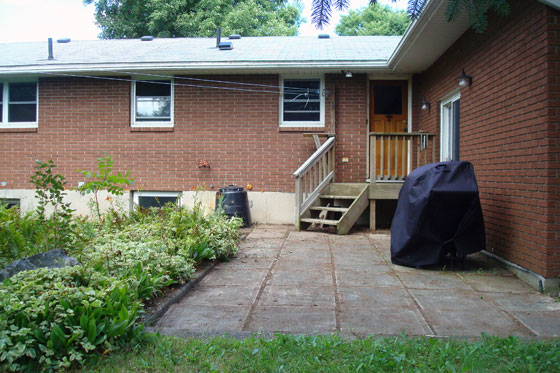
Patio after

“All this work for a composter? I think I need a shower.”

“But hmmm… what about the patio on the other side of the house?”

Clearing weeds from the patio

“I need to stop thinking so hard.”

Who else has ever over-complicated a simple project? Do you have a composter at your house? Do you have a weedy patio? Any tips on how to do battle with ivy?

Harvest!

I know this blog has turned into more of a gardening blog over the last little while as opposed to a home reno blog. We have many more renos to go, but in our limited Canadian growing season, I am going to garden. I appreciate you all sticking with me. In case you can’t tell, we’re loving our new vegetable garden. We’re especially loving all of the food that we’re harvesting.

Vegetable garden harvest

We were a little late on planting (the whole building the garden thing delayed us a bit). So I’ve been trying to be patient when it comes to looking for edible vegetables. However, I’ve perhaps been a little too patient.

I thought the zucchinis were still at the blossom stage. A closer look revealed we were past the harvest stage for some zucs. Yipes. There were nine good-sized (really fairly large) zucchinis. And two days later, I harvested seven more (and there’s been one more since then).

So far, I’ve made grilled zucchini, chocolate sour cream zucchini cake, zucchini bread, chocolate zucchini bread, zucchini soup and zucchini parmesan. I even snuck a few into my parents’ car when they came to visit the farm. More are coming though. Anyone have any good zucchini recipes?

Zucchinis

Out of a whole package of bean seeds, only four plants have grown (the others were nibbled right after they sprouted). That means our harvest has not been huge, but we’ve had a few lovely yellow beans.

Yellow beans

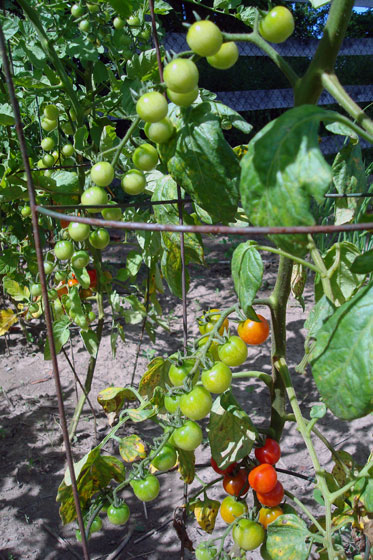
Beside the beans, the tomatoes are turning red. The cherry tomatoes blow me away. I’ve never seen tomatoes grow in clusters like this. And of course, they’re my favourite sweet tomatoes. Very few make it to the house. I eat ’em like candy right in the garden.

Cherry tomatoes

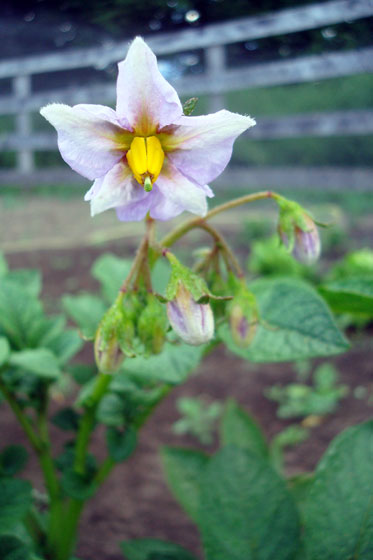
The potatoes plants are blooming. I hope potatoes themselves grow in time for harvest this fall.

Potato blossoms

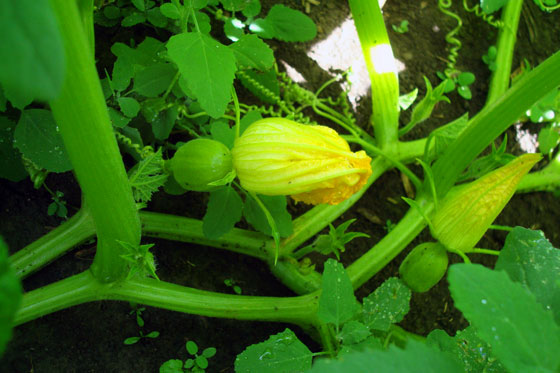
And beside the potatoes, in a mass of leaves and vines, squashes are starting to form. I’m absolutely going to figure out a trellis system next year for the squash. They’re taking over. Good thing we have a big garden, but there are lots of other plants on the wishlist for next year. The squash are going to have to learn to share.

Baby squashes

We’re picking lettuce, beets and green onions as we need them, the red raspberries have transplanted successfully, and I have hope that a few of the black raspberries are going to make it. It looks like even the peppers may be perking up.

This is the closest I’ve ever been to being a farmer. And I have to say I like it.

What are you growing, harvesting and eating at your house?

Pepper problems

Anyone have tips for growing peppers? Our plants aren’t doing so well over here.

Remember this picture of the little pepper and blossoms from a few weeks ago?

Baby pepper and pepper blossom

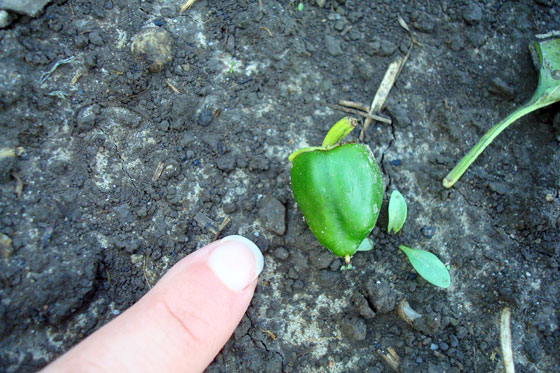
Well, the plants haven’t grown at all. In fact, they’ve regressed. See the little green nuggets laying on the soil?

Little pepper plants

The little peppers fell off their stalks. (My finger is in the shot for scale to show you how little the peppers grew).

Baby pepper

The peppers are the only things that aren’t doing well in the garden.

I thought maybe they weren’t getting enough sun, but we’ve planted two different batches in two different locations.

We’ve tried jalapenos as well as sweet red bells.

None of them are growing.

Do you have any tips?

Uncovering a favourite perch

So you have a spot like this in your yard, right? Somewhere that you just let things go a little bit?

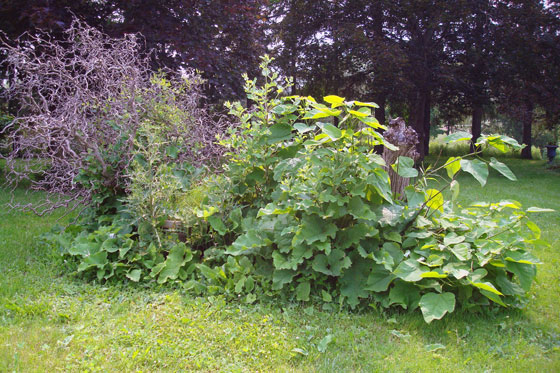
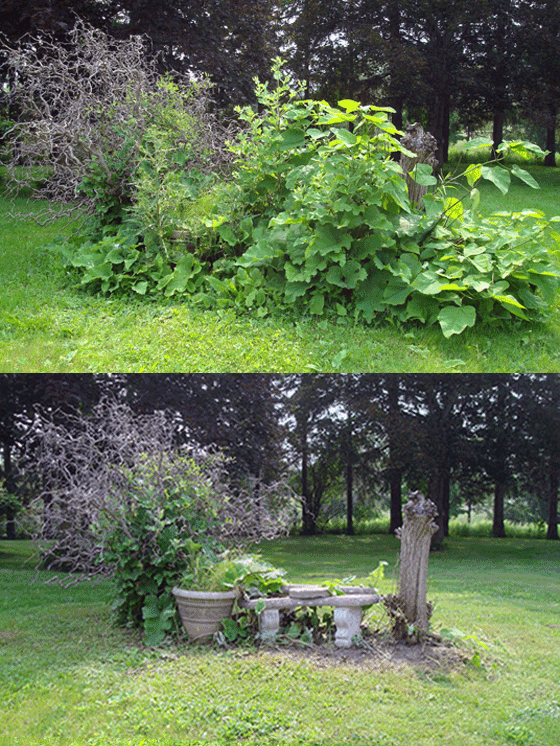
Overgrown clump of weeds

My pledge this year is to not worry about the yard and focus only on the vegetable garden. But this clump of overgrowth at the edge of the south lawn finally got to me. My inner Edward Scissorhands came out (along with a pair of clippers, since I don’t actually have blades on my hands).

Who knew there was a dead curlicue bush, a mostly dead catalpa, a huge flowerpot and two stone benches hidden in there? (Well, we did, since we’ve seen them before… and put some of them there during our previous yard clean-up episodes).

Trimming bushes

The bush and the tree froze to death last winter. The big flowerpot is a gift from previous owners that I haven’t bothered to get rid of yet. The benches? Well, the benches belong to Ralph.

While she didn’t express gratitude (are cats capable of gratitude?), I think she appreciated our work.

The benches allow her to ascend to the perfect height for convenient scratching.

Ralph getting scratches

But most importantly, the benches allow her to assume a superior height over her brother.

Ralph and Baxter

So our landscaping meets with the cat’s approval, if not the dog’s. Now to convince Matt to get out his chainsaw and deal with those dead trees…

Do you have an overgrown spot at your house? Does anyone else’s animals “help” with the yard work? What furniture belongs to furry friends? Who’s the boss, your cat or your dog? (I think I know the answer to the last one… in my experience that relationship only goes one way).


Learning to like lilies

Last year, when Matt and I transplanted a lilac from beside the driveshed, I dug up a few other plants that looked like they might be something (as opposed to just being weeds). I was wishing for hollyhocks because I had found a plastic tag near them that said hollyhock. (Plus I love hollyhocks).

This year when they started to grow, I realized they were probably not hollyhocks. As they started to bud, I thought lilies, but maybe (wishfully) calla lilies? Surely they wouldn’t be ubiquitous day lilies, would they? (Not my favourite flower, honestly).

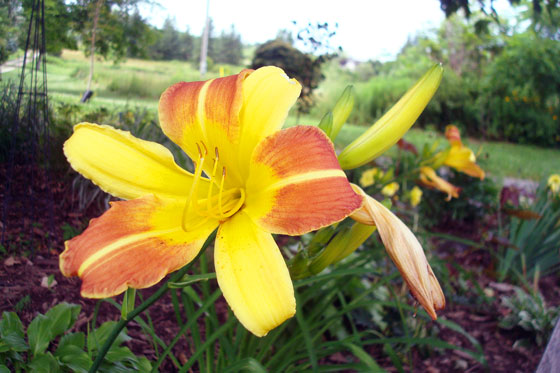
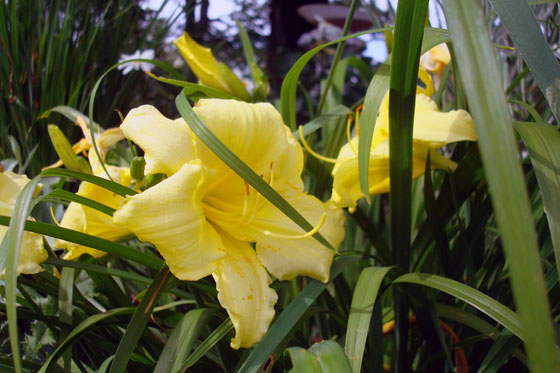
Well, they are day lilies, but they’re a bit special. They’re two-toned, which is kind of cool.

Orange and yellow day lilies

A bunch of lilies still in their nursery pots were among the plants we inherited from the previous owners. I stuck them in the ground last year, and they’ve done super well.

There’s the orange sherbert (again, I’m not the hugest fan of this version).

Yellow lilies

The lemon sherbert is a bit more palatable.

Yellow lilies

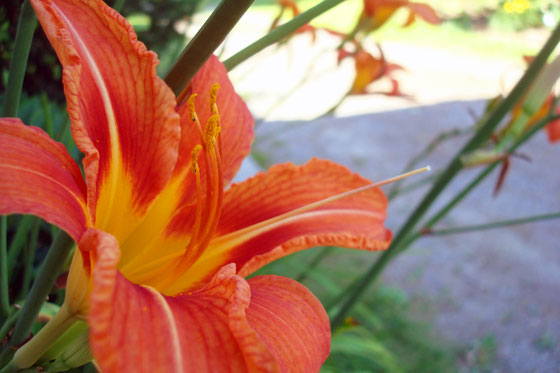
Then we of course have what I classify as regular orange day lilies.

Orange day lilies

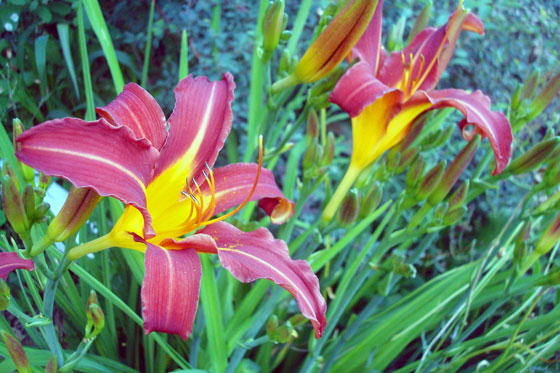
The late bloomers that have come on in just the last week are these dark red ones. I actually like these quite a lot.

Red day lilies

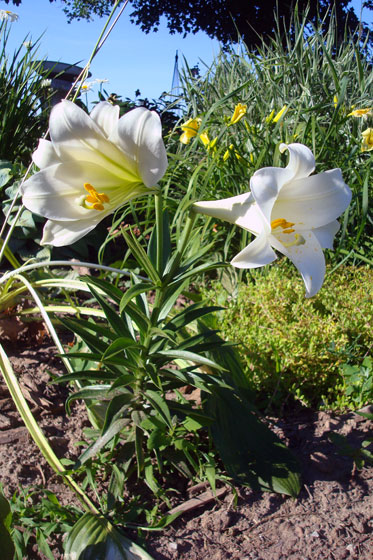
But the star of the show is one special lily. Yes, this an Easter lily. I stuck it in the ground last year. And this year, after doing nothing (except having a close call with Wiley), it’s blooming. In fact, it’s bloomed so big that the second blossom has split open.

Easter lilies in the garden

The success of our lilies makes me think I may not have such a black thumb after all. Or else lilies thrive when neglected.

As the lilies are growing in the garden, they’re also starting to grow on me. I think I actually like them. I know for sure that there is one type of lily that I’d really like to add to our garden.

Growing up, we had two clumps of tiger lilies in our backyard (basically day lilies with spots). My Mom had transplanted them from her family’s farm where she spent childhood summers. The tiger lilies eventually got squeezed out of the garden, but I’m hoping I might be able to find some for our farm. For now, I get my tiger lily fix from a plate painted by my great grandmother that lives in my Mom’s china cabinet.

Tiger lily plate

I’m hoping I can find some tiger lilies to add to our farm. Sentimentality always wins out for me.

Do you have lilies growing at your house? Are you a fan? Any suggestions for a source for tiger lilies?

Bounty of berries

This year is an incredible year for raspberries. We have canes growing all around the farm, and they’re all loaded with tiny berries.

Black raspberries

Black raspberries

I’ve never picked this many berries any of our previous summers.

Black raspberries

It took me awhile to pick them–not just because there were so many. I had to do it all one handed because this was happening on my other side. Oh Ralph, so helpful.

Ralph getting scratches

After harvesting the berries, I decided to harvest some canes. The plan is to have two rows of raspberries in the vegetable garden: one red and one black. I had already started the red row with canes from my parent’s garden,and they’re doing well. A few days after transplanting, though, the black canes aren’t looking so hot.

Black raspberry canes

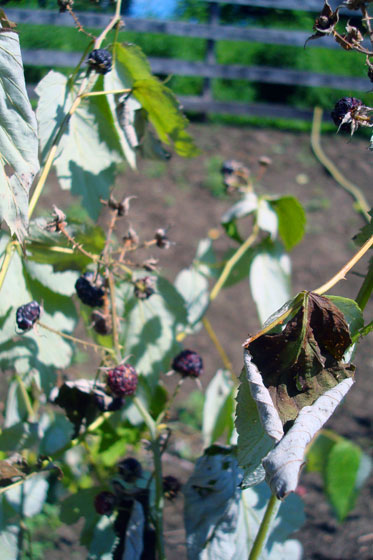
Wilted black raspberries

I’m hoping I can convince them that they’ll be happy in the garden. I also have hopes that with a little domestication, hydration, fertilization and cultivation, I’ll not only have healthy canes but big and juicy berries.

Do you grow raspberries? Are they black or red? Who else has a four-legged helper for picking? Any tips for domesticating “wild” berries?

The growth of a garden

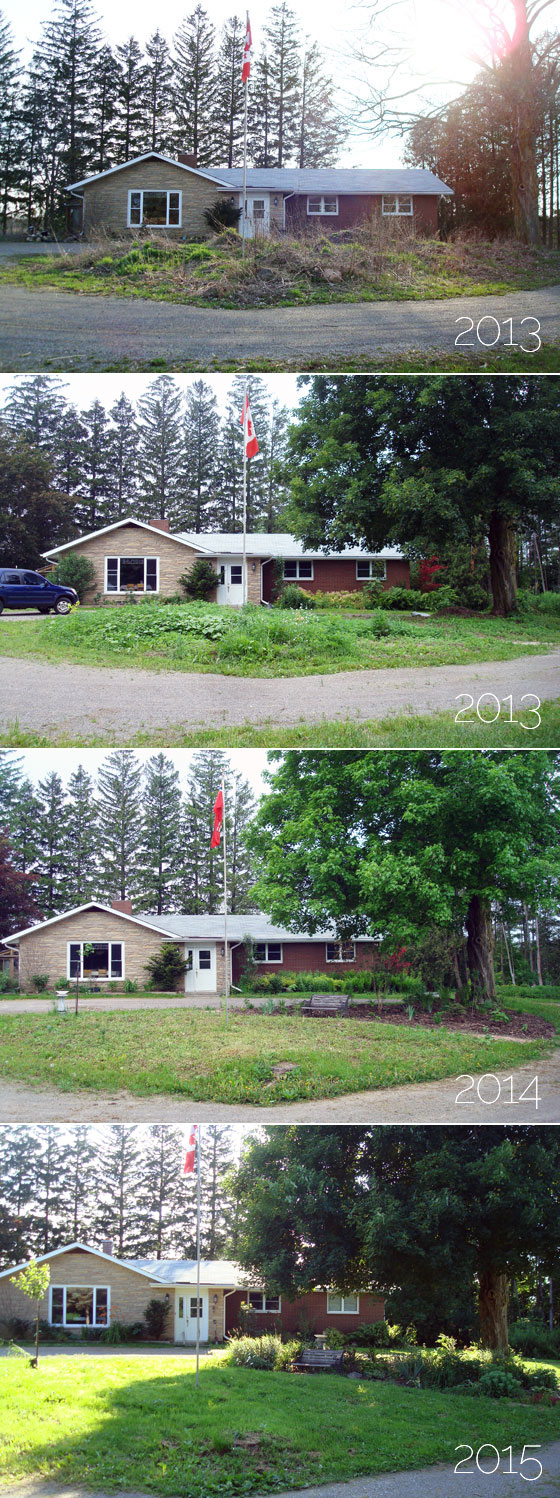
As I was putting together Friday’s post, I started looking through old photos of the turnaround garden. It was amazing to me to see how far it’s come–even though I’ve been here for all of it. I had to share it with all of you.

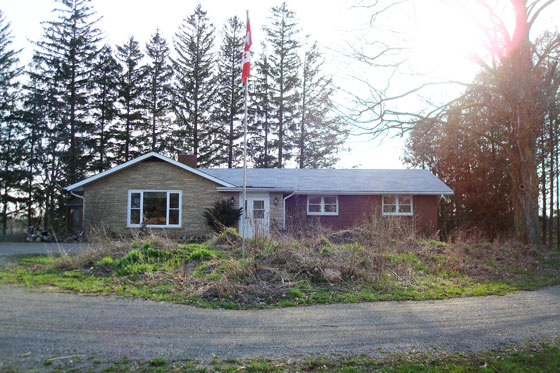
The turnaround started out as mountain goat territory. Rocks, mounds of dirt and weeds made a very unattractive scene right outside our front door.

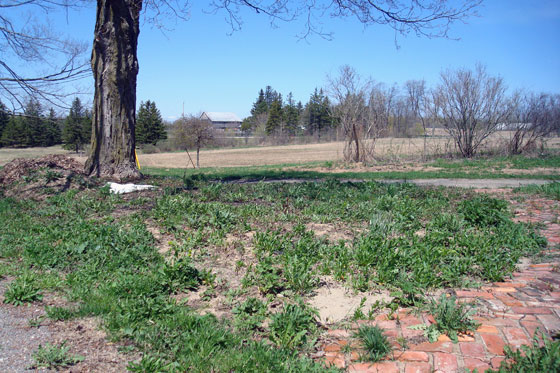
Turnaround garden before

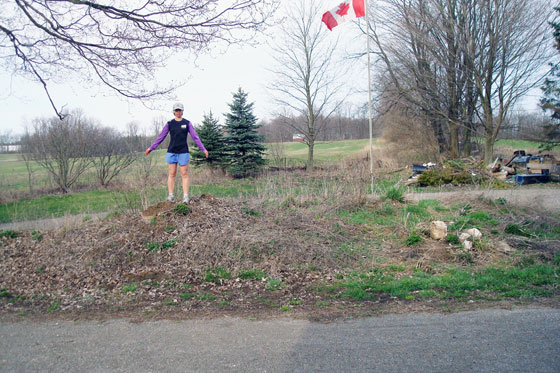
Allow me to illustrate the scale of our “mountains.” (And the pile of crap at the old firepit in the background. Ugh.)

Turnaround garden before

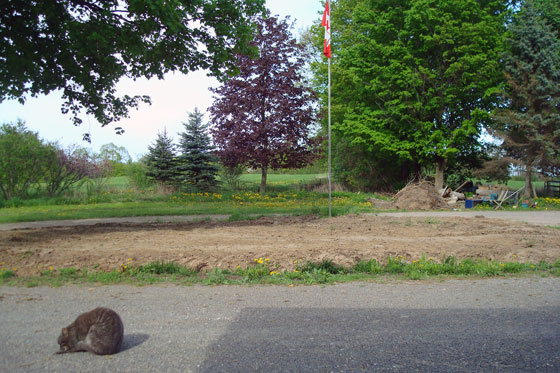
We did nothing to it the whole first year we lived here. Finally, in spring 2013, our farmer came by with his big tractor and flattened things out for us. Hello, Easter.

Turnaround garden before

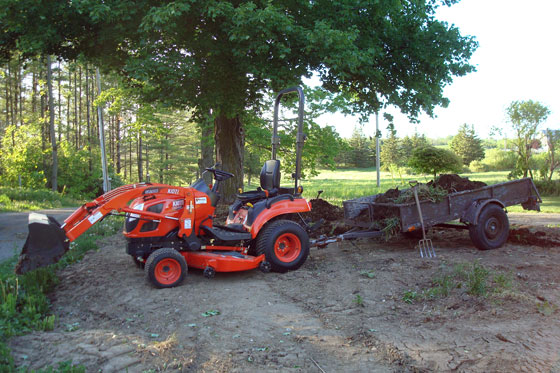
I enriched the soil with lots and lots of manure.

Kioti CS2410 towing a trailer full of manure

And my parents helped with mixing it into the soil and picking out rocks.

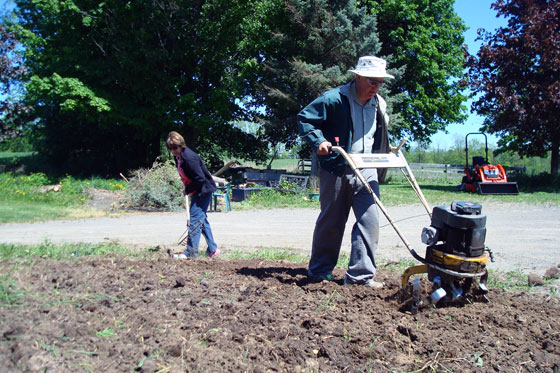
Rototilling a garden

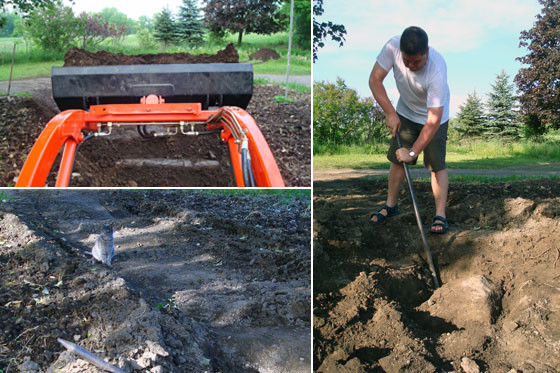
Wiley, Matt, Easter and I dug out a path across the turnaround.

Digging the pathway

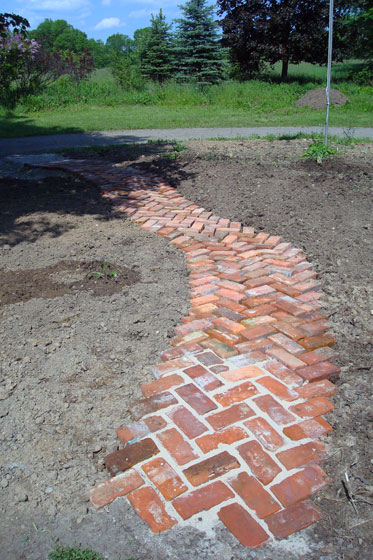
Then I laid a herringbone brick path.

Herring bone brick pathway

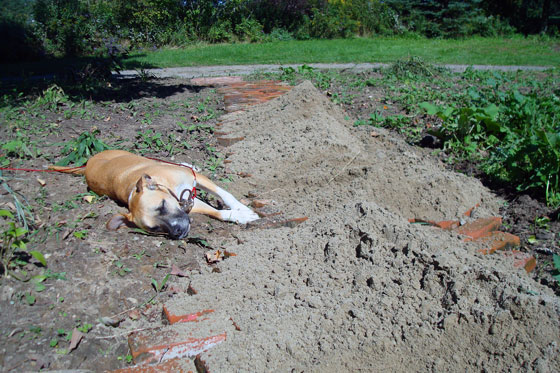
And Baxter joined the family in time to be part of the project, helping to fill the joints with sand.

Baxter helping with the brick path

Then things got a little weedy (a lot weedy). The turnaround is huge–the size of a suburban backyard. I just couldn’t keep up with it.

Weeds on the turnaround

At the beginning of spring 2014, I had given up on half the turnaround. Matt mowed the weeds. The other half was still weedy at the beginning of May, but I went to work.

Weedy flower garden

By the end of May, the turnaround was planted (half of it, at least).

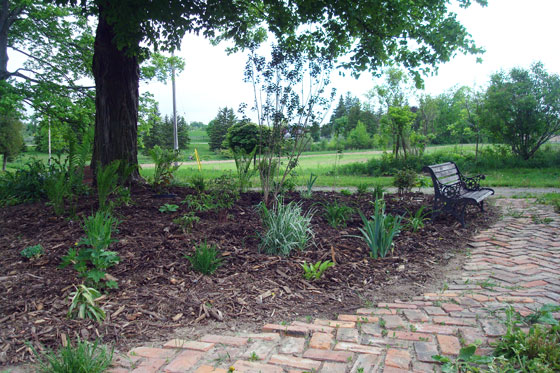
Turnaround garden in May 2014

And this year, it looks like an actual garden. (And I’m already starting to think about the other half).

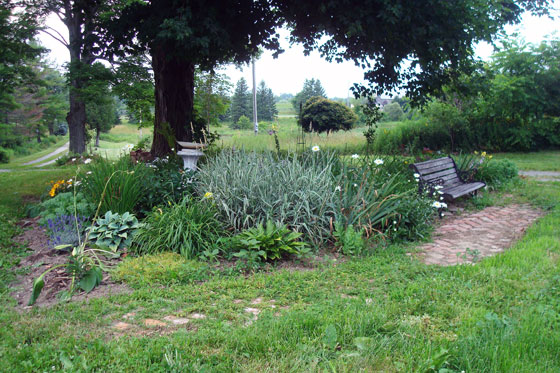
Turnaround garden in July 2015

I am amazed how much the plants have filled out in just one year. Everything in the garden, including the bench, the birdbath and the brick path, came from the farm or from family (except for the plants you saw on Friday). Transplanting and splitting–and a lot of hard work–have made this huge garden come together nearly for free.

The most important element of gardening in my opinion though is patience. Gardens take time to grow. But the payoff is huge. I’m so glad that I’m able to take a look back and realize how far we’ve come.

Evolution of the turnaround flower garden

Do you keep track of your garden’s progress through the years? Who else has a garden that’s taken awhile to come together?

When you are ready for planting

When my aunt came to the farm for the first time (three years ago), she brought with her as a housewarming present a gift card to a local nursery.

Gift card

It may have taken three years, but we’re finally ready for planting.

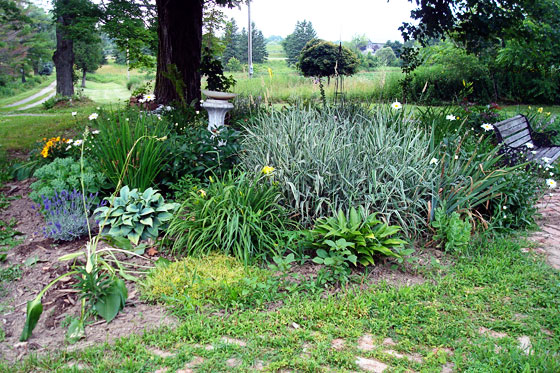
Well, we’ve actually been planting, using plants we found around the farm. We’ve been transplanting and splitting and spreading everything around, trying to fill in the gardens. And they’re looking pretty good. (Just ignore the weedy path).

Flower garden

There were a few gaps I was looking to fill in.

  1. I wanted some different colour foliage to break up all of the green we have happening right now.
  2. I wanted a shrub for the well garden.
  3. I wanted some lavender.
  4. I wanted a white hosta.

A visit to the busy nursery gave me what I was looking for.

Plants

It also gave me a reminder of why I don’t buy plants. Even with my aunt’s gift card, I shelled out a fair chunk of cash–and I only bought five plants.

Most of the plants will spread, though, so I should be able to get some good mileage out of them.

Here’s how some of them look in the garden.

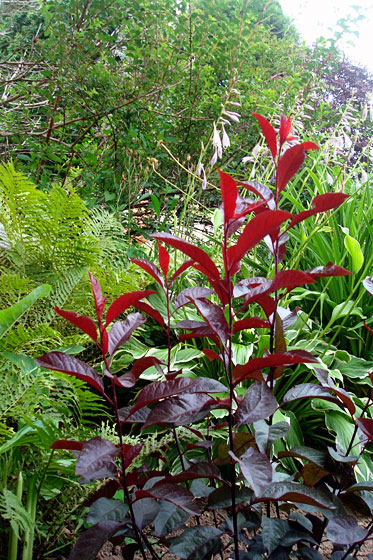
Purple sandcherry in the well garden. Definitely pops against the green.

Purple sandcherry

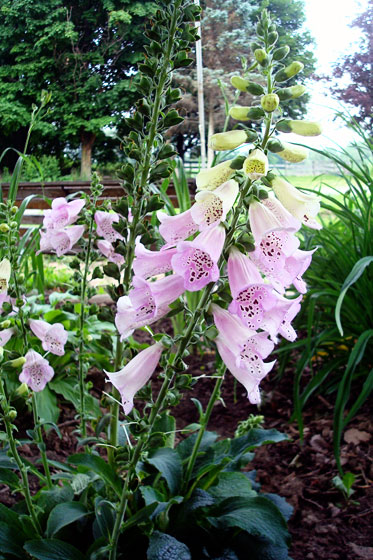
This flower wasn’t labelled at the nursery. Is it fox glove?

aaflowers14

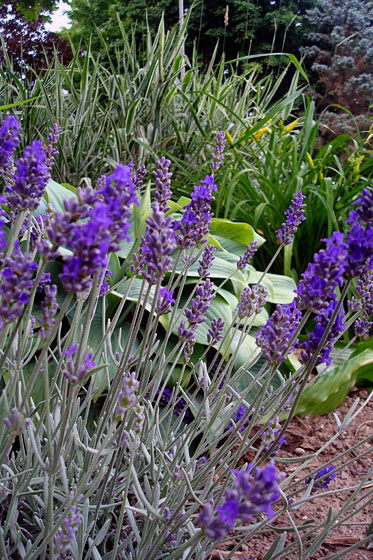
I heard that lavender is a mosquito repellent–so, so needed this year.

Lavender

And when it comes to propogating, I’m already rooting a sprig that broke off the sedum. I love this dark purple tone. (And ignore the weedy path again).

Purple sedum

Auntie Anne is a loyal reader of the blog, and she’s always enthused about what Matt and I are doing here at the farm. Her gift card has definitely given the gardens a boost. Thanks so much, Auntie Anne. We appreciate your encouragement.

What would you like to add to your garden? How do you find new plants for cheap (or even free)? What plant should I consider adding to our gardens? Do you have an Auntie Anne cheering you on?