The first day of summer meant the first harvest of the year on the farm.
The field behind the driveshed had been mowed earlier in the week, and by the time I came home on Friday, the hay was dry and had been mounded into long rows ready for baling.
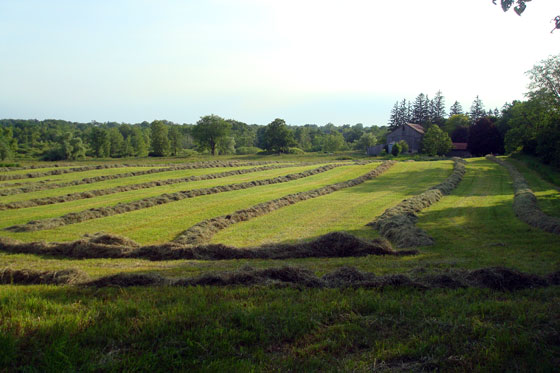
As soon as I got out of the car, I could hear the clanking of machinery in the big field. Matt and I walked out to see what the commotion was.
Two big tractors were baling the hay. Unlike last year’s first cut when we had big round bales, this year we had massive rectangle bales. Allow Matt–all six feet of him–to illustrate the scale.

As best I could tell, each of these huge hay blocks is made up of about 21 smaller size rectangle bales. For those not familiar with hay, it’s not any one plant. Each hay bale is made up of a variety of grasses, clover, flowers and other plants. Last weekend, when I walked out to the back field, I snapped some shots of the most frequently occurring grasses.

I’m not knowledgeable enough about haying to tell you what any of these grasses are. According to the farmer who manages our fields, we have a good crop of hay for this first cut thanks to a good amount of rain this spring and some doses of fertilizer earlier in the season.
Just like people have to mow the grass on their lawn weekly, the hay will grow back, and we should be able to have a second cut–or maybe even a third–in one year. Something I learned last year that surprised me was that the second cut is usually better–as in more nutritious–than the first.
So this scene may repeat yet this year.

How did you mark the first day of summer?











 Home on 129 Acres