Solar panels four years later

Solar panel array

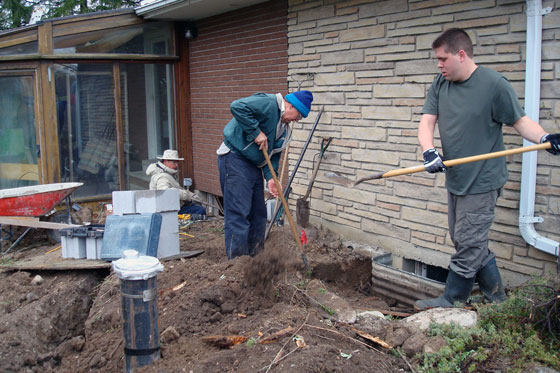
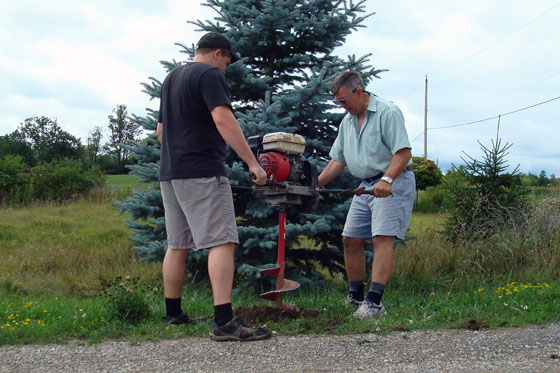
Four years ago on April 25, 2014, we powered up our solar panels and began feeding electricity back to the provincial grid.

Every spring, I like to look at our numbers and compare how we’ve done with past years. Here are our previous annual summaries:

We don’t track how many kilowatts we generate, so all of my calculations are financial.

Over four years, we’ve made a total of $17,469.28.

Our initial investment in the panels was $40,727.16, so I guess you could say we still have awhile before we’re truly ahead (based on this year’s numbers, our total payback period will be just under 8 1/2 years).

However, we already feel like we’re ahead every year because we consistently generate more power than we consume.

Last year, we paid $2,594.40 for electricity, and we earned $4,855.15–$2,260.75 in “profit.”

The amount of power we produce is very much determined by the weather, so we see a lot of fluctuation month-by-month and year-by-year. Last year we made more than $300 more than the year before. Here is the comparison over the last four years.

Solar panel income over the last four years

Obviously solar panels are a big investment. Knowing that we’re going to be at the farm for a long time, it’s a choice that made financial sense for us.

And now that we have Ellie, I feel even more strongly about the environmental reasons that we chose to install our solar panels. I want to do my part of create a healthy world for her and set an example of taking personal responsibility for the planet.

For all of the details on our solar panels, you can see previous posts about Going Solar here.

Creating a new family heirloom

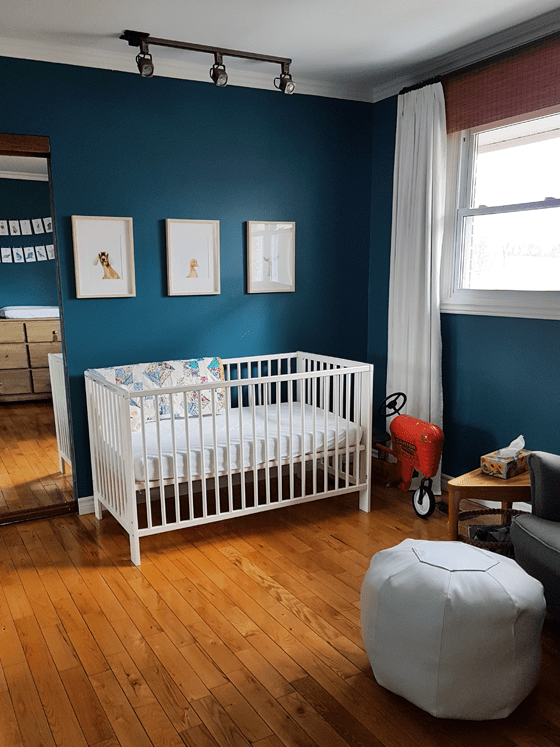
Turquoise gender neutral nursery

The words “new” and “heirloom” don’t really go together. Is it possible to create an heirloom?

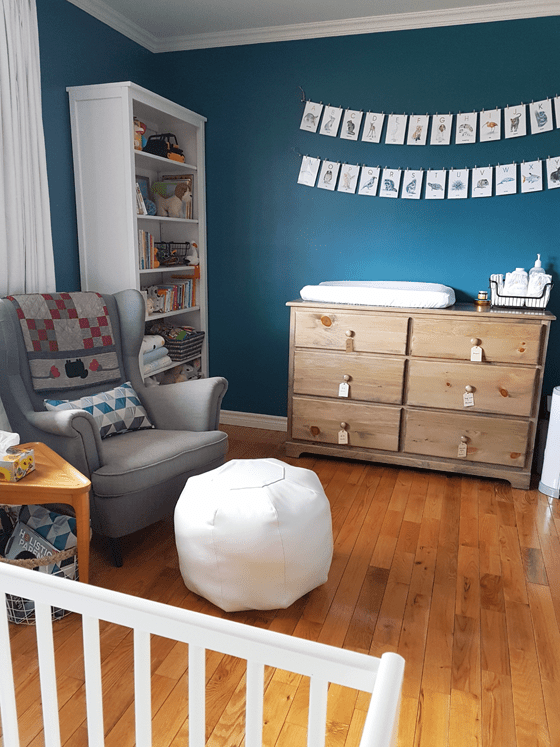
I love the dresser that we chose for Ellie’s room. You know I’m all about sentimental family pieces. This is a brand new piece of furniture, and I chose it specifically because I hope that it becomes a special heirloom for her.

It’s a solid wood, handcrafted gift from Grandma and Grandpa. I think it will last for many years and can have a long life beyond a baby’s room.

But whoa, it felt like a saga to get here.

Dovetailed drawer

Both sets of grandparents of course wanted to help us by buying some things for the new baby. When Matt’s parents redecorated his old bedroom, they had a Mennonite crafted dresser made.

Pine dresser

It’s country pine which is perfect for the farm, lots of drawers for storage, seemingly a good change table height (#firsttimemom #whatdoiknow). I thought something like it would be a really nice piece for the nursery–and I liked the heritage potential.

Matt’s parents were on board, so I met them at the furniture shop, and we picked out a dresser that was the same as theirs. But then the salesman told me the price. For a person who has furnished her home with mostly hand-me-downs or thrifted furniture, the sticker shock was immense. I wanted to walk out of the store and find a different dresser, but Matt’s Dad was sold.

We compromised by me paying the deposit, and they covered the balance.

Then I had to pick the finish.

Originally, I had planned to pick the same country pine finish that Matt’s parents have. But then I started to think about the rest of the furniture in the room. White crib and bookcase, grey chair. Would the addition of pine look too much like a garage sale?

The shop had a grey finish that still showed the grain of the wood, and I decided to go with that.

Usually I’m pretty decisive, but I started to doubt myself as soon as we walked out of the store. I quizzed my sisters, my Mom, my friends. Should I have gone with the pine? Or stick with the grey?

I saw this picture from Dina Holland and that sealed it for me. I loved how the grey dresser looked in the room that she designed, and I decided I’d made the right choice . (You can–and should–check out all of the rooms that Dina did in this house. They are colourful and fun and sophisticated and different from so much of what I see in decor these days).

As it turned out, I would have had plenty of time to change my mind. While the production time on the dresser was supposed to be two months, it took closer to three. Matt started to question whether the baby would arrive before the dresser.

But finally, everything came together (with free delivery to compensate for the delay). The dresser arrived and it was perfect. The size was right for the room (18 inches deep by 36 inches high by 54 inches long). The storage was abundant. The height is good for diaper changes. The grey finish still has a country style. And the quality of this piece means that it will be with us–and Ellie–for a long time.

I added simple wood dividers inside the drawers to help keep us organized (I cannot be bothered to fold baby clothes). Then I tied wooden labels to each of the knobs so that no matter who is dressing baby (including sleep deprived Mama), they know where to find things. The top is set up with the change pad and other diapering essentials.

Dividers inside a dresser drawer

Wood tags to label dresser drawers

Wood tags to label dresser drawers

In the future, I know this is a piece that will grow with Ellie and have a life beyond a change table and a nursery. I like thinking of it being in Ellie’s own home some day.

Turquoise gender neutral nurseryTurquoise gender neutral nursery

Do you have any furniture that you hope becomes an heirloom one day? How do you organize baby clothes at your house? What finish would you have chosen for the dresser? Anyone else suffer from sticker shock when furniture shopping?

Using a gardening calendar to track annual progress

Spring seems to be taking its time coming this year. A late-season ice storm meant that less than a week ago, the farm was still covered in snow. Conditions in Illinois are the same. Sarah in Illinois uses a calendar to track her annual progress in the garden, and she knows exactly how delayed the season is this year compared to last. She’s sharing her calendar–and lack of progress–today.

For someone who loves spending time out in the garden, this spring has been pretty frustrating.

On April 9 we woke up to this:

I keep a gardening calendar. Every year I write notes on it when I plant certain things, when I till the garden, when I see my first hummingbird, etc. Then each year when I get a new calendar I transfer all of my notes to the new calendar. Here is an example for April:

It is really handy to use as reference for anything outdoor related. However, this year it is really frustrating because I can constantly see how behind I am. Look closely:

Two years ago I tilled the garden on April 16 and last year I tilled it for the SECOND time on April 15. This year weather has prevented us from stepping one foot in the garden.

Now obviously I can’t do a thing about the weather, so I try not to let it upset me very much. Plus there are sure signs that the weather will warm up.

Remember the picture I posted above? Here is that very same tree 11 days later:

Has spring arrived where you live? Do you keep a gardening calendar or something similar? Have you been able to start working in your garden?

Oh Sarah, I feel your pain. We had sunshine over the weekend, and things not only melted, they finally started to dry out. I’m not sure that spring is officially here, but it seems like it might come someday… probably… hopefully.

DIY Moroccan pouf and other footstools you can make yourself

DIY Moroccan pouf free sewing pattern

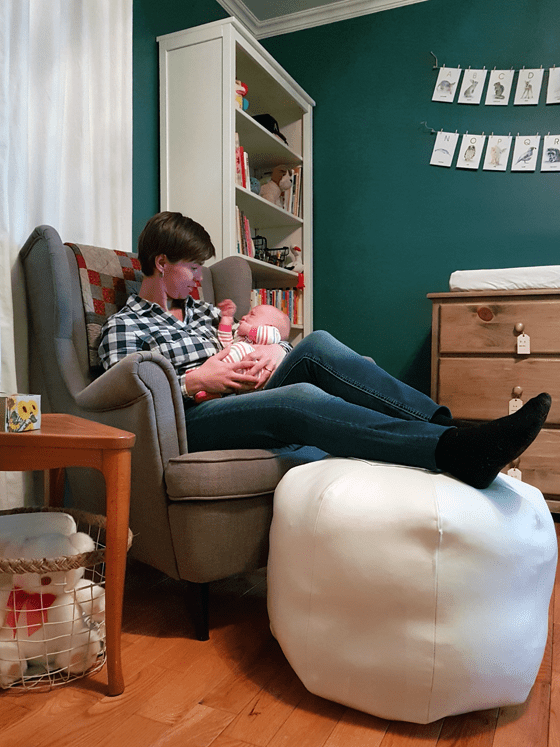
One of my must-haves for the nursery was a spot to put up my feet. I knew a footstool of some kind would make nursing, cuddling, storytime and all the rest of baby time much more comfortable.

I love the look of the Moroccan poufs, so I was excited to find a free pattern to sew my own from Better Homes and Gardens.

Free DIY pouf sewing pattern from BHG

I made a few modifications to my pouf. First, I lengthened the pattern just slightly. I extended the side pieces by about an inch to make my pouf a bit taller.

Another change was my fabric. Rather than using the burlap and muslin that the BHG team used in their sample, I went with a white vinyl. Wipeable, durable, good for a nursery. However, I will say that vinyl is not the easiest to sew, and as the pouf got bigger it was much more challenging to manipulate. I’m sure the burlap would be easy-peasy.

I also chose to do my top stitching by machine, rather than going with the decorative hand embroidery BHG showed. Vinyl does not fold and cannot be ironed, so the top stitching helps my seams to lay properly.

DIY Moroccan pouf

The final change was I added a zipper. Even though the vinyl is wipeable, I liked the idea of being able to remove the cover if I ever need to. So at the very bottom of the pouf, I put in a 20-inch zipper. Stitching a zipper in vinyl, especially where all the seams came together, was not my funnest sewing moment. (Again, in another fabric it would be NBD.)

Zipper in the bottom of a homemade Moroccan pouf

To stuff the pillow, BHG recommends towels and fibre fill. I happen to have a large stash of pillows (anyone else find the search for the perfect bed pillow challenging?), so I mined that to stuff the pouf. This thing held seven full size bed pillows. Honestly, I’d love to fit an eighth in there, but I’m afraid the seams might not hold. Getting the pillows to lay smoothly inside, so that the pouf doesn’t look overly lumpy took a bit of effort.

DIY Moroccan pouf free sewing pattern

As soon as the pouf was finished and I set it in the nursery, I was thrilled. It’s the perfect height with the chair, and the white goes well with the other elements in the room. Now that we’ve been using it for more than a month, I also have to say that I’m glad the pouf is light weight enough that I can kick it out of the way when I am trying to oh so carefully put Ellie back in her crib without waking her up.

Turquoise gender neutral nursery

I’m also really proud that I made this myself.

In my experience, poufs, ottomans and footstools are pretty easy to make. Even high-end poufs that I see online get my creative juices flowing as I think how I could make them myself.

Here’s a round-up if you’re looking for inspiration.

DIY Poufs

Ready-made poufs that you could DIY

If you’re looking for a Moroccan pouf similar to the one I made.

I think these buffalo check cubes were originally at Target and seem to now be discontinued, but they’d be super easy to DIY (a cube is really easy to sew). And wouldn’t the check fabric and the leather handles be perfect for a farm?

It might take a bit of searching to find a textural fabric like this, but once you do, it would be a snap to whip up this large ottoman.

Other footstools I considered

I truly love this Ikea cowhide footstool for its fit with our farm theme, but it appears to only be sold at Ikea in the US… and my DIY option was much less expen$ive.

My original nursery plan called for a lot of colourful accessories, like this beanbag ottoman.

A storage ottoman is a favourite for obvious reasons–it’s dual purpose, providing a spot to sit or rest your feet as well as a spot to stash blankets, toys or other nursery stuffs.

In the end, I’m very happy with my pouf. The price was right and so is the style.

What’s your favourite style of footstool? Have you ever made a pouf?

Our favourite children’s books plus the nursery bookcase

Bookcase in the nursery

One of the earliest things Matt and I did when we found out we were having a baby was buy our favourite children’s books. We each enjoy reading and we love the large book collection we have, so we want the same for our child.

Our two favourite children's books

For Matt, his book was A Woggle of Witches. He didn’t have this book growing up, but he checked it out of the library nearly every week. For him, he’s all about the pictures in this book, and he couldn’t really remember the story–or even the title until his Mom helped him.

A Woggle of Witches

The witches are afraid of the trick or treaters, even the cute little ghost dog.

For me, my book was an old anthology of Little Golden Book stories. I remember being read so many stories in this book. By far, my favourite is Jill’s Jack, the story of a young girl and her extremely friendly boxer puppy (it could easily be titled Julia and Bax IMO).

Children's story Jill's Jack

Children's story Jill's Jack

This particular anthology was published in 1951, so I was not optimistic that we’d be able to find a copy. But Matt found one on eBay and bought it for me for my birthday.

Beyond our two favourites, we’ve been gifted a lot of beautiful books, and we’ve built a great library for Ellie.

To hold the library I found an Ikea Hemnes bookcase on Kijiji for half what we would have paid new. Since the old backing was falling apart, I bought a piece of beadboard and installed that instead, and then I painted everything a nice clean white.

The bookcase fits perfectly in the corner beside the window and actually helps to balance our crazy off-centre window. Children’s books are not very thick, so we have plenty of space to tuck in some toys, mementos and extra storage. Plus I like that the bookcase will grow with Ellie as her library expands.

Turquoise gender neutral nursery

Ellie is now at the stage that she’s enjoying stories, and I’m loving working our way through her collection with a few books everyday.

Do you have a favourite book that you read your children (or perhaps was read to you)? I’d love to get more recommendations. How do you store children’s books at your house?

Early mornings in Illinois

I would not call myself a morning person, but there is something magical about those early moments in the day. Time to be alone and enjoy the quiet of the farm. Time to be productive and tackle a little bit of work. Sarah in Illinois–also not a morning person–has come to appreciate her morning routine. She is here today, sharing a bit about how she starts her day.

Having chickens requires me to get up a little earlier every morning to tend to them. This isn’t the easiest for someone who readily admits she is not a “morning person.” However, I do enjoy the fact that everything is a little more peaceful just as the sun rises. It also allows me to spend a little one on one time with Blitz. We like to play ball and visit with Ruff the barn cat.

These two have comically become good friends.

I think because it is early morning, and they both are still a little groggy from sleep.

When I leave the barn I usually pat Ruff on the head and her head is always soaked in Blitz’s slobbers.

I have begun to really enjoy this quiet time in the morning. It helps remind me to slow down and look around.

Are you a morning person? What do you enjoy about the start of the day? Do you have a pair of unlikely buddies around your house?

Aww. It’s great to meet your Ruff, Sarah. I wonder how she and Ralph would get along. Baxter and Ralph’s relationship is definitely not as buddy-buddy as Blitz and Ruff’s. I would say Ralph tolerates Baxter. She definitely does not allow him to slobber on her. It’s great that Ruff and Blitz have become such good friends.

How to make your own Eames Hang-It-All

How to make your own Eames Hang-It-All

I firmly believe you can never have too many hooks. Bedrooms, bathrooms, kitchens. Hooks are good.

So when I was putting the baby’s room together, hooks were on my list. We have a relatively large empty corner behind the door, which was going to be the perfect spot.

How to make your own Eames Hang-It-All

Originally, I planned to make simple hookboards similar to what I did in our master bedroom.

Brass and white hookboards

But then I had a brainwave. What about the Hang-It-All by Eames? It’s definitely not farmy or rustic. But it’s colourful and fun, which were some of the other qualities I was looking to incorporate into the nursery.

Eames Hang-It-All

The Hang-It-All is not at all in my price range ($200+ for a coat hook?). I did find a mini version for $4 at the Dollarstore of all places, but it was much too small for what I was looking for.

Dollarstore knock off Eames Hang It All

I decided my best bet was to make my own. Here is my tutorial.

Materials

  • Wire hook rack (mine are 20 inches wide and sport 12 hooks each)
  • Wood balls (1 inch, one for each hook)*
  • Craft paint or stain in your preferred colours (depending on what version of the Hang-It-All you’re making)
  • Scrap 2×4 and 3 inch finishing nails (for drying rack)
  • Glue (optional)

* You can buy wood beads, but I found that they were flat on two sides, rather than perfect spheres. Also, since the hole goes all the way through, you’ll have to patch one end with wood filler. If you go with the balls, you’ll have to drill holes in them yourself. Buy a few extra as they may split when you drill them.

Materials to make your own Eames Hang-It-All

Tools

  • Small paint brush
  • Drill and appropriately sized bit(s)
  • Hammer
  • Adjustable pliers or vice

I liked the look of the version that is white wire with colourful balls. But of course, I couldn’t find a rack in white (there are some good sources online). I bought a grey version and hit it with white spray paint in a very makeshift paint studio, also known as our utility room. (I really need the temperature outside to warm up again. This was beyond awkward.)

Makeshift spraypaint studio

Then I was able to begin assembling my homemade Hang-It-All. Here are my steps.

1. Remove rubber tips from your hooks. This is optional, but I found I was able to get a better fit on the wire itself.

2. Determine what size holes you need to drill in your balls. This took a bit of trial and error and a few balls were sacrificed in the process.

Broken wooden ball

Drilling smaller pilot holes with a 1/8 inch bit helped to keep the balls from splitting. For the final holes, I ended up going with a 3/16 inch drill bit. It was a tight fit, but the balls slid onto the hooks with a bit of muscle.

3. Determine how deep to drill your holes. I measured the length of the rubber sleeves that were originally on each hook and then marked my drill bits with a bit of tape so I knew when to stop drilling.

Mark your drillbit with tape to ensure you drill holes to the right depth

4. Drill your balls. (What a terrible sentence.) Use a vice or pliers to hold the balls. I found my adjustable pliers worked fine. I used an old sock as a cushion so that the teeth on the pliers didn’t mark the balls. Remember to stop when you reach the edge of the tape on your bit.

Drilling holes in wooden balls

5. Assemble your drying rack. Hang-It-Alls come in a variety of finishes. Whether you’re painting or staining your balls, a drying rack will be helpful to get a nice finish. I tapped a bunch of nails into a scrap 2×4, which worked very well. I could slip the balls over the head of each nail so they dried cleanly. Tip: Tilt your nails in alternate directions so you can fit more balls into one piece of wood.

DIY drying rack for painting wooden balls

6. Paint or stain your balls. A small craft brush will be helpful here. I tried to match Eames’ colours, but then decided to keep it simple with the primary and secondary colours. I was doing 24 hooks, so that meant 4 balls in each colour. Tip: If you’re staining your balls, watch out for different wood tones. I found between the two packages of balls that I bought, one was darker than the other.

I did two coats of paint. The finish with the craft paint is a bit dull, so if you like the glossy finish of the authentic Hang-It-All consider using a glossier paint or adding a final coat of a clear sealer.

7. Stick your balls on your hooks. My 3/16 inch holes were a very tight fit, so I didn’t use glue or any other adhesive. I simply twisted each ball until it covered up the dark grey unpainted tip of each hook.

How to make your own Eames Hang-It-All

8. Install your rack on the wall. Admire your handiwork and pat yourself on the back for being so thrifty.

Cost (for one DIY Hang-It-All)

  • Hook rack $11.28
  • Wood balls $5.99
  • Craft paint $7.14 (6 bottles at $1.19 per bottle)
  • Total $24.41

Much less than $200.

Turquoise gender neutral nurseryTurquoise gender neutral nursery

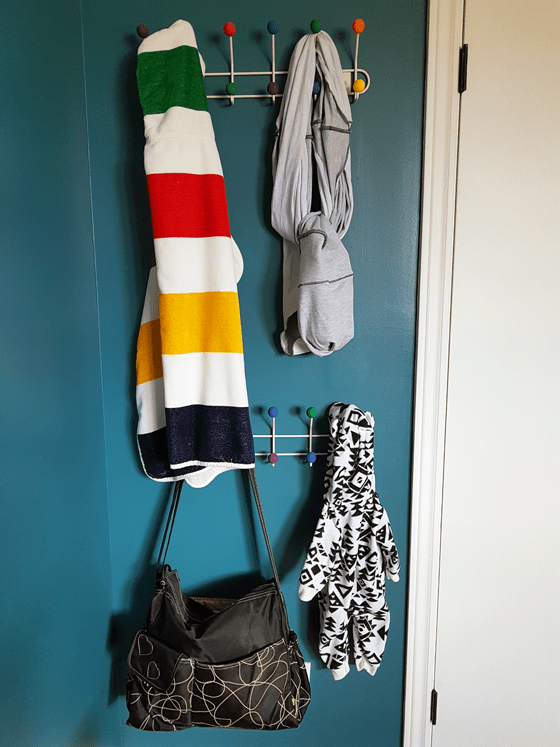
Right now, these hooks hold the diaper bag, our carrier, her warm outdoor outfit and a bath towel, and they’re a fun surprise when you look behind the door in the baby’s room. In the future, I can see these being useful for more tiny clothes and eventually dress-up costumes or backpacks.

For more about the Hang-It-All, check out this post by White Cabana.

How to make your own Eames Hang-It-All for less than $25

Creative, affordable and personal art for a nursery

My approach to art is all about keeping it personal and affordable. When it came to the nursery, I had so many ideas that I couldn’t fit them all on the walls.

I thought it might be helpful to share the ideas here–including some that we did and some that we didn’t. I’d also love your input on what art you’ve incorporated into your babies’ rooms and other ideas you have.

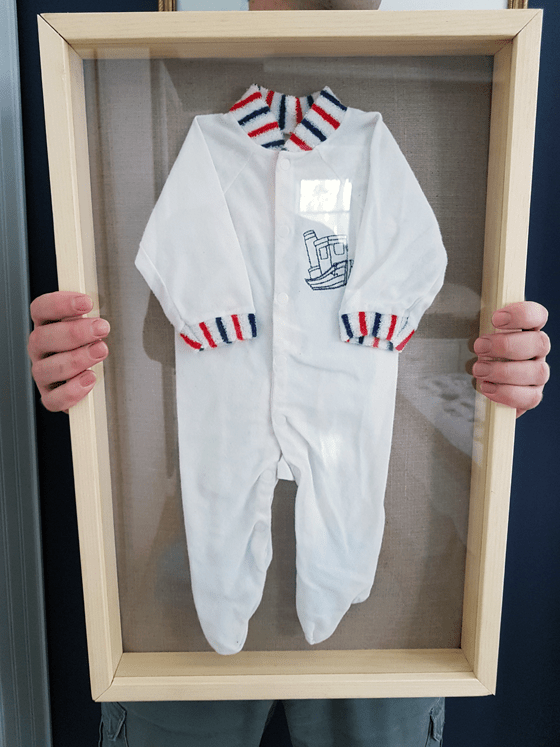
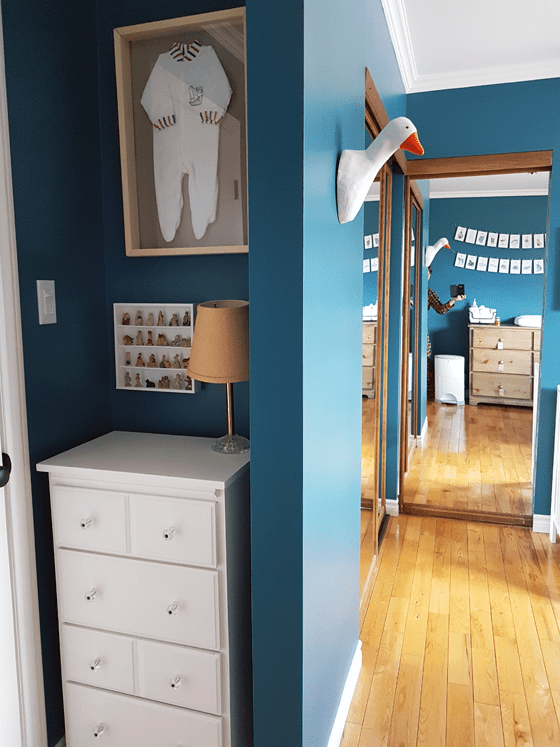
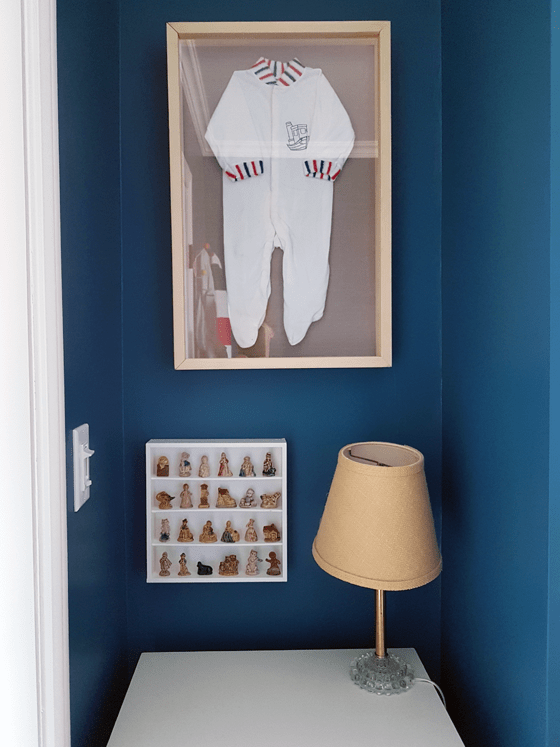
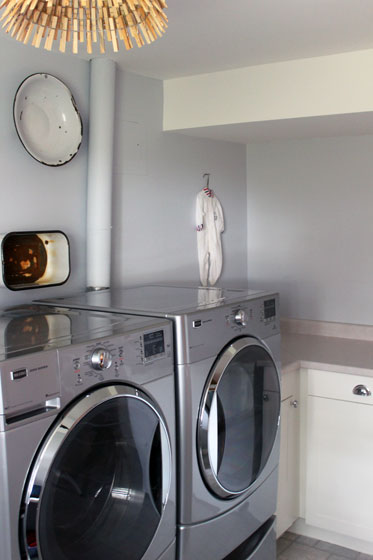
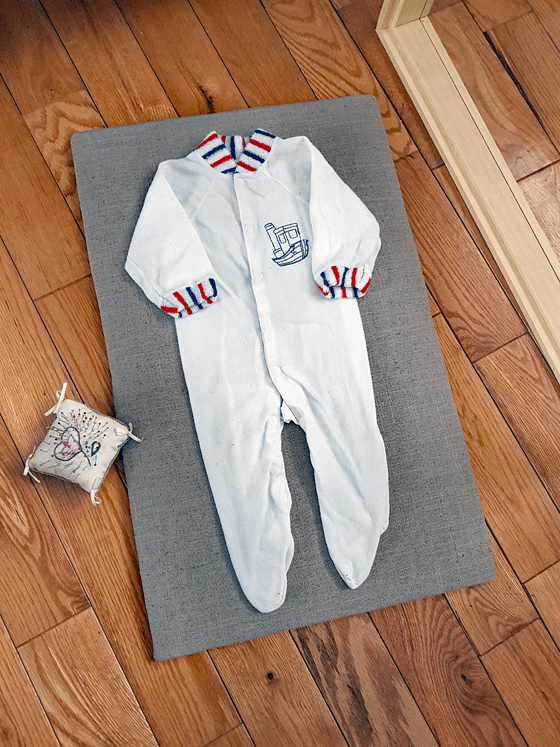
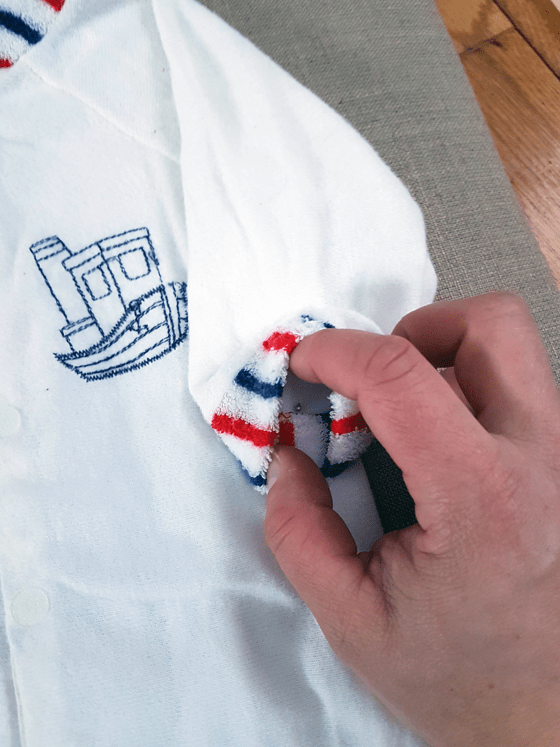
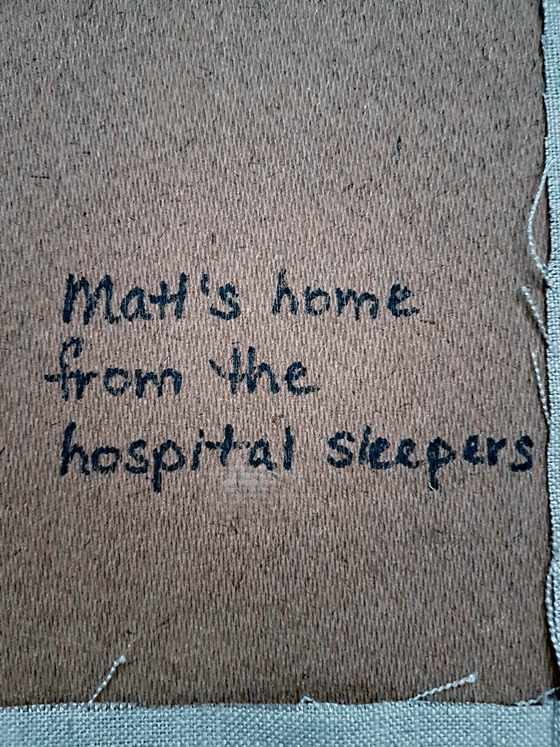
Family mementos – The most sentimental piece of art in the room by far is Matt’s first pair of sleepers. These were what he wore home from the hospital. Can you believe it?

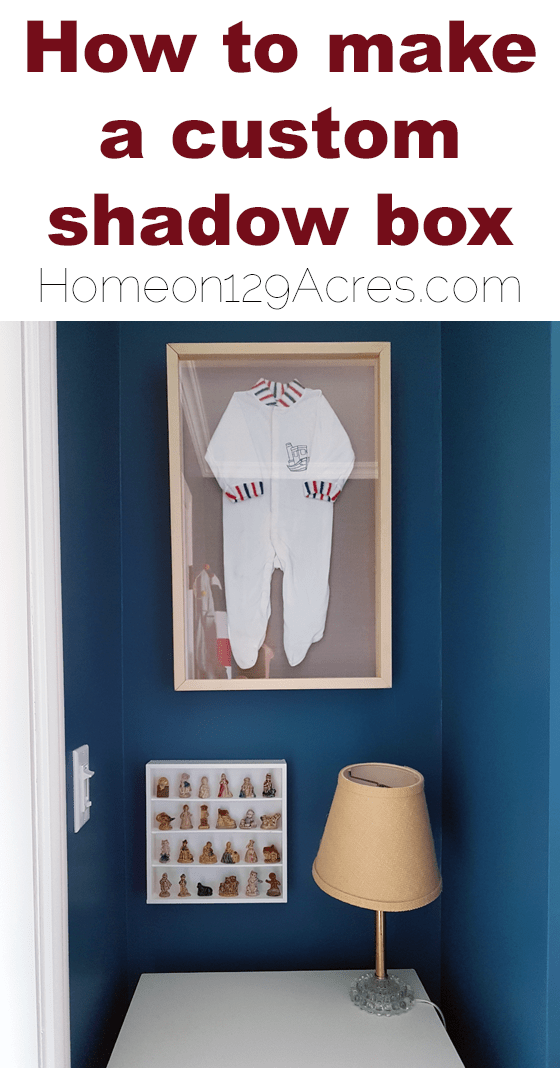
Baby sleepers framed in a homemade shadowbox

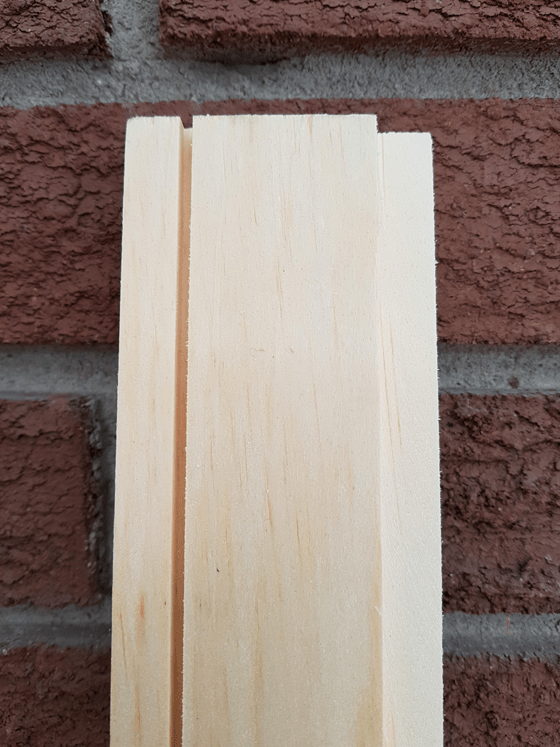
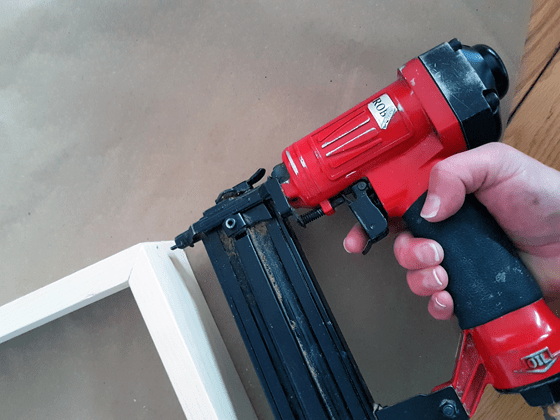
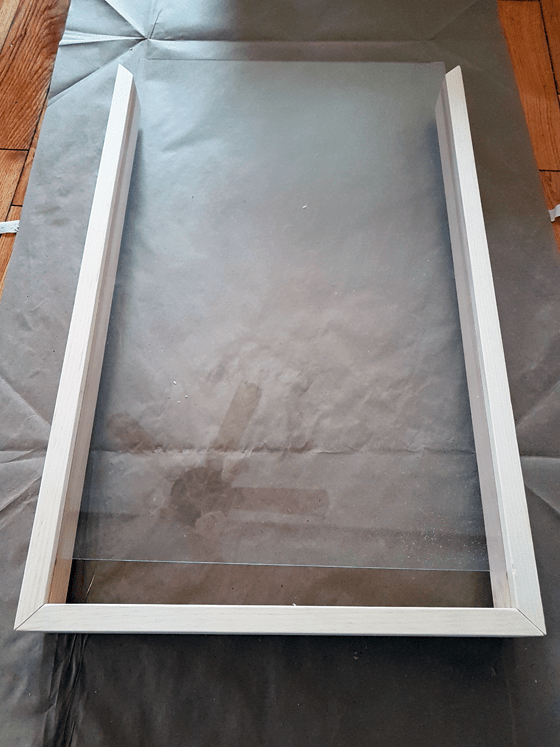
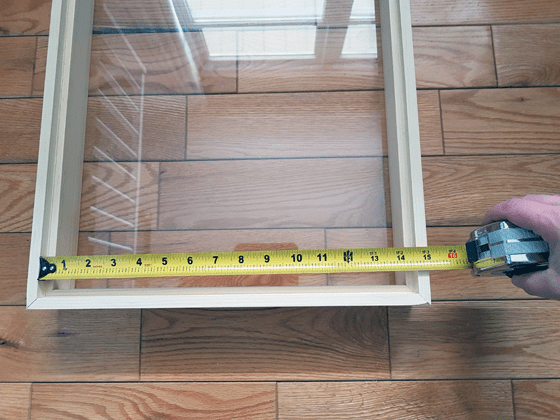
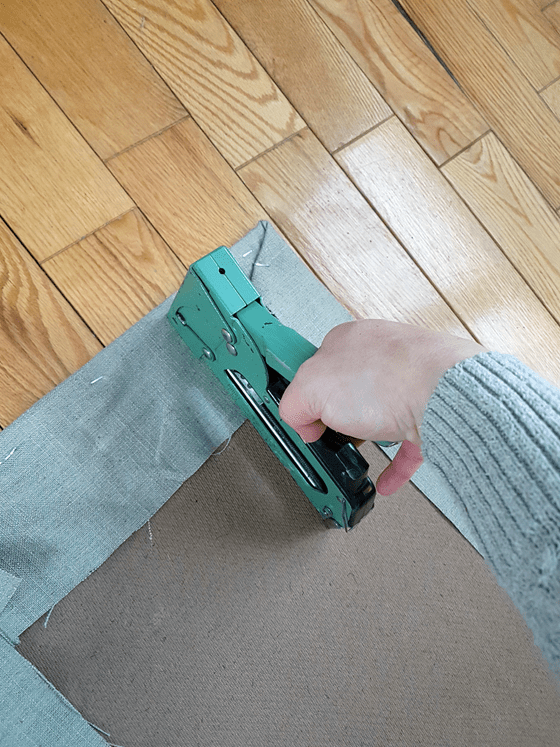
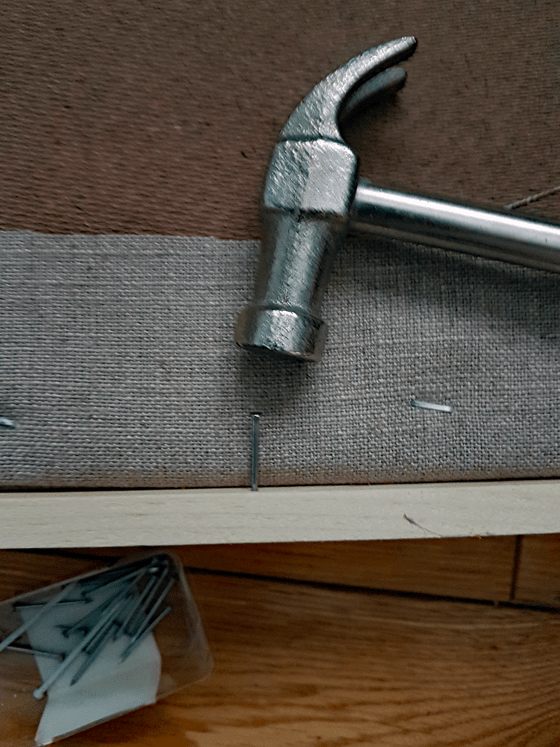
I built a simple shadow box, which protects and displays the sleepers and hung them in the little nook just inside the door. (I’ll be sharing more details on this project in an upcoming post.)

Anything can go in a shadow box–and a shadow box makes anything look artsy. Consider displaying a special toy, a small collection or a hospital bracelet. They would all make beautiful art.

Sleepers framed in a shadow box

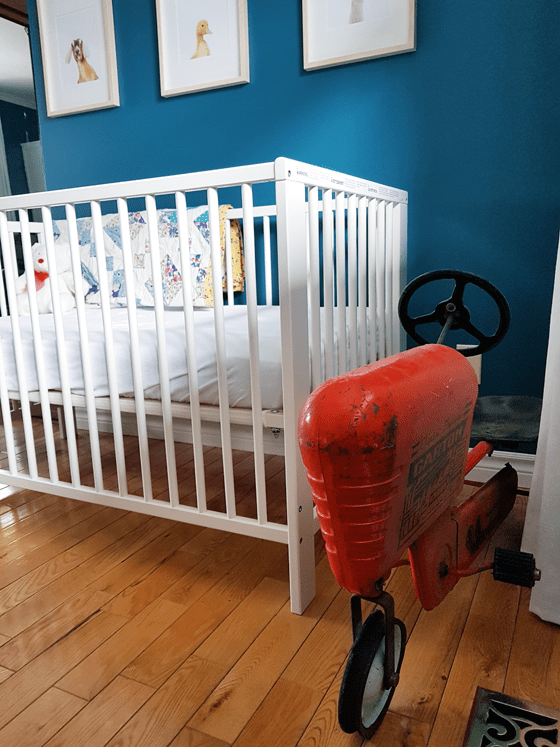
Baby animals – Is there anything as cute as a baby animal? Before we considered having children, I knew if I was ever decorating a nursery I wanted some prints from the Animal Print Shop–they’re a nursery staple for a reason. The photos are so crisp and full of personality.

Animal portraits in a turquoise gender neutral nursery

I picked three animals that you may find someday on our farm. They make me smile every time I see them–although Matt thinks the duck is scheming something. Paintings, drawings, illustrations or photos, there are lots of options online–or even on your own camera–to get some cute animal art.

Animal busts – While I’m not advocating taxidermy for a baby’s room–not that there’s anything wrong with that if that’s meaningful for you–I love the different options that are available now for displaying animal heads on the wall. Most are really fun and whimsical.

Turquoise gender neutral nursery

Way back, before the third bedroom became my office and before my office became the nursery, I bought a papier mache goose head on Etsy that reminded me of the pet goose I had growing up. Bill has made the transition from office to nursery, and I think he’s a perfect fit for our farm theme.

Paper mache goose head

A favourite story book – There are so many great children’s stories out there. Consider scanning or cutting pages from your favourite story book, framing and displaying them. This isn’t something we’ve done in our nursery, but I know exactly what story I’ll choose if I ever change up the decor.

Children's story Jill's Jack

Children's story Jill's Jack

Growth chart – While it’s not applicable to an infant, I love a growth chart to track Ellie as she grows through the years. I made growth charts for both of my sisters when they had their first children, and I was excited to make one for our own baby.

Ruler growth chart

Alphabet/numbers art – Babies and children are learning so much, and we want to start them off right. So educational art is a natural fit for nurseries. Plus so much of it is pretty cute too. I found these animal alphabet flashcards through The Grit and Polish and knew right away they’d be perfect for the baby’s room.

Alphabet flashcards above the changing table

Like many of the commenters on Cathy’s blog suggested, I had them laminated so if they ever go on to a life as actual flashcards, they hopefully won’t get too tattered. Rather than framing 26 individual cards, I strung a pair of twine clotheslines and clipped the cards up with miniature clothespins. Etsy is a great source for beautiful flashcards (my set are by Susan Windsor).

Alphabet flashcards hung on a twine clothesline

Ultrasound print – Ultrasounds are very special moments in our journey to being parents. For me, the first ultrasound was the moment our baby became real–“holy moly, there’s really something in there.”

Remember that moment you first “met” your baby with a print of an ultrasound picture. If you have a bit of Photoshop or design skills, this is something you can DIY fairly easily. Or there are lots of services that offer ultrasound prints these days. Chris Loves Julia shared one in their daughter Polly’s nursery.

Ultrasound art

Quote – I admit I’m not the biggest fan of typography art. A sign with a word or two just isn’t my thing. But these longer quotes that I first saw on The Painted Hive are absolutely lovely and really speak to me.

Book quote art by the Painted Hive

You could use a quote from a favourite story (this would go great with the storybook art idea above), a song verse, an inspirational wish for your child or something that is particularly meaningful to you. For a different treatment, The Handmade Home does beautifully coloured quotes.

My mama choice would be this poem from Kahlil Gibran On Children:

Your children are not your children.
They are the sons and daughters of Life’s longing for itself.
They come through you but not from you,
And though they are with you yet they belong not to you.

You may give them your love but not your thoughts,
For they have their own thoughts.
You may house their bodies but not their souls,
For their souls dwell in the house of tomorrow,
which you cannot visit, not even in your dreams.
You may strive to be like them,
but seek not to make them like you.
For life goes not backward nor tarries with yesterday.

A talisman – This idea may be a bit abstract, but sometimes there’s something that we associate with our children. At the baby shower Matt’s family hosted for me, his sister-in-law decorated each table with sunflowers and sent every guest home with a packet of sunflower seeds to plant in their gardens. Sunflowers have now become something that I associate with our baby, and I love the idea of incorporating a photo of a sunflower or an artificial sunflower into the room. Nicole at Making it Lovely wears a special piece of jewelry for each of her children, which I think is absolutely… lovely (of course).

Sunflower puckered up for a kiss

Online printables – There is so much beautiful art available online. Minted and Jenny’s Print Shop are popular sources, but there are many more too. Don’t forget free printables as well. This pencil drawing from Shades of Blue Interiors is an extremely moving image for me. I printed and framed this as a gift to Matt’s brother and sister-in-law just before they had their first baby, and I still may find a spot for it in our baby’s nursery too.

Shades of Blue Interiors nativity print

Silhouettes – Anyone remember tracing their profile in silhouette in grade school for art class? A silhouette of your child’s profile is a super easy DIY and super personal. I spotted this silhouette via Shailey Murphy on Instagram, and I love how the artist Kendra of Lilac Paperie incorporated flowers (including Shailey’s daughter’s birth month flower) and other elements to make it even more special.

Child's silhouette by Lilac Paperie

Family tree – I made this fan family tree for our master bedroom, but I think it would be perfect for a baby’s room too. Put her name and birthdate in the centre and then branch out from there. It’s a lovely reminder of the heritage you’re carrying on in your family. (Martha Stewart has a free template).

Fan family tree

There are so many more creative ideas out there for creative, affordable, personal art. You can make a space that perfectly fits your style and is meaningful for your family.

What’s your favourite art idea from this list? What other ideas would you add? Have you tried any of these? What art did you use in your baby’s room?

12 creative, affordable, personal ideas for nursery art

Ideas for a beautiful herb garden

Sarah in Illinois is back today with more gardening plans. This time, she’s focusing on herbs and the ever popular herb garden.

I was hoping that this blog post would be pictures of all my plants that I started from seed under my grow light.

I have started a poultry mix (a mix of clovers and alfalfa that chickens like to eat), and I have started some dill and cilantro from seed. Both instances I used my grow light and warming mat and the seeds broke through the dirt and that was it. I think that even though they are on a heat mat, the room is too cool for them to get a good start. So I will keep working on this project and report back later.

What I have been thinking about is what I plan to do with my herb garden this year. I am not sure if I have shared a picture of my herb garden before. Right now it is just brown sticks with that little patch of chives that I showed in my last post.

It is fairly small only measuring 9 feet by 3 feet. For the past two years I have grown chives, salvia, oregano, lemon balm, lavender, peppermint (all perennials), and I usually add in dill, basil, and sometimes cilantro.

I decided that since I have so many perennials that have filled the small garden, I need to set aside a larger and more planned out garden just for my herbs. Of the herbs that I currently have, I mostly use the chives and oregano. But when I look in our kitchen at the herbs that we use constantly, I realized that I really need to add more dill and cilantro and, although not technically an herb, I really need to be growing garlic.

The thing with perennial herbs is they spread. A lot. So if I am going to make a larger garden I need to make sure that I designate an area for each herb to keep any one herb from over taking the garden. Ever grown mint? It spreads like crazy!

One option is to use different sized pots stacked up like seen here. This would be good for someone with a small backyard or maybe just a deck or patio.

Here is an attractive container garden that uses cinder blocks to prevent the herbs from spreading. It has a modern look, and I am sure it needs watered often.

Cinderblock Succulent Planter

Source: contemporist

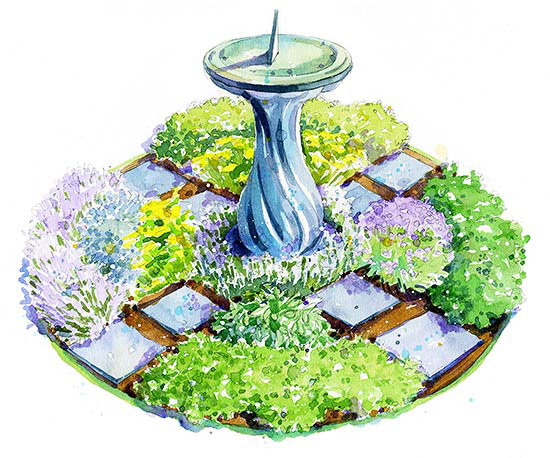
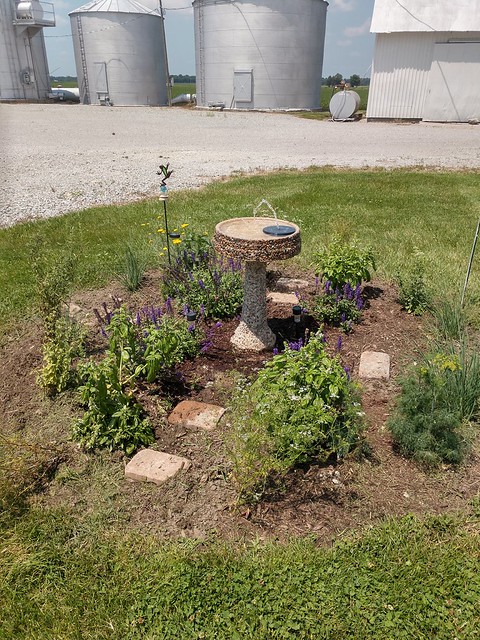
I am leaning towards creating a more formal herb garden, similar to the one seen here on Better Homes & Gardens. I have recently received my grandma’s birdbath and I need somewhere to display it. Surrounding it with herbs in a tidy layout sounds like something I would like.

However, I can’t help but be drawn to this beautiful herb garden. There is just something about the checkerboard pattern and every herb having its own little square that I am really admiring,

So what style herb garden do you prefer? Any suggestions on taming out of control mint? What are the most used herbs at your house?

Those are some neat ideas, Sarah. Rather than set up a dedicated space for herbs, I’ve spread them around our garden in the raised border beds. The one that’s spread the most is thyme, but we have so much space that I don’t worry too much about it taking over. I did plant mint for the first time last year, and I sunk a large pot in the ground first and then planted the mint in that. It looks like it’s part of the garden, but I’m hoping that the pot helps to contain it.

DIY Benchwright coffee table with double-sided drawers

DIY Benchwright Coffee Table

The Benchwright coffee table from Ana White (originally by Pottery Barn) has been on my wishlist ever since we moved to the farm. I loved the look of it, the storage potential that came with the drawers and lower shelf, and the DIY factor–building myself versus buying is pretty much always a win.

Well, I’m excited to share that the coffee table is finally done, just in time for Ellie’s arrival.

Ellie in her chair on the coffee table

In a lot of ways, the new coffee table may not look all that different from our old one.

Comparing our old and new coffee tables

The old one cost $15 at a garage sale when Matt and I were furnishing our very first house. My Dad helped me add a lower shelf, and then I painted the whole thing dark brown–and I just discovered that I missed a spot on the inside of one of the legs. It only took me 10 years to notice. Whoopsie.

The size and the shelf worked really well for us, so I knew I’d like those on the Benchwright. But I was ready to move away from the heavy brown paint to real wood, and I loved the idea of drawers to tuck things away–like remotes, if it turns out our new small person likes buttons.

Drawers on the coffee table

I won’t post a full tutorial because Ana’s plans have that pretty well covered. I’ll talk a bit about some of the changes I made and what worked and what didn’t.

I will say that this is my first time using an Ana White plan. I think her library is a tremendous resource for DIYers. I would agree with the “advanced” rating on this plan, not because of the drawers or overall complexity, but because a certain amount of detail is skimmed over on the plans.

I’m not sure if this is typical of Ana’s plans, but I often had to study the drawings, written instructions and cut list together to figure out what piece went where. In fact, I had two tabs open on my computer so that I could quickly reference the cut list without scrolling up and down repeatedly.

Nothing stumped me, but I did spend some time figuring things out as I went, and I think that would have been the case even if I hadn’t customized the plan.

Speaking of, I made one big change to this coffee table by doubling the number of drawers so that we had two on each side.

DIY Benchwright Coffee Table with four drawers

On the fireplace and TV side we can store newspaper, the lighter or DVDs.

Drawers on the coffee table

Then on the couch side we can tuck away remotes, magazines, books or other Mama and Daddy things.

The shelf underneath can hold bébé things, like toys or books–and be easily accessed for time in the baby jail play yard.

Toy storage under the coffee table


Doubling the number of drawers was not as difficult as I thought it might be. If you want to do this yourself, it’s important to start building the coffee table at step 8, the drawer frames.

Two sets of drawers slightly changes the dimensions of the coffee table, so you need the drawers first to determine all of the other measurements.

In Ana’s plan, the table measures 24 inches wide from the outer edge of each leg (this is not the overall width, as the top has an overhang that makes Ana’s table 27 1/2 inches wide in total). My table ended up being 27 1/4 inches from leg to leg.

In Ana’s plan, her drawers are 16 inches deep. I didn’t want the table to turn out too much wider than hers, so I shortened the drawers to 12 inches. All of the length measurements I kept the same. As you can see from the measurements above, my table ended up being 3 1/4 inches wider than Ana’s–not too much bigger.

I made two face frames–Ana’s plan calls for just one–so that I had one for each set of drawers. All of the drawers connect to one centre support, which again, I built according to Ana’s plan. The only change was the location because my support is right in the middle of the table.

Benchwright coffee table drawer frames

The back end of the drawer slides share the centre support. Installing the drawer slides determined the placement of all of the frames and the overall dimensions of the table. I used 12 inch drawer guides by Richelieu and attached them with 3/4 inch screws.

Richilieu 12 inch drawer guide

Attaching drawer guides with 3/4 inch screws

Drawers are intimidating to a lot of people. They’re actually not all that difficult. With purchased slides, you build your drawers to be 1 inch smaller than your opening. The slides take a half inch on either side.

On the table, you attach the slides in 3/4 of an inch from the outside edge. On the drawer, you attach them even with the front edge of the box. At the end, you cover the front of your drawer box with a “face” that hides the slides and the gaps. (Ana’s plans cover all of these details, so trust the instructions.)

Ana preaches throughout the plan the importance of building your drawers and frames square. I found that wasn’t a huge challenge. I followed the measurements, used my speed square and made sure my saw blade was set properly. The result was that everything stayed pretty square.

Speed square

Once I had the drawer frames built and the slides installed, I knew what the new width of the coffee table was going to be. Again, 27 1/4 inches (not factoring in the top).

This affected the side “aprons” on the top and bottom, and the dimensions of the bottom shelf and top. Again, I kept the length and height the same as on Ana’s plan.

Benchwright coffee table drawer frames

So with the drawer frames done, I went back to step 2 and started building the base. I say step 2 because for the bottom shelf (step 1), I used a piece of nice plywood, rather than piecing it together out of 1x12s as the plan called for. I had some good quality plywood leftover from another project, and it seemed easier to use that when I would have had to add an additional small piece of lumber to the 1x12s to get the width I needed.

Benchwright coffee table base

The one issue that I uncovered with the base, which would have been an issue even if I’d built the coffee table completely according to plan, was teeny gaps around the legs and drawer frames. Ana’s plan relies on exact measurements of your lumber. As in no overlap.

Gaps

They’re little tiny hairline gaps (despite looking giant in that picture), but they had me worried for awhile. I didn’t love the idea of seeing the gaps on my finished table. Fortunately, with the drawers and top in place, there are enough shadows that you can’t tell the joints aren’t completely tight. If I shine a flashlight through them, you’d see them, but I don’t expect that to happen, so I’m not worrying about them now.

For the top, you may recall that I debated whether 1-by or 2-by stock was the best choice. The resounding feedback on my last post was 2-by and you guys were all right.

Toy storage under the coffee table


When it came to the top, I decided that I wanted less of an overhang than Ana’s plan called for. Her table appears to have a roughly 3 inch overhang on either end and 1 3/4 inch overhang on the sides. I decided a 1 inch overhang all the way around was what I was aiming for, which meant my top was going to be 52 inches by about 30 inches.

The top is probably the area I struggled with most. Calculating the dimensions and the materials I needed wasn’t the problem. The problem was the wood itself. I bought all of my lumber at Home Depot, and the selection at my local store was terrible. In the 2×8 and 2×6 piles (I ended up using both to get the measurements I wanted), most of the wood looked like it had been chewed by a wild animal. Those that hadn’t been mauled were twisted like spaghetti noodles. In hindsight, I should have gone to my local lumber mill, but after this pregnant lady had single-handedly dismantled most of the stack, I just wanted to buy some wood and go home.

As I did when I made our wood countertop, I had the wood milled to ensure my pieces were completely square without the rounded edges typical of stock lumber. The staff member at HD was not at all happy by my request (apparently they’re not permitted to rip lumber like that), but he did it for me (looking over his shoulder for his manager the whole time).

The square edges make it much, much easier to get a tight joint and smooth top between the boards. However, because my lumber was so badly warped, we ended up with a few imperfect joints. Matt used all of his strength to try and hold the boards straight while I screwed them together (using my Kreg Jig).

In the end, the joints aren’t bad, but they aren’t great. I used a bunch of woodfiller, which is visible along some of the joints. I also sanded and sanded a few spots that were particularly chewed, which gave us a couple of dips.

Pregnant lady sanding

The biggest issue though is that the top as a whole had a huge twist from the warped boards.

Warped coffee table top

When we attached the top to the base, it pulled the base out of line. We ended up with a very tippy table. Matt’s advice was to ball up some paper and tuck it under the elevated leg. Thank you, husband.

Uneven table leg

My solution was that we each spent some time sitting on opposite corners of the table, trying to bend the top back into shape. We managed to twist it in the right direction a bit, but not quite all the way. I leveled it with a stack of foam pads. Perhaps not all that different than a ball of paper, but I feel like it’s a little less obvious.

Levelling coffee table with foam pads

Fortunately, all of our drawers still slide nicely and haven’t been pulled too far out of square. Just in case each drawer fits slightly differently, I’ve labelled the bottom and frame of the drawers so that we know which goes where.

Labelling drawers

Labelling drawers

None of our furniture is precious, so I’m happy to live with the top as it is. We have meals and snacks at this table. We put our feet up. Some day, Ellie will likely be drumming and then colouring on the coffee table. I’m not going to worry about any of it.

If I decide to in the future, the top will be easy to rebuild–with better lumber. It could also be replaced with a beautiful live edge piece if I want to go for something a little more precious.

We finished off the table with stain in Minwax Provincial, a couple of coats of Varathane and simple black handles from Lee Valley.

Black drawer handles on the coffee table

I’m very pleased with how it all came together and that we were able to build this ourselves. I love having it in the living room after years of envisioning it in our home.

DIY Benchwright Coffee Table

Thanks Ana for a very good plan. Thanks everyone for your input on this project. If you have any questions about the drawers or other aspects of this table, please leave a comment, and I’ll do my best to explain my process.