Operation popcorn

You know those things that you have to do, want to do, but don’t really want to do? That’s this month’s project.

The plan is to start our master bedroom makeover. Step one is remove the popcorn ceiling (the fan’s on the list too).

Popcorn ceiling

I’ve been saving this project until I could open the windows, as there is likely to be a bit of dust and mess.

What are you up to this July? Do you have any tips for removing stippled ceilings? In the basement, I scraped some and sanded others. Sanding’s way messier, but I got a nice smooth finish and had to do less patching.

How to make a fabric-covered bulletin board

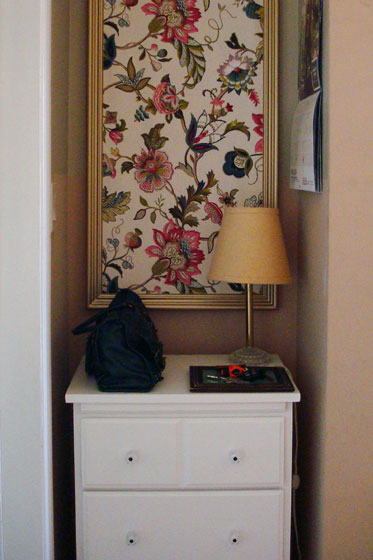
While the dresser may be the workhorse of my new office nook, the beauty queen is definitely the fabric-covered bulletin board that hangs above it.

Pretty home command centre

Since I was working with such specific measurements in this tiny space, I decided that my best option was to make my own bulletin board.

Home Depot sells prefab cork panels that are 48 inches by 24 inches, very close to the dimensions I needed, so I started with that. Then I found a piece of decorative molding to build my frame. I considered some of the very fancy crown moldings, but a lot of those are very wide. Given that I only had about 20 inches total to work with, I didn’t want to take up too much space just with the frame. I wanted as much pin-up space as possible.

For the back of the frame, I bought some 5/8 inch by 2 inch strips. After ripping them in half, they were about half an inch narrower than my molding. By attaching them to the back of the molding with some glue and little nails, I was able to make a recessed area for the cork to sit.

How to make a bulletin board

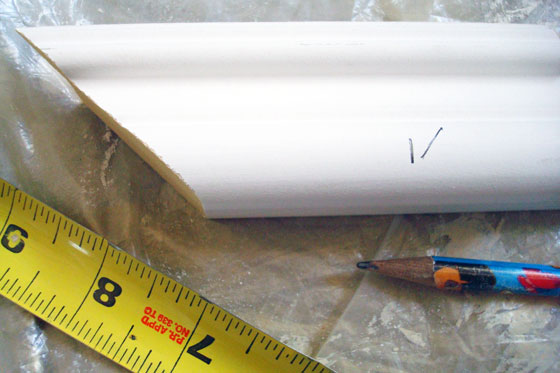
I used my mitre saw to cut each side of the frame to the right length at a perfect forty-five degree angle. Tip: When you’re cutting pieces on an angle, mark your desired length as you usually would at 90 degrees. Add a tick mark to the left or right to remind yourself which way you’ll need to angle your cut your.

Cutting decorative molding on an angle

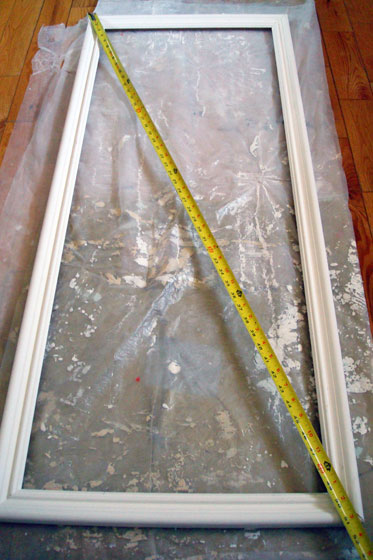
Each corner got a few dabs of glue, and then I nailed them together with my Dad’s nail gun. Tip: To check that your frame is square, measure diagonally from corner to corner. The dimensions should be the same between each diagonal pair. Twist your frame a bit to the left or right until your measurements match exactly.

Checking for square

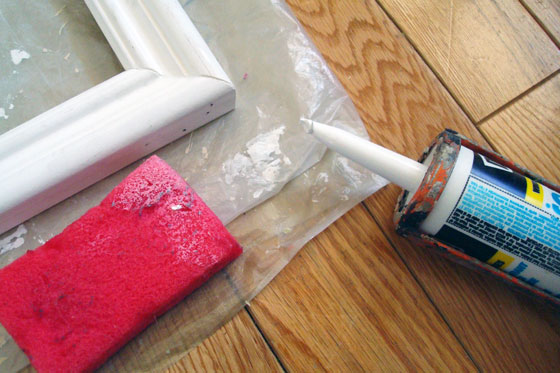
Once my frame was perfectly square, I caulked all of the nail holes and corner joints. Tip: Keep a damp sponge on hand as you’re caulking. Wetting your finger before smoothing out the caulk gives a nice even finish. Plus the sponge gives you a spot to wipe any excess caulk off your hands before you get it all over yourself. Not that I’m speaking from past experience, or anything. Oh, and make sure you choose paintable caulk.

Wet your finger before smoothing out caulking

I let everything dry and then it was time for paint. I knew I wanted a bit of glitz, so I decided to go with gold. A few light coats of spray paint did the job.

With the frame done, I moved on to the cork. The prefab piece was close, but just a bit too wide. It cut easily with a knife, and then a quick rub with fine sandpaper smoothed any ragged edges. Tip: Cut the the cork about 1/8 inch to 1/4 inch smaller than the frame. A little bit too loose is better than too tight. Plus any gap will be hidden by the recessed channel behind the frame.

Cutting cork with a knife

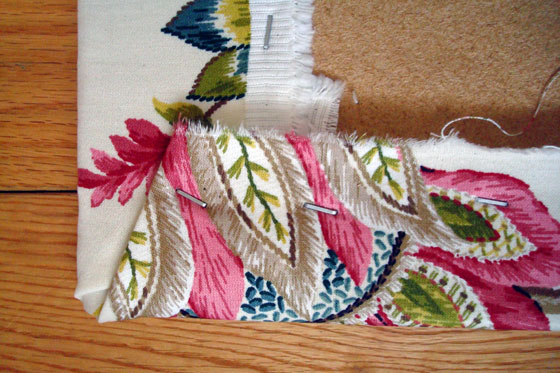
Covering the cork in fabric was no more complicated than wrapping a present. I cut the fabric about 6 to 7 inches bigger than the cork panel, so that I had plenty to wrap around the back. I pulled it taunt and stapled it in place. The corners got a bit of extra pleating and a few extra staples.

Staple the corners on the backside of the cork

I slipped the cork into the frame. To hold it in place, I tacked staples part way into the frame at four different points around the back side of the frame. I can easily pull these out if I ever want to change the fabric.

Use staples to hold the bulletin board in the frame

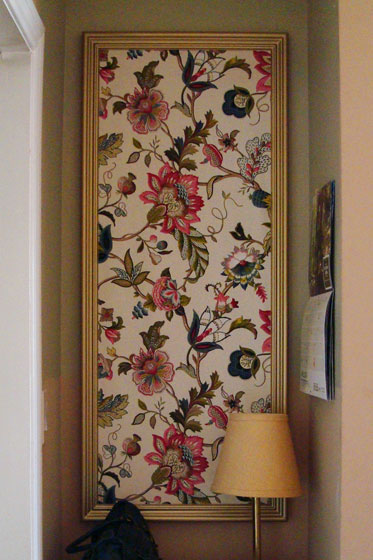
I flipped it over and was dazzled. Pretty! Pink! Flowers! Colour! Gold!

Fabric covered bulletin board

I was so dazzled that I didn’t spend too much time coming up with a technical solution to hang it on the wall. I just wanted it up. My solution was two finishing nails hammered into the drywall on the same level. Their small heads fit easily between the edge of the frame and the cork, and the board is light enough that that’s all the support it needs.

Anchoring securely might be more important if you have small children or other things you don’t want bulletin boards falling on, although we’ve had no issue with the board shifting or falling since I installed it.

Fabric covered bulletin boards are a pretty easy and popular DIY. Have you ever made one? How do you bring beauty to functional pieces like bulletin boards? Are you a floral sparkle fan?

How to make a tall narrow dresser

When I reorganized the tiny nook in my office, I knew that I had to add some kind of storage. A dresser was the ideal solution. Drawers would allow me to tuck things away, and the surface would give me a spot to write notes and set my purse and keys.

So I had some pretty specific requirements: drawers, about counter top height, oh, and it had to fit in the nook, which was 16 inches deep by 24 inches wide. Of course, it also had to be cheap.

Well, I had no luck finding a piece of furniture that met those standards. However, I soon realized that nightstands often have drawers and are usually small enough to fit this little space. While nightstands are much shorter than countertop height, they usually come in pairs. Couldn’t I just stack them one on top of another?

It turns out, yep, I can.

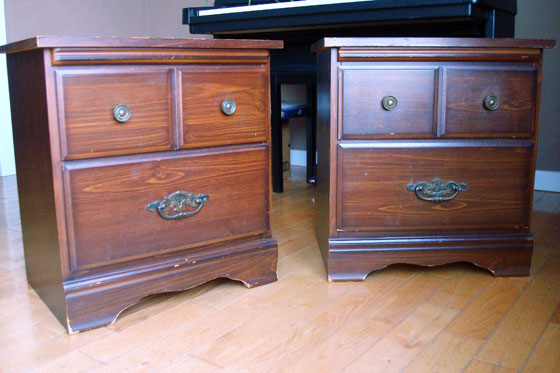
Here’s what I started with. Two little nightstands I found at the Salvation Army thrift store for $12 each.

Two vintage night stands

First step of any furniture makeover: remove the drawers and the hardware. It turned out that one of the drawers contained a plastic hardhat, so I got distracted by that for a little while. Consider this your PSA to always wear safety equipment (hardhat, safety glasses and ear protection) while DIYing.

Geeky safety equipment

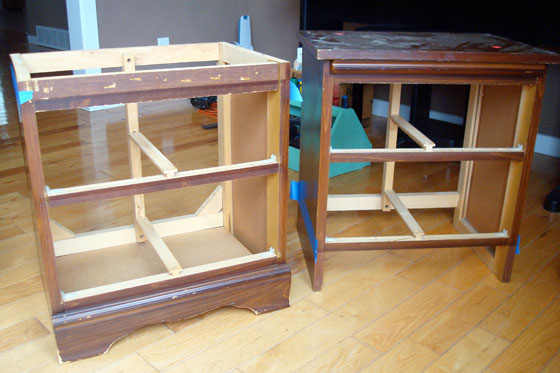
Anyways, back to work. I started taking apart the dressers. I popped the backs off of each of them. Then I took the top off one and the bottom off another. The nightstands came apart really easily. The backs were just stapled in place. The top was attached to corner blocks that were screwed in place. The decorative trim at the bottom was tacked with some little nails. I needed a few different tools, and I was thankful for my stubby screwdrivers that fit in some of the tighter nooks and crannies, but dismantling these pieces of furniture was not a taxing task.

Dismantled night stands

Once they were apart, it was time for something that was a little more taxing: cutting. The nightstand that was going on the bottom had to be trimmed along the top, and the one that was becoming the top half had to be cut down along the bottom. Clear? I measured the spacing between the drawers to figure out exactly where to make my cut and marked the line with painters tape.

Marking a cut line with painters tape

Four quick slices with my circular saw, and the dressers were the right height. I set them on top of each other and was super excited. It was looking like I envisioned.

Making a dresser out of two night stands

Now I just had to figure out how to actually attach the two halves. When I’d taken apart the dressers, I’d removed some side braces. I was able to reuse those pieces on the inside of the dresser. I ran them half on the bottom and half on the top and screwed right through the side into the brace. My dresser was now all one piece and it was solid, but it was ugly. No amount of wood filler was going to fix that joint.

Attaching two night stands to make a dresser

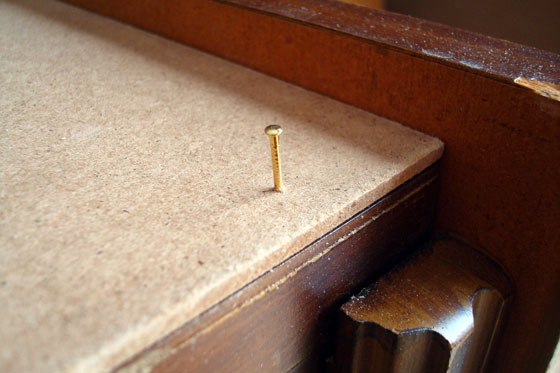
The solution was overlaying a very thin panel along the whole side. I had 1/8 inch MDF, which I cut down to the exact dimensions of the side of the dresser. I tacked it in place with small finishing nails, and it covered up the gap completely.

Tacking a board in place with small brass finishing nail

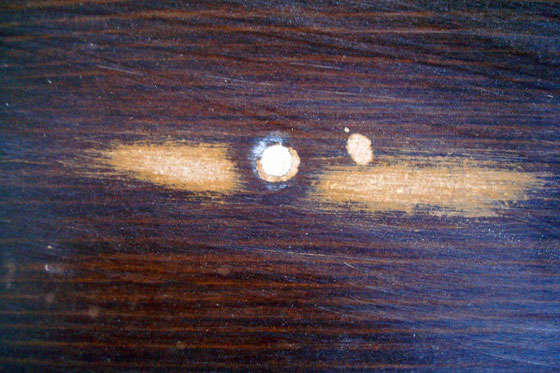
A bit of wood filler camouflaged the joint on the front of the dresser. While I had the wood filler out, I filled the holes on the drawers where the original pulls had been and a few other spots on the dresser where the veneer was chipped.

Filling holes with wood filler

After a light sanding all over, I primed the dresser and drawers, and then they all got a coat of creamy white paint–Cloud White in Benjamin Moore’s Advance formula. This was my first time using Advance, and I really like it. The finish is nice and smooth (I used a foam roller), it has none of the stickiness that you sometimes get with latex after it dries, and it has been very durable. In the past, I’ve used heavy duty oil paints on furniture or cabinets. The clean up is a pain and the stench is noxious. None of that is an issue with Advance, and in my opinion it’s held up just as well as an oil finish.

Painting a dresser with a foam roller

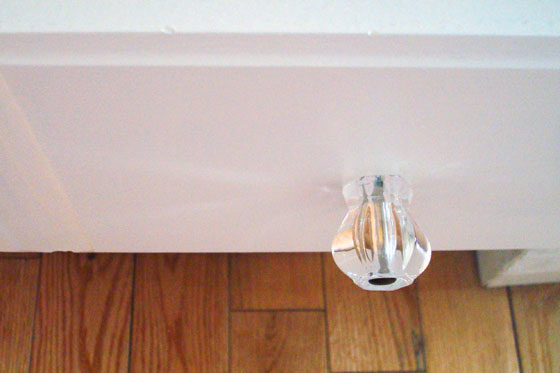
The finishing touch for the dresser was new crystal (plastic) nobs. This is one area where I got a bit neurotic. The nobs that I chose had a metal post that went through the middle. The posts were brushed nickel. I’m not a fan. Plus, I already had oil-rubbed bronze and gold/brass elsewhere in the office. I’m not good with mixing metals, so I spray painted all of the metal pins with oil-rubbed bronze spray paint. It was easy, but probably not entirely necessary.

Crystal drawer nobs

As you saw last week, the dresser fits perfectly in the nook. It ended up being the exact right height, and I’m loving having all of the drawers to keep me organized.

Tall and narrow DIY dresser

What second hand furniture have you made over? Have you ever made two pieces into one? How do you handle hard-to-furnish spots with specific dimensions?

DIY wood countertops one year later

See an update on our counters after four years.

A year ago, I wrote about how we DIYed our own wood countertop. Since then, this post has become far and away the most popular on the blog. Given that we’ve been living with our homemade counter for a year now, I thought a good topic for today’s post would be an update on how our DIY counter has worked for us.

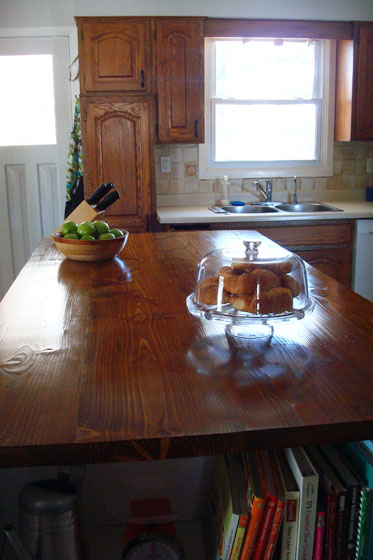
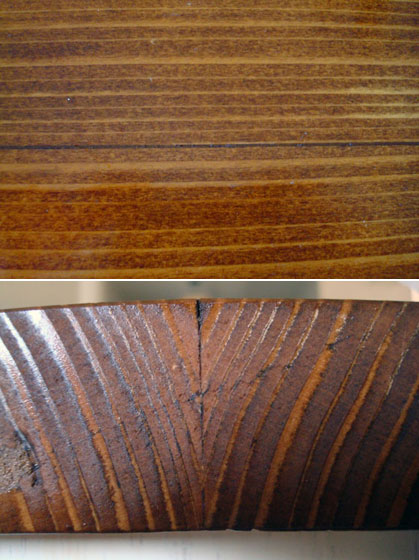
The simple answer is the counter has worked great. Here’s what it looks like today.

DIY wood countertop 1 year later

Just a reminder, here’s how the counter looked a year ago.

How to make a wood countertop

Here are a few more details on how the counter performed.

The biggest measure of this counter’s success is the joints. After a year of use, they’re still nice and tight. Squaring off the edges of the boards, gluing the seams before screwing them together with my Kreg Jig, cramming every joint full of wood filler and sanding everything perfectly smooth have ensured that the counter has held up really well for us.

Joints in a homemade wood countertop

The finish has held up as well. The tone of the wood has stayed constant, and the Waterlox sealer has been a great protector. Originally, the finish was pretty shiny. It has dulled a little bit over the past year. We’re not the best at wiping down the counter religiously, but no matter what we spill or how long something sits on the counter (ahem), it wipes up easily.

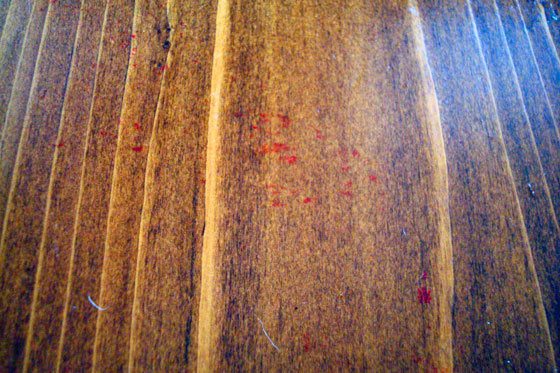
We have one spot that has stained, but it wasn’t from food. Of all things, it was from a plastic bag. We had set a regular grocery store bag on the counter. The bag had some red writing on the outside, and that dye somehow transferred onto the counter. No matter how much I scrub, this dye will not come out.

Red dye on wood counter

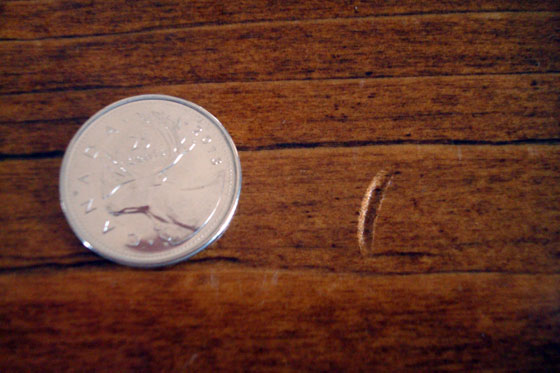
It’s well known that wood is softer than the other countertop materials that are out there. It dents pretty easily. After a year of use, there are some imperfections in our counter. Most are the size of a quarter or smaller, and this one’s about the deepest.

Dent in a wood countertop

The dents don’t worry me at all. We use a cutting board when we’re chopping, but if something leaves a mark, I don’t get upset.

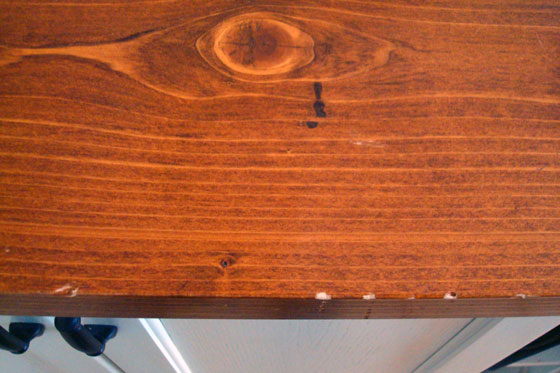
Along one edge of the counter, we have some small chips. These were from a unique incident that had absolutely nothing to do with cooking. The night that we picked up our dining room table, Baxter got a little upset at being left alone in the house. To make himself feel better, he ate the pan of brownies that had been left on the counter. When he reached for the pan, his toenails left some marks on the edge of the counter. These marks are particularly noticeable because they go down below the stained surface. (The dark marks near the middle of the image are features of the board and aren’t a stain or damage that we’ve inflicted).

Chips in the edge of a wood counter

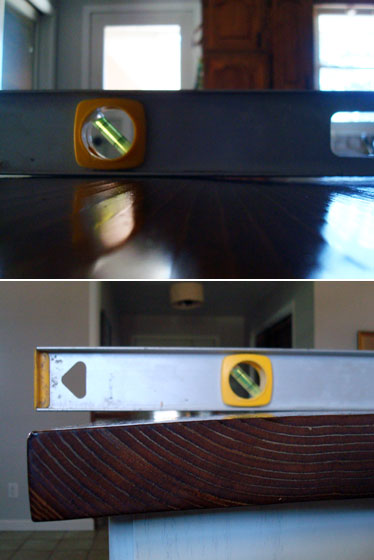
In my post a year ago, I talked about how the counter had warped a little bit and how we were able to flatten it by trimming the end and carefully screwing it to the cabinets. The boards have warped a little bit more over the past year. If you run your hand over the surface, you can feel a bit of a wave. The middles have curved up and the edges have curved down. The warp isn’t severe enough to impact the usability of the countertop and it’s not noticeable to the eye, unless I pull out the level to show you the gaps.

Warp in a DIY wood countertop

We don’t coddle the counter, and a year later it’s obvious that it’s had some use. I am really pleased with all of the choices we’ve made a year ago: going with wood, the colour of the stain, the Waterlox sealer, and especially making it ourselves. Everything has worked out really well.

The counters are still going strong four years later–although there are a few provisos.

DIY light fixture (fail?)

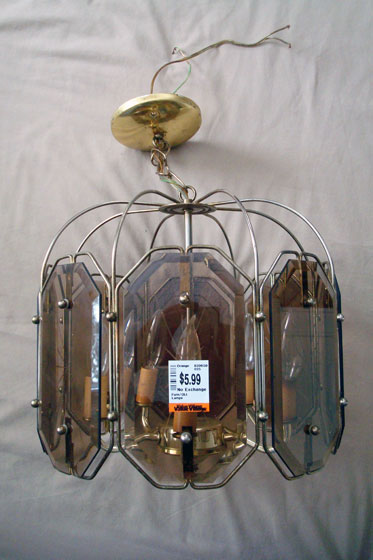
I have another thrifted light fixture makeover for you today. Remember this beauty from my thrifting post?

1980s light fixture redo

When I was in the checkout line at Value Village, the woman ahead of me said, “What a great find! So classy!”

I said, “Oh, thank you.” In my head I was thinking, “Are you insane? This light is completely 1980s. It will look nothing like this when I’m done.”

My plan for the foyer was to replace the giant ceiling fan with a small chandelier covered by a simple drum shade.

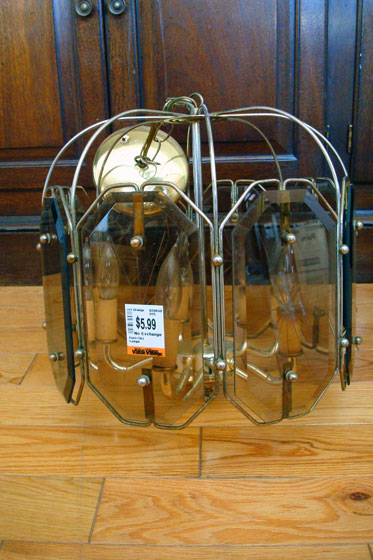
Here was my chandelier.

1980s light fixture

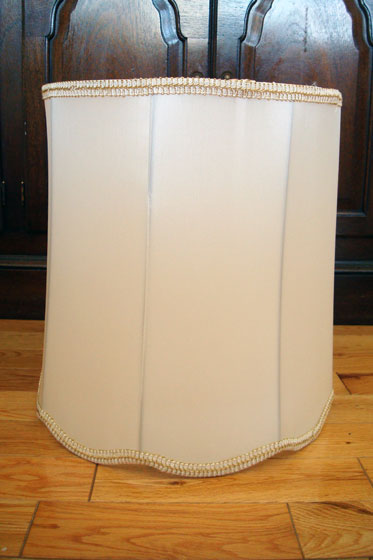
Here was my drum shade.

Vintage lampshade

It was vintage lighting fest over here.

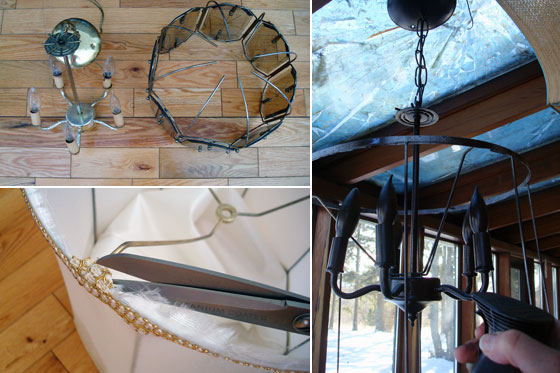
I took apart the light, took apart the shade, merged the two together and spray painted everything oil-rubbed bronze.

1980s light fixture redo

I shortened the shade and added a new fabric cover.

1980s light fixture redo

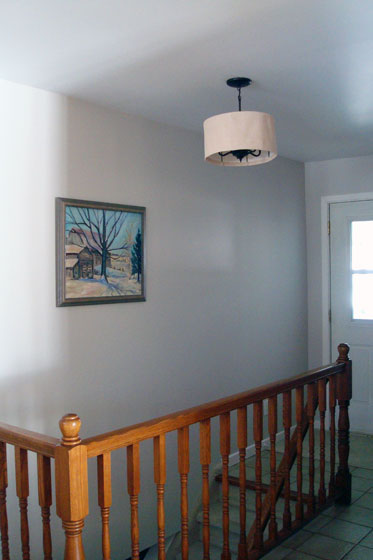
Then I installed it over the stairwell.

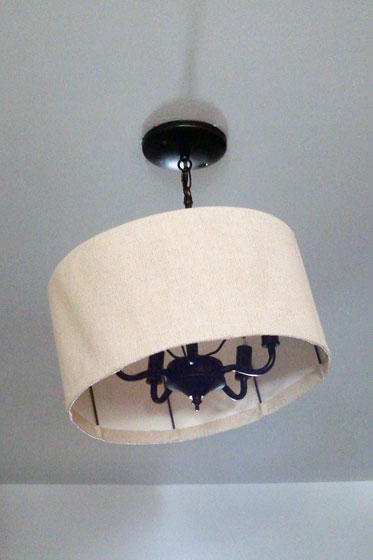
Crooked drum shade

Hmmm… not quite what I envisioned. As Matt said, “Woman, what were you thinking?” I stood there and laughed.

Then I got out my glue gun. A couple of daubs of glue held the shade a bit straighter.

Foyer light fixture DIY drumshade over a chandelier

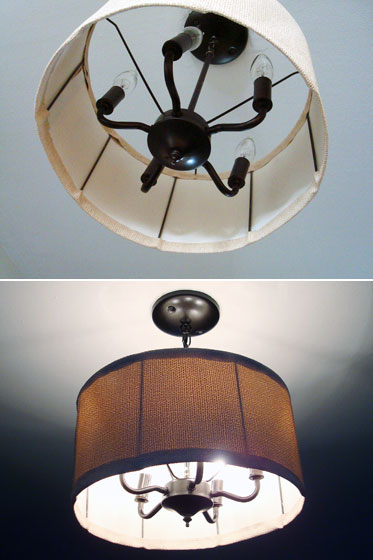
I’m still not sure if this is quite what I envisioned. The inside looks a bit rough in some spots, and the ribs of the shade show through when the light is turned on.

1980s light fixture redo

Another layer of fabric on the inside might solve both of these issues, but it would also lessen the light. This light is much brighter than the ceiling fan that was there before, which I like as our foyer tends to be a bit dim.

I’m content to live with it for awhile until I make up my mind. Either way, it’s an improvement over the fan that was there when we moved in and the pigtail that we wired up when we were painting.

I’d love to hear your to opinion. Do you think this is a #DIYfail or #victory? Have you ever made over a light fixture?

How to refurbish a ping pong table

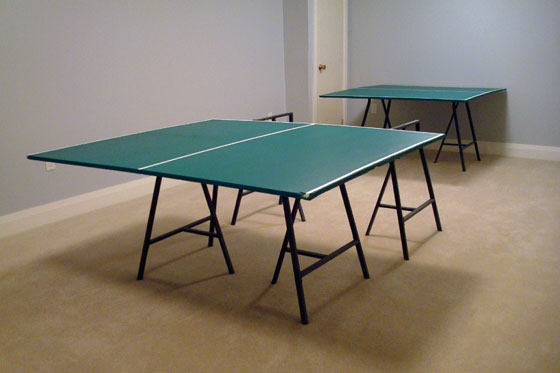
It’s St. Patrick’s Day, so today’s post is all about something green. Our new(ish) ping pong table.

Refurbished pingpong table

This ping pong table was a bit of an experiment. We found the top (in two pieces) in the barn when we first moved in. It was pretty dirty and had even been pooped on by the swallows that live in the barn.

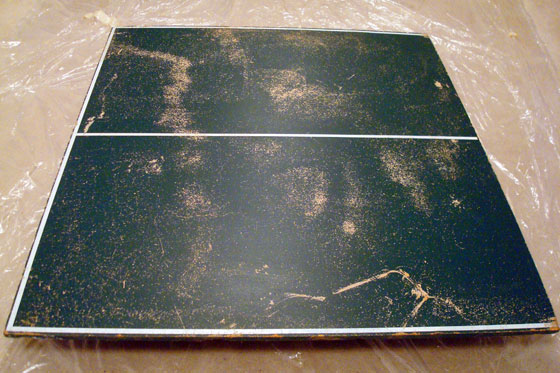
I am always optimistic, so one day last summer, I dragged the two halves outside. I have no idea how I managed to move them by myself because each piece is extremely heavy. I haven’t been able to carry them on my own since. I scrubbed with a brush and sprayed with the hose until all of the poop and dirt (and a fair portion of the original green paint) washed away.

Damaged pingpong tabletop

Matt did not share my optimism that the table could be rehabilitated. That night he tucked the pieces deep into a corner of the driveshed. I have no idea how, though, because the tabletop is heavy even for him to move on his own.

Despite his lack of enthusiasm for the project, Matt did help me carry the top into the house. Then, one weekend while he was out of town, I went to work.

This project was a total experiment, and I’m sure ping pong purists out there will be horrified. But (spoiler alert) everything worked out, so I’m sharing my technique with you.

There were two big issues with the table: 1) We had no legs to go with the top. 2) The top itself was not in great shape.

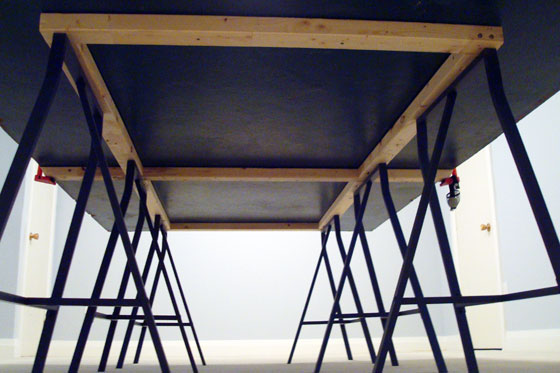
The leg issue was easy to solve with six trestle style legs from Ikea (Lerberg).

Ikea Lerberg legs for a pingpong table

The top took a little more effort.

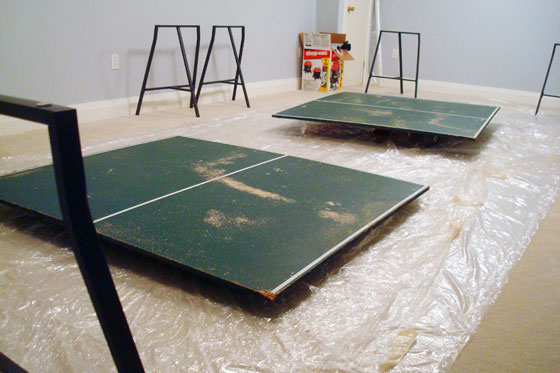
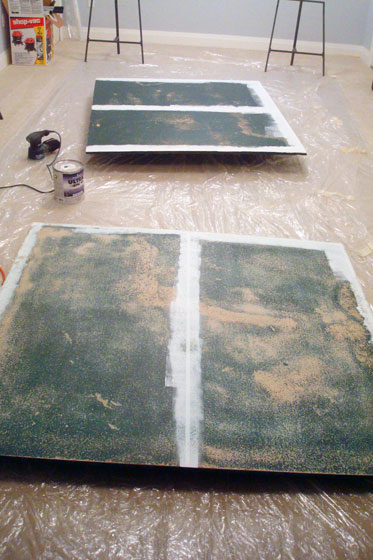
I started with a coat of fresh white paint over the lines. After sleeping on it for the night, I realized I really should have sanded the top first, so the next morning I basically started all over again. I sanded down the top, which was not an indoor task. Sanding resulted in a fine green powder over the whole room–not the best scenario with our nice light carpet. There was a defined line between where the drop cloth had protected the carpet and where the green dust had floated beyond the drop cloth’s reach. I was very glad Matt was not home to see the mess I had made.

Refurbishing an old pingpong table

The Shop Vac erased the green mist, and I was able to get back to the painting.

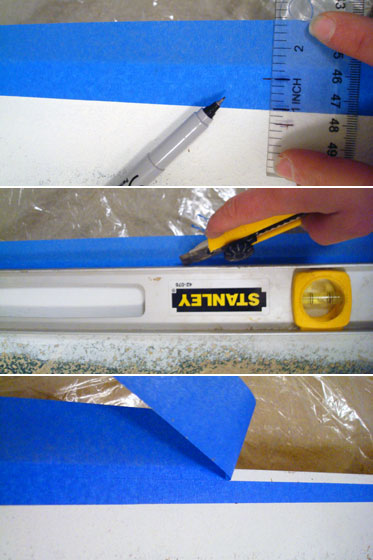
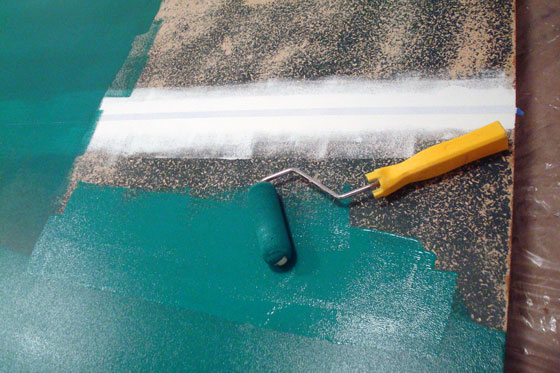
White paint went on again, and, then once it was dry, I taped off the lines. Since painter’s tape doesn’t come in ping pong line widths, I had to very carefully trim it.

Cutting painters tape to narrower width

Then the tape got a quick coat of white paint to seal it, and after some drying time I moved onto the green. Since I wasn’t sure if this was actually going to work, I used some regular latex paint that we had left over from Matt’s office. It’s Manor Green from Benjamin Moore in case anyone’s interested.

Refurbishing an old pingpong table

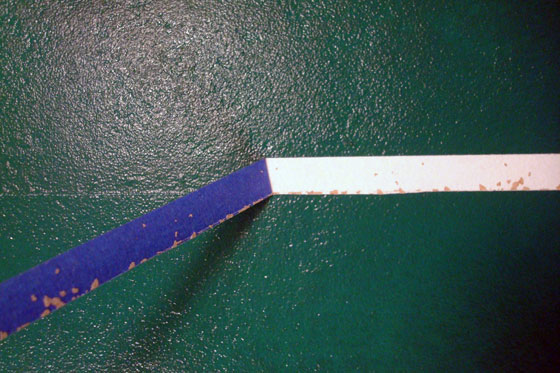
The green took about three coats, I think. On the final coat, I carefully peeled off the tape to reveal the white lines. Some of the white flaked off (I think giving the white more time to dry, or even doing two coats would have been helpful).

Refurbishing an old pingpong table

Chips aside, the finish was a massive improvement over the table’s previous state. In fact, Matt was so impressed when he arrived home that he started to think that maybe I wasn’t entirely crazy in wanting to save the table.

So now I had a tabletop and I had table legs. How to put them together?

Refurbishing an old pingpong table

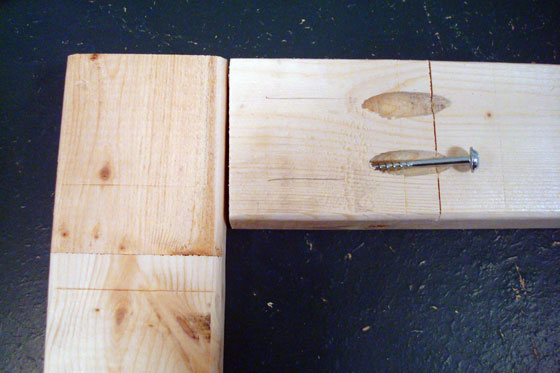
It turned out that the Lerberg legs are a bit shorter than regulation ping pong height of 30 inches–hey, I have some standards. Using a few 2x3s and my Kreg Jig I built a frame to attach to the underside of the tabletop.

Using a Kreg Jig to screw 2x3s together

I screwed the frame to the tabletop… or at least to one half. The top ended up being too unwieldy and heavy as one big piece, so I didn’t screw everything together. We set the top on the frame and the frame on the legs, and we think each piece is heavy enough to stay in place on its own.

Frame for the underside of a pingpong table

The six Lerberg trestles mean the table is very leggy. However, we really needed the support in the middle of the table as well as at each end.

We got a very simple cheap net at Walmart. It’s called an “everywhere table tennis” from EastPoint, and we just clipped it onto the table. Again, I wasn’t sure that this refurbishment was actually going to work, so I didn’t feel the need to invest in a professional net.

Anywhere table tennis net by East Point

With the table set up, Matt broke out the paddles, tapped one of the balls across the net, and it bounced. It worked! We had a functional ping pong table.

I had no ping pong skills, but after a week of daily practice, I’ve improved a lot. I finally won a game against Matt yesterday (he also may have let me win one). My ping pong prowess aside, refurbishing the table was a definite win.

Have you ever rehabbed a piece of furniture that seemed beyond hope? Anyone have any ping pong pointers? How are you celebrating St. Patrick’s Day?

February goals wrap up report (and a reveal)

It’s the last day of February and time for the final report on how we did on our goal for the month of painting the main floor hallway, foyer and kitchen.

Want a sneak peak?

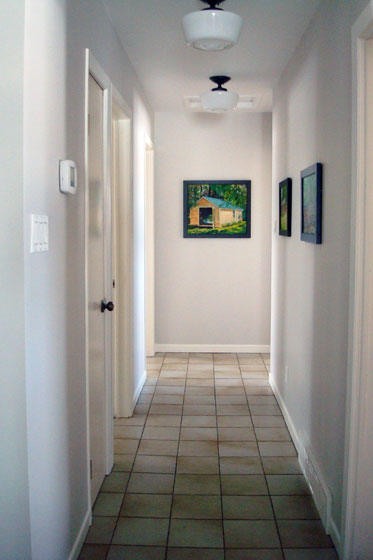
Hallway painted Benjamin Moore Abalone

Yup. We have light fixtures, art and fresh paint. Hallelujah.

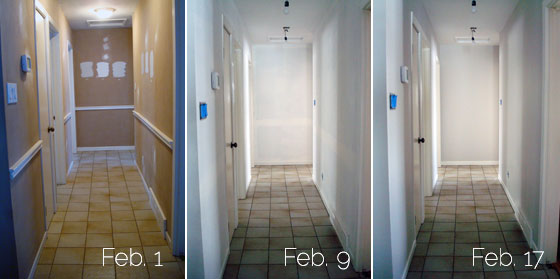
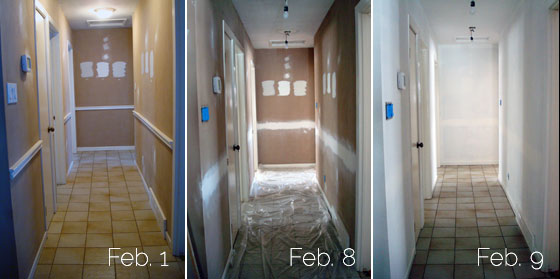
Just for a reminder, here’s a look back at how this project unfolded over the month:

Progression of painting our hallway

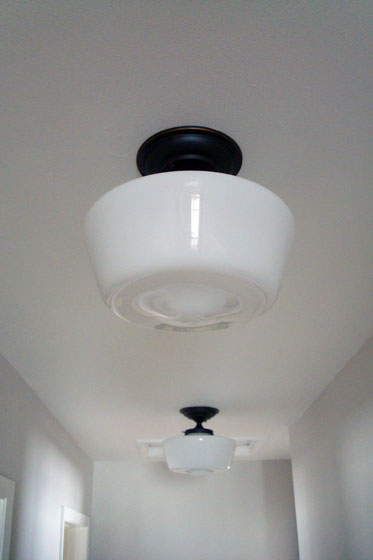
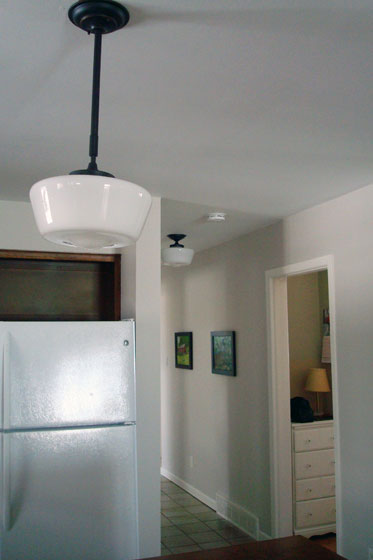
Heading into last weekend, the final task on our list was installing light fixtures. I chose school-house type fixtures from Home Depot (a complete source list is below). There were lots of options through their web site, and these were about the cheapest. I love how the dark oil-rubbed bronze contrasts with the light coloured walls, our pristine white ceilings and echoes the dark tones of our picture frames.

 World Imports Luray Collection Oil Rubbed Bronze 1-Light Semi Flush mount

The light fixtures came in both a semi-flush mount, which I used in the hall, and in a pendant, which I used over the island. I love these lights and have wanted to use them for awhile. They have so much more personality than the boob lights that were there before, and I think they work very well with our casual country setting.

 World Imports Luray Collection Oil Rubbed Bronze 1-Light Pendant World Imports Luray Collection Oil Rubbed Bronze 1-Light Pendant

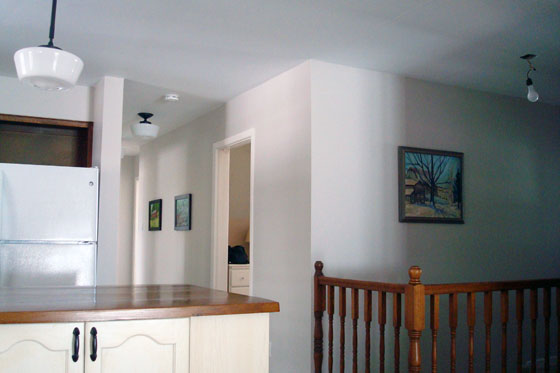
The final task on our to-do list was also where we fell off schedule a little bit. If I zoom out a little bit you’ll see that we’re still missing one light fixture in the foyer. I’m DIYing this one and need just a bit more time to pull it together. This angle also gives you a glimpse of the kitchen, hallway and foyer all together.

Hallway painted Benjamin Moore Abalone

This one miss aside, I’m declaring February’s project a success.

For us, a month was a realistic timeline to completely transform these spaces. My schedule worked really well to keep us on track. I kept a rough tally and for just the painting, we spent about 25 hours. We worked steadily but didn’t stress ourselves out trying to get it all done too quickly. I’ll definitely be mapping out monthly goals again.

The main floor feels fresh and new. Having Matt’s grandpa’s paintings on the walls really makes the space feel like ours. I’ve fallen even more in love with my house.

Anyone else go through a transformation this month? What did you accomplish in February?

Source list:
Wall paint: Abalone from Benjamin Moore (75% intensity)
Trim paint: Cloud White from Benjamin Moore
Light fixtures: Luray Collection Oil Rubbed Bronze 1-Light Semi Flush mount (this one doesn’t seem to be available online anymore) and Luray Collection 1-Light 34-5/8 in. Hanging Oil-Rubbed Bronze Pendant both by World Imports through the Home Depot
Paintings: Family heirlooms painted by Matt’s grandfather

Progress report 2

Another Friday, and time for another update on how we’re doing with our February project of painting the foyer, hallway and kitchen.

We have colour!

Hallway painted Benjamin Moore Abalone

It’s subtle, but I promise it’s there.

Just to remind you, here’s how the hallway has looked throughout this month.

Progression of painting our hallway

And here’s how the colour stage went down.

Thank goodness for three-day weekends
Two coats of the colour took longer than I expected, but, like everything else that’s been on the to-do list so far, we finished it, and we are on schedule.

Tag, you’re it
Painting at our house is a game of tag, as I cut in and try to stay ahead of Matt who handles the rolling. On the first coat, he caught me quickly. Cutting the ceiling, baseboard, nine doorways and the kitchen meant that I was extremely slow.

I was so glad I made the decision to take off the chair rail. I would not have been happy if I’d had to do more cutting.

On the second coat, Matt didn’t even start rolling until I finished edging the hall and the kitchen. This timing ended up being perfect, as we finished at exactly the same time.

Scraping the bottom of the bucket
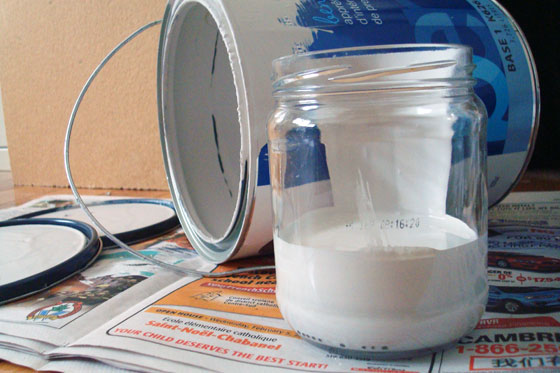
We had just enough paint. I bought two gallons, even though Matt thought three might be better. We were probably a bit stingy towards the very end of the second coat, but I still think we have a good finish on the walls… and less than 200mL of paint leftover.

Left over paint

Change it up
We chose Abalone, a popular neutral shade from Benjamin Moore. I find this colour very changeable, which I like. At night with the lights on it looks very grey. In the morning with the sun shining in the windows, it looks more brown.

Lighten up
I had the paint mixed at 75% saturation, as our hallway and kitchen tend to be a bit dim. I was a bit worried that lightening it would change the colour, but it still seems true to the Abalone tone, and the lighter shade works really well in our spaces.

Tongue-tied
How do you pronounce Abalone? Is it “own” like “home alone?” Or is it “onee” like “baloney?”

Coming up
The major work of painting is obviously done. I’m keeping my eye out for touch-ups, but so far haven’t found any spots that inspire me to break out the paintbrush again.

Since I took the picture at the top of this post, I’ve put the cover plates are back on all of the plugs and switches. Which leads to the final item on my original to-do list: install new light fixtures.

Matt, aka “he who hates pigtails,” aka “in-house electrician” will take on this task this weekend.

What’s on your to-do list for this weekend? What’s the division of labour at your house when it comes to painting and electrical? How do you pronounce Abalone?

I’m dreaming of a white ceiling

I know a lot of people are adding colour and patterns to their ceilings these days, but I am still white ceiling person. Even if I wasn’t, the colours and patterns we’ve had on our ceilings for the past two years would not be my choice… ever.

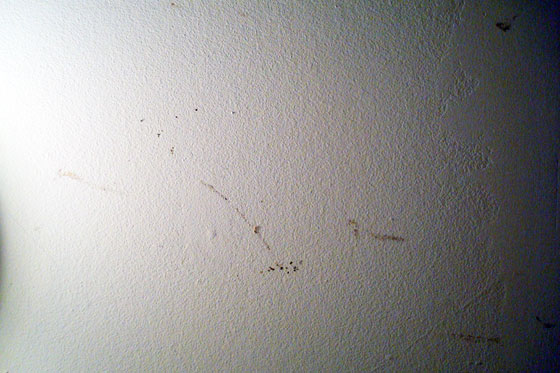
There were the specks and smears. (Sorry for the poor photo quality. I find it really difficult to photograph our dim hallway).

paintingprep5

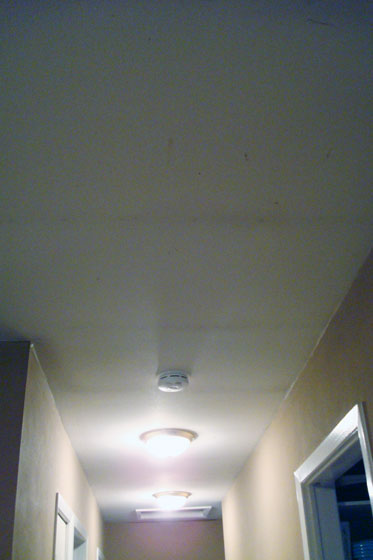
Then there were the stripes.

paintingprep2

Our home inspector’s explanation for these lines was that the insulation in our attic was insufficient. As a result, the ceiling joists got cold. The temperature difference between our warm drywall inside the house and the cold joists in the attic resulted in condensation. Dust and dirt in the air in the house stuck to that condensation, making stripes.

When we upgraded the insulation in the attic, our contractor had a slightly different opinion. Of course I now can’t remember what he said.

In addition to the obvious dirt, there was the overall grey tinge that you saw on Friday.

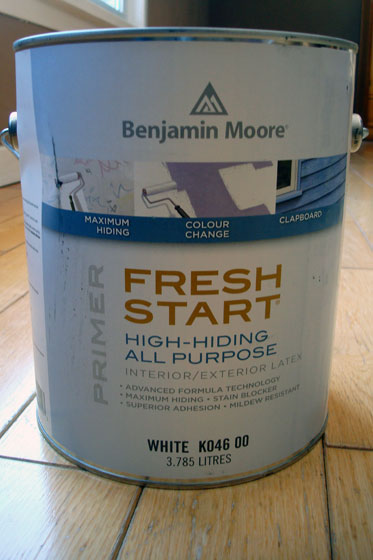
I’m a bit embarrassed to say that we’ve been living with these ceilings since we moved in two years ago. However, I am no longer ashamed. We used Benjamin Moore’s Fresh Start primer to make our dreams of a clean white ceiling come true, and I thought it might be helpful to post a bit of a review of this paint.

Out of all of the things I care about in my house, the shade of white on my ceilings is not one of them. My usual method is to use primer to paint the ceilings. For the hallway, foyer and kitchen, I didn’t splurge and go all the way to buying real paint, but I did choose a slightly upgraded primer, rather than the standard formula. The “high hiding” label on the Fresh Start can was what sold me. I had a lot of dirt to hide.

Benjamin Moore Fresh Start Primer

Fresh Start is a slightly thicker consistency than standard primer, which made me feel like I was covering more dirt. It’s not sticky, though, and was easy to apply.

Whether because of the thicker consistency or because our drywall absorbed the paint, we ended up using more than I expected. I had bought a second gallon, not realizing I had one at home already. The extra paint ended up being a good thing because for our 310+ square feet of hallway, kitchen and foyer we used a gallon and a quarter, just for one coat.

I had hoped that we would be able to get away with a single coat on our ceilings, but we ended up having to do two. I’m not sure if it’s that our ceilings were just too dirty, if the Fresh Start didn’t cover as well as I thought it would, or if we applied it a bit thinly in a few spots, but the next day there were sections where I could still see some of the grey.

The second coat went on very quickly (about an hour) and used much less paint (probably just a bit more than half a gallon). The second coat also did the trick. There are no more dirt spots, and none of the grey has bled through.

Since we were working on a ceiling, it would have been helpful for the Fresh Start to have a tint, like some of the specialized ceiling paints out there. These go on light pink and then dry white. In the dim lighting of our hallway, it was sometimes hard to tell where we had yet to paint. At least, it was on the second coat when we were painting over white, rather than grey.

One coat, two coat. One can, two cans. It doesn’t matter now. All that counts is that the Fresh Start did its job, and we now have the white ceilings that I’ve been dreaming of since we moved in.

There’s still one more painting post coming up this week. Check back Friday to see the progress we’ve made on the walls. (Hint: there will be colour!)

Until then, I’m really curious to hear how you handle your ceilings. Are you all about white, like me? Or are you one of those daring folks that embrace the “fifth wall?” What’s your go-to primer? Anyone else tried Fresh Start?

And just in case you’re wondering, Benjamin Moore has no idea who I am, I bought my own paint, and this post is just my opinion.

How to make a DIY ottoman

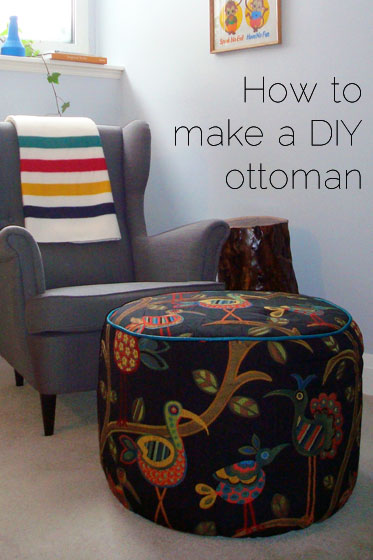
The search for the perfect footstool for my basement reading nook took a little while. How to make a DIY ottoman I knew I wanted something round. Between our sectional, the ottoman, the entertainment unit, the TV, and even my Austin chair, we have a lot of squares and rectangles happening in the basement, so I thought it was time for some contrast. And I wanted to make it myself. But how? What would give me the size and the shape that I wanted while being sturdy enough to sit on but light weight enough to move around? Maybe a Sonotube? But I couldn’t find one that was big enough in diameter, and I really didn’t want to buy a six foot tube and use only a short piece of it. Maybe I should just use one of the Moroccan poof patterns available online and upscale it? But that would take a lot of stuffing, and I wasn’t sure how it would work as a seat. Then one night it came to me just as I headed to bed. (Isn’t that always the way?) The next morning when Baxter and I headed out for our walk, we took a brief detour to our junk pile. (Doesn’t every farm have one?)
Baxter investigates our junk pile

“Uhhh… I don’t see anything that you’d want to put in the house over here…”

Are you confused like Baxter, or do you see it?
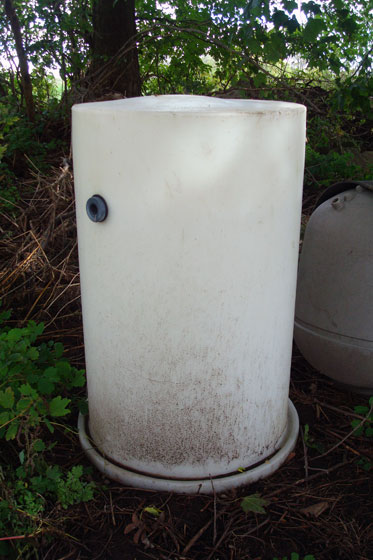
Plastic barrel

Yes, ladies and gentlemen, I upholstered a giant plastic barrel.

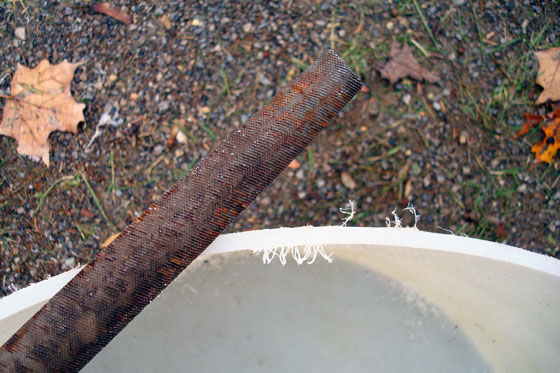
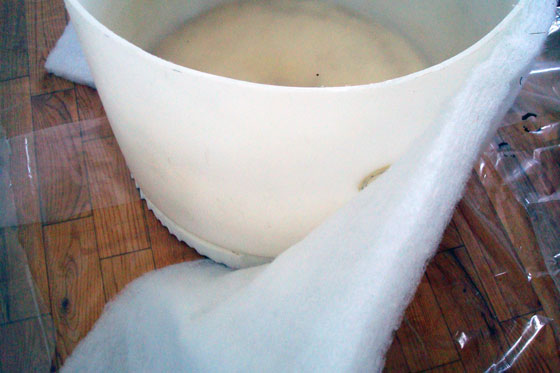
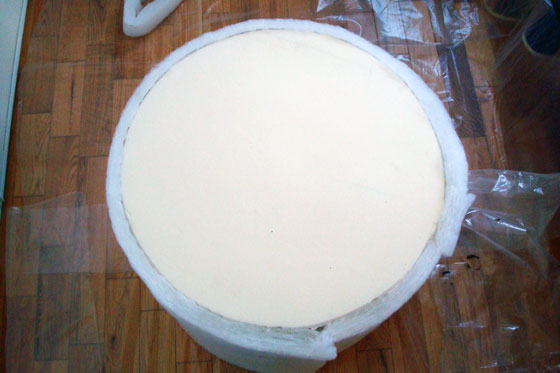
It was big. It was round. It seemed sturdy, but wasn’t too heavy. I had found my base. Now how to make it into an ottoman? I mulled the question of how to upholster it over for a little while. Here’s the technique I came up with. 1) Cut the barrel to my desired height–roughly equal to the height of Strandmon’s seat. I initially planned on using my hack saw, but then I realized that between the thickness of the plastic and the massive circumference of the barrel, cutting it manually would take forever. Plan B was my circular saw, which was much, much faster. Note: an extra person (thank you, Matt) to hold the barrel while you’re cutting is essential. Cutting a plastic barrel with a reciprocating saw Go over the cut edge with a file to smooth out any rough spots and remove any plastic strands. Use a file to smooth out plastic edges 2) If your barrel still looks like something that’s been sitting outside for who knows how long and really isn’t something you can see yourself bringing into your house, give it a good scrubbing. This is probably a good step regardless because you never know what’s been inside the barrel. Well, some of you might, but I sure didn’t. 3) Pack on the padding. I used a piece of 2 1/2-inch thick foam for the top. Using my barrel as a pattern, I traced a circle onto the foam. The foam cut easily by hand with a serrated bread knife, although I’ve heard that an electric carving knife also works. Using spray adhesive, I attached the foam to the top of the barrel.

Cutting and attaching foam to a foot stool

Note: Working in a barn avoids spraying sticky glue onto your floors, but you may end up with a few pieces of straw stuck to your stool.

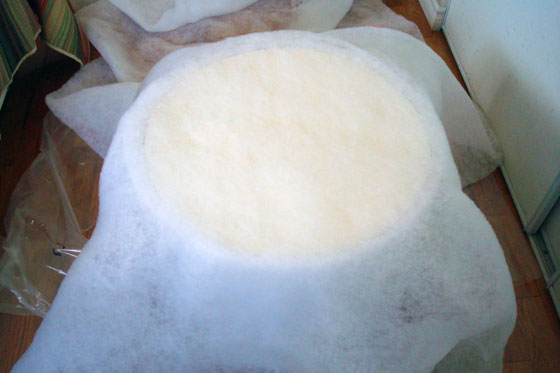
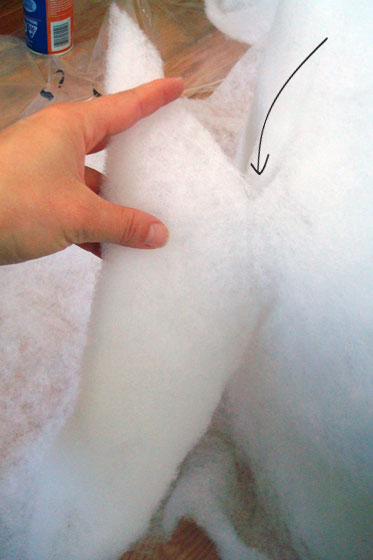
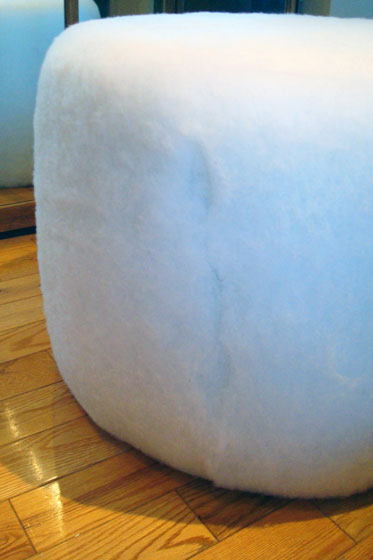
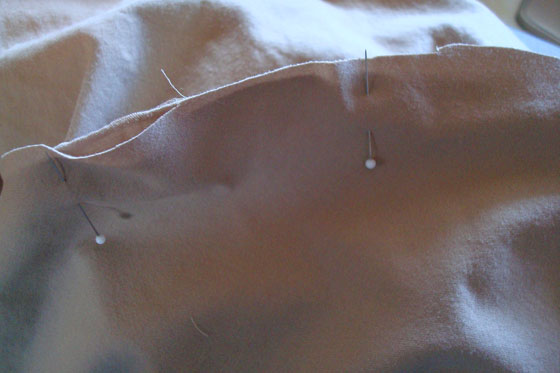
4) To soften up the sides, I took batting left over from my dining room chair upholstery project and glued it to the sides of the barrel. It was at this point that I realized I had less batting left over than I thought. As in not enough to complete the ottoman. So the padded barrel came into the house and sat until I could go to the fabric store. During the waiting period, I found out that the spray adhesive maybe wasn’t going to work quite as well as I’d expected. Basically, the barrel shed its fluffy skin. Quilt batting peeling off a plastic barrel 6) However, I was undeterred. Once I had more batting, I reattached the first layer using the same spray adhesive. By this point, it was cold outside, so I was working in the house. Note: Be prepared for some overspray. A drop cloth will help, but you will end up with sticky socks. Upholstering a foot stool in batting 7) You’ll notice that my batting was a little patchy. To smooth it out and hold it in place, I added two more layers of batting over top of the whole barrel. I’m going to try to explain how I did this, but if it’s not clear, feel free to ask for more information in the comments. I draped the big sheet of batting over the whole barrel making sure it hung evenly down each side. Upholstering a round foot stool Working in sections of about a quarter at a time, I sprayed the barrel with the adhesive, smoothed the batting down the side and stuck it in place. If you think of the barrel like a clock, I worked at 3, 6, 9 and 12 o’clock. In between each quarter section, I had extra batting. These looked like big triangle wings. I carefully took my scissors and cut off these wings. I wish I had a better picture of this, but my scissors hand was busy being camera hand in this moment. I snipped roughly where the arrow is pointing. Upholstering a round foot stool The nice thing about batting is that it doesn’t fray, so I could just snip it off and the smoosh the edges together. The join wasn’t perfect, but close enough ended up working just fine. Upholstering a round foot stool At the bottom of the barrel, I trimmed the batting so that I had about 6 inches overhang. Then I pulled it taunt, smoothed it out, wrapped it around the edge and tucked it up inside the barrel. A spritz of adhesive held it in place. Upholstering a round foot stool Now I had a giant fuzzy marshmallow. Um, yum? Upholstering a round foot stool 7) To protect the batting, make sure it stayed attached to the barrel and ensure a smooth surface to overlay my fabric, I decided to make a lining or slipcover before putting on my final upholstery fabric. This was also an opportunity to test my pattern for my outer fabric. To figure out the pieces for the slipcover, I measured first the circumference of my ottoman and then the height. I cut out a rectangle that was as long as my barrel was round (80 inches) and 8 inches wider than my barrel was tall (25 inches). Using the circumference measurement, I was able to figure out the size of circle that I needed to cut for the top of the stool. After a brief consultation with my resident math teacher, I remembered that Pi x diameter = circumference. So for my 80 inch around stool, I needed a circle that was approximately 25 1/2 inches in diameter (80 / Pi = 25.47). I started by cutting a 25 1/2 inch square, folded it into quarters, and then using a very makeshift compass I drew an arc that gave me the curve of my circle. I cut along the arc, and voilà a circle.
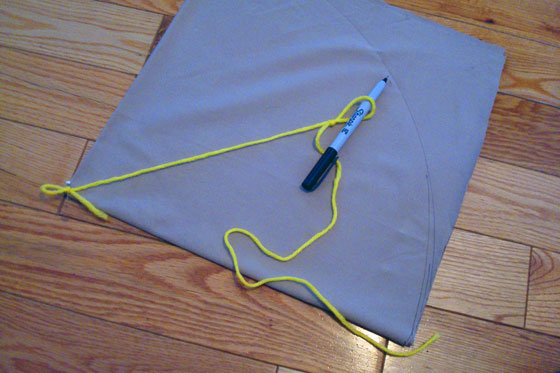
How to draw a large circle

Note that length of the string should be equal to the radius of the circle (half the diameter).

Before unfolding the circle, it’s helpful to mark the outer quarters (basically 3, 6, 9 and 12 o’clocks again). They’ll come in handy later. Now that I had my top, it was back to the sides of my slipcover. I joined the short ends of the rectangle to form a tube, stitching them together on my sewing machine. This is a good point to “try on” the cover. I slipped the tube over the footstool and adjusted the fit as necessary. You’ll notice I haven’t talked about adding seam allowances. I had them at first, but I found that the cover was looser than I wanted. To get a smooth, close-fitting cover, I found going with the actual measurements of the ottoman worked best. Once I had the fit I wanted, I marked the tube in the same way that I’d marked the circle. Using the seam as 12 o’clock, I marked the tube along one edge at 3, 6 and 9 o’clock (rather than measuring, I just folded the tube in half and then half again and pinned at the creases). Then, I pinned my circular piece of fabric to my tube, starting at each of my marked clock points. As I made my way around the circle, I had to smooth things out a little bit since I was joining a straight edge to a curved edge, but with some patience and adjustments everything lined up. Upholstering a round foot stool 8) Finally, I could sew the cover. I took it fairly slow as my machine stitched around the circle, and then I held my breath as I flipped it right side out and slipped it over the ottoman. Victory! It fit perfectly. 9) Now to finish the bottom edge. Remember, it was about 8 inches longer than than the barrel. I turned the raw edge under by a 1/4 inch all the way around, and then I turned the bottom up an additional 3/4 of an inch. Upholstering a round foot stool I stitched this hem almost all the way around. I left about a 2 inch gap so that I could insert a drawstring. Upholstering a round foot stool 10) It was time to dress the ottoman. I slipped the slipcover over top and using the drawstring cinched the bottom tightly. Upholstering a round foot stool I turned it over and… Victory #2! A pretty smooth, albeit slightly crooked, slipcover.
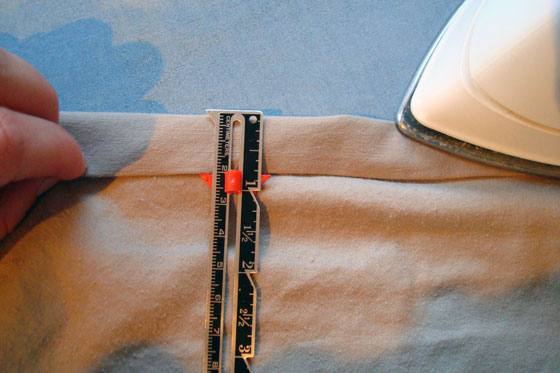
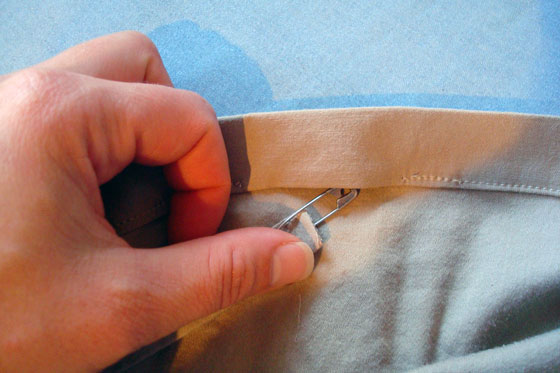
Upholstering a round foot stool

Note to self: In the future, straighten out the cover before taking the photo.

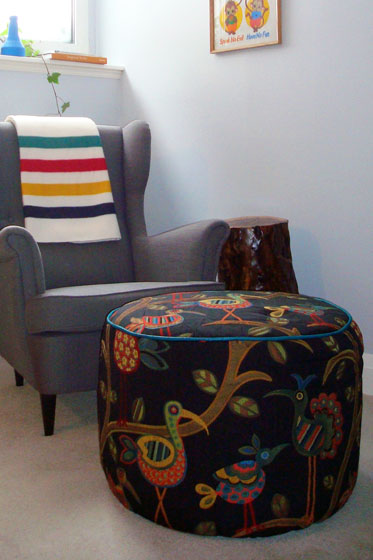
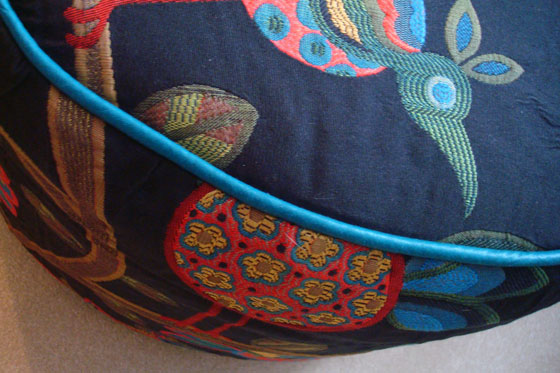
With my pattern perfected, it was time to move on to the official fabric. The search for this fabric had taken my Mom, her friend and me up and down the fabric district, in and out of every store. I was carrying one of the cases from the couch throw pillows, trying to find a fabric that was equally vibrant and equally fun. In one store, I went over to a particular bolt and said, “I love this fabric. I actually bought a few yards a year ago, just because I couldn’t bear not to have it.” My Mom’s friend said, “Hold your pillowcase up.” I did, and she said, “Julia, I think that’s your fabric.” It took me a minute, but then I saw that it was absolutely perfect. Swavelle / Mill Creek Crazy Ol Bird Midnight Fabric I bought some more because I couldn’t remember how much I had already, added some bright turquoise piping and carted it all home. For all of you who’ve admired the fabric, it’s Crazy Ol Bird Midnight by Swavelle/Mill Creek. To make the outer cover, I followed the same technique that I had used with the inner slipcover. I even did the drawstring at the bottom. The only change was that when I sewed the top to the sides, I sandwiched some piping in between the layers. The piping is a great pop against the black fabric, and I think it makes the ottoman look a bit more professional. Upholstering a round foot stool And here’s my finished ottoman sitting with Strandmon and the stump table in the reading nook. How to make a round footstool I love it. This ottoman is such a fun addition. It makes the reading nook a really comfortable spot to hang out. If you have any questions about the construction please let me know. Have you ever used something unconventional (like a plastic barrel) for furniture? What upholstery projects have you tackled?
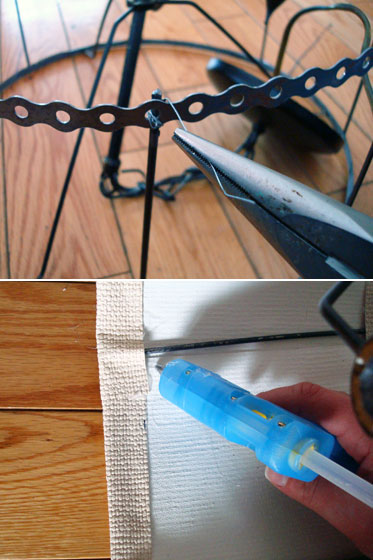
Update: While I know everyone doesn’t have a plastic barrel lying around outside, it just occurred to me that a plastic garbage can would probably work in much the same way and be close to the same size.

Linking up to: Happy Housie DIY Challenge Party: Fabric Projects, Happy Housie DIY Challenge Party: Patterned and Textured Projects