Mid-summer garden update

Basket of potatoes and zuccini in front of marigolds in the vegetable garden

It’s been awhile since I shared what’s up in the vegetable garden. Deep in the middle of summer, lots is up. As in lots of beautiful vegetables.

Looking back at my last update from the end of June, I’m amazed at how much things have grown. Here’s the tour ’round the ring.

Quadrant #1, where the first three of the five rows of potatoes are ready to be dug.
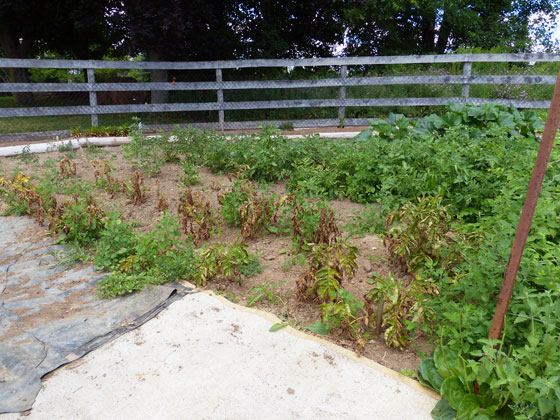
Potatoes in the garden

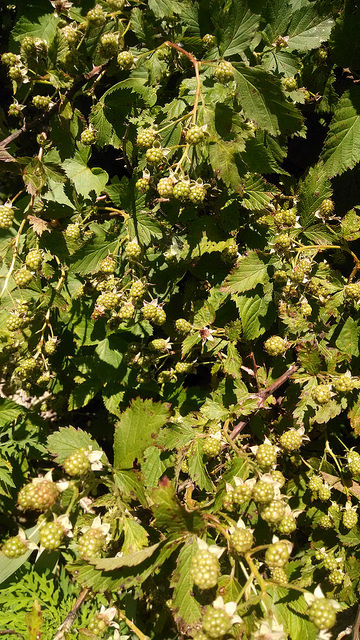
The raspberries along half the centre axis. I think that the black raspberries (the mess on the left) will be coming out to be replaced with either more raspberries or something entirely different. We have enough growing wild around the farm that we don’t need them in the garden too. And they do not seem amenable to being tamed.

Two rows of raspberries

Quadrant #2 which continues to be weed central as there’s nothing planted here beyond asparagus and grapes in the perimeter beds. I actually broke down and mowed this section last weekend. Let’s pretend I’m a really sophisticated gardener and we’re intentionally letting this section lie fallow this year, okay?
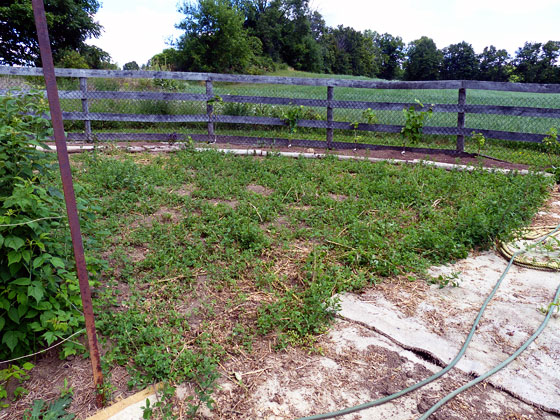
Weedy section of garden

Quadrant #3, which also continues to be quite weedy. However, no mowing is happening here, as this is home to our watermelon, which have totally taken off (more on this below).
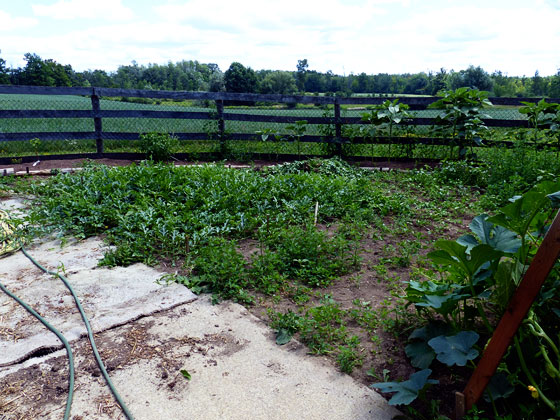
Watermelon vines growing in the garden

The other half of the centre axis is our squash A-frame. The vines are climbing! I’m very excited that the trellis seems to be working. We have baby butternuts, acorn squash and gourds.

Squash growing up an A-frame trellis

Quadrant #4 is the best looking, especially after Matt spent hours last weekend pulling weeds. It’s home to our very bushy tomatoes, peppers, beans and more zucchini.
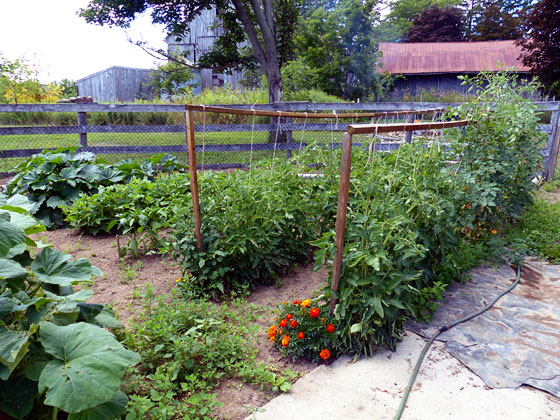
Vegetable garden

I tried to pick a few highlights to zoom in on a little more. A few is hard, as I’m super excited about everything.

Most exciting is our watermelon. As in we actually have watermelon! They’re about the size of softballs right now, so they’re not quite watermelons, but they’re on their way.

Baby watermelon

Another vegetable that is exciting just by its presence is our yellow bush beans. Last year all of four plants sprouted. This year we have a whole row and each plant is loaded with beans and blossoms. We’re going to have more than enough beans to freeze for the winter.

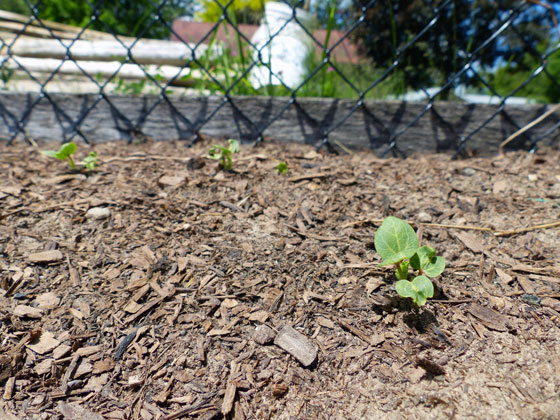
Yellow bush beans

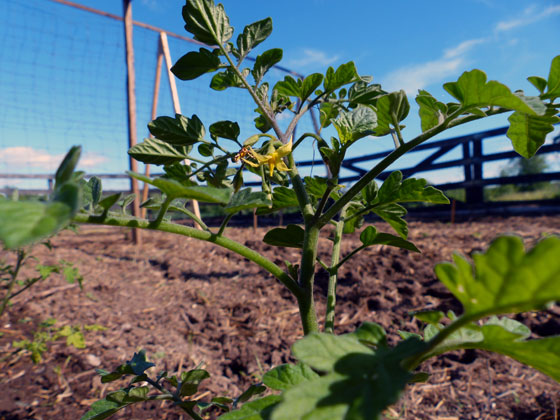
Also on their way are our Sicilian Saucer tomatoes. I picked up these seeds on a whim, so I’m not sure what to expect. The blossoms were huge, befitting the “saucer” name. We have some catfacing on the bottom of the fruits, which I’ve learned is common with big tomatoes. The fruits aren’t saucer-size yet, but I feel like they’re on their way to being quite large.
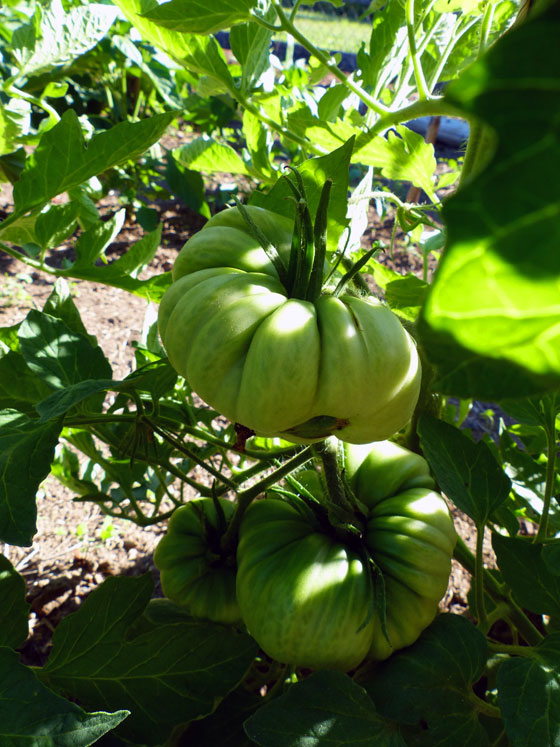
Sicilian Saucer tomatoes

The plants that I’m watching most closely are our grapes. A few of the vines have finally reached the top of the fence, and some tendrils have even started to wind themselves around the wires.

Grape vines

These are the highlights, but there are a few lowlights.

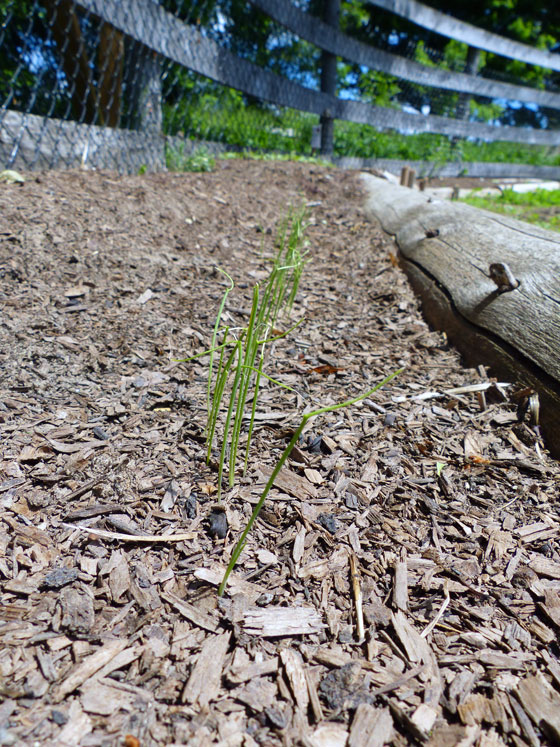
I planted the bunching onions in the raised bed, which are filled with the dirt we bought this spring. The onions did not like the dirt at all. They’ve looked like blades of grass ever since they sprouted back in June. Last weekend we transplanted those wee little sprouts into the main section of the garden. They’re already looking perkier.
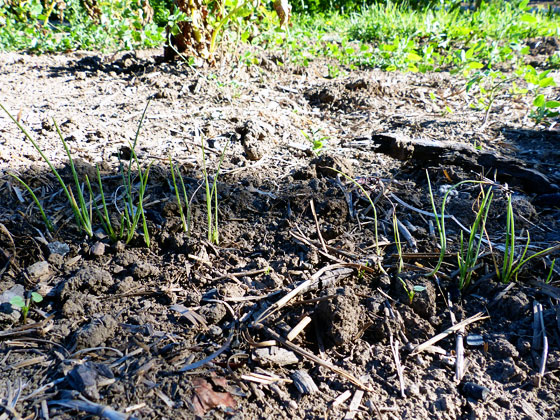
Green onion sprouts

A few of the raspberries have been hit by Japanese Beetles. The damage hasn’t been too bad, and we have so many canes that I’m not miffed to sacrifice a few leaves. However, that doesn’t mean I’m not on a campaign against the beetles. It only took me a couple of days to get over my squeamishness at the crunch they make when I crush them.
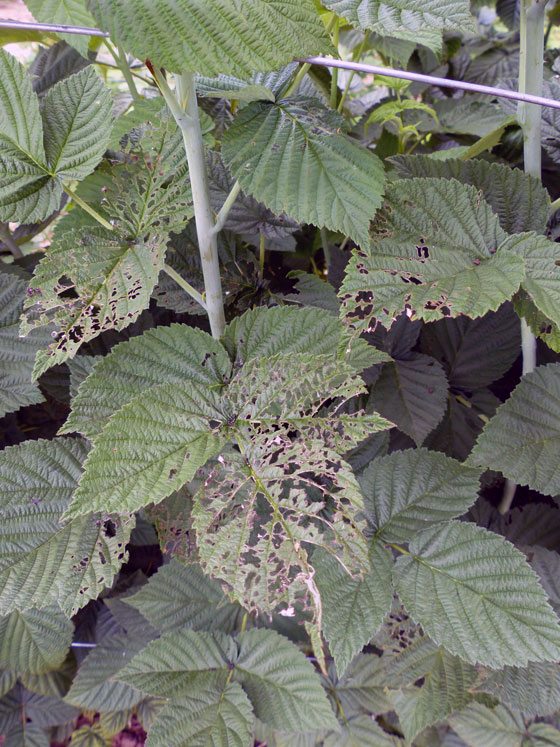
Japanese beetle damage on raspberry canes

This one may not be a lowlight, but some of the tomatoes that we purchased as sprouts are growing oddly. The plants are all the same type, but the fruit are all different sizes. Everything from the size of a marble to the size of a pingpong ball.

And then we have a few plants where the stems that support the trusses have taken a turn and branched up into “suckers.” You can see the stem looping around and up in the photo below. I’ve never seen this before. Have you?

Sucker on a tomato truss

One final highlight that I have to share. As I was photographing the garden, I came across this guy in the watermelons. A frog in the garden is a good omen, right?

Frog in the garden

What we’re loving most is eating the garden–the vegetables and fruits only, no frogs. We have so much desire to cook in the summer, and our meals are so fresh and full of variety.

How is your garden growing? What fresh produce are you enjoying this summer?

Save

Save

Save

Save

How to build a raspberry trellis

Raspberries are a pretty easy crop to grow in my opinion. Last year I transplanted a whole bunch of raspberry canes from my parents’ garden to ours. The canes have grown and spread like crazy.

This year, the object of the game is to contain the canes–a little bit. Raspberry canes don’t bear fruit until their second year, so the first year is all about letting the canes grow… and grow… and grow.

The taller the canes grow, the more likely they are to fall over. A trellis can help to keep them upright and also keep the row a manageable width.

Here’s how Matt and I made the trellis for our berries.

How to build a raspberry trellis

We started with metal T-posts. We happened to have a large quantity courtesy of past owners–free materials, yay! And I liked that the metal won’t rot like wood.

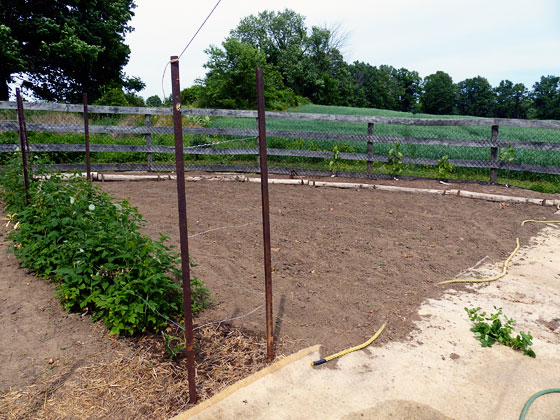
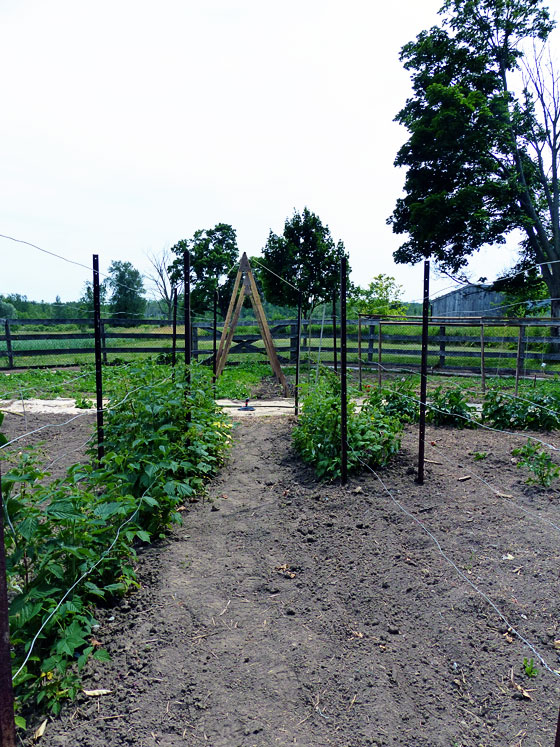
The posts were about 7 feet long. Matt hammered them into the ground leaving about 5 feet sticking up. We used six posts, three on each side, for our rows, which are about 18 feet long. The width of the rows is 2 feet.

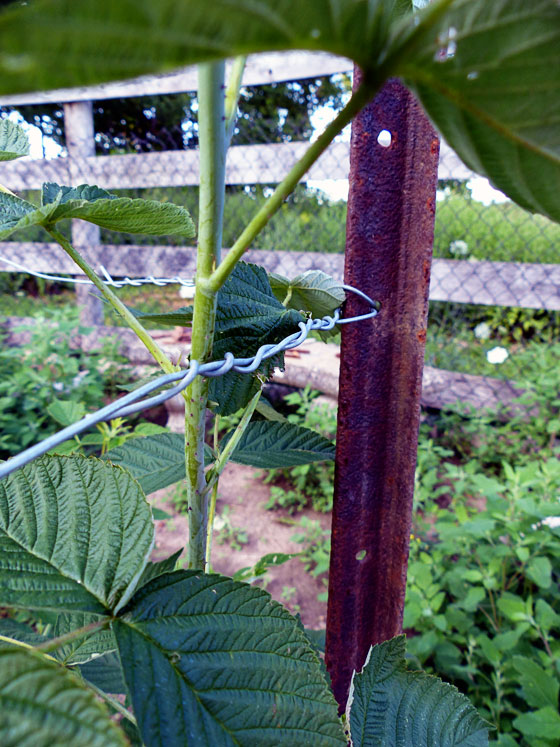
Then I strung wire through the holes on the T-posts. There are three rows of wires, each about 16 inches apart.

How to build a raspberry trellis

At the final corner I doubled the wires back and twisted them around themselves.

How to build a raspberry trellis

The raspberries grow between the wires staying nice and straight. About once a week, I walk along the row and make sure all of the growing canes are tucked inside the wires.

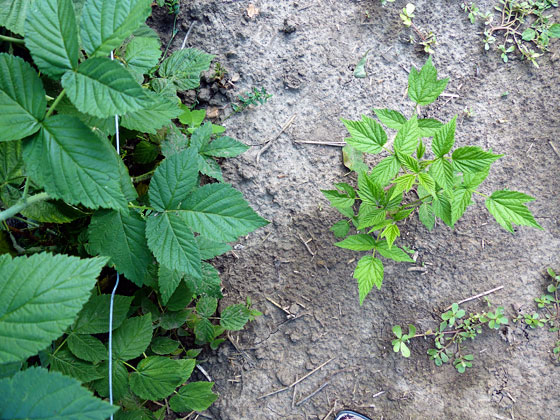
Any canes that sprout outside the row can be transplanted to inside the boundaries.

How to build a raspberry trellis

So far, we’ve had just a handful of berries, as we only started our canes last year. Our plants, though, have become thick and lush. With our trellis in place, we’re set to have a great crop of raspberries next year.

Have you picked any raspberries this year? Do you grow raspberries? Have you ever built a raspberry trellis?

Save

Garden at the end of June

Garden at the end of June

Much progress has been made on the garden. You might notice in the photo above that we have a gate! And it’s not just propped in place. It’s actually on hinges, and it swings and everything. It’s only been 10 months since I built the gate. Not at all unreasonable to wait that long to fully protect the garden, right?

Inside, things are slowly filling in. I’m trying to remind myself to be patient and things will grow… eventually.

Let me take you on a tour of around our garden as it’s growing right now.

Quadrant one is our most well-established. It is home to five rows of potatoes–three red, one Kennebec and one Russian Blue. Although I really could have done two Russian Blues given how many we had and how much space there is in this quadrant. There are also three zucchini plants. Then in the perimeter beds there are onions, beets, carrots and a selection of herbs.

Quadrant one of the vegetable garden

I’m a bit disappointed in the onions. They are spindly, some of the ends are brown, and I’m not confident that they’re going to size up. But I keep watering them and sowing new rows for my attempt at succession planting. (The beets in the background are doing excellent, however).

Green onions

Quadrant two is bordered by our perennial crops: raspberries, grapes and asparagus. The middle is empty however, and we don’t have plans to plant anything here. One of the things I’ve realized is that we can only handle so much with this large vegetable garden.

Quadrant 2

The asparagus isn’t that much farther along than the onions, but I’m beyond excited by it. I’m trying to grow asparagus from seeds, and I thought I wasn’t going to be successful. These seeds took so long to sprout. Almost three weeks. I thought it wasn’t going to happen. So these little tiny ferns are tremendous progress.

Asparagus sprouts

Quadrant 3 has a lot of growth, but not the kind I want. Welcome to weed central. Ugh. There are some watermelon seedlings in here, but I’m not sure they’ll last that much longer without some defense. The outside edge has our sunflowers which are growing incredibly.

Quadrant three in the vegetable garden

Quadrant four is slightly better than weed central, but not by much. This is our first year planting this half of the garden, so it’s taking more effort to clear out the weeds on this side. In this quarter we have two rows of tomatoes (under the wood frames), one of peppers, one of beans and three more zucchini plants. The outer edge has some more herbs, more sunflowers and our hollyhocks.

Quadrant four of the vegetable garden

You’ve caught glimpses of the centre axis already, but here’s the view that I’ve been working towards for the past two years. A long look between our two rows of raspberries, through the squash A-frame and out to the back fields.

Centre axis of a round vegetable garden

On Monday I posted about vision. The vision for this vegetable garden has been a long time coming, but it’s oh so wonderful to see it come to life.


Save

Save

Save

Wild raspberries in Illinois

Sarah in Illinois is kicking off summer with a quintessential summer activity: a family berry-picking outing.

One of the perks of my husband being a farmer and spending long days driving around backroads and secluded fields is that he finds secret spots.

Like the best mushroom hunting spot. Or like one day this spring when he took us out into one of the fields that he was getting ready to plant and showed us an eagle’s nest. The nest was so very big. We waited for quite a while but never got to spot an eagle.

His latest secret spot came to us Friday.

When he got home he said, “Tomorrow we are going raspberry picking!” In years past when he would see that the raspberries or blackberries were nearing ripeness, we would wait too long and the birds got to them first. So this year Steve said we had to go and we had to go immediately.

Saturday after breakfast we rounded up ice cream buckets and baskets, picked up Steve’s mom and headed to the field.

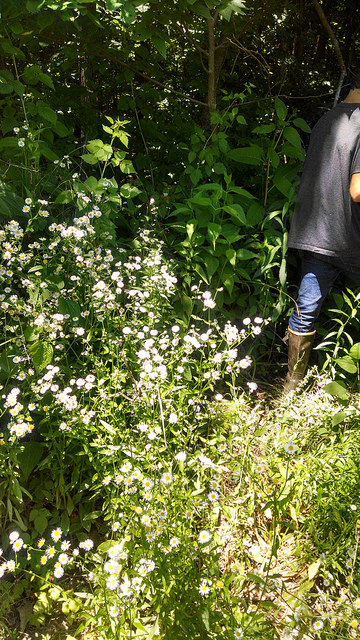
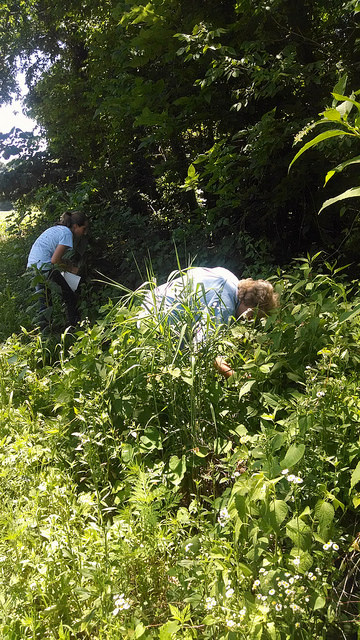
Picking wild raspberries

Picking wild raspberries

I think we were still a little too early but we picked for at least two hours.

Picking wild raspberries

Picking wild raspberries

And believe it or not, after Julia posted about her run in with a turtle, we ran across one in the field.

Yellow and black box turtle

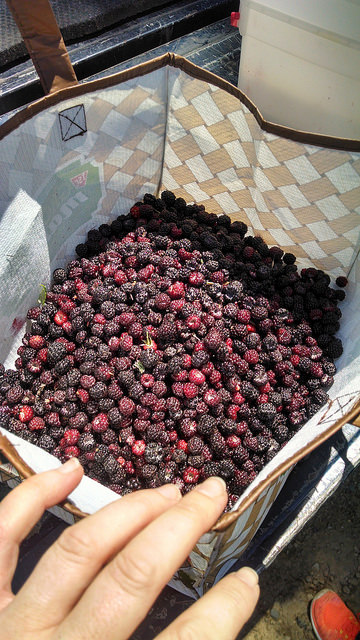
We ended up bringing home enough raspberries to freeze 3 quarts.

Bin of wild black raspberries

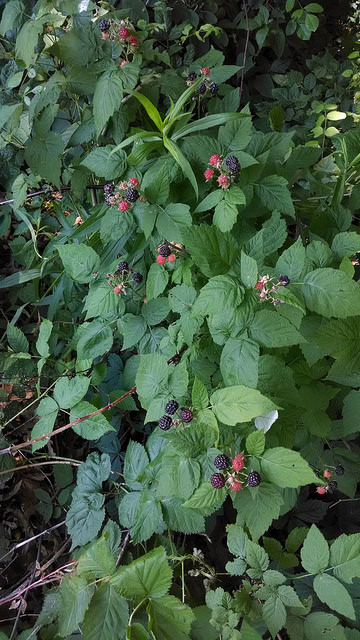
We have given Steve instructions that as soon as he sees these blackberries begin to ripen to take us back! There were even more blackberries than raspberry vines!

Unripe blackberries

What a great bounty of berries, Sarah! Strawberries have just started in our area, so we have a little while to go until the raspberries are ready. I can almost taste the sunwarmed berries when I look at your photos. Enjoy!


Garden in June

Vegetable garden in June

Every night when I get home from work, I walk through the garden. It’s one of my favourite times of the day–outside at the farm, seeing what’s grown during the day, appreciating all of the hard work we’ve done so far.

The garden is finally taking shape as I’ve envisioned it would from the start–as in years.

Sprouts are growing, from hollyhocks to beets to onions and sunflowers.

Hollyhock seedlings

Beet sprouts

Green onions

Sunflowers

Some of the plants have gone beyond sprouting and moved onto blossoming.

Tomato blossom

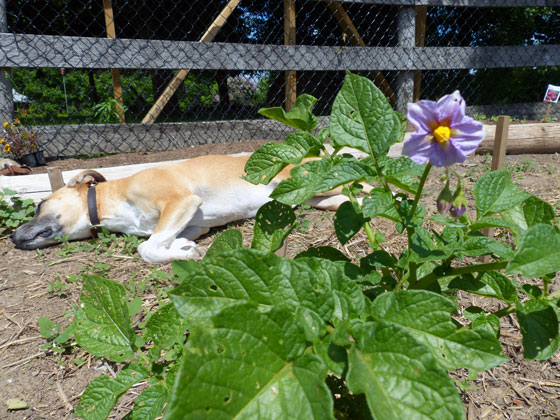
Potato blossom

Marigolds amongst the tomatoes

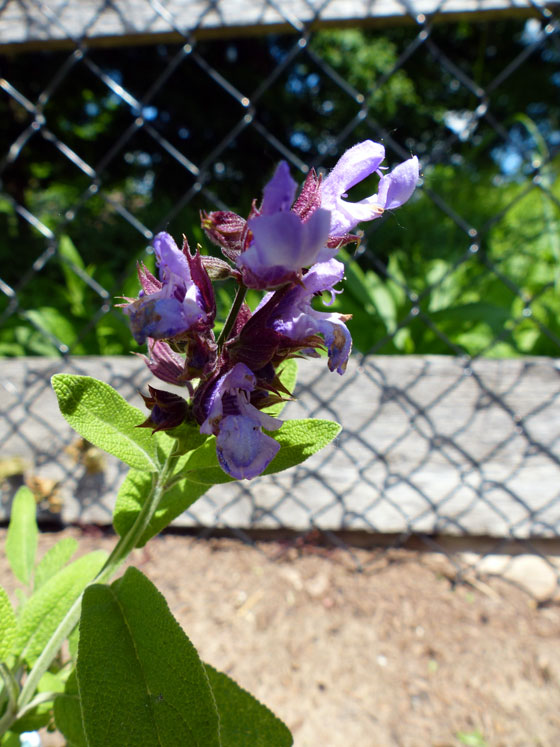
Sage blossom

There are even signs of fruit on the raspberries and grapes–although I’m working myself up to picking the grapes, as the vines are supposed to focus on growing, not fruiting yet.

Raspberries

Baby grapes on new vines

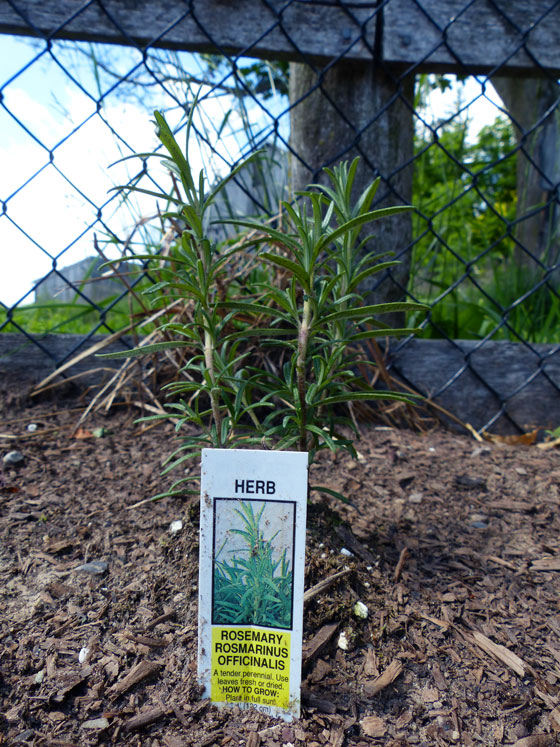
I’ve planted herbs all around the perimeter, lavender, thyme, sage, rosemary, basil.

Rosemary plant

The biggest progress since my final Dueling DIY update are the trellises for the squash, raspberries and tomatoes. I’ll go into more detail on each of these as we go through the season, but here are a few snapshots for now.

The tomatoes are planted under a simple 2×2 wood frame. I’ll add strings once the tomatoes grow a bit more.

Simple wood 2x2 tomato trellis

Matt hammered 12 steel T-posts around the 2 rows of raspberries. I still need to string wire between each post to hold the raspberries upright, but the hard work was definitely the posts. So much hammering.

Raspberries trellised with steel T posts

The biggest addition is our squash trellis. Fingers crossed this works to corral the squash. We have a big garden, but I learned last year that it was no match for squash.

A-frame squash trellis

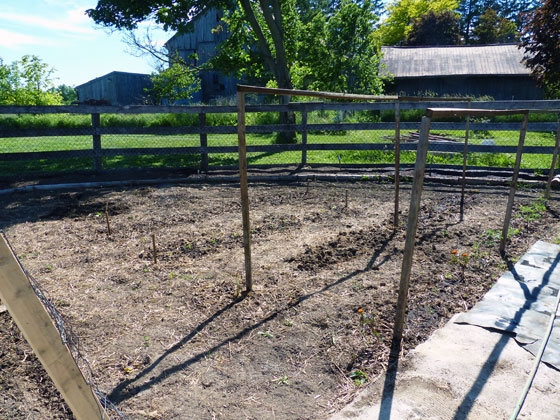
We have a few more tasks to do before we can officially move into maintenance mode: hang the gate and spread the straw for our deep mulch experiment.

But for now, I’m enjoying my evening walks and seeing the growth so far.

What’s growing at your house?

Sweet times on the farm

I looooove maple syrup. Growing up, every spring my parents went to a Mennonite farm and bought gallons of pure maple syrup. Then they put it into containers and froze it, so we had it for the whole year. It was always a sad day late in the winter when we ran out of syrup.

Sorry, Aunt Jemima, you’re just not for me.

You can imagine how excited I am to be making our own maple syrup this year.

We jumped right in to tapping our trees with little thought to how we’d transform the sap into syrup. A lot of what I saw online talked about evaporators or cauldrons over fires. Pretty much everything said, “Do not boil sap indoors.”

We have neither an evaporator nor a cauldron, however. Nor did we have a ton of sap, so Matt and I threw caution to the wind and decided we were going to boil our sap inside on the stove. Daring, I know.

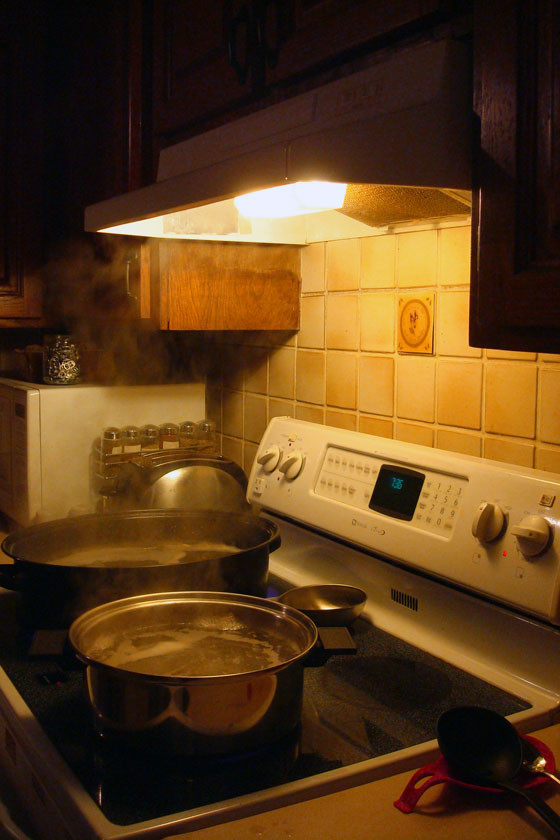
We selected some large pots–including our big roasting pan, dumped in the sap, set the burners to high and turned on the exhaust fan to suck out the steam. And you know what? It totally worked!

Boiling sap on the stove to make maple syrup

On an average evening, we found about 12 litres of sap was a good quantity. It fit in our pots easily and didn’t fill the house with too much steam. After boiling for about 3 and a half hours, the sap had transformed into syrup.

At first we just judged by colour and flavour, but Matt progressed to measuring the temperature. He found online that 218ºF (103ºC or so) was the magic number.

Tip to anyone who wants to try making syrup indoors, we used the soup pot as a finishing pot and transferred the sap from the roasting pan into the soup pot for the last half hour of boiling

Boiling sap on the stove to make maple syrup

The ratio for sap to syrup that we found online was 40:1, and that was our experience too. 12 litres (12,000mL) of sap made about 1 1/2 cups (375mL of syrup).

This picture shows another neat thing I’ve learned about syrup. I knew it came in different grades or colours, but I thought it was just the amount of boiling time that determined what grade your syrup was. It turns out it’s early versus late in the season. The jar on the left is from our second boil, and the one on the right is our fourth. See how the colour is subtly darker in the older syrup?

Homemade maple syrup

An aside about these old Crown canning jars. How perfect is the made in Canada label?

Homemade maple syrup in a Crown canning jar made in Canada

I’m loving having maple syrup again. It’s sweetened a lovely pumpkin soup, made a beautiful golden topping on vanilla ice cream (one of my favourite ways to eat it) and of course added just what was missing to my favourite meal of the day, breakfast.

Homemade maple syrup on French toast

I’m trying to be a bit frugal and not eat it all at once. We already have two full jars in the freezer, so I’m hoping to remember my childhood and make it stretch as long as I possibly can.

Are there any other maple syrup snobs out there? Have you ever made your own syrup? Any tips to share–whether for inside or outside boiling? Do you have a favourite maple syrup recipe?

Getting sappy

We have a new project for these last few days of winter. We’re tapping our maple trees!

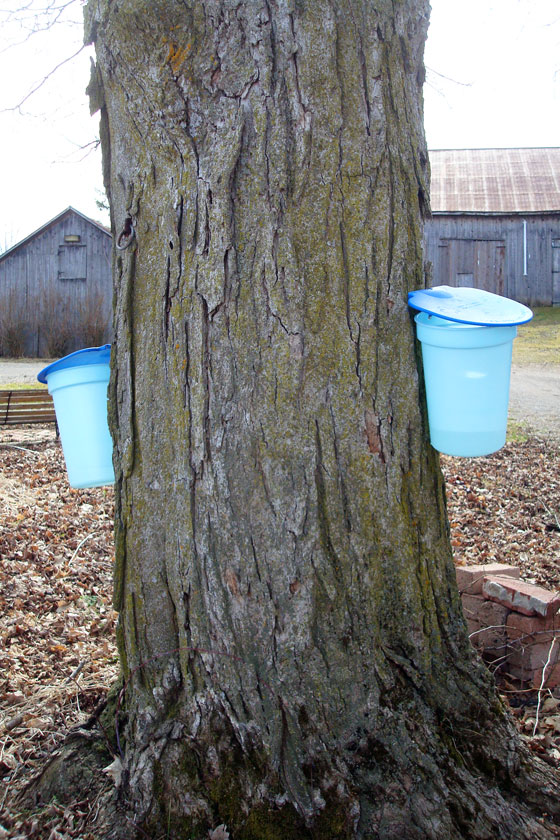
Tapping maple trees

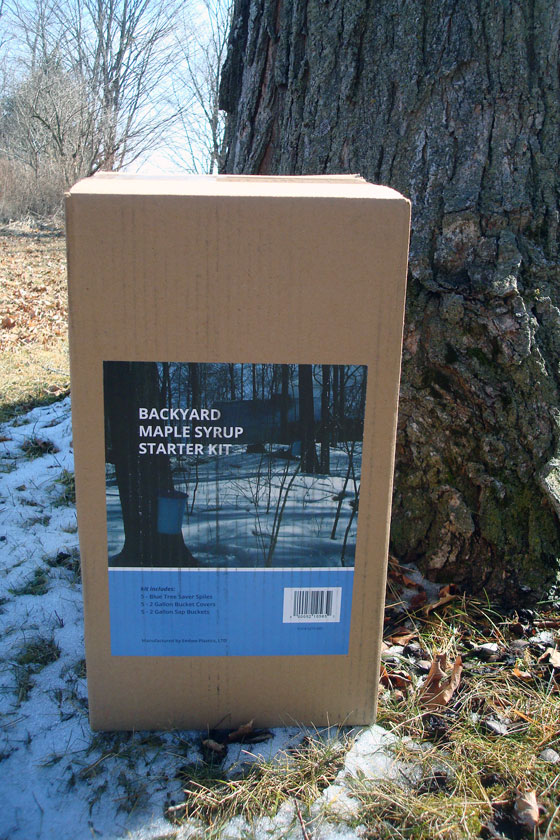
I picked up a basic starter kit at the hardware store. It came with five buckets, five lids and five spiles.

Backyard maple syrup kit

Thankfully the kit also came with instructions on how to get started. We selected trees that were the right size, drilled holes, stuck the spiles in, and watched the magic happen.

Tapping maple trees

The sap started flowing as soon as we drilled the holes. Matt was impatient saying, “Stop taking pictures! We’re wasting sap!” (Picture Kermit arm flailing). The maple syrup has totally turned into Matt’s thing.

Tapping maple trees

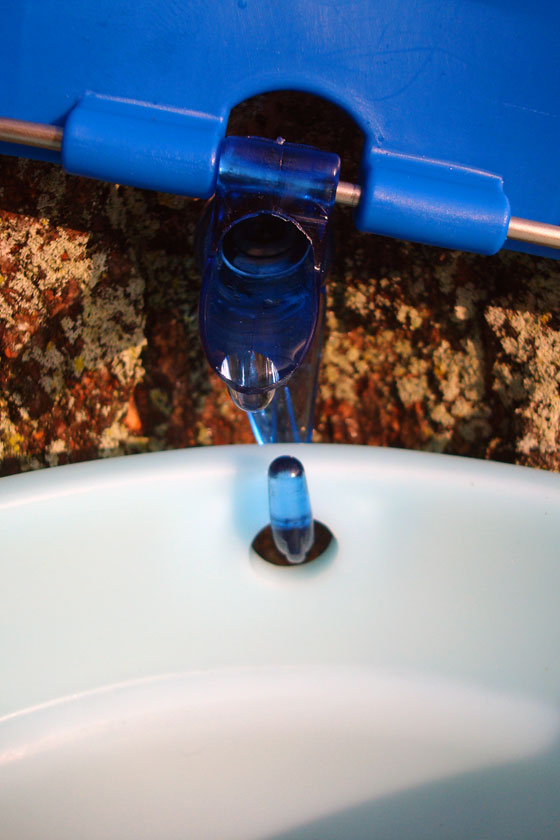
The spiles, buckets and lids all hook together in a pretty simple system. The sap travels up the tree, into the spile and then drips into the bucket.

Tapping maple trees

Tapping maple trees

Tapping maple trees animated gif

The sap run this year hasn’t been terrific. Last week temperatures shot up, and I had high hopes for a a lot of sap. However, the temperatures were so high that even night was above freezing. Apparently cold nights are critical for sap.

However, we have had a few good days where Matt had to empty the buckets several times.

Tapping maple trees

To collect the sap, Matt takes my biggest stock pot outside and empties the buckets into the pot. Then in the house we strain the sap to get out any dirt or bugs or twigs and put it in big containers in the fridge until we’re ready to move on to the syrup stage–which I’ll talk about in my next post.

Have you ever tapped trees? Are you trying anything new this time of year? What’s your big spring project?

The big freeze

In the final stages of negotiating to buy our first house, we were $1,000 under what the sellers wanted. In hindsight, it was just $1,000, but it was hard for us to up our offer. In the end, we wrote the microwave and little chest freezer that were in the house into the contract and paid the extra $1,000.

Since then we’ve joked that we have a $700 microwave and a $300 freezer (don’t ask me why the freezer got undervalued… although the microwave makes really excellent popcorn).

Despite low-balling it, we do like the freezer too. It’s small, but it allows Matt to feed his habit of always being stocked in case the apocalypse arrives.

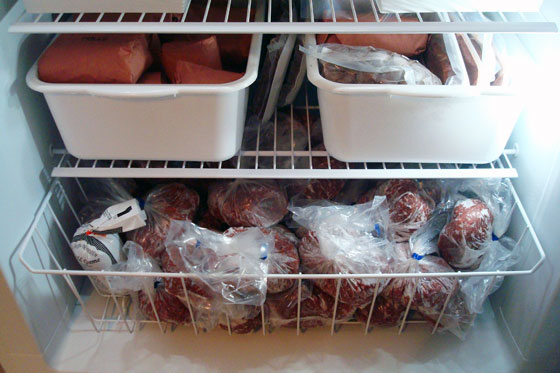
Small chest freezer full to the brim

Because Matt keeps us so well-stocked though, I often find myself emptying the entire freezer looking for the one tray of chicken breasts I’m sure is somewhere underneath the boxes of frozen fish and 17 packages of bacon. (There’s no question about Matt’s priorities–and yes, I actually counted 17 packages).

In his desire to improve his bacon stockpile, Matt has been campaigning to upgrade the freezer for some time. I’ve been holding out. However, when 100+ pounds of venison came into our lives at the beginning of November, I relented.

We could get a bigger freezer. But I was adamant it had to be upright. I was not going to spend more time mining through an even bigger chest freezer.

Just before Christmas, our freezer arrived. Matt retrieved our venison from his father’s freezers–yup, plural. (The propensity to stockpile frozen food is genetic). And we loaded up the new freezer.

Upright freezer

The venison got a shelf, the whole bottom drawer and a few of the door shelves as well. Deer burgers anyone?

Venison in our new freezer

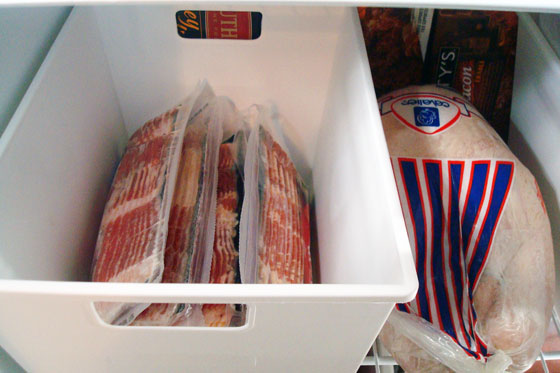
Despite being one-third filled with venison, there’s still lots more room. This freezer is huge. Cubic footage was our biggest criteria in choosing the new freezer. To help keep us organized, I purchased some bins from the dollar store. We have one for chicken, wieners (sausages and hotdogs), vegetables, breads, seafood, and, of course, one just for bacon.

Bacon in the freezer storage bin

We’re calling this our Christmas gift to each other. (Isn’t being a grown-up so cool? Forget about video games or gadgets. We get appliances for Christmas.) It’s not as big as the couch from our first year and definitely not close to the fireplace from last year, but the new freezer is absolutely an upgrade from our old one.

What did you get for Christmas this year? Do you have a freezer? Is yours upright or chest? Any freezer organization tips to share? Do you have venison in your freezer? Any venison recipes to share? We’re going to be eating it for awhile.

Garden #harvest15

In case you haven’t heard, a vegetable garden was my biggest home goal for this year. Well, I am officially declaring the garden a success.

We did our last harvest a week or so ago.

And just in time too. Frost is a regular occurrence now, and the plants have all shriveled up. They’re not producing any more produce. But they were pretty productive for most of the season.

Especially the squash.

I knew the squash was going to be plentiful. When it was time to pick, I didn’t even consider a basket. I got out the wheelbarrow.

This is the first load. Please note that there are still numerous pumpkins hanging on the fence, just waiting to be picked.

Wheelbarrow full of acorn squash, butternut squash and pumpkins

The second load.

Wheelbarrow full of acorn squash, butternut squash and pumpkins

The grand tally is 37 pumpkins, 39 butternuts and about 70 acorns. We donated several of them to Thanksgiving dinners on both side of our family, and then brought them as party favours for all of the guests. We’re also eating them ourselves, of course.

This is the corner of my dining room where they are currently living. Lovely dinner party decor, aren’t they? Apparently, there was a reason I didn’t toss the cartons that held the fireplace stone.

Squash curing in the dining room

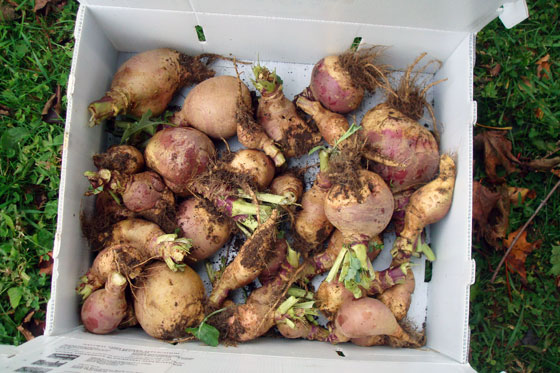
The cartons also came in handy for the rutabagas.

Matt was joking when he suggested we plant rutabagas. Neither of us knew what they were. I don’t think I’ve ever eaten one. I know I’ve never cooked with one. Seeing a carton full of these large vegetables was a bit daunting.

Rutabagas

We strategically picked the rutabagas the week before Thanksgiving. Then we divvied them up, and Matt and I took two-thirds of them to work. Thankfully, many of our coworkers were enthused by the idea of adding rutabagas to their Thanksgiving menus, and we were able to get rid of most of them.

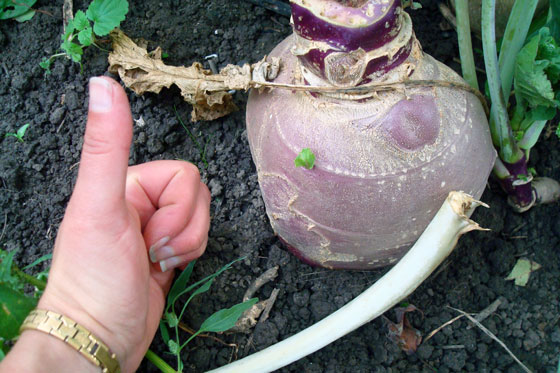
Rutabaga

I did cook one for our own Thanksgiving dinner. The recipe called for one large rutabaga “about 1 1/2 pounds.” My version of a large rutabaga weighed in at 3 pounds–double the recipe. Thankfully, we liked the rutabaga, so we didn’t mind that we had a lot of it.

The other star of our harvest were Matt’s potatoes. We had just three plants, but they produced some beautiful taters.

Harvesting red potatoes

There were some big ones, some medium ones, and some wee-tiny potato-lets.

Potatoes

That big guy came in at more than a pound all on his own. In total, we had 6 pounds 4 ounces of potatoes.

Weighing a potato

And they taste amazing. I definitely notice a difference between our fresh homegrown ones and the grocery store. (This may be cruelty to vegetables).

Breakfast for dinner

The only things that did not do well–and I’ve talked about this before–are our poor peppers. We had 8 red pepper plants and 12 (supposedly) jalapenos, all of which did pretty much nothing. We got probably about 6 peppers total, and they all resembled misshapen green bell peppers.

The one pepper that started to turn red shriveled up and fell off. And note how the plant is blossoming again even though fall leaves are on the soil around it? These guys just could not get it together.

Red pepper

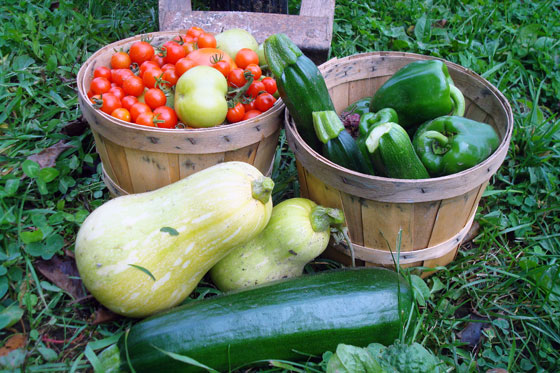
Our final harvest included those last few peppers, a small bushel of tomatoes, half a basket of beets, and of course, more zucchini. Those things just kept coming.

Not pictured are two more baskets of Matt’s onions.

Harvest 2015

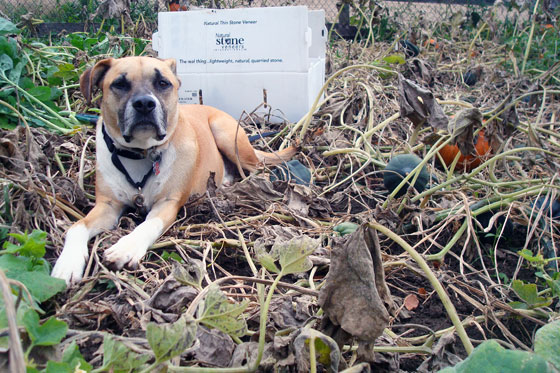
Oh, and we grew a puppy too!

Baxter in the garden

The last of the tomatoes and peppers are now on the dining room table, ripening the rest of the way in front of our best window.

Tomatoes ripening in front of the window

It’s so great to have finally fulfilled my dream of having our own garden and growing our own food. And it’s something that Matt and I both really enjoyed–I love projects that happen like that.

We have more to do to wrap up the garden for the season. I’m already full of plans for next year. But for now, I can pretty much check vegetable garden off the 2015 wishlist.

Did you have a vegetable garden this year? How did your garden grow? Do you have any favourite squash or pumpkin recipes to share?

Fall mantel

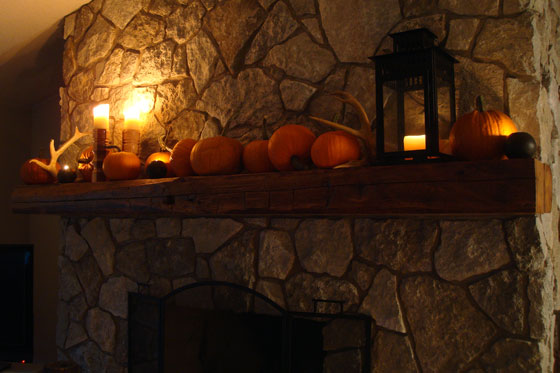
Pumpkins, antlers and candles decorating the mantel

There have been some beautiful fall home tours going around the blogosphere recently. I’ve held off on bringing fall inside, trying to hang onto summer just a little bit longer. However, now that it’s October, I can’t deny that fall is here.

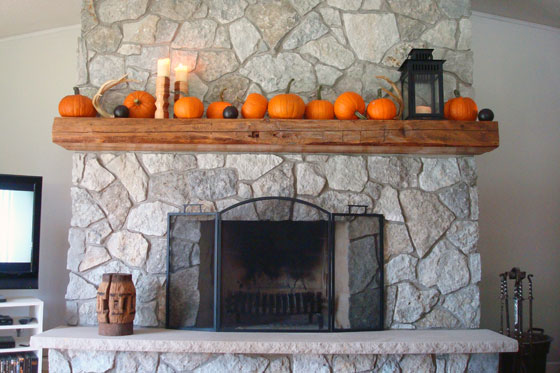
This is our first fall having a working fireplace, so that’s where I started my decor. Behold the fall mantel.

Stone fireplace decorated for fall with pumpkins

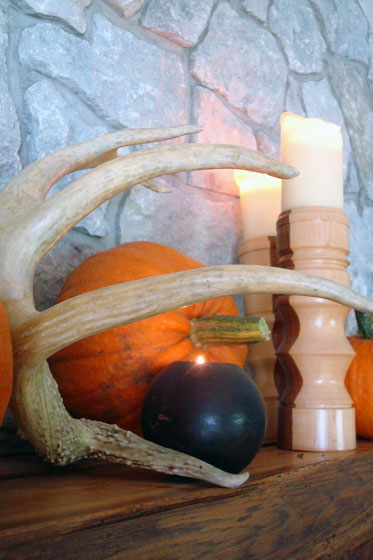
The black lantern, wooden sphere tealight holders and antlers have become staples on the mantel. For fall, I added two wooden candlesticks that my Dad made and a whole bunch of pumpkins.

Antler, pumpkins and candles decorating a fall mantel

These 10 pumpkins are probably only about half of what the garden has produced this year. From what I’ve read, squash (and pumpkins) need to cure in a warm-ish place before they’re stored for the winter. So this display is about both form and function. (And yes, that’s the Blue Jays game on the TV in the background. Summer continues even into October. Go Jays!)

Pumpkins, antlers and candles decorating the mantelAntler, pumpkins and candles decorating a fall mantel

I love the barn beam mantel so much. The wood against the stone is beautiful. Now with the pops or orange and black it feels right for fall.

The only thing we have yet to do to fully embrace fall is light the fire.

Candles lit on the fall mantel

How are you decorating for fall? Have you had a fire at your house yet? Did anyone else grow your own pumpkins? Any suggestions of what to make with the pumpkins (besides jack o’ lanterns)? How about tips to store the pumpkins? Who else is watching the baseball? Let’s hear it for the Jays!