Second year for syrup

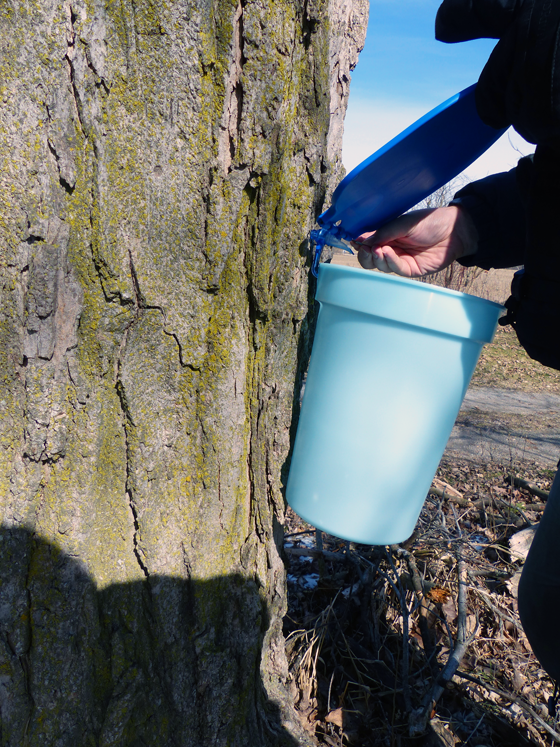
Tapping a maple tree

It’s maple syrup season again on the farm. Or we think it is.

This is only our second time tapping our trees, so we’re still pretty much guessing. Temperatures are supposed to be above freezing during the day this week and below at night. From what I’ve read and what we learned last year, that’s sap weather.

Last year, we were impressed by how easy it was and how much syrup we made. In fact, we still have syrup left. We just don’t eat enough pancakes at our house.

But we’re not letting that stop us. We enjoyed making syrup last year, so we’re going to do it again.

Like so much of what we do on the farm, this is an experiment, so we’re learning as we go.

Lesson #1: Make sure the drill battery is charged (and the back-up too) before you start tapping. Mr. Dewalt had to hang out for a little while until the bit could spin enough to get him unstuck.

Drill stuck in a tree

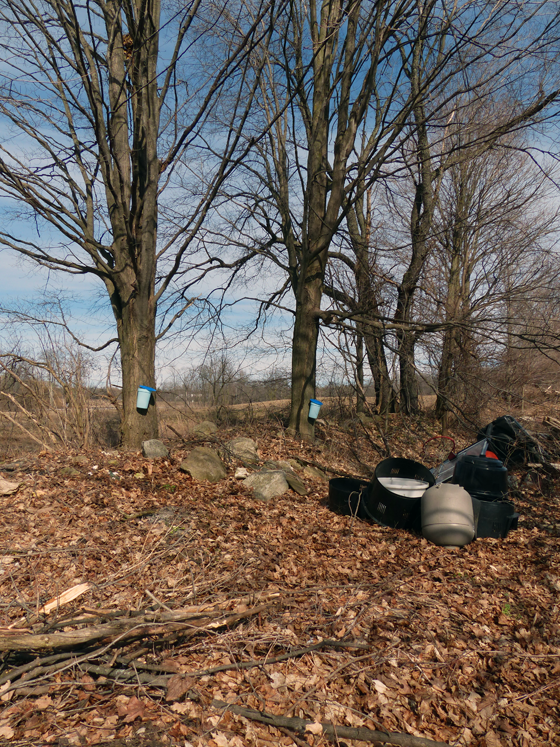
Matt has picked a couple of new trees. The only issue is they’re not the easiest to access. More incentive to clean up the brush and junk along the edge of the field.

Tapping maple trees

The other three buckets went on our most productive trees from last year. (Can you spot the puppy?)

Tapping maple trees

Now our fingers are crossed that the weather cooperates and the sap starts flowing.

Making a compost enclosure

Like us here in Canada, Sarah has had some unusual warm winter weather in Illinois. She took advantage of the spring-like temperatures recently to do some building outdoors. Her compost enclosure is something I’ve considered for our farm, so I enjoy seeing how she tackled it.

Last weekend we had unseasonably warm temperatures. When the forecast said that we were supposed to hit 70F (21C–thanks for the Celsius translation, Sarah!) on Sunday I decided I had to do something outside. One of the projects that I wanted to work on was my compost pile. At that point, I literally had a pile.

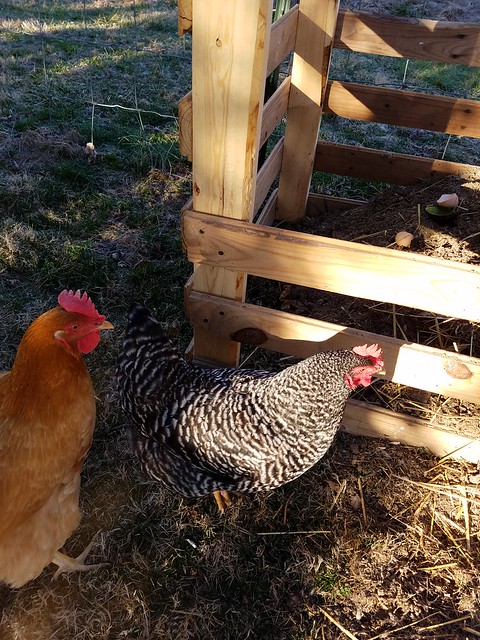
Basically, I just threw my scraps and yard waste into a corner of the chicken’s pen. The chickens helped me by scratching and turning over the pile, but pretty much we just had a mess.

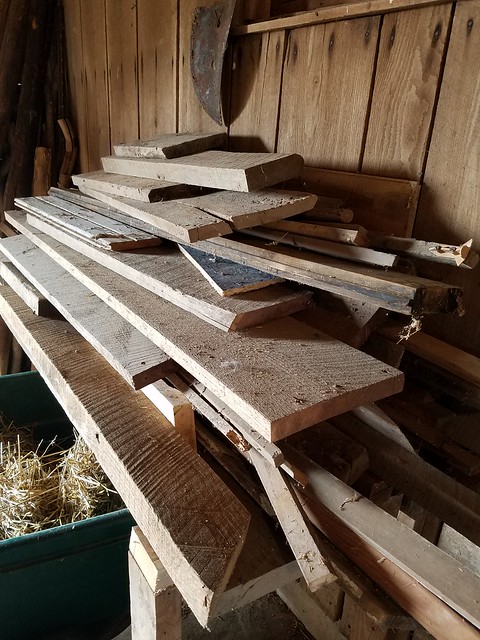
I have a pile of wood scraps in my barn so I had plenty of supplies to make something to corral my compost.

I started by taking a 2×4 and cutting it into four 42 inch pieces for the corners. I found some old scraps of wood siding to use as the slats. I cut the slats for the sides at 30 inches and the slats for the front and back at the 42 inches.

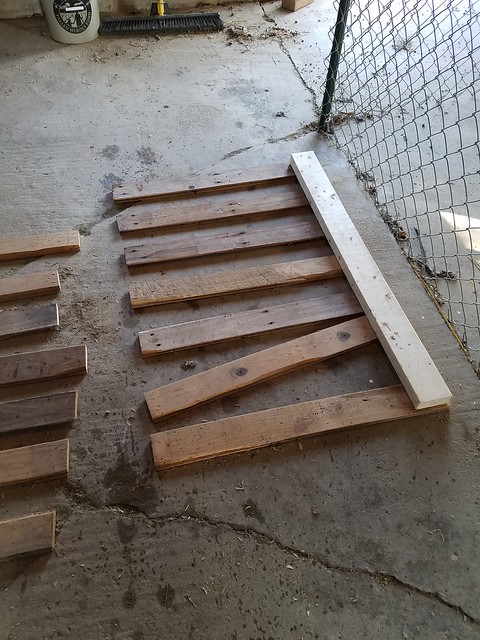
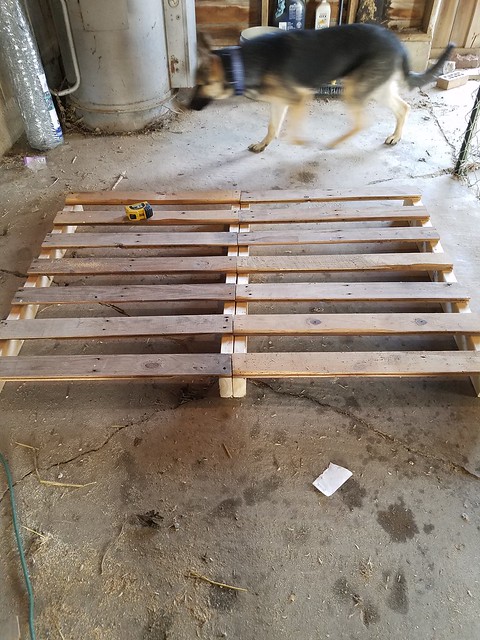
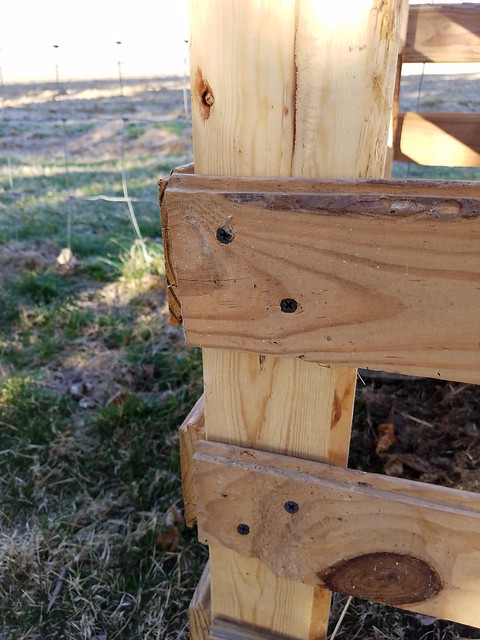
I first assembled the two sides. I laid them on the floor and used screws to attach the slats to the corner pieces.

I set both sides next to each other so that the spacing between the slats would be the same. (Blitz photobomb!)

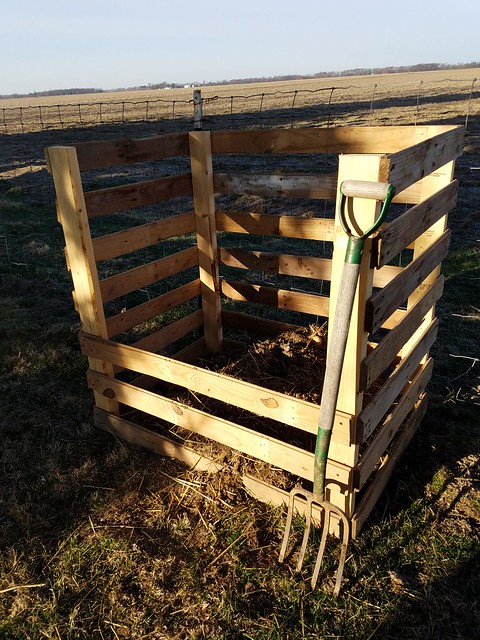
Once I had the two sides done, I just had to connect them with slats for the front and back. I didn’t necessarily have to add slats to the front but it did help make the structure more stable.

Also, since I knew that the chickens would help me turn the compost over, having front slats also helps keep the compost inside.

Once I finished I was very happy with the outcome.

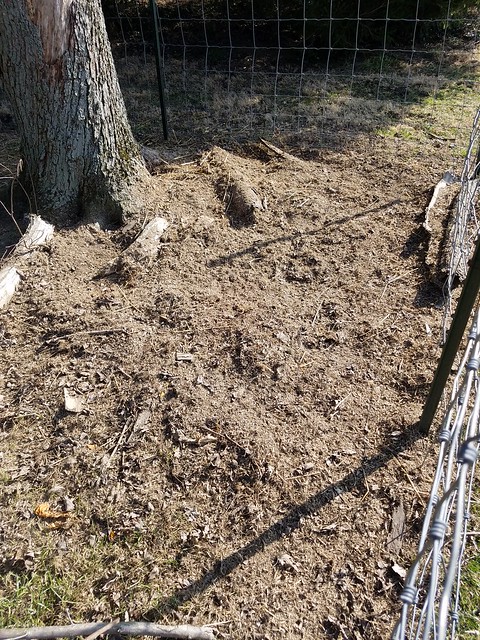
However, Steve pointed out something very important. Compost can get very hot when it is breaking down. The chances of my pile catching fire are very slim, but there is no need to risk anything, so I moved the pile away from the barn.

Now, all I have to do is add more scraps to the pile, turn it over occasionally and wait.

Compost is “black gold” for gardeners, so I am excited to turn food scraps and yard waste into a nutritious fertilizer for my plants.

This will be so helpful for your garden, Sarah. The enclosure seems like a good way to keep the pile tidy. Gardening season is coming soon!

Vegetable garden additions – Blackberries and more grapes

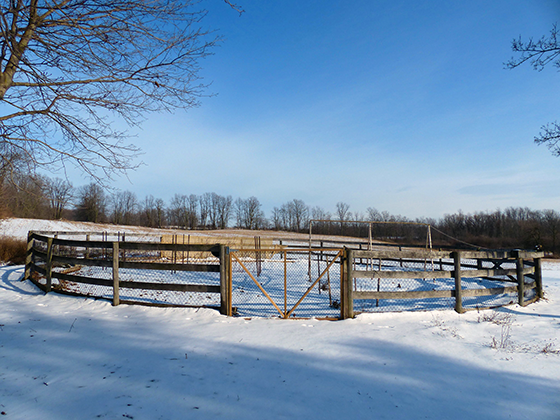
Vegetable garden covered in snow

I don’t know as gardening season ever really stops on the farm. Sure we’re not out in the garden every day like during the warmer weather (hello, -20 degree windchill and ice storm). But we’re thinking about the next season, monitoring our stores of vegetables and preserves, and enjoying the produce (curried butternut squash soup, yum).

But come February, I feel like it’s more socially acceptable to discuss gardening. I mean, we’re just 40 days away from spring, people. It’s comin’.

My plans for the garden this year are relatively modest compared to last year. Between our raised beds, trellises, hose and gate, the infrastructure is all in place.

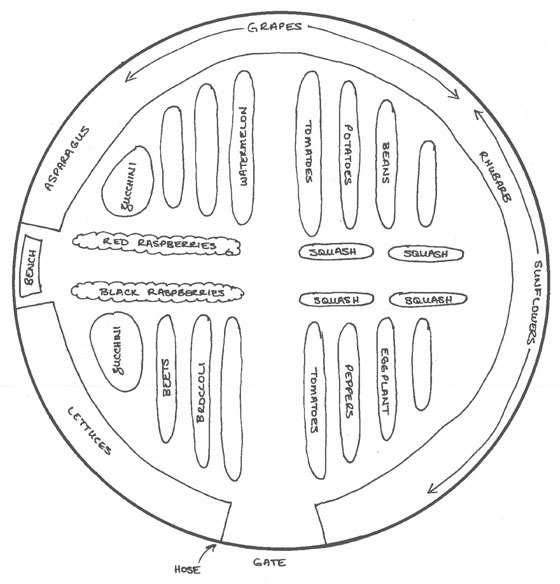
The quadrant layout is working for us. So now I’m just thinking about how to fill those quadrants. (Reminder, here was last year’s plan).

Round garden plan for 2016

Top on my list is adding a few more perennials this year, and I’d love your input on what would work best.

You may remember that I tried to domesticate some wild black raspberries, and ended up ripping them out when they ran wild. So I have a row of raspberry trellis that’s empty. My established raspberries reproduce prolifically, so it would be easy to transplant some new canes into the empty row. But I’d love to try something different.

I’m come across Arapahoe blackberries. They’re supposed to be thornless, self-supporting (so not floppy like the wild raspberries), reasonably hardy for the Canadian climate and with smaller seeds.

Seed catalogues

The other addition I’m considering is more grapes. I’m a bit hesitant because I know nothing about grapes, and I’m not sure if the grapes I bought last year are going to be alive in the spring.

I bought eight vines last year, four red (Somerset) and four purple (Sovereign Coronation). In my mind, I’ve always considered 12–an even dozen–a nice number of grapes. Plus, I feel like four green would round out my collection.

Lakemont are supposed to be seedless, store well (my catalogue says “actually improves in cold storage”) and a “superior” table grape.

Anyone know anything about Lakemont or Arapahoes? Any other suggestions of berries or grapes to add to our garden?

Home Goals 2017

Alright. It’s officially time to start looking ahead. Time to share my Home Goals 2017.

Unusually, I’ve not been thinking about these for the past few months. Some of them have solidified over the last few weeks–one of them even started just before the end of last year. Some of them came together just as I was writing this post.

I think we’re getting to the stage where more things are done around the house–and the things that are yet to come are biggies. As in so big we’re not ready to tackle them yet (although I really, really, really want a garage).

However, there’s still enough to keep us busy for another year. Here’s what’s on the list.

My office

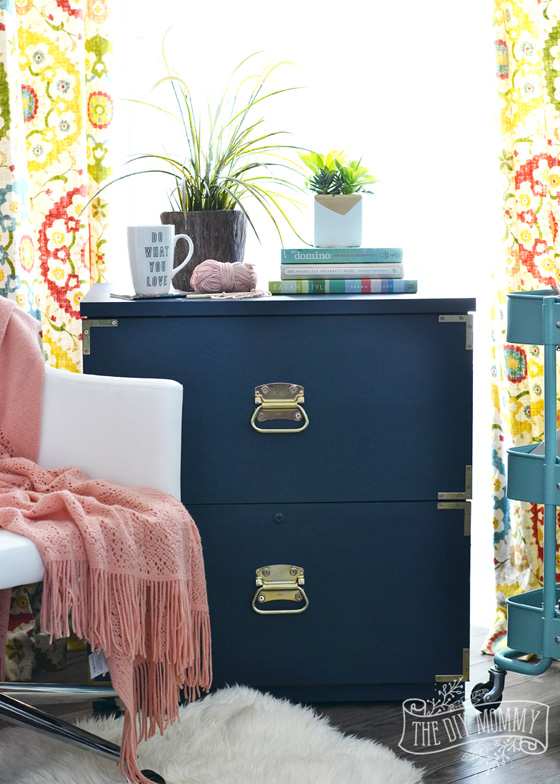
Turquoise and brass file cabinet from DIY Mommy

Source: DIY Mommy

Ahhh. My office. Finally a room of my own (thank you Virginia Woolf–not an affiliate link). I don’t know as I can convey the monumentalness of this project–except by making up words. Five years ago we moved to the farm. Since that time, moving boxes have been stacked against the wall in my “office.” I want to unpack and truly have a functional office. Finishing off my office will finish off another milestone for the house: the final bedroom.

The transformation is already underway. This is the project that Matt and I started right at the end of December–gotta keep up our holiday tradition of scraping a stippled ceiling.

Clean up the pond shore

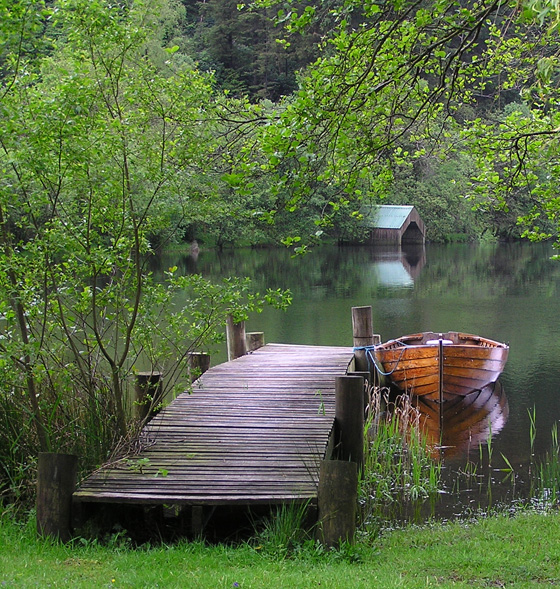
Property clean up has been on my list every year. And every year I end up working on whatever spot shows up in front of me. This year I want to be a little more plannful. This year, I am cleaning up the pond shore–how’s that for an emphatic statement.

The pond is my favourite place on our whole 129 acres. And I haven’t been able to easily access the shore the whole time we’ve lived here. I’ve considered enlisting professional help, but I think if I put out a call, I should be able to find a few family members willing to wield chainsaws and weed eaters for a weekend.

Vegetable garden

The vegetable garden was our major project last year, and as a result I feel like we’re in very good shape to start this year’s growing season. However, there are a few things I’d like to add this year, like rhubarb, a second row of berries (maybe raspberries, maybe something else) and maybe some more grapes.

Most important, this year I am going to keep the weeds under control–another emphatic statement. I’m hoping a deep mulch will help me not spend my whole summer weeding.

Flower gardens

Last year our flower gardens were entirely neglected as the vegetable garden consumed all our time. This year I want to give them at least a little bit of attention.

I’ve dumped plants randomly in two beds at the front of the house, and they need a bit of organization. I’d like to add some more shade tolerant flowers to the turnaround.

I’m also planning to remove the flowerbeds at the back of the house (there are only so many hours in a day, and mowing is easier than weeding).

Basement

I’ve said it before. The basement has been hanging around long enough. This is the year we’re going to finish it once and for all–including fun art.

New barn cat

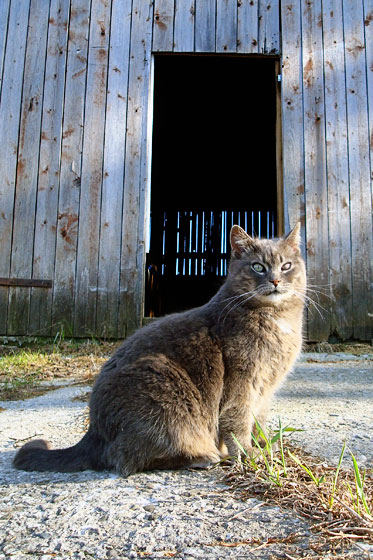
Ralph the barn cat

This one may be more of a farm goal than a home goal.

We have an outstanding barn cat in Ralph. So outstanding that we’d love for her to teach someone the wisdom of her ways. I’m not sure exactly how we’re going to go about finding her an apprentice, but we’re going to figure it out.

So there you have it. Six goals. Two inside, three outside, one alive. Some big, some small, one with a tail. Some easy, some tedious, some furry.

We’ll see how this goes.

Time to get started!

Do you have any goals for this year? What would you like to accomplish at your house? Any tips for introducing a new barn cat? Anyone want to help clear the shore at the pond?

Looking back at Home Goals 2016

I have to be honest. I’m on the side that is glad to see the end of 2016. It was not my favourite year.

But there were some bright points. And before I look too far ahead into 2017, I want to take a look back at my Home Goals 2016.

I really enjoy laying these goals out at the start of every year. And I find them very helpful throughout the year to keep me on track.

This year was kind of a mix. We accomplished a lot, and I am really happy with what I can cross off the list. However, some little finishing details continue to hang around, and I couldn’t summon the motivation to finish them.

Here’s my review.

Start to plan for the big reno

I started last year by sharing some of the floorplans that we’ve been playing around with for our long term vision for this house. Through that process, I think we landed on a plan that will work best for us.

We also met with a contractor, got his input on the plans and got some very rough numbers from him about how much things will cost.

We also realized that we can easily break our plans–and our budget–down into several phases. I like knowing that we don’t have to do everything and spend all the money all at once.

The big reno, even just phase one, is likely still a little ways away, but it seems more real now that we have some drawings and numbers.

Guest room

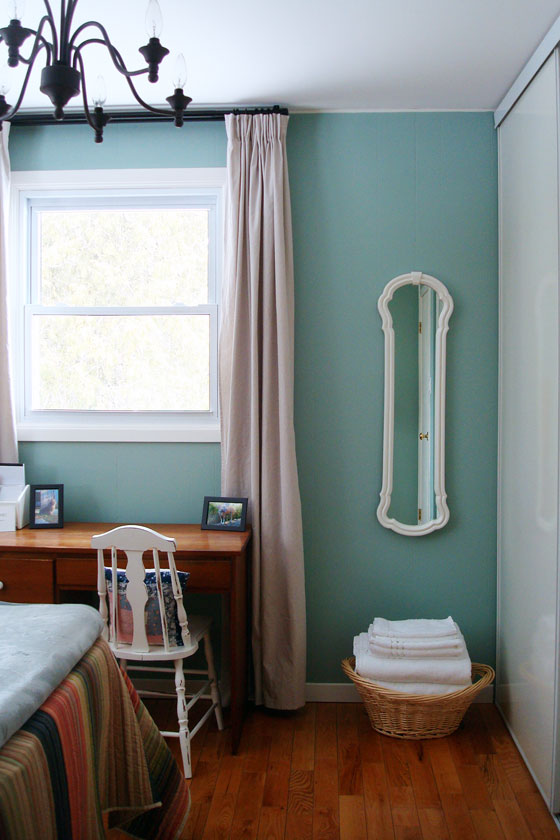
Robin's egg blue country guest room

You know I love crossing a whole room off my list, and the guest room has been one of my favourite projects so far.

A few family members visited us in 2016, and they all liked it too. My one nephew said it was like a bed and breakfast–the kid knows how to make his aunt happy.

This is a project where one niggly finishing detail is still hanging around. I stripped the paint off the old metal bedframe way back in the summer, but I never repainted it. So this will have to go on the list for 2017.

Finish the basement
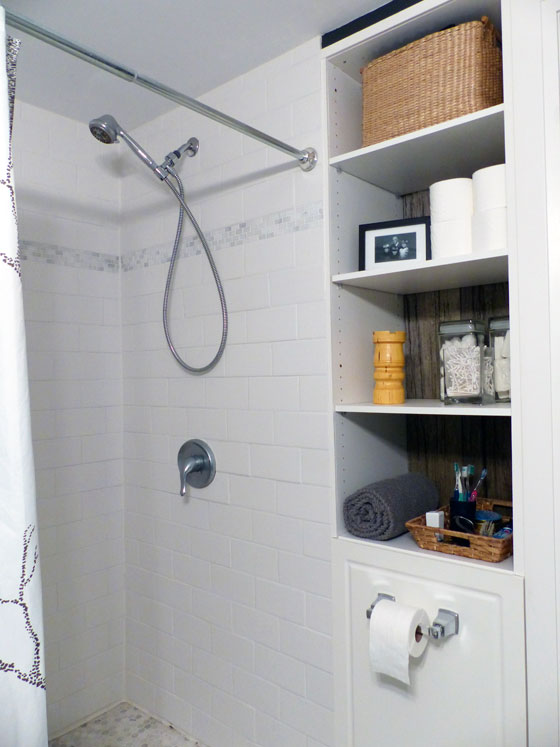
Built in shelving in a small bathroom

The basement was our very first project when we moved to the farm, but four years later I still had some niggly finishing details hanging around. The biggest detail was Matt’s bathroom, which is alllll done–and so, so pretty.

The basement ended up being the focus of an unexpected reno this year when we had to waterproof the foundation in a few areas. It was tough to redo already redone areas. I’m keeping my fingers crossed we don’t have any water seep in this spring.

While I had planned to focus on just a few small things, after redrywalling the areas that were waterproofed, I also built a new closet in the laundry room. Closets were a theme of the basement. We added a tonne of new shelves to the cold cellar and built shelves in the closet under the stairs. These areas have given us a lot of extra storage. It was great to dig out the Christmas decorations without digging through a pile of boxes first.

So there was some good productivity.

But on the niggly details front, I continue to struggle with art to finish off the basement. I know what I want and I even have frames. I just haven’t taken the time to find the pieces I’m looking for. I did make 16 personalized Scrabble tiles for the pingpong room. Having each of our family member’s initials is a touch that I really like. The rest of the art will come in 2017. I promise!

Furniture
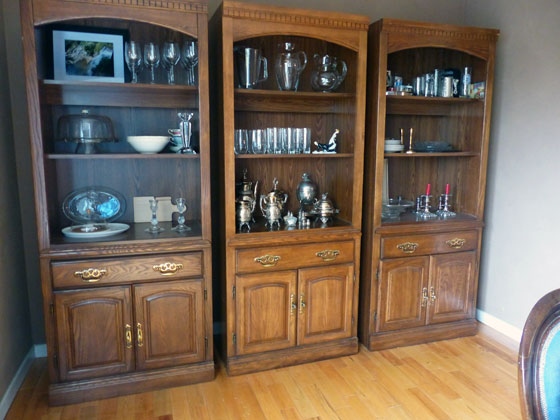
90s bookcases as china cabinet

I didn’t buy a whole lot of new furniture this year, but what I did has been on the list for a loooong time.

Finding a third matching cabinet for the dining room was definitely the thrifting score of the year. I think it will be hard to top that one.

A close second, though, is finding a china cabinet for my office. I’ve been looking for a pretty specific piece for a long time. This hunt was a lesson in persistence and the importance of carrying furniture measurements with you everywhere.

The two other pieces of furniture on my list for 2016–making a new coffee table for the living room and reupholstering a slipper chair for my office–will carry into 2017.

Vegetable garden
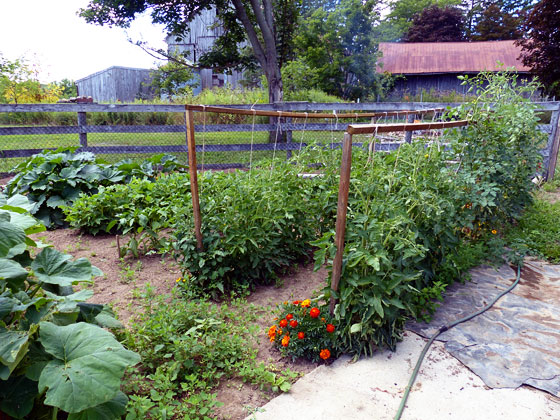
Vegetable garden

The garden was a huge project this year. We invested a lot of time in it, and we saw the results.

In fact, everything that I wanted to do on my original Home Goals 2016 list, save for planting rhubarb, we did.

2016 was about a lot of the infrastructure for the garden. We finally hung the gate, put in curbs around the outside edge, built raised beds, built trellises for raspberries, tomatoes and squash, planted some perennials like grapes and asparagus, tried our first cover crop of winter rye, experimented with a deep mulch of straw, and last but absolutely not least ran a waterline out to the garden.

This year’s harvest was again fabulous. I feel like we’re starting to settle into our gardening groove.

And thanks to all of the work that we did in 2016, I feel like 2017 will get off to a much faster start and we can focus on growing, not building, the garden.

Outdoor clean-up

Burned lawn

When I look at the farm, I feel like there’s so much that needs to be tidied up. In adding outdoor clean-up to my list last year, I knew I was going to have to pick a spot.

However, when I reflect on the last year, I realize that we actually ended up doing better than just one single spot. We cleaned up a scrap lumber pile behind the barn and another big one at the edge of our centre field. We picked up rocks, so I’m able to mow along the north side of the house, although I would still like to add some more topsoil and pick up a couple of patio slabs.

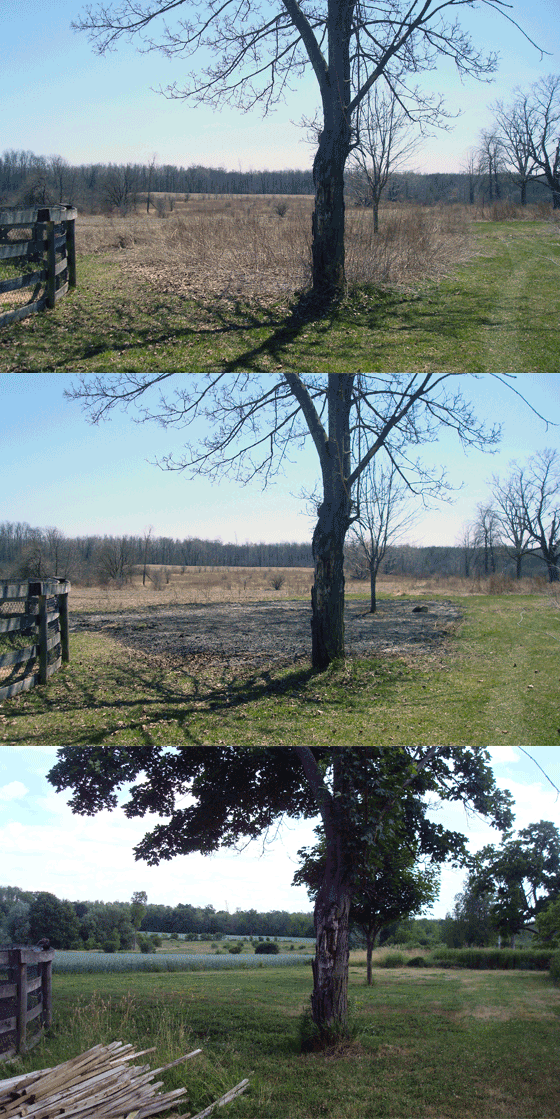
And the biggest area is the one pictured above on the south side of the garden, which was cleared for the first time this year–a controlled burn is the way to go–and then mowed by Matt all year.

There’s still a lot more clean-up to go, but I have to remind myself that we have a 129-acre property and we have made good progress.

And that’s a good word to sum up 2016 as a whole. Progress.

I feel good about what we accomplished, and, even better, I continue to enjoy the process of making the farm and the house ours.

What were your accomplishments in 2016?
That’s a wrap

If you’re looking for Christmas presents, fancy paper and pretty ribbons, you’ve come to the wrong place.

I did do some wrapping this weekend, but it was in the garden (yes, I’m still working in the garden).

I have wrapped our grape vines in burlap. I have no idea if this is the right thing to do or not, but, as I’ve said before, gardening is an experiment.

Wrapping grape vines in burlap

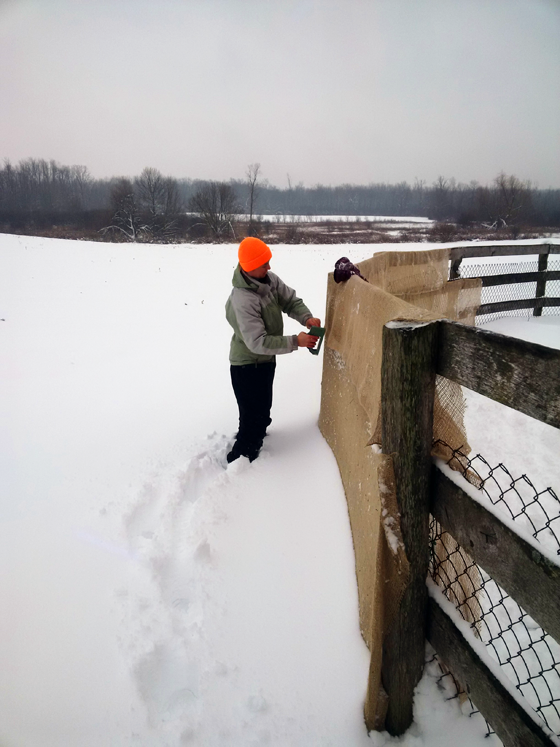
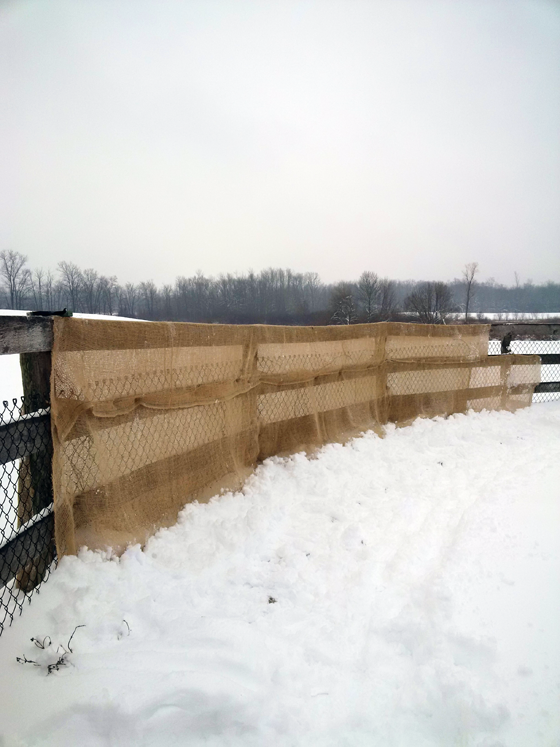
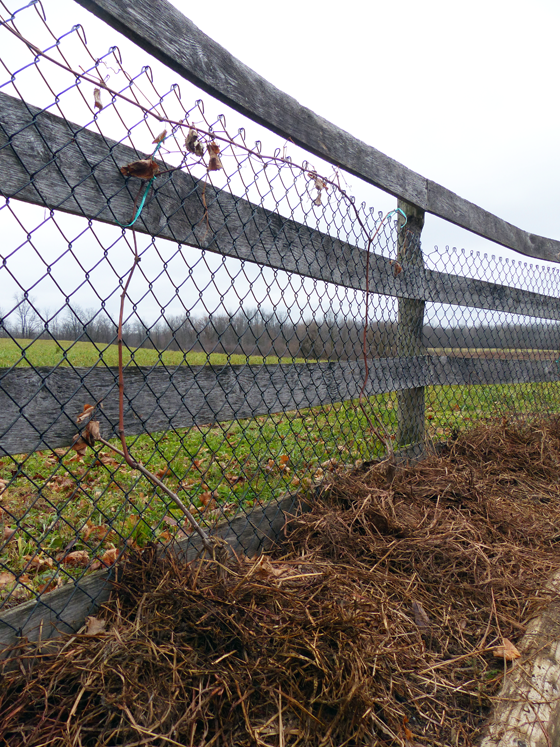
The grapes are brand new and they’re a wee bit exposed on the outer edge of the garden where it meets the field. I felt like a bit of additional protection wouldn’t hurt, and I had some burlap lying around, so a couple of weekends ago, I stapled a length of fabric to the fence.

Wrapping grape vines in burlap

Of course, I ran out and by the time I picked up more burlap, we’d had snow. A lot of snow–at least for us and for this time of year.

Wrapping grape vines in burlap

Since I could no longer open the garden gate–unless I wanted to shovel and I had been shoveling for a couple of hours by the time I had the brainwave to finish the garden–I tossed the burlap, the stapler and the scissors over the fence, and then climbed the fence myself. In case you’re wondering, climbing a fence in bulky snow pants and boots is not the easiest. But the snow makes a soft landing.

I was grateful we have a wood fence, because it was easy to just staple the burlap right to the wood. Where the bottom of the fence was buried in snow, I packed the snow against the fabric to hold it in place.

Wrapping grape vines in burlap

Then I ever so gracefully climbed out of the garden again.

This officially wraps up work on the garden for this year. (And no, I’m not sorry for the pun. That was completely on purpose.)

The last straw in the vegetable garden

My approach with our vegetable garden is to view it as a big experiment. I do a bit of research here and there, but mostly I dive in and cross my fingers.

We added two new crops this year that I view as experiments: asparagus and grapes.

Asparagus isn’t really a huge experiment. I know how it grows. We like to eat it. However, most people grow asparagus from crowns. I started ours from seed. This means it will be probably four years before we harvest any asparagus.

Nurturing our asparagus along is an experiment.

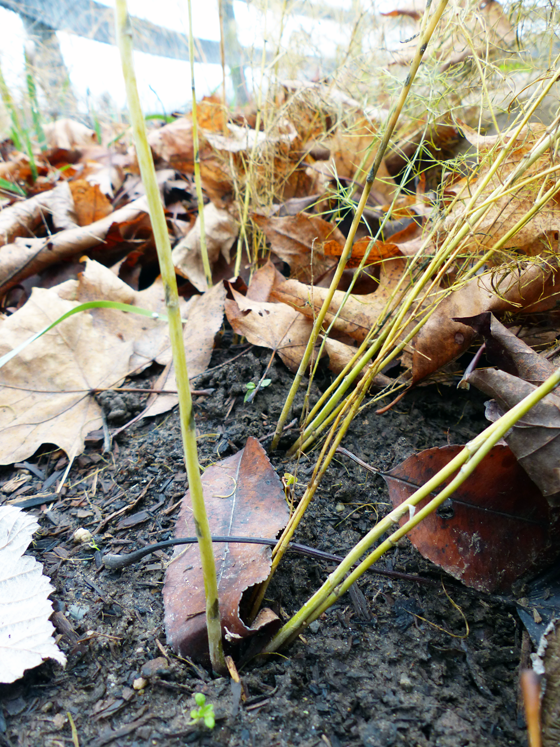
My very basic research on asparagus told me to wait until the ferns turn brown, then cut them down and top them with compost and straw. This weekend, I judged that the ferns were brown enough.

Asparagus ferns in fall

You can see that our asparagus are very spindly. I’m not sure if this is because they’re brand new, or because I planted them in the raised bed, which is filled with what we discovered is very poor triple mix.

Tiny asparagus spears

Either way, they need some coddling. While this bed could probably benefit from some compost, I’ll leave that for the spring. For now, I just covered the asparagus stumps with a healthy layer of straw.

Straw mulch in the vegetable garden

I also applied the straw to our other experiment, the grapes. I fully admit that I have no idea what I’m doing with the grapes. Despite the reading I’ve done, I’m not at all clear on how to prune them, trellis them or just in general care for them. So I’m making it up as I go along based on what I think I’ve read.

Our grapes are new and they’re a little exposed on the outside of the garden on the edge of the field. So I figured some mulch might help to insulate their roots.

Grapes mulched with straw

As often happens with me, once I get started, I got a bit carried away.

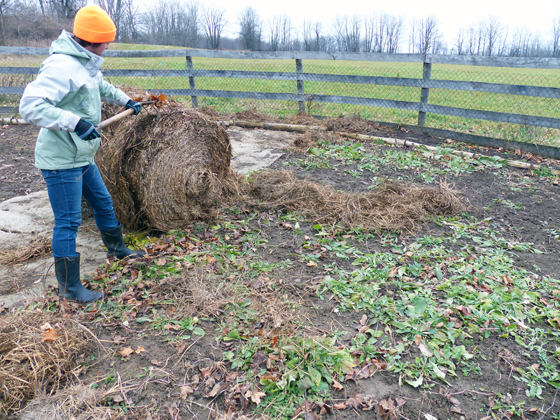
After mulching the asparagus and grapes, I thought, “Why don’t I just roll the whole bale into the garden and see how far it goes?”

I wasn’t entirely sure I’d be able to move the bale on my own, as Matt and I have always done it together up to this point.

It turns out I can. Not easily, but I can.

Mulching the garden with straw

Between hacking at it with the pitchfork and unrolling it, I covered about half the garden.

Straw mulch in the vegetable garden

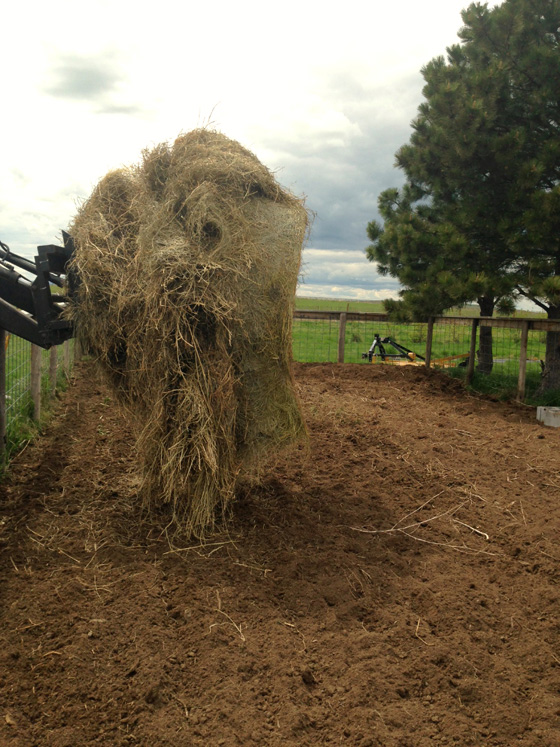
Those big round bales are full of a lot of straw. And this one was quite old, so the layers were very matted together. It always felt like a major victory when a large flake or one full coil peeled off.

So that brings me to my third experiment: seeing if a thick straw mulch helps to control weeds. My fingers are crossed–my default approach to gardening.

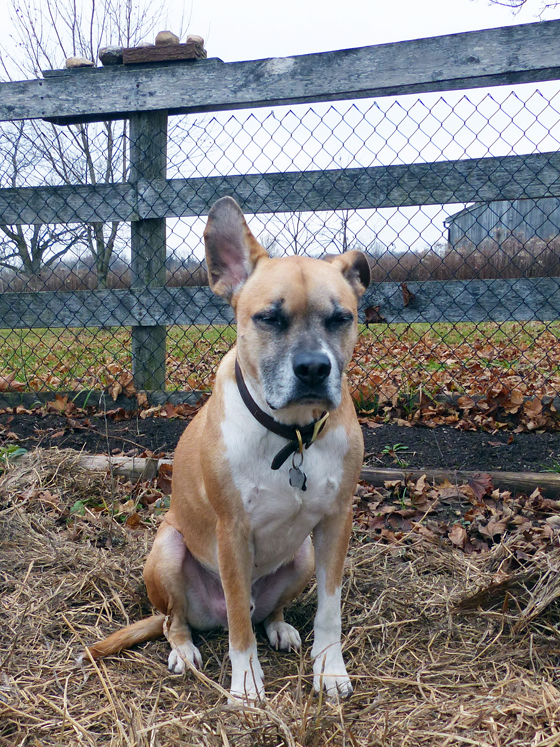
Gratuitous Baxter picture: Dude’s ears very rarely stand up. But an afternoon outside and a garden full of sniffy straw are exciting–or at least halfway exciting. He looks so ridiculous that I couldn’t resist sharing a photo.

Baxter with one ear up

Anyone have any tips on growing asparagus or grapes? Do you use straw in your garden? Or a different type of mulch? Anything else I should do this winter to protect my little plants?

Winter rye cover crop in the vegetable garden

Winter rye sprouts in the vegetable garden

Look at our pretty green sprouts.

Fall in Ontario is about brown. Gardening season is done. Leaves, grass, flowers are all pretty drab. But we have one new crop growing.

This is our winter rye cover crop in the vegetable garden. It’s our first time trying a cover crop.

We love our garden and how productive it is. So we’re working hard to maintain the quality of our soil. Last year, I spread straw and manure all over the garden. This year, we’re going with so-called green manure.

In the spring, we’ll cut the rye and turn it into the soil.

Have you ever grown a cover crop? Do you have any green growing at your house?

Vegetable garden highs and lows

I’m going to go a bit corporate today. Have you heard of a SOAR analysis? It’s a business planning exercise where you look at the strengths, opportunities, aspirations and results for a particular project. It’s a bit friendlier than the old-school SWOT (strengths, weaknesses, opportunities, threats).

Today’s project is the vegetable garden.

Vegetable garden in October 2016

Matt and I officially harvested everything last weekend. We have more clean-up yet to do, but I feel like I’m ready to look at what worked and what didn’t… or, more positively, what opportunities there are for next year.

Strengths

Soil – We have a great garden, and I can’t really take a lot of credit for it. Our soil is fabulous, and I’m doing everything I can to keep it healthy (see opportunities below).

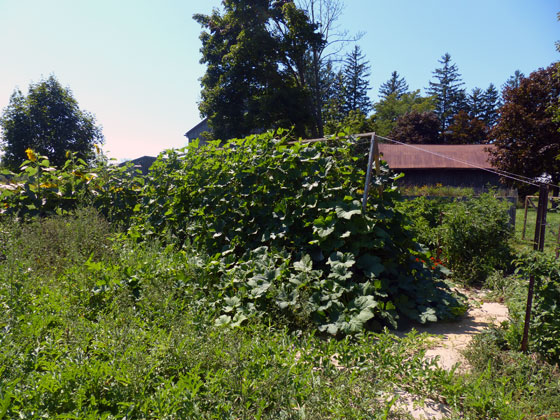
Trellises – I’ve written about growing our raspberries, tomatoes and squash vertically. It totally worked. We got great yields in much less space than we would have without the trellises.

How to grow squash vertically

Watering – This was a very, very, very dry summer. I was very thankful for our well, so that we didn’t have to pay municipal water fees. We watered every other day–more than is recommended by most gardening how-tos–but I think it made the difference between losing most of our plants (which didn’t happen) and harvesting a very impressive crop (which did).

Crops – In terms of impressive, the key successes this year were peppers and beans, which last year did next to nothing. Two new crops–sunflowers and watermelon–were also great successes. The watermelon took forever to ripen, but finally made it thanks to the hot summer weather continuing well into fall.

Watermelon harvest fall 2016

Our potatoes, tomatoes and zucchini were crazy prolific as usual, and the new versions we tried–ridiculously giant Sicilian Saucer tomatoes and Russian Blue potatoes–were fun additions.

Russian blue potato

Opportunities

Raised beds – Argh the raised beds. I love having the perimeter beds in the garden, but the soil we bought for them was not good at all. Weeds didn’t even grow. The asparagus, hollyhocks and some of the herbs eventually got some traction, but it took all season. The carrots, beets and onions were nearly complete failures. Some of the herbs just shriveled up and died.

Pathetic carrots

Dead lavender plant

I’m not sure what we need to do to remedy this next year. The soil was triple mix which is supposed to include compost, peat moss and top soil. However, our triple mix is very sandy and seems to be deficient in nutrients. I’m thinking all kinds of compost and manure might revitalize it.

Black raspberries – My attempts to domesticate the wild black raspberries that grow elsewhere on the farm was also a big fat fail. These plants can only be described as brambles. They’re thorny and floppy–and when they flop over, they root themselves into the ground making a big tangled mess. I channeled Sleeping Beauty’s Prince Phillip and dug them all out last weekend. I’m looking forward to finding a new kind of berry to plant in their place next spring.

Weeds – One of the things I wanted to try this year was using a deep layer of straw as a mulch over the garden to smother the weeds. Matt and I brought an old abandoned bale of straw up to the garden, but I never got around to spreading it over the garden. We didn’t keep up with weeding by hand, so the garden was very, very weedy. The deep mulch method is still on my list for next year.

Weedy garden

Plant the whole garden – Our garden is big. Last year we planted just half, but this year we made it up to three quarters . I ended up mowing the weeds in the empty quadrant all summer. Not the best use of space. I’m hoping that we can use the whole garden next year.

Aspirations

Maintain the soil – I’m learning that gardening is about growing soil, more than growing plants. Last fall I added ash and manure to the whole garden. This year, I’m aiming for more manure and some compost–especially in the raised beds. I’m also trying a cover crop for the first time, seeding one quadrant with winter rye. Crop rotation is another consideration that I’m realizing takes lots of advance thought–as in years in advance.

Slow-growing crops – Asparagus and grapes were two additions to the garden this spring. Both are going to be long-term commitments, and I’m hoping that they make it through the winter and thrive next year.

First year grape vines

New additions – I’m looking forward to adding more herbs to the raised beds and putting more thought into how they’re clumped around the perimeter of the garden. Another consideration is maybe a cutting garden, or at least dressing up the vegetables–and filling some of the vacant spaces–with a selection of flowers.

Results

Infrastructure – There’s another corporate, distinctly non-garden word for you. But I don’t know how else to describe the base structures that form the garden–and that as of this year are all done. Last year our big accomplishment was the fence. This year, we added the curbs, raised beds, trellises, gate and waterline. I’m looking forward to not “building” the garden next year and just planting it.

#Harvest16 – Once again, the garden was super, duper productive. We had more zucchini, tomatoes and watermelon than we could use–to the benefit of our families and co-workers. We’re hoping that our squash and potatoes last well into the winter. Any storage tips?

Garden harvest fall 2016

Preserving – I feel like growing your own garden soon leads to preserving your own food, and this year Matt and I dove in to canning. We pickled about 10 pounds of beans–I was skeptical, but they’re so good I can eat a jar on my own–and made nearly 12 litres of our own ketchup–Matt is a big user of ketchup and is very particular about his preferred brand… although he has now switched allegiances to our homemade version. We’ve also loaded up the freezer with beans, roasted tomatoes, grated zucchini and plan to add peppers.

I’m not quite ready to call this year’s garden completely done, but I am ready to call it a success. In fact, we have also fulfilled every single goal I had for the garden in my original Home Goals 2016 post. That’s an achievement.

How did your garden grow this year? Any tips for storing potatoes and squash? Or favourite recipes to share? Anyone have ideas for the soil in our raised beds?

Growing sunflower seeds

It’s been neat to watch the sunflowers go through their various stages of growth.

More than a month ago you saw the cheery blossoms.

A couple of weeks ago, the seeds started to come in. The spiky flowers in the centre of the blossom dropped off to reveal the tightly packed seeds.

Sunflower seeds

Sunflower seeds

It was about this time that the local wildlife seemed to discover the sunflowers.

I had hoped to get another photo this week, but the flowers have been nearly picked clean. Most of the seeds have been consumed.

The biggest culprits are the blue jays. Any time I walk past the garden, at least six jays erupt from the sunflower patch. We’ve also spotted chipmunks and squirrels.

So it appears that we may be buying bird seed again this year.