Bird’s eye view

A few weeks ago as we headed into this year’s major undertaking that is landscaping, I posted an overview of what I call the residential portion of the property. That post got me thinking that you might be interested in seeing the whole farm. So let’s zoom out a bit, shall we?

Birds eye view of the farm

Voilà. The farm. All 129 acres of it. Clear? Good. Post done for today.

What? Oh. Not clear? Perhaps you’d like some explanation of where and what things are.

Layout of our farm

Obviously, the residential portion is a very small part of the property.

The farm is a fat L-shape. The small severance on the west side belongs to the people who owned the farm three owners ago.

During our real estate search, it was very hard to find farms that hadn’t been chopped up over the years. Lots of them had rows of small one acre lots cut off on all sides, and it became a running conversation between Matt and me about how I didn’t want a property that was missing any pieces of pie. This single severance is relatively small and tucked around the side, so I don’t notice it too much. Ironically, it’s an unusually shaped lot: triangle, just like a piece of pie.

Anyways, before you all leave me and go looking for dessert, back to the explanation of the farm.

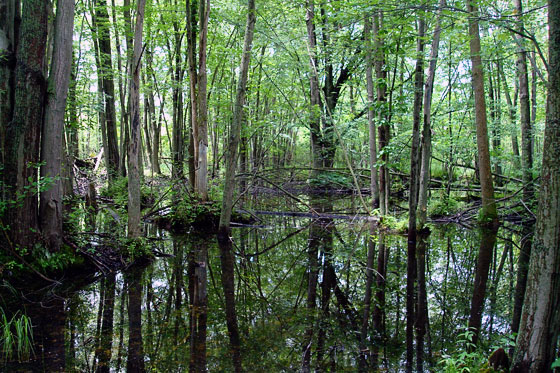
At the top of the image (on the west half), the dark squiggly line cutting across the top left corner is the creek that runs across the front of the property and under the driveway. It flows into the pond and then continues out to the back half of the property, which is mostly marsh.

When I describe the property, I say that about half of it is cleared for hay fields and that the other half is natural. The natural half is very wet, but it’s also thickly forested.
Marsh

According to the third season of Sarah’s House (where Sarah Richardson bought her farm), an acre is about as big as a football field and fits 16 small city lots. So using that math, we could have more than 2,000 houses on our property–or a whole lotta guys in tight pants. Yikes.

One of our most frequently asked questions is, “What are you going to do with all of that land?” My answer is always, “Enjoy it.” The opportunity to live in these surroundings is a luxury that I do not take for granted.

I’ll admit that my environmentalist side was one motivator in buying such a large property. I am not a fan of suburbia, and I’m happy that I can preserve this small (or large, depending on how you look at it) corner.

Self revelations

I can be a bit snobby sometimes. I’m somewhat prim.

So when a caricature artist showed up at the very fancy restaurant where my sister was having her wedding rehearsal dinner, ready to draw all of our portraits, I may have sniffed a bit disapprovingly.

Matt and I were up first. There was no way out. After all, it’s not proper to insult my sister or her soon-to-be mother-in-law.

The artist—a large man who looked a bit like Steven Seagal, with a long ponytail wearing a Samuel L. Jackson beret—asked us in a loud raspy voice to tell him about ourselves. Matt said, “Well, we live on a farm.”

And that’s all it took.
Carticature of man and woman driving a tractor

Perhaps it because the farm has become so central to my identity, and I love it so much. Perhaps it’s that Wiley was included in our family portrait. Perhaps it’s because Matt and I are obviously having really, really good hair days.

I love our caricature. The artist was amazing. He captured us well (although I absolutely do not have those cheekbones IRL, and I don’t recognize that chin that Matt’s sporting). He was very friendly and obviously very skilled at his craft.

This picture is being carefully protected until I find a frame and hang it in the basement. I think it fits in perfectly with the fun atmosphere I’m trying to create down there.

So lesson of the caricature: loosen up, have a little fun, be open to new experiences, don’t worry so much about what’s proper. In this simple caricature, I found a bit of extra happiness, both in the moment of the portrait and now whenever I look at it.

Thanks to my sister, her mother-in-law and our amazing artist, Cartoon Bob.

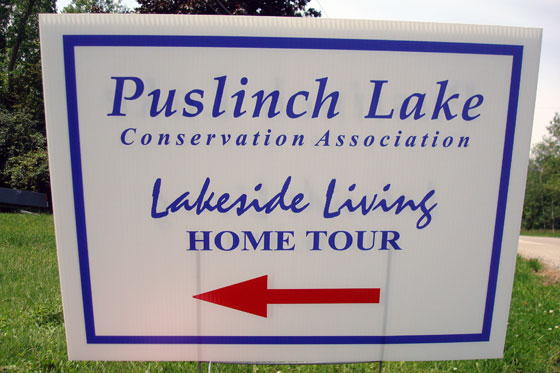
Lakeside Living Home Tour

Sign for Lakeside Living Home Tour
Not far from the farm is a decently sized lake. One day each year, various residents on the lake open their homes for tours. I missed last year’s, but I knew I wanted to go this year, so Saturday morning I slathered on my sunscreen, grabbed my camera and headed out.

The tour is run by volunteers and funds raised support the lake’s restoration. People from all over the lake take part, shuttling visitors from house to house on pontoon boats.

Pontoon boats

At each stop, more volunteers greeted and directed us, including these two pint-sized safety-conscious tour guides.

Kids in life jacketsI was very impressed by how the whole community came together for this event. A few of the houses even had artists set up outside painting.

Artist painting a picture of a house

The houses we toured ranged from rustic cottages…

Woodsy cottage

To slightly grander new builds.

Large stone house

Many of the homes were quite personal and had some unique features. Like a sink made out of petrified wood.

Petrified wood sink

A screened porch with a built-in barbecue, vent hood, tap, flat screen TV, stainless steel counters, stamped concrete floor and large wood-topped bar.

Outdoor kitchen with built in barbecue

Unusual light fixtures.

Swirly pinwheel chandelier

Built-ins constructed by the homeowner from reclaimed wood.

Library built-ins

A hammered sink from Mexico set in an antique dresser.

Hammered metal sink

I wish I had a better picture of this vanity, because the dresser was amazing. In fact the whole bathroom was pretty unique with murals painted on the wall and the tub clad in wood that matched the dresser. Unfortunately, I couldn’t zoom out enough to get the whole room, and I thought climbing into the shower to get a wider angle might be too a bit to invasive.

While I don’t think a petrified wood sink is totally my style, the tour did give me a couple of inspiring ideas for our place. I think pretty much everyone on the tour was inspired by this closet.

Walk in closet with built-ins

On a slightly simpler scale, I love this twig and branch archway. I think something like this would be great at one end of the vegetable garden.

Arch constructed out of tree branches

Seeing some unique homes, supporting my local community and floating around a calm lake on a bright sunny morning. Not a bad way to spend a Saturday.

Small island in a lake

What did you do with your weekend? Anyone else get away to the lake? Have you ever gone on a home tour? Or have you had your home featured in a home tour? Who wants a wooden sink?

Oz

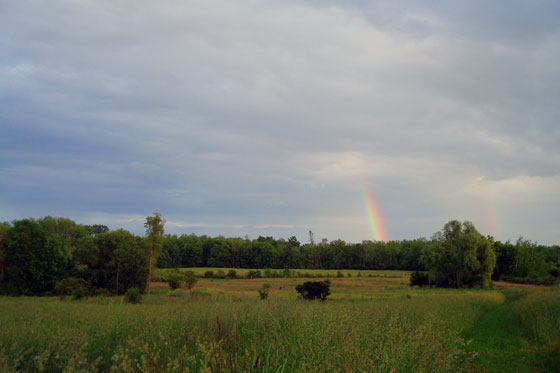
We’re definitely not in the emerald city, but last night somewhere over the emerald fields and out beyond the verdant green forest, we had a beautiful rainbow.

Rainbow over a green hayfield

It has been a very rainy week—a rainy spring, in fact—so I’m hoping this rainbow is a sign that the weather is taking a turn for the better.

Fortunately, the farm is not plagued by any flying monkeys. However, we do have enough mosquitoes to carry off a small dog or a full grown woman, so heading out into the hay fields to take pictures of rainbows is hazardous.

Mosquitoes biting my hand

Raindrops, mosquitoes, even flying monkeys, bring it on.

There is absolutely no place like home.

Path preview

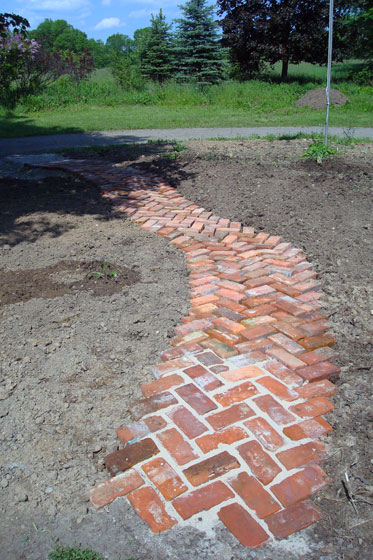
Please gaze upon my bliss.

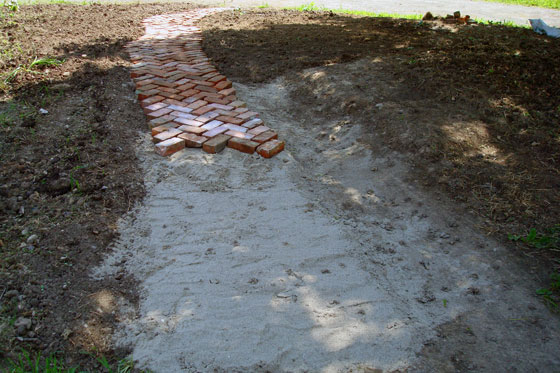
Herring bone brick pathway

Yes, that’s right. My definition of bliss is a brick pathway. So what?

But isn’t it so pretty? I realize some of you who voted for the traditional brick pattern–or “running bond” as I learned from a commenter–may not agree that this looks lovely. The vote came out very close, which really surprised me: 63% herring bone to 38% brick. I honestly thought herring bone would be the clear favourite.

I chose to go with the herring bone after spending a few days looking at the layouts that I’d mocked up last weekend. I just decided that I really, really liked the way it looked.

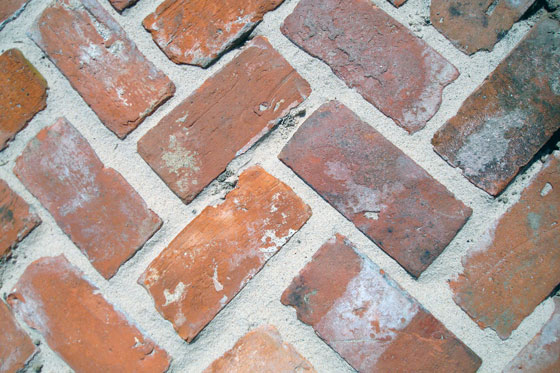
Bricks laid in a herring bone pattern

Laying the brick in the herring bone pattern and getting the bricks to bend smoothly around the curve was a bit more challenging than it would have been if I’d chosen another pattern, I’m sure, but I just fudged the spacing between the bricks as I needed to.

I still have to fill all of those spaces with sand. I found two bags of something called “magic sand” in one of our junk piles. The description said that it was a polymer infused sand made to fill the joints between paving stones. That sounded like just what I needed so I dumped the bags onto the bricks and managed to fill the joints for the first three feet of pathway. I’ll pick up the rest of the sand this week and hopefully finish off the path next weekend.

I say hopefully because along with needing more sand, I also need a few more bricks. What might be a little hard to see in the top photo is that as the path heads into the shade, about six feet from the end, I ran out of brick.

Brick pathway laid in a herring bone pattern on a bed of sand

I knew I was going to be short, and I actually made it much farther across the turnaround than I expected to. Apparently 362 bricks are just not enough. They are enough to make me blissfully happy though.

Time to zigzag or stay on the straight and narrow?

Remember this picture from my 2013 home goals?

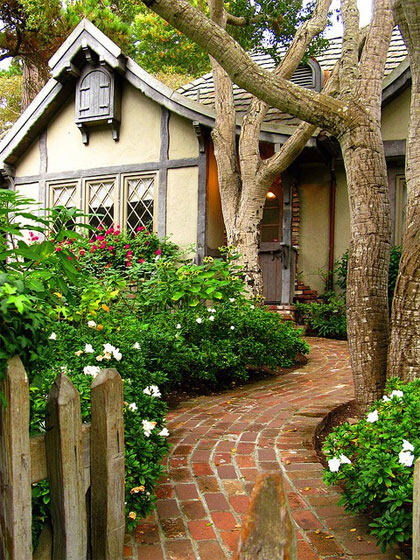
A lush garden with a brick path winding through it

This is my inspiration for the garden I’m building on the turnaround at the front of the house. Lush. A little bit wild. A beautiful brick walkway winding through.

Honestly, the path is an excuse to use up some of the piles of bricks that we have lying around the farm. But, it does have two additional benefits: the path will save us from having to walk all the way around the turnaround when we want to get to the other side (it’s farther than you might think) and it will be an attractive feature at the front of the house (I hope).

The path is next up on the landscaping list. I’ve dug out the route across the turnaround and gathered my bricks. Now I’m just trying to decide how to lay them: trendy herring bone or traditional brick pattern.

Herring bone brick walkway

If I go with the straight brick pattern, I’ll probably do six courses, not the five that are pictured here. If I go with the herring bone, this is pretty much what it’s going to look like. I’m not going to cut the bricks, so the edge will be a bit ragged. It will probably be hidden eventually by all of the lush plants, but that might take a little while.

I think I know what you’re all going to say, but I’m going to put it to a vote nonetheless. What do you think?

For those who might be concerned by the photo above, I am not going to lay the bricks directly on the dirt. I’m planning a base of sand, which we also just happen to have a huge pile of lying around. I’d use gravel, but the gravel in our pile (yes, we have one of those too) is a bit too large to provide a really stable base.

No matter what pattern I end up using, I’m planning on leaving about a half inch gap between the bricks. Does anyone have any experience with polymeric sand? I’ve heard that it’s good for filling the spaces between the bricks.

Feel free to expand on your opinions on polymeric sand, the beauty of herring bone, dos and don’ts of brick laying, fast growing plants and any other topic that strikes you in the comments. I appreciate any advice.

How to mend a torn window screen

In the category of better late than never, I’ve finally fixed our torn window screens.

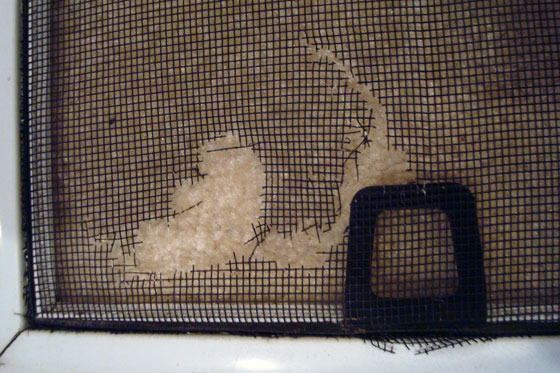
Torn window screen

You may remember that one of the last jobs I completed on my fall to-do list (on the first day of winter, no less) was to remove all of the window screens so that I could clean and patch them over the winter.

So yeah. That didn’t happen.

Now June is here and I’d really like to open a window without inviting the local mosquito population inside. It was time to get on with mending the tears.

First I trimmed the ripped screen so that I had a regular shaped hole.

Square hole in a window screen

Then I cut a patch from my replacement screening. The patch should be about 1/4 inch bigger than the hole all the way around.

Patching a torn screen

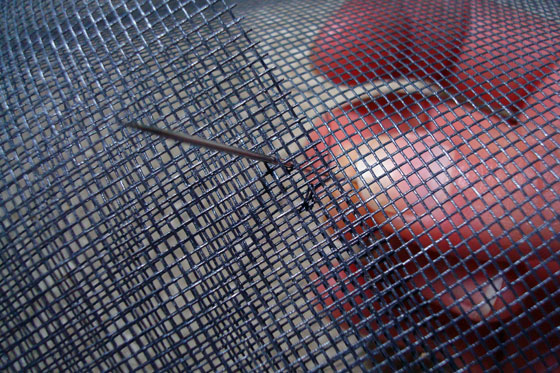
Next I lined the patch up over the hole and sewed it in place. I used regular black polyester sewing thread and tacked the screening about every three holes.

Stitching a patch on ripped window screen

I stitched my way around the patch and when I got to the end I simply knotted the thread a couple of times.

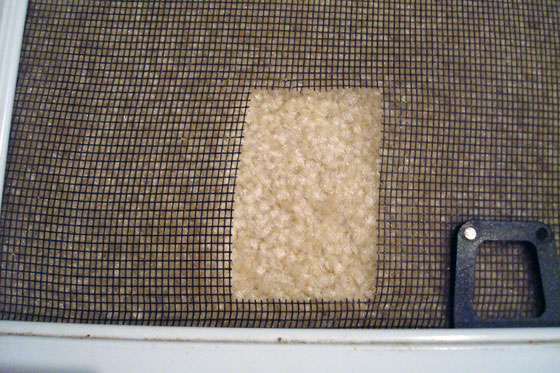
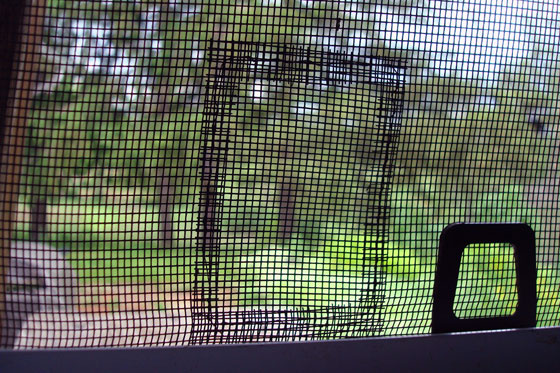
The patch is not invisible, but it’s not very noticeable. Most important, it does the job of keeping the skeeters and other flying critters on the outside while letting the fresh air come through to the inside.

Patched window screen

I will take an open window over air conditioning whenever possible, so with the weather getting steadily warmer, the repaired screens are a cause for celebration for me.

How about you? Are you a fresh air lover or an air conditioning aficionado? Does anyone else have experience patching screens? I’m sure my method isn’t the only solution. What’s the mosquito population like where you are? We seem to have had a baby boom this year, so the screens are absolutely essential.

Naked snake

A flasher recently passed through the farm. He left his coat behind.

We’re keeping our eyes open for a skinny fellow, more than two feet long, currently wearing shiny new scales. He’s not considered dangerous.

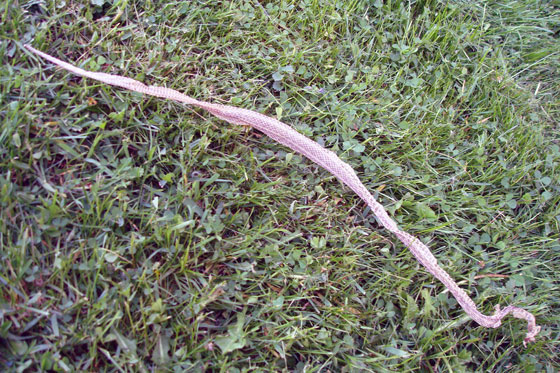
In case anyone still hasn’t guessed the answer to last week’s guess what post, it’s a freshly shed snakeskin.

Shed snakeskin

I found it in one of our flowerbeds last weekend. I’ve never seen a snake skin before outside of exhibits at the zoo. I found it really neat how it was all in one piece and how the scales were so clearly defined.

Close up of a shed snakeskin

A few of you guessed that it was a milk snake. Matt and I have conducted extensive research online, and we’re pretty confident that this skin belongs to just a regular garter snake. Regular or not, for me the snake skin is another novelty of country living.

Guess what?

What is this?

Hints:

  1. Found while weeding the garden last weekend.
  2. While it’s not that exotic, I’ve actually never seen one before.

How to play:

  1. Leave your guess in the comments.
  2. Check back next week for the answer.

Have a good weekend, everyone.