Growing sunflower seeds

It’s been neat to watch the sunflowers go through their various stages of growth.

More than a month ago you saw the cheery blossoms.

A couple of weeks ago, the seeds started to come in. The spiky flowers in the centre of the blossom dropped off to reveal the tightly packed seeds.

Sunflower seeds

Sunflower seeds

It was about this time that the local wildlife seemed to discover the sunflowers.

I had hoped to get another photo this week, but the flowers have been nearly picked clean. Most of the seeds have been consumed.

The biggest culprits are the blue jays. Any time I walk past the garden, at least six jays erupt from the sunflower patch. We’ve also spotted chipmunks and squirrels.

So it appears that we may be buying bird seed again this year.


Happy fall from Illinois

Lots is happening in Illinois this fall. Sarah is here today with a whole bunch of updates–and some very exciting news.

Happy fall! I thought this week I would give you a review of what has been going on around here and a little sneak peek of what we are preparing for.

Harvest is in full swing here. Steve has been working long hours every day in the combine. It seems like every field on my drive to and from work is either already harvested or has farmers in it working hard.

The view from our house is opening up since we have fields on all four sides. But I have to admit; with or without crops our view isn’t too bad.

The chickens are doing great. They have become very comfortable here.

Maybe just a little too comfortable.

I can pretty much count on getting two eggs a day from them.

From everything I have read, four chickens should average about three eggs a day. So I think they still have some room from improvement. We have been catching grasshoppers from the fields for them and they have learned who brings them the treats. They follow us around the yard all of the time.

One project that we are currently working on is building a garage inside of our pole barn. I have decided to do one large recap of that when we finish, but here is a hint of what we have been working on including pouring a concrete slab for the floor.

And finally, if you follow me on Instagram you already know the most exciting news: we are adding four legs to our family. I will give him a formal introduction once he joins us, but here is my first picture with him on the day I picked him from the litter.

Our house is about to get a whole lot busier.

What does fall look like at your house? What crops grow in your area? Any suggestions on introducing the new puppy to the chickens?

Aaah! That is very exciting, Sarah. New chickens and new puppy all in one year. You’re more ambitious than me. As cute as that fluff ball is, I think I’m most jealous of your fresh eggs and your new garage.

16 things

My favourite tree at sunset in the fall

This list was originally published as “15 Ordinary Things that Amuse City People*” in the June 2007 edition of Harrowsmith Country Life. The asterisk led to a footnote: “and that country dwellers should never take for granted.”

Matt’s aunt–a fellow magazine and book hoarder–passed the magazine on to me last weekend.

As I typed them out, I realized there are actually 16 things–I counted twice just to make sure.

It also occurred to me that today, as we celebrate Thanksgiving here in Canada, these are pretty good things to be thankful for.

Living on our farm is one of the most meaningful experiences of my life, and I’m grateful everyday that I am able to see, appreciate and enjoy these and so many other things:

  1. Sheep
  2. Fresh air
  3. Tractors
  4. Horizons
  5. Home-grown veggies
  6. Deer
  7. Deer and fawn
  8. Cattle chewing their cuds
  9. Sunrise over the cornfield
  10. Barns
  11. Church suppers
  12. An apple fresh off the tree
  13. Homemade maple syrup
  14. Babbling brooks
  15. Inhaling after a summer storm
  16. Starry starry nights

Happy Thanksgiving to my fellow Canadians.

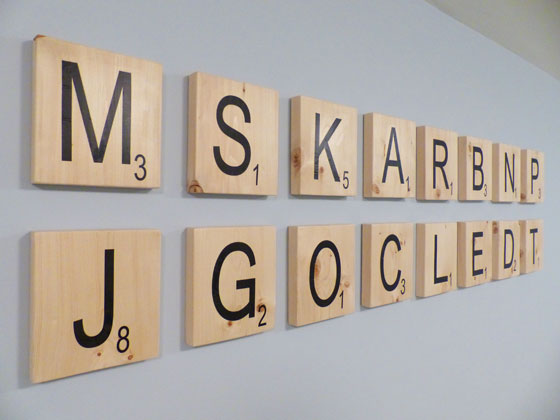
Fun oversize Scrabble art for the basement

Oversize scrabble tiles as art in the game room

Anyone want to play Scrabble? I’ll bring some letters if you bring the very, very large board.

When it comes to art in this house, I follow two principles: keep it personal and keep it inexpensive. For the basement, I have one more factor: keep it fun.

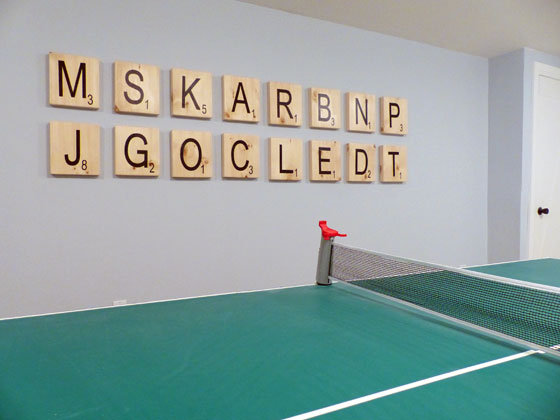
A wall full of really big Scrabble tiles ticks all the boxes.

Oversize scrabble tiles as art in the game room

Personal: The letters are the initials for us and everyone in our immediate family. Moms, Dads, brothers, sisters, in-laws, nephews, niece, pets.

A message from Auntie JuJu to the two babies joining our family in the next few months: your names must start with one of these 16 letters. More than half the alphabet is in play. That’s lots of options for you.

Inexpensive: Sanding all of these tiles took a bit of time, but since I’m not paying myself an hourly rate, my only costs were a few 2x10s, some sandpaper, printer paper, Mod Podge and a paint pen.

Fun: We have giant Scrabble tiles hanging on our wall. That’s not typical artwork.

Oversize scrabble tiles as art in the game room

When I was making these, I wanted the letters to hang perfectly flush to the wall. Even the thinnest hanger didn’t appeal to me.

Oversize scrabble tiles as art in the game room

I came up with a simple solution that was also–you guessed it–cheap.

I routed a channel in the back of each tile, which slips over a nail that I hammered into the wall.

Oversize scrabble tiles as art in the game room

Adding art to the basement was one of my Home Goals for 2016. We call this room the long room, so I wanted some substantial art that could fill the wall. Sixteen large wood slabs work very well.

Oversize scrabble tiles as art in the game room

Do you play Scrabble? Would you ever hang boardgame art on your walls? How do you handle art when you have a big wall?

Save

Save

Save

Save

How to grow squash vertically

Last year, our squash took over the garden. Fully half of our nearly 2,500 square foot garden was completely covered in squash vines.

We loved the squash that we harvested, and we knew we were definitely growing squash again. However, we knew that we weren’t willing to give up that much of the garden this year.

My plan to corral the squash was first to plant less. No matter how much we like squash, we cannot eat nearly 40 butternuts and about 70 acorns (last year’s harvest).
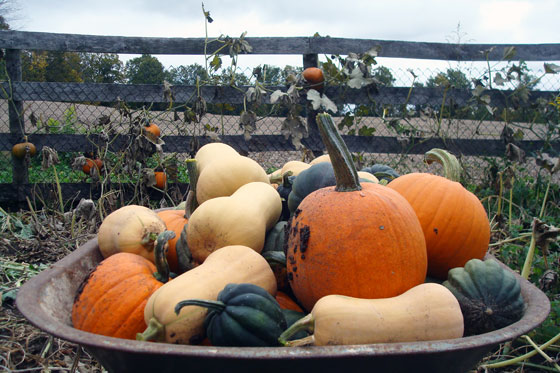
Wheelbarrow full of acorn squash, butternut squash and pumpkins

The second part of the plan was to coax it up, rather than across. Up was a theme of our garden all this season. I’ve already shared how our raspberries and tomatoes are growing vertically. Now it’s time for the report on our final vertical experiment.

And this truly was an experiment. We were growing acorn and butternut squash. They weren’t small and lightweight. I wasn’t sure whether the vines would be strong enough to support the hanging fruit.

Back in the spring, I built a large A-frame. It was about 8 feet tall and 16 feet long.
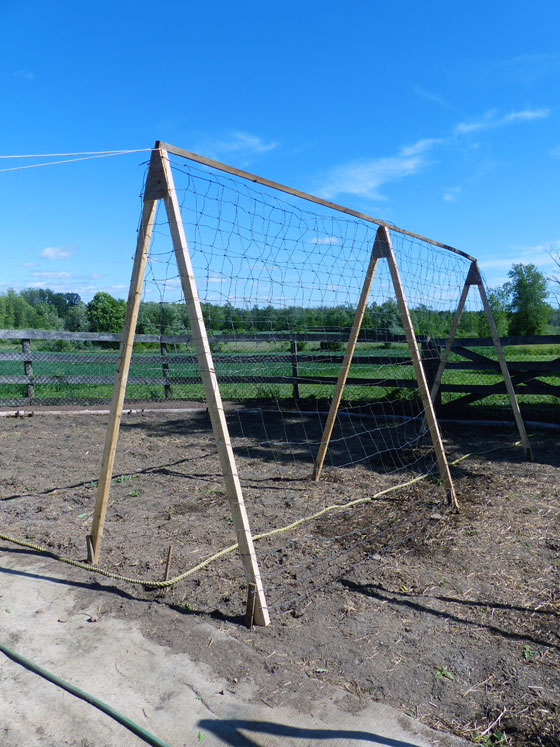
A-frame squash trellis

We used 2x3s for the As with plywood at the peaks for extra stability. The top ridge is two 2x2s. Each A is screwed into stakes that are hammered into the ground. We spread wire fencing across each side and attached it to the wood with big staples. Just for extra stability, we tied each end of the trellis to the fence so that it couldn’t fall over.

How to grow squash vertically

With the A frame in place, I planted (half) our squash seeds under the trellis.

Squash seedlings

As the plants grew, I tucked the vines into the mesh. The vines were a bit fragile and bruised or even snapped easily. I learned it was important to not let the plants get away from me. I had to be diligent about training them up the trellis before they grew too big. Fortunately, the squash seemed to recover quickly from any of the damage I inflicted.
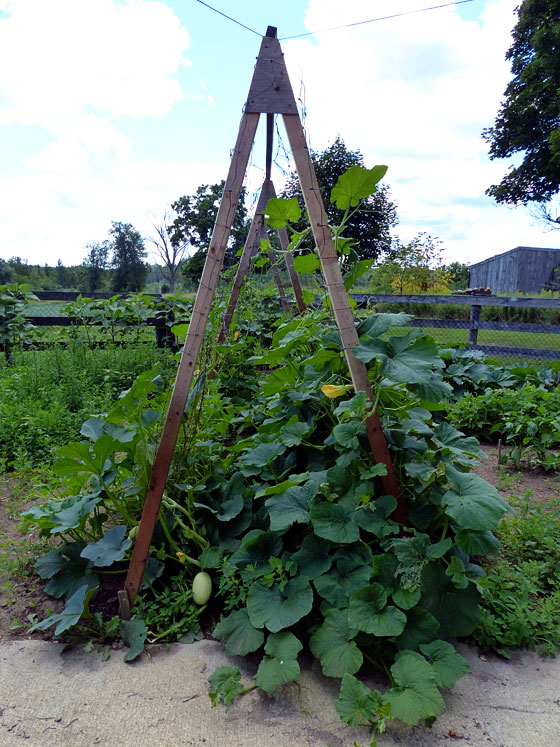
Squash growing up an A-frame trellis

Just like last year, though, the squash took over. Thankfully, this year it took over in the right direction–up. Soon, the whole A frame was completely covered.

squashtrellis7

The plants blossomed and set fruit. And I crossed my fingers that the fruit would stay on the vines long enough to ripen.

We’re nearing the end of the season now, and I’m happy to report that things are looking really good. The leaves are starting to die off, so you can see just how good for yourself. Behold, the squash.

How to grow squash vertically

Yup. Once again, we have a whole lotta squash. And they’re big ‘uns. Oy vey.

How to grow squash vertically

The butternuts are phenomenal. The acorns are more iffy. But I’m not sure that I can blame the trellis.

First, we don’t have quite as many acorns as I was expecting. The butternuts definitely have them beat for quantity.

Second, the acorns aren’t exactly all acorns. They come in a few different shapes. Any ideas what would make them grow so differently?

Elongated acorn squash

Mishapen acron squash

Despite some mutants, I’m calling the vertical squash growing experiment a success. It’s definitely a method we’ll be using again.

Have you done any experiments in your garden this year? Have you tried vertical gardening? What’s your favourite type of squash? Any tips for storing the squash or recipes to share?

Save

Save

Save

Save

Save

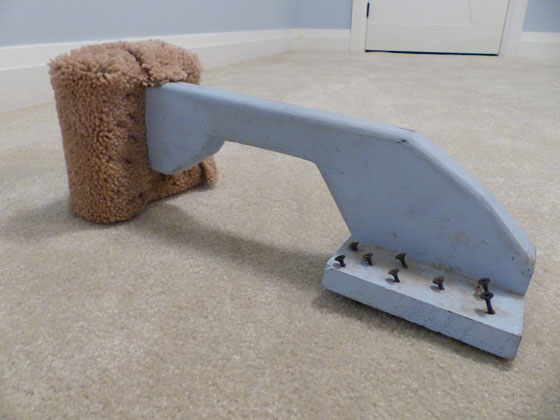
How to make a DIY carpet kick – Free plans

Early in your life as a DIYer, you learn that having the right tool can make the job much easier. However, sometimes you don’t want to go buy a new tool for a project that you’re only going to do once, maybe twice.

Laying carpet is one such job in my opinion. Likely–hopefully–you’re not laying carpet every year. However, if you do want to tackle installing carpet yourself, there are a few things that can help you get a nice finish on your floor and make the end product look more professional. One of those things is a carpet kick.

How to make a DIY carpet kick

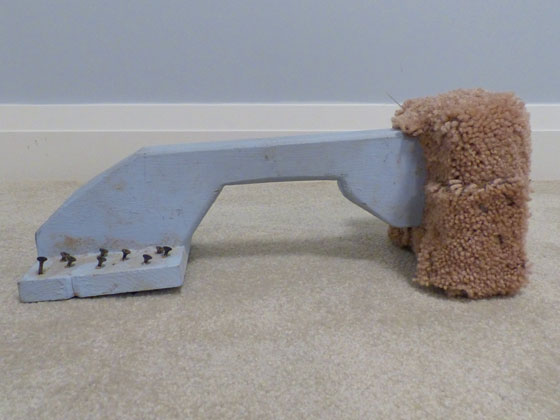
Unless you’re a professional carpet installer, a carpet kick is not likely a tool that you’ll use very often. If you’re a professional carpet installer, I expect that you will go buy your own professionally made kick. However, for a DIYer you can easily make your own carpet kick out of scrap wood.

How to make a DIY carpet kick

Download the plans to make your own carpet kick

Materials:

  • 2×4 approximately 14 inches long
  • 2×6 5 inches long (you’ll cut it to a 5×5-inch square)
  • 3/4-inch plywood (also cut to a 5×5-inch square)
  • Two 3-inch screws
  • Two 1 1/2-inch screws
  • Eighteen 1 5/8-inch drywall screws (or other screws with a coarse thread)
  • Scrap piece of carpet (about 12×12 inches)

Cut each piece of wood according to the plan. Screw the wood together using the 3 inch and 1 1/2 inch screws.

If desired, paint your kick–I recommend a stylish baby blue.

How to make a DIY carpet kick

Once paint is dry, wrap the butt end of the kick in the scrap carpet and staple in place. You’ll likely have to trim the carpet to make it fit. This is like wrapping a really awkward present.

How to make a DIY carpet kick

Screw the drywall screws part-way through the kick plate so that they poke out the bottom. These “teeth” are what will grip the carpet and stretch it over the tackstrip.

How to make a DIY carpet kick

And that’s all there is to it. Now you’re ready to install your carpet.

How to reuse old carpet

Save

Save

Save

Save

How to reuse old carpet

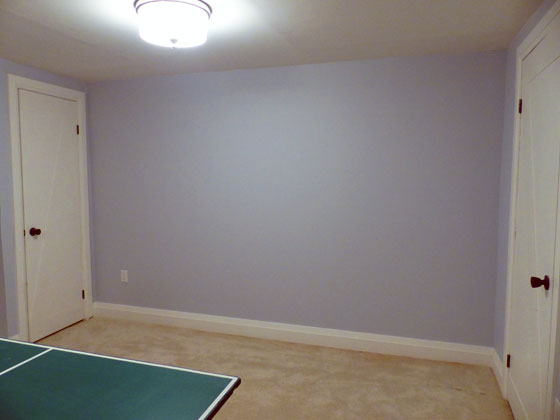
A few weeks ago you caught a glimpse of our redone basement. We put it back together after our waterproofing contractors finished their work.

Wall repaired after waterproofing

Fortunately, the carpet and underpad were not damaged  by the leaks, so we were able to reuse them. (Although they could use a good cleaning).

Our contractors had folded the carpet back out of the way while they were doing their work.

carpetrep4

After giving everything–the carpet, the underpad, the concrete–a really good vacuum we were able to unfold the underpad and lay it back down over the concrete. The vacuum is critical. You don’t want to discover any bumps under your carpet once you’re finished installing it, so make sure everything is really clean and smooth.

How to reuse old carpet

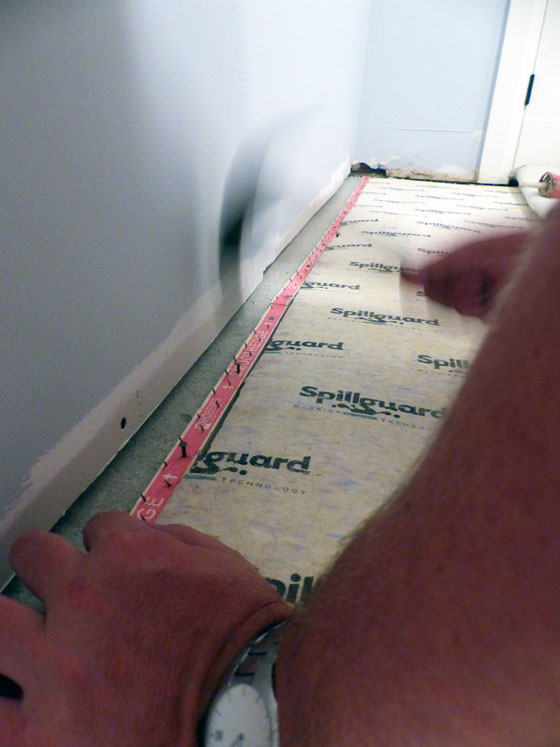
The next step was to install new tackstrips, also known as smoothedge. The tackstrips are what hold the carpet in place. The underpad provides the guide of where to install the strip. Tackstrips come in two different versions–one for wood subfloor and one for concrete. Make sure you buy the right type for your floor.

Line the tackstrip up with the edge of the underpad with the little spikes pointing in towards the wall. Hammer the small nails in the tack strip into your floor. With our new concrete from the waterproofing, we found the nails did not want to go in. We ended up gluing the tackstrips to the concrete with construction adhesive.

Installing carpet tack strip

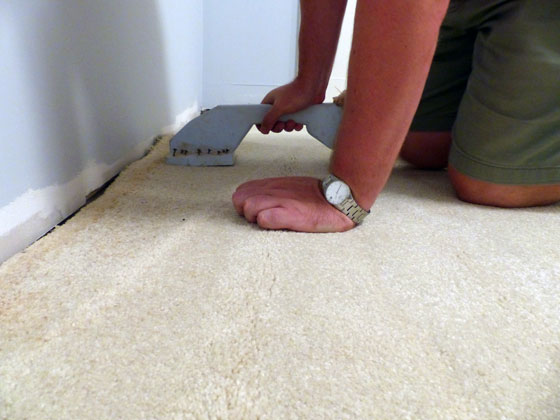
Once the glue was set, we unfolded the carpet and laid it over the tack strips. It’s important to stretch your carpet tightly. For this, you need a carpet kicker. I’ll share how you can make your own kicker in an upcoming post.

The idea is you lay your kicker on the carpet and using your knee you kick the carpet towards the wall. While the carpet is stretched tight, run your hands over the edge to press it onto the tack strip. You should feel the carpet catch on the spikes. As you get towards the corner, kick on a bit of a diagonal to push the carpet towards both walls.

How to reuse old carpet

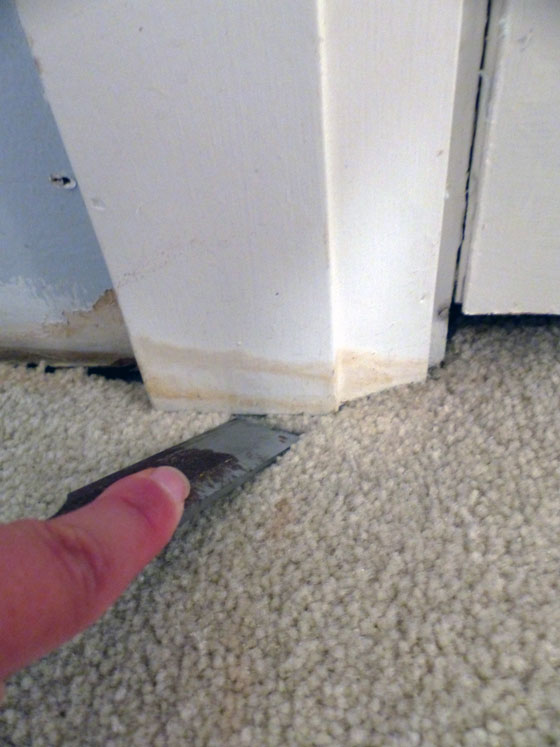
You’ll notice that we installed the carpet before we put the baseboard back on. Usually you will have baseboard or trim in place already. In those spots, use a chisel to tuck the carpet in under the trim. (You can see some of the water damage we have on the base of the door trim. It has since been covered with fresh paint.)

How to reuse old carpet

And that’s all there is to it. I’m so grateful that we were able to reuse the carpet. This carpet goes through the whole basement, so redoing this one area would not have been an option. Plus installing it ourselves was a quick and easy DIY.

Have you ever installed carpet yourself?

Save

Save

Save

Making more ‘mums

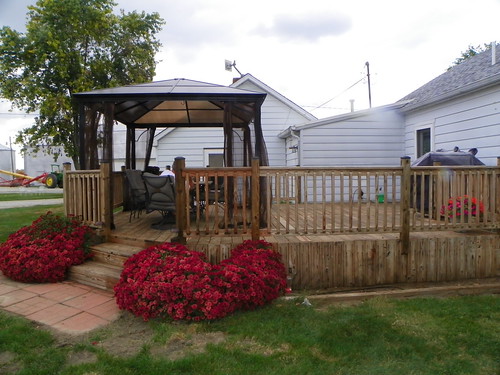
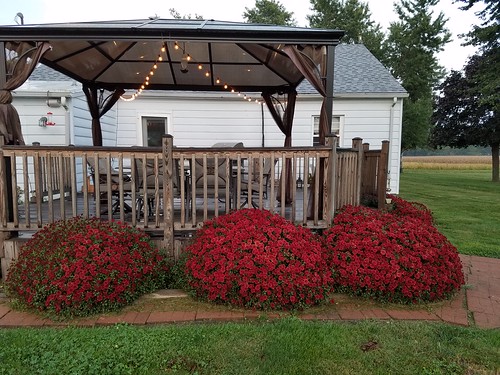
Almost exactly a year ago Sarah in Illinois wrote a post about sealing her deck, and she included a photo of the very impressive chrysanthemums that were growing on either side of the deck stairs. A year later, they’re even more impressive–and they’ve multiplied. Read on to learn about how Sarah successfully split her mums.

Last fall I shared a picture of my mums. I was really proud of them. They were so full and added so much color to our deck.

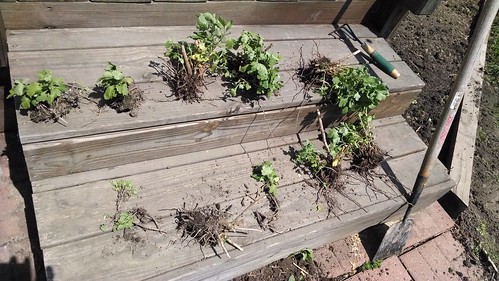
Then this spring Julia and I had a garden challenge. One of the projects I checked off my list was to divide my mums.

I simply dug them up out of the ground, divided them into a few same-sized clumps and planted them back into the ground around our deck.

That is it. That is all I did.

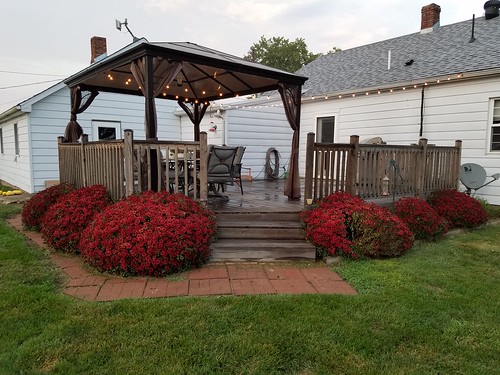
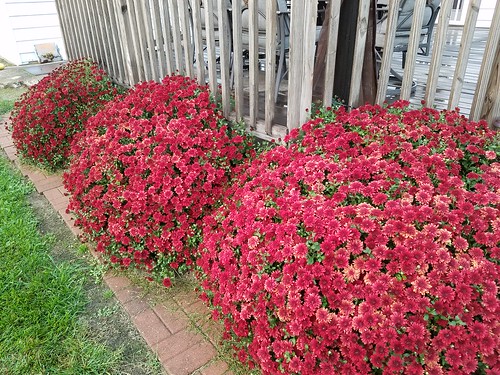
Then this is what happened.

I know. I am as impressed as you are.

I have had neighbors stop and ask me what my secret is. But all I can say is, I watered them for the first week or two after I transplanted them. That’s it. No fertilizer. No secret concoction. I didn’t trim them back or even sing to them! I just sat back and let them go.

That’s my kind of gardening.

Holy chrysanthemums, Sarah! Those are gorgeous. I’ve heard that some plants do better after splitting, and this seems to definitely be the case for your mums. My frugal heart also loves that you now have six huge plants and didn’t have to spend any extra money.

Summer to-dos done

Is anyone else mourning the passing of summer like I am? While it seems like summer ends with Labour Day, I’ve been holding on to my favourite season. However, as of yesterday, I can no longer pretend. Fall is officially here.

Three months ago, I posted four projects that I was hoping to accomplish over the summer. You know how I like to hold myself accountable. So let’s see how I did.

Project #1: Build a closet in the basement

Done. This one felt so easy it surprised me. Doing the drywall in the basement the first time around was a massive job. I was not looking forward to doing any drywall at any time ever again. However, this time around I was doing such small areas that it seemed like it took next to no time to put on a coat of paste.

This area has given Matt a tonne of extra storage, and the basement is (almost) tidy and organized. I’m only sharing a progress shot because the closet holds Matt’s stuff and I like to give him his privacy. But trust that it is done.

Drywalling the laundry room

Project #2: Sand scrabble tiles

Done. I can’t wait to share these with all of you. Sanding 16 wood tiles was the definition of not fun DIY. However, the end product is (spoiler alert) awesome.


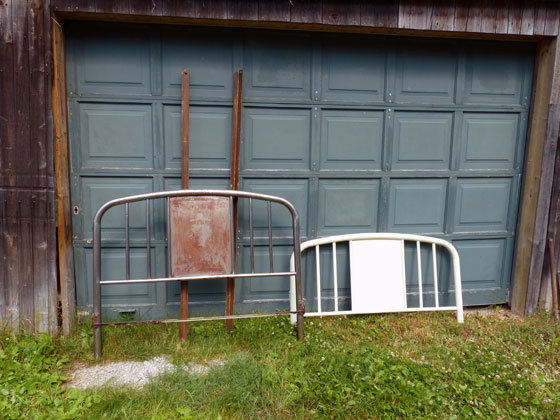
Project #3: Strip paint off the guest room bed

Done. Okay I’m calling this one done, but it’s more like I gave up halfway through. The metal underneath the drippy, chippy spraypaint is not in good shape. So after stripping the headboard and side rails I decided to skip the footboard and just repaint everything. I’ve just been waiting for the weather to cool down enough to be able to paint (not a project for the summer to-do list).

Stripping paint off a vintage metal bedframe

Maybe project #4: Makeover office cabinet

Not done. This was a maybe project from the beginning, so I don’t feel bad about not finishing it. Although I do really, really, really want to put my office together.

Perhaps a project for the fall to-do list…

However, I’m still in denial about it being fall, so I’m not prepared to write a list quite yet.

How are you feeling about the changing seasons? What did you accomplish this summer? Are you thinking about fall to-dos yet?

Save

Save

Save

Save