Garden update from Illinois

Happy July 4th to all of my American readers. Our resident American, Sarah, is taking a break from her Independence Day festivities to share a glimpse of how gardening is going so far this summer in Illinois.

Happy 4th of July to all the American readers! As you are reading this we should be celebrating Independence Day with a fish fry and fireworks in our back yard.

When Steve and I discussed what sides to make to serve with the catfish, I knew that my goal was to make dishes that included as many foods as possible from our garden.

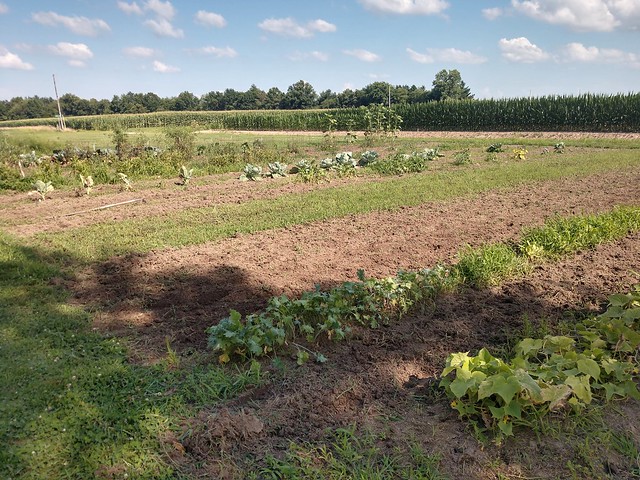
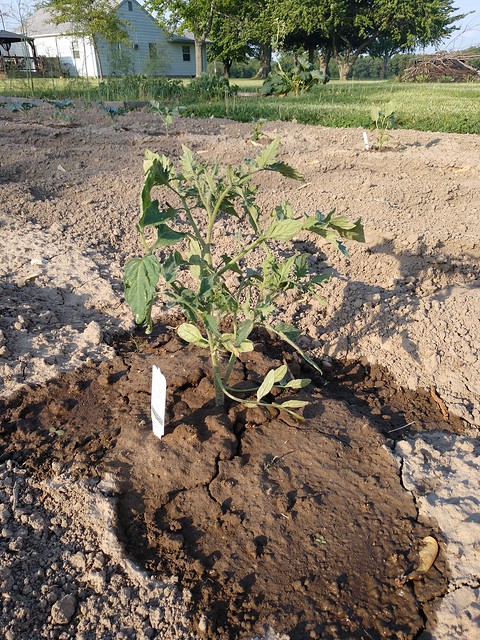
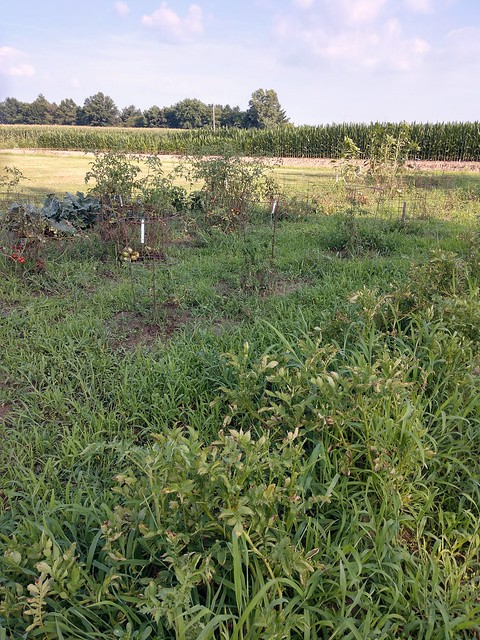
I’ve mentioned in a previous post that we got a slow start to our garden this year. Unfortunately, we have struggled ever since. Walking through the garden last weekend Steve said, “This is the worst our garden has ever looked.” I had to agree.

We had several heavy rains, and it seemed that every time the garden dried up enough to actually walk the rows, another big rain came. Looking up the rainfall for June, it shows that we only had one inch more than average, but I think the timing was our issue.

However, our garden may look awful and yields are down, but we have still been able to have some fresh vegetables.

We have had the best luck with our cucumbers. We have picked enough pickling cucumbers to make 3 quarts and a pint of refrigerator pickles.

Steve had never made refrigerator pickles before and after giving him a little tutorial of how to do it, he has taken over and made it his project. He has tried 3 different recipes and tweaked them to how he thinks they could be improved. The pint above is his version of a hot pickle which included a jalapeno and some red pepper flakes. Hopefully after a few more weeks of marinating and adjusting the recipe, I can share his final version.

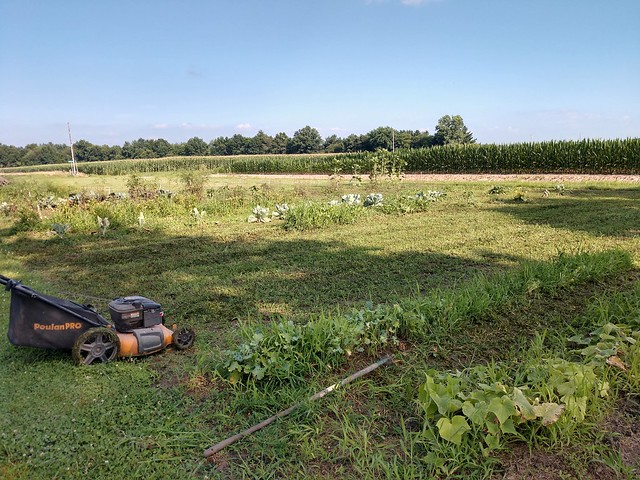
Even though the garden is not exactly like we like it, we are still fighting through. Over the past weekend, I actually MOWED our garden rows. I can’t say that I have ever done that before.

Then I was able to pass through with the tiller and pull weeds by hand.

We have a long way to go, but it is looking more like a garden now.

How is your garden doing this year? Have you had to fight weeds? Rain? Any other adversities?

Ahem… fellow garden mower here. I’ll just leave it at that.

Happy Canada Day

Happy Canada Day from the newest–and cutest–Canadian at the farm.

Ellie in a point stripe onesie

Ellie’s romper is the iconic multistripe of the Hudson’s Bay Point Blanket pattern, which was introduced at the end of the 18th century. 🍁 Read the full story of the point blanket here | Buy a similar point stripe onesie here

And to all my American readers, happy 4th of July too.

How to prepare your dog for a baby

Baxter and Ellie

As our little family has grown, I’ve loved watching Baxter with Ellie. I’m so proud of how relaxed he is with her.

As soon as we found out we were pregnant, I started thinking about how I wanted Baxter to act around our baby and what behaviours we needed to work on. We consulted with our trainer and at the beginning of this year (about two months before our due date) we started working in earnest to prepare Baxter for his new role as big brother to Ellie.

Baxter watching Ellie in the play yard

As regular readers know, I’m a contributor to ThatMutt.com, where I write about dog training and behaviour. I’ve been sharing all of the details of our baby prep strategies for Baxter through a series of posts on ThatMutt, and this weekend the final entry was posted. I’m really proud of this series, so I wanted to mention it here.

Baxter and Ellie are both really, really important parts of our family. While Ellie isn’t super aware of her big brother yet, Baxter has been doing very well with Ellie. For the most part he ignores her—which is fine with us—but he also chooses to lay as close as possible to her stroller when we’re working outside and waits beside the car until I unload her when we come home from an outing. He seems to recognize her as part of the family.

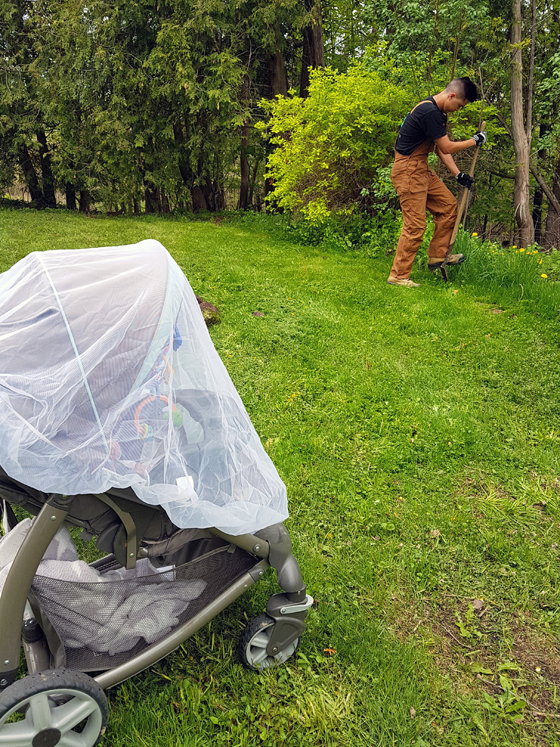
Ellie in her stroller in the garden

Here are the links to the individual posts in my series on how we prepared Baxter for our new baby:

As Ellie grows we’re going to have to teach her how to behave in many situations–and especially how to behave around Baxter and other dogs. Likewise, he’s going to have to keep on adjusting to her. We’re very focused on working with them both to make sure everyone lives happily and safely together.

Hiking with Ellie and Baxter

I hope you’ll check out some of the posts and leave a comment if you have any advice or questions. I also hope that this series becomes a resource for other parents and dog owners out there. Thanks to Lindsay at ThatMutt.com for allowing me to document this important time in our family.

For all of you dog lovers out there, ThatMutt.com is having a huge giveaway featuring $500 worth of great dog gear from Mighty Paw. Baxter has a bunch of MP equipment, and we love it. Just for entering, you’ll receive $5 to spend on anything in the Mighty Paw store and a free copy of Lindsay’s dog training ebook, “The Good Mutt Guide.” The deadline is Wednesday. Click over to ThatMutt.com to enter (and read a couple of the baby prep posts while you’re there 😉 ).

Round herb garden with birdbath

Summer is just around the corner. In Illinois, Sarah is already well underway with summer projects. In fact, she’s already crossed one off her list–a new herb garden.

I seem to always have project ideas spinning around in my head. With Pinterest, magazines, pictures of other people’s gardens and yards, I have plenty of inspiration at my fingertips.

So it is such a wonderful feeling to take one of those ideas and bring it to life. If you remember back to March when I posted that I wanted to move my herbs, I had some ideas of what I wanted them to look like.

Well, I am happy to report that I as soon as the weather warmed up enough to work outside, I got started on this project.

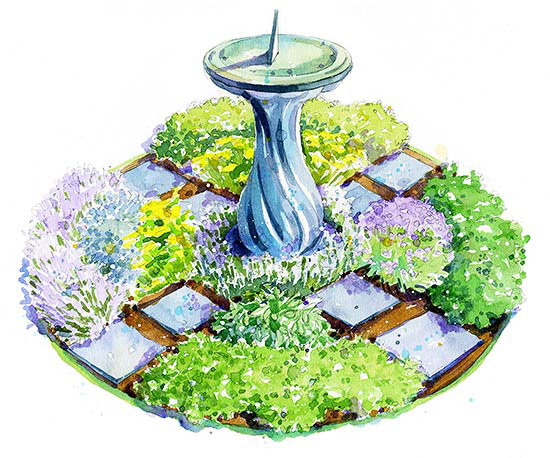
This was the inspiration picture that I chose to go with:

I chose the small patch of grass in our back driveway. I have big dreams of eventually filling it all with flowers, but thankfully I have learned to start with small bites at a time so that I don’t become overwhelmed.

My focal point is my grandmother’s birdbath. So I first decided where I wanted it to sit. Then I took a measuring tape and measured out 4 feet from the bath in several different directions and marked it with spray paint.

Next, I shoveled the top layer of sod out of the circle. This was a long and tedious process but I believed it helped prevent my bed from being overrun with weeds and grass.

When all of the sod was removed I went over the bed with the tiller. This was a little difficult because it is a small area for as large of a tiller as we have but after wrestling it around for a bit, I got all of the soil turned over.

I then used twine and some scrap boards to lay out where I wanted to plant the herbs and where I wanted the stepping stones to go.

I found some stepping stones at the home improvement store and slowly started to see the herbs fill in.

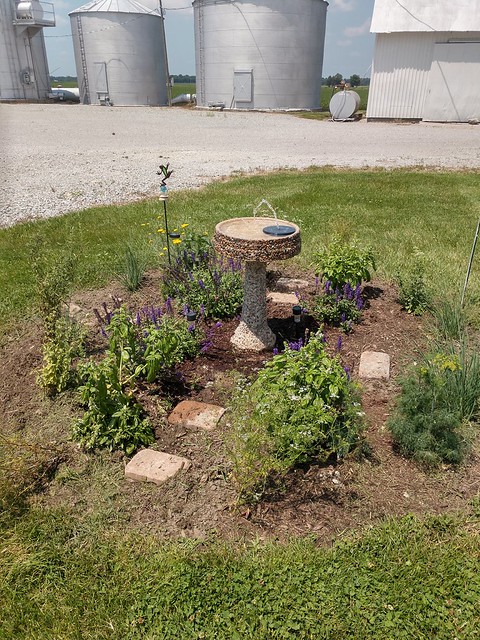
I have cilantro, chives, basil, oregano, dill, salvia, yarrow, tarragon, and rosemary so far. Some of the herbs such as dill, cilantro and chives we use very often. I don’t use the salvia or yarrow, but they add some pretty color.

One more feature I added was a solar powered fountain for the birdbath.

I have to keep a close eye on it because it can occasionally empty the birdbath, but mostly it works perfectly well.

I still am going to make a couple decisions such as if I am going to add more mulch or maybe plant creeping thyme between the stepping stones. But overall I am pretty happy with my progress and cant wait to see the rest of the bed fill in.

Do you have a designated herb garden? A birdbath? Any project ideas swimming around in your head that you need to get started on?

Your grassy patch looks so much like our turnaround, Sarah. My goal is to have ours covered in flowers too, but I’ve stopped halfway because it’s definitely a big job. The turnaround is home to our birdbath too… although we still haven’t put ours out yet. 😦 I love the garden that you’ve built. The herbs are filling is so well, and it’s so special to use your grandmother’s birdbath.

First Father’s Day

The moment Ellie was born, she let out a cry and the doctor placed her on my chest. Matt said, “It’s a girl.” And he was laughing. I was in an over-whelmed haze at that moment, but hearing that happiness, that emotion is something I will never forget.

So much joy that he had to laugh.

Matt and Ellie

A few hours later, our midwife asked for her name. I looked at Matt and he said her name for the first time. That act of him naming her is one of the best moments of my life.

Matt, Ellie and Baxter snuggling on the bed

We have some amazing examples of fathers in our lives. Men who are hard-working, kind, selfless and who do anything for their children.

These are qualities I have always seen in Matt, and they have reached another level as he has become a Dad.

Happy Father’s Day, from our family to yours.

How to make a custom shadow box

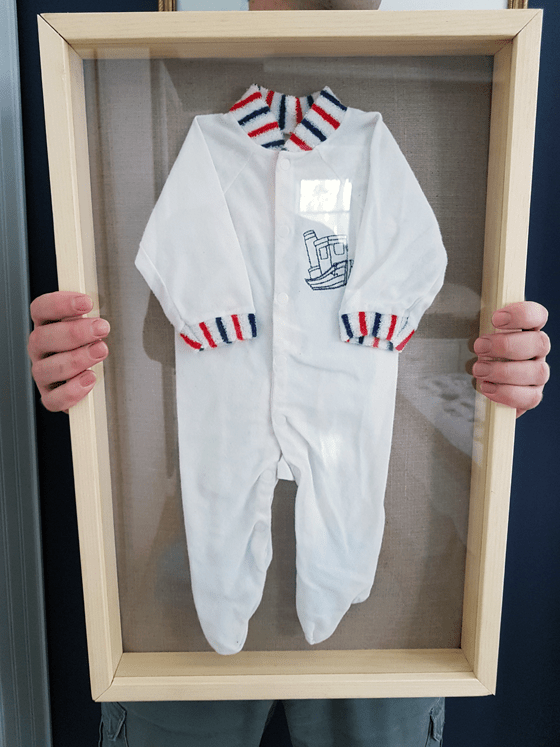
Baby sleepers framed in a homemade shadowbox

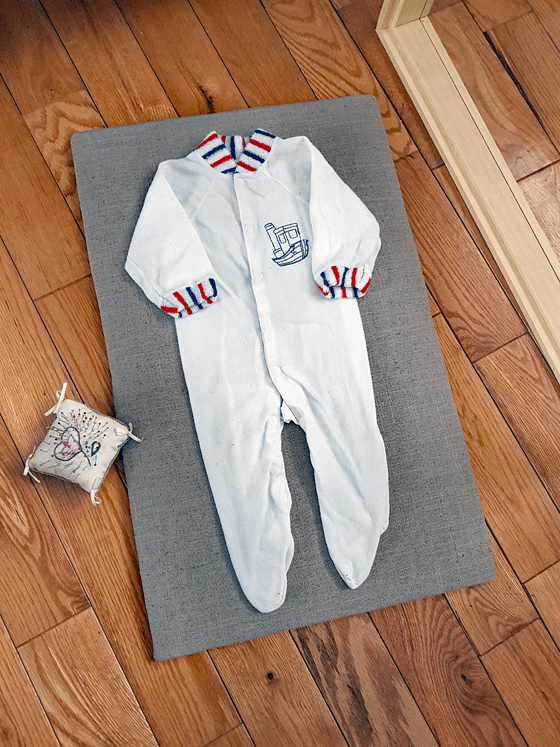
Years ago Matt’s Mom gave us the teeny tiny sleepers Matt wore home from the hospital when he was first born. If you recall our laundry room makeover, I had hung the sleepers on the wall and mentioned that I’d someday like to make a shadow box for them.
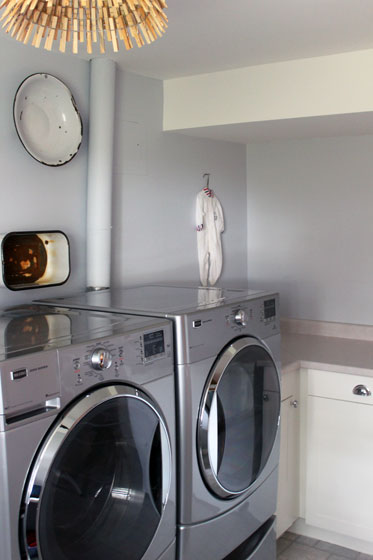
Enamel basins and infant sleepers hanging in the laundry room

I decided the sleepers would be super cute in Ellie’s room, and it was officially time to display them properly in a shadow box.
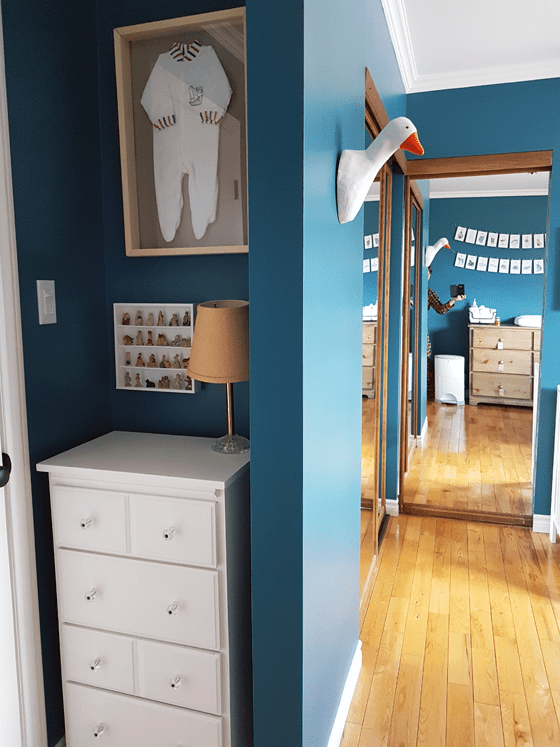
Turquoise gender neutral nursery

Custom shadow boxes tend to be very expen$ive, so I knew this was something I was going to make myself. It ended up being very simple and cost much, much, much less than I expected.

Materials

  • 1×3 (choose lumber that is an appropriate width for the items that you want to frame)
  • Glass
  • Hardboard or thin plywood for backing
  • Cork sheet (optional)
  • Fabric, wall paper or paint (for backing–optional)
  • Construction adhesive (optional)
  • Finishing nails
  • Staples
  • Wood glue
  • Wire

Tools

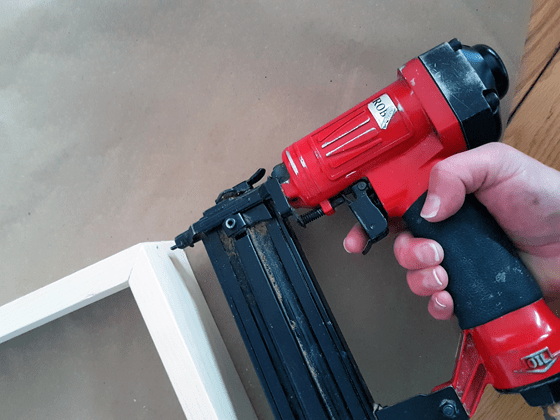
  • Nail gun
  • Tablesaw
  • Mitre saw
  • Staple gun
  • Hammer

Method

1. Measure the item that you want to frame to determine the dimensions for your shadow box.

I figured out how I wanted the sleepers to look in the frame and then measured them, giving approximately an inch and a half of breathing space around the edge.
How to make a custom shadowbox

2. Have a piece of glass cut to your dimensions.

Our local hardware store cut the glass for me. Total cost for my 14 by 22 1/2 inch piece was an extremely reasonable $9.96. I had never bought glass before and was surprised that it was so cheap.

3. Cut grooves in 1×3 for glass and backing.

I like the depth 1x3s gave me for the sleepers. If you’re framing something bulkier, you may want to choose a wider stock.

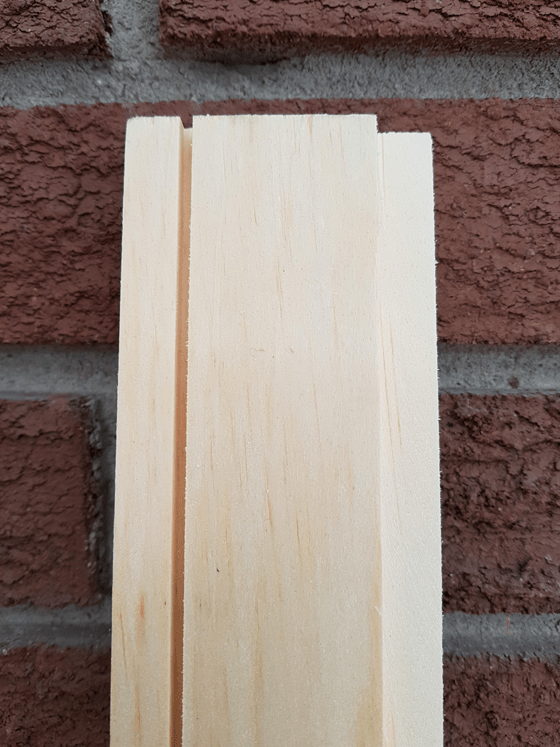
I used my Dad’s tablesaw to cut two separate grooves in my 1×3. First was a channel for the glass. A single pass through the tablesaw was the exact width I needed for the glass. Depending on your glass, you may have to do a couple of passes. The groove is about 1/8 inch deep and about 1/4 inch from the edge of the wood.
How to make a custom shadowbox

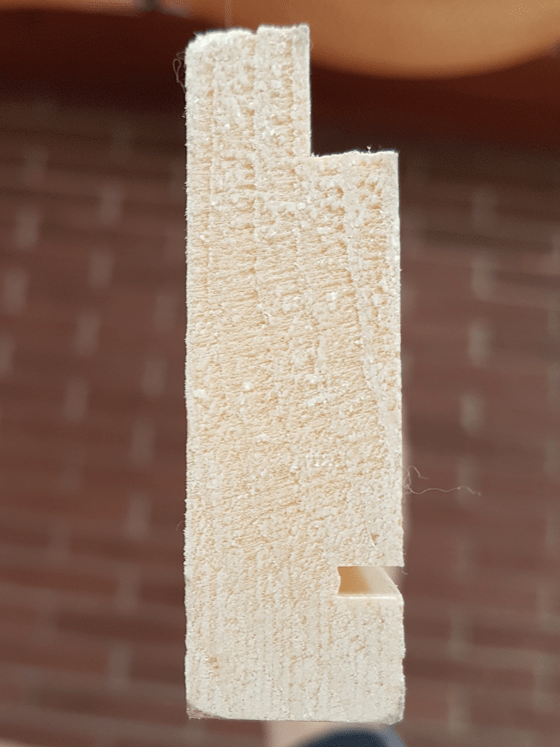
For the backing, I cut a slightly different type of groove. I made a recess about a 1/4 inch into the depth and width of the 1×3.
How to make a custom shadowbox

4. Cut the 1×3 to length.

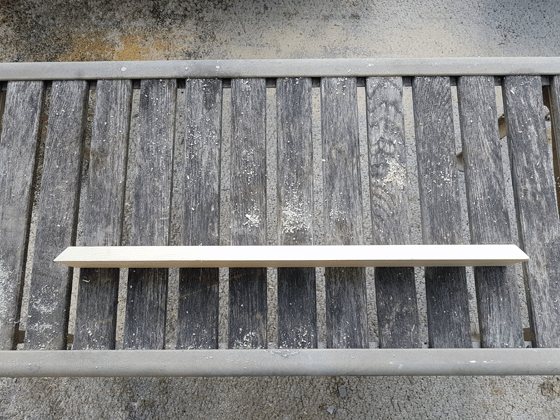
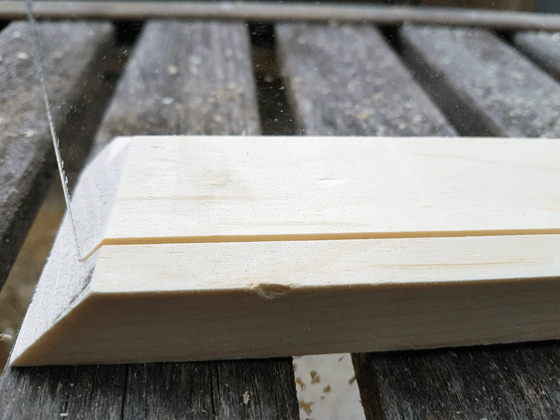
Use your mitre saw to cut each piece to length with 45 degree angles.
How to make a custom shadowbox

You want your wood to be ever so slightly shorter than your glass, so that the glass slides into the channels all the way around. Don’t make your frame too tight.
How to make a custom shadowbox

Take your time at this stage and dryfit, dryfit, dryfit as you go to make sure your wood and glass are fitting together perfectly. I purposely cut my pieces a bit long and then trimmed off little tiny slices to ensure a perfect length.

4. Glue and nail your 1x3s together.

Run a thin line of glue over all of your corners and nail together.
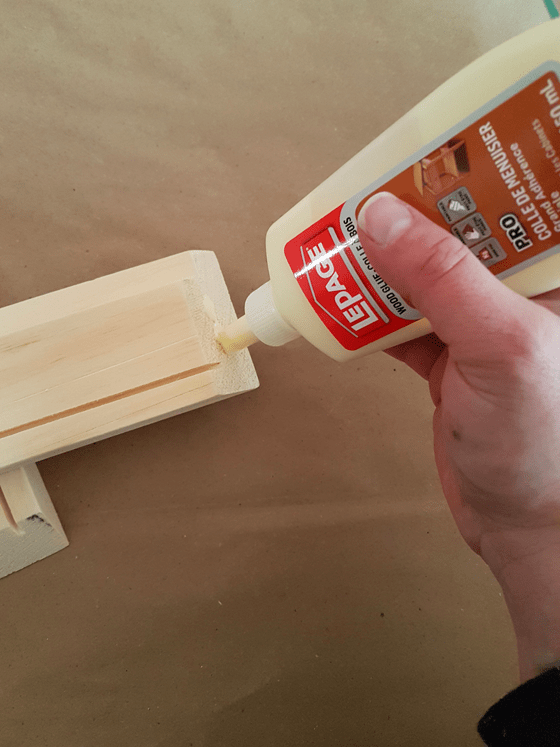
How to make a custom shadowbox

How to make a custom shadowbox

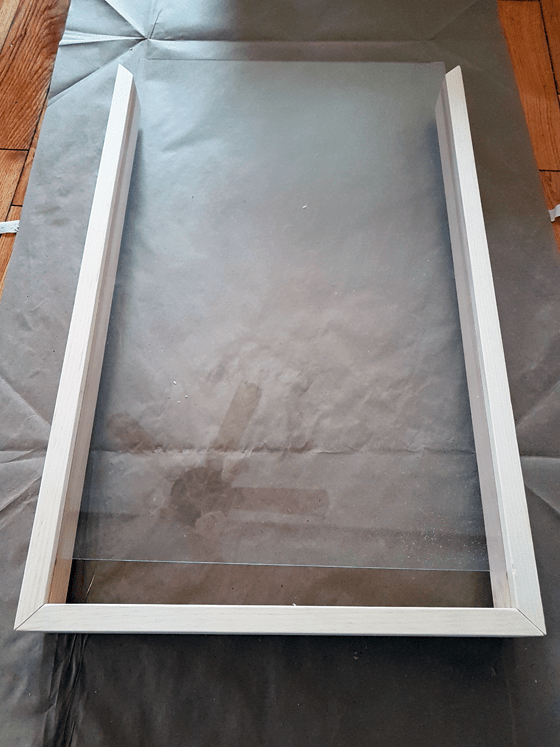
A nail gun is absolutely the best way to do this. Once you get three sides together, slide your glass into the frame before adding the fourth side.
How to make a custom shadowbox

If you don’t have a nail gun and are instead using a hammer, there’s a larger possibility of cracking the glass.

5. Cut backing for the frame.

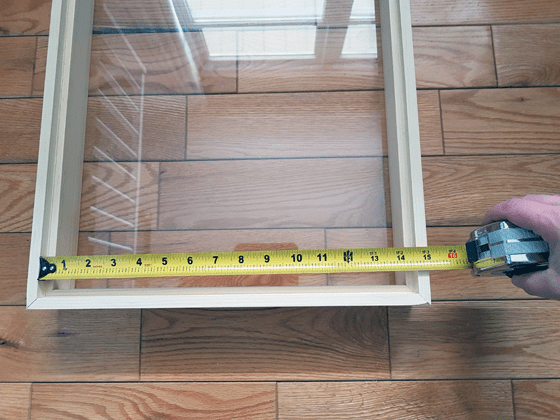
Measure the size of panel that will fit in the recessed area on the back of your frame. Cut your backing just a little bit narrower and shorter than the opening (about an 1/8 inch all the way around). If your backing is too tight, it can loosen the joints of your frame.
How to make a custom shadowbox

6. Adhere cork to backing (optional)

I decided that the best way to attach the sleepers to the backing was going to be with pins, so I put a couple of layers of cork on the backing to give me something soft to pin to. Depending on how you’re mounting your item, this step may not be necessary.

I took a few pieces of leftover cork flooring underlay that we had and cut them to the size of the backing. Then I adhered them with construction adhesive.

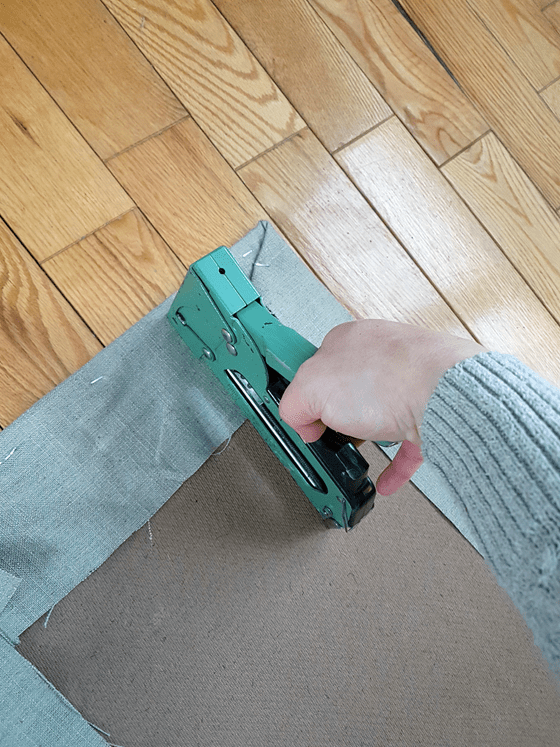
7. Wrap the backing in fabric (optional)

The raw wood (or cork) of the backing may not be the most attractive. I found a piece of fabric and wrapped the backing in that for a more attractive base. You could also paint or use a scrap of fancy paper to cover your backing.
How to make a custom shadowbox

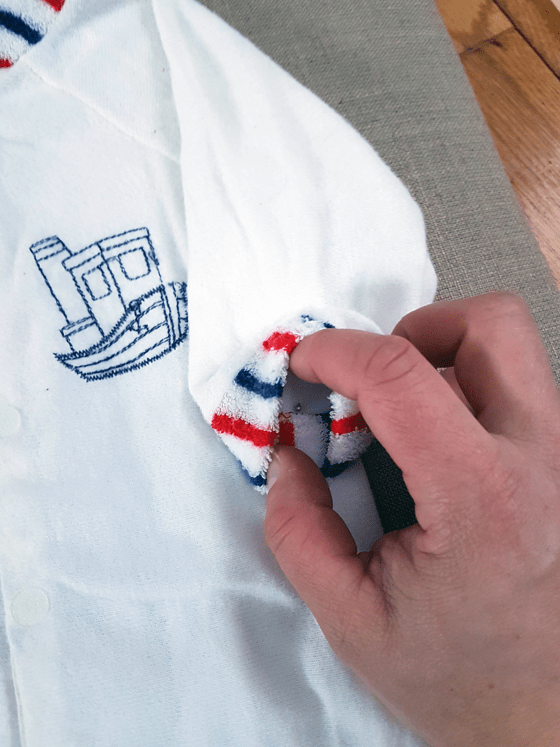
8. Mount the item.

For the sleepers, I chose to use little tiny pins to attach it to the backing. I hid the pins inside the sleeves, neck and folds of the fabric.
 

How to make a custom shadowbox

Depending on what item you’re framing, you could also use glue, tape or other tricks to mount it in your frame. Be careful whatever  you use because it may damage the item. For example, I didn’t love the idea of tape or glue residue on the sleepers.

The weight of your item will also affect how you mount it.

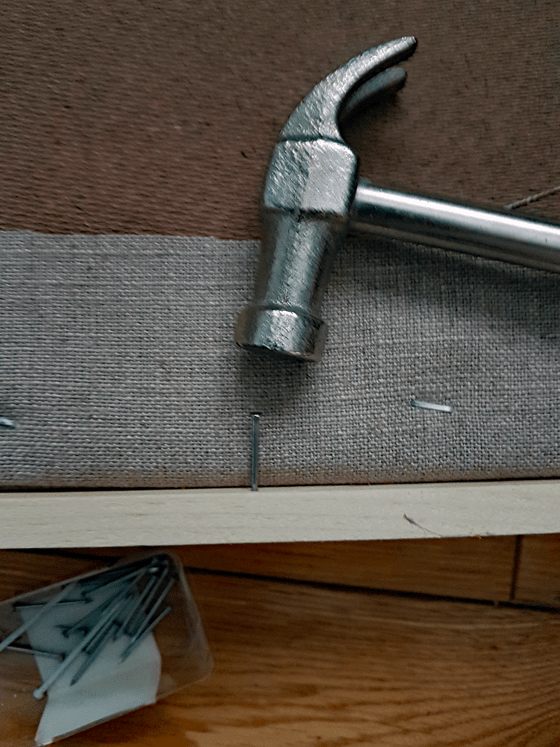
9. Insert the item and backing into the frame.

Carefully set the backing into the recess of the frame. Tap little finishing nails around the edge to hold the backing in place. I did this by hand very, very gently. Don’t set the nails all the way flush. You want them to stick out so they serve as a barrier to keep the backing in place.
How to make a custom shadowbox

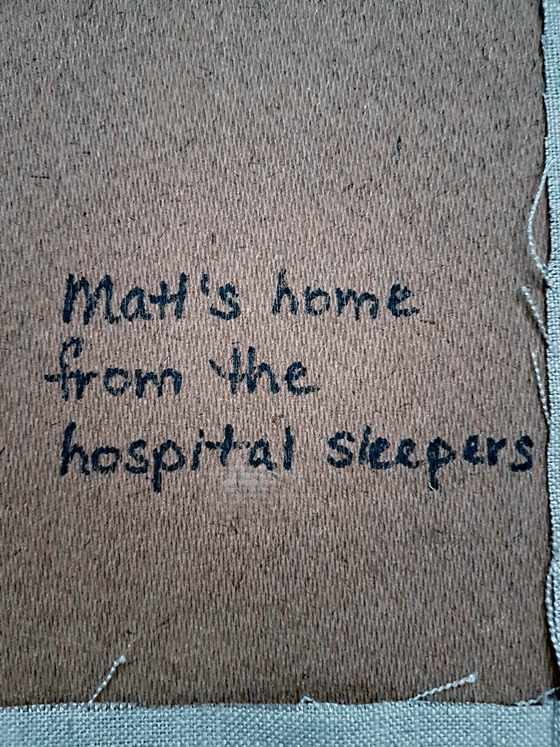
For an extra tidy finish, you can cover the entire back side of the frame with a piece of paper. Professional frames often come with simple brown paper glued to the back of the frame. I didn’t bother doing this because I wasn’t worried about what the back looks like.

I did add a note with a marker on the back about what was in the frame.
How to make a custom shadowbox

10. String a wire across your frame for hanging.

I attached a piece of wire to the frame with two staples, one on either side. This gave me a secure line to set over my hook on the wall.

How to make a custom shadowbox

11. Hang your shadow box and admire your handiwork.

The paint stick and screw trick makes hanging anything (but particularly a shadow box) so much easier. Give yourself a break and whip one of these up.
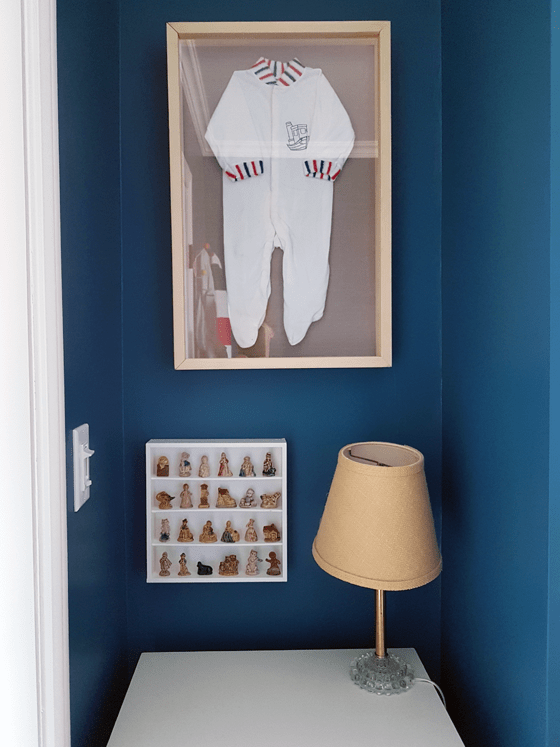
Sleepers framed in a shadow box

I’m very happy that I finally completed this project after thinking about it for so long. A shadow box is a great way to protect these little sleepers, and it’s very special to see them everyday in Ellie’s room.

Do you have any items displayed in shadow boxes at your house? What would you like to frame in a shadow box? Have you ever built a custom frame?
How to make a custom shadow box

Hummingbirds arrive in Illinois

Wildlife sightings are one of the highlights of living at the farm. I particularly love to spot hummingbirds because they’re some of our rarer visitors. Sarah in Illinois enjoys her hummingbirds too, and she’s here today with her latest sightings.

Most days I have a to-do list a mile long, but Steve and I still take the time to sit out on our deck, have a drink and throw the ball for Blitz. We also like to watch the hummingbirds.

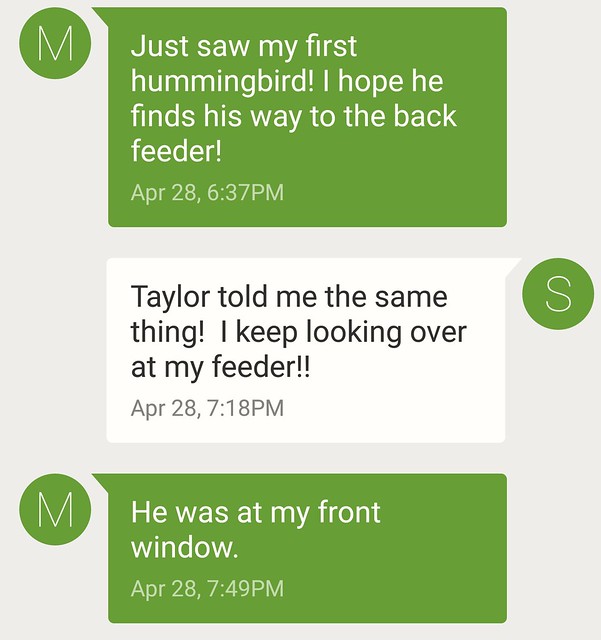
They seemed to show up late this year. Looking at my garden calendar (see, I use it all the time!) last year the first hummingbirds showed up on May 3. I waited patiently–well not so patiently after friends and family gave me their updates:

While I was mowing I would look over at the feeder every time I made a pass by the house.

After several days, I dumped out the syrup in the feeder and made a fresh batch. I didn’t want them to have any excuse not to stop at my house!

I finally was rewarded with a couple visitors and I shared with my friends on May 12 that I counted 6 at my feeder at one time.

I now have 4-5 regularly visiting through the day. I feel like this is less than I normally have at this time of year, but since they got a late start I am hoping that that is why I have fewer little friends.

I have talked about my love of hummingbirds before, and here is a reminder of how to make your own syrup:

Boil 4 parts water with one part white sugar just until sugar dissolves. Then let cool.

You do not need to add any food coloring. The hummingbirds will find the feeder. You can store the extra syrup in the refrigerator for a few days.

Make sure to keep an eye on your feeder. If the syrup begins to look cloudy or you see bugs, ants or other insects floating in it, throw out the syrup and add fresh.

Anyone else have their hummingbird feeders out? What breed of hummingbirds are in your area? We only see Ruby-Throated around here but I know the west coast gets a much larger variety.

Hummingbird watching sounds like a great way to end the day, Sarah. I’ve seen one bird this year, flitting around Ellie’s diapers as they dried on the clothesline! Apparently he enjoyed the bright colours.

Role model

Our nephew digging out rocks while Ellie sits in her stroller

When he first met Ellie, our oldest nephew was worried. He thought that we might not need his help anymore now that we had Ellie. She would work with us around the farm, or we wouldn’t be doing as many projects because we were busy with her.

We quickly clarified that we felt like we needed him more than ever. Ellie is a long way from being helpful and, yes, we are busy with her, but there is still lots we wanted to do.

Every time we saw him after that, he asked if we needed him to come to the farm. Finally, we set a date for him to come over and start the spring clean up, picking up branches that had fallen over the winter and piling them up to burn.

I set him up with the tractor, and he went to work. A month later he was back, digging out rocks, burning more brush and helping to pick up firewood.

Loading firewood into the tractor bucket

Over our six years at the farm, and especially since having Ellie, we have had lots of help from family and friends. We are extremely grateful that people are willing to give us their time and help make the farm what we envision.

Our nephew is 18 years old. I remember the first time I met him at the hospital the day he was born. It’s been so rewarding to watch him grow up, and I’m so proud of the responsible, caring, hard-working young man that he is now.

I hope that we can teach Ellie those same values and that she shares her big cousin’s enthusiasm for helping around the farm.

How to patch and repaint a gallery wall

Turquoise gender neutral nursery

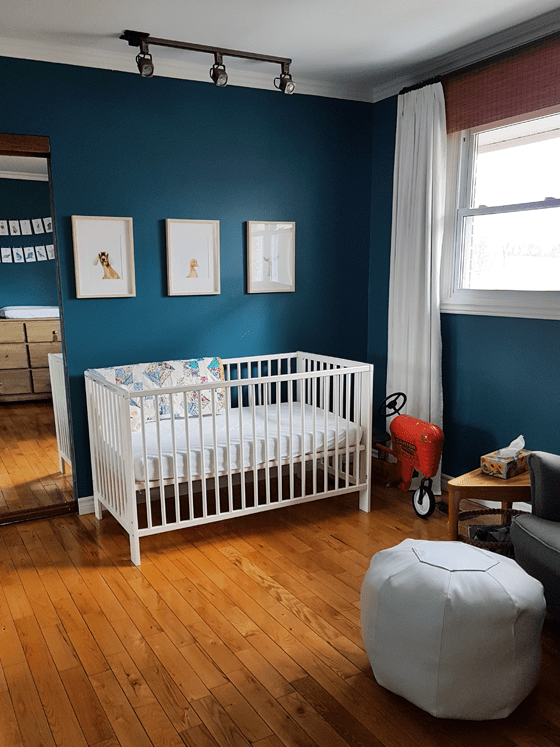
For a long time, I’ve loved the idea of a turquoise nursery. So when we were transforming my office into Ellie’s room, I knew I didn’t want to change the colour. However, we did have to do some painting when I removed my gallery wall and my display of vintage hats in favour of more baby-friendly art.

Vintage hat display in my craft room

Sooooo many holes (and weird reflections from the light fixture).

Patching holes after removing a gallery wall

There are a few tricks to patch and repaint a gallery wall.

The first step is obviously to patch the holes. Use your favourite drywall spackle. Let it dry and then sand the patches so they’re nice and smooth. Do a second coat of spackle if any of the holes are extra deep and sand again. (Spackle sometimes shrinks as it dries, so you may find you have an extra dimple to fill in.)

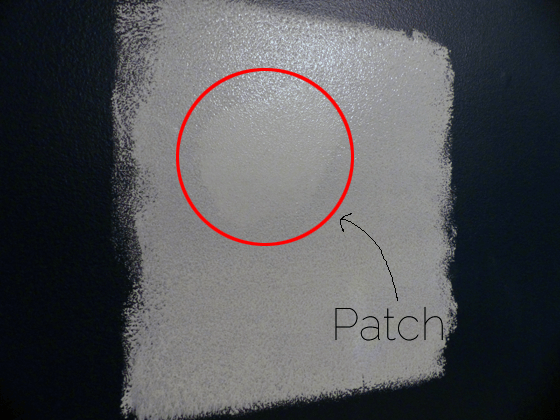
Once you’re happy with the patches, it’s important to prime. Painting directly over the “raw” patches will result in “flashing.” This means dull or shiny spots on your wall. While the colour may look the same, the patches will still be visible as the drywall paste absorbs the paint differently than the surrounding wall, which has already been painted.

Prime gives a fresh surface for your paint to adhere to. You can limit your priming to just the patches, but make sure to cover all of the raw drywall paste.

Priming drywall patches

Priming drywall patches

The next step is paint. Again, you don’t have to paint the whole wall. Cover the primed area completely with paint.

Repainting a patched wall

The final step is to repaint the wall–the entire wall. Time, sun or slight variation in the mix stirred up by the paint store may lead to variation in your paint. So while your patches may only be in one section, repainting the whole wall ensures that the paint looks completely uniform.

Repainting a patched wall

However, you do not need to repaint the whole room. Stop painting at the corners, either an outer or an inner corner works. Even if your paint is a slightly different tone, the difference won’t be noticeable if you “break” at a corner.

Cutting in at a corner

The result will be a seamless finish and no one will be able to tell that you repainted.

How to patch and repaint a gallery wall

Garden beginnings in Illinois

Our vegetable garden is very delayed this year–and still mostly to be determined–thanks to Ellie. So I’m living vicariously through other people’s gardens. Sarah has made it through the early uncooperative weather that delayed her garden start. Planting has officially happened in Illinois and she’s sharing the details today.

If you read my last post, I mentioned that we finally made our way out of winter. Which means we had to jump quickly into planting the garden. We were about 4 weeks behind our normal planting time. As an example, we usually try to plant potatoes on Good Friday (this year March 30) and we were not able to get them into the ground until April 29.

Another problem that we are facing is that we seem to have jumped directly from winter to summer. We went from cold days and many nights of frost to 85F (29C) every day.

This is hardest on some of the colder weather crops like lettuce, kale, radish and possibly carrots. I went ahead and planted them but, they aren’t looking very hopeful.

Here are some of the other vegetables that we planted:

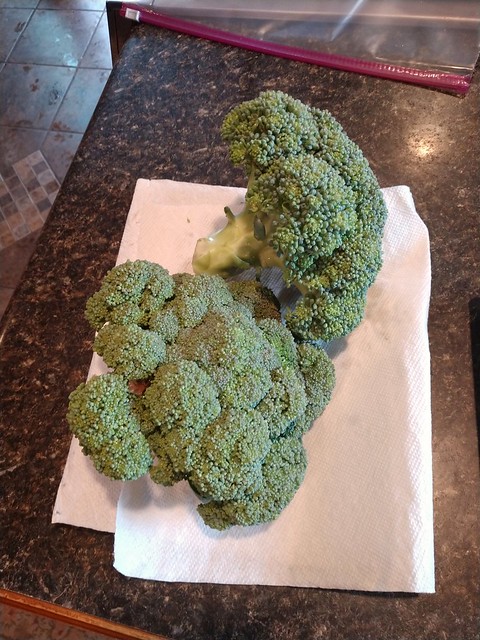
Broccoli

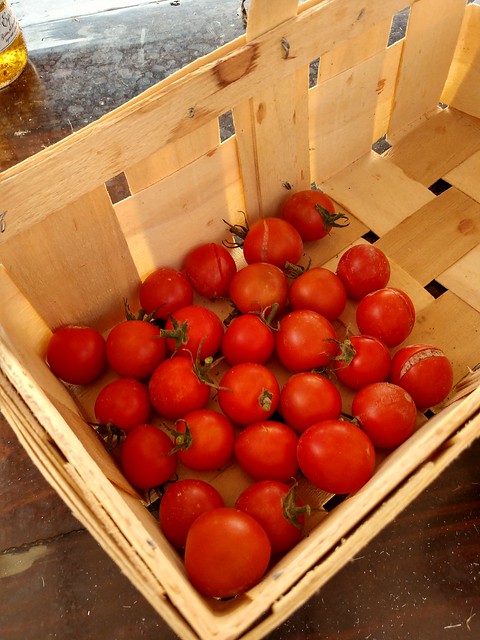
Tomatoes

Bell peppers, cauliflower, brussel sprouts, tomatillos, zucchini, pepperoncini peppers and
cucumbers.

And even though they got such a late start, I think the potatoes are going to make it.

Another issue we are having is that it has been very dry. So every day after work I fill two 5 gallon buckets twice and carry them out to the garden and water each individual plant.

There has been some discussion between Steve and I on running a water line out there. If that happens, I will be sure to document it!

Have you started planting anything where you live? Are you having any struggles with your vegetables? Temperatures? Rainfall? Do you get a workout by hauling water to your garden?

That’s a lot of water lugging, Sarah! I definitely vote for a water line, but in our experience running the line is probably as much work as hauling water all season. Perhaps rent a small backhoe if you decide to put one in. We transplanted a tree this weekend, so we’ve been hauling buckets, as there’s no way a hose will reach the spot I chose. That seems to be the extent of our gardening so far, so I will continue to enjoy your updates. Good job with all of your planting!