Fall to do list

Spring and fall are important seasons on the farm. We’re either working to get things going or working to wrap things up. And all the time I feel like there’s a deadline.

In the fall the deadline is very real because we never know when the weather is going to turn and winter is going to be here. I realize we’re only in the first week of October, and it’s barely begun to feel like fall. It’s not really fair to start talking about winter already, but I already feel like I need to get moving. I have approximately three months until winter officially hits. And who knows how long until freezing temperatures and snow arrive.

Here’s what I’d like to accomplish this fall:

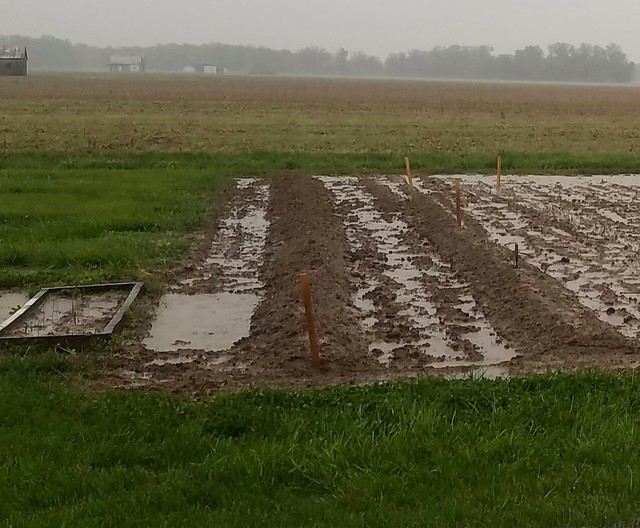
1. Clean out the vegetable garden

Pulling out the plants, a final weeding, lots of pruning, maybe some cover crops or mulch–there’s lots to do here.

2. Remove window screens

I didn’t get around to this last fall, and as a result our windows never got cleaned this spring, and they’re pretty dirty. Pulling the screens off will set me up for next spring.
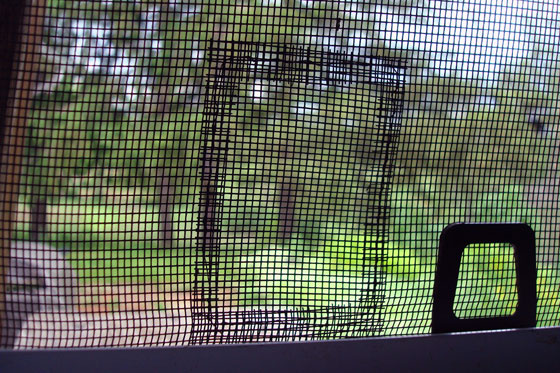
Patched window screen

3. Wash dining room and living room windows

See #2 above. I can’t wait til spring on these two big windows. While we still have running water outside, I will clean these two windows.

4. Put away the birdbath and put out the feeder

The bird feeder is easy now that I have a sleeve in the ground that the stake slips into. However, the bird bath is pretty heavy and needs assistance from both Matt and Wiley.
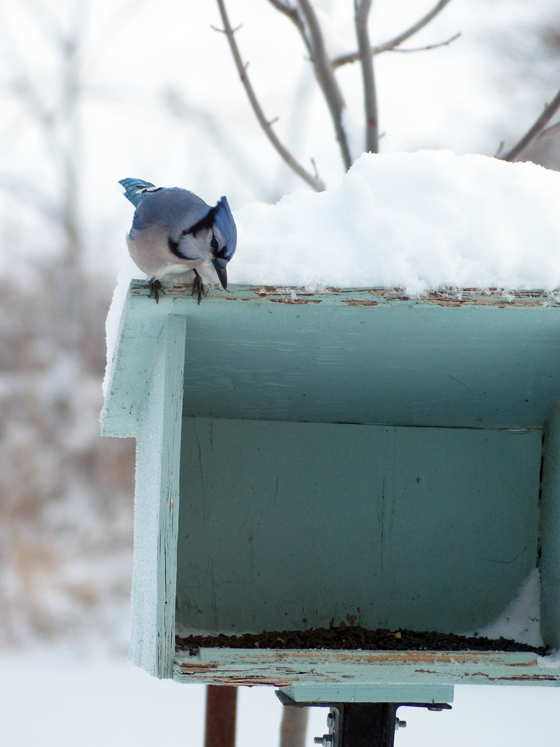
Blue jay at the birdfeeder

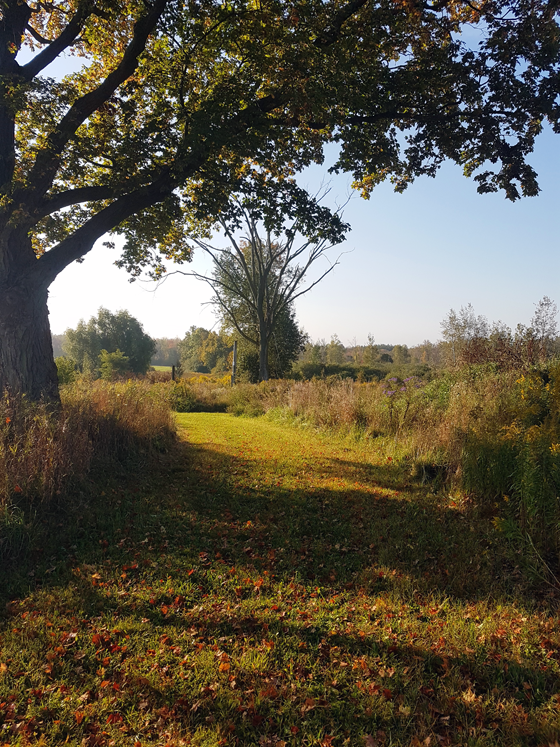
5. Bush hog the meadow, septic and pond shore one more time

I will also likely light the big pile of brush down at the pond on fire while I’m driving around on the tractor.

6. Clean gutters

Matt’s job. Will likely be done several times this fall.
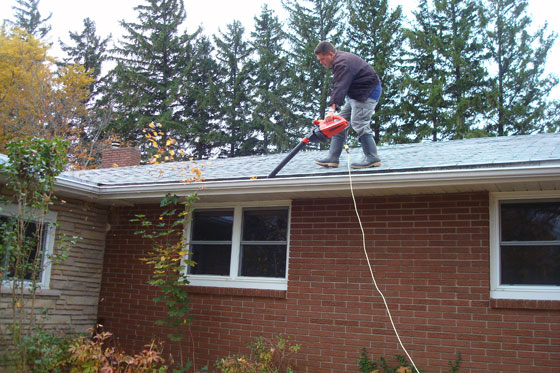
Cleaning gutters with a leaf blower

7. Switch out the mudroom mats

Covering our whole mudroom floor in my large DIY cocoa fibre mat helps to deal with the wet and snow that might come in on our boots.

8. Sweep the chimney

I’m ashamed to say that after three seasons of having a working fireplace, I have never cleaned the chimney. It’s passed time for this chore.
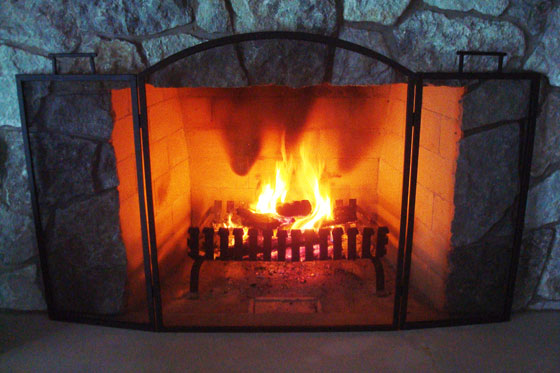
Fireplace screen

9. Vacuum my car

Between Baxter and the grit of a country property, my car desperately needs a cleaning. Winter will only make things worse, so if I can start off relatively clean, I’ll feel better about myself.

10. Service the tractor

Taking off the mower, greasing all the fittings, changing the oil will ensure that we’re all set for whatever comes this winter.
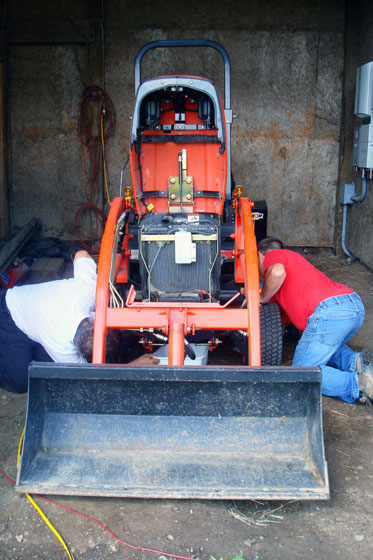
Changing the oiil on our tractor

11. Build a new coffee table.

This has been on my home goals list for awhile, and it’s time to do it. Ideally, the weather holds long enough that I can do some of the work outside.

12. Pick up the lumber pile beside the silo

Last year we went all summer with a big pile of lumber beside the silo. This year, we’ve done it again. Although not quite so big this time around. Hopefully we can move it into the barn without injury this year.

13. Regrade back and side of house

I didn’t get a load of topsoil for my birthday, but I’m not giving up on this one yet.
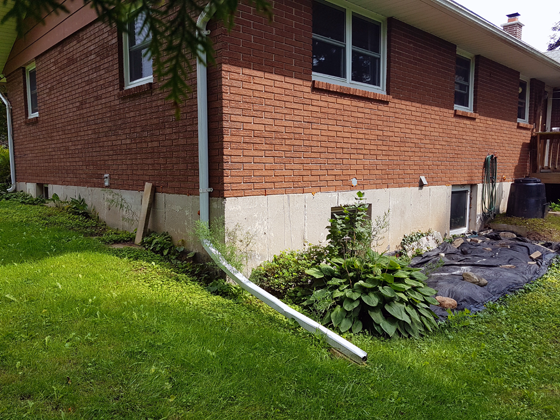
Back of the house

Oooh. Unlucky 13. I feel like I should find one more task to even it out. I’m a bit surprised there are only 13 things knocking around in my brain. Thinking about fall felt much more overwhelming than that. Sometimes that’s the beauty of writing down a to-do list. It makes the tasks seem more manageable.

Hopefully, that’s the case with this list.

What’s on your fall to-do list?
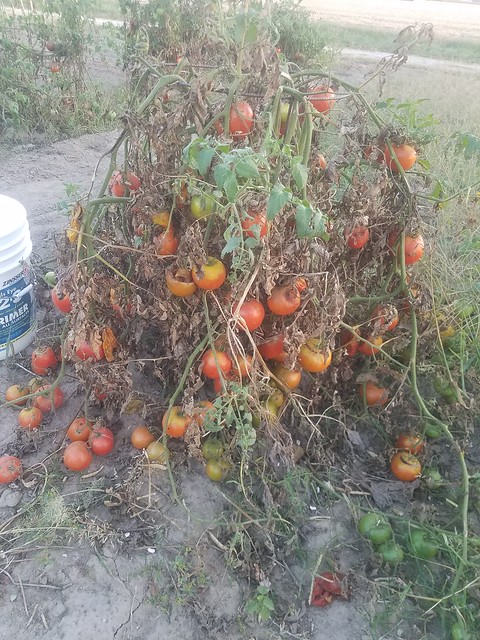
Long term tomato storage

It’s finally starting to feel like fall here in Southern Ontario. We had an unexpected frost on the weekend that made me fear for our still growing garden, but we made it through fairly well. Sarah in Illinois is feeling the coming fall and looking to prolong her garden too. She’s here today to talk about how she’s trying to store that favourite garden fruit, tomatoes, for as long as possible.

Fall-like temperatures have finally hit Illinois and the cooler weather is a sure sign that the days for getting fresh vegetables from the garden are numbered. I posted earlier that I am learning the ropes of canning, but there are other methods for storing vegetables well after the frost arrives.

When I was choosing the tomatoes that I wanted to plant this year, I had on my list “Long Keeper.” Long Keeper is a variety of tomato by Burpee that is supposed to be great for winter storage. I tried to plant some from seed, but I am still struggling with the hardening off process.

A friend provided me with several varieties of tomatoes that she grew from seed, I was excited to discover that one plant was a “Red October” which is another variety of storage tomato.

Thankfully, this plant did very well and had an abundant supply of fruit.

So now that I have all of these tomatoes, what is the best way to store them?

The info I have gathered from several sources has a few things in common.

  1. Store tomatoes so they are not touching.
  2. Store in a cool (but not cold), dry spot.
  3. Check often for spoilage, since one bad tomato can cause the others to spoil quickly.

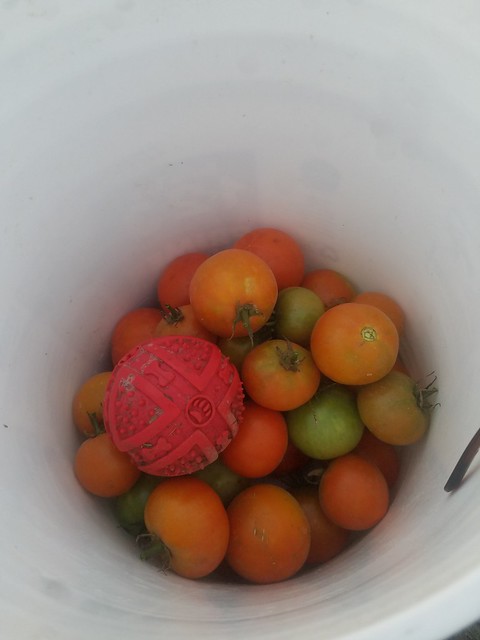
When I picked the tomatoes to store, I made sure to pick only the healthiest, firmest tomatoes. I figured that if they are already showing signs of over-ripening there was no reason to attempt to store them. I also picked them in varying degrees of ripeness. I am not sure if they will ripen well in the box or not.

Blitz quickly figured out what I was doing and added his red tomato-colored ball to my bucket. Man, it amazes me how smart he is!

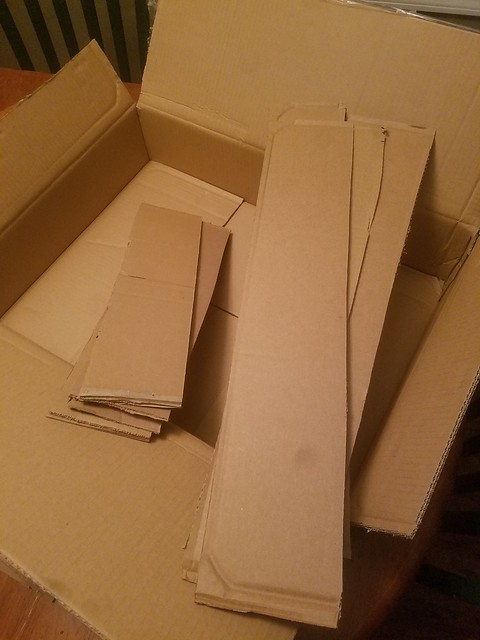
I have a seemingly endless supply of cardboard boxes at work so I picked a shallow box and made a cardboard grid to keep the tomatoes from touching.

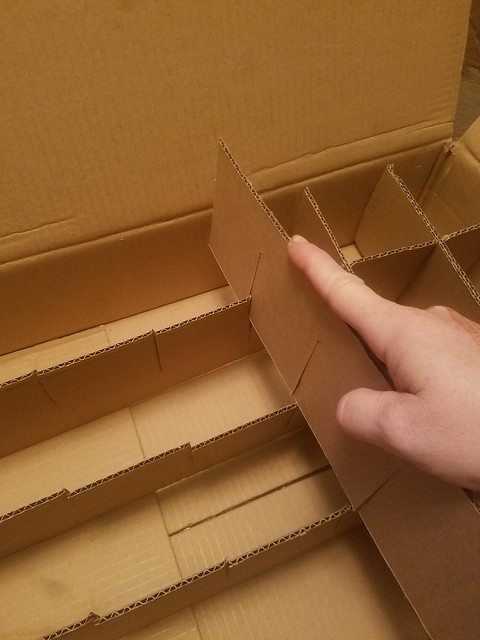
To make the grid I cut pieces of cardboard the height of the box (4 inches in this case) and then I cut them the length of the box. Some I cut the length of the short side of the box, and some the longer length. I ended up with 4 longer pieces and 6 shorter pieces. Each box of course will be different and you can adapt it to your needs, but in this case my box was 15 inches by 21 inches. So when I evenly spaced the slats I had 3 inch squares for the tomatoes to sit in.

To get the slats to fit together in a grid I cut slits evenly across each piece. I made sure to cut each slit more than halfway so that the grid fit together nicely.

I was able to fit my slats together fairly easily. None of my measurements were exact so thankfully cardboard is forgiving and I could work everything into place.

Once my grid was in place I was able to fill it with tomatoes.

I have chosen to store the box in the garage attached to our house. This way I can keep a close eye on them to check for spoilage and I know that it will be a while before it freezes out there.

This really is an experiment. I have no idea if I will have garden tomatoes in January, or if they only last into October. So I plan to report back on how it is going and anything I learn along the way.

Have you ever stored tomatoes long term? Any advice for me? Have you ever grown Red October tomatoes?

I feel like this is as good a technique as any, Sarah. I’m curious to see how it works for you.

I received an interesting preserving cookbook last Christmas called Batch, and it talked about how there are so many more preserving techniques than just canning. Cellaring (like what you’re doing) and freezing were two additional techniques along with several others (and yes, there’s a whole section on tomatoes).

I slow roasted a batch of cherry tomatoes on the weekend. They’re super simple to toss in the freezer and then toss onto pizza in the middle of winter. Unfortunately, I got distracted and didn’t check them soon enough and they were beyond roasted by the time I pulled them out. I’m still mourning them a bit. But they’re in the composter now, so I may have some volunteer tomato plants next year.

Monarchs fly again

Look who showed up again this year.

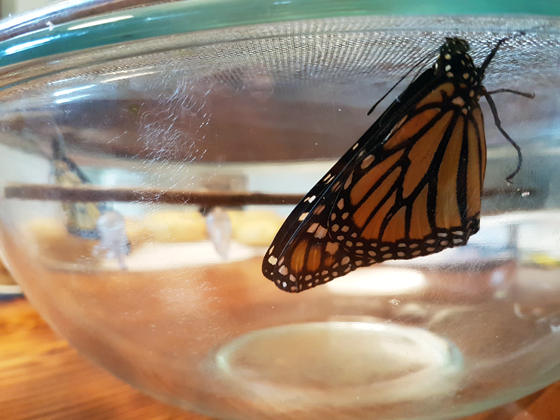
Monarch butterfly in a glass bowl

That’s right, once again we raised some monarch caterpillars into butterflies. We did this for the first time last year (well, it was my first time and our first time together. Matt did this lots as a kid.)

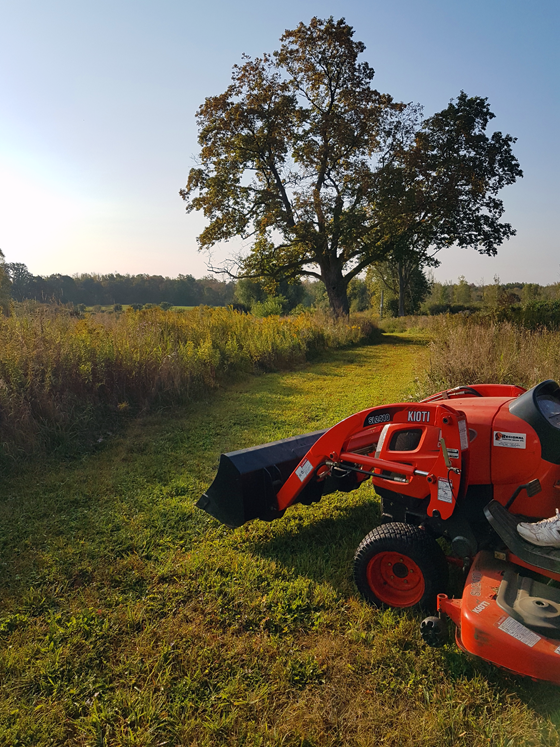
We hadn’t planned on doing it again this year, but then I found three fat caterpillars crawling on the milkweed in the meadow. Since mowing the meadow, the milkweed has popped back up, but nothing else has grown as tall. I was worried that the caterpillars were very exposed and would be tempting for a passing bird, so I brought them inside.

Three monarch caterpillars

They crawled around in a bowl on our island for a week or so (except for the one who made a dramatic escape and was apprehended marching across the kitchen floor–he had a broader worldview than his two bowlmates), and then they shed their outer skins for the chrysalis. I got to watch this happen this year and it was so cool.

Monarch caterpillar about to change into a chrysalis

Three monarch chrysalis

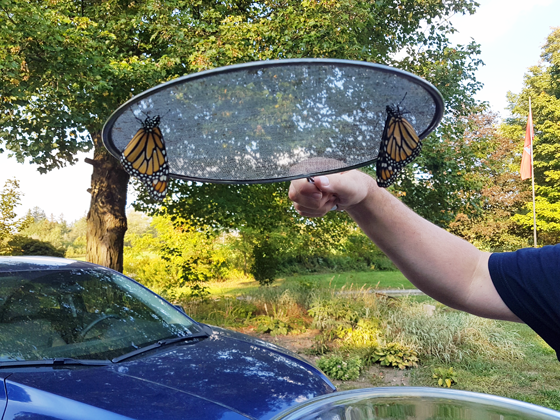
After another week or so, they shed their chrysalis and became butterflies.

Monarch chrysalis about to hatch

Two monarch butterflies hanging from a mesh screen

Newly hatched monarch butterfly

It was as exciting and special as it was last year.

I’ve seen more monarchs this year than I’ve ever seen in a summer. I’m hopeful that the population is healthy and growing. And hopefully our three are now part of that.

How to change a tractor tire on a Kioti CS2410

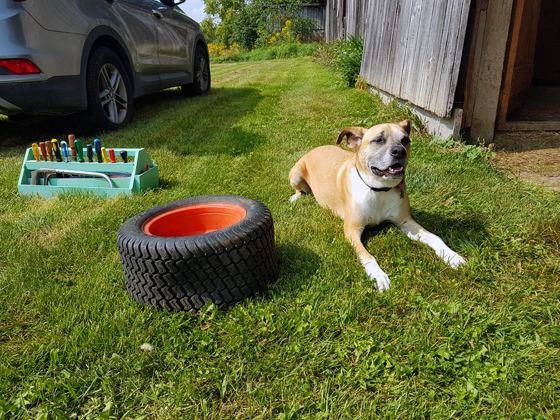
Baxter with the flat tractor tire

One of the issues we’ve run into with our little Kioti CS2410 tractor, Wiley, is his front tires not holding air.

The tires are just rubber tires on metal rims. No tubes. So if they’re underinflated or hit something, we’ve found that the seal between the tire and the rim can start to leak.

We added a tube to the front right tire back in our first winter here. The left front tire we left mostly alone, just checking it and reinflating it regularly.

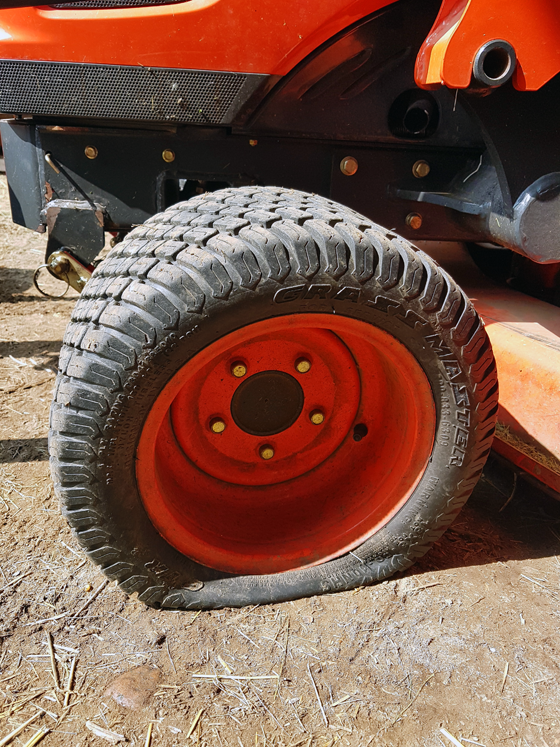
But after Wiley got stuck at the start of the month, the front left tire wouldn’t hold air at all.

Flat tire on a Kioti CS2410

So we popped it off the tractor, took it to the tractor dealership and asked them to put in a tube.

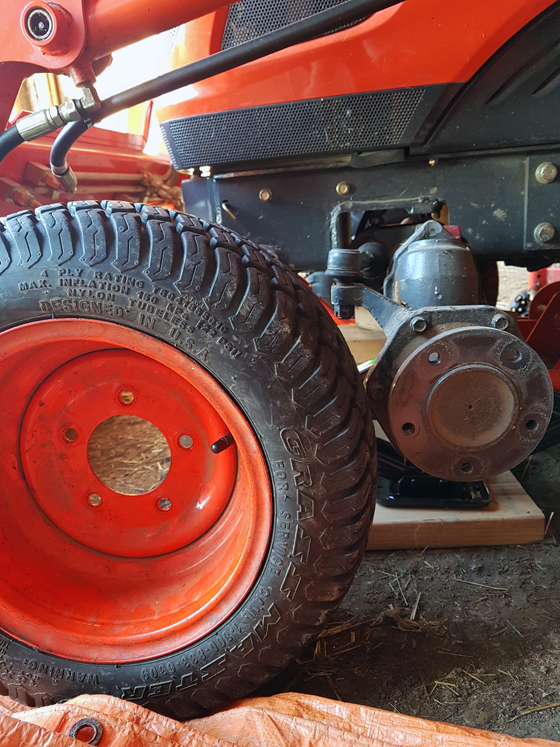
Removing a tire from a Kioti CS2410 is relatively straightforward.

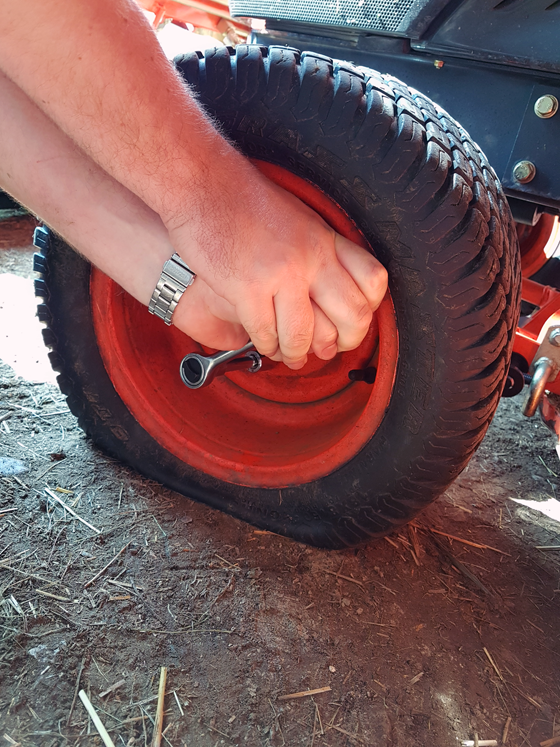
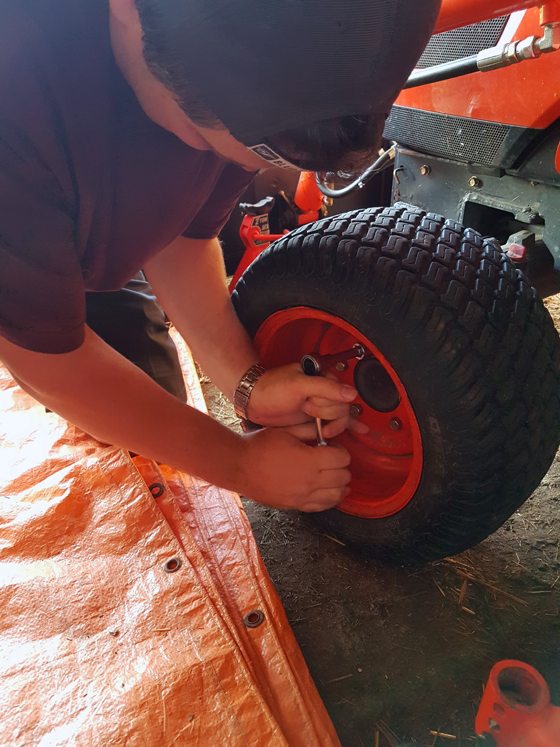
First, with the tire and the tractor still on the ground, we loosened the nuts. Keeping the tractor on the ground ensures that your tire won’t spin while you’re trying to undo the (often very tight) nuts.

How to change a tire on a Kioti CS2410

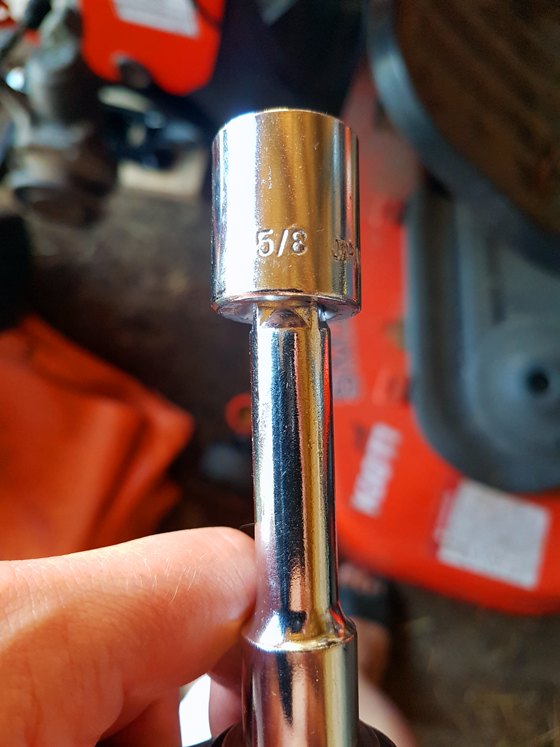
We found a normal tire iron was too big for the nuts. Instead, we used our socket wrench with a 5/8 socket.

5/8 socket

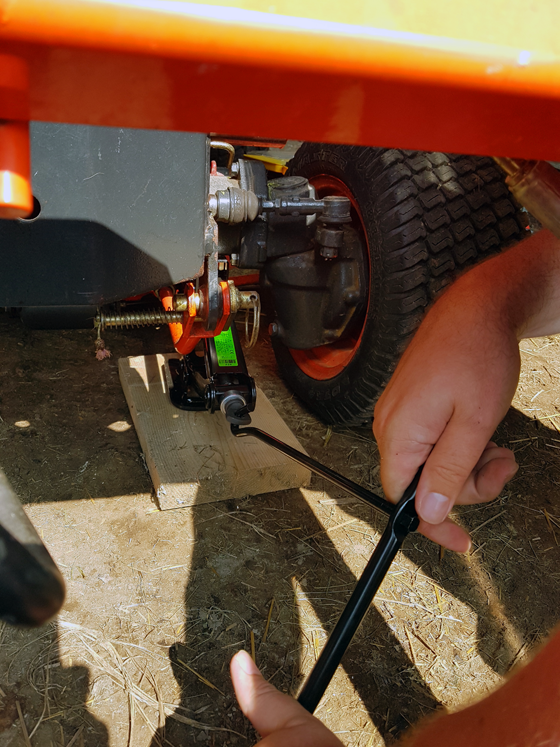
Once all five nuts were loose, we raised the tractor up with a jack under the front axle. (If you’re on uneven ground like we are, it’s smart to stabilize your jack by putting it on a board).

How to change a tire on a Kioti CS2410

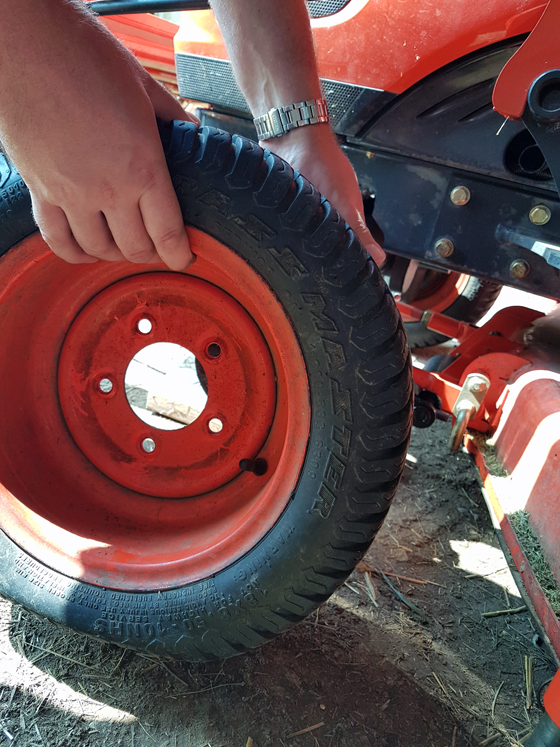
Then we unscrewed the nuts the rest of the way and lifted off the tire. Super easy.

How to change a tire on a Kioti CS2410

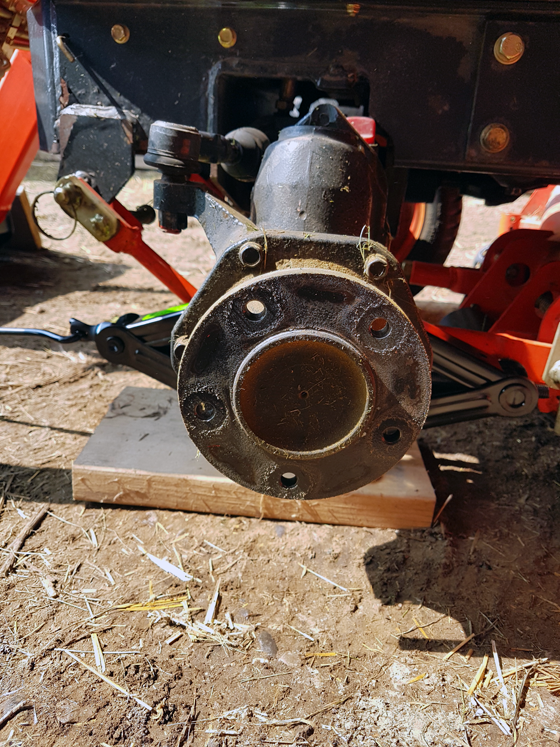
Wiley did a balancing act for a few days (we stuck some wood under the axle so we weren’t relying solely on the jack) while the tire was at the repair shop.

How to change a tire on a Kioti CS2410

Once we got our newly tubed tire back, attaching it to the tractor was pretty straightforward.

How to change a tire on a Kioti CS2410

The hardest part was getting the holes perfectly lined up so that the nuts would screw in straight. It was helpful to have two people, one to hold the tire and the other to handle the nuts.

Once we had the nuts finger tight, we lowered the tractor back down onto all four wheels and removed the jack. Then Matt tightened the nuts with the socket again. Like with any tire, follow a star pattern when you’re moving from nut to nut, rather than going around in a circle.

How to change a tire on a Kioti CS2410

And that was it. Then Wiley got to go for a little run on his new wheels.

How to change a tire on a Kioti CS2410

I’ve learned that a tractor–even a small one like Wiley–is indispensable on a farm–even when we’re not farming. We’re very happy to have him back in working order and to not have to worry about flat tires any more.

September summer keeps the vegetables coming

The first weekend of fall was not at all fall-ish. Temperatures were over 30 degrees (85F), and it felt like 40 degrees (100F+) with the humidity. Matt and I both agreed that it felt like the hottest weekend we’ve had all year.

The good news about summer continuing into fall is that our garden is continuing to grow.

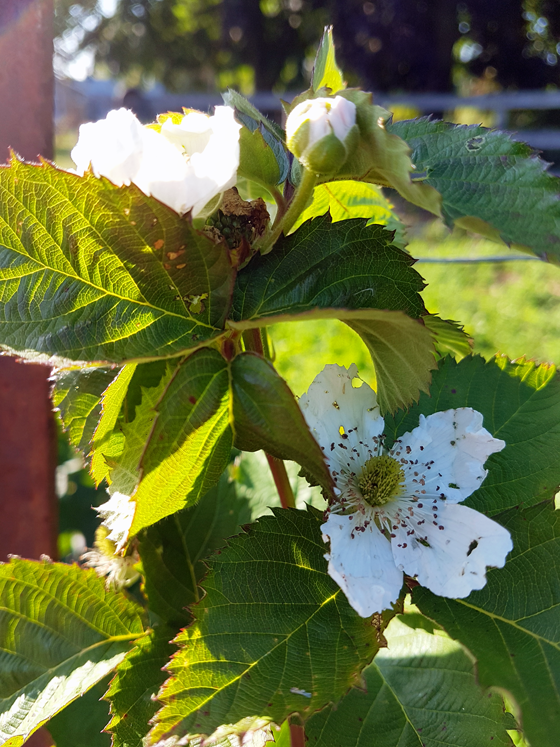
In fact, our blackberries have started blooming.

Blackberry blooms

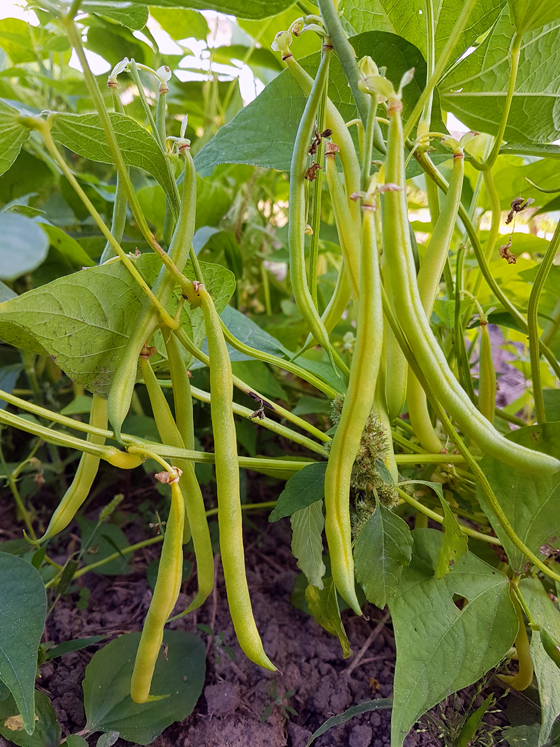
I don’t think we’re going to get to the berry stage before the weather officially turns–it’s going to happen eventually–but we’ve managed to successfully get to the bean stage with our yellow bush beans.

Matt and I braved the heat on Sunday afternoon to pick our first couple of quarts of the year.

Yellow bush beans

Like our berries, the other crop I’m extremely skeptical about is our first try at eggplant. We were so, so late getting these plants in the ground. We have some beautiful purple little babies finally, but I’m not sure they’ll have time to grow up. (Isn’t the colour amazing?)

Baby eggplant

We picked and froze 35 jalapeno peppers over the weekend and have a whole lot more coming. I’m watching our bell peppers closely hoping they turn red soon.

Our tomatoes are still battling, and I managed to salvage a few dozen cherry tomatoes. I’ll be roasting these off tomorrow.

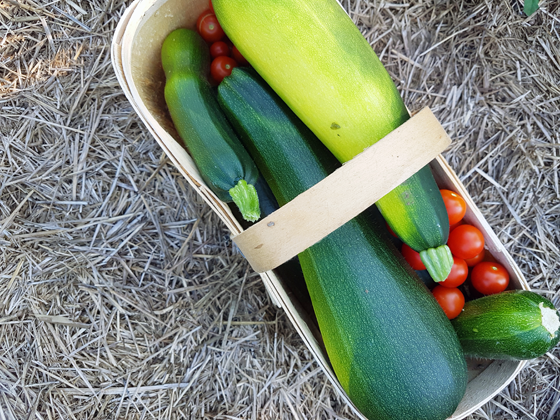
Zucchini are slowly persisting, although a few got away from me and grew a little too large for my liking. Zucchini bread coming up.

Basket of zucchini

We got such a late start on planting the garden this spring. I’m grateful that the weather has held, so that we actually are able to have a decent growing season. Summer’s my favourite season, so garden or not, I’m really hoping that the hot weather hangs around a little bit longer.

What’s the weather like where you are? What do you think my chances are of harvesting eggplant this year?

Harvest report from Illinois

You saw on Monday that our last hay harvest of this year happened on the weekend. In Illinois, harvest is also underway, although there’s some variation in the crops. Sarah is here today to share a crop report.

Harvest 2017 is officially underway. I say “officially” but that just means that I saw my first combine this week.

If you remember back to some of my spring posts, we had an extremely wet season.

Of course it affected my planting but more importantly it affected the farmers’ planting. Most farmers either had to wait to plant, planted then had to re-plant, or some were just lucky enough that the first planting made it.

With these three scenarios, I find it fascinating that fields that are usually all ready to harvest about the same time are now looking completely different.

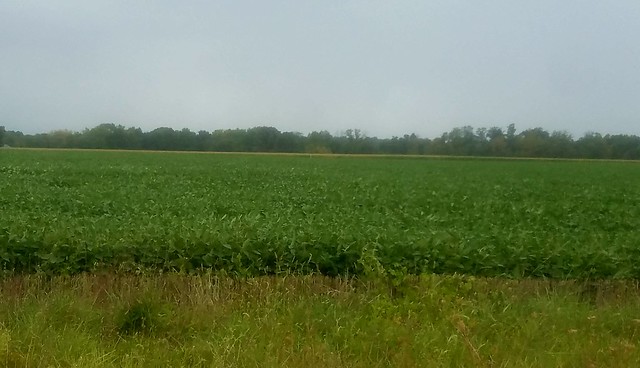
I took pictures on my way home one night of different fields of soybeans all in different stages of harvest.

Not at all ready to harvest:

Starting to show signs of the foliage dying:

And almost ready:

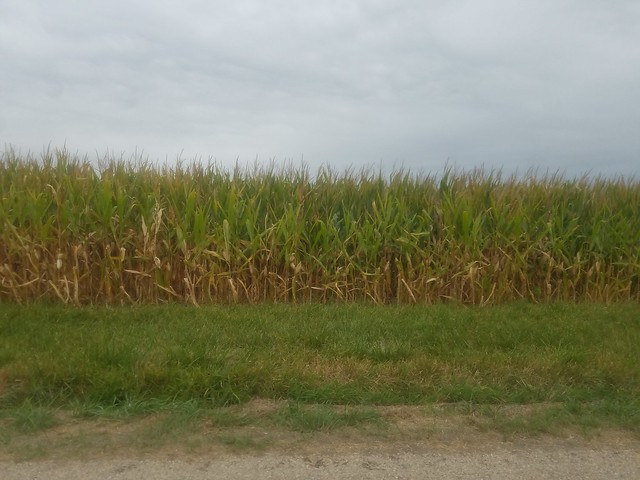
The corn is in similar stages:

None of these examples are from the fields that Steve farms. He says that he is about 2 weeks away from cutting his first beans. I think this is going to be a long drawn-out harvest season.

How are crops doing in your area? Have you seen any signs of harvest approaching?

It seems like this has been a good season for hay in our area. The wet weather has meant it just keeps on growing. The farm across the road had at least three cuts, I think. You have me curious about beans and corn, Sarah. I’m going to have to find a field and take a look.

Get to the choppa

Ahhh, a peaceful weekend morning in the country. The bugs buzzing and the birds chirping. The hum of a tractor in the distance. The sound of gates creaking and horses neighing at the farm across the road. The pop of gunshots and whir of a helicopter. The… um, what was that?

No, the farm has not become a war zone. But we did have an interesting invasion on Saturday when a helicopter landed in the big field.

Hay wagon

Honestly, I wasn’t paying much attention. There’s a shooting range a few kilometres down the road, so gunshots are something that we hear fairly regularly. They’re just background noise to me now.

I definitely heard the helicopter. But again, I wasn’t concerned because there have appeared to be helicopter lessons happening over the farm throughout the summer. They fly low and they fly around and round. It’s noisy and odd, but not novel anymore.

However, a helicopter landing on our property is novel, and apparently that’s what happened.

Matt, who was out for a walk with Baxter, had seen the helicopter. However, he wasn’t expecting to see it touch down in our field. Matt and Bax were on the road, some distance from the field, talking with a police offer who had pulled over when he saw the helicopter flying erratically.

The helicopter only touched down for a few minutes, so Matt–and the cop–didn’t have a chance to find out what was happening. And I didn’t get a chance for a picture.

The cop’s comment was, “If it crashes on that side of the road, it’s the city’s problem. If it’s on this side it’s our problem.”

Ummm… if it crashes, it’s a problem period. If it crashes on our farm, that’s our problem. Not helpful input, Mr. OPP.

After an apparently safe takeoff, the police officer went on his way, and Matt and Bax returned for breakfast. Later in the day, Matt commemorated the occasion by finding Predator on TV–hence the title of this post, Matt’s favourite line from that movie.

The rest of the weekend our fields were pretty much back to normal.

Our last hay was baled, so tractors and hay wagons replaced the helicopter. The closest we got to a helicopter was this spinning attachment on the back of the tractor as our farmer was preparing the hay for baling.

Haying

Baling hay

Did anything unusual happen at your house this weekend?

Not so rosy results from this year’s tomatoes

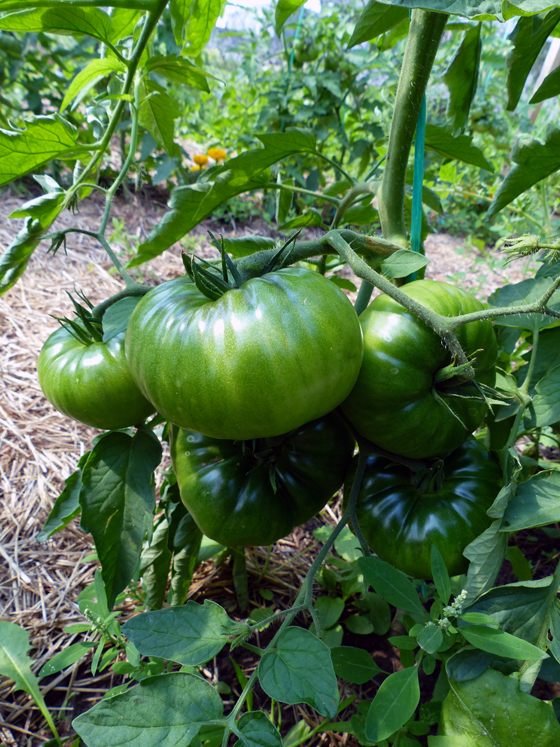
Unfortunately we’re ending garden week on a low note. I was very optimistic about our tomatoes this year. We had beautiful big green tomatoes. I was just waiting for them to turn red and then I would be devouring my favourite tomato sandwiches.

Green tomatoes growing in the garden

From what I’ve heard from other gardeners in our area, tomato blight is pretty prolific this year. Many people have lost their crops.

I thought we were going to squeak through, but the blight has now hit us as well. It started with our Black Krim tomatoes–this year’s new variety. The plants died first. The stalks developed brown patches, then the leaves withered. And now the fruits themselves have started to shrivel, darken and fall off the plant–even as a few of them have tried to turn red.

Tomatoes afflicted by blight

Tomatoes afflicted by blight

I thought the blight might be limited to the Krims, but it’s now spreading to the Mountain Merit beefstakes and even our usually resilient cherry tomatoes.

Tomatoes afflicted by blight

To try and curb the blight for next year, I will be ripping out our plants and throwing them on the burn pile rather than composting as we usually do. And rotation is a must to ensure that next year’s tomatoes are away from the blight.

I did stock up for my tomato sandwiches, but I did it at the grocery store, rather than the garden. 😦

Have you had any blight issues this year? How have your tomatoes grown? What’s your favourite way to enjoy tomatoes?

Potato harvest 2017

Garden week is continuing here on 129 acres. This post is all about the high point of the whole gardening season so far–the potato harvest.

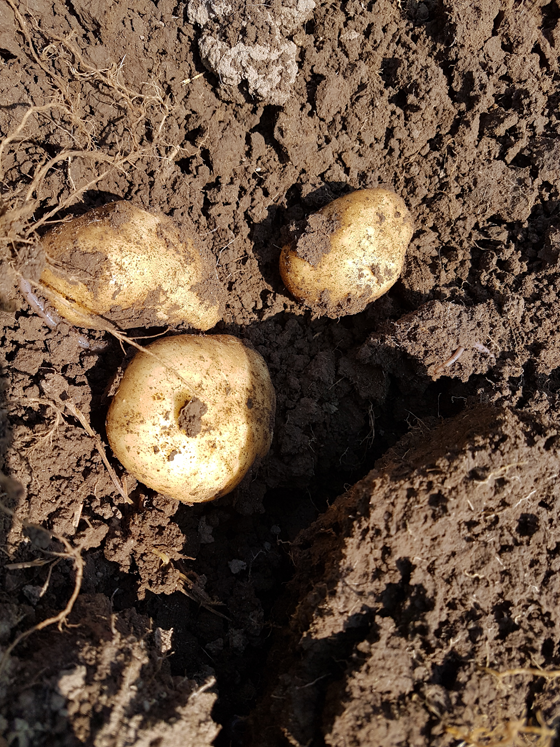
Picking potatoes

You may recall that we decided to devote a whole quadrant of our 2,500 square foot garden to potatoes this year. We had a whole bunch of seed potatoes–all from our own pantry–and I ended up putting in about eight rows.

The results were pretty much as expected. A whoooooole lotta potatoes.

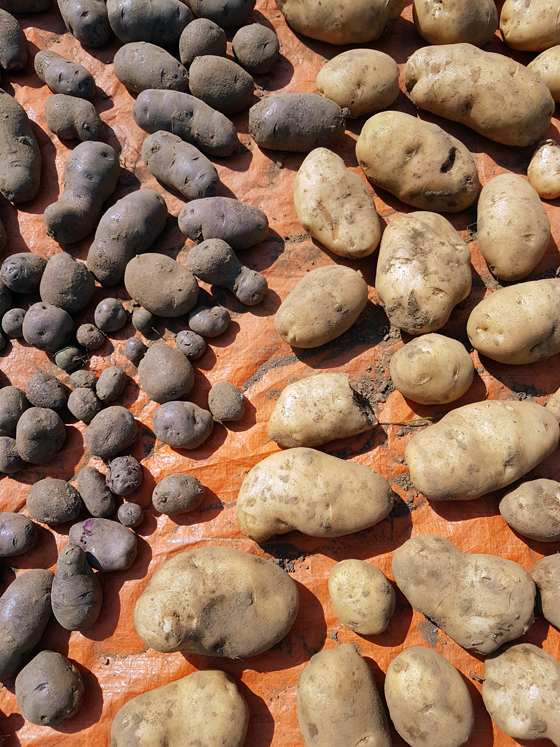
Potato harvest 2017

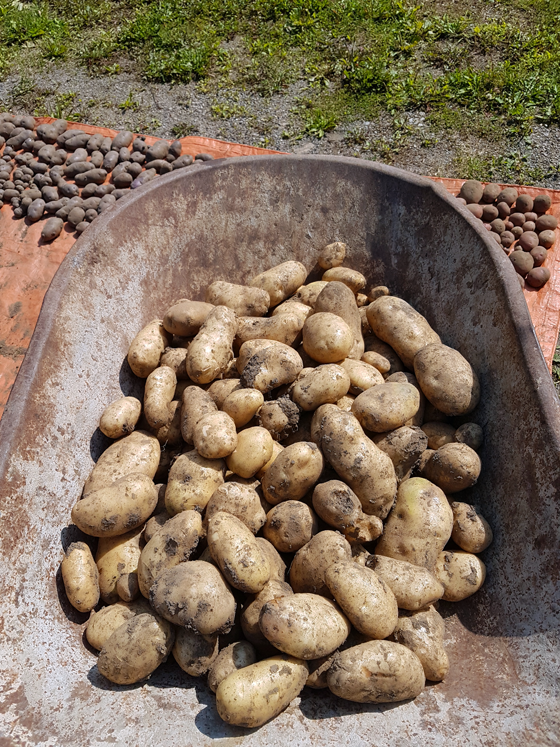
We grew four varieties: Kennebec, Russian Blue, Basin Gold and red. The Kennebecs are by far our favourite. They fry up nice and crisp for hashbrowns, but stay soft and potatoey inside. Their flavour is also wonderful. It’s a good thing we like them because we had so many we ended up picking them into the wheelbarrow.

A wheelbarrow full of Kennebec potatoes

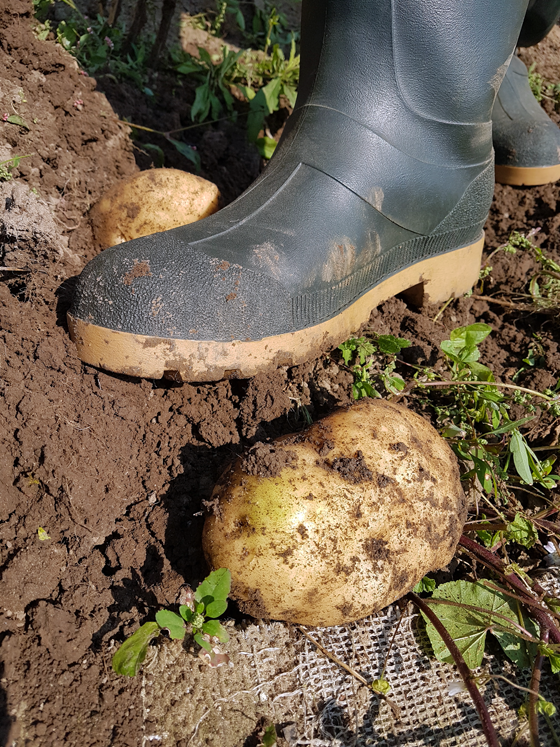
The Kennebecs also grew big. One potato will make more than enough hashbrowns for breakfast for both of us. For comparison, Matt wears a size 13 boot.

Giant potato

The Russian Blues are fun purple potatoes. We got a decent crop of them. The reds are the first potatoes we ever tried growing. I think some of the plants were choked by weeds this year because the number of reds that we got this year was not great.

However, the greatest disappointment ended up being the Basin Golds. These were an experiment. When Matt is looking for giant baking potatoes to go with our steak dinners, he picks up Basin Golds.

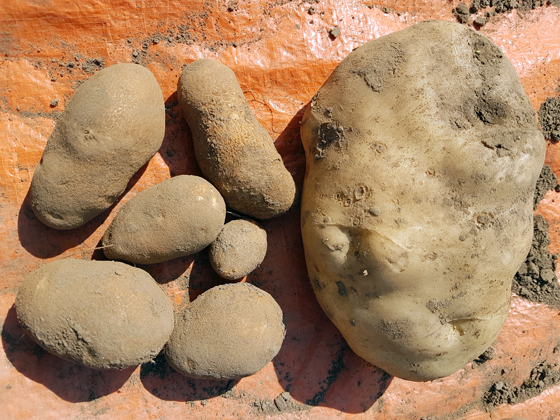
We had a couple of potatoes that sprouted by the time spring arrived, so we stuck them in the garden. They definitely did not live up to our expectations of giant baking potatoes. First, we only got six potatoes. And second they’re small. Here are our measly six taters with their size 13 Kennebec relative.

Different size potatoes

The potatoes are all different shapes and sizes.

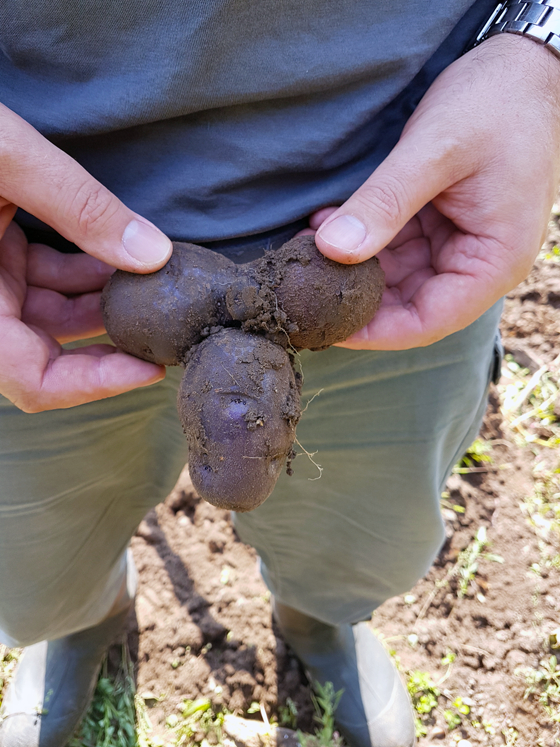
There was a Russian Blue that Matt enjoyed particularly. Ahem.

Mishapen potato

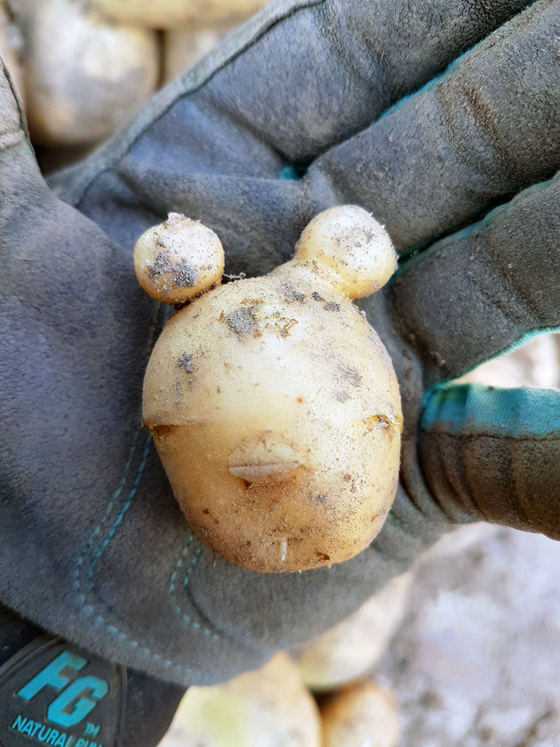
And the much more G-rated Mini Mouse potato.

Mini Mouse potato

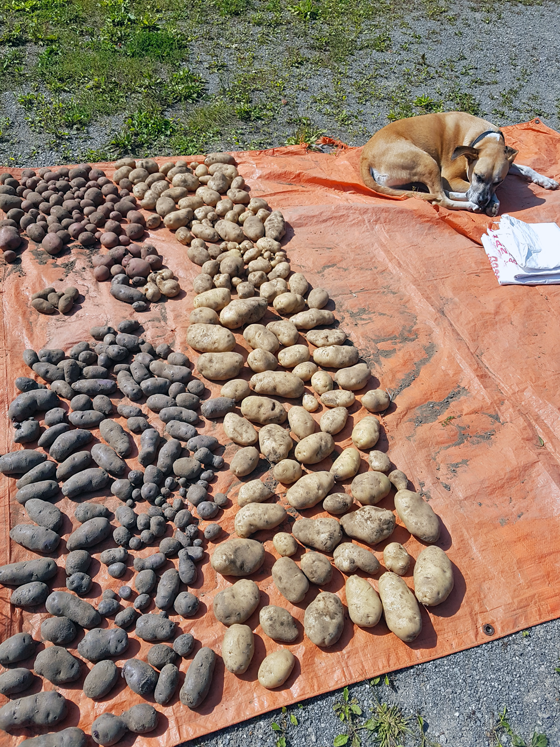
We dried the potatoes for a little while on a tarp on the driveway–supervised by that omnipresent puppy–and then loaded them into sacks and put them in the cold cellar. Last year, we followed a pretty similar process, except we put them in cardboard boxes, and they lasted fairly well.

Potato harvest 2017

Hopefully we will be enjoying homegrown potatoes for many months to come. I’m expecting breakfast for dinner–complete with hashbrowns–will be on the menu one evening this week.

Do you grow your own potatoes? Do you have a favourite kind of potato? How do you like to eat potatoes? Any tips on storing potatoes? I’m really hoping that our sacks work well.